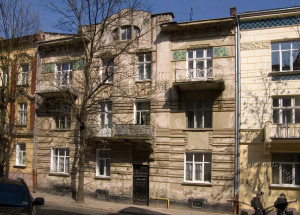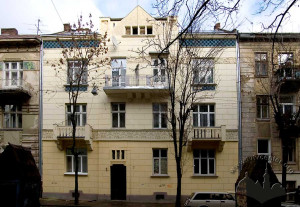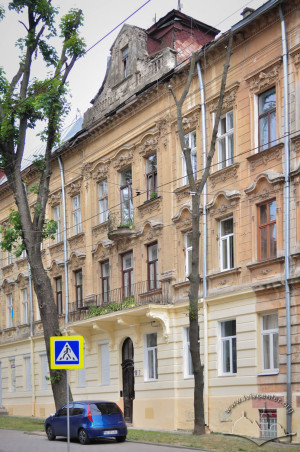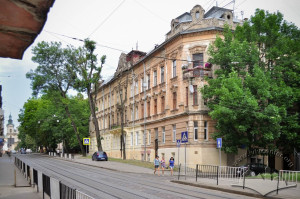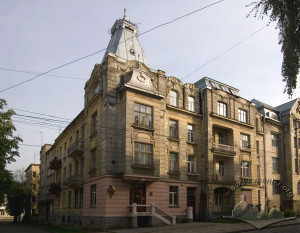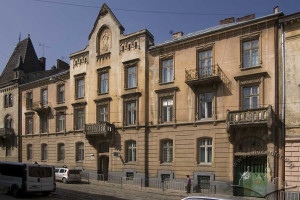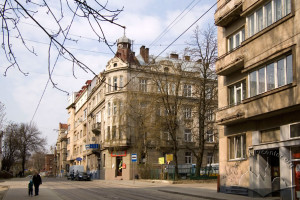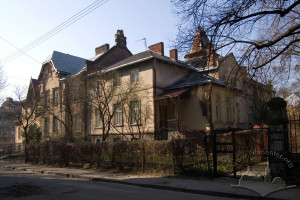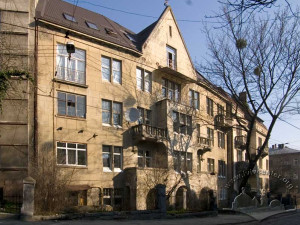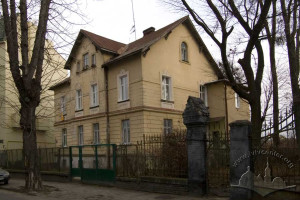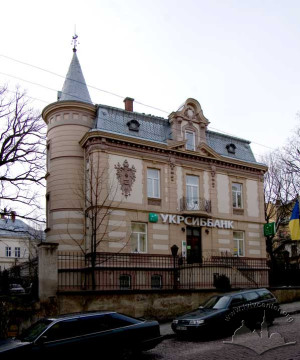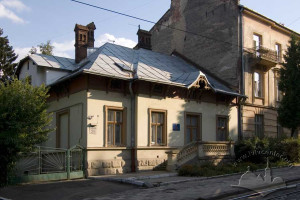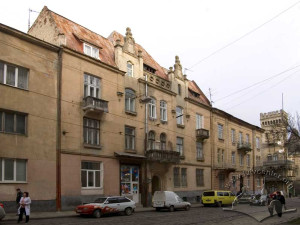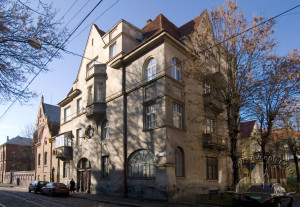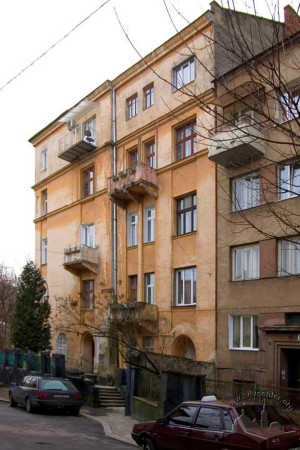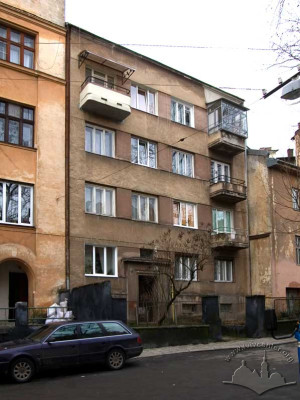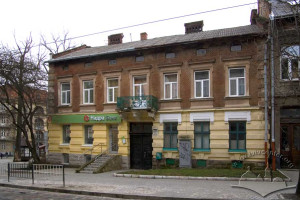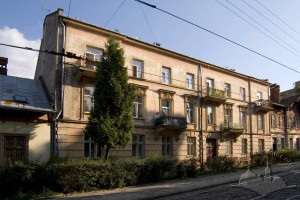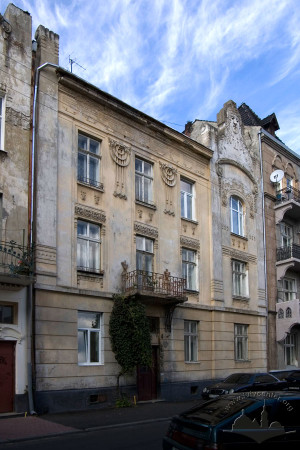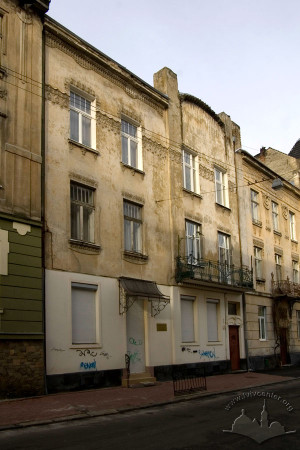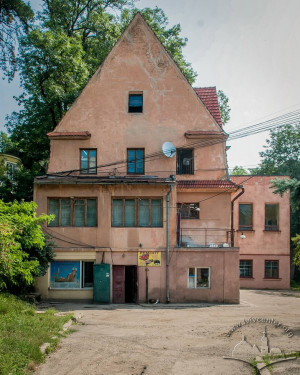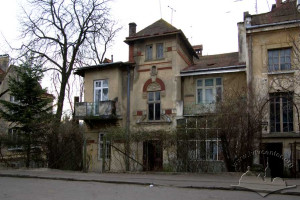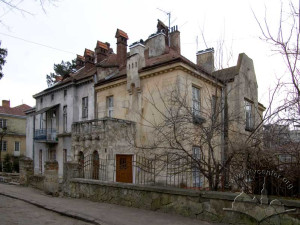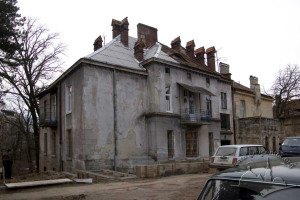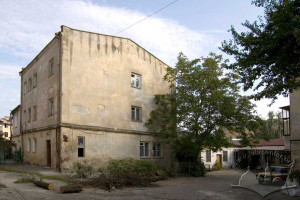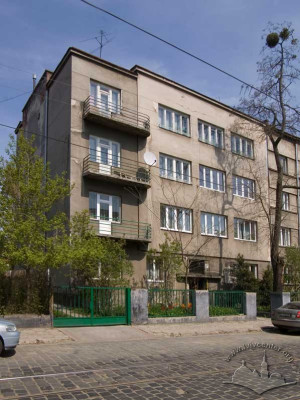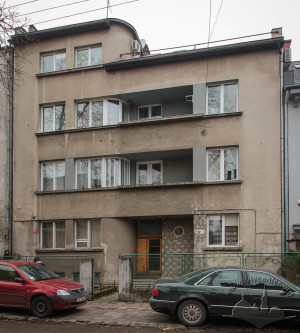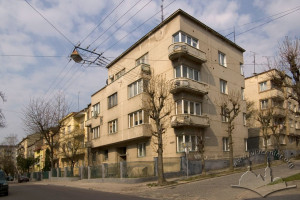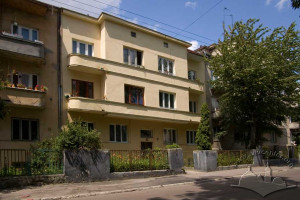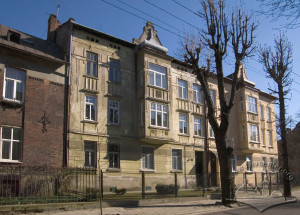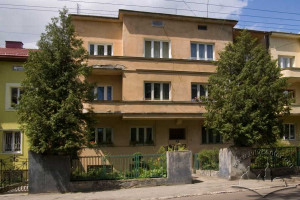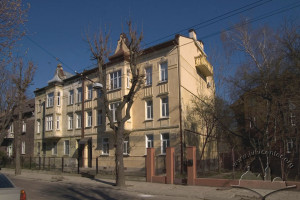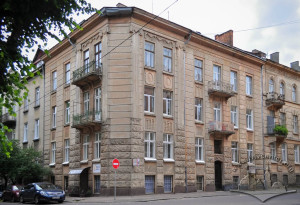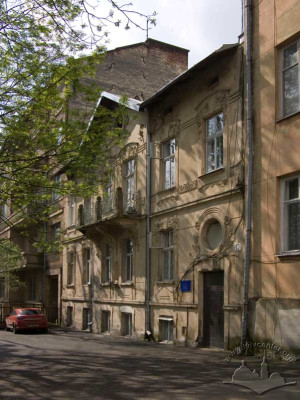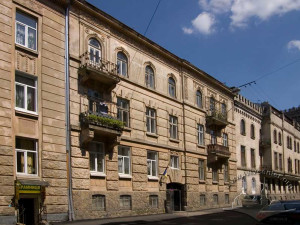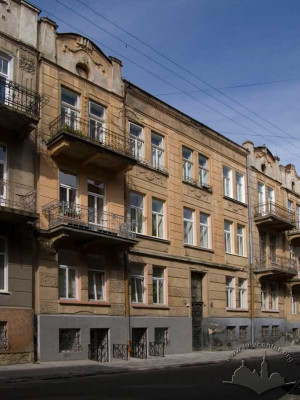
Kastelivka ID: 66
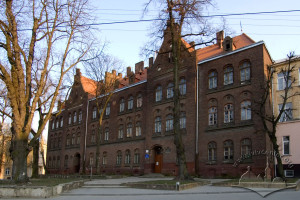
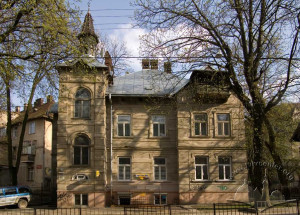
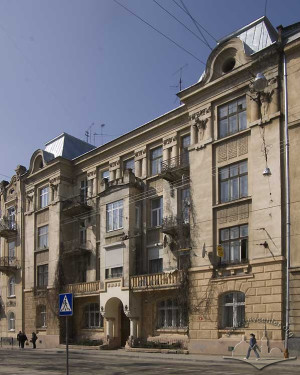
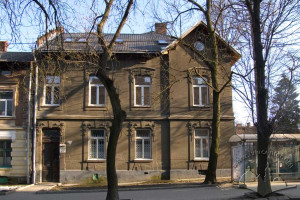
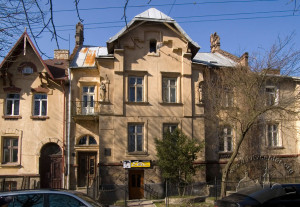
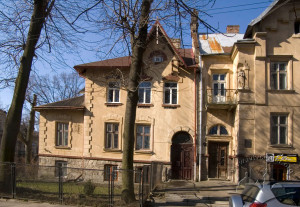
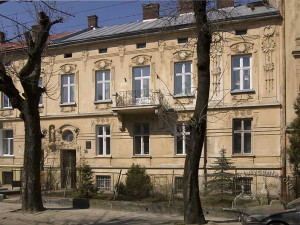
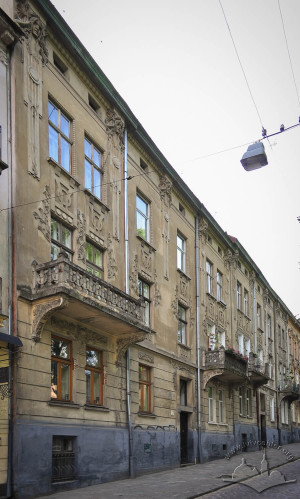
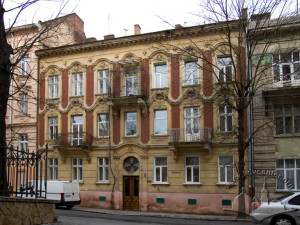
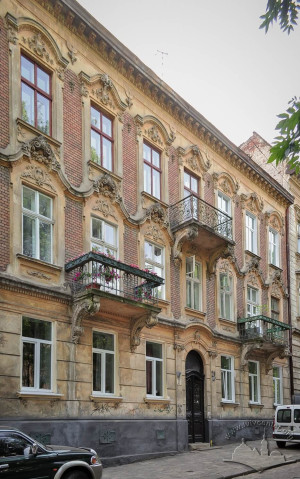
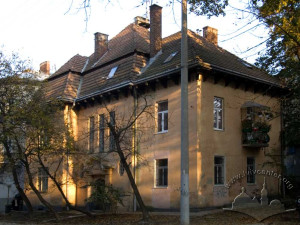
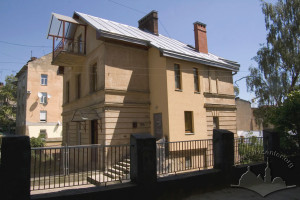
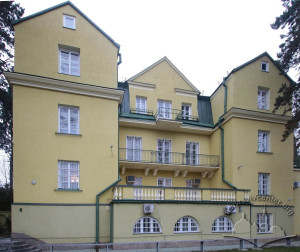
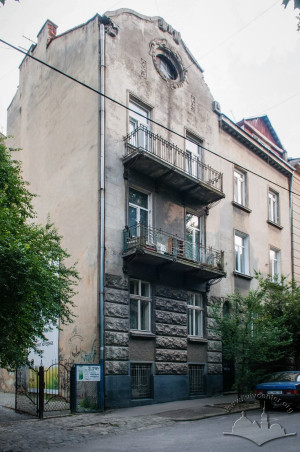
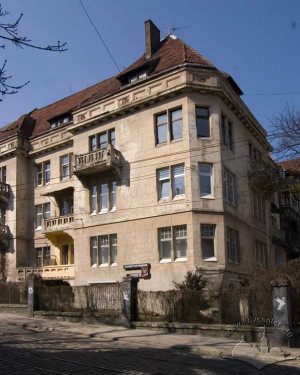
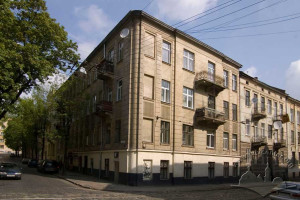
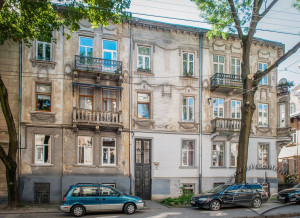
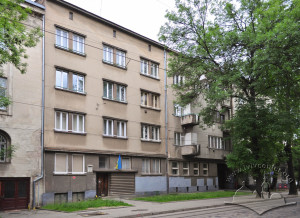
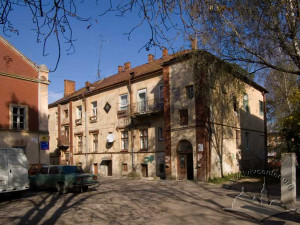
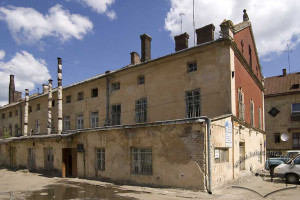
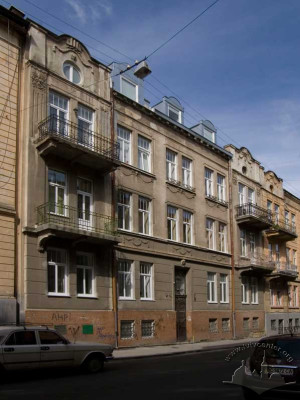
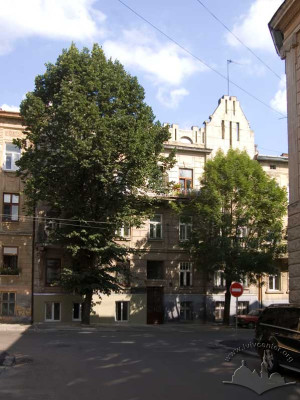
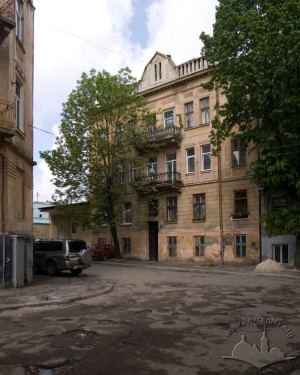
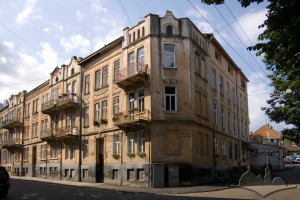
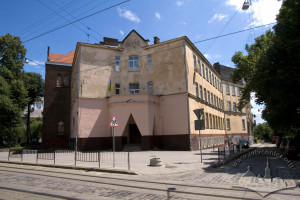
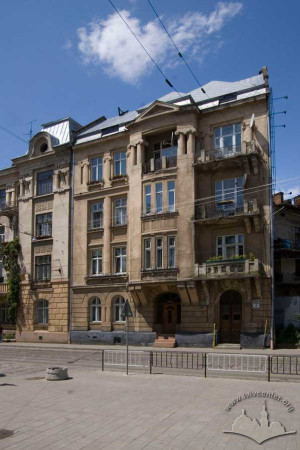
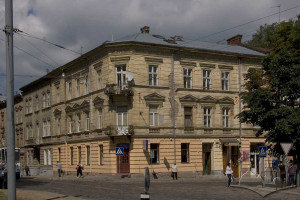
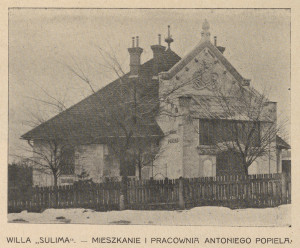
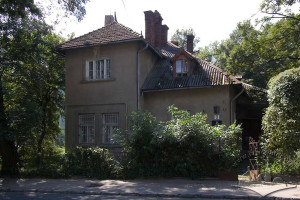
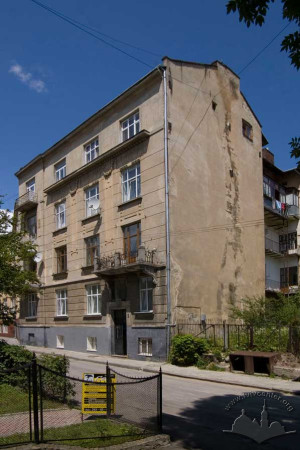
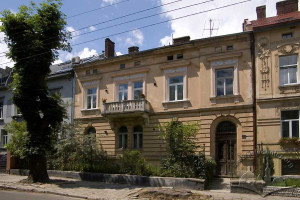
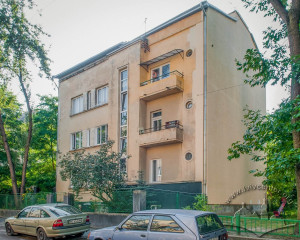
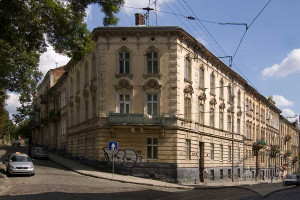
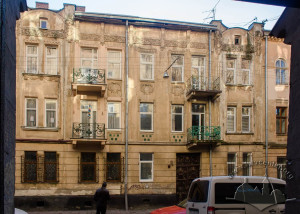
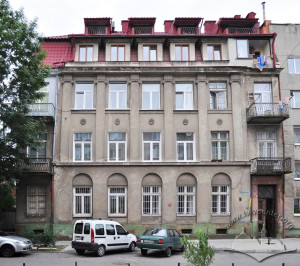
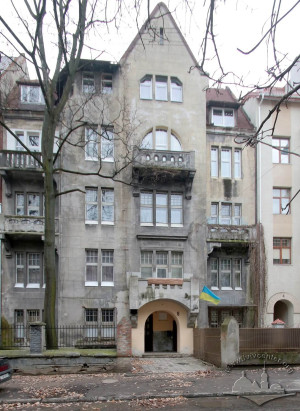
The theme aims at a thorough research of Lviv area commonly known as Kastelivka, until today a largely underresearched example of town planning.
Story
This theme, developed in the framework of the complex project "Lviv Interactive," is being conducted in order to do vast research of one of the less studied districts of Lviv - a part of its southwestern sector that has acquired the historic moniker "Kastelivka."
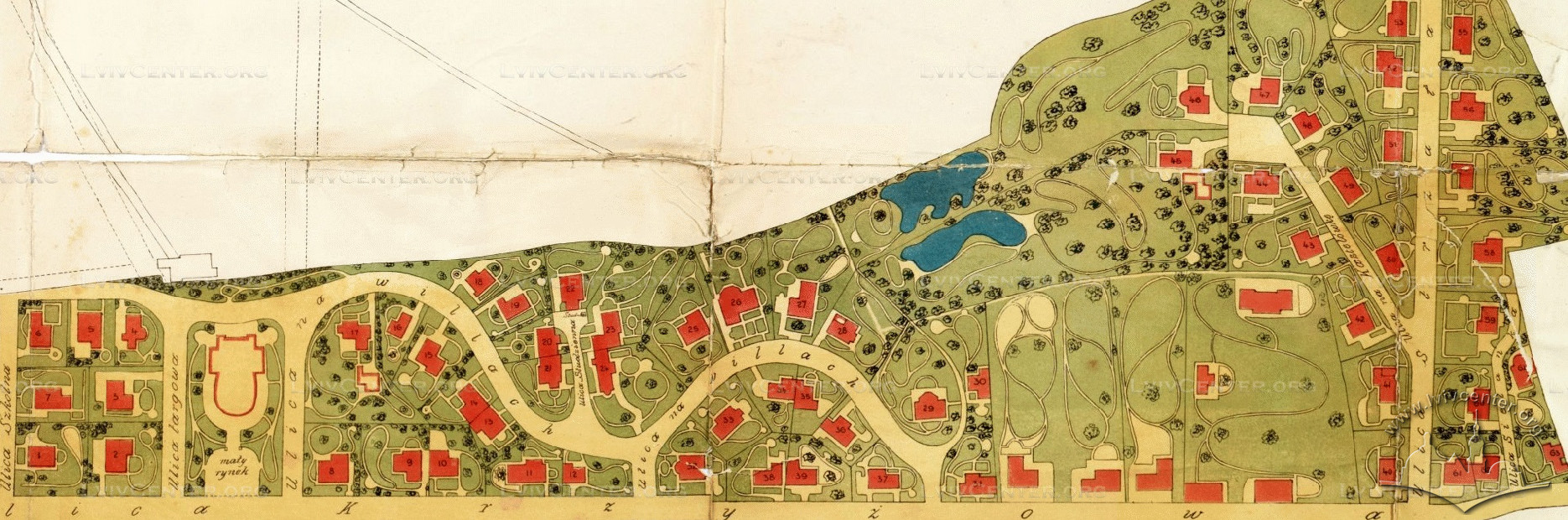
The territory of Kastelivka includes the quarters located along the modern-day Kotlyarevskoho Street and the northwestern part of Henerala Chuprynky Street.
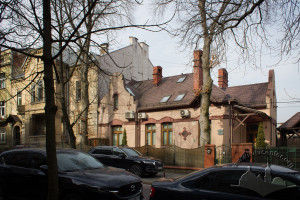
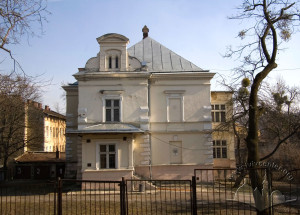
Several stages of development can be distinguished in the chronicles of this district. During the early modern period, Kastelivka was formed as an area of country houses that constituted the far periphery of Lviv. The process of its rapid integration into the urban structure of the modern city took place in the last third of the nineteenth century, during the period of Constitutional Halychyna. The "prime time" of Kastelivka is the middle of the 1880's, when two outstanding architects of Lviv were its main builders - a professor of the Lviv Polytechnic Institute called Julian Oktawian Zachariewicz and a builder named Ivan Levynskyi. The project initiated by Zachariewicz and Levynskyi was aimed at creating a model neighborhood of one-family buildings on the territory of Kastelivka. Already in the early twentieth century Kastelivka turned into a respectable "bedroom community," the architectural character of which bore witness to the living standard orientation and social values of the representatives of the middle class. The dramatic events and changes of the middle of the twentieth century introduced unavoidable corrections to this image. Ever since the second half of the 1940's specific connotations of the Soviet time were added to Kastelivka's historic-architectural and historic-cultural appearance.
Our theme in its chronology will thus cover four centuries (the seventeenth through the twentieth) of the development of the Kastelivka district. Numerous monuments of this district, the architecture of which has become the core of the construction of the "west end" of Lviv, will be researched and documented in the context of the social, political, economic and cultural history.
We would like to immediately define some priorities in our research plans: Villas of well-known architects of the late nineteenth-early twentieth centuries have become an inseparable part of the architectural landscape of Kastelivka. In particular, this includes the family home of Julian Zachariewicz and Alfred Zachariewicz – father and son, great architects of the Lviv school. Another important accent is the building materials factory complex of a leading builder of Halychyna of the 1880's-1910's – Ivan Levynskyi. Objects connected with the activities of the Zachariewicz architects as well as Ivan Levynskyi will be treated with special attention in the framework of the "Kastelivka" theme.
The role of Kastelivka in the development of the architecture and culture of Lviv is unique. Our goal is to conduct a foundational interdisciplinary research of this neighborhood. We hope that this theme has the potential of becoming the prelude to a wider complex study of the territory of the western districts of Lviv that formed the old Krakiwski suburb.
The theme is headed by Candidate of Art Studies Ihor Zhuk.
People
Related buildings and spaces
-
Vul. Bohuna, 5 – residential buildingRead more
Multi-apartment residential building (constructed 1906-1907 by the Project Bureau of Ivan Levynsky [project co-developed by Ivan Levynskyi and Lew Lewiński]). The three-storied Art Nuveau building is L-shaped in its layout. The frontal wing is augmented by an additional wing, built at a right angle to it. Together with the neighboring building No. 7, the stonehouse forms a T-shaped building block. The façade stands out in perspective thanks to its attic's horseshoe-shaped shield.
-
Vul. Bohuna, 7 – residential buildingRead more
Multi-apartment residential building (constructed 1906-1907 by the Ivan Levynskyi buerau [project co-developed by Ivan Levynskyi and Lew Lewiński?]). The three-storey building is L-shaped in its layout, which is traditional for buildings, consisting of a main frontal wing, and and internal wing. The façade, oriented along a regulation line, is decorated by a triangular gable. Characteristic of the building's décor are the geometrical ornamental forms, which show the builders' gravitation toward late Art Nouveau style.
-
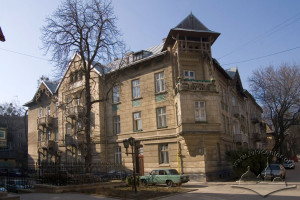
Vul. Henerala Chuprynky, 11a – residential buildingRead more
Multiapartment residential building (constructed 1906-1907 by the Ivan Levynsky bureau– project co-developed by Ivan Levynsky and Lew Lewiński [?]). The large three-storey U-shaped building is located deep within the plot, and has three façades. A prismatic erker protrudes at the corner. The house is distinguished by the sharp, expressive silhuetto of its covering and rooflets. The apartment sections are grouped around the two gateways. The building attracts attention as an example of architectural style using stylized motifs of traditional Ukrainian art within the framework of Art Nouveau style.
-
Vul. Henerala Chuprynky, 7 – residential buildingResidential multiapartment building (1897-1898; construction and project co-development by Julian Zachariewicz an Ivan Levynskyi). Inscribed between the two neighboring buildings (Nechuya-Levytskoho 23 and Generala Chuprynky 9), forms a central link of the building complex, created by the three multiaparment buildings. It has three stories, its frontal part features a symmetrical façade. The internal layout is based on the two-tract system of room dislocation. Late nineteenth-century historicism, oriented towards Neo-Baroque forms.Read more
-
Vul. Henerala Chuprynky, 9 – residential buildingRead more
Residential multiapartment building (1897-1898; design and construction by Julian Zachariewicz and Ivan Levynsky). This L-shaped corner building is part of an architectural complex, that also includes buildingsin Nechuya-Levytskoho 23 and Generala Chuprynky 7). The building consists of three floors, and employs «curtain-type» façades in its decoration. Internal planning based on two-tract room placement. Late nineteenth-century Historicism, oriented towards Neo-Baroque forms.
-
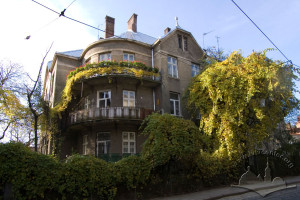
Vul. Kotliarevskoho, 23 – residential buildingThis four-story apartment building (1910-1911; Ivan Levynsky architectural bureau [co-authored by Ivan Levynsky and Olexandr Luszpynski?]) is located on the slope of a hill. The building forms an ensemble with an adjacent house no. 25. Its façade is accentuated by expressive plastics of the rounded corner section. The staircase is the center of the internal structure plan. The building is an example of an apartment house of the 1910’s.Read more
-
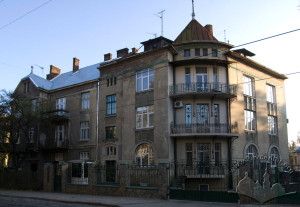
Vul. Kotliarevskoho, 25 – residential buildingThis three-story apartment building (1908-1909; Ivan Levynsky project bureau [co-authored by Ivan Levynsky and Oleksandr Lushpynskyi?]) forms an ensemble with the neighboring house no. 23. The building is constructed on the slope of a former ravine and is surrounded by a garden-recreational territory which is in harmony with the picturesque landscape. The decoration of the rounded front wall is a deviation from the traditional approach of planning facades of a “curtain” type. Internal planning design is sectional. This is an example of late Art Nouveau architecture.Read more
-
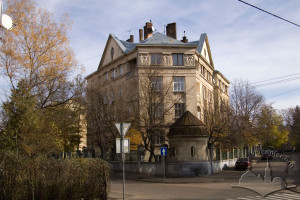
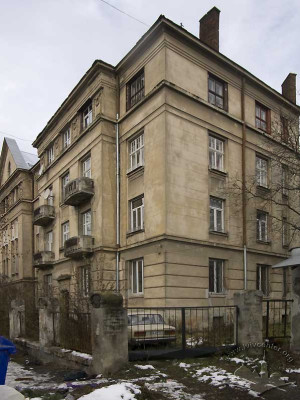
Vul. Kotliarevskoho, 67 – residential buildingThis apartment house (1911-1912; Ivan Levynsky architectural bureau [co-designed by Ivan Levynsky, Witold Minkiewicz and/or Wladyslaw Derdacki?]) is an example of the early twentieth-century Neoclassicism. This four-story building has two wings located at a sharp angle to each other, with a corner risalit protruding between them. The façades are topped with triangular pediments. A polygon-shaped staircase is the center of the floor plan. The architects paid special attention to small forms such as rotunda in the garden in front of the main façade.Read more
-
Vul. Metrolohichna, 3 – residential buildingRead more
This four-story apartment building (1911-1912; Ivan Levynsky architectural bureau) forms an ensemble with the neighboring house no. 67 on Kotliarevskogo Street. In apartment sections, internal planning is organized according to the two-tract principle. This is an example of the early twentieth-century Neoclassicism.
-
Vul. Nechuia-Levytskoho, 23 – residential buildingRead more
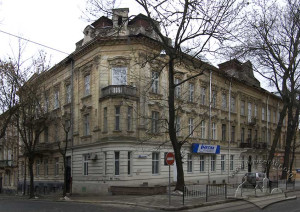
This corner L-shaped apartment house (1897-1898; architects Julian Zachariewicz and Ivan Levynsky) is part of an architectural complex of buildings consisting of three apartment houses (other components of the group are buildings no. 7 and 9 on Generala Chuprynky). It has façades of the “curtain” style and is separated from the pavement with a strip of the garden. This is an example of the late nineteenth-century Historicism, predominantly Neo-Baroque.
-
Vul. Bandery, 11 – School buildingRead more
Building of the former City School of St. Mary Magdalene (1883-1884, additional construction 1909-1910; architect Juliusz Hochberger, Director of the City Construction Administration together with the Architectural Bureau of the Lviv City Council). Historicism (medievalising architectural forms). The façades, laid with unplastered red brick, were augmented with high Gothic frontons, Romanesque archvolts, and rosettes. The internal layout is based on hallways. The School of St. Mary Magdalene started as one of the city's general education schools, providing instruction mostly to students from the Kastelivka / Bajki district. As of today (2009) the object is still in use as a school building.
-
Vul. Henerala Chuprynky, 5 – office building (former villa)Read more
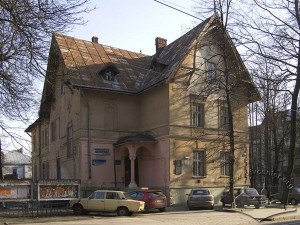
Family residence, villa (1889-1890; architect Alfred Kamienobrodski). The villa is part of an ensemble of single family buildings, which partially served to realize the project of developing a comlex of single-family residences in the Kastelivka district. Construction project of the building envisioned it as a freely-situated object, surrounded by a garden plot. Late Historicism (combining Neo-renaissance forms with motifs of Alpine architecture). According to documents, at the time of construction, the object was in the property of Jan Bromilski, whose family was connected with several other construction projects to leave a notable trace in the architecture of late nineteenth and early twentieth century Lviv. In Soviet times the building housed administrative institutions, and after the collapse of the USSR, it became home to offices of various political parties.
-
Vul. Henerala Chuprynky, 19 – residential buildingRead more
Residential single-family home, villa (1902-1903; architect Michał Kowalczuk). The two-storey buidling has a high tent of the roof, complemented by sharp silhouettes of the corner turret and frontons. The rectangular outline of the building is enlivened by protrusions of façade projections and risalits. The building's interior design is based on the two-tract system of dislocating rooms. A garden and flower-beds were planted in front of the building's façades. The villa's style can be described as late Historicism with a tinge of Neoromanticism. The decoration features stylized folk art forms.
-
Vul. Henerala Chuprynky, 6 – residential buildingRead more
Residential multiapartment building (1910-1911; architects and project co-developers: I. Kiendzierski and A. Opolski). The four-storied building attracts attention with its dynamic modelling of the façade, decorated by risalits and an erker. The basic structural element of the building is the rectangular main section (adjacent to Generala Chuprynky street), which is augmented by sidewings from the side of the courtyard. The staircase fixes the layout's central axis, and the rooms are situated along two rows. Early twentieth century Neoclassicism with elements of late Secession style architecture. The façade's upper part is decorated by coupled haut relief.
-
Vul. Henerala Chuprynky, 11 – bank building (former villa)Read more
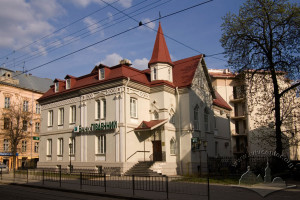
This single family villa (1889-1890, with later reconstructions, co-designed by Julian Zachariewicz and Ivan Levynsky) is an example of Historicist single family home. Small corner tower and dynamic interior outline used to show similarity with the shapes of neighboring objects in Kastelivka (for example, with a villa on Generala Chuprynky 21). During the following decades architecture of building no. 11 lost its original character. Reconstructions turned the villa into a multi-apartment building. Today (2009) offices of a bank establishment are located here.
-
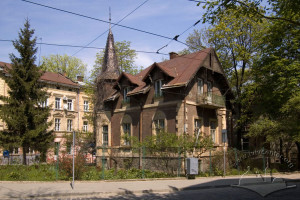
Vul. Henerala Chuprynky, 21 – Shevchenko Scientific Society buildingRead more
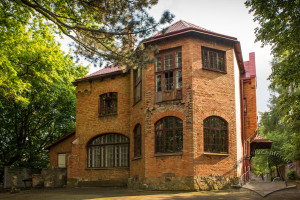
A residential single family building-villa (constructed in the 1890’s; co-authored by Julian Zachariewicz and Ivan Levynsky [?]). The building is an example of a Neo-romantic type of single family home which became popular in the 1890’s among the local middle class. The villa was built on a corner plot as a freely standing object surrounded by a garden and flower beds. L-shaped mansion is added by a picturesque six-faceted tower on a corner. The facades formed from non-plastered brick are distinguished by the bright ceramic decor (glazed tiles) and carved details.
-
Vul. Henerala Chuprynky, 27 – residential buildingRead more
A residential Art Nouveau apartment building (1900-1901; Ivan Levynsky architectural bureau). A small two-story building was constructed with a shift from the regulation line; its fireproof wall borders with building no. 25. The facades are segmented by buttresses with triangular tops. It has the shape of an elongated rectangular in its floor layout. The narrower façade faces Generala Chuprynky Street; a portal is built on the left side. A small protrusion with veranda is added to the rear façade facing the garden. A small enclosed yard is located in the middle of the building.
-
Vul. Henerala Chuprynky, 47 – residential buildingRead more
A residential apartment building (1910-1911; architect Karol Boublik). Four-story corner building, L-shaped in its outline. Balcony loggias, bay window and portal are arranged on the façade from Generala Chuprynky Street; it is separated from the road by sections of flower beds. The composition accent of the building is a corner block with high roof shaped as a marquee. The center of the planning scheme is the stairway adjacent to the corner of the yard. This is a Historicist Neo-Baroque building with modernist influences.
-
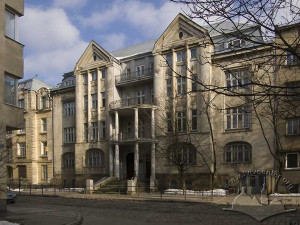
Vul. Henerala Chuprynky, 49 – Lviv National Franko University buildingRead more
Residential four-story apartment building (1908-1909; architect-constructor Jozef Piatkowski). The center of the plan is a spacious staircase and an elongated corridor that divides the inner premises into two tracts. The building features stylistic elements of the early twentieth-century Neoclassicism, which reveal the influence of German architectural school. Presently (2009) the building is used by a university.
-
Vul. Henerala Chuprynky, 48 – hospital buildingRead more
Residential three-story apartment building (1904-1905; architect Alfred Zachariewicz [project bureau of the building company of Jozef Sosnowski and Alfred Zachariewicz]). Later the building was adapted as a medical establishment. Entrance to the yard is on the right side. The building is rectangular in its layout with a risalit extruding to the yard. The staircase is located in the center of the building. This is a late Historicist Neo-Gothic building with Art Nouveau elements.
-
Vul. Henerala Chuprynky, 60 – residential buildingRead more
A residential four-story apartment building (1910-1911; Ivan Levynsky architectural bureau). The building is L-shaped and has a cut corner. An oriel window protrudes on the corner; it is crowned with a high helmet-shaped cupola. The facades are segmented with cornices and pilasters that finish with attics. The staircase is adjacent to the corner of the inner yard. This is an example of the early twentieth-century Neoclassicism.
-
Vul. Kolberga, 4 – residential buildingRead more
A residential single-family home-villa (1889-1890; co-authored by Julian Zachariewicz and Ivan Levynsky). The villa is a component of a building complex created by three buildings on Kolberga Street 4, 6 and 8. These three villas have identical flowerbeds in front and joint space of courtyard gardens inside the quarter. Building No. 4 is rectangular in floorplan, with buttresses protruding along its perimeter and on the sides of the tower covered with a high tent-shaped roof. This is an example of Neo-Romantic trend of late Historicist architecture. The villa was rebuilt in the second half of the twentieth century.
-
Vul. Kolberga, 6 – residential buildingRead more
A residential two-story single-family home-villa (1889-1890; co-authored by Julian Zachariewicz and Ivan Levynsky). The building is a middle section of the group which includes buildings no. 4 and 8 on Kolberga Street. These three villas have identical flowerbeds in front and joint space of courtyard gardens inside the quarter. The building is rectangular in floorplan. Its façade with a buttress in the center is accentuated with a trapezium-shaped pediment. Neo-romantic trand of late Historicist architecture.
-
Vul. Kolberga, 8 – residential buildingRead more
A residential single-family home-villa (1889-1890; co-authored by Julian Zachariewicz and Ivan Levynsky). L-shaped building is a corner component of the group-complex which also includes buildings no. 4 and 8 on Kolberga Street. The villa has two floors with a mansard, asymmetrically located risalits, and a tower that once had a high marquee-shaped roof. This is an example of Neo-Romantic trend of late Historicist architecture. The villa was rebuilt in the second half of the twentieth century.
-
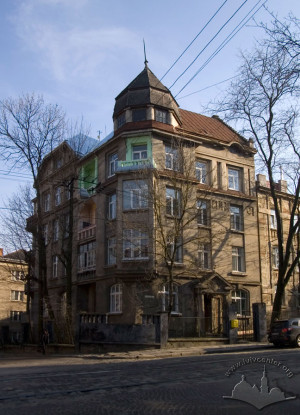
Vul. Kotliarevskoho, 15 – residential buildingA residential apartment building (1912-1913; architects I. Kendzerski and A. Opolski). This corner four-story stone building is separated from the street with a small garden in front of its façade. The building is distinguished by an impressive roof silhouette (in particular, with a high corner construction in the shape of a helmet) and a trapeze-shaped pediment. It has a V-shaped plan with diagonal location of the staircase. The inner floor plan is of a section type. This is an example of early twentieth-century Neoclassicism with modernist influences, demonstrating the adherence to the German architectural school.Read more
-
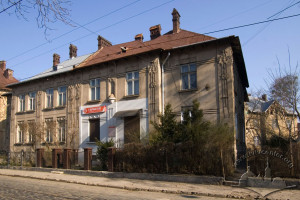
Vul. Kotliarevskoho, 16 – residential buildingA residential two-story apartment building (1904-1905) situated with a deviation from the street regulation line; together with the neighboring building no. 18 it forms a building block. The character of its facade is defined by vertical segmentation by lisens, with reliefs on them. The portal is located on the eastern façade. The layout is rectangular with projecting risalits and buttresses. There is a small closed-in yard in the middle of the building. This is an example of Secession architecture.Read more
-
Vul. Kotliarevskoho, 17 – residential buildingA residential three-story apartment building (1910-1911; architect Jozef Hornung). The plan and design mirror the forms of the adjacent building no. 19. Flowerbeds are arranged in front of the building; and a garden is set up behind, in the middle of the quarter. A portal is placed in the middle of the façade under a triangular balcony-roof; a buttress is on the right side. It is topped with a steeple with a majolica panel arranged on it. The floor layout is L-shaped. This is an example of Secession architecture.Read more
-
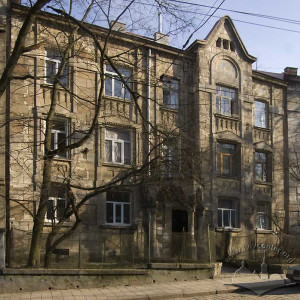
Vul. Kotliarevskoho, 18 – residential buildingA residential two-story apartment building (1904-1905; Ivan Levynskv architectural bureau) constructed with a deviation from the street regulation line; together with the neighboring house no. 16 it forms a building block. The character of facades is defined by vertical segmentation by lisens with reliefs on them. The western façade is symmetric; the entrance is located in the middle of the façade. The layout is rectangular, with projecting risalits. A small closed-in yard is situated in the middle of the building. This is an example of Secession architecture.Read more
-
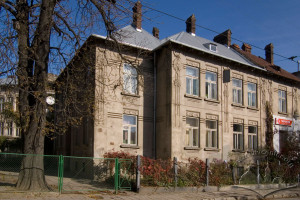
Vul. Kotliarevskoho, 19 – residential buildingA residential three-story apartment building (1910–1911; architect Jozef Hornung).Read more
-
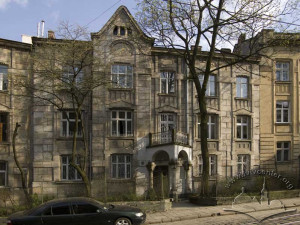
Vul. Kotliarevskoho, 20 – residential buildingThis two-story apartment building (1902, Ivan Levynsky architectural bureau [co-authored by Ivan Levynskv and Alfred Zachariewicz?]; later reconstructed) was designed freely located and surrounded by a garden and flowerbeds. The third floor was added later. The floor plan is an elongated rectangular with a narrow corner risalit built along a diagonal. Vertical segmentation prevails in the composition of the building’s facades. A cylinder block of reinforced concrete stair case projects on the rear façade. This is an example of Secession architecture.Read more
-
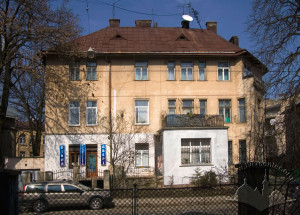
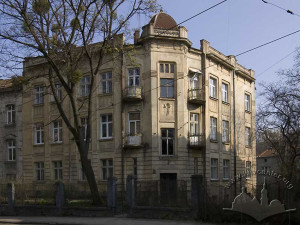
Vul. Kotliarevskoho, 21 – residential buildingThe apartment building was constructed in 1908–1909 according to the design of architect and builder Józef Hornung.Read more
-
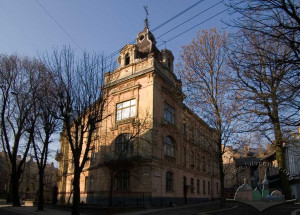
Vul. Kotliarevskoho, 22 – residential buildingThe apartment building was constructed in 1897–1898 according to a design by architect and builder Karol Boublik.Read more
-
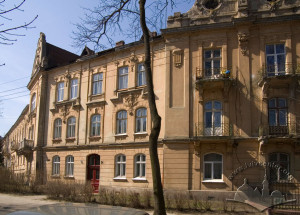
Vul. Kotliarevskoho, 24 – residential buildingThis three-story apartment building (1897-1898; architect Karol Boublik) was constructed with a deviation from the street regulation line. High Neo-Baroque attics dominate the façade. The entrance and the staircase are located in the center of the T-shaped construction plan. This building forms an integral block with the neighboring house no. 22. The two buildings have identical decoration. This is an example of late Historicist architecture (Neo-Baroque).Read more
-
Vul. Kotliarevskoho, 26-26a – residential buildingRead more
The two adjacent houses at vul. Kotliarevskoho 26 and 26a were built by Jakub Rysiak in 1905-1906. They stand out due to their floral, Secession style, stucco decoration. Both are architectural monuments of local significance.
-
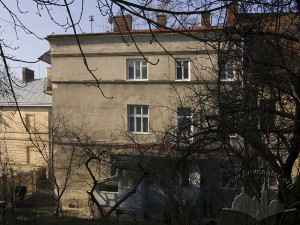
Vul. Kotliarevskoho, 31 – residential buildingA residential single-family building – a former villa (1891-1892 with later reconstructions; co-authored by Julian Zachariewicz and Ivan Levynsky). Together with the neighboring villa no. 29 the house created a group of single-family buildings which became an integral component of Kastelivka district. The house had two floors, high roof and a mansard. Later significant reconstructions turned this villa into a multi-apartment building. The arrangement of window slits on transformed facades and adjacent garden plot are the only reminders of the project of the 1890’s.Read more
-
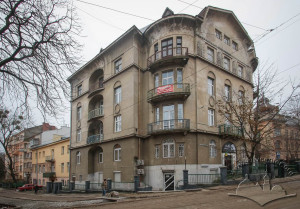
Vul. Kotliarevskoho, 37 – residential buildingThe apartment building was constructed in 1914–1916 according to a design by architect Jan Bagieński and builder Wojciech Dembiński.Read more
-
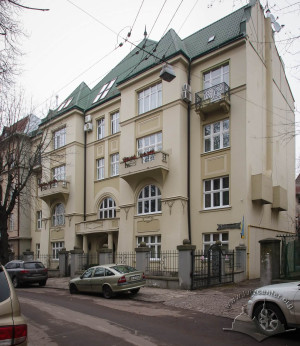
Vul. Kotliarevskoho, 37a – residential buildingThe apartment building was constructed in 1912–1913 according to a design by architect Jan Bagieśski and builder Wojciech Dembiński.Read more
-
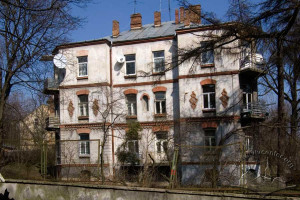
Vul. Kotliarevskoho, 4 – residential buildingA single-family building–villa (1890- 1891, co-designed by Julian Zachariewicz and Ivan Levynskyi). The building is a part of an architectural ensemble of the north-eastern section of Kastelivka district which consists entirely of villas. The building was designed as a free standing house surrounded by a garden. It has a symmetrical floor plan, a high tent-shaped roof with carved consoles was once an integral part of the building’s architecture. The villa was reconstructed in the second half of the twentieth century. The elements of authentic ceramic decor have been preserved on the facades.Read more
-
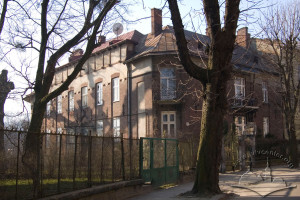
Vul. Kotliarevskoho, 41 – residential buildingA private residential building — a villa built in 1897–1898 according to a design developed by Ivan Levynsky's bureau.Read more
-
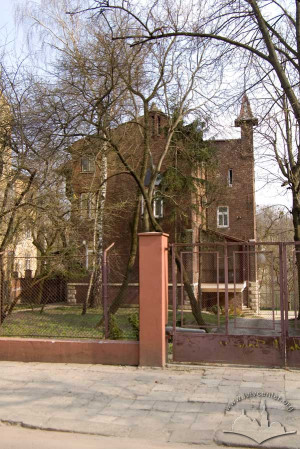
Vul. Kotliarevskoho, 47 – residential buildingThe former villa of Karol Dziadoń Dzieliński, was built in 1903-1906 by the Jan Lewiński company under a project designed by Alfred Zachariewicz. It is a bright example of Romantic architecture, it stands out by its unplastered red brick façades. It is an architectural monument of local significance no. 116.Read more
-
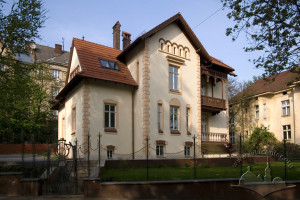
Vul. Metrolohichna, 2 – residential building (villa)A private residential building — a villa built in 1904–1905 according to a design by the architectural bureau of Józef Sosnowski and Alfred Zachariewicz.Read more
-
Vul. Nechuia-Levytskoho, 20 – residential buildingRead more
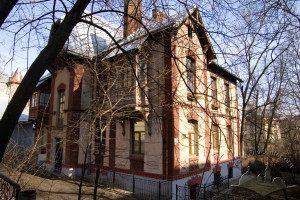
This single family villa (1890-1891; architects Julian Zachariewicz and Ivan Levynsky) is a component of the architectural ensemble of the north-eastern quarter of Kastelivka district which consisted entirely of single-family mansions. The villa has an adjacent garden plot. The internal floor layout is symmetric; the center of its structure is the central hall with an exit to loggia. In the twentieth century the villa was speared reconstruction and was therefore preserved better than the other similar Kastelivka villas. In particular, the construction of a high roof and original facade decoration such as ceramic tiles and carved details have been preserved.
-
Vul. Nechuia-Levytskoho, 15 – residential buildingRead more
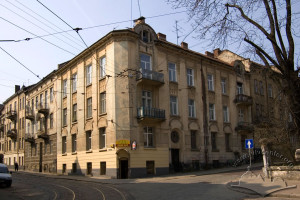
The apartment building was constructed in 1906–1907 according to a design by architect Alfred Zacharewicz (design bureau of the construction company of Józef Sosnowski and Alfred Zacharewicz). It was built in the Secession style for engineer Jan Lopushansky. For some time, Lopushansky's friend Maximilian Huber, a well-known mechanical engineer and rector of Lviv Polytechnic, lived in the building. In later years, the building was significantly rebuilt.
-
Vul. Nechuia-Levytskoho, 17-19 – residential buildingRead more
These two adjacent mirror-like houses were built by Jakub Rysiak in 1906−1907. Both feature the Secession style expressed in the distinctive stucco decoration and in the paintings with poppy motifs. The buildings are included in the Register of architectural monuments of local significance.
-
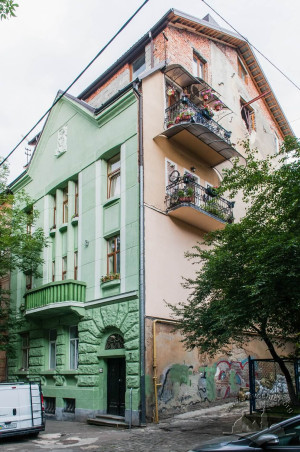
Vul. Zdorovia, 7 – residential buildingThis small three-story apartment building (1910-1911; Ivan Levynsky architectural bureau, co-designed by Ivan Levynsky, Witold Minkiewicz and/or Wladyslaw Derdacki?) has a narrow façade crowned with a triangular steeple decorated with relief of putti. The floor plan is rectangular, with a projection of risalit on the rear side. The entrance gate and the staircase are shifted to the right side. The building used to belong to architect Ivan Levynsky and later his inheritors. This is an example of the early twentieth-century Neoclassicism.Read more
-
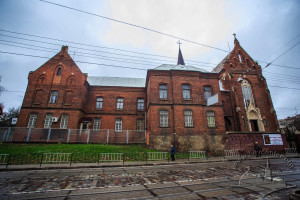
Vul. Henerala Chuprynky, 70 – former monastery of the Discalced CarmelitesThe Discalced Carmelite monastery building (1895) was designed as part of a complex alongside the Church of St. Mary of the Perpetual Assistance and St. Joseph. Architect: Franz Statz. The monastery structure consists of four wings enclosing an inner courtyard; its layout is nearly square. Inside, corridors run along the perimeter, flanked by rows of rooms. The façades, clad in profiled facing brick, feature Neogothic motifs.Read more
-
Vul. Henerala Chuprynky, 70 – the former chaplain's house at the Carmelite conventRead more
The chaplain's residence at the Discalced Carmelite Church (1893–1895). Architect: Franz Statz. This small building — a single-story structure with a half-story situated within a high raised basement — was part of the monastic ensemble. The floor plan is rectangular in configuration, featuring a projecting avant-corps facing the inner courtyard. The façades, clad in facing brick, are adorned with blind Neogothic arches and gables.
-
Vul. Henerala Chuprynky, 23 – residential building (no longer exists)Read more
This private residence was constructed between 1892 and 1893. It was one of the buildings in the Kastelivka neighborhood that has not survived to the present day. The villa was designed by engineer Przetocki. A two-story structure and an example of Late Historicism, it was built as a freestanding residence on a lot near the intersection of what are now Henerala Chuprynky and Kotliarevskoho streets. The building was demolished in the 1970s to accommodate the expansion of the tram line.
-
Vul. Verbytskoho, 4 – residential building (former villa)Read more
The former villa of architect Ludwik Baldwin-Ramułt, built under his own design in 1890, is one of typical examples of Lviv’s Neo-Gothic architecture with some picturesque style elements. The building is an architectural monument of local significance (protection number 74). Today, the ground floor and the second floor are occupied by residential apartments while there are cellars as well as a beauty salon and a tattoo parlor on the basement floor.
-
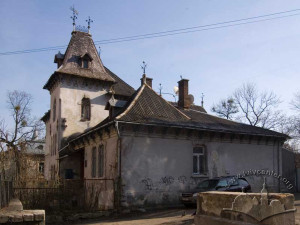
Vul. Verbytskoho, 6 – bank building (former residential building))Read moreDetached residential house – villa (1895-1896). Designed by architect Stanisław Choloniewski. A detached building surrounded by a garden. Two-storey, with an attic and a basement. Rectangular in horizontal projection. The main rectangular perimeter is protruded by a semi-cylindrical tower with a conical roof, and a terrace on the garden side. The design of the facades and high roof with dormers is traditional for French Neo-Renaissance architecture.
-
Vul. Henerala Chuprynky, 29 – residential buildingRead more
This private residence was constructed between 1900 and 1901, based on a design developed within Ivan Levynskyi's bureau. A modest one-story residence featuring a raised basement and an attic, the home is surrounded on three sides by lush flowerbeds and a garden. A firewall connects the structure to the end wall of building No. 31. The layout of the plan has a shape close to a square. The design of the cornices and small canopy incorporates wooden detailing inspired by the architectural traditions of the Alpine region.
-
Vul. Henerala Chuprynky, 56 – residential buildingRead more
This apartment building was constructed between 1909 and 1910. The design was developed by architect Jan Bagieński and master builder Wojciech Dembiński. A three-story townhouse is integrated into the block's perimeter development and features a symmetrical façade aligned with the property line. The structure is topped by two Neogothic gables, between which sits a balustrade featuring tracery. The internal axis of symmetry is defined by the entryways and the stairwell, with apartments arranged symmetrically on either side. An avant-corps projecting from the courtyard side gives the floor plan a T-shaped configuration. It is a prime example of Late Historicist architecture.
-
Vul. Henerala Chuprynky, 68 – residential buildingRead more
This multi-unit apartment building was constructed between 1913 and 1916. The design was developed by architect Jan Bagieński and master builder Roman Żurowski. The massive corner townhouse features three stories and a mansard. Its layout is nearly square in configuration. The architectural composition is characterized by a blend of regularity and asymmetry (featuring diverse window shapes and an irregular silhouette of the gables and roof). The internal layout is based on the principle of a free and flexible arrangement of rooms. The building can be classified as an example of early Modernist architecture.
-
Vul. Henerala Chuprynky, 72 – office building (formerly residential)Read more
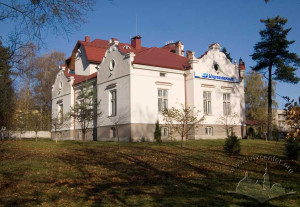
This former private residence was constructed between 1903 and 1904 based on a design by Gustav Bisanz. A single-story villa was built on a garden plot as a detached structure. The floor plan is rectangular, with the interior rooms arranged in three parallel bays oriented to present-day vul. Henerala Chuprynky. The façade is articulated by projecting wall sections topped with pediments, which feature small round attic windows and volutes. The architectural composition is notably static, with modest decorative detailing that leans toward Neorenaissance forms.
-
Vul. Bohuna, 3 – residential buildingThe apartment building was constructed in 1898–1899 according to a design by architect August Bogochwalski. The three-story stone building is part of the perimeter development of the neighborhood and has a symmetrical facade. The main part of the building is a front block with two rows of rooms inside, and there's a prismatic avant-corps on the courtyard side. The building is T-shaped, with the entrance hall and staircase as the axis of symmetry. The building occupies the end of an elongated plot that crosses the block. On the opposite side is its "twin" building, No. 21 on Nechuya-Levytskoho Street. The stucco decoration features neo-baroque forms. In later years, the building was significantly rebuilt.Read more
-
Vul. Henerala Chuprynky, 17 – residential buildingThis private residence was constructed between 1892 and 1893, based on a design by builder Kazimierz Teodorowicz from the design bureau of the architect and builder Ivan Levynskyi. A detached structure, it is surrounded along its perimeter by a belt of gardens and flowerbeds. Originally designed at the end of the nineteenth century as a modest cottage with a veranda, the building underwent a significant remodeling in 1923–1924. This reconstruction added new avant-corps to the northern end and expanded the upper floor and the attic beneath a pyramidal roof. Through these changes, the house was transformed into a spacious villa featuring a large hall, redesigned in the Art Deco style.Read more
-
Vul. Henerala Chuprynky, 70 – church of St. Clement (former Church of St. Mary of the Perpetual Assistance and St. Joseph)Read more
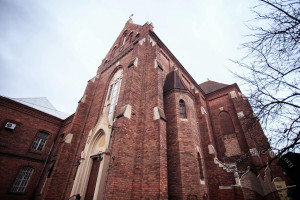
The former Church of St. Mary of the Perpetual Assistance and St. Joseph — now the Church of St. Clement (1895). Architects: Franz Statz, Tadeusz Münnich, and others. It originally belonged to the Order of Discalced Carmelite nuns. The church is a single-nave structure featuring a transept and a polygonal apse oriented to the north. The south façade is composed of a portal and a pointed-arch window with tracery, topped by a triangular gable. Buttresses line the perimeter of the red-brick façades, and the building is covered by a gable roof. The monastery wing is attached to the west side, while a bell tower stands in the corner between the transept and the choir wall. Architectural style: Neogothic. Today, the church functions as a parish of the Ukrainian Greek Catholic Church (UGCC).
-
Vul. Henerala Chuprynky, 33 – medical institution building (formerly residential)Read more
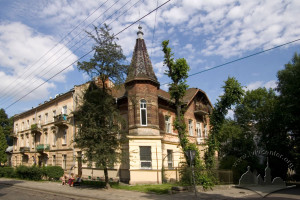
This private residence was constructed between 1897 and 1898, based on a design by the architect and builder Michał Kovalchuk. It is a two-story corner building with an L-shaped plan, set back from the street by front flowerbeds and a fence. The entryway and stairwell are located in the northern section of the building, positioned against the firewall shared with building No. 31. The silhouette of the facades is defined by a striking corner turret topped with a spire. The exterior finish features exposed polychrome brickwork and carved wooden consoles supporting canopies, while the decorative plasterwork incorporates Neobaroque motifs.
-
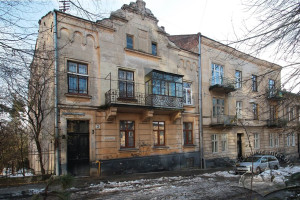
Vul. Kotliarevskoho, 3 – residential buildingRead moreThe apartment building was constructed in 1904–1905 according to a design by architect and builder August Bogochwalski. The small two-story stone building was built on sloping terrain, with the facade oriented along the regulatory line. In the center, there is a balcony and a pediment finished with a decorative gable, and on the left side, there is a portal. The L-shaped building consists of the main front block and a wing on the courtyard side. The staircase is circular. Style: Secession. In later years, the building was significantly rebuilt.
-
Vul. Henerala Chuprynky, 25 – residential buildingRead more
This multi-unit apartment building was constructed between 1896 and 1897 based on a design by architect Wiktor Mostowski. A small two-story structure, it is separated from the street by a front garden strip and stands adjacent to building No. 27. The symmetrical composition of the main façade, characterized by horizontal articulation, reflects Neorenaissance influences. The first floor is rusticated, with the entrance gate positioned in the center. The floor plan is L-shaped, featuring a frontal block with a wing extending toward the inner garden.
-
Vul. Henerala Chuprynky, 31 – residential buildingRead more
This multi-unit apartment building was constructed between 1897 and 1898, based on a design produced in Ivan Levynskyi's bureau. Originally a two-story house, its left wing and upper floor were added during later expansions. The façade's composition, with its horizontal articulation, possesses a static, balanced character. The L-shaped structure is separated from the street by a flowerbed strip and consists of a frontal block and a wing. Its modest decorative detailing reflects characteristic Neorenaissance influences.
-
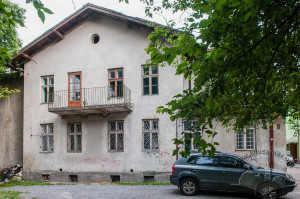
Vul. Zdorovia, 9 – former "Zdorovia" FactoryThe small building of former “Zdorovia” factory of mineral waters and soft drinks (the 1900’s-early 1910’s; the main reconstruction was completed in 1909-1910; today's address Zdorovia 9) is located in the depth of the parcel. The two-story house is rectangular in its floor layout, with a projection of a risalit on the left side. A machinery hall and administration premises were located on the first floor; a chemical laboratory was on the second floor. Presently the building is used for administrative purposes (2009).Read more
-
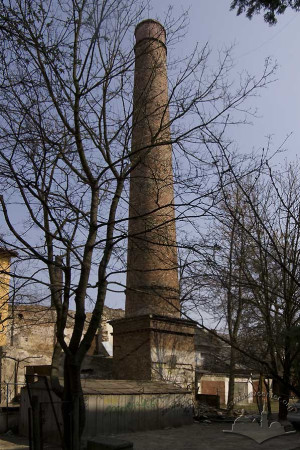
Vul. Henerala Chuprynky, 58a – steam engine smokestackRead more
The steam engine smokestack of the Levynskyi factory was constructed between 1897 and 1898; it was designed by the bureau of Ivan Levynskyi, the owner of the renowned building materials factory. It is the sole surviving fragment of its western wing, which housed the joinery and carpentry workshops. An engine room was established in the center of the building, featuring a steam engine that powered a large mechanical saw. The smokestack is a valuable landmark of late-nineteenth-century industrial architecture.
-
Vul. Bohuna, 8 – residential buildingThe apartment building was constructed in 1910–1911. The co-authors of the project were architect Jan Bageński and builder Wojciech Dembiński. It is a three-story cornerstone building. The prismatic structure, topped with a high roof, has a cut corner. The facades, separated from the sidewalks by flower beds and fences, feature elongated double and triple windows. The rectangular outline of the plan is enlivened by protruding walls. The axis of the internal composition is the staircase block. The stylistic “costume” features modernized forms of medieval architecture. In later years, the building was significantly rebuilt.Read more
-
Vul. Bohuna, 9 – residential buildingThe apartment building was constructed in 1909–1910 according to a design by architect Karol Turkowski. The building belongs to the post-Secessionist architectural style and is distinguished by its simple composition and modest decorative finish. The building has a rectangular floor plan and is located between two corner buildings with an L-shaped floor plan. In horizontal projection, the plane of the facade follows the regulatory line of the block, and the staircase fixes the axis of central symmetry. Parallel to the facade wall are two rows of rooms separated by corridors. In later years, the building was significantly rebuilt.Read more
-
Vul. Henerala Chuprynky, 15 – residential buildingRead more
This multi-unit apartment building was constructed between 1910 and 1912, likely based on a design by architect Bronisław Bauer. It is a three-story townhouse featuring a raised basement level. Built with a setback from the regulatory building line, it forms a cohesive architectural group with the adjacent building at No. 11a. The primary L-shaped structure, featuring two façades and a corner bay window, is set back into the lot; together with a shoulder of an inner wing, it creates a U-shaped floor plan. The townhouse includes two entrances and two separate stairwells. The façades are articulated by protruded wall sections — which support the balconies — and a prominent cornice positioned above the first floor. Architecturally, the building serves as an example of Late Historicism, with various Neoclassical elements featured in its decor. In later years, the apartment house underwent significant reconstruction.
-
Vul. Henerala Chuprynky, 51 – residential buildingThis multi-unit apartment building was constructed between 1936 and 1937 based on a design by Henryk Sandig. It is a four-story townhouse designed in the Functionalist style. The main façade, characterized by a composition of rectangular forms, is set back from the property line. Its surface features rows of paired windows, strings of cornices with a corrugated texture, and an entrance portal shifted to the left. Facing the courtyard, a central avant-corps features a vertical ribbon of stairwell windows flanked by balconies. The building block, framed by two firewalls, has a rectangular layout divided crosswise by the axes of the entryways, the stairwell, and the internal apartment corridors.Read more
-
Vul. Henerala Chuprynky, 58a – residential building (formerly factory building)Read more
The eastern wing of the Levynskyi factory was constructed between 1885 and 1886 based on a design developed by Ivan Levynskyi's bureau. Throughout the 1880s and 1890s, the building was continuously expanded and modified. By the late 1890s, it occupied the eastern portion of the factory grounds. Following several renovations, it was transformed from a small utility structure into a two-story, L-shaped building that served both residential and administrative functions: the factory owner, I. Levynskyi, resided here, and the building also housed his firm's office. Today, the factory's former eastern wing serves as a multi-unit apartment building.
-
Vul. Henerala Chuprynky, 58a – residential building (formerly factory building)Read more
The central building of the Levynskyi factory, housing ceramic workshop, was constructed in 1888 based on a design from Ivan Levynskyi's firm. Between 1889 and 1900, it underwent numerous renovations. Situated at the heart of the factory complex, the two-story building features a façade of unplastered brick topped by a triangular pediment. The layout takes the shape of an elongated rectangle oriented perpendicularly to vul. Henerala Chuprynky. During Levynskyi's era, the building housed powerful ceramic kilns. Today, it is occupied by various commercial and utility entities.
-
Vul. Henerala Chuprynky, 58a – residential building (formerly factory building)Read more
The northern wing of the Levynskyi factory housed blacksmith and locksmith workshops, as well as the production department for artificial stone, gypsum, and certain types of ceramics. It was constructed between 1891 and 1892 based on a design by Ivan Levynskyi's bureau. Between 1897 and 1912, the structure underwent multiple renovations. In the early 1910s, the building, situated deep within the block, took on the floor plan of an elongated rectangle with its axis oriented along vul. Zdorovia. Only the end section of the building has survived to the present day, and it currently functions as a multi-unit residential building.
-
Vul. Henerala Chuprynky, 58a – former factory buildingRead more
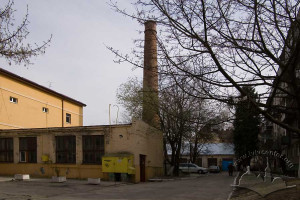
The western wing of the Levynskyi factory housed the woodworking workshops. It was constructed between 1892 and 1893 based on a design by Ivan Levynskyi's bureau. Between 1897 and 1912, the structure underwent multiple renovations. It has not survived to the present day. The production wing was situated deep within the block, closer to the corner of what are now Yefremova and Kuka streets. In the early 1910s, it featured a U-shaped floor plan and contained joinery and carpentry workshops equipped with a large array of machinery. The wing was demolished in the 1970s.
-
Vul. Henerala Chuprynky, 58b – bank building (formerly factory building)Read more
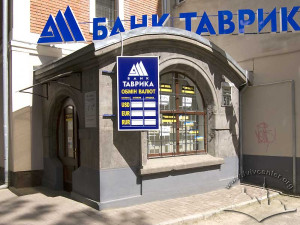
The former gatehouse of the Levynskyi factory was constructed in 1908 based on a design developed by Ivan Levynskyi's bureau. The small, single-story building is situated at the main entrance to the former factory complex (from the side of ul. Krzyżowa (now vul. Henerala Chuprynky). Rectangular in its floor plan and constructed of artificial stone, the detailing of its window openings displays characteristics of the Secession style. Today, the building houses a bank office.
-
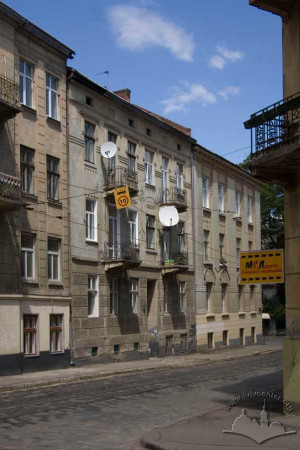
Vul. Kotliarevskoho, 8 – residential buildingThe apartment building was constructed in 1909–1910 according to a design by architect Karol Turkowski. The stone building, whose L-shaped structure is part of the dense perimeter development of the neighborhood, was built on a corner lot stretching along Bohuna Street. It has three floors and a half floor in the basement. The facades feature rows of rectangular windows without decorative trim. The stairwell, oriented parallel to Bohuna Street, borders a narrow strip of the inner courtyard. The layout of the rooms in the apartments is based on the two-wing principle, traditional for a tenement (income-generating) building. The building can be classified as a modest example of residential construction from around 1910. In later years, the building was significantly rebuilt.Read more
-
Vul. Horbachevskoho, 18 – university buildingRead more
This was the first student dormitory in Lviv, built in 1894-1895 as an example of a grassroots initiative, a common cause of many people, especially the Society of Fraternal Aid organized by the Polytechnic students. Its detailed history illustrates the process of building a house in the city in the late 19th century. Now the lecture-rooms of the Institute of Entrepreneurship and Advanced Technologies of the Lviv Polytechnic National University are located there.
-
Vul. Henerala Chuprynky, 1 – school buildingRead more
The St. Mary Magdalene City School building was constructed between 1928 and 1930, based on a design by the City Council's architectural bureau and architect Tadeusz Pisiewicz. The structure was built as an extension to the school's older building, today located at vul. Bandery 11. The new three-story building features a V-shaped configuration at the base of its plan. A portal is nestled within the recessed angle between the two wings, topped by a trihedral canopy with a terrace. On the courtyard side, the building features a triangular stairwell. The interior layout consists of corridors running through the wings, with classrooms arranged along one side in a single-row configuration. An additional two-story block, which houses the gymnasium, was attached to the end of the right wing. The façades are defined by horizontal cornices and rows of rectangular windows. The sharp, "crystal-like" silhouette of the attic and the specific geometry of the corner terrace supports reflect the clear influence of the Art Deco style. In later years, the building underwent significant reconstruction.
-
Vul. Henerala Chuprynky, 4 – residential buildingRead more
This multi-unit apartment building was constructed between 1911 and 1912, based on a collaborative design by architects Ignacy Kędzierski and Adam Opolski. The structure is a four-story townhouse topped by a tall pyramidal roof. It was designed as a component of dense perimeter development on a lot shaped like an irregular pentagon. The façade features a centrally positioned bay window, flanked on the right by balconies. The entrance portal and entryway — connected at an angle to an oval stairwell — are located along the right firewall. The building's layout consists of a frontal block containing a row of living quarters with a central corridor and kitchen, and a rear service wing extending from the left side into the inner courtyard. Architecturally, the building represents early twentieth-century Neoclassicism blended with Late Secession forms. In later years, the apartment house underwent significant reconstruction.
-
Vul. Henerala Chuprynky, 36 – residential buildingRead more
This multi-unit apartment building was constructed in the second half of the 1890s. A three-story corner structure located at the intersection with vul. Kyivska. It features two street-facing façades and is integrated into the continuous perimeter development of the block. The L-shaped building features a chamfered corner, which hosts a balcony set at a 45-degree angle. The façade composition is static in character, dominated by horizontal articulation. The lateral sections of the façades are emphasized by protruded wall sections, and the first floor is rusticated. The decorative program incorporates Neorenaissance motifs. The main entrance is located on vul. Henerala Chuprynky, positioned at the center of the façade. The stairwell is adjacent to the corner of the inner courtyard, which is encircled by gallery balconies . This building represents a typical mid-sized tenement of the late nineteenth century, featuring a ground floor adapted for retail shops.
-
Vul. Henerala Chuprynky, 45 – hospital building (formerly school)Read more
The former Queen Jadwiga Gymnasium for Girls was constructed around 1930. This four-story building, which includes a basement level, is situated on an expansive plot bounded by Henerala Chuprynky, Zakharevycha, and Kotliarevskoho streets, occupying a significant portion of the city block. TThe architectural design featured simple prismatic forms in an L-shaped building set back from the front of the lot, with rows of rectangular windows on the unadorned façades. A horizontal string course separates the lower floor from the upper stories along the entire perimeter. The corner where Henerala Chuprynky and Zakharevycha streets meet is accented by an avant-corps. The eastern wing, which is finished with another avant-corps, was extended toward vul. Levynskoho during an expansion in the early 1960s. The interior layout follows a traditional educational scheme: corridors run the length of the wings, separating two rows of internal rooms. Today, the building serves as a hospital.
-
Vul. Henerala Chuprynky, 55 – villa (no longer exists)Read more
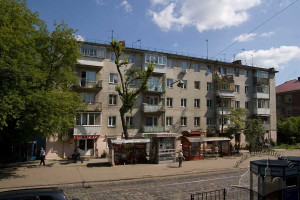
This former private residence was constructed between 1901 and 1902 based on a design from Ivan Levynskyi's firm. In archival documents, it appears under the name "Villa Romana" (named after its owner, Professor Roman Zalozetskyi) and occupies a plot at the corner of what is now vul. Horbachevskoho. It was originally designed as a two-story detached building. Its hallmark features included asymmetrical projecting avant-corps, a picturesque roofline, and an open floor plan. As a result of a 1906–1907 renovation, folk-building motifs, stylized according to the formative principles of the Secession style, were introduced to the villa's architecture. Villa Romana is one of the architectural landmarks of Kastelivka that has not survived to the present day.
-
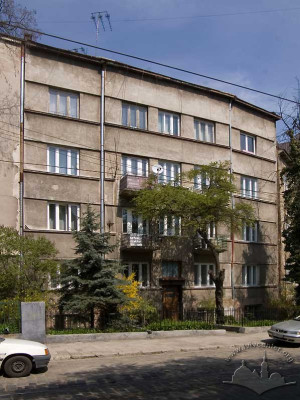
Vul. Kotliarevskoho, 14 – residential buildingThe apartment building was constructed in the mid-1930s.Read more
-
Vul. Bohuna, 6 – residential buildingThe apartment building was constructed in 1910–1911. The co-authors of the project were architect Jan Bageński and builder Wojciech Dembiński. It is a four-story stone building with a basement and an attic floor under a high roof. It has an L-shaped layout with an elongated wing, the broken arm of which surrounds the inner courtyard. It is part of the perimeter development. The facade features narrow two- and three-section windows and an avant-corps, complemented by asymmetrically placed balconies, with the entrance gate shifted to the right and a high triangular pediment. The axis of the planning structure is the stairwell in the center of the building. The style of massive forms is defined by modernized motifs of medieval architecture. In later years, the building was significantly rebuilt.Read more
-
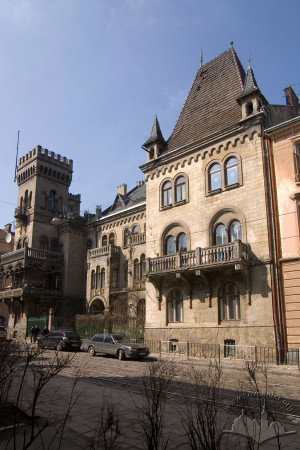
Vul. Henerala Chuprynky, 50–52 – residential buildingThis residential building was constructed in 1901 based on a design by architect Józef Sosnowski; in 1922, it was reconstructed as an apartment building by architect K. Piątkowski. Its stylistic character is Late Historicism. It is a corner building, serving as a prominent accent within the streetscape. The exterior design makes extensive use of Neogothic and Neoromanesque elements. A sculpture of a lion is positioned in front of the entrance.Read more
-
Vul. Konovaltsia, 16 – villaRead more
This single-story villa was built in 1901–1902 according to a project designed by Emanuel Jarymowicz, who was then working for Ivan Levynsky's company. It is an example of the picturesque style in architecture. The clients were Józef Petry, a forest inspector, and his wife Felicja. The villa is an architectural monument of local significance.
-
Vul. Bohuna, 5 – residential building
-
Vul. Bohuna, 7 – residential building
-
Vul. Henerala Chuprynky, 11a – residential building
-
Vul. Henerala Chuprynky, 7 – residential building
-
Vul. Henerala Chuprynky, 9 – residential building
-
Vul. Kotliarevskoho, 23 – residential building
-
Vul. Kotliarevskoho, 25 – residential building
-
Vul. Kotliarevskoho, 67 – residential building
-
Vul. Metrolohichna, 3 – residential building
-
Vul. Nechuia-Levytskoho, 23 – residential building
-
Vul. Bandery, 11 – School building
-
Vul. Henerala Chuprynky, 5 – office building (former villa)
-
Vul. Henerala Chuprynky, 19 – residential building
-
Vul. Henerala Chuprynky, 6 – residential building
-
Vul. Henerala Chuprynky, 11 – bank building (former villa)
-
Vul. Henerala Chuprynky, 21 – Shevchenko Scientific Society building
-
Vul. Henerala Chuprynky, 27 – residential building
-
Vul. Henerala Chuprynky, 47 – residential building
-
Vul. Henerala Chuprynky, 49 – Lviv National Franko University building
-
Vul. Henerala Chuprynky, 48 – hospital building
-
Vul. Henerala Chuprynky, 60 – residential building
-
Vul. Kolberga, 4 – residential building
-
Vul. Kolberga, 6 – residential building
-
Vul. Kolberga, 8 – residential building
-
Vul. Kotliarevskoho, 15 – residential building
-
Vul. Kotliarevskoho, 16 – residential building
-
Vul. Kotliarevskoho, 17 – residential building
-
Vul. Kotliarevskoho, 18 – residential building
-
Vul. Kotliarevskoho, 19 – residential building
-
Vul. Kotliarevskoho, 20 – residential building
-
Vul. Kotliarevskoho, 21 – residential building
-
Vul. Kotliarevskoho, 22 – residential building
-
Vul. Kotliarevskoho, 24 – residential building
-
Vul. Kotliarevskoho, 26-26a – residential building
-
Vul. Kotliarevskoho, 31 – residential building
-
Vul. Kotliarevskoho, 37 – residential building
-
Vul. Kotliarevskoho, 37a – residential building
-
Vul. Kotliarevskoho, 4 – residential building
-
Vul. Kotliarevskoho, 41 – residential building
-
Vul. Kotliarevskoho, 47 – residential building
-
Vul. Metrolohichna, 2 – residential building (villa)
-
Vul. Nechuia-Levytskoho, 20 – residential building
-
Vul. Nechuia-Levytskoho, 15 – residential building
-
Vul. Nechuia-Levytskoho, 17-19 – residential building
-
Vul. Zdorovia, 7 – residential building
-
Vul. Henerala Chuprynky, 70 – former monastery of the Discalced Carmelites
-
Vul. Henerala Chuprynky, 70 – the former chaplain's house at the Carmelite convent

-
Vul. Henerala Chuprynky, 23 – residential building (no longer exists)
-
Vul. Verbytskoho, 4 – residential building (former villa)
-
Vul. Verbytskoho, 6 – bank building (former residential building))
-
Vul. Henerala Chuprynky, 29 – residential building
-
Vul. Henerala Chuprynky, 56 – residential building
-
Vul. Henerala Chuprynky, 68 – residential building
-
Vul. Henerala Chuprynky, 72 – office building (formerly residential)
-
Vul. Bohuna, 3 – residential building
-
Vul. Henerala Chuprynky, 17 – residential building
-
Vul. Henerala Chuprynky, 70 – church of St. Clement (former Church of St. Mary of the Perpetual Assistance and St. Joseph)
-
Vul. Henerala Chuprynky, 33 – medical institution building (formerly residential)
-
Vul. Kotliarevskoho, 3 – residential building
-
Vul. Henerala Chuprynky, 25 – residential building
-
Vul. Henerala Chuprynky, 31 – residential building
-
Vul. Zdorovia, 9 – former "Zdorovia" Factory
-
Vul. Henerala Chuprynky, 58a – steam engine smokestack
-
Vul. Bohuna, 8 – residential building
-
Vul. Bohuna, 9 – residential building
-
Vul. Henerala Chuprynky, 15 – residential building
-
Vul. Henerala Chuprynky, 51 – residential building
-
Vul. Henerala Chuprynky, 58a – residential building (formerly factory building)
-
Vul. Henerala Chuprynky, 58a – residential building (formerly factory building)
-
Vul. Henerala Chuprynky, 58a – residential building (formerly factory building)
-
Vul. Henerala Chuprynky, 58a – former factory building
-
Vul. Henerala Chuprynky, 58b – bank building (formerly factory building)
-
Vul. Kotliarevskoho, 8 – residential building
-
Vul. Horbachevskoho, 18 – university building
-
Vul. Henerala Chuprynky, 1 – school building
-
Vul. Henerala Chuprynky, 4 – residential building
-
Vul. Henerala Chuprynky, 36 – residential building
-
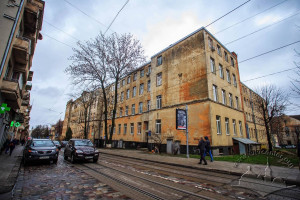
Vul. Henerala Chuprynky, 45 – hospital building (formerly school)
-
Vul. Henerala Chuprynky, 55 – villa (no longer exists)
-
Vul. Kotliarevskoho, 14 – residential building
-
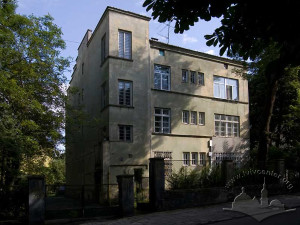
Vul. Kotliarevskoho, 55 – residential building
-
Vul. Bohuna, 6 – residential building
-
Vul. Henerala Chuprynky, 50–52 – residential building
-
Vul. Konovaltsia, 16 – villa
Author(s): Ihor Zhuk