Luna Amalia Drexler/Drexlerówna ID: 88

Luna Amalia Drexler/Drexlerówna ID: 88
1882–1933
Sculptor, artist, social activist.
Luna Amalia Drexler/Drexlerówna was born on November 19, 1882, to Ignacy Drexler and Eugenia Smunta. Her brother, Ignacy Drexler, was a renowned architect and urban planner in Lviv.
She acquired her first artistic skills in Lviv. Beginning in 1899, she took painting lessons from Stanisław Reichan (Rejchan) and Stanisław Kaczor-Batowski, while also learning carving from Antoni Sulima-Popiel at Marceli Harasimowicz's art school in Lviv. Simultaneously, from 1899 to 1902, she studied drawing in the women's workshops at the Imperial-Royal State Industrial School in Lviv (C.K. Państwowa Szkoła Przemysłowa we Lwowie). In the spring of 1907, Luna Drexler left for Paris, where she studied sculpture at the Académie de la Grande Chaumière under Émile Antoine Bourdelle and Jean-Antoine Injalbert. During this period, she was fascinated by the sculptures of François-Auguste-René Rodin, studying his works in person.
In 1908, she returned to Lviv and took over the former studio of Lviv sculptor Tadeusz Barącz, who had died in 1905. That same year, the Society of Friends of Fine Arts (Towarzystwo Przyjaciół Sztuk Pięknych) organized the young sculptor's first solo exhibition, where Drexler displayed more than 20 works.
In 1909, Luna Drexler returned to Paris, where she worked for a time in Bourdelle's studio. She then lived briefly in Rome, attending classes at the Medici Academy. Beginning in 1910, she continued her studies at the Munich Academy of Fine Arts. While studying at the academy in Munich, she became close friends with the philosopher, playwright, sculptor, and architect Rudolf Steiner, who would go on to found the Anthroposophical Society in 1913 in Dornach near Basel. Steiner's philosophy profoundly influenced Luna Drexler's worldview and, consequently, her creative work. Together with other artists, she designed the interiors for the Anthroposophical Society's first building — the Goetheanum in Dornach. After returning to Lviv in 1917, she founded the Polish Anthroposophical Society.
While living abroad, she maintained constant contact with the artistic community of Eastern Galicia and regularly participated in art exhibitions in Lviv. From 1911 to 1914, she collaborated with Oleksandr Levytskyi's faience factory in the village of Pacyków near Stanisławów (now Pidlisia in Ivano-Frankivsk Oblast). As a result of this collaboration, small porcelain and faience sculptures appeared in Luna Drexler's body of work.
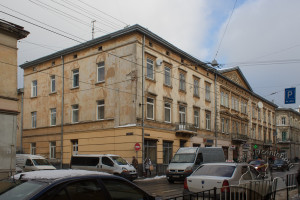
In Lviv, she initially resided in an apartment building at ul. św. Zofii, 30 (now vul. Ivana Franka, 114), later moving to ul. Pułaskiego, 14 (now vul. Parkova, 14), where she lived until the end of her life.
Luna Drexler's artistic legacy consists of two hundred sculptures and several dozen paintings. Her sculptural body of work includes plaques and other small-scale pieces, reliefs, and numerous free-standing sculptures — psychological portraits, genre and religious compositions, often symbolic, with philosophical or anthroposophical undertones.
Until the early 1910s, she favored the aesthetics of Art Nouveau, Symbolism, and Impressionism in her work. Working in both sculpture and painting, Luna Drexler sought to unite these two art forms in her creations. Her sculptures are characterized by softly modeled surfaces, giving her works an almost painterly quality. She enjoyed tinting plaster to achieve the desired color and even used oil paints to create polychromatic effects, adding an additional aesthetic impact.
Beginning in the 1910s, she gradually moved away from Impressionism and Art Nouveau, becoming fascinated by French medieval and ancient Greek sculpture, as well as the art of Egypt and Assyria, often employing an archaic style in her works. Influenced by Rudolf Steiner's ideas about the manifestation of the spiritual principle in human beings and its artistic reflection in art, this became the central theme of her creative work.
In addition to sculpture and painting, Luna Drexler experimented with printmaking, particularly etching.
Drexler combined her creative work with social activism. She was one of the founders of the Union of Polish Women Artists (Związek Artystek Polskich) and a regular exhibitor at its shows; a founding member of the Sculpture Association; a member of the board of the Union of Polish Artists; a member of the Art Council for Eastern Lesser Poland; and a member of the Lviv City Council responsible for arts issues. Six of her solo exhibitions were held in Lviv.
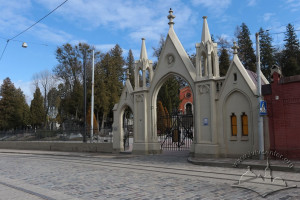
Luna Drexler died on November 5, 1933, in Lviv at the age of 50. She was buried in Section 48 of the Lychakiv Cemetery, near the Orliata Chapel, in the area dedicated to the Polish defenders of Lviv. One of her 1927 reliefs, Consecration, which depicts a flying angel holding a cross and seven roses, was used for her tombstone. After her death, this relief was cast in bronze and installed within a black marble frame on her grave.
Works and projects
Sculpture
1905 — 1)
Bust of a girl (Lost in Thought). Toned plaster. Lviv Art Gallery; 2) Orphan.
Bronze. National Museum in Warsaw.
1906 — Portrait of an elderly French woman.
1907 — 1) Rest (Lady in a Hat). Toned
plaster. Lviv Art Gallery; 2) Female bust. Toned plaster. Lviv Art Gallery; 3) Rest.
Patinated plaster. Lviv Art Gallery.
c. 1907 — 1) Bust of a boy; 2) Portrait of the artist Elia
Mondrakovska; 3) Marusia.
1908 — 1) The Blue Boy. Toned plaster. Lviv Art
Gallery; 2) Woman in an Armchair. Patinated plaster. Lviv Art Gallery.
c. 1908 — 1) Girl with a Doll. Plaster. Lviv Art
Gallery; 2) singer Aleksander Sas-Bandrowski. National Museum in Kraków; 3)
figurines in porcelain or faience: Kimono, Sisters, Rosalina, Rococo.
c. 1909 — 1) sculptural miniatures in plaster and wax: Mother,
Hamlet Study,Lady in an Armchair; 2) bust of Priest Bokanovskyi.
Tinted plaster. Lviv Art Gallery.
1910 — A bust of a Black girl, Yolanta, was created in
Rome (according to the inscription) while the artist was studying at the Medici
Academy. It was exhibited during the interwar period in Lviv under the title Mulatka
and has an unusual history. Family lore holds that the Black girl was adopted
by Felix Shchasnyi Selskyi — a well-known socialist activist in Vienna and
Lviv, a world-class gynecologist, and the uncle of artist Roman Selskyi. No
documents regarding Yolanta have survived in the Selskyi family archive. The
collection contains several photographs confirming her close ties to and
membership in the Selskyi family — some likely originating from their family estate
in Sokál. After returning from her studies in Paris, Rome, and Munich, Luna
Drexler settled at ul. Pułaskiego, 14 (now vul. Parkova) in Lviv, while the
Selskyi family lived at number 5 on the same street.
1910 — 1) Mascaron. National Museum in Kraków;
2) busts of Fryderyk Chopin and Stanisław Moniuszko for the concert hall of the
Galician Music Society; 3) Lady in Fox Fur (In the Bed). Toned
plaster. Lviv Art Gallery.
c. 1910 — 1) bust of Y. Bokanovskyi. Toned plaster. Lviv Art
Gallery; 2) Largo. Toned plaster. Lviv Art Gallery.
c. 1910–1913 — Psyche (Self-Knowledge). Tinted
plaster. Lviv Art Gallery.
c. 1911 — Homo sapiens. Bronze. Lviv Art Gallery.
1911–1913 — Woman in Black Stockings. Pacykowski
faience. National Museum in Warsaw.
c. 1911–1913 — bust of Armenian Archbishop Józef Teodorowicz
(ՀովսէպԹեոդորովի).
Plaster. Lviv Art Gallery.
1912 — A relief depicting Piotr Skarga on the facade
of the Latin Cathedral. No longer extant (destroyed during World War I).
c. 1913 — Bust of Maria Konopnicka. Plaster. Lviv Art Gallery
(in 1931–1933, it was used to create a tombstone for the writer's grave at
Lychakiv Cemetery. Cast in bronze in 1935. No longer extant. In the 1950s,
Volodymyr Skolozdra created a copy of the bust for Konopnicka's grave).
c. 1917 — Madonna and Child on a Throne. Plaster. Lviv
Art Gallery.
1918 — a commemorative plaque dedicated to Tadeusz
Kościuszko for the church in Peremyshliany near Lviv. Iron, relief. Lviv Art
Gallery.
1920–1924 — The Resurrection of Jairus's
Daughter. Dr. Trenkner's tombstone at the Evangelical Cemetery
in Warsaw. A version of this tombstone stands at the grave of the Luna Drexler
brothers, Ignacy and Kazimierz, at the Lychakiv Cemetery in Lviv.
1921–1924 — Madonna with the Infant Jesus.
Sandstone. Chapel at the Cemetery of Polish Defenders of Lviv.
1926–1927 — 1) Figure of the Virgin Mary. Sandstone. In
front of the church in Stryi. Destroyed in 1962; 2) Archangel Michael.
Relief.
1926–1929 — Portrait of composer Mieczysław Sołtys.
Plaster, relief. In 1929, it was cast in bronze and installed on the composer's
grave at Lychakiv Cemetery in Lviv.
1927 — Consecration (An angel flying with a
cross and seven roses in his hands). After Luna Drexler's death, this relief
was cast in bronze and installed within a black marble frame on her grave at
Lychakiv Cemetery.
c. 1927 — 1) design for a monument to Frédéric Chopin; 2) Portrait
of a Mother; 3) Crucifixion; 4) Vision; 5) Madonna.
c. 1929 — Saint George. Artificial stone. Private
collection in Poland.
1931 — a bust of Stanisław Żółkiewski for the school
in Lviv named after him. No longer extant.
1933 — a commemorative plaque for Józef Tomicki (with
a copper relief) for the machine room of the power plant in Persenkivka (now
part of Lviv).
Paintings
c.
1908 — Self-Portrait. Lviv Art Gallery.
c.
1908 — Rusyn Woman (or Ruthenian Woman).
1923 — Self-Portrait
in the Sanctuary. Lviv Art Gallery
Related buildings and spaces
-
Vul. Parkova, 14 – residential building

-
Vul. Lychakivska, 15 – residential building
-
Vul. Illi Mechnykova – Lychakivskyi (Lychakiv) cemetery
Organizations
-
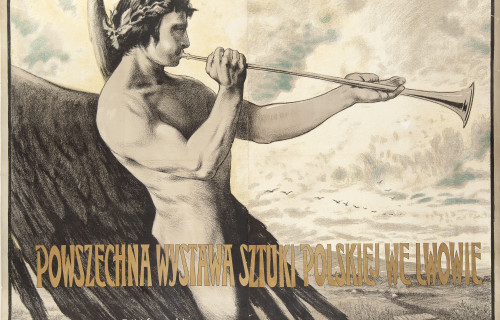
Society of Friends of Fine Arts in Lviv (Towarzystwo Przyjaciół Sztuk Pięknych we Lwowie)
The Society of Friends of Fine Arts in Lviv (Towarzystwo Przyjaciół Sztuk Pięknych we Lwowie) was the first art organization in Lviv to operate from 1868 until the outbreak of the Second World War. The Society brought together artists and art connoisseurs, organized exhibitions, sold works of art and provided material support to artists.
Read more
Sources
- Державний архів Львівської області (ДАЛО) Р-3152/1/26:628.
- Baranowski K., Rzeźby p. Luny Drexlerówny, “Gazeta Narodowa”, 28.02.1907, №49, 3.
- Biriulow J., Rzeźba lwowska od płowy XVIII wieku do 1939 roku (Warszawa: Neriton, 2007), 190-195, 209, 211, 258, 261, 266.
- In propia persona. Malarzy polskich portret własny. Ze zbiorów Lwowskiej galerii obrazów. Katalog wystawy obrazów w Muzeum Narodowym w Krakowie (III-V, 1998) i w Zamku książąt pomorskich w Szczecinie (VI-VIII, 1998).
- Kallas. Luna Drexlerówna, “Wiek Nowy”, 13.05.1919, №5388, 2-3.
- Katalog I wystawy Związku Artystów Plastyków we Lwowie (Lwów, 1921), 3 poz.
- Katalog salonu wiosennego w Pałacu Sztuki na Pl. Targów Wschodnich (Lwów, kwiecień-lipiec 1923), 10 poz.
- Katalog VI wystawy sztuki Związku Artystek Polskich we Lwowie oraz wystawy zbiorowej dzeł Marji Wodzickiej (Lwów, kwiecień 1922), 2 poz.
- Katalog wystawy “Artystki Polskie” (Warszawa, 1991), 146.
- Katalog wystawy zbiorowej dzieł ś.p. Marji Dulębianki oraz II wystawy sztuki Związku Artystek Polskich we Lwowie (Lwów, czerwiec 1919), 6 poz.
- Lwów. Ilustrowany przewodnik (Lwów: Centrum Europy, 2006), 36, 177, 234.
- Nicieja S. S., Cmentarz Łyczakowski we Lwowie w latach 1786–1986. Wydanie drugie, poprawione (Wrocław-Kraków-Gdańsk-Łódź: Ossolineum, 1989), 200, 201, 237, 263, 388, 391, 402, 404.
- Powszechna wystawa sztuki polskiej we Lwowie (Lwów, maj 1910), 6 poz.
- Powszechny Związek Polskich Artystów Plastyków Wschodniej Małopolski. Katalog II wystawy (Lwów, maj 1921), 2 poz.
- Salon wiosenny. Katalog wystawy (Lwów, 1917), 12 poz.
- Samotyhowa N., Luna Dreхlerówna, “Kobieta współczesna”, 1934, №15, 271.
- Słownik Artystów Polskich y obcych w Polsce działających. Malarze, rzezbiarze, graficy, T. IІ (Warszawa: Instytut sztuki Polskiej Akademii Nauk, 1971), 99-100.
- Sprawozdanie c. k. Państwowej Szkoły Przemysłowej we Lwowie za rr. szk.: 1899–1990, s. 27; 1900–1901, s. 27; 1901–1902, s. 27.
- Towarzystwo Dziennikarzy i TPSP we Lwowie. Katalog wystawy (Lwów, 1913), 1 poz.
- TPSP we Lwowie. III wystawa wiosenna (Lwów, maj-czerwiec 1908), 2 poz.
- TPSP we Lwowie. IV wystawa jesienna (Lwów, 1907), 2 poz.
- TPSP we Lwowie. IV wystawa wiosenna (Lwów, maj-czerwiec 1909), 4 poz.
- TPSP we Lwowie. Katalog wystawy dzieł sztuki Związku artystek polskich we Lwowie (Lwów, listopad 1929), №26-30.
- TPSP we Lwowie. Katalog wystawy zbiorowej prac art. mal. Zygmunta Radnickiego oraz wystawy ogólnej (Lwów, wrzesień-październik 1926), №80-83.
- TPSP we Lwowie. Salon wiosenny (Lwów, maj 1930), №474-479.
- TPSP we Lwowie. V wystawa jesienna (Lwów, listopad-grudźień 1908), 3 poz.
- TPSP we Lwowie. VI wystawa jesienna (Lwów, listopad-grudźień 1909), 6 poz.
- TPSP we Lwowie. VII wystawa wiosenna (Lwów, maj-czerwiec 1912), 3 poz.
- TPSP we Lwowie. Wystawa jesienna (Lwów, grudźień 1911 – styczeń 1912), 7 poz.
- TPSP we Lwowie. Wystawa pośmiertna ś. p. Luny Drexlerówny artystki-rzeźbiarki i malarki (Lwów, maj-lipiec 1934).
- TPSP we Lwowie. Wystawa wiosenna (Lwów, 1921), 4 poz.
- TSP we Lwowie. Katalog wystawy gwiazdkowej oraz wystaw zbiorowych art. mal. Antoniego Markowskigo, Aleks. Pareńskigo i Marji Wodzickiej (Lwów, grudzień 1923 – styczeń 1924), 5 poz.
- TSP we Lwowie. Katalog wystawy Luny Drexlerówny, Marji Chibińskiej, Anieli Czarnowskiej, Anny Harland-Zajączkowskiej (Lwów, maj 1924), №30-97.
- Wystawa dzieł do wygrania (Lwów, kwiecień 1917), 3 poz.
- Wystawa monograficzna “Luna Drexlerówna: rzeźba, malarstwo” (Kraków, 1978).
- Wystawa obrazów dawnych i współczesnych (Lwów, luty 1909), 2 poz.
- Wystawa sztuki (Lwów, luty-marzec 1908), 14 poz.
- Wystawa sztuki Artystek Polskich we Lwowie (Lwów, grudźień 1917), 7 poz.
- Wystawa sztuki współcesnej (Lwów, 1918), 3 poz.
- Zachęta. Salon sztuki współczesnej. Ul. Karola Ludwika, 7. Wielka wystawa wiosenna (1919), 2 poz.
- Zaczęta. Salon sztuki we Lwowie. Wystawa wiosenna (Lwów, 1929), №2 (4 poz.).
- Związek Artystek Polskich we Lwowie. Katalog IV wystawy sztuki (Lwów, grudzień 1920), 12 poz.
- Бірюльов Юрій, Мистецтво львівської сецесії (Львів: Центр Європи, 2005), 90, 118, 146-148, іл. 218, 301, 302, 371-374, 376, 377.
- Личаківський цвинтар. Схема (Львів: Мапа ЛТД, 1992), №№ 5, 183.
- Львів. Туристичний путівник (Львів: Центр Європи, 1999), 295.
- Львівська сецесія. Каталог виставки із збірок Львова. Львівська картинна галерея (Львів, 1986), 56 (№272), 62 (№312-318), іл. с. 93.
- Мистецтво Львова першої половини ХХ століття. Каталог виставки. Львівська галерея мистецтв. 1994 рік (Львів: Каменяр, 1996), 86, 95, іл. 15.