Pl. Rynok, 6 – former Korniakt Palace ID: 135
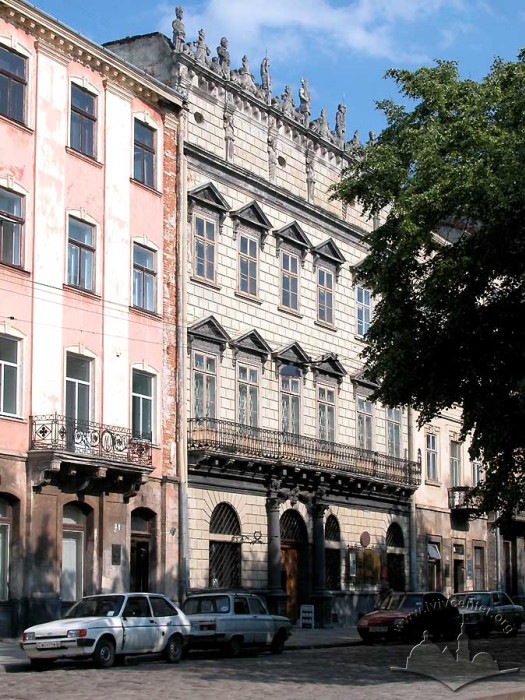
The building at pl. Rynok 6 (protection No. 326/5) is located within the territory of the State Historic-Architectural Preserve, set in the row development on the eastern side of the market square. The building was erected in 1580 for the wealthy Greek merchant Kostiantyn Korniakt on the foundations of two ancient Gothic townhouses.
Story
The building was named the Korniakt Townhouse (conscription number 175), or the Royal Townhouse. The townhouse was erected in 1580 by architects Petro Barbon with the participation of Paweł Rzymianin for the wealthy Greek merchant Kostiantyn Korniakt from Candia on the foundations of two ancient fifteenth-century Gothic townhouses, the Melchiorhazovska (or Avhustovska) and Tarlovska townhouses.
Kostiantyn Korniakt hailed from the island of Crete. He arrived in Lviv in 1569 from Moldavia, where he served as a boyar and head of the customs service. Later, he became the personal secretary to King Zygmunt II August. To construct his house, Kostiantyn Korniakt purchased their plots — specifically, two parcels on pl. Rynok and an adjacent parcel facing vul. I. Fedorova. In particular, as Dionizy Zubrzycki reports, Kostiantyn Korniakt purchased the Melchiorhazivska townhouse in 1571. Named after its owner's surname, the townhouse is also referred to as the Korniakt Palace. At the time, it was one of the most imposing buildings in the city.
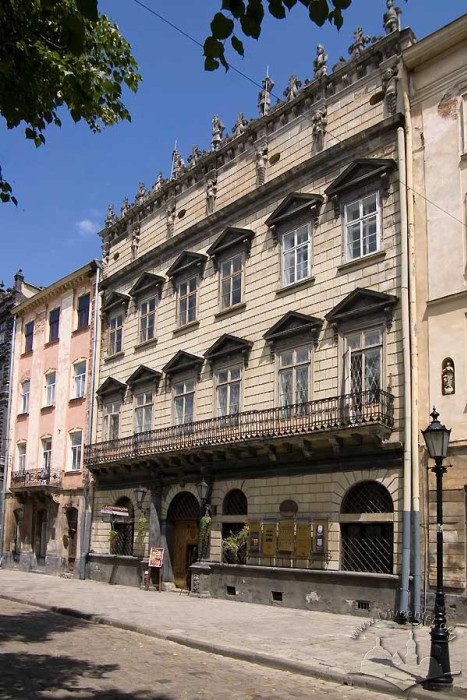
Unlike most market square townhouses, the building was six-windowed — that is, it had six windows per story on the principal elevation. Kostiantyn Korniakt died in 1603. His descendants quickly went bankrupt, and in 1623, the townhouse was sold to Carmelite monks.
Later, in 1642, the house was bought by Polish magnate Jakub Sobieski and his wife Teofila. After his death in 1647, the townhouse was inherited by his son, Jan III Sobieski (King of Poland from 1647). From that time on, the townhouse also came to be called the Royal Townhouse. The building's first restoration was carried out during this period.
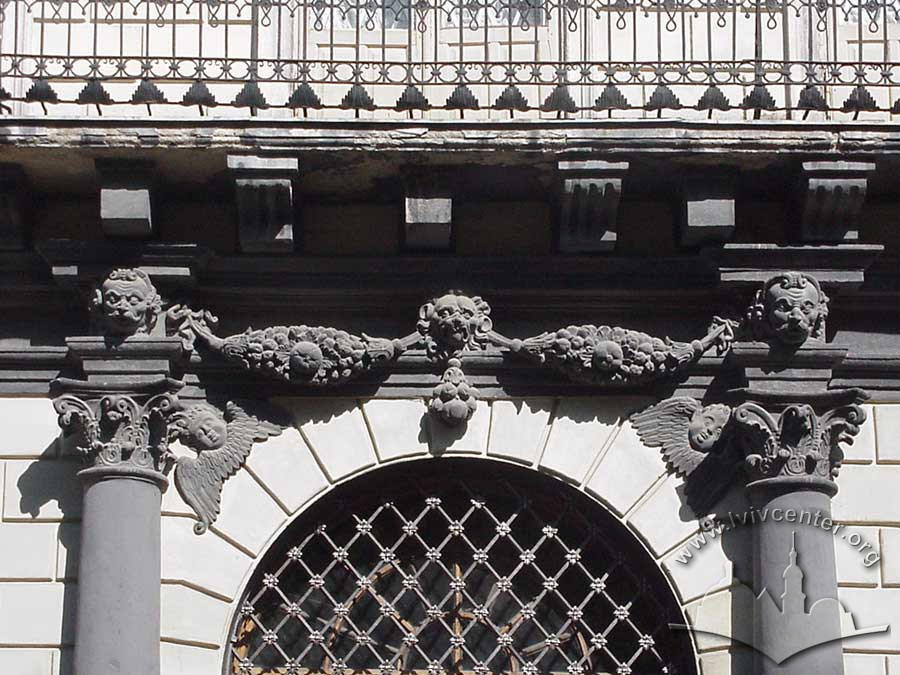
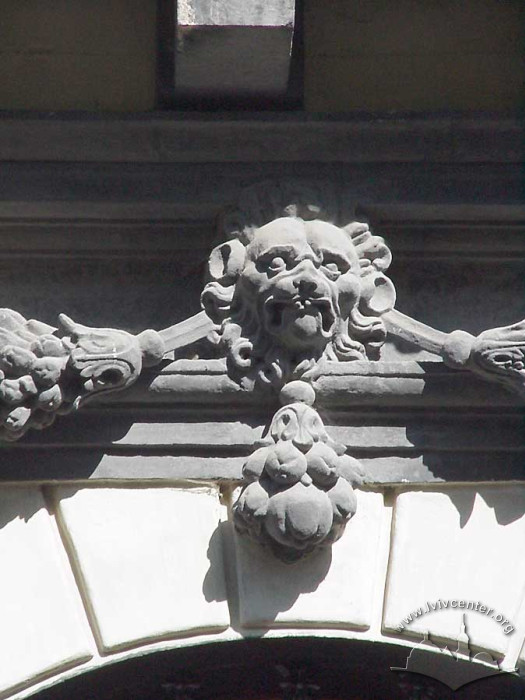
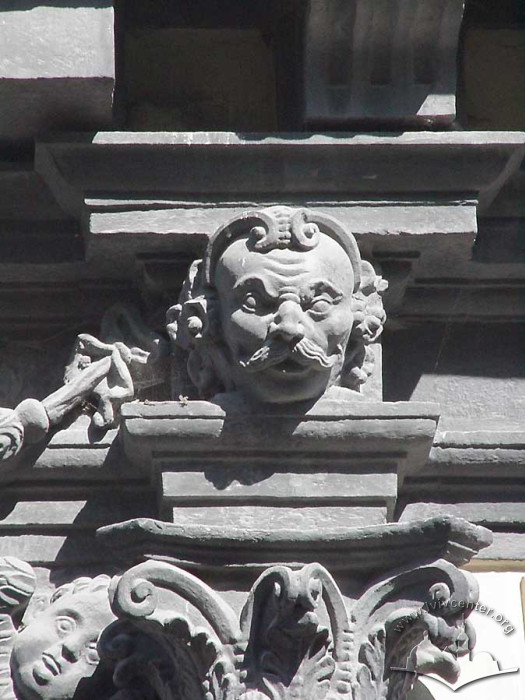
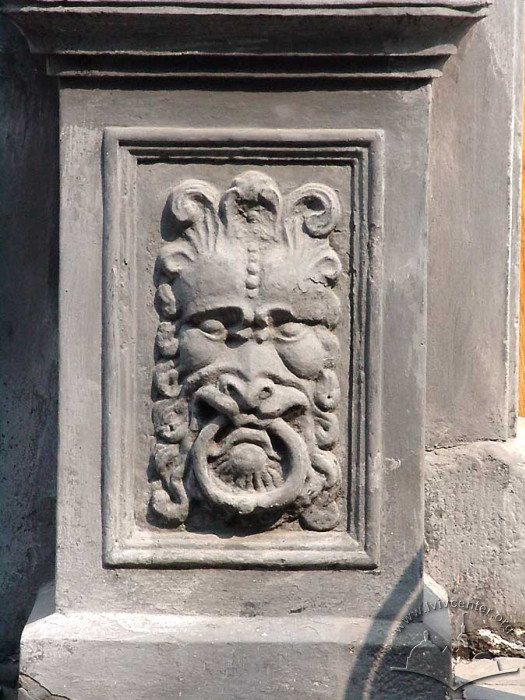
In 1678, its façade was adorned on the attic with figures of the king and six knights, and a white-stone portal decorated with masks and garlands appeared. After the death of Jan III Sobieski, the house belonged to his son.
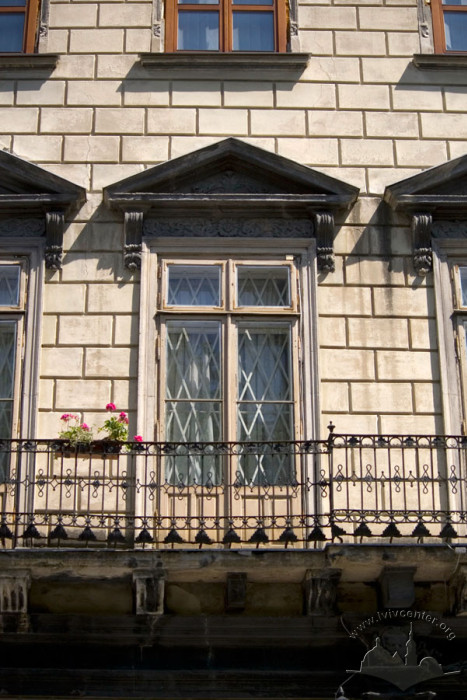
In 1723, it passed into the ownership of the Rzewuski magnates. By order of Józef Rzewuski, a partial restoration of the townhouse was conducted in 1793. At that time, the staircase was rebuilt in the Empire style, the façade was rusticated, and a balcony was installed on it. The reconstruction was carried out under the direction of architect Fryderyk Baumann. In 1797, the staircase was embellished with a wrought iron handrail.
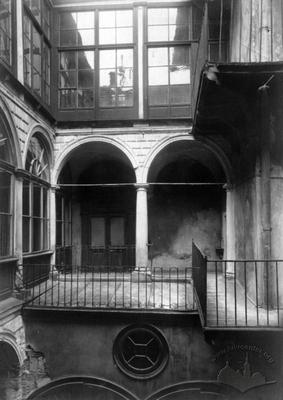
The next restoration took place in the 1820s, when the building belonged to the family of Princes Poniński. During this period, the ceilings on the second floor — in the so-called "royal halls" — were decorated with plasterwork. At the same time, the room layout was partially altered. The circular throne hall was transformed into a rectangular one. It is likely that part of the galleries in the courtyard was demolished at that time and replaced with a side wing. At the end of the nineteenth century, the house belonged to Prince Kalikst Poniński, who lived here on the third floor. Following the latter's death, the house passed to the Princes Lubomirski, from whom the city purchased it in 1908 to establish a museum.
On September 12, 1908, on the 225th anniversary of Jan III Sobieski's victory over the Turks at Vienna, a museum named the "King Jan III National Museum" opened in the building. Collections of weapons, numismatics, and paintings were assembled here.
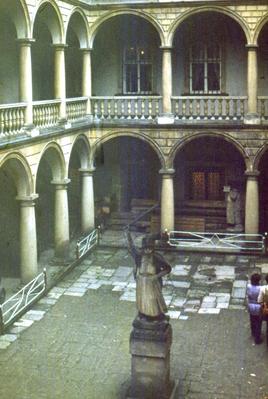
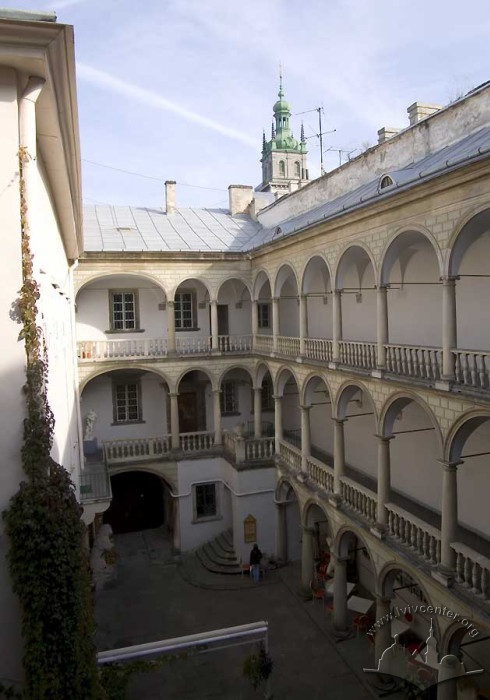
Between 1910 and 1912, a comprehensive restoration was carried out: the building was cleared of later accretions and adapted for museum use. In the 1930s, architect Ludomił Gyurkowicz restored the three-tier Renaissance arcade-loggia in the building's courtyard.
In May 1940, the Lviv Historical Museum was opened here. The "Italian Courtyard" also enjoys great popularity, serving as a filming location, a venue for traditional concerts by the Lviv Conservatory, and a setting for theatrical performances.
Architecture
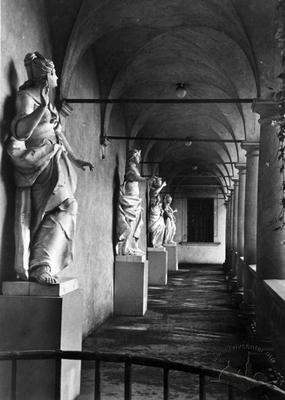
A palace-type building with a plan characteristically elongated into the depth of the plot, three stories high, built of stone, and plastered. In the townhouse's inner courtyard is the so-called "Italian" or "Venetian" courtyard, which houses a three-tier Renaissance arcade-loggia, restored in the 1930s by architect Ludomił Dyurkowicz.
Prior to restoration, the arcade was built over with early nineteenth-century side wings (photographs from that period showing these wings have survived). Unlike most market square townhouses, the building is six-windowed — that is, it has six windows per story on the main western façade. This façade is topped with an attic featuring caryatids and atlantes, an architrave, and a frieze with consoles, crowned with figures. The façade facing vul. I. Fedorova is more modest. Its primary architectural accent is a large, wide white-stone portal.
The interior received its modern appearance during the eighteenth-century restoration, as evidenced by a memorial plaque above the entrance. A Gothic hall has been preserved from the ancient fifteenth-century structure. The so-called royal halls merit special attention, decorated with plasterwork ceilings and walls, antique mirrors, wall coverings, marble fireplaces, and artistic parquet made of precious wood species. Carved white-stone portals have also survived. Despite numerous rebuilds and restorations, the landmark impresses with its imposing character. The austere façade, underscored by a clear rhythm of windows decorated with triangular pediments, alongside the light, openwork arcades of the "Italian Courtyard" loggia, retain the forms of a Renaissance palazzo. Open arcades connect the main building with the rear wings.
The Korniakt House in Lviv is one of the finest examples of residential Renaissance architecture.
People
Petro Barbon –– architect, master builder.
Fryderyk Baumann –– architect, plasterer.
Ludomił Dyurkowicz –– architect, author of the project to recreate the courtyard arcades.
Rzewuski Family –– magnate family, owners of the house.
Witold Rawski Jr. –– architect, sculptor, painter. In the early 1930s, Witold Rawski directed the restoration of the townhouse.
Kostiantyn Korniakt –– owner of the house.
Lubomirscy Family –– princes, owners of the house.
Poninscy Family –– princes, owners of the house.
Kalikst Poniński –– co-owner of the house.
Paweł Rzymianin (Paolo Romano) –– architect, probable author of the townhouse.
Jakub Sobieski –– father of King Jan III Sobieski, owner of the house.
Teofila Danylovychivna Sobieska — wife of Jakub Sobieski, owner of the house.
Jan III Sobieski –– King of Poland, owner of the house.
Olena Turyanska –– artist, creator of paper cuts (vytynanky), installations, art objects, and art books, interior designer. Lives and works in Lviv. Olena Turyanska designed the Italian Courtyard Cafe.
Sources
- Проект "Галіціана" (І. Жук), 2001-2002.
- Державний архів Львівської області. – Ф. 2. – Оп. 2. – Спр. 3650. – С. 49-67, 74-77, 106-109. Справа на будинок на пл. Ринок, 6.
- Вуйцик В. Державний історико-архітектурний заповідник у Львові. – Львів, 1991.
- Мельник Б. Вулицями старовинного Львова. / Серія "Історичні місця України". – Вид. 3-тє зі змінами. – Львів: Світ, 2006.
- Пам'ятники градостроительства и архитектуры Украинской ССР. – В четырех томах. – Т. 3. – Киев, 1985.
- Трегубова Т. О., Мих Р. М. Львів. Архітектурно-історичний нарис. – Київ: "Будівельник", 1989. – С. 59.
- Jaworski F. Królowie polscy we Lwowie. (Bibl. Lw. nr. XIX – XX ст.). – Lwów, 1912. – S. 105–119.
- Józefowicz J. Kronika miasta Lwowa od r. 1634 do 1690. – Lwów, 1854. – S. 391.
- Orłowicz M. Przewodnik po Lwowie. – Lwów, 1925.
- Charewiczowa Ł. Czarna kamienica i jej mieszkańcy. – Lwów, 1935. – S. 24-25.
- Kunasiewicz S. Przechadzki archeologiczne po Lwowie. – Lwów, 1874. – S. 76–89.
- Łoziński W. Patrycyat i mieszczaństwo. – Wyd. II. – Lwów, 1892. – S. 311–318.
- Łoziński W. Sztuka lwowska. – Lwów, 1898. – S. 37, 44-45, 49, 82, 84, 86-87, 92.
- Medyński A. Lwów. Ilustrowany przewodnik dla zwiedzających miasto. – Drugie wydanie poprawione i uzupelnione. – Lwów: nakładem autora. – 1937. – S. 86.
- Skorowidz nowych i dawnych numerów realności, nazw ulic i placów król. stół. miasta Lwowa wedlug Rady meijskiej w r. 1871 z urzędowych źródeł zestawiony. Lwów: nakładem Karola Wilda. – 1872. – S. 206.
- Skorowidz król. stół. miasta Lwowa. – Lwów: nakladem król. stół. miasta Lwowa. – Z drukarni instytutu Stawropigialnego. – Lwów, 1889. – S. 195.
- Skorowidz król. stół. miasta Lwowa z planem miasta. – Lwów: staraniem i nakladem gminy. – Z drukarni "Dziennika Polskiego" (Dr. Felixa Wojnarowskiego) pod zarządem Fr. Kattnera. – Lwow, 1899. – S. 183.
- Wykaz domów na obszarze miasta Lwowa . – S. 66. // Księga adresowa Małopołski. – Lwów. Stanisławów. Tarnopól. Rocznik 1935/1936.
- Zubrzycki D. Kronika miasta Lwowa. – Lwów: Nakładem autora. – 1844. – S. 183, 184.