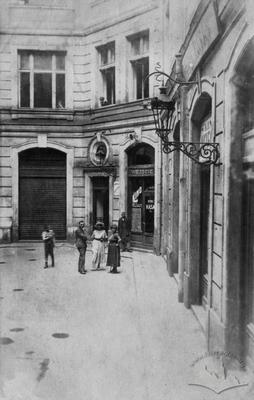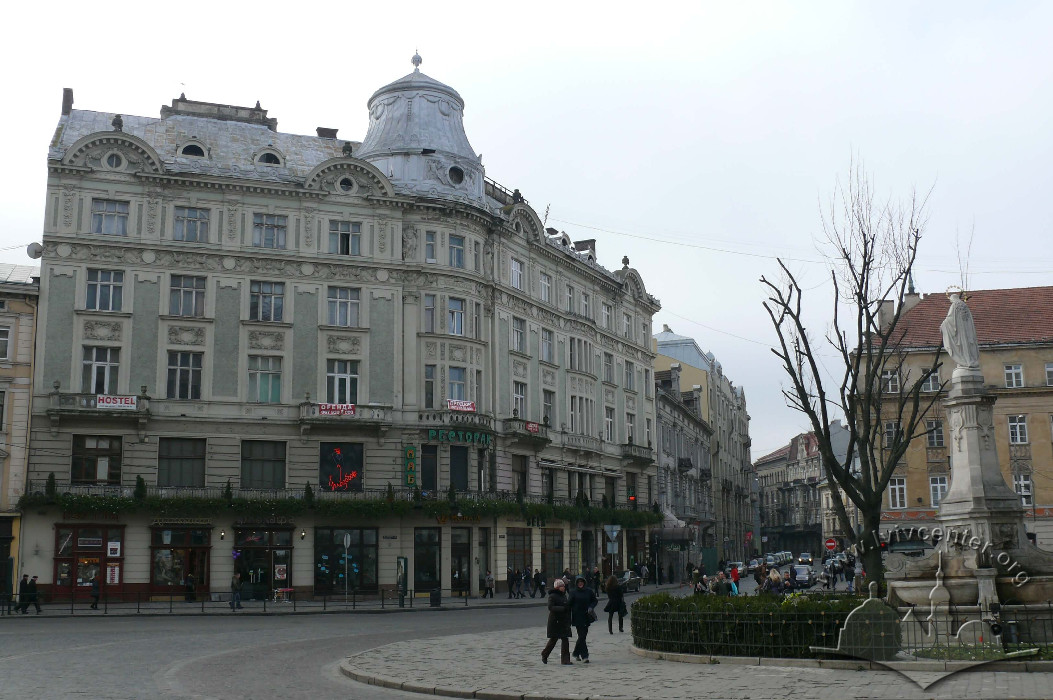
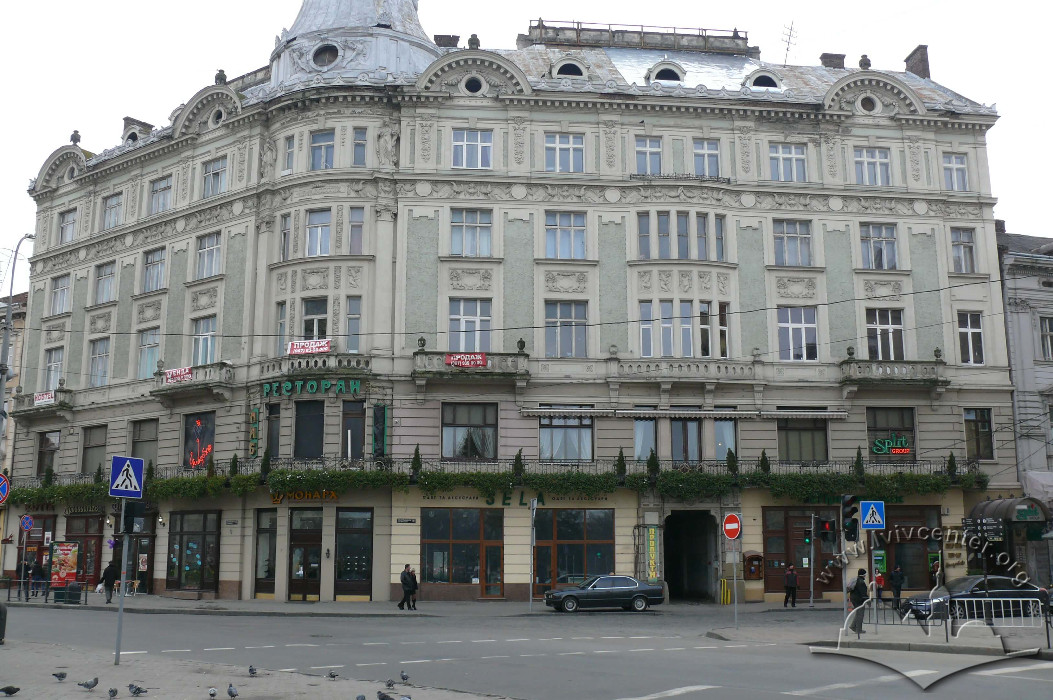
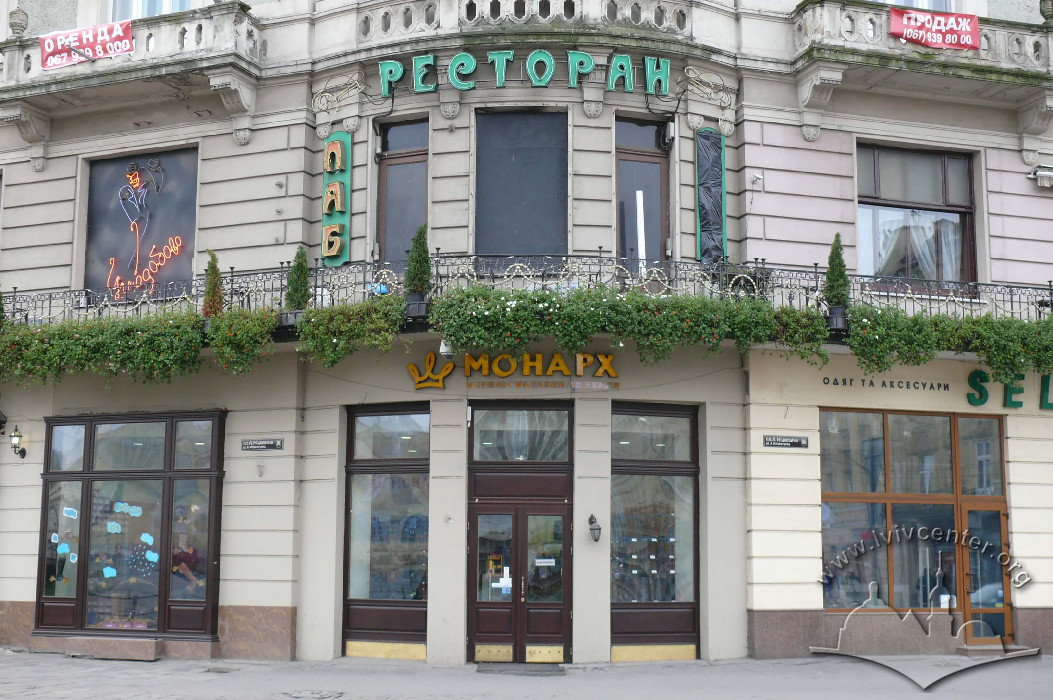
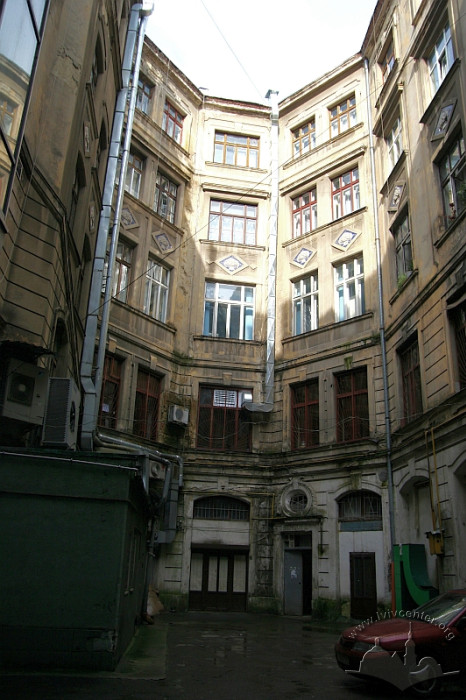
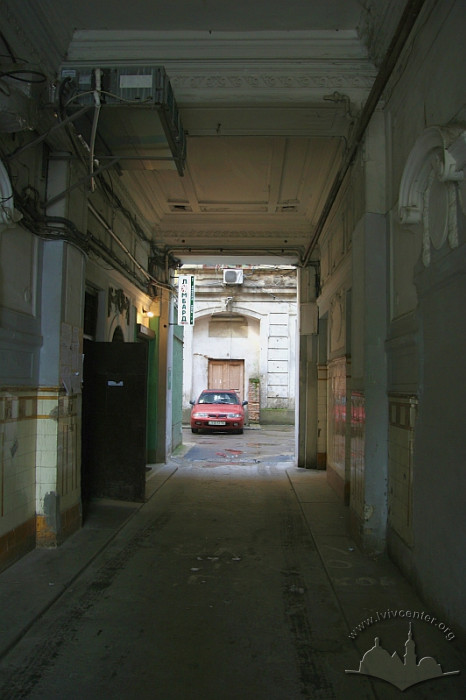
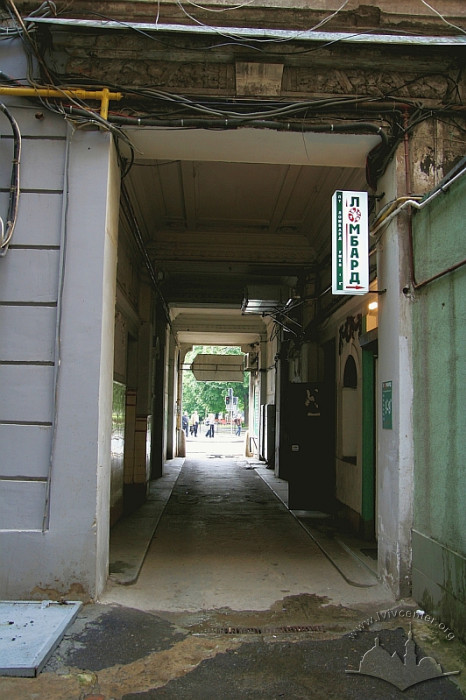
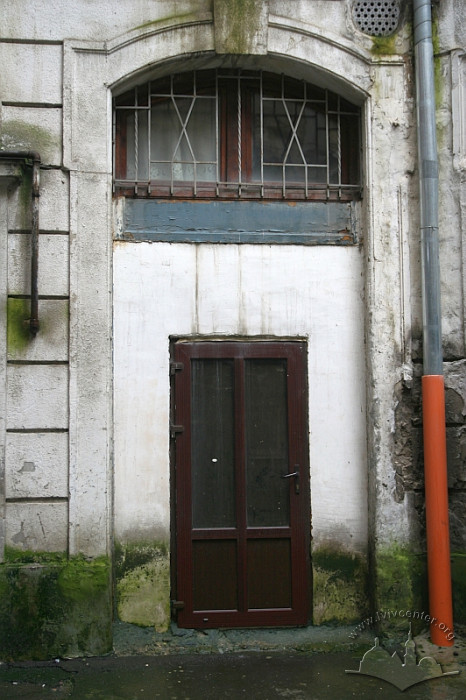
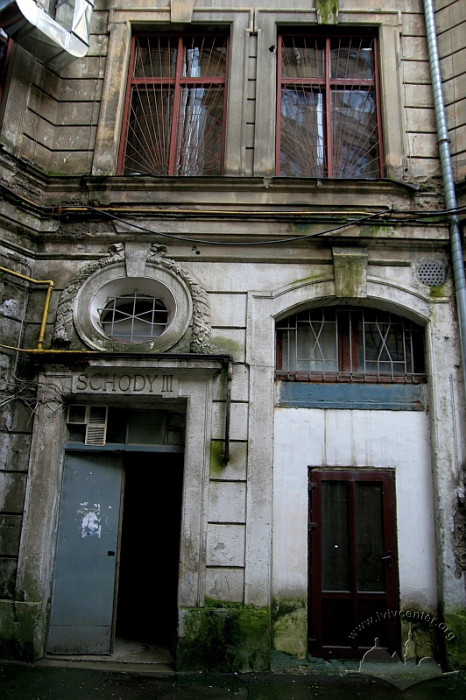
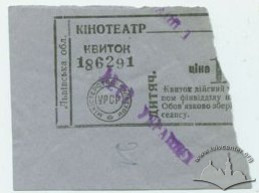
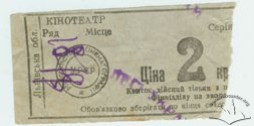
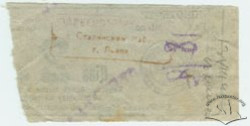
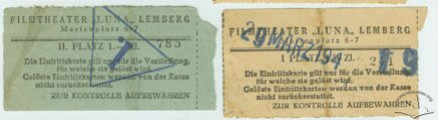
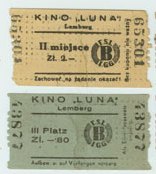
Pl. Adama Mitskevycha, 6/7 – cinema (no longer in operation) ID: 1743
A cinema operated in the building at present-day pl. Mitskevycha 6/7, undergoing a series of name and ownership changes: "Avenue" (1908–1912, 1923–1930), "Dreamland Kino" (1912–1914), "Uciecha" ("Delight", 1914–1915), "Raj" ("Paradise", 1930–1943), "Luna" (1943–1945), "Khronika" ("Chronicle", 1945–1946), "Lesia Ukrainka Cinema" (1946–2000s), and "Kassandra" (2000s). The cinema ceased operations in 2007.
Story
Chronology of name changes and owners:
1908–1912 — "Avenue", owner presumably Melchior Meiblim;
1912–1914 — "The Dreamland Kino", owner W. D. Lewicki;
1914–1918 — "Uciecha";
1926–1930 — "Avenue" (nominal owner: Building Department of the A. Mickiewicz Society in Kraków; 1927–1930 owner Adolf Weitz);
1930–1941 — "Raj", owners Franciszek Andraszek (withdrew from the partnership) and Stanisław Zborowski;
1943 — "Luna";
1945 — "Khronika";
1946–2000s — Lesia Ukrainka Cinema;
2000s — "Kassandra".
The "Avenue" cinema was founded by Melchior Meiblim in 1908 in the inner courtyard of the building at 6/7 Mariacka Sq. As early as 1912, the establishment changed ownership and was renamed "The Dreamland Kino". With the outbreak of World War I, its name was changed to the Polish "Uciecha" ("Delight" or "Utesheniye" — as rendered in Russian in a guidebook from the period of the Russian occupation of Lviv in 1914–1915). In 1923–1930, the cinema operated under the name "Avenue" with a seating capacity of 209; starting in 1930, it operated as "Raj" (192 seats). In the 1930s, another cinema named "Uciecha" operated nearby in Lviv, located in the Mikolasch Passage.
By 1945, the venue was known as "Khronika"; starting in 1946, it became the "Lesia Ukrainka Cinema". The nature of its repertoire was highlighted by a neon sign above the ticket lobby reading "News of the Day". In the 1980s, an arcade game room operated in the ticket lobby. Later, the cinema was renamed "Kassandra". In 2007, by decision of the city council, the state municipal enterprise was liquidated.
Given its name, the repertoire of the "Khronika" cinema evidently focused primarily on newsreels and documentary films.
On May 20–30, 1952, the "Stalinist Friendship of Peoples" film festival took place at the "Kyiv" and "Lesia Ukrainka" cinemas, during which propaganda films were screened at the latter, including: Moscow – Capital of the USSR, Flourishing Ukraine, Soviet Belarus, Soviet Georgia, In the Unified Family of Fraternal Peoples, and Along the Glorious Kolkhoz Path.
Resolution No. 994 of the 6th Session of the 5th Convocation, dated July 5, 2007, on the termination through liquidation of the Municipal Enterprise Cinema and Video Center "Kassandra" (Doc. 2).
Selected Repertoire:
September 1, 1939 — Dangerous Love (USA).
September 8, 1939 — Dangerous Love (USA).
October 19–25, 1943 — We Invite You to Dance (original German title: Wir bitten zum Tanz, 1941).
November 13, 1946 — Northern Lights.
November 20, 1946 — Myrhorod.
May 13, 1948 — Dniprohes.
May 31, 1949 — Matinee: The Magic Carpet; Evening show: The Order-Bearing Moscow Region.
May 12, 1955 — Across Indonesia.
August 9, 1958 — Matinee: Basketball USSR vs. USA; Evening show: For the Lives of the Doomed.
November 4, 1958 — Matinee: Hypnosis Session; Evening show: Named After Tchaikovsky.
March 23, 1965 — Not listed in the program.
Related buildings and spaces
-
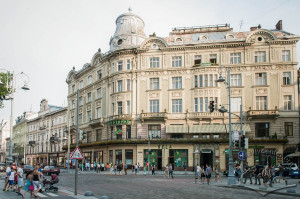
Pl. Adama Mitskevycha, 6/7 – residential building with office space and club
People
Franciszek Andraszek — co-owner of the "Raj" cinema.
W. D. Lewicki — owner of "The Dreamland Kino".
Melchior Meiblim — owner of a cinema chain in Lviv, founder of the "Avenue" cinema.
Adolf Weitz — owner of the "Avenue" cinema.
Stanisław Zborowski — co-owner of the "Raj" cinema.
Sources
- Gierszewska, Barbara, "Kino і film we Lwowie do 1939 roku", (Kielce: Wydawnictwo Akademii Świętokrzyskiej, 2006)
- Мельник Б. В. Довідник перейменувань вулиць і площ Львова. ХІІІ — ХХ століття (Львів: Світ, 2001).
- Путеводитель по г. Львову. Львов. Изд. Г. Хлиппа, 1915.
- Збірка І. Котлобулатова.
- Збірка В. Румянцева
- Taschenjahrbuch 1943: Für den deutschen Generalgouvernement. Krakau: ZKW Druck. 1943.
- Dziennik Polski, 1.09.1938 (№ 249).
- Chwila. 08.09.1939