Vul. Mykoly Lysenka, 8 – residential building ID: 1537
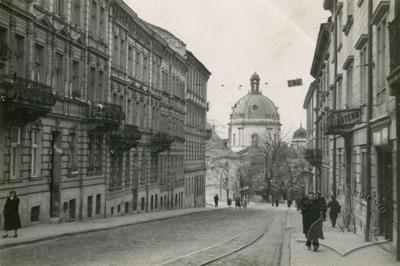
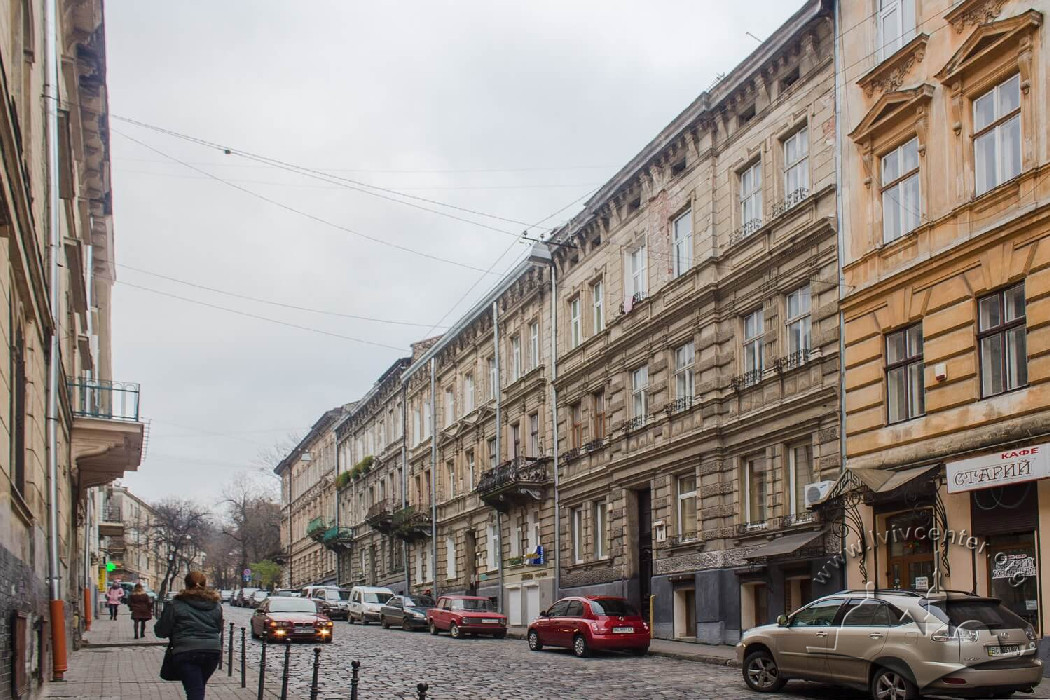
Former address: ul. Kurkowa 8 (conscription No. 700 4/4). In 1800–1801, a covered riding arena and equestrian school owned by Józef Krupp was built on a portion of the plot belonging to the Monastery of the Discalced Carmelite Fathers. The riding arena stretched along today's vul. Lysenka. In the 1890s, several apartment buildings designed by architect Andrzej Gołąb were constructed on its site, including building No. 8. At the beginning of the twentieth century, the building housed the Regional Defense Court (Ger. Landwehr Gericht). It is an Architectural monument (registration No. 978), designated as a nineteenth-century residential building.
Architecture
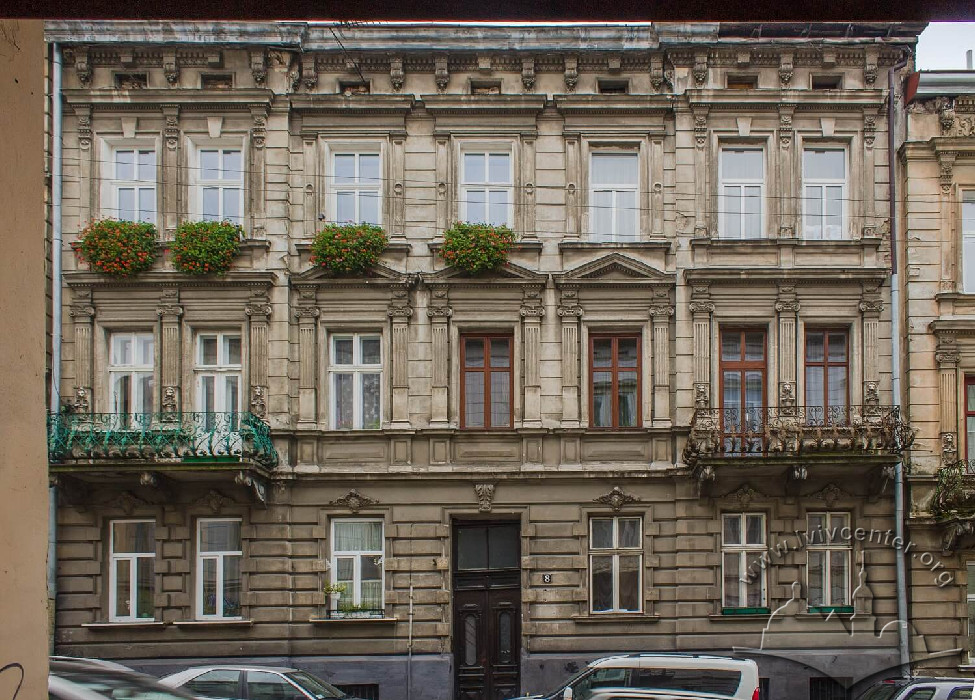
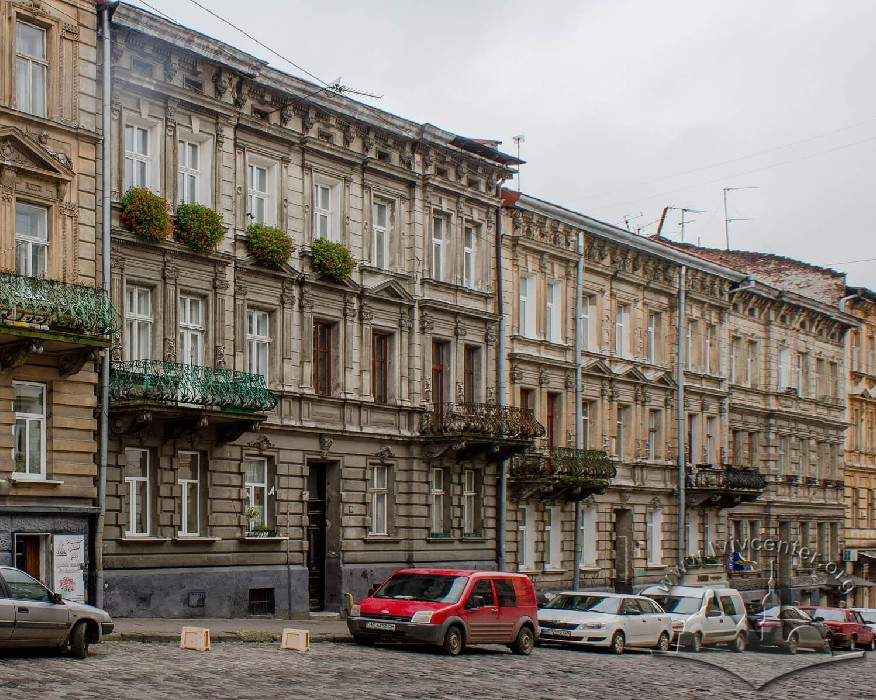
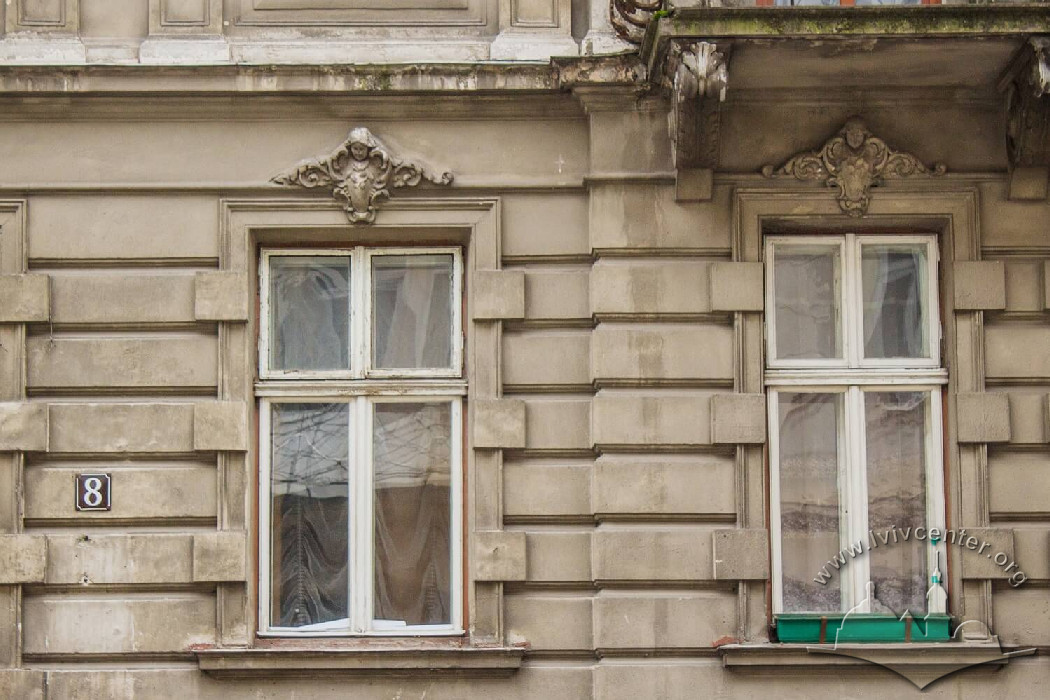
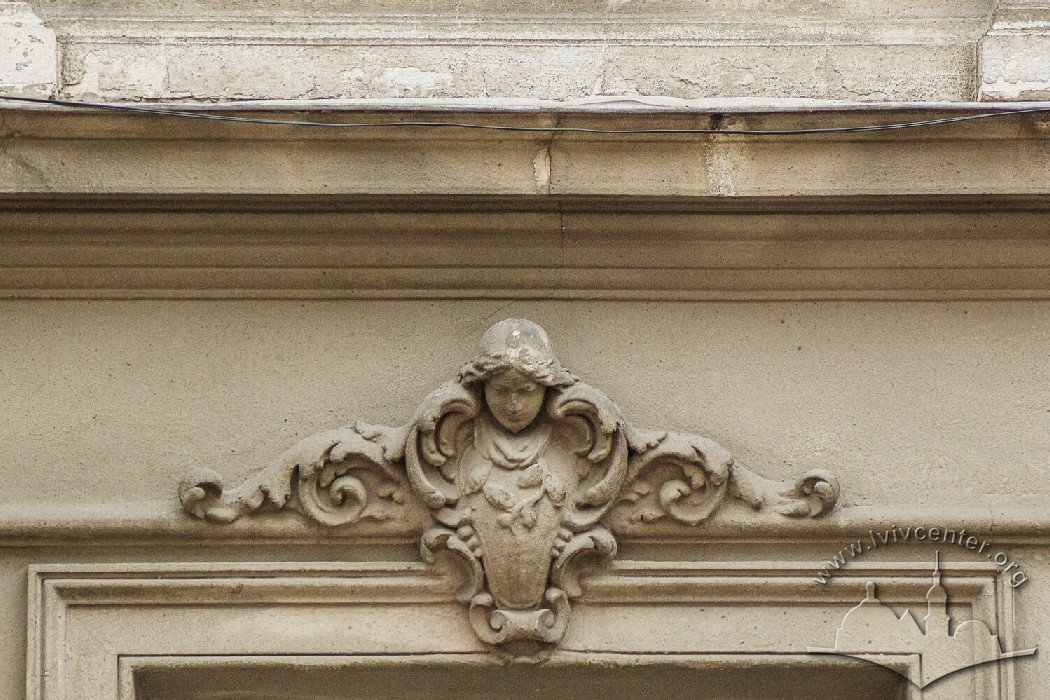
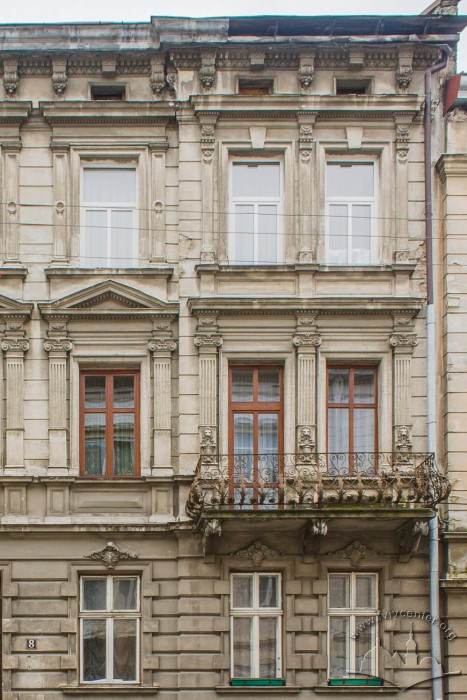
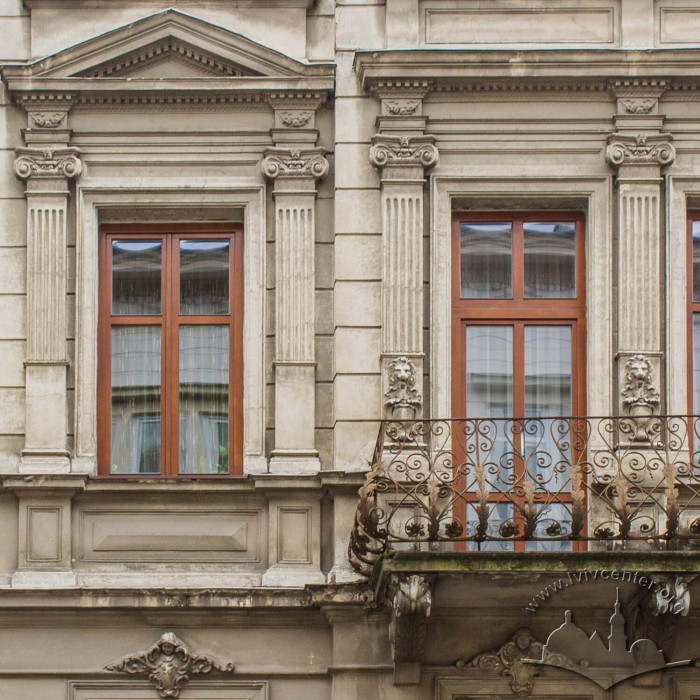
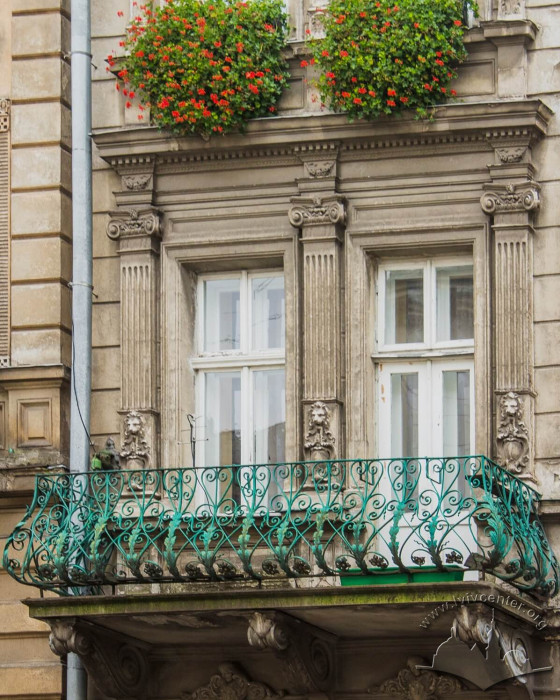
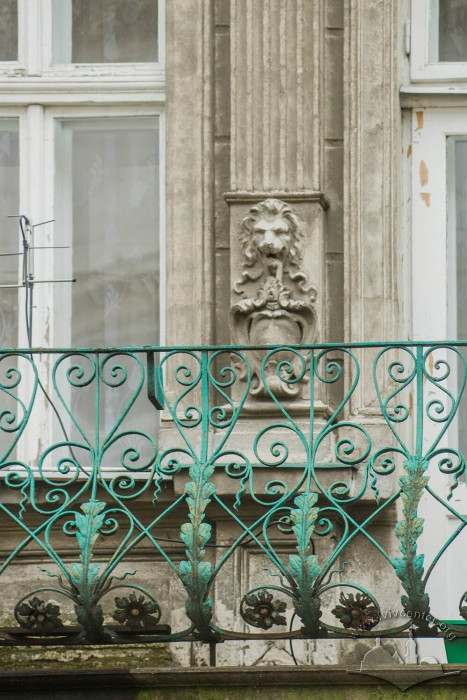
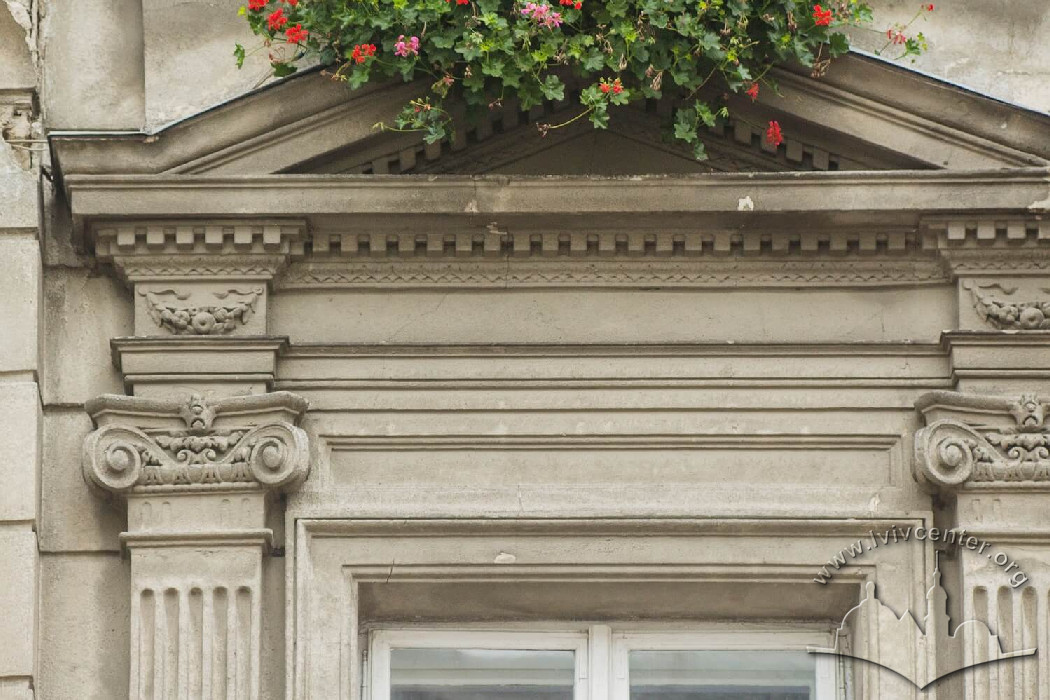
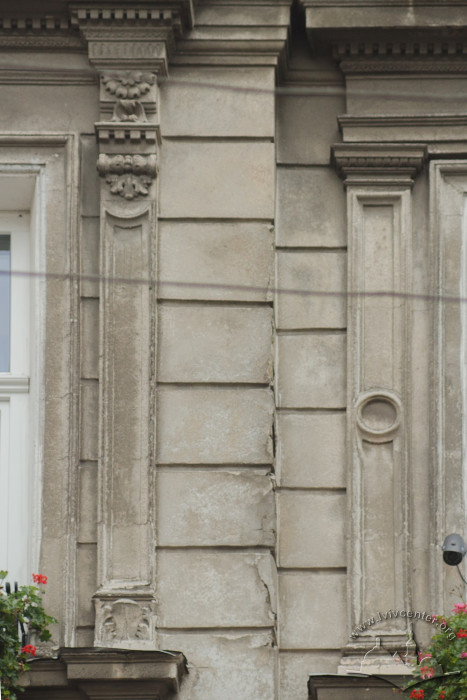
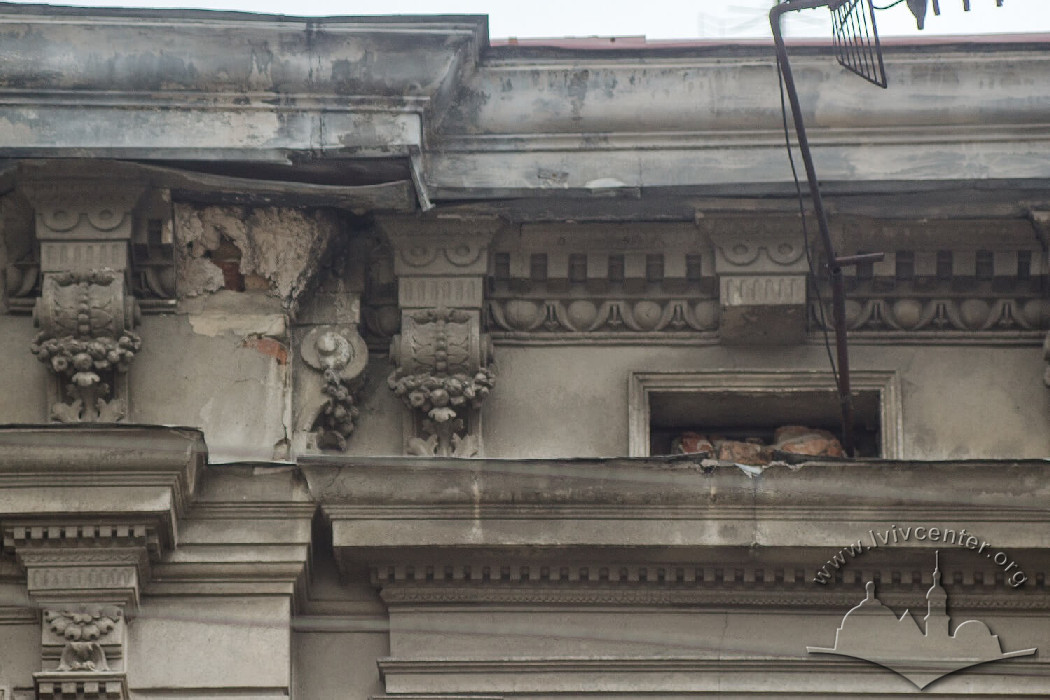
This three-story historicist apartment building, constructed in the 1890s according to a design by Andrzej Gołąb, features a high basement and a small inner courtyard. On both sides of the principal façade, slight avant-corps protrude, featuring second-story balconies with ornate, lacelike Neobaroque railings. The façade walls are finished with banded rustication. The second-story windows are flanked by small Ionic pilasters and topped by triangular pediments, while the balconies feature reliefs of lions holding shields. The third-story windows are flanked by small Tuscan pilasters and topped by rectangular pediments.
People
Porbus Barczewski –– owner as of 1889.
Józef Czyńczyk –– treasury usher, resided in the building as of 1910.
G. B. Frasch –– chemist, resided in the building as of 1902.
Andrzej Gołąb –– architect, author of the project.
M. Gruberska –– private individual, resided in the building as of 1910.
Marya Heyzman –– property owner, resided in the building as of 1910.
Piotr Kuszów –– courier, resided in the building as of 1910.
Marcela Kuchnowa –– private individual, resided in the building as of 1910.
Karol Leimsner –– captain, resided in the building as of 1910.
Henryk Centner Manner –– captain, resided in the building as of 1910.
Wojciech Mayer –– notary candidate, resided in the building as of 1902.
Edward Mianowski –– engineer, resided in the building as of 1910.
Kazimierz Piotrowski –– court secretary, resided in the building as of 1902.
Antoni Rudnicki –– official of the Regional Department, resided in the building as of 1910.
Max Schlittner –– shopkeeper, resided in the building as of 1902.
Helena Sochora –– private individual, resided in the building as of 1910.
Karol Strobach –– employee, resided in the building as of 1910.
Eugeniusz Szygalski –– employee, resided in the building as of 1910.
Franciszek Talar –– bank clerk, resided in the building as of 1910.
Kazimierz Tyszkiewicz –– owner as of 1871.
Juliusz Twardowski –– railway auditor, resided in the building as of 1910.
Władysław Vodicka –– bank clerk, resided in the building as of 1910.
Karolina Warzecka –– confectioner's widow, resided in the building as of 1910.
Moses Ber Gleit Wasserman and co-owners –– owners as of 1916.
Jan Welebny –– private employee, resided in the building as of 1910.
Tomasz Wijatyk –– former merchant, resided in the building as of 1910.
Bronisław Wysocki –– governor's office auditor, resided in the building as of 1902.
Bronisław Wysięki –– governor's office counselor, resided in the building as of 1910.
Jarosław Zandt –– bank clerk, resided in the building as of 1910.
Sources
- Czerner O. Lwów w dawnej rycinie i planie. – Wrocław–Warszawa–Kraków, 1997.
- Księga adresowa Król. stol. miasta Lwowa. – Lwów, 1902.
- Lwów. Ilustrowany przewodnik. – Lwów: Centrum Europy, 2003. – 320 s..
- Skorowidz król. stoł. miasta Lwowa z oznaczeniem podziału miasta. Nazw ulic I placów, oliczbowania domów numerami konskrypcyjnemi i orientacyjnemi z wymienieniem właścicieli realności – tudzież nazw i numerówdawniejszych. – Lwów: Nakładem król. stoł. miasta Lwowa, z drukarni Instytutu Stauropigiańskiego, 1889.
- Skorowidz król. stol. miasta Lwowa – Lwów, 1916.
- Skorowidz nowych i dawnych numerów realności, tudzież nazw ulic i placów król. stoł. miasta Lwowa... – Lwów, 1872.
- Spigel J.R. Skorowidz adresowy Król. stol. miasta Lwowa. – Rocznik II: Rok 1910. – Lwów, 1909.