Vul. Mykoly Lysenka, 23a – former municipal shooting range ID: 2187
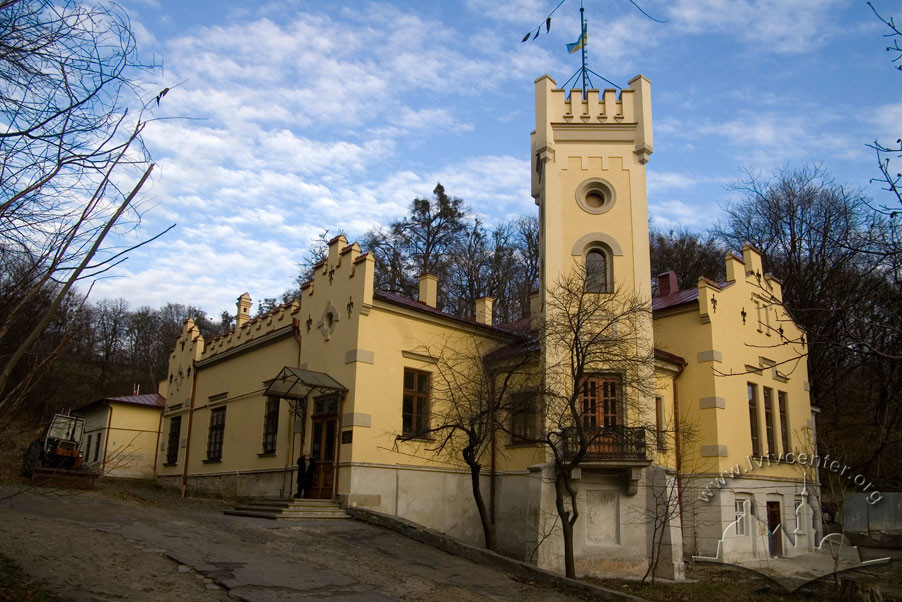
The Rifle's Association estate with a park, located at vul. Lysenka, 23a, dates back to the nineteenth century. Throughout its existence, the complex underwent multiple renovations. It is designated as a local architectural and urban planning monument (protection No. M-980). The main building of the Rifle's Association — the so-called Strzelnica (shooting range) — dates to 1899 and is associated with architects Jozef Engel and Alfred Kamenobrodzki. In the post-war period, World and European champions, medalists, and Olympians — including Mykola Kalynychenko, Dmytro Bobrun, Volodymyr Zymenko, and others — trained and competed in the northern wing of the Strzelnica. On October 14, 2012, the Museum of the Ukrainian Liberation Struggle opened in the former palace of the Strzelnica. The building is registered as a local architectural and urban planning monument (protection No. M-158).
Story
The Rifle's Association is the successor to Lviv's esteemed Kurkowe Bractwo (Cock Society/Shooting Society), founded back in the fifteenth century. In 1783, the Kurkowe Bractwo purchased part of the Chychevychivsky garden at the foot of Vovcha Hill and built an estate there in 1789 (Вуйцик). From that time on, the street where the society was located was called Kurkowa (a name that lasted until 1939).
The original Kurkowe Bractwo, and later the Rifle's Association, served the city by contributing to its military defense during times of war and training burghers in marksmanship during peacetime. The exercises were competitive: shooters aimed at a rooster tied to a pole, and the most accurate was elected the "Cock King". He was granted the privilege of wearing a medal and a gold ring. Initially, they shot using only bows, later transitioning to firearms. The city council rewarded the most skilled shooters with valuable prizes. Along with other privileges, the brotherhood was permitted to operate a bowling alley (bowling alley/skittle alley), which was built in 1872 and expanded in 1901, 1904, and 1910 (operating until 1939).
Throughout its existence, the complex was renovated several times. In 1872, the old building was reconstructed according to the design of Jozef Engel, and in 1899, the new Strzelnica building was restored (arch. Alfred Kamenobrodzki). Restoration works were carried out in 1901, 1904, 1910, and 1932 (ДАЛО 2/2/7350), as well as between 2008 and 2012. Starting in 1890, the park was expanded and landscaped (gardener Bauer). The most recent park reconstruction took place in 1989–1992.
The Strzelnica reliably served its purpose as a competitive hub for archery and target shooting. Cross-country track and field amateurs also competed on the park grounds. In the 1930s, archer Bruno Prugar from the Lviv club "Pogoń" — a participant in the 1936 Berlin Olympic Games — was repeatedly crowned "Cock King". Brothers Myron and Roman Trush, sons of the painter Ivan Trush, achieved high results in archery here as well.
During the post-war era, when the Strzelnica and its surrounding grounds were transferred to the Carpathian Military District, a shooting range was established in the northern wing. World and European champions, medalists, and Olympic participants trained and competed here, including Mykola Kalynychenko, Dmytro Bobrun, Volodymyr Zymenko, Anatolii Onyshchuk, Borys Melnyk, Stepan Starynskyi, and Anatolii Kuksa. Renowned pentathlete Pavlo Lednov (Kordiiak) — a multiple world champion and medalist in three Olympic Games — also practiced his marksmanship here.
Until 1991, the Strzelnica territory remained military property.
On October 14, 2012, the Museum of the Ukrainian Liberation Struggle opened in the former Strzelnica palace.
Construction History (Brief):
1823 — the Strzelnica park was established (landscape arch. Ernst Wittman).
1825–1828 — the original shooting club building was erected (arch. Franz Trescher).
1869–1870 — the palace, competition wing, and service building were constructed (arch. Jozef Engel).
1899 — the administrative building to the left of the entrance gate was built (arch. Alfred Kamenobrodzki).
Architecture
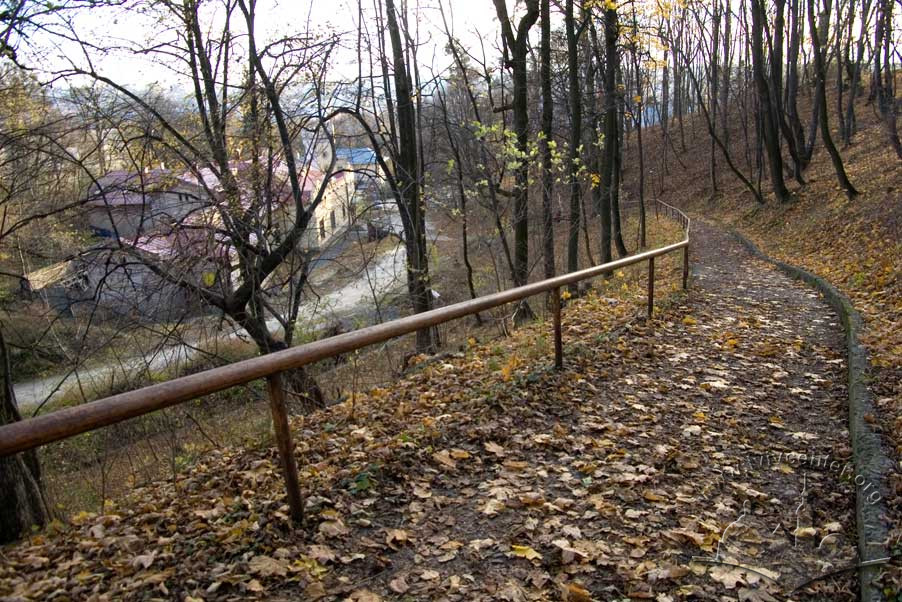
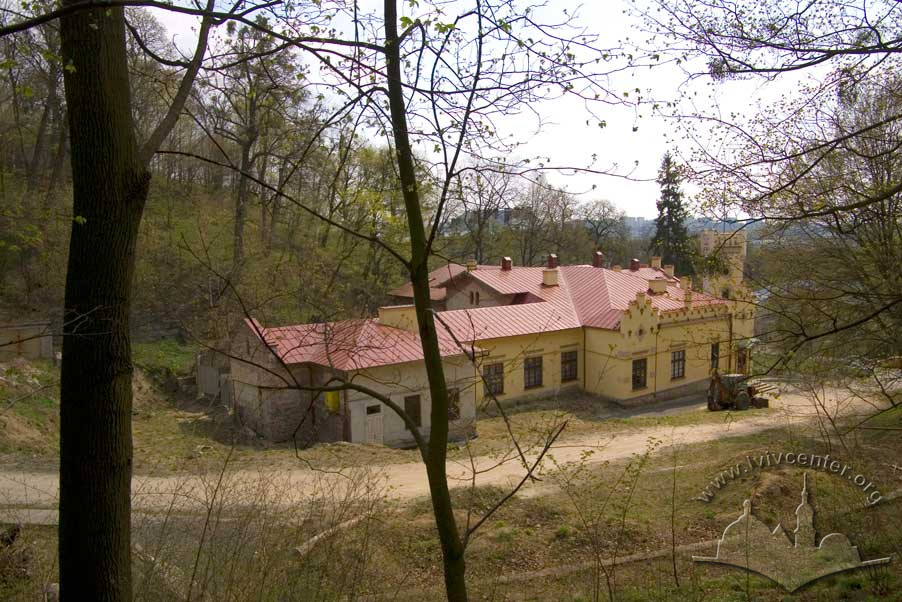
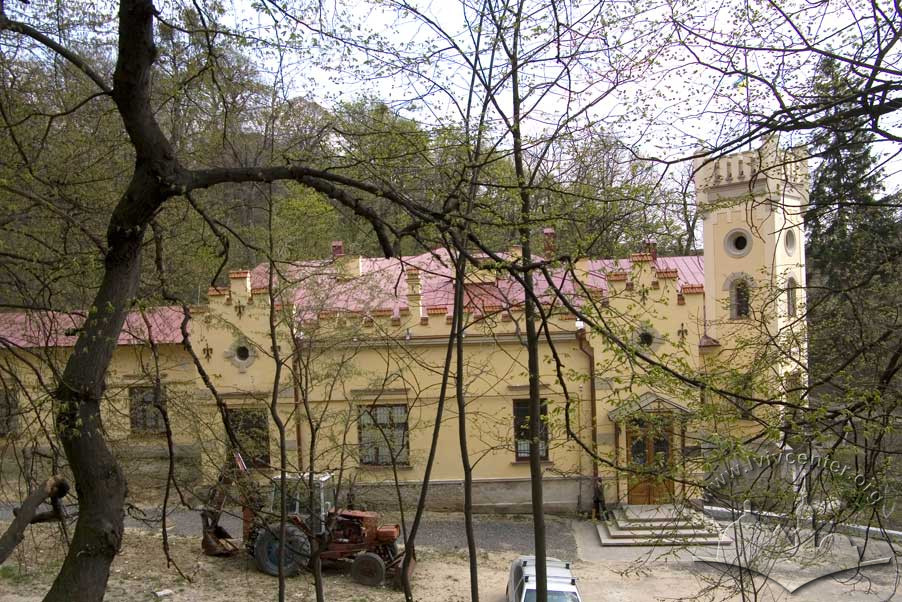
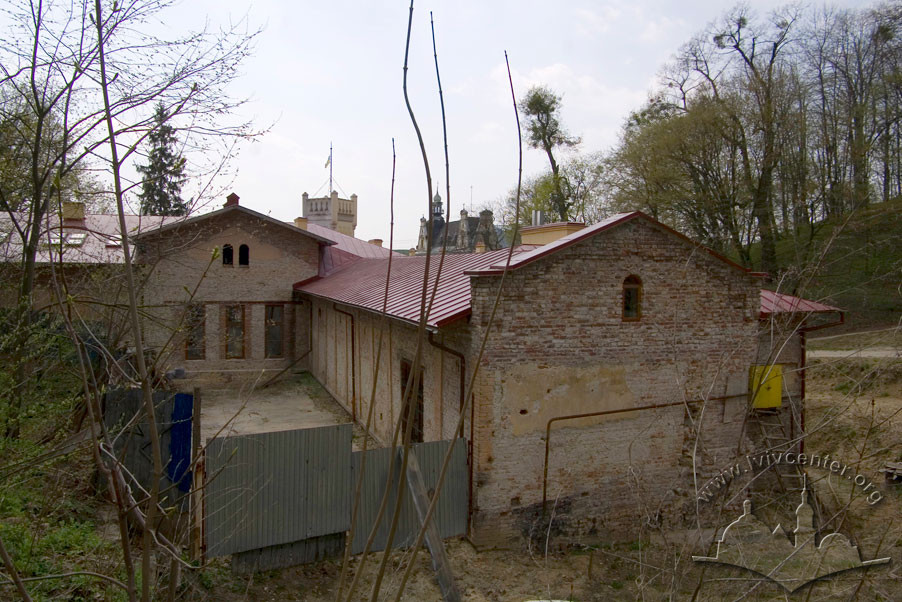
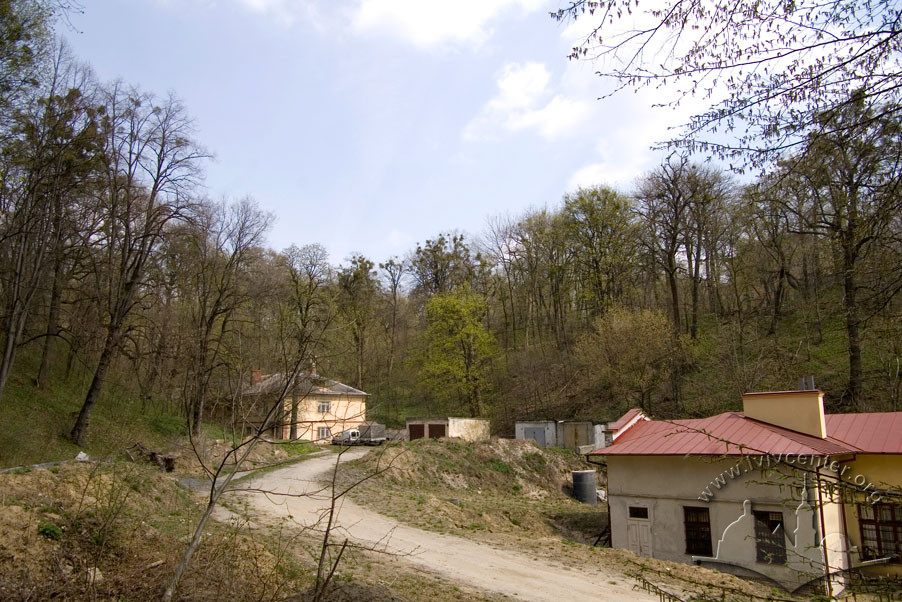
The Strzelnica complex consisted of several structures. The main building is a two-story palace with a complex plan featuring a corner four-sided tower. The two-story building to the right of the main entrance to the property is the former fogard (caretaker's lodge), now a residential house. To the left stands a three-story building with avant-corps crowned by helmet domes. The roof of this building features a weather vane in the shape of a rooster — the symbol of the Rifle's Association. To the north of the palace sits the competition wing or shooting pavilion. On the western side of the site stands a small service structure with cellars (now semi-ruined), built into the hillside. The complex also includes a landscape park.
People
Bauer — gardener.
Jozef Engel — architect.
Alfred Kamenobrodzki — architect.
Pavlo Lednov — outstanding pentathlete, multiple world champion, and Olympic medalist. Refined his skills at the Strzelnica shooting range during the 1960s and 1970s.
Bruno Prugar — archer representing the "Pogoń" society, participant in the 1936 Berlin Olympic Games. Repeatedly elected "Cock King". Competed at the Lviv Strzelnica shooting range.
Franz Trescher — architect.
Ernst Wittman — landscape architect.
Sources
- Державний архів Львівської області (ДАЛО) 2/1/7350.
- Науково-технічний архів ДП Ін-т “Укрзахідпроектреставрація”, Л.-220-2.
- Księga pamiątkowa 35-lecia lwowskiego sportowego klubu “Pogoń” (Lwów, 1939).
- T. Kulczycki, Rys historyczny Towarzystwa Strzelców Lwowskich (Lwów, 1848).
- В. Вуйцик, Міська стрільниця (Комп’ютерний набір. У друці).
- Ю. Кордіяк, Чемпіони живуть у Львові (Львів: Каменяр, 1980).
