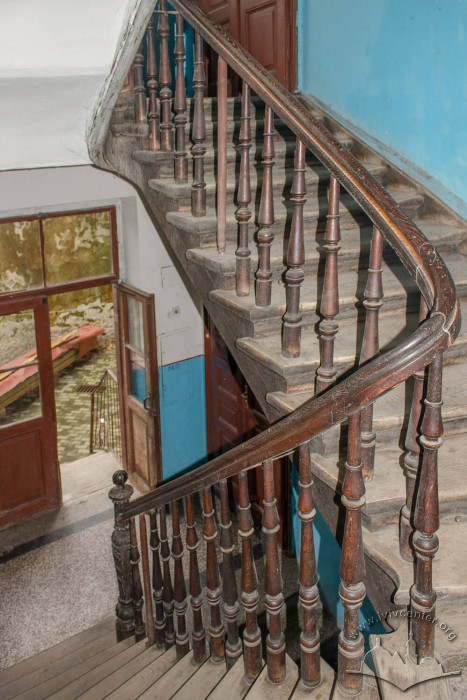
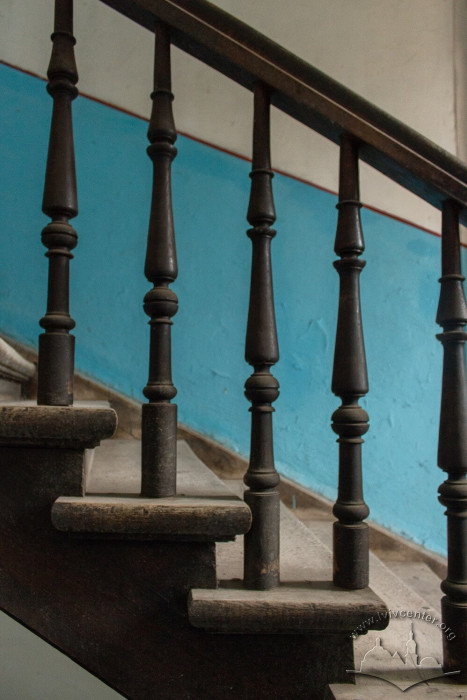
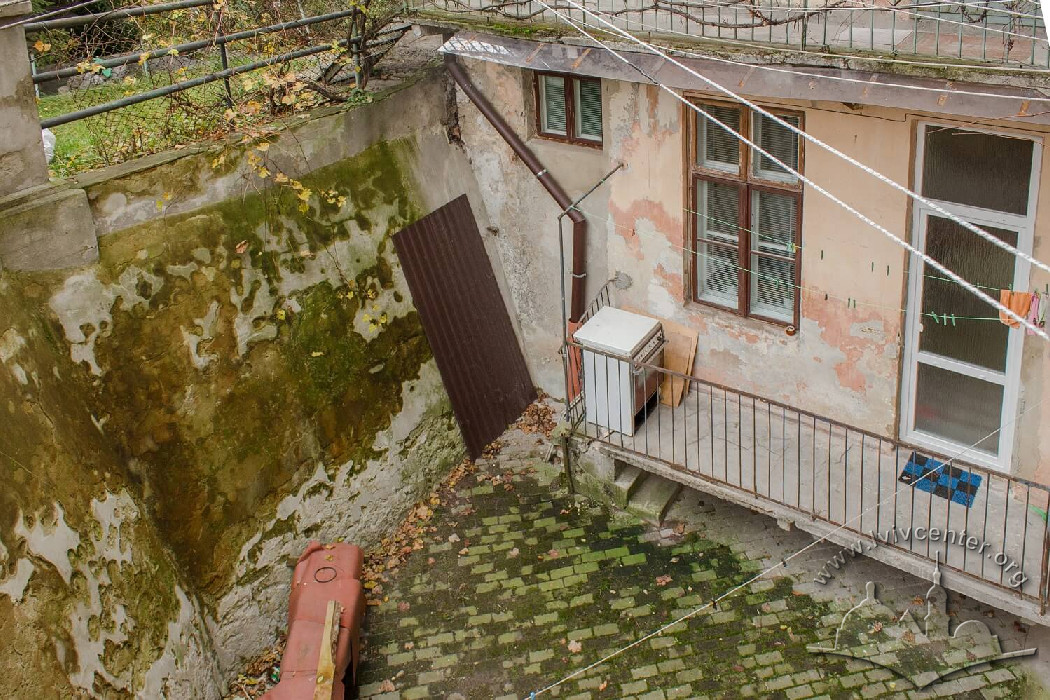
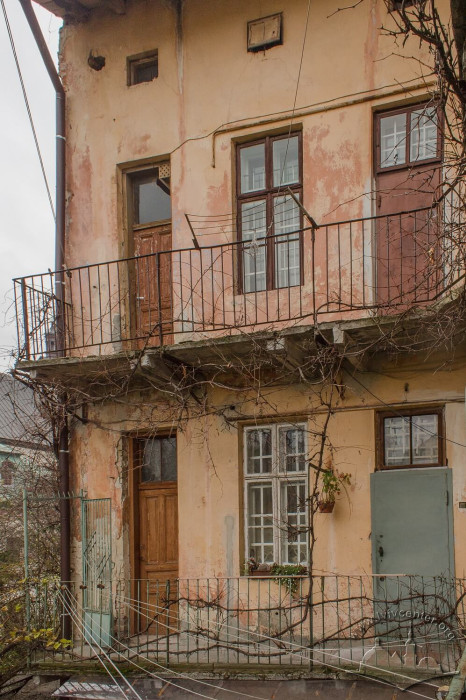
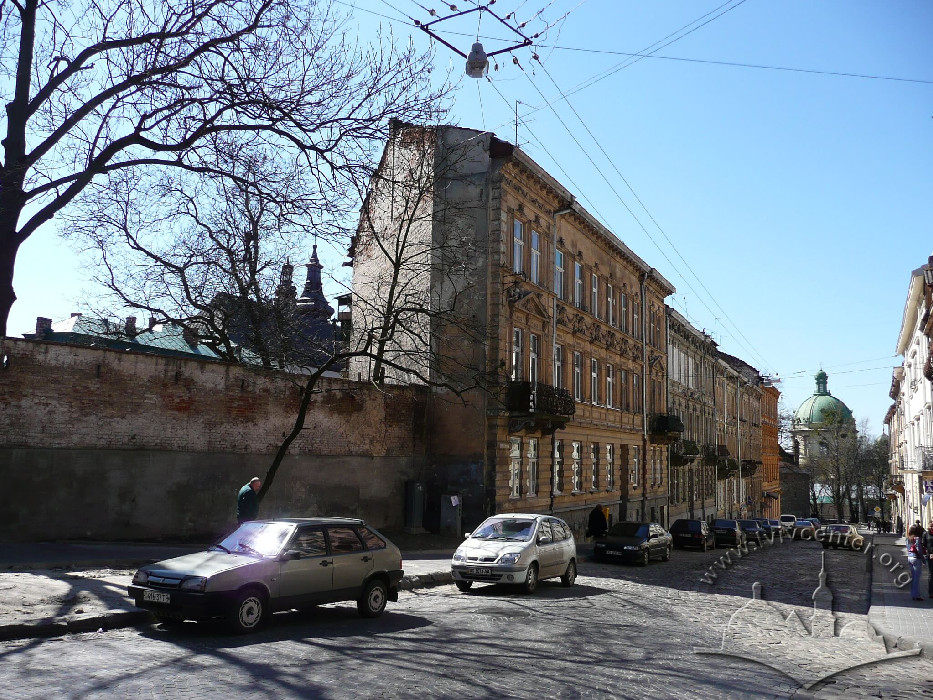
Vul. Mykoly Lysenka, 10 – residential building ID: 1539
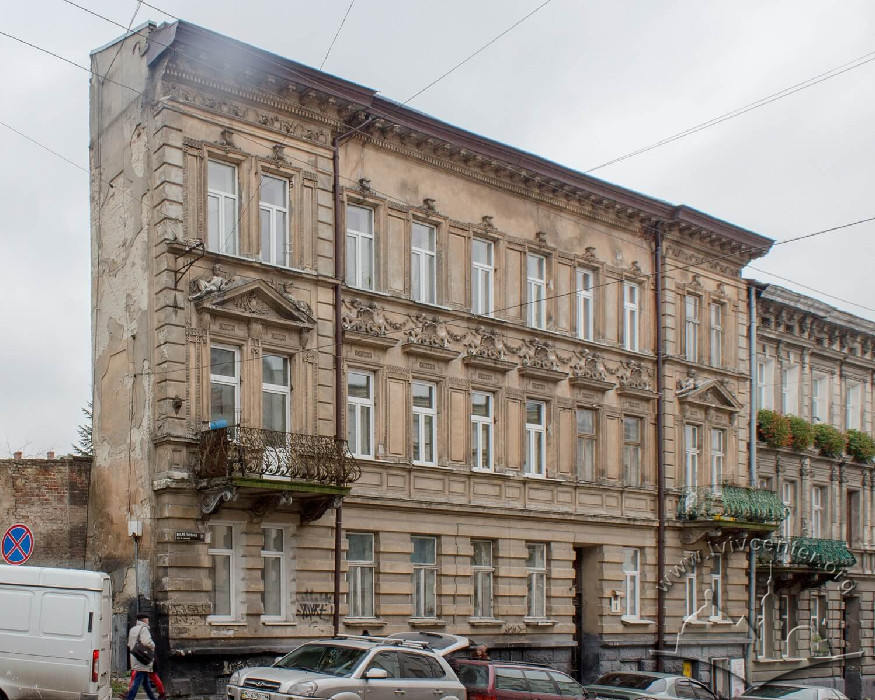
Former address: ul. Kurkowa 10 (conscription No. 701 4/4). In 1800–1801, an indoor riding arena and equestrian school owned by Józef Krupp was built on a portion of the plot belonging to the Monastery of the Discalced Carmelite Fathers. The riding arena stretched along today's vul. Lysenka. In the 1890s, several tenement houses designed by architect Andrzej Gołąb were constructed on its site, including building No. 10. In 1910, the tenement house accommodated the editorial office of the magazine Przegląd Urzędniczy, managed by K. Neumayer. In 1929, the building housed the editorial office of the Teatralna Bibljoteka magazine and a colonial goods store owned by L. Parzygnat. It is an Architectural monument (registration No. 979), designated as a nineteenth-century residential building.
Architecture
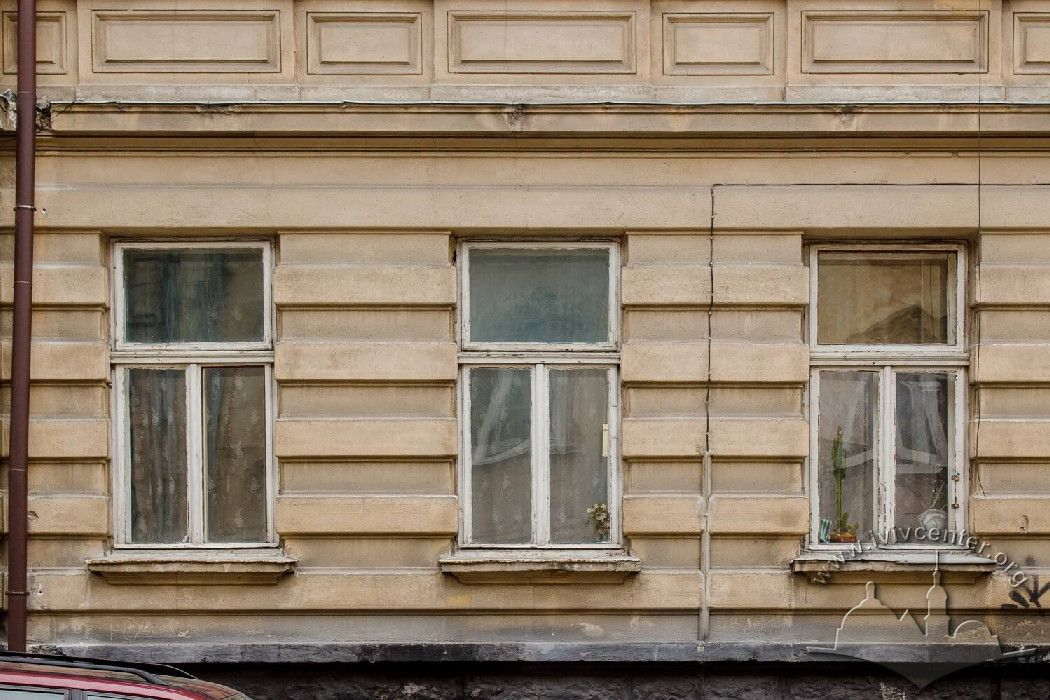
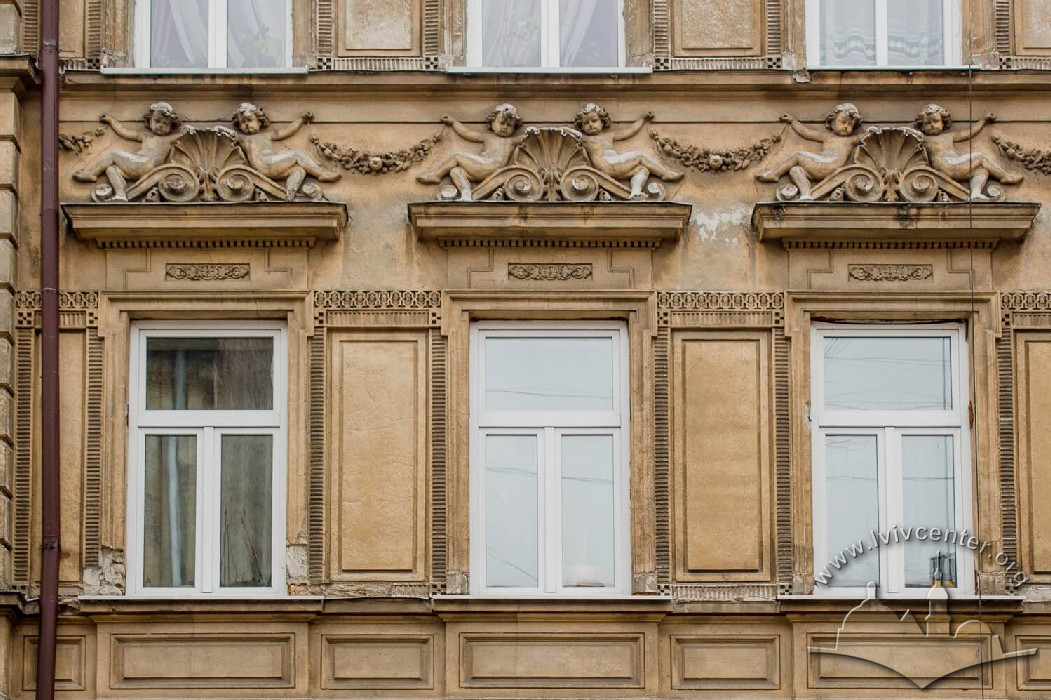
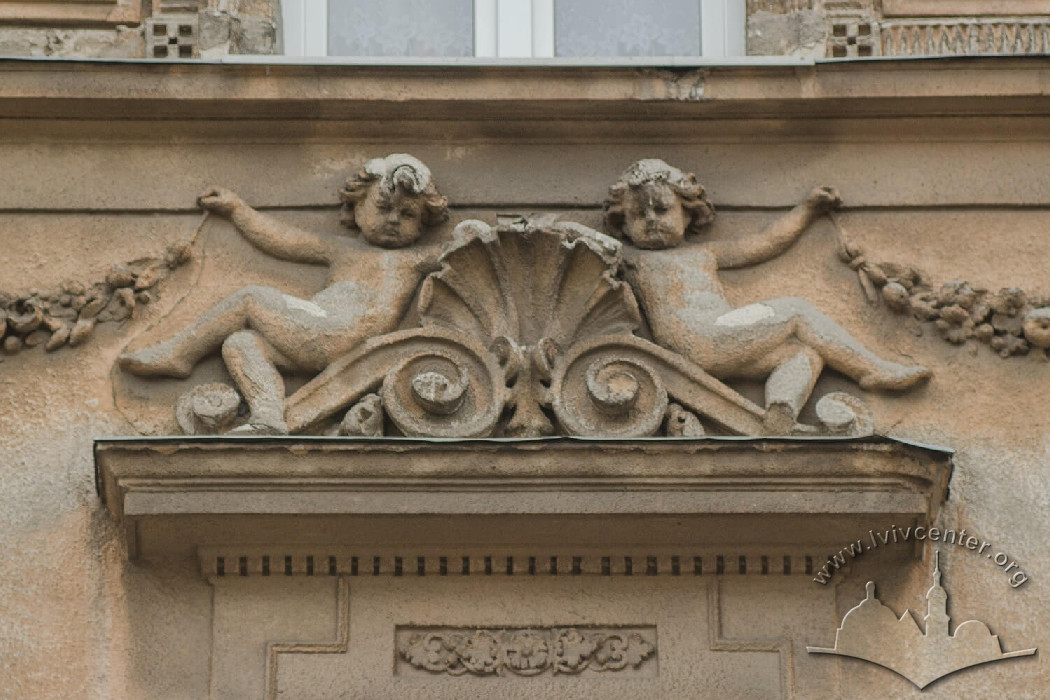
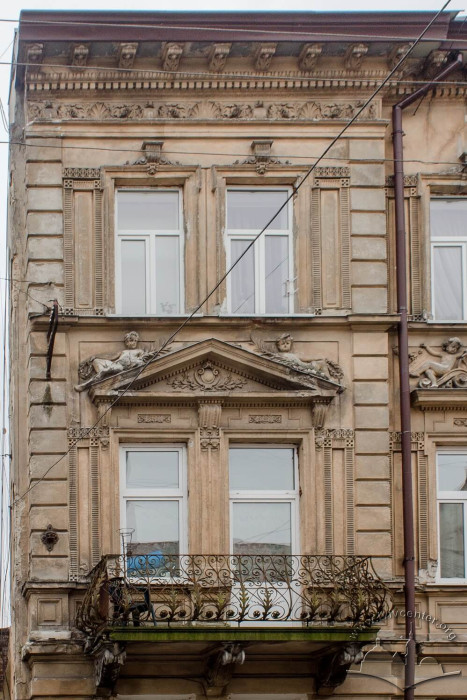
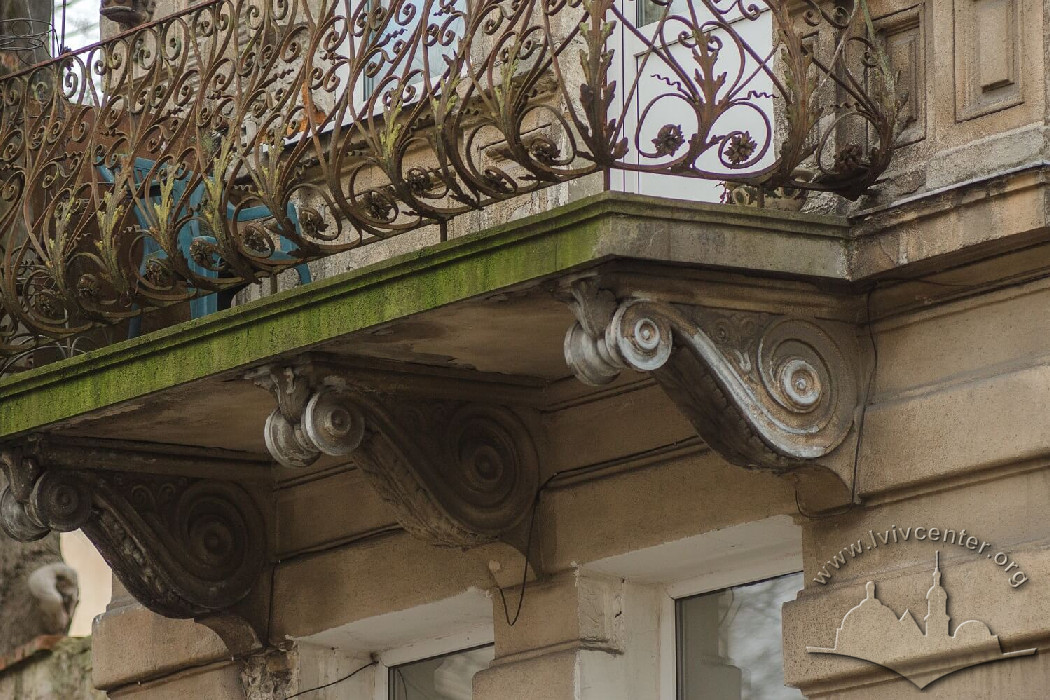
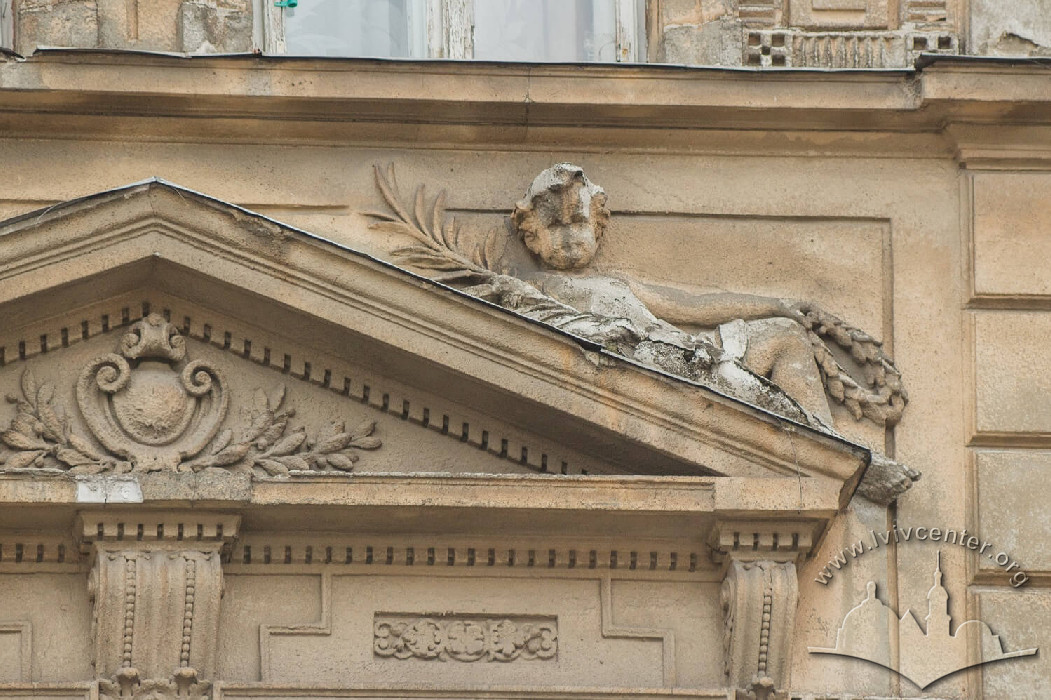
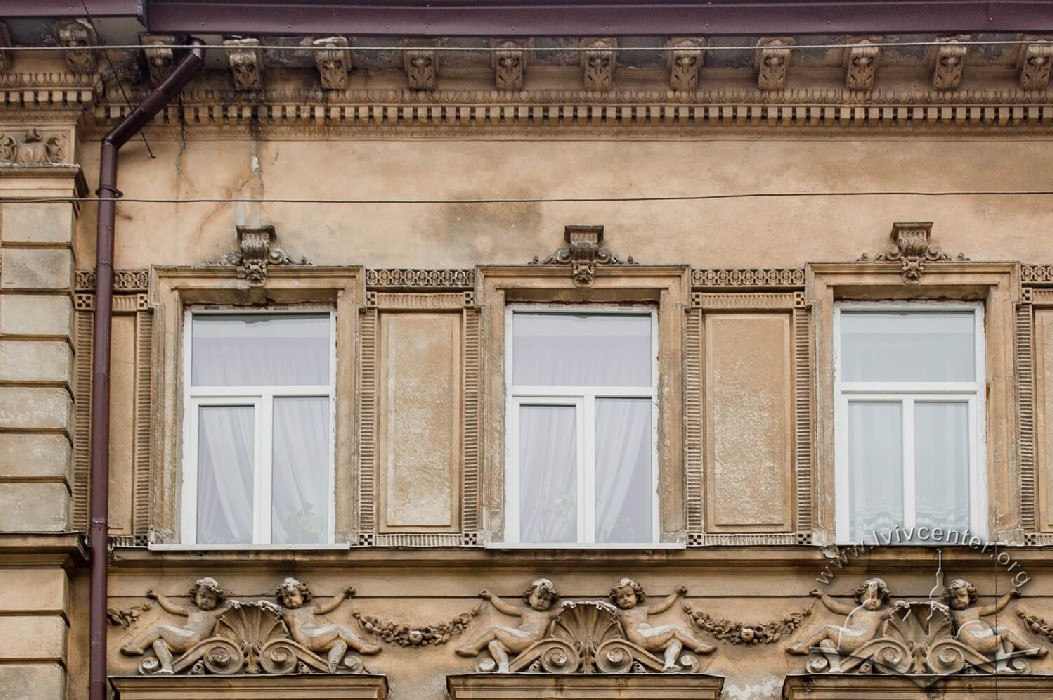
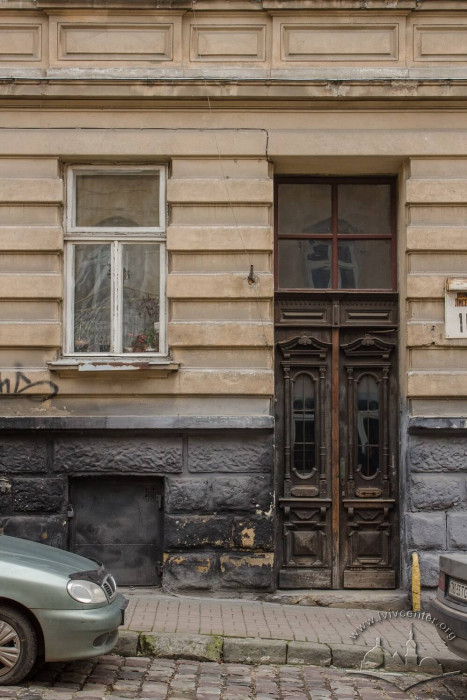
This three-story Historicist apartment building, constructed in the 1890s according to a design by Andrzej Gołąb, features a small inner courtyard and is set on a high basement level. On both sides of the principal elevation, subtle avant-corps protrude, featuring second-story balconies with ornate, lacelike Neobaroque railings. The façade walls are finished with banded rustication. The second-story windows are topped by rectangular pediments, except for those above the balconies, which feature triangular pediments. Figures of putti are positioned on both sides above the pediments. A unique feature of the building's layout is the sharp angle on the eastern side, dictated by the configuration of the site. Beyond this corner lies the garden of the former Monastery of the Discalced Carmelite Fathers, which is separated from the street by a high wall.
People
Porbus Barczewski –– owner of the building in 1889.
Aleksander Bogdanowicz –– engineer of the Regional Department, resident of the building in 1902.
Roman Ciszewski –– teacher, resident of the building in 1902.
Andrzej Gołąb –– architect, author of the building's design.
Oswald Groh –– colonel, resident of the building in 1902.
Stan. Klemensiewicz –– gymnasium professor, resident of the building in 1902.
Anna Kontecka –– owner of the building in 1902, real estate owner, resident of the building in 1902.
Edgar Paszkudzki –– estate owner, resident of the building in 1902.
Julian Timoniewicz i spólnicy –– owners of the building in 1916.
Kazimierz Tyszkiewicz –– owner of the building in 1871.
From 1903 to 1905, the tenement house served as the foreign headquarters of the Revolutionary Ukrainian Party (RUP). Symon Petliura (1879–1926) lived here during that period. In December 1904, at the RUP conference in Lviv, he opposed a merger with the Russian Social Democratic Labour Party (RSDLP). For several months, Petliura attended Ukrainian studies university courses in Lviv, which were directed by Mykhailo Hrushevsky. Starting in March 1917, Petliura became a member of the Ukrainian Central Rada; by May, he was appointed head of the Ukrainian Military General Committee, and in June, he became the General Secretary (Minister) of Military Affairs. In January and February 1918, he formed the Haydamak Kosh of Sloboda Ukraine. In November 1918, he was released from prison and elected to the Directorate of the Ukrainian People's Republic (UNR). From November 1918, he served as the Chief Otaman of the UNR Army. Beginning in November 1920, he directed the operations of the UNR government-in-exile in Poland. In October 1924, Petliura settled in Paris, where he was assassinated by Bolshevik agent Shwarzbard on May 25, 1926.
Organizations
-

The Ukrainian Pedagogical Society
The Ukrainian Pedagogical Society (until 1912, the Ruthenian Pedagogical Society; from 1926, Ridna Shkola — Ukrainian Pedagogical Society) was a public organization that was based in Lviv and supported Ukrainian education from 1881 to 1939.
Read more