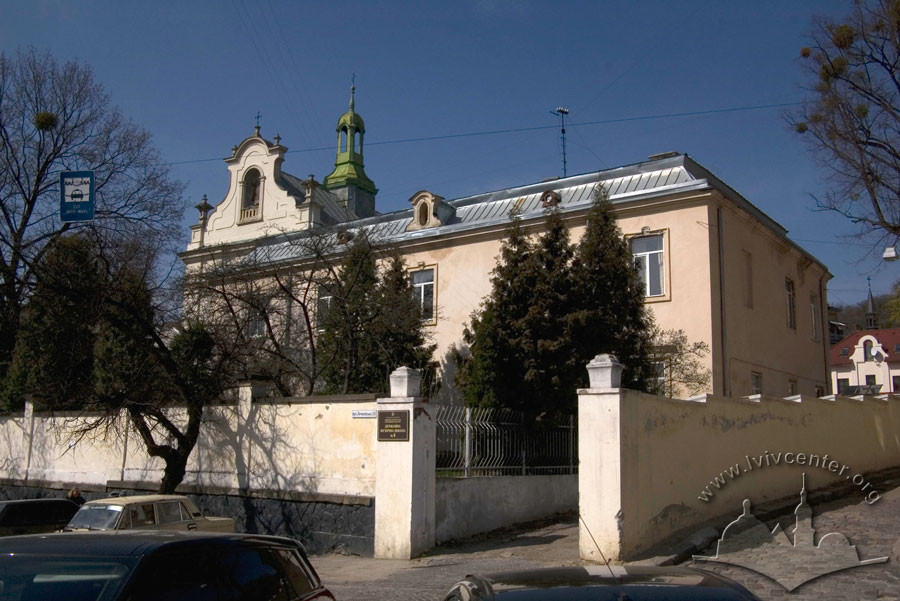
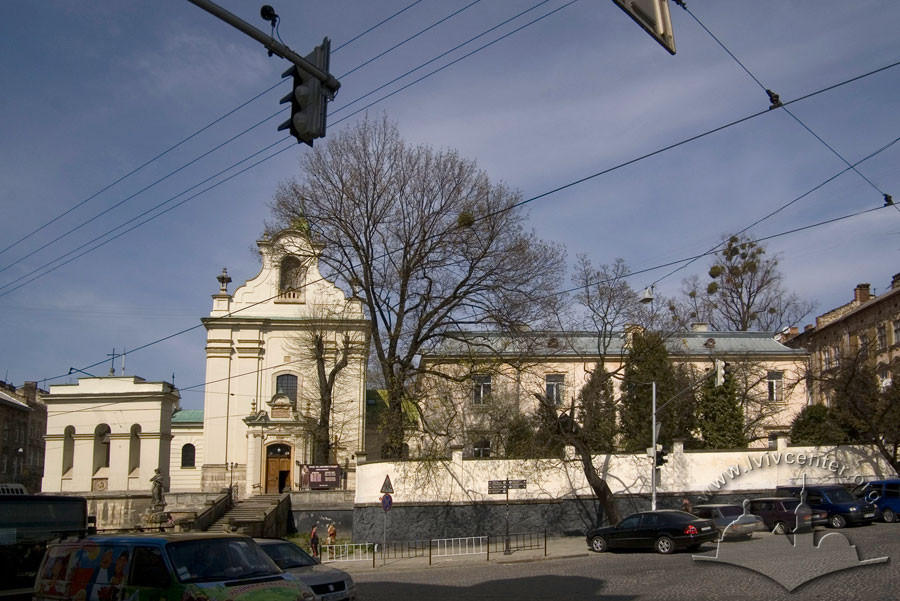
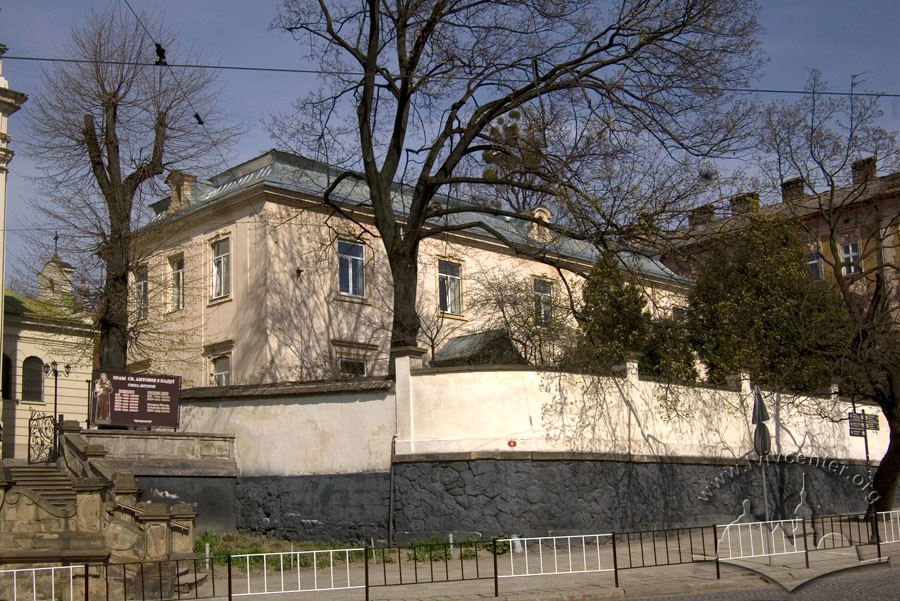
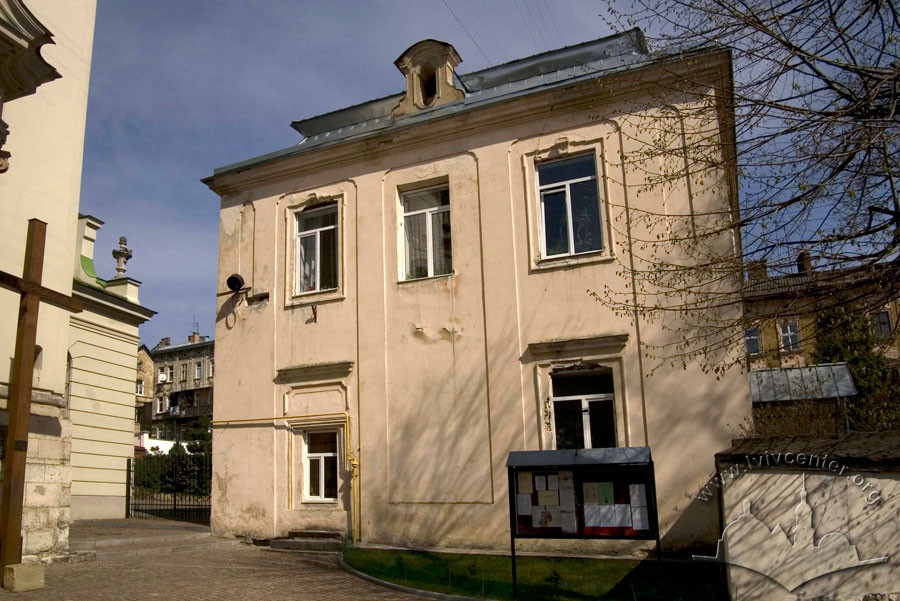
Vul. Lychakivska, 49 – music school №4 ID: 1600
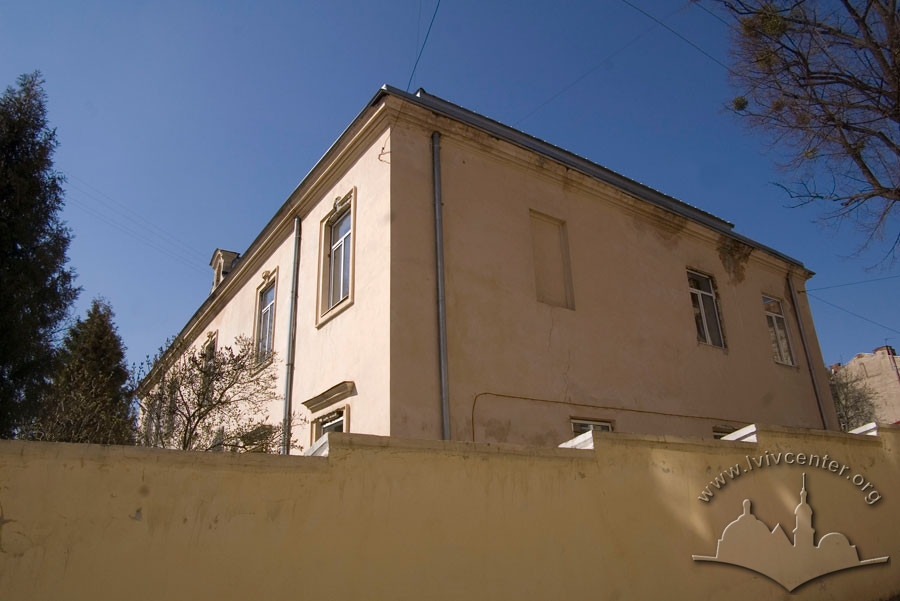
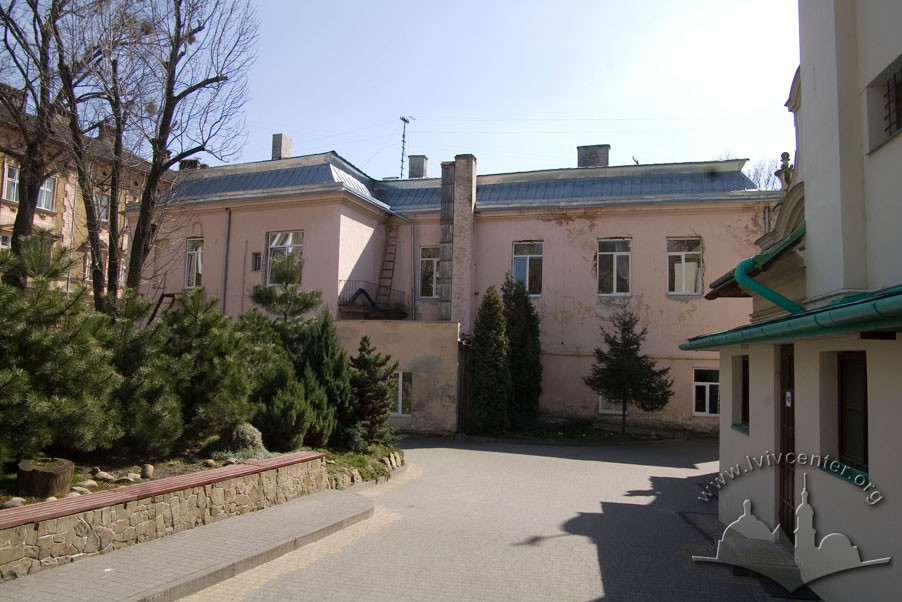
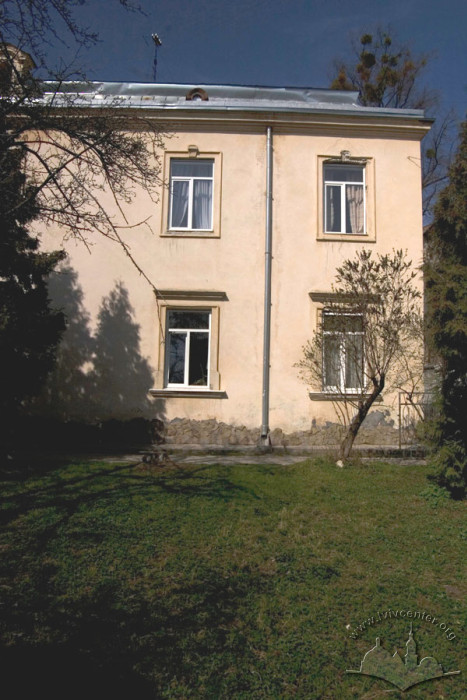
This building previously served as the parish house for the Roman Catholics of Lychakiv, and later as the school attached to the Church of St. Anthony. From the Soviet period until the present (2010), it has housed Music School No. 4.
Story
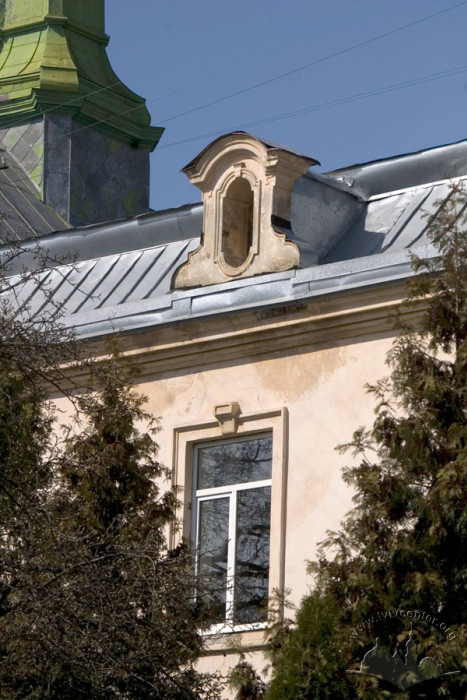
In 1617, the city council designated a site among the municipal vineyards in Lychakiv for the foundation of a Franciscan monastery and the Church of St. Anthony. King Zygmunt III confirmed this land grant. However, the city stipulated that the church and monastery must be built of wood so that enemies could not utilize them for defense during an attack. The wooden monastery burned down in 1648 when Lviv was approached by the Cossack army of Bohdan Khmelnytsky and the Tatar horde of Tugay Bey. On this site in 1669, Prince Konstanty Krzysztof Wiśniowiecki sponsored the construction of a masonry church and monastery; these were never completed, as they were destroyed by the Turks during the siege of Lviv in 1672. In 1718, construction began anew based on a fresh design by architect Paweł Antoni Fontana. The Franciscan monastery was dissolved during the reforms of Emperor Joseph II, and in 1786, the church became the parish church for the Roman Catholics of the Lychakiv suburb. The former monastery was then converted into a parish house. Between 1858 and 1860, it was used to accommodate the St. Anthony trivial school. In 1885, the parish house was remodeled with the addition of a second story and decorated in the Neobaroque style. During the Soviet era, Music School No. 4 was opened in the building.
Related buildings and spaces
-
Vul. Lychakivska, 49a – St. Anthony Church

People
Owner in 1871, 1889, and 1916 –– the Roman Catholic Parish of St. Anthony (Pol. Probostwo rz. kat. św. Antoniego).
Sources
- Архітектура Львова. Час і стилі ХІІІ-ХІХ ст. / Упорядник і науковий редактор Ю. Бірюльов – Львів, 2008.
- Зубрицький Д. Хроніка міста Львова – Львів, 2006.
- Мельник І. Львівські вулиці і кам’яниці, мури, закамарки, передмістя та інші особливості Королівського столичного міста Галичини. – Львів: Центр Європи, 2008.
- Czerner O. Lwów w dawnej rycinie i planie. – Wrocław–Warszawa–Kraków, 1997.
- Kościoły i klasztory rzymskokatolickie dawnego wojewódstwa Ruskiego / Red. J.K. Ostrowski. – Kraków, 2000.
- Księga adresowa Król. stol. miasta Lwowa. – Lwów, 1902.
- Lwów. Ilustrowany przewodnik. – Lwów: Centrum Europy, 2003. – 320 s..
- Skorowidz król. stoł. miasta Lwowa z oznaczeniem podziału miasta. Nazw ulic I placów, oliczbowania domów numerami konskrypcyjnemi i orientacyjnemi z wymienieniem właścicieli realności – tudzież nazw i numerów dawniejszych. – Lwów: Nakładem król. stoł. miasta Lwowa, z drukarni Instytutu Stauropigiańskiego, 1889.
- Skorowidz król. stol. miasta Lwowa – Lwów, 1916.
- Skorowidz nowych i dawnych numerów realności, tudzież nazw ulic i placów król. stoł. miasta Lwowa... – Lwów, 1872.
- Spigel J.R. Skorowidz adresowy Król. stol. miasta Lwowa. – Rocznik II: Rok 1910. – Lwów, 1909.