Vul. Kniazia Romana, 26 – residential building ID: 2687
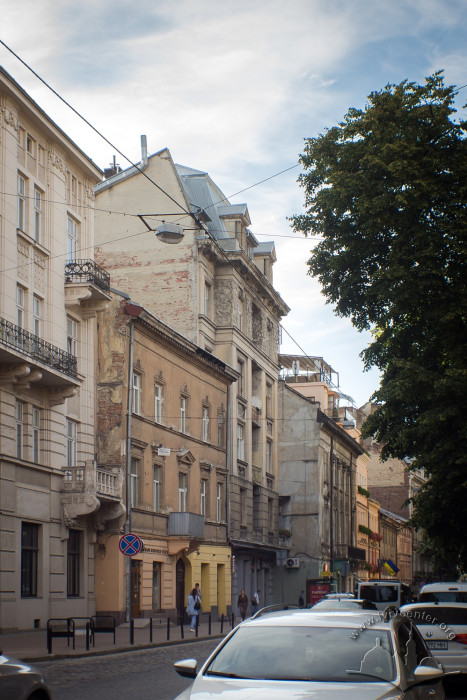
The five-story building was constructed between 1914 and 1924 for the French oil company "Premier," based on a design by architect Ferdynand Kasler. It stands as a prime example of modernized Сlassicism integrated with Art Deco elements and is recognized as a local Architectural monument.
Story
The city block situated between modern-day Kniazia Romana and Nyzhankivskoho streets began taking shape at the end of the eighteenth century. Development on this specific urban site was first recorded on a map from 1777, which shows an existing masonry building designated as conscription number 398 ¼. The floor plan layout depicted on the map, featuring two narrow lateral avant-corps, suggests that this was the very same building that remained on the site until 1914 and was documented in early photographs.
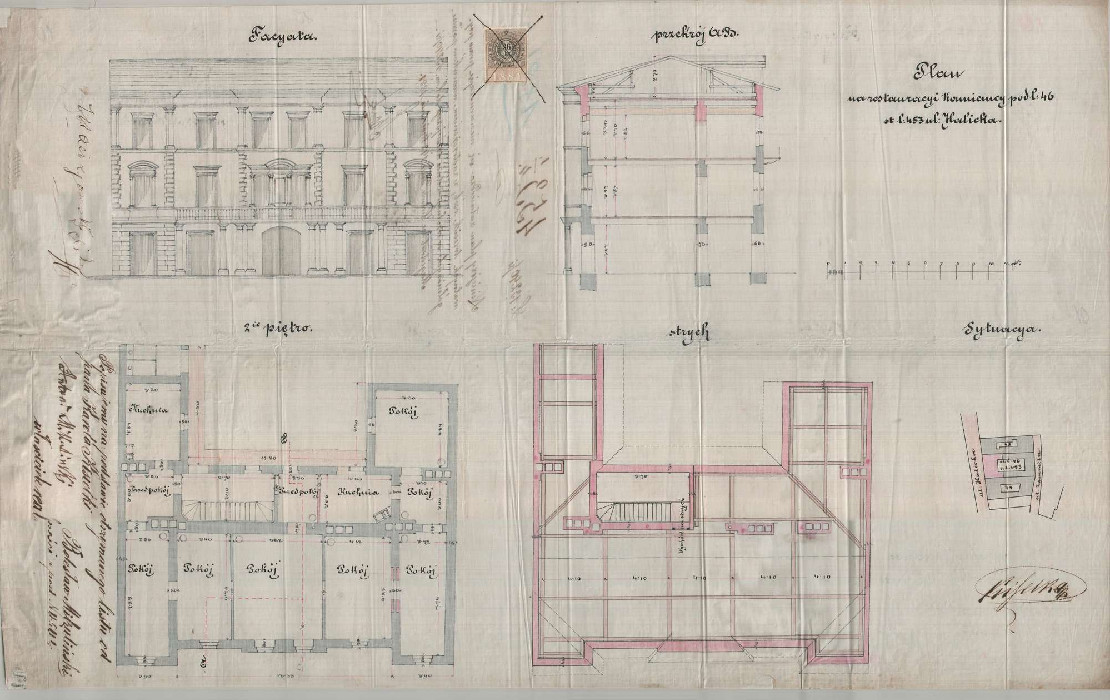
The earliest archival records concerning construction on this property date back to 1836. By the mid-nineteenth century, it had become a three-story building, and its façade was later documented in a 1881 reconstruction design. At that time, the property was owned by the prominent Lviv entrepreneur Karol Kisielka. In compliance with the regulations of the city council's building department, the old shingle roof was replaced with a new fireproof, covered in sheet metal.
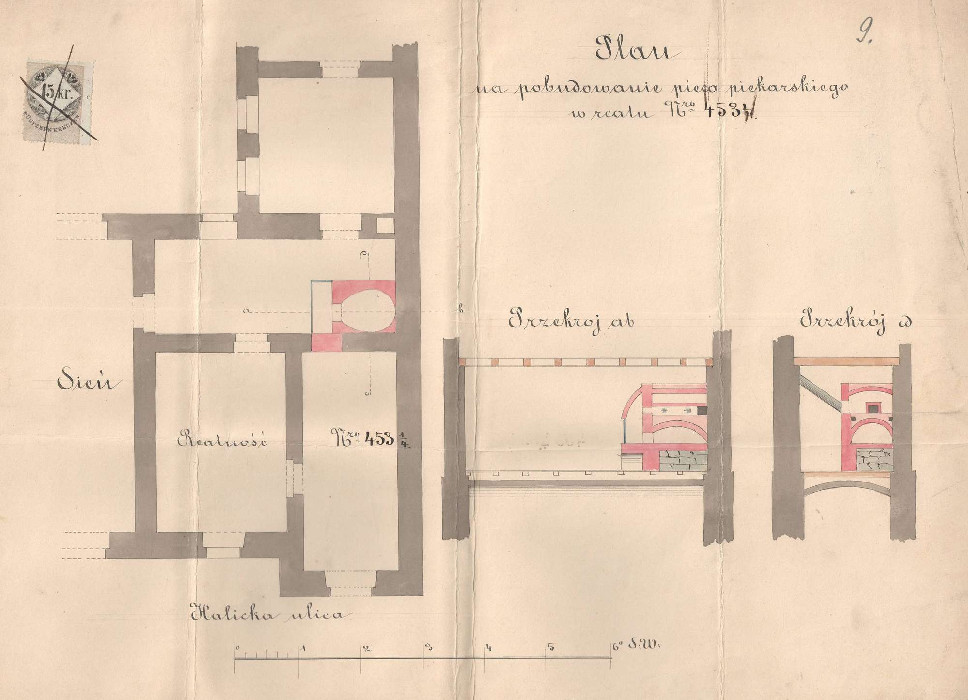
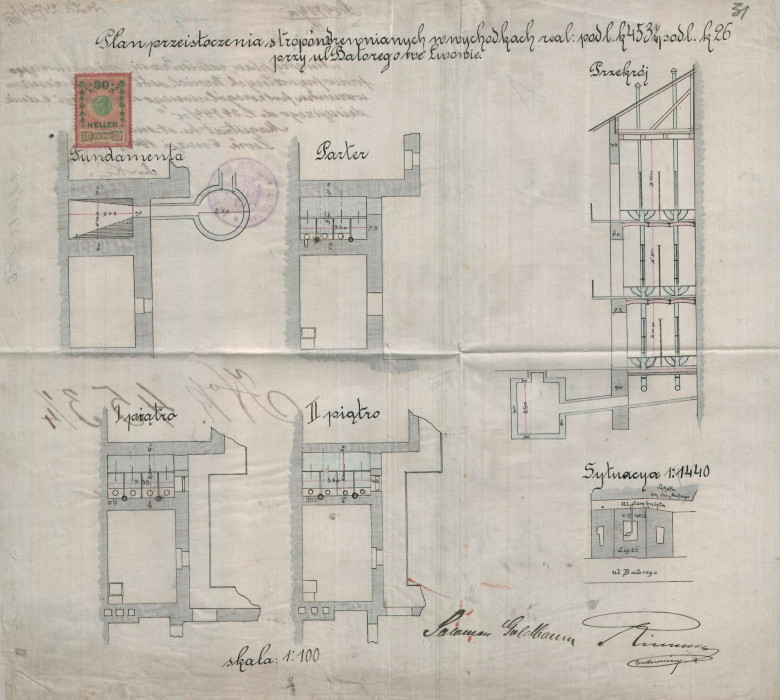
Prior to Kisielka, the property was owned by Adalbert (Wojciech) Sadowski (1836), Jan Sokula (1853), and Tomasz Łuszczyński. Over the years, the townhouse underwent numerous renovations, reconstructions, and layout alterations, which included installing new heating stoves and converting windows into doors. A document from 1868 records that Tomasz Łuszczyński petitioned the city council for permission to install a bakery oven for a confectioner, submitting a corresponding design for the project.
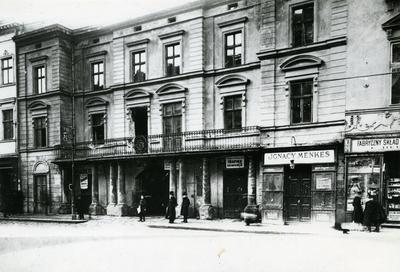
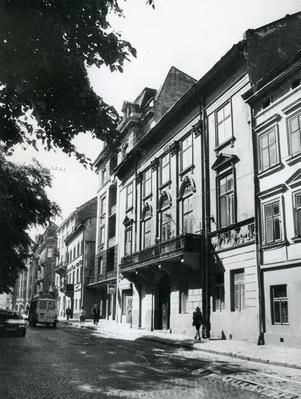
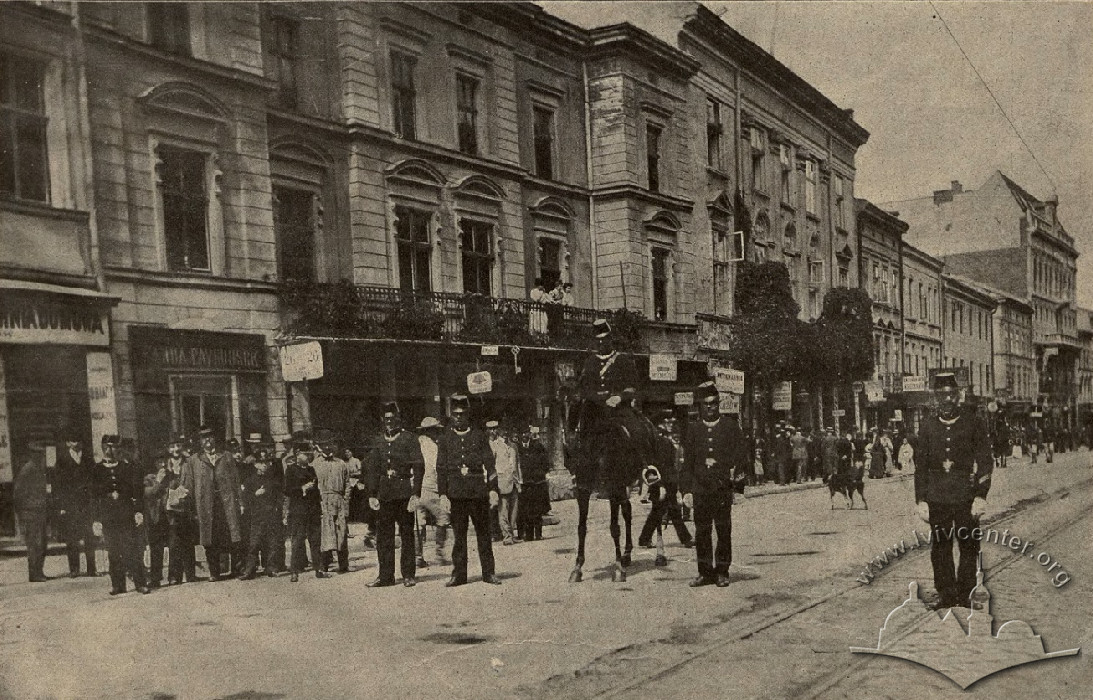
Just before its demolition in 1914, the building was photographed. The image captures a three-story late-Classicist structure featuring a symmetrical, center-axis façade composition. This axis was emphasized by a portal framing a wide carriage pass-through, while the second floor featured a balcony spanning the entire length of the façade, supported by eight columns. The ground floor housed various commercial establishments, including Ignacy Menkes’s antique shop.
The Modern Building
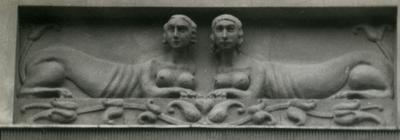
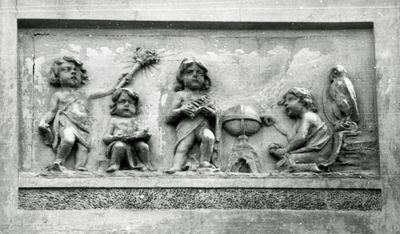
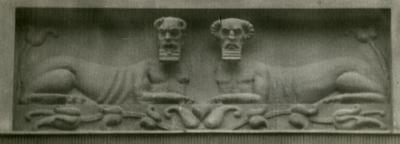
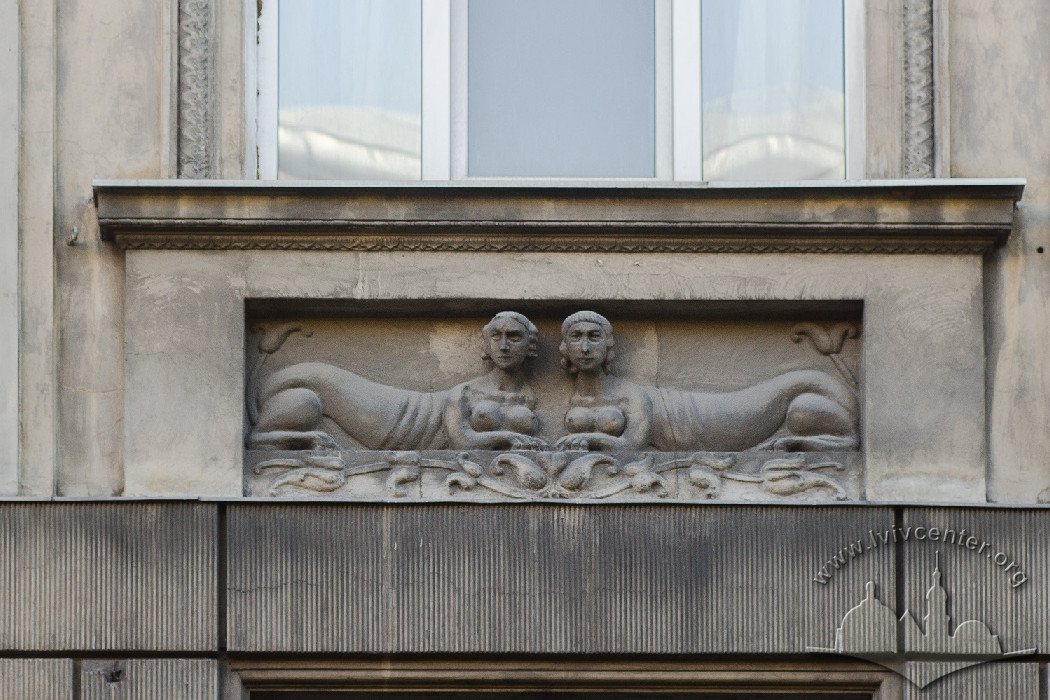
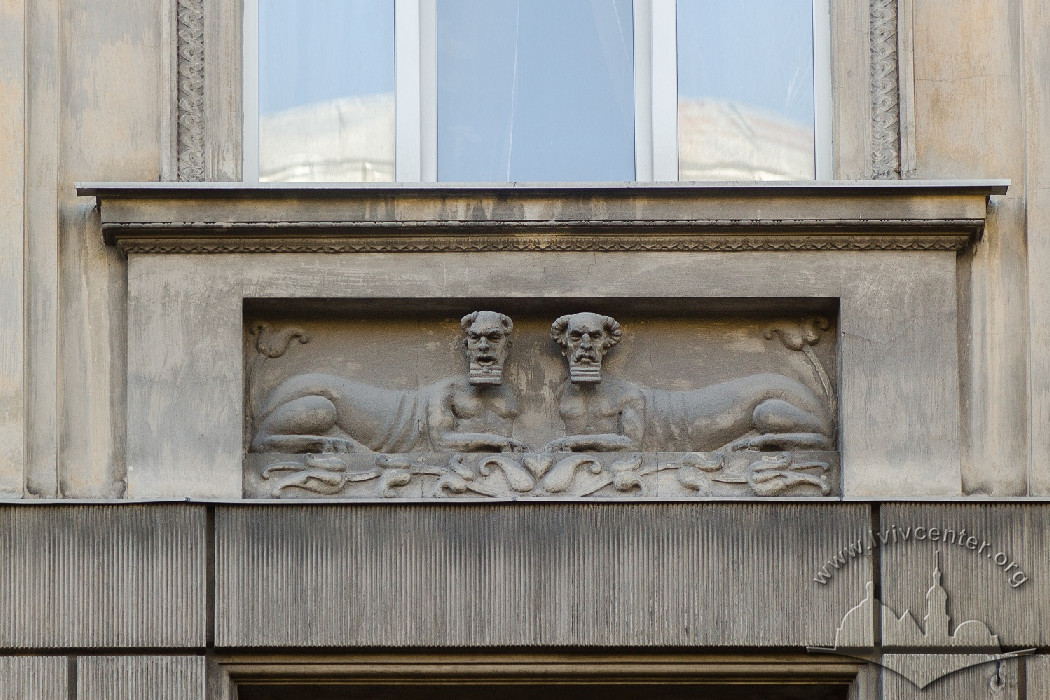
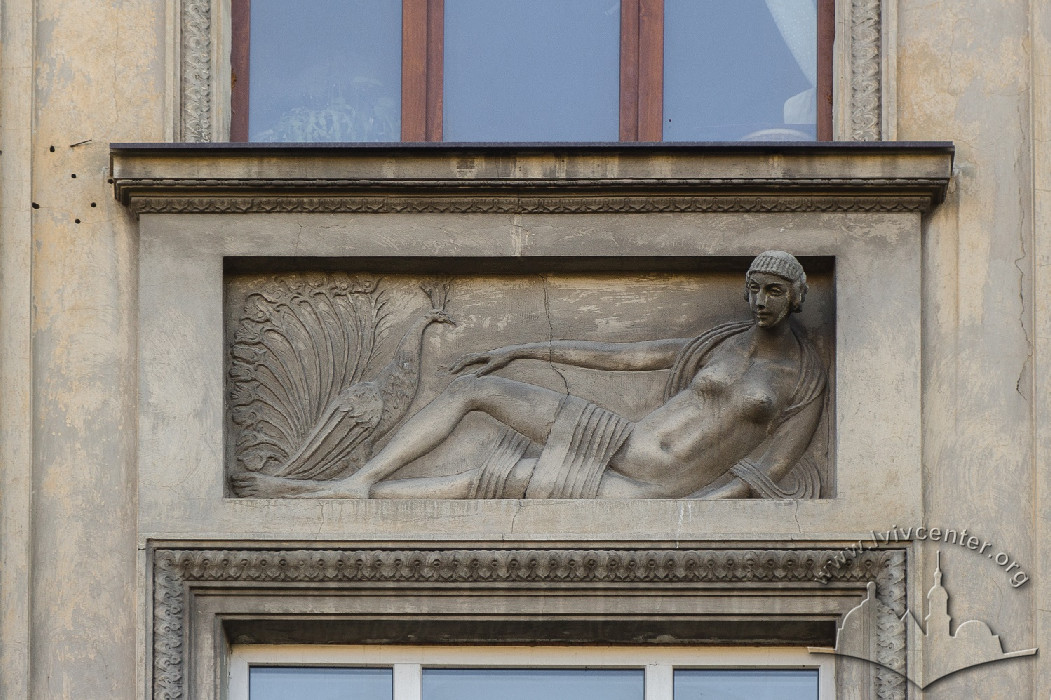
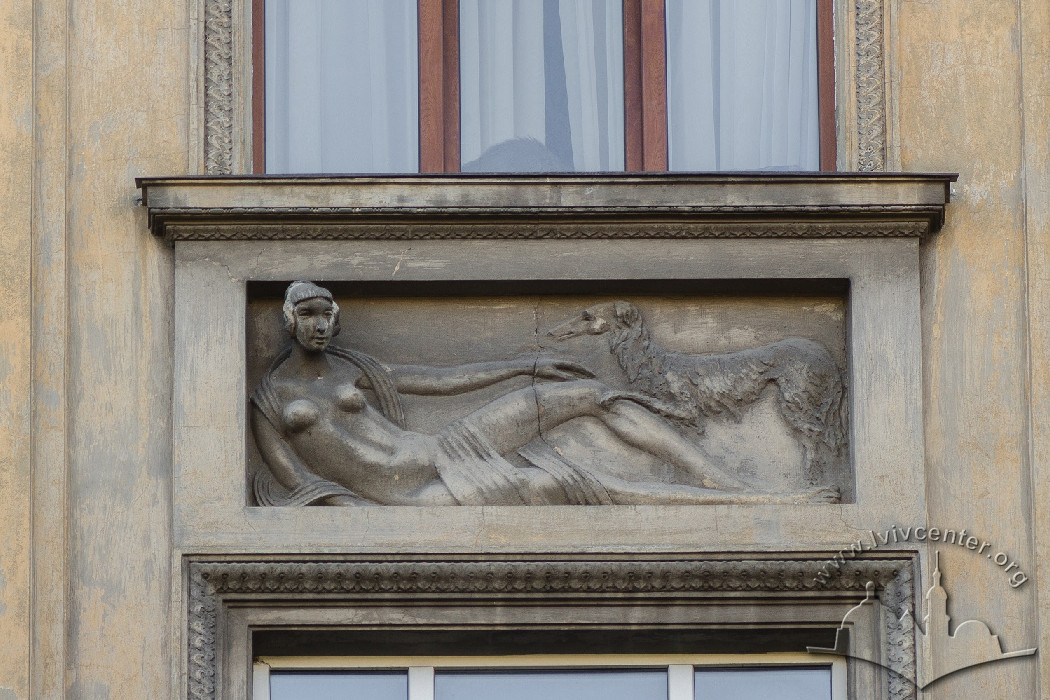
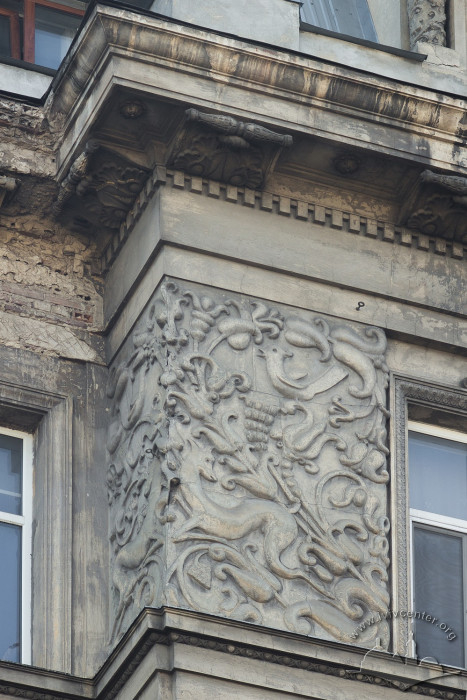
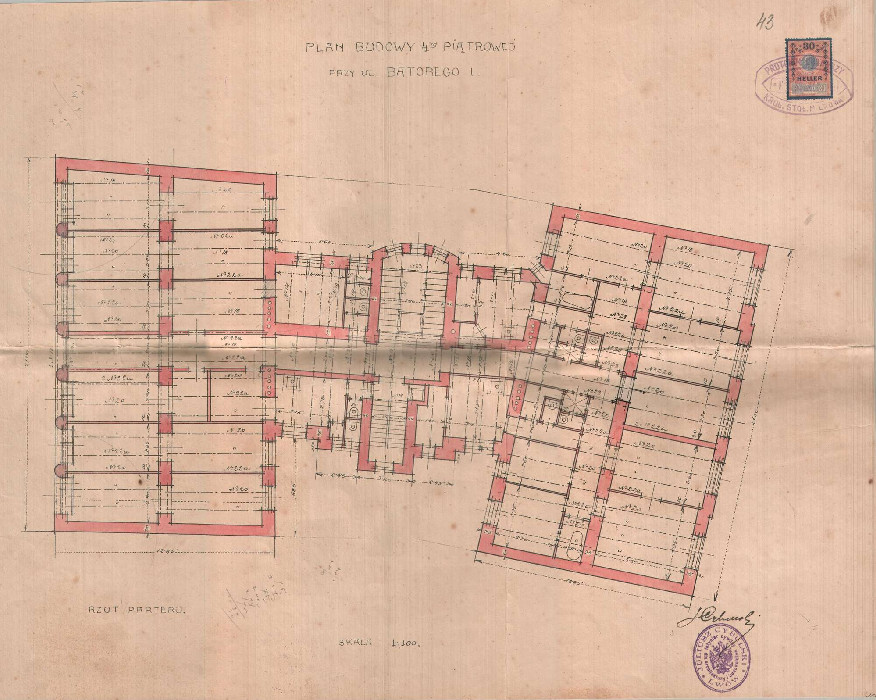
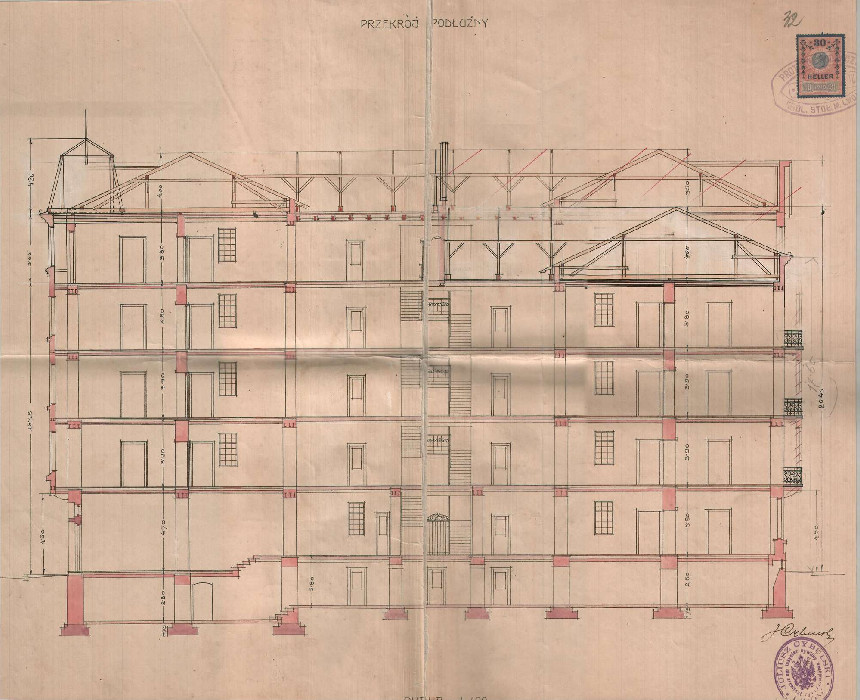
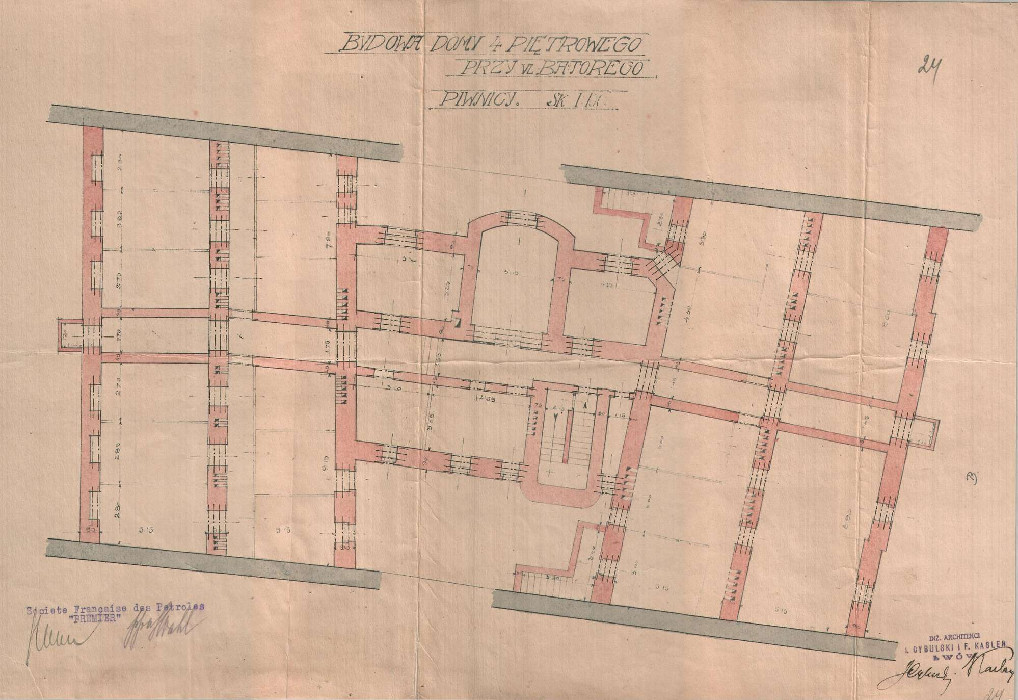
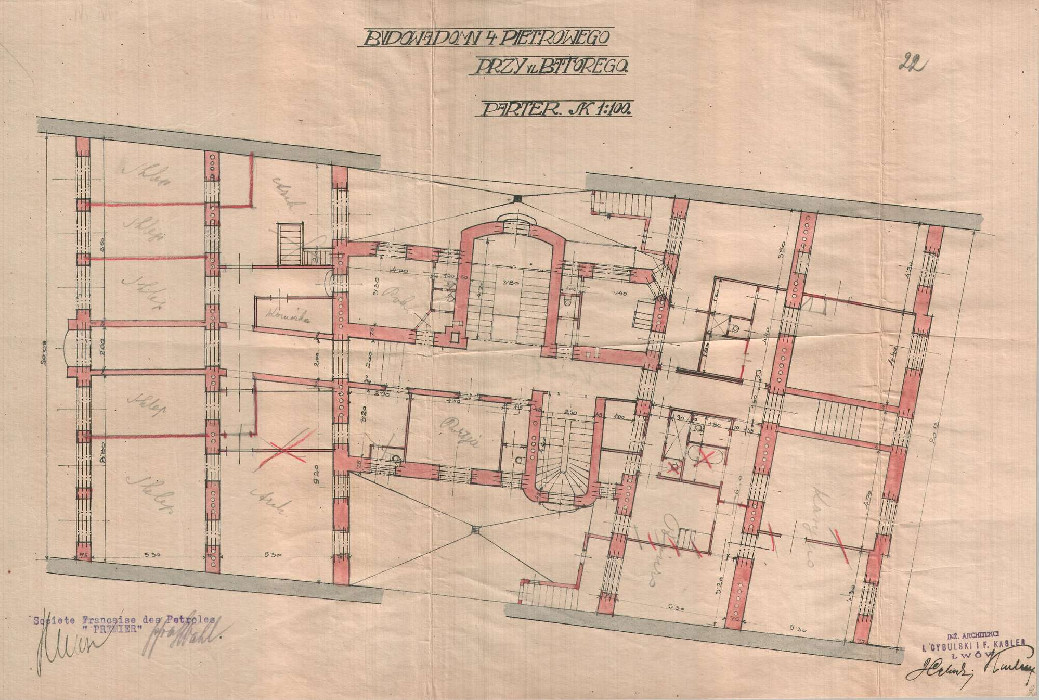
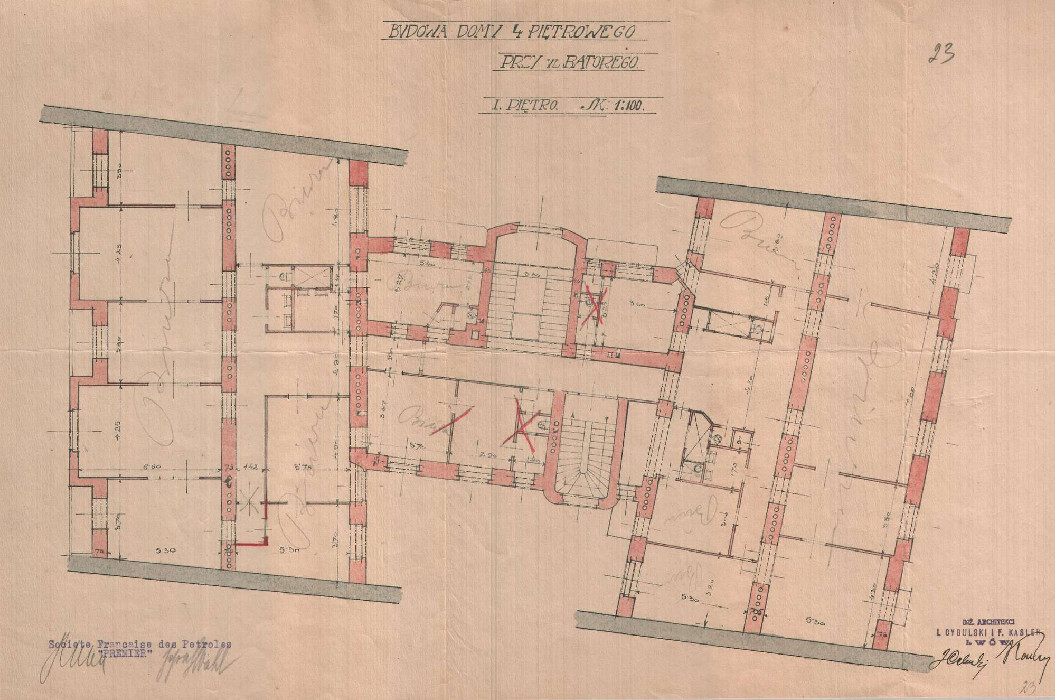
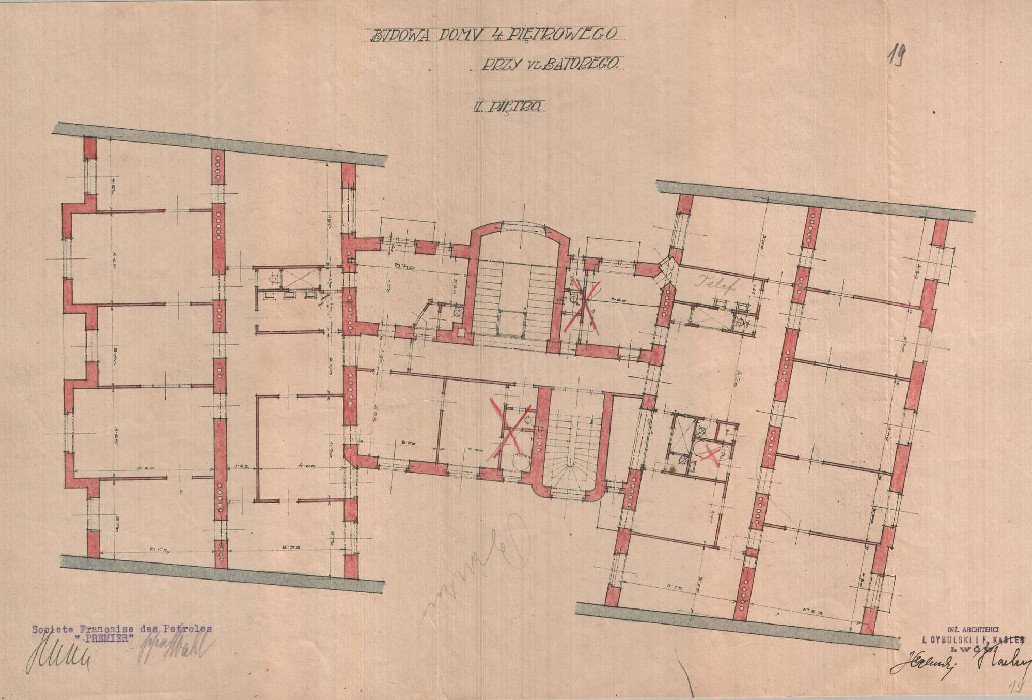
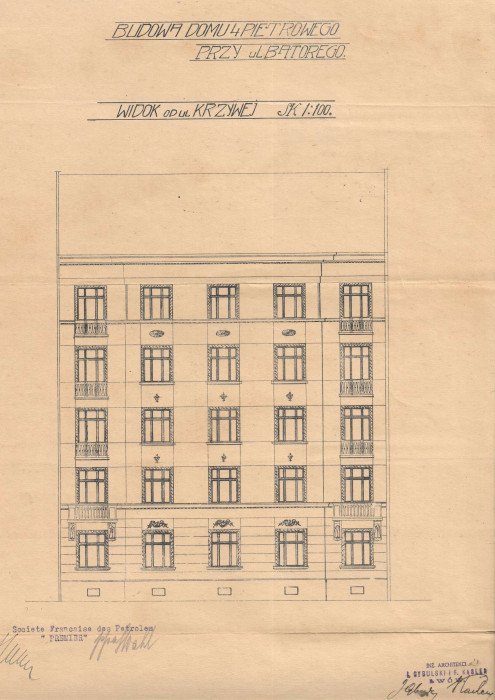
In 1914, commissioned by the French oil company Société française des pétroles "Premier", Lviv architects Julian Cybulski and Ferdynand Kasler designed a mixed-use office and residential building. However, the outbreak of World War I and the subsequent occupation of Lviv by Russian troops in September 1914 halted construction. The initial design, which was approved in April 1916, originally detailed a four-story structure. Records from June 30, 1922, indicate that construction was nearing completion. Yet, modifications were introduced during the process, resulting in a supplemental design that was not officially approved until April 1924. The architects proposed a concept for sculptural façade ornamentation, which was executed by the renowned Lviv sculptor Zygmunt Kurczyński. The company finally received its occupancy permit in October 1927. In its final form, the building was completed with five stories and an integrated attic floor.
During the Soviet period, the building was nationalized and converted into municipal property; its spacious apartments were subdivided and repurposed into communal flats.
Architecture
This five-story residential and office building features an attic floor on its front-facing side. It originally accommodated the corporate offices of the oil company alongside apartments for its employees.
Dimensions: 23.0 by 44.0 meters.
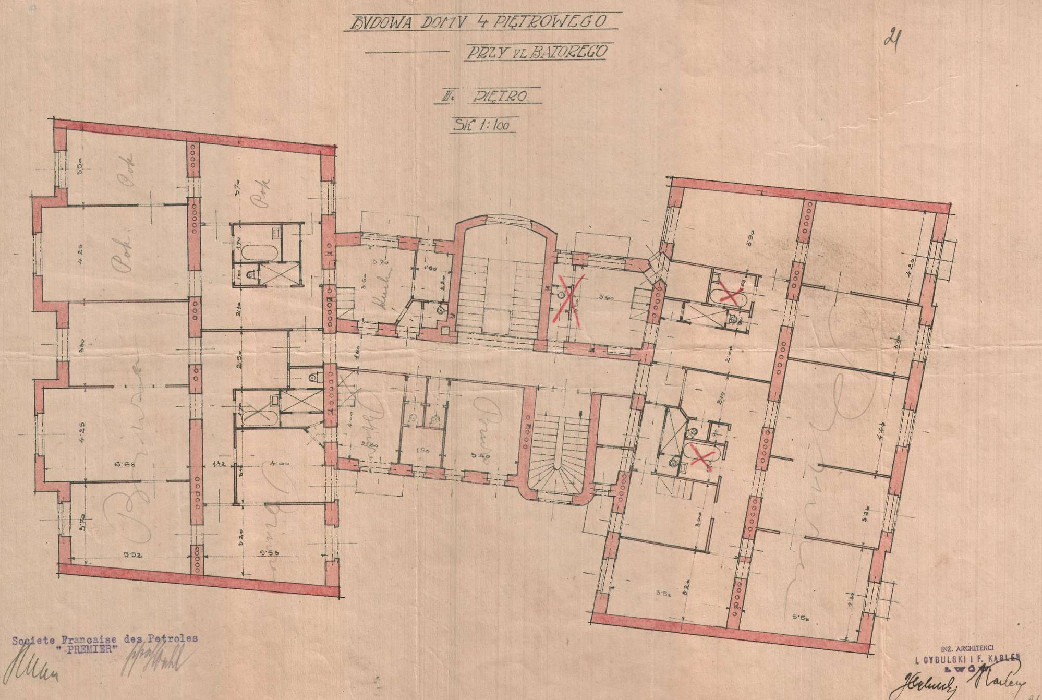
The building is constructed of brick and features a "butterfly" layout. In terms of spatial design, the structure consists of three distinct masses: a front and a rear block shaped as irregular rectangles (facing Kniazia Romana and Nyzhankivskoho streets, respectively) and a narrow central volume containing the staircases that connects them. Together with the neighboring buildings (No. 24 and No. 28), it encloses two internal courtyard-wells, though access is restricted exclusively to the northern one.
The building’s layout follows a sectional structure tailored to its original dual function of housing both corporate offices and private residences. The center-axis layout is anchored by a staircase and elevator shaft. This core is reached via an entrance vestibule with a narrow hallway leading from the principal entrance on vul. Kniazia Romana, as well as a secondary vestibule leading from the rear block on vul. Nyzhankivskoho (this rear exit is currently closed). Originally, an auxiliary staircase (now closed) sat directly opposite the primary southern staircase; it was documented in the 1914 design and noted in inventory floor plans from 1972. Today, it only provides access to the basement. The residential units on all floors are arranged in sections along a central passage in both building masses, with windows opening either onto the streets or into the inner courtyards.
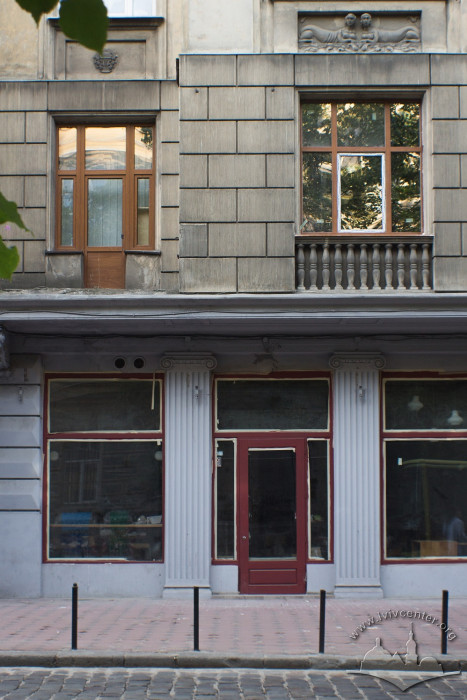
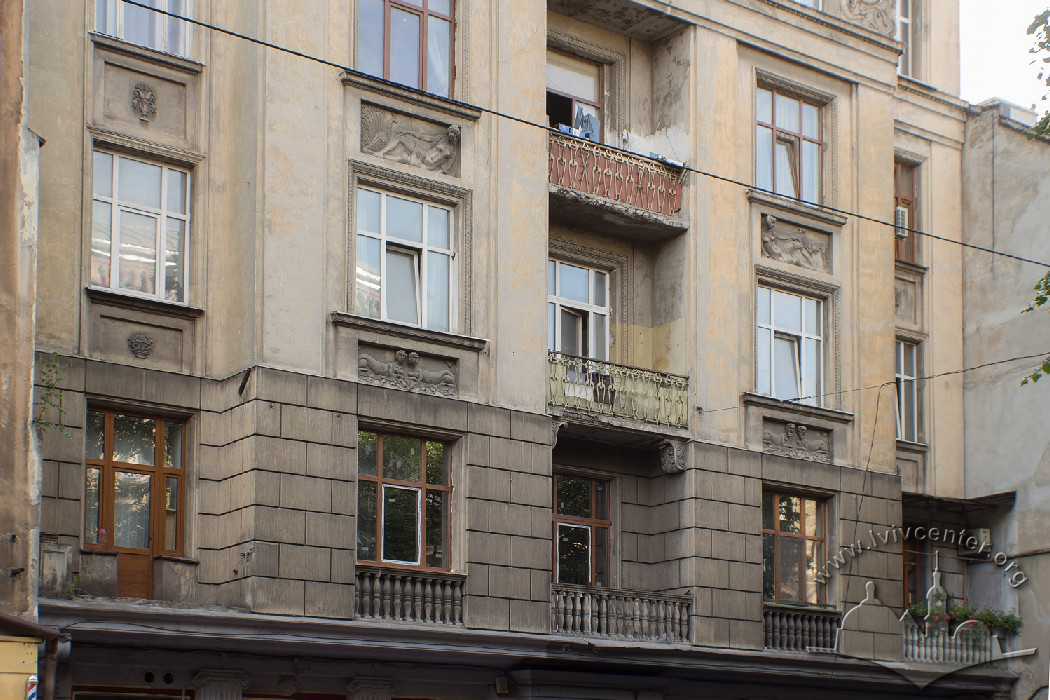
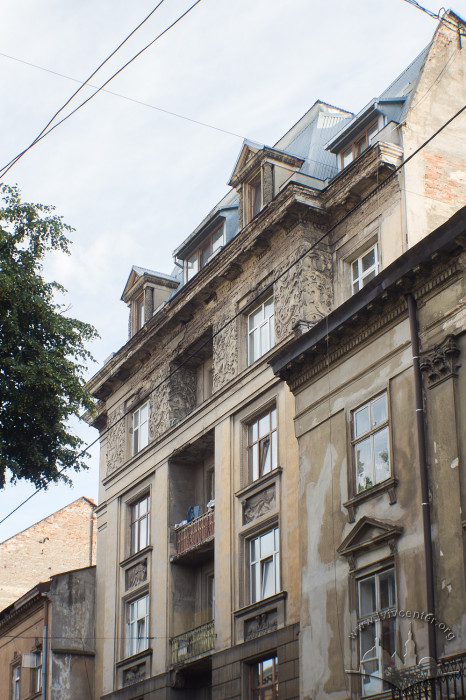
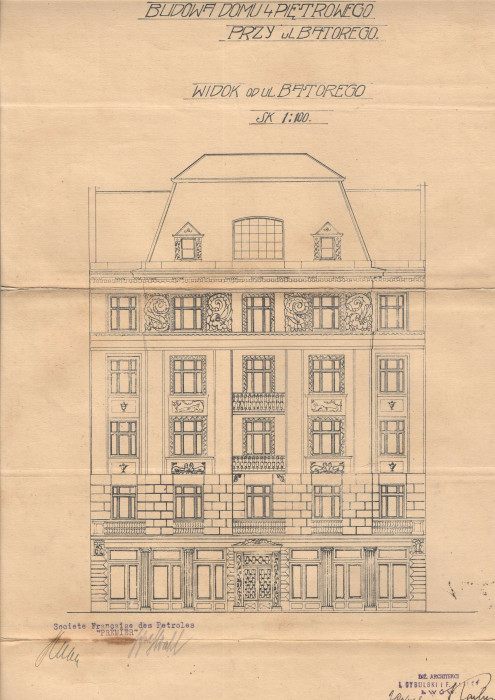
The façade composition facing Kniazia Romana Street features a symmetrical, five-axis design highlighted by a large bay window that spans three window units. The central axis is accentuated by loggias with metal grilles and a main entrance set within a recessed portal. The façade is topped by a simple, low attic sitting above a deeply projecting, molded cornice, while the fourth and fifth floors are separated by a plain frieze. A small canopy accentuates the recessed portion of the ground floor.
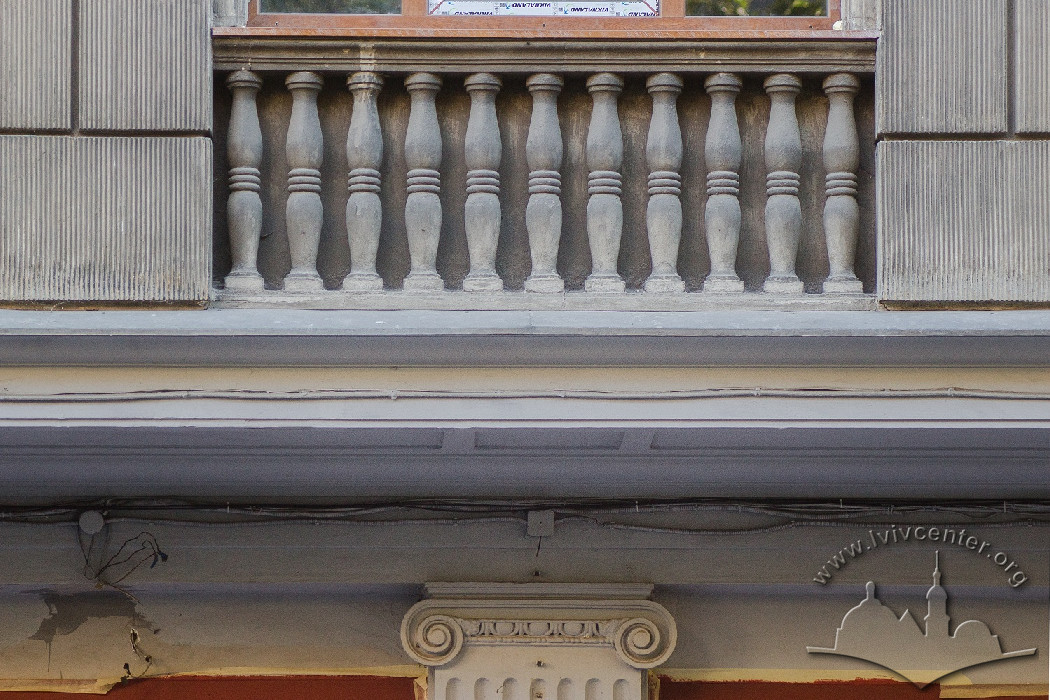
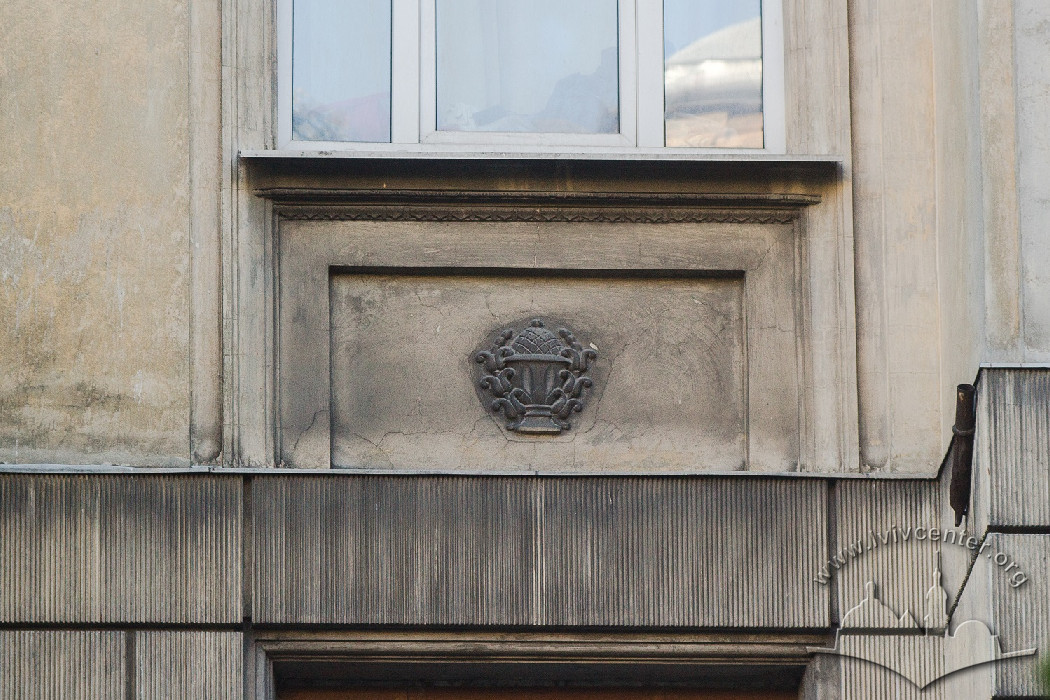
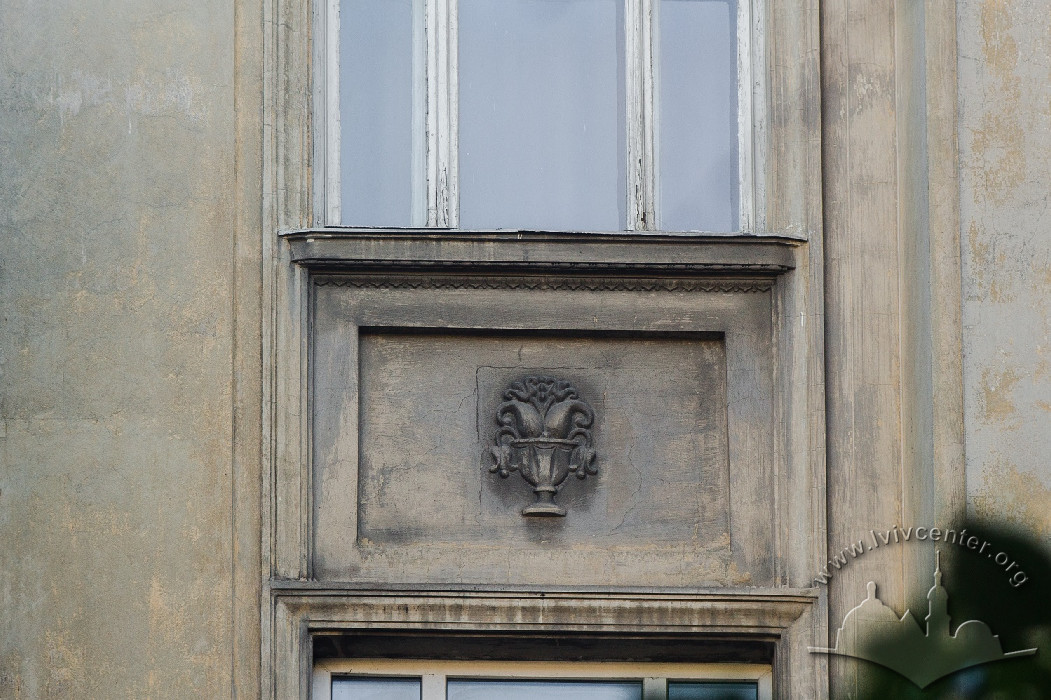
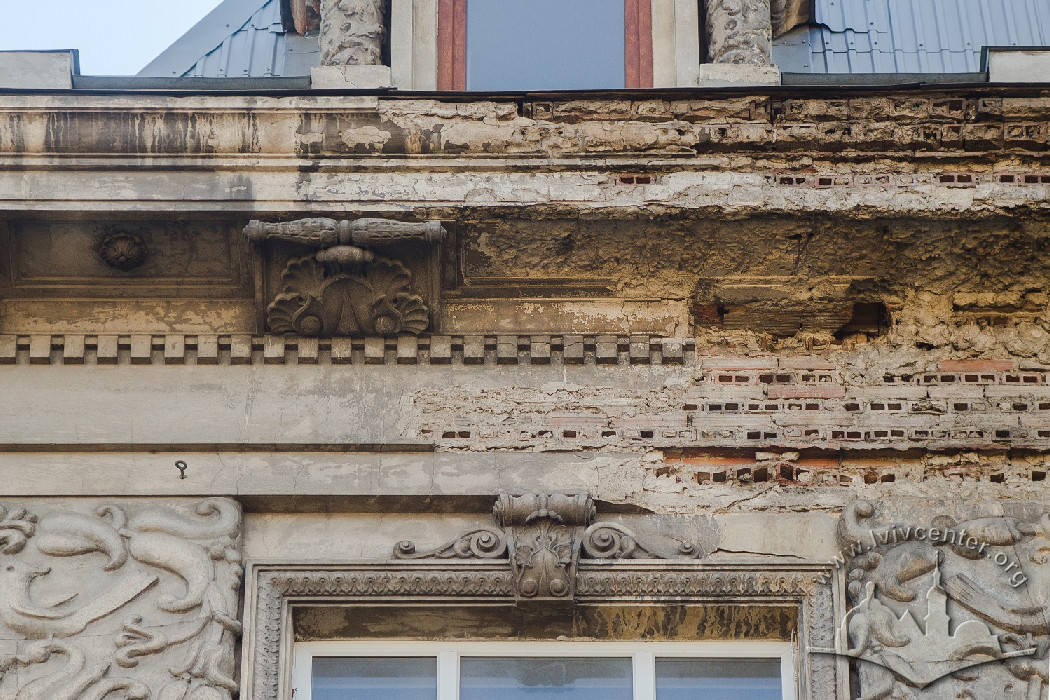
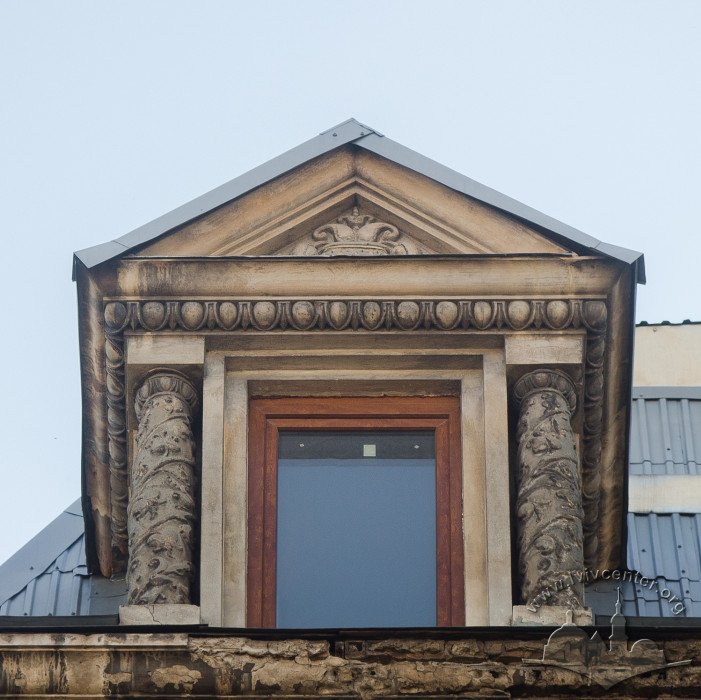
The wide display windows on the ground floor are separated by lesenes. The relief panels between the fifth-floor windows of the bay section are richly decorated with anthropomorphic and zoomorphic bass reliefs cast in Roman cement. Similar Roman-cement sculptural compositions are set into rectangular niches beneath the third- and fourth-floor windows on the outer axes of the bay window. The second-floor balconies feature masonry balusters. The attic floor, with its wide, low windows, is punctuated by two dormer windows framed by decorated portals with triangular pediments.
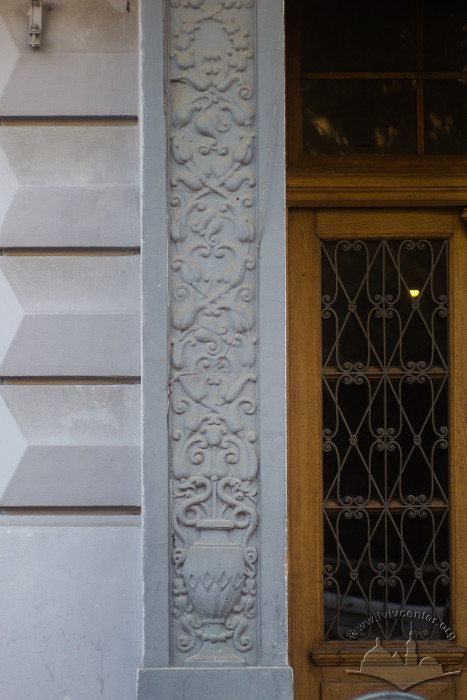
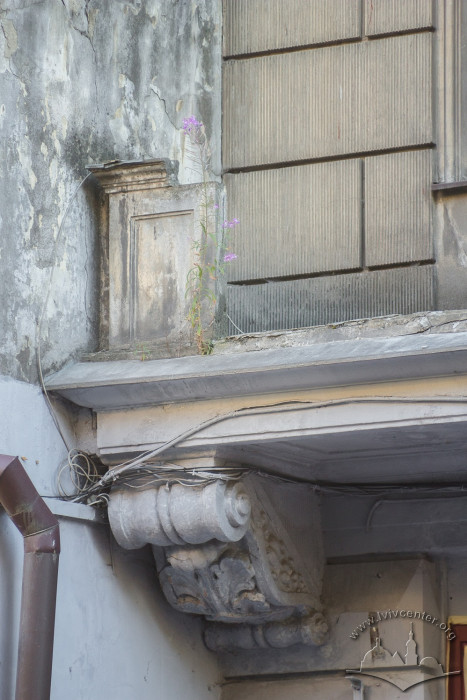
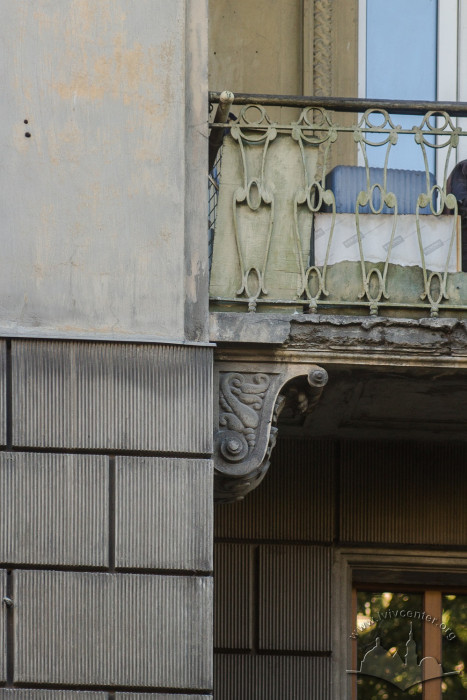
The rear façade facing vul. Nyzhankivskoho compositionally mirrors the front façade but features more modest ornamentation. Its architectural decoration consists of window trimmings set within niches, along with ornamental inserts above the ground-floor windows and between the window axes. The ground floor is highlighted by banded rustication. The lateral axes of the façade are accented by cantilever balconies featuring metal grilles, while the second-floor balconies are finished with balusters. Doors and windows are framed by molded trimmings and accented with decorative inserts.
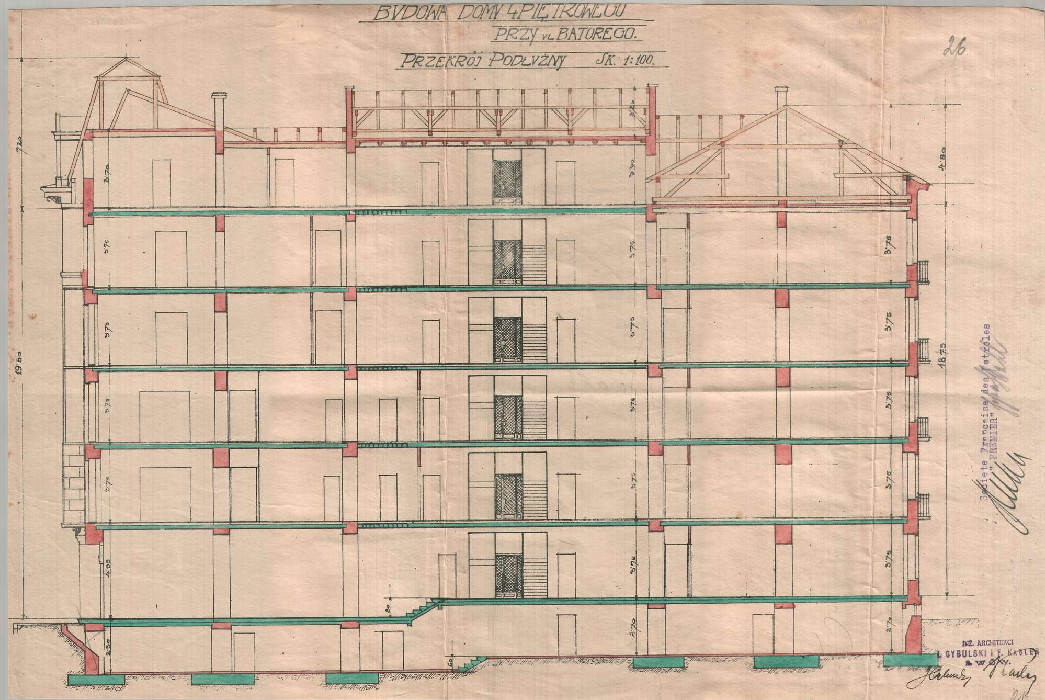
The main entrance doors on Nyzhankivskoho Street are crafted from wood. The entry hallway is paved with decorative tiles, and the two-flight stairs are fitted with wrought iron railings. The preserved elevator shaft retains its original decorative grilles. The basement features a flat reinforced concrete ceiling, while the upper floors are built with flat wooden ceilings.
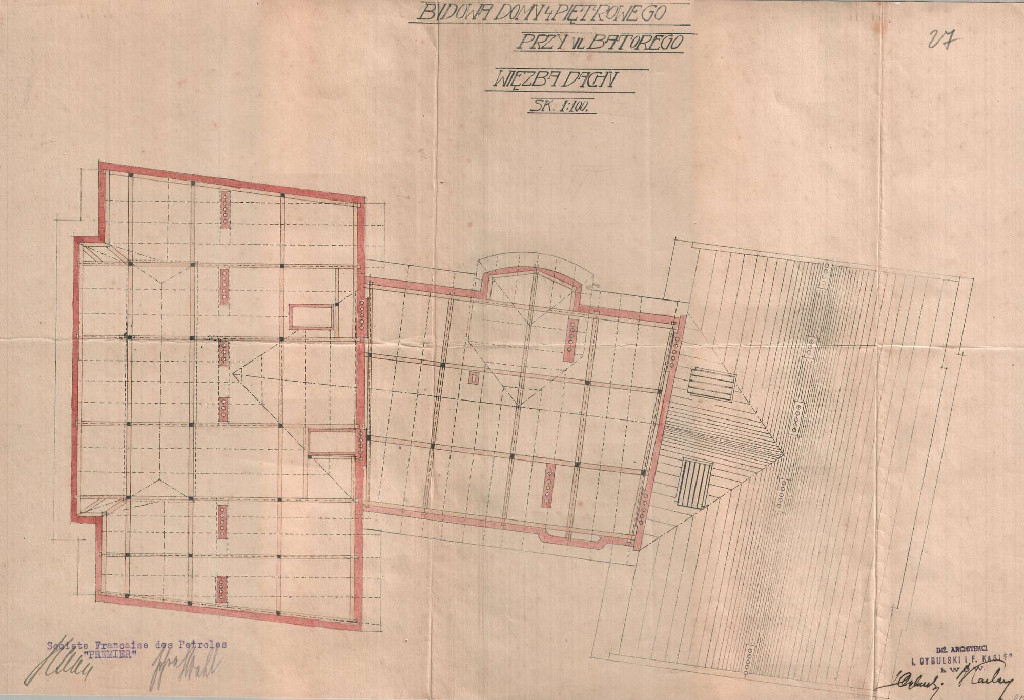
The roof structures consist of a wooden rafter-and-beam system covered with a galvanized sheet metal roof.
The building's attic space accommodates the studio of Yaroslav Shymin, a well-known Lviv artist and head of the painting department at the Academy of Arts.
Overall, the building serves as an excellent example of a prestigious 1920s corporate office structure designed in a Neoclassical style and enhanced by Art Deco sculptural details.
People
Julian Cybulski — Lviv architect, builder of the house.Ferdynand Kasler (1883−1943) — Lviv architect, designer of the building.
Karol Kiselka — Lviv entrepreneur and patron of the arts in the mid-19th century.
Zygmunt Kurczyński (1883−1954) — a well-known Lviv sculptor, author of the Art Deco sculptural decoration of the. building.
Tomasz Luszczyński — owner of the plot (in 1868).
Adalbert Sadowski — owner of the plot (in 1836).
Yaroslav Shymin — famous Lviv artist, head of the painting department at the Academy of Arts, owner of a workshop in the house.
Jan Sokula — owner of the plot (in 1853).
Sources
- Державний архів Львівської області (ДАЛО) 2/1/1006 Справу перейменовано на: Державний архів Львівської області (ДАЛО) 2/1/971 (https://e.archivelviv.gov.ua/file-viewer/227750#file-722239).
- Архітектура Львова: Час і стилі. XIII-XXI ст., ред. Юрій Бірюльов, (Львів: Центр Європи, 2008), 720.
- Павло Ґранкін, "Архітектор Юліан Цибульський", Будуємо інакше, 2000, №6, 46.
- Pawło Grankin, "Lwowski architekt Julian Cybulski (1859-1924)", Статті (1996-2007), (Львів: Центр Європи, 2010), 105.
- Jakub Lewicki, Między tradycją a nowoczesnością. Architektura Lwowa lat 1893–1918, (Warszawa: Neriton, 2005).