Vul. Kniazia Romana, 26 − residential building ID: 2687
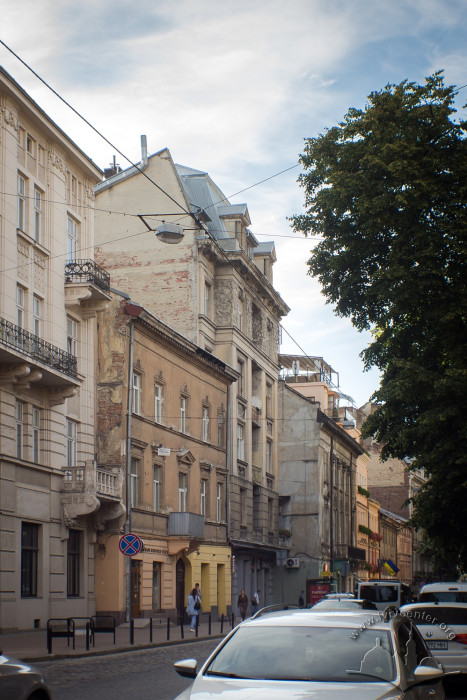
This five-story townhouse was designed by architect Ferdynand Kasler and built for the French oil company Premier in 1914−1924. An architectural monument of local significance, it is an example of modernised Neoclassicism with Art Deco elements.
Story
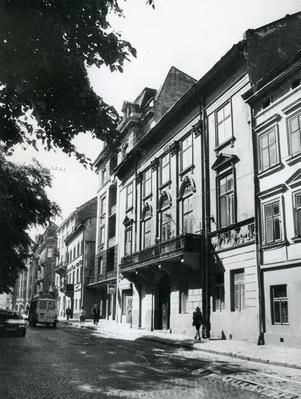
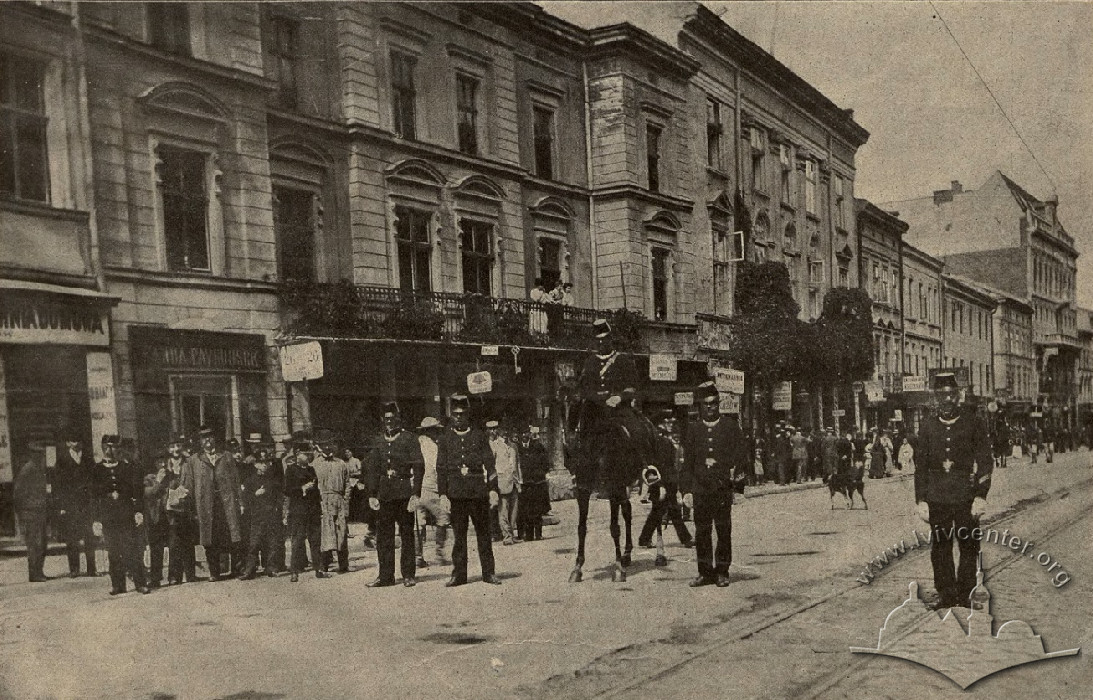
The neighborhood between the modern-day vul. Kniazia Romana and vul. Nyzhankivskoho was formed in the late eighteenth century. The building on the site of the house in question was first marked on the 1777 map; in that year, a brick house with conscription number 398 ¼ stood there. The shape of the house with two narrow side avant-corpses, depicted on that map, suggests that this was already the house that stood here until 1914 and is recorded in the photo.
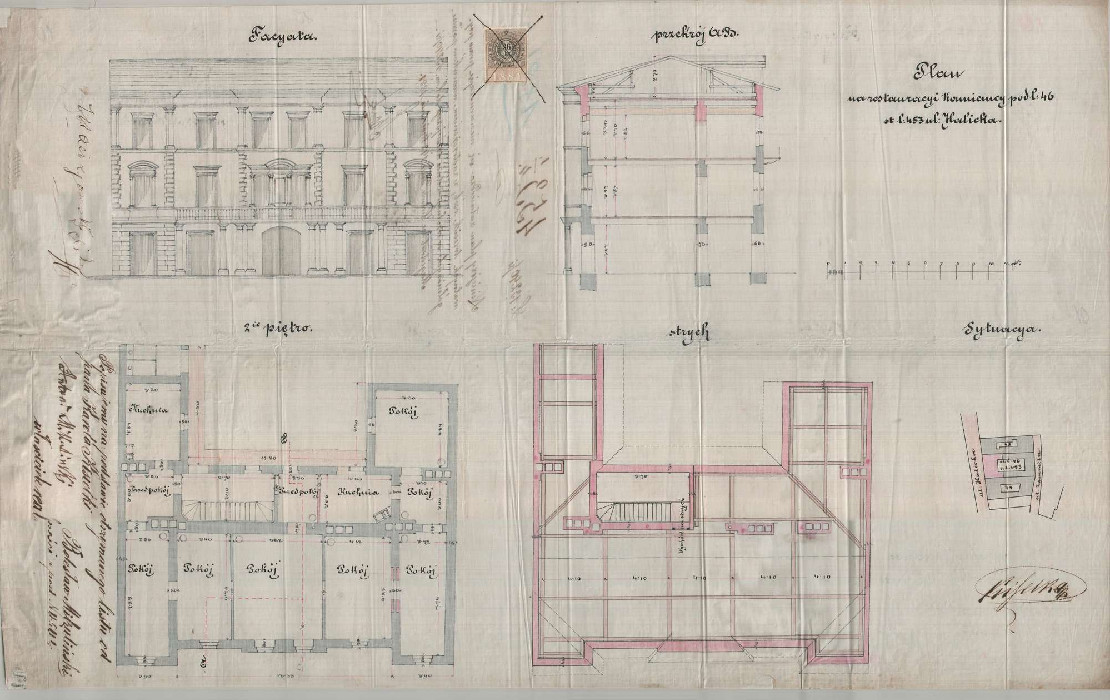
The first archival documents about construction on this site date back to 1836. In the mid-nineteenth century, it was a three-story building. The reconstruction project from 1881 shows its façade. At that time, the building was owned by Karol Kisielka, a well-known Lviv entrepreneur. It was then that, in line with the requirements of the municipal Building Department, the old shingle roof was replaced with a new fireproof tin one.
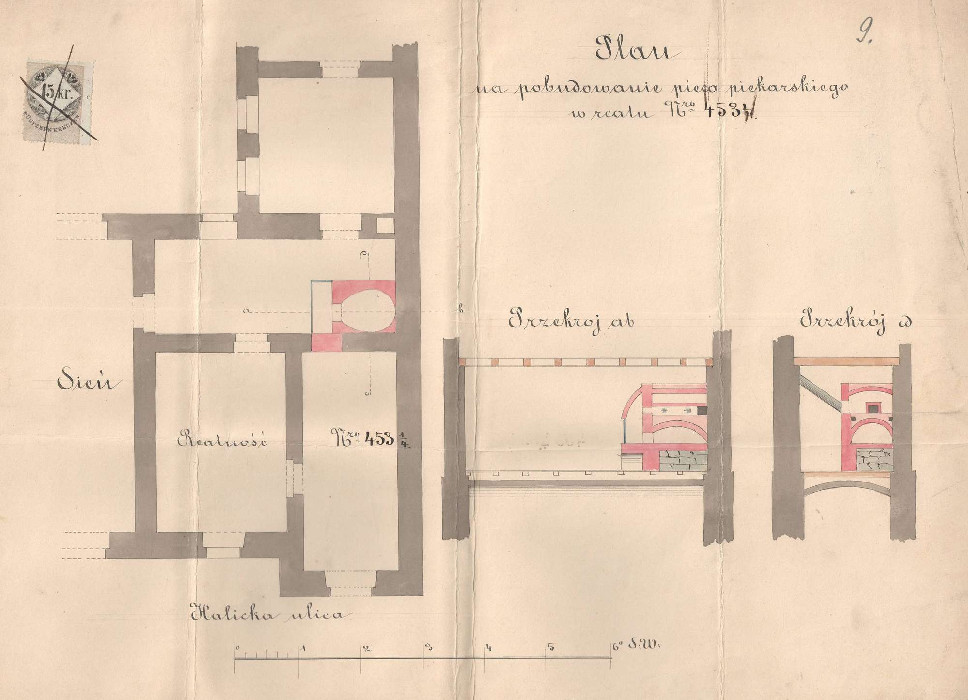
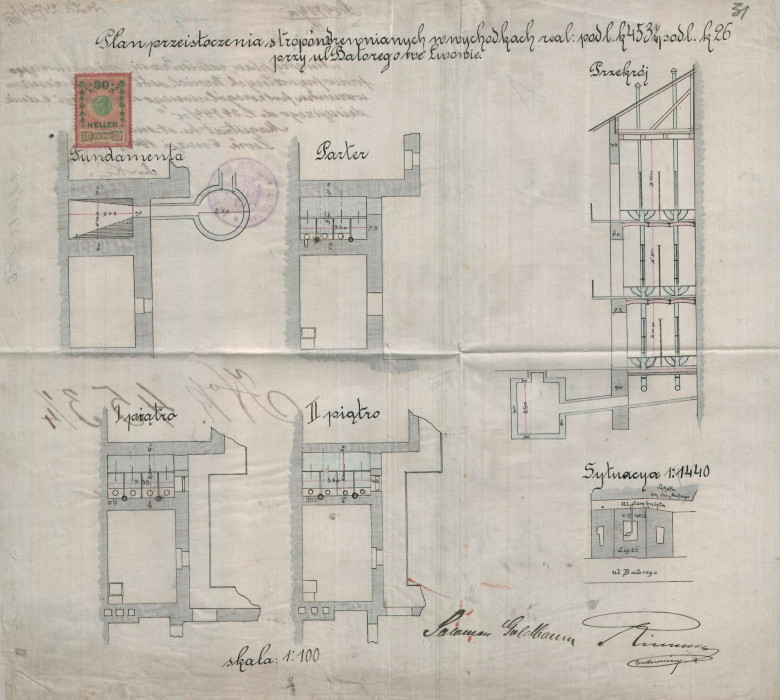
Before Kisielka, this townhouse was owned by Adalbert (Wojciech) Sadowski (1836), Jan Sokula (1853), and Tomasz Łuszczyński. The house was repeatedly repaired, reconstructed, and redeveloped. New stoves were installed, windows were converted into doors, etc. A document from 1868 shows that Tomasz Łuszczyński asked the magistrate for permission to arrange a baking oven for a confectionery and presented a project for this purpose.
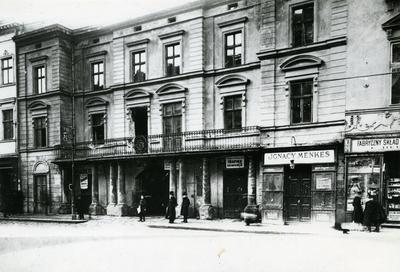
Before the building was demolished in 1914, it was photographed. The picture shows a three-story building in a late Neoclassicist style, with a central axial layout of the main façade. The axis was accentuated by a wide passage portal; on the second floor, there was a balcony along the entire length of the façade, supported by eight columns. The ground floor housed various establishments, including the antique shop of Ignacy Menkes.
The present building
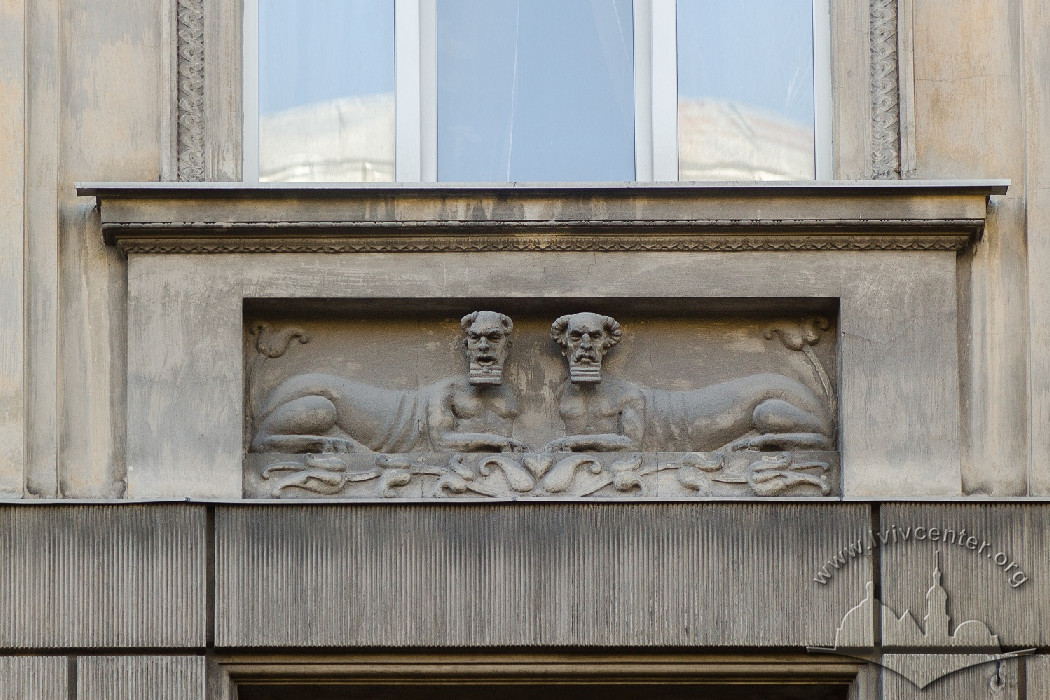
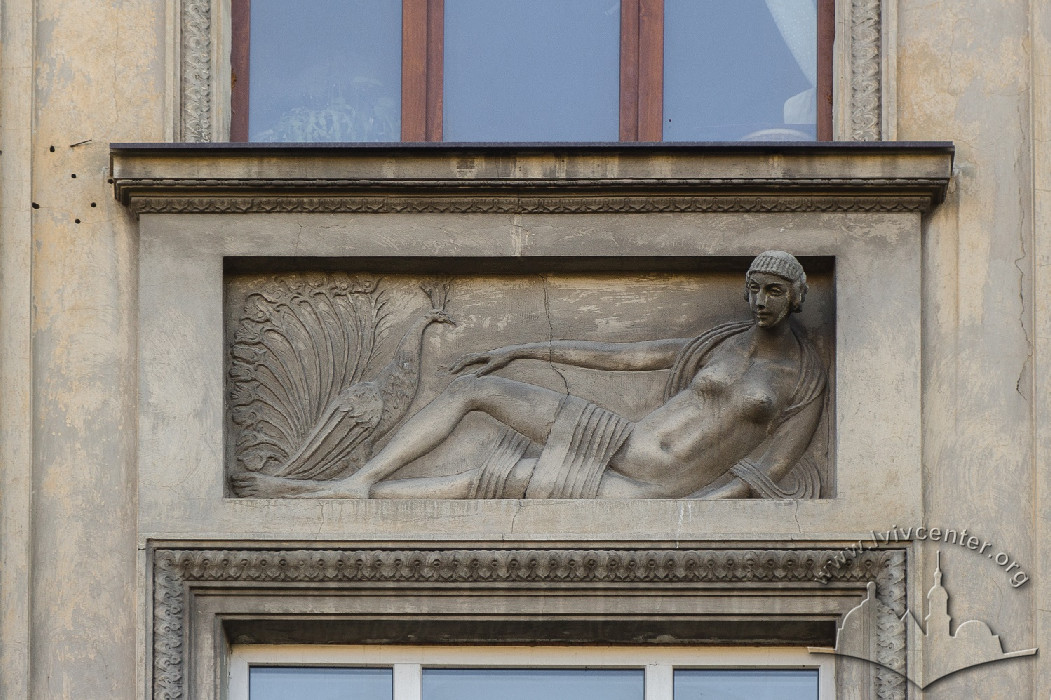
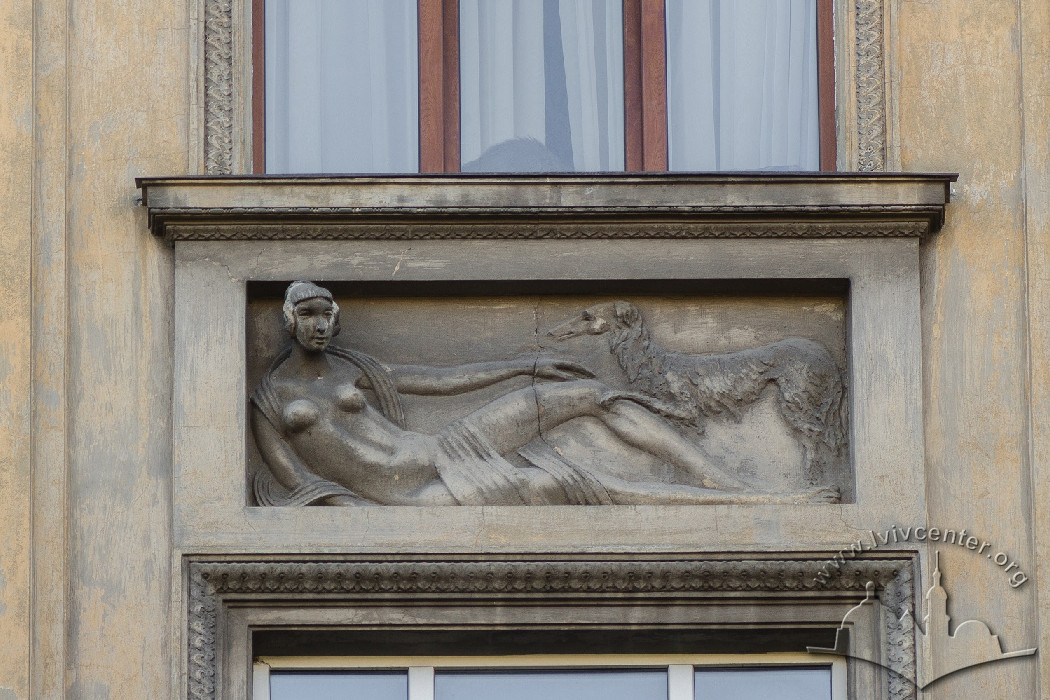
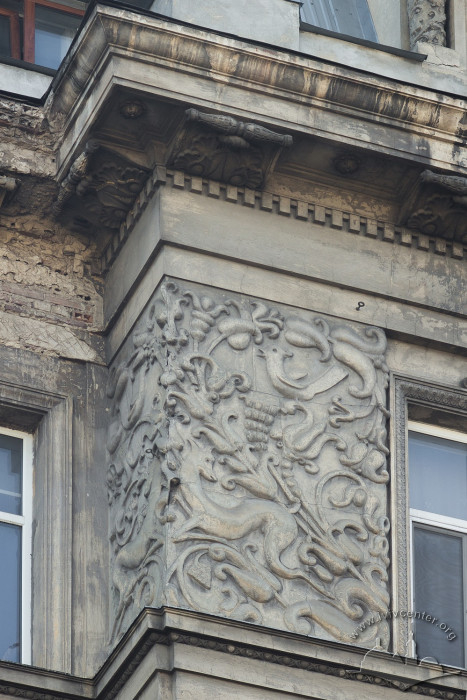
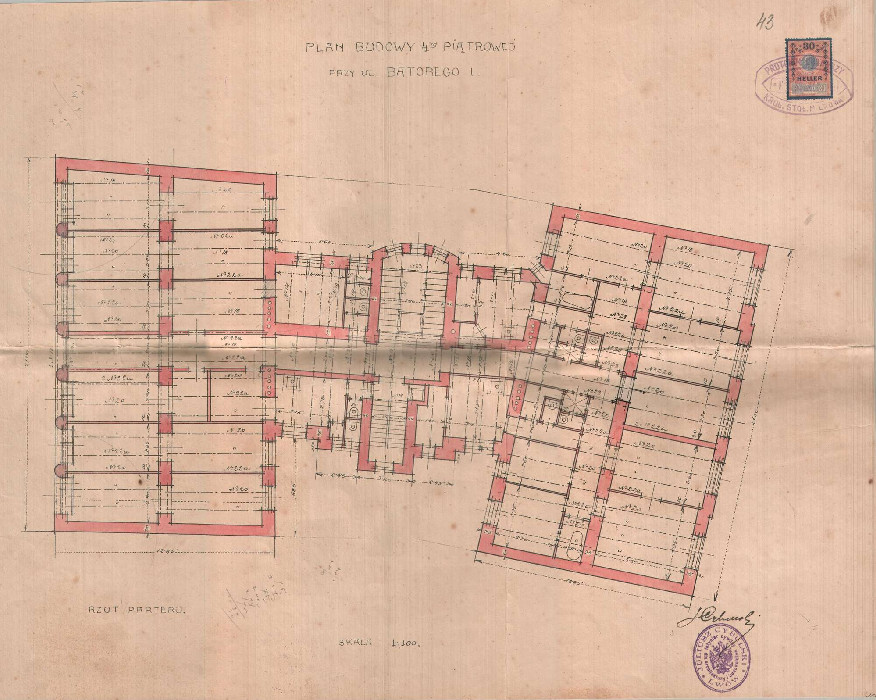
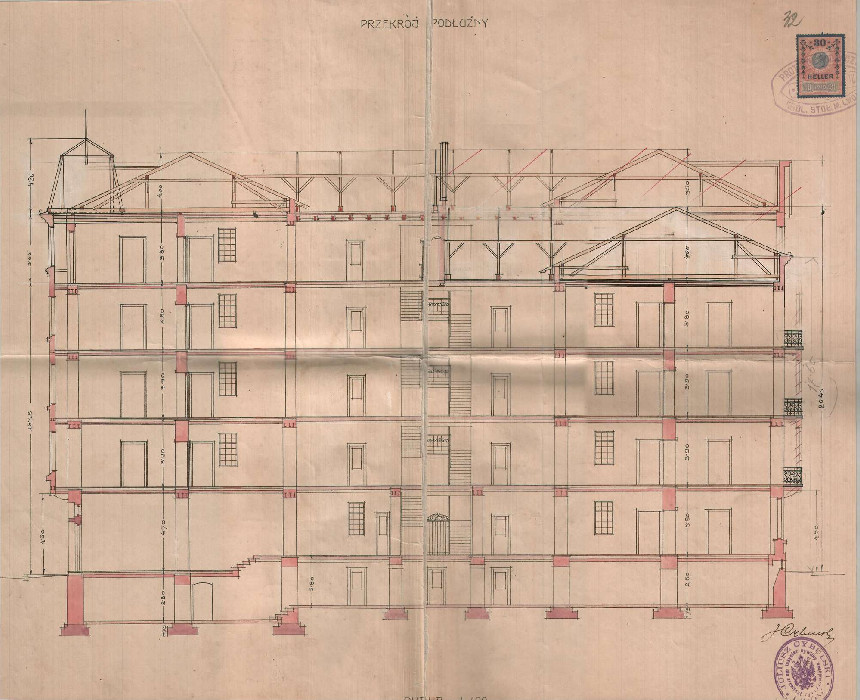
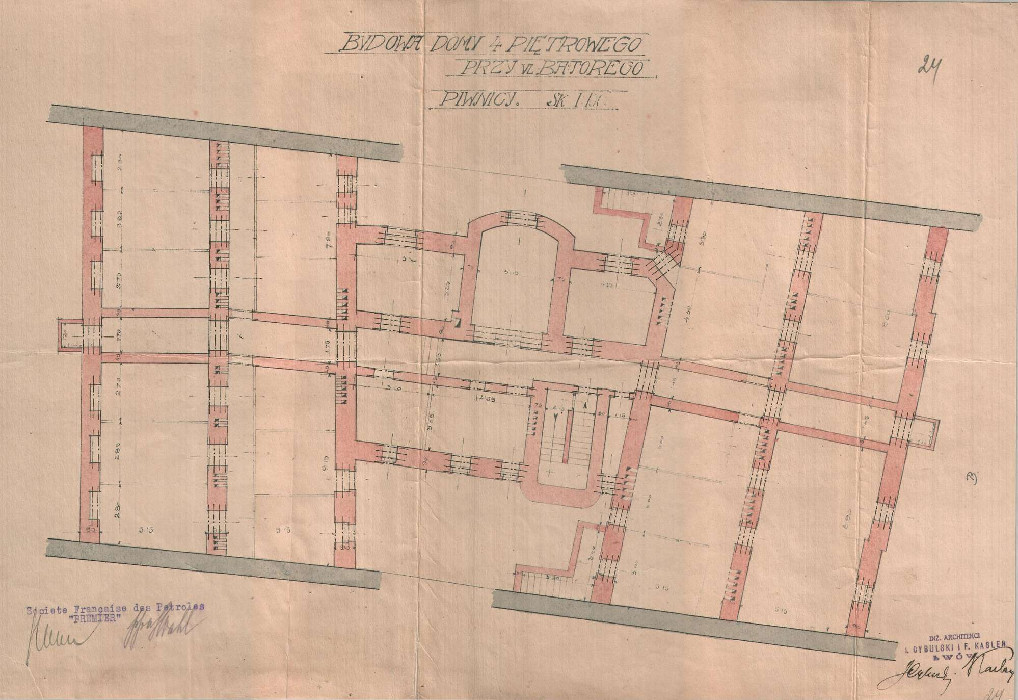
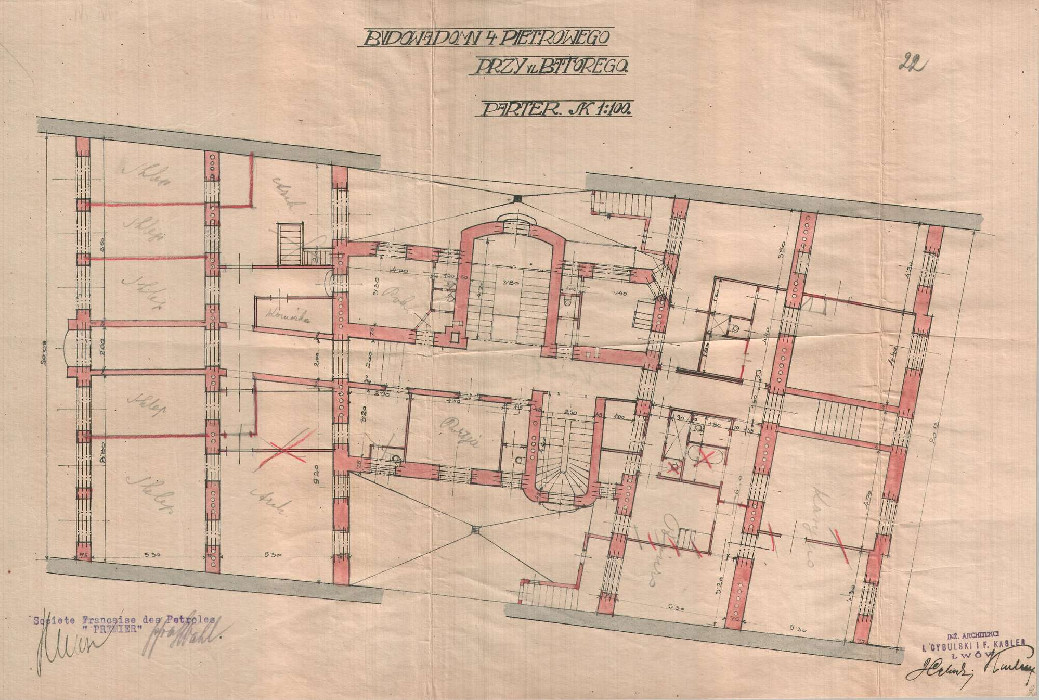
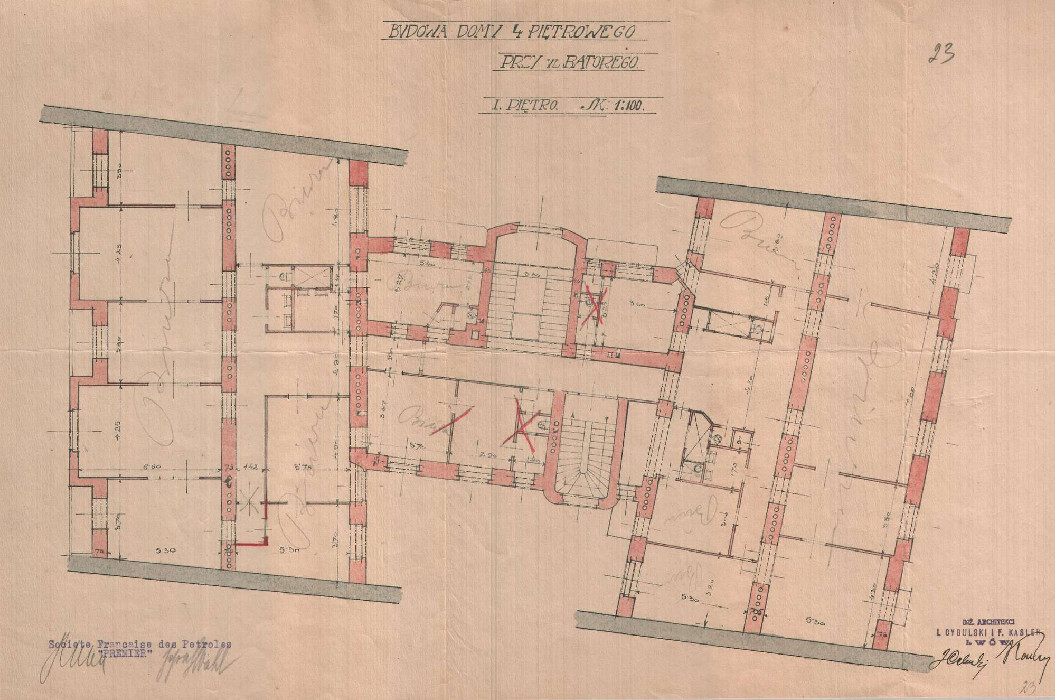
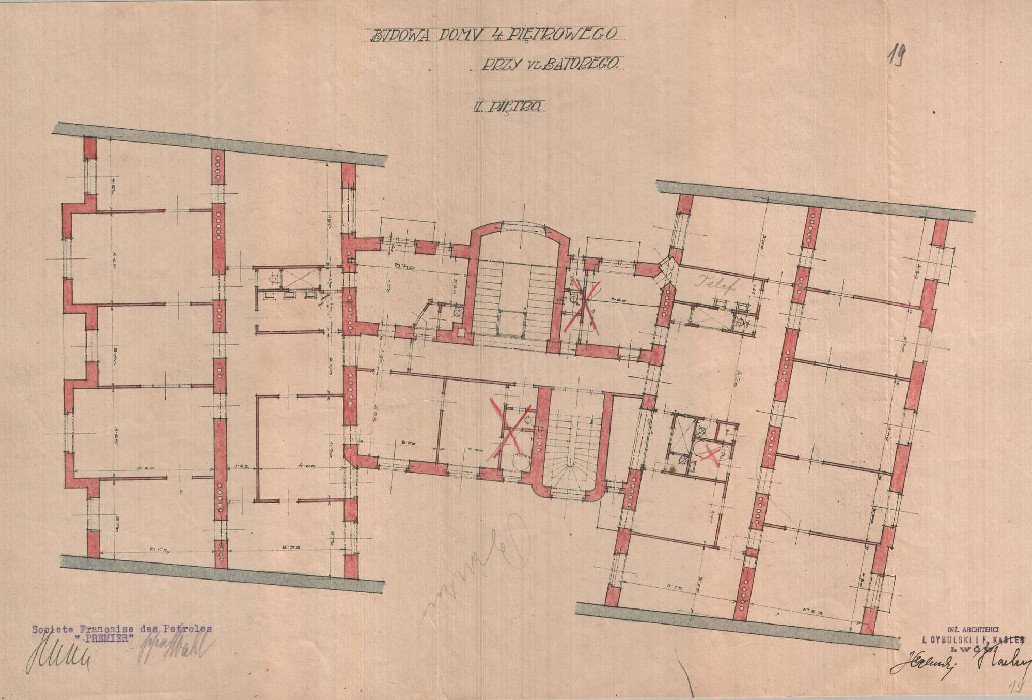
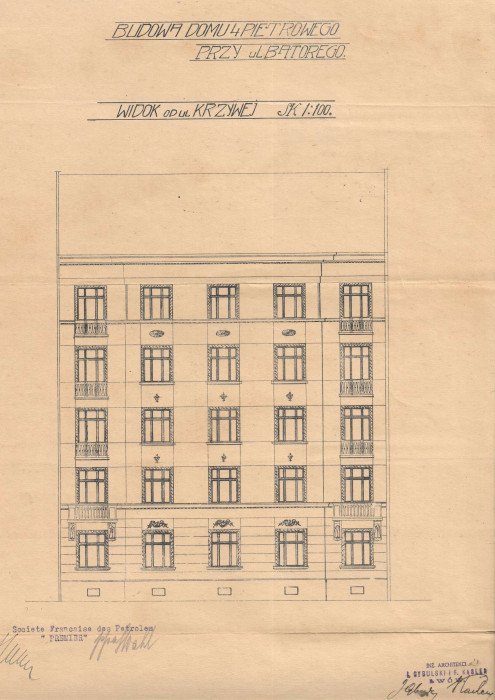
In 1914, Lviv architects Juliusz Cybulski and Ferdynand Kasler designed an office and residential building for the French oil company Premier (Société française des pétroles "Premier"). However, the outbreak of the First World War and the invasion of Lviv by Russian troops in September 1914 suspended construction. The project was approved in April 1916; according to this document, the building was to have four floors. The data of 30 June 1922 records the completion of the construction. However, changes occurred during the construction process, as an additional project was designed and approved only in April 1924. The architects proposed a concept for the sculptural decoration of the façades, which was executed by the famous Lviv sculptor Zygmunt Kurczyński. The company received permission to use the building in October 1927. The building had five stories; apart from that, an attic floor was added.
During the Soviet period, the building was nationalized and transferred to communal ownership; the large apartments were divided and converted into communal apartments.
Architecture
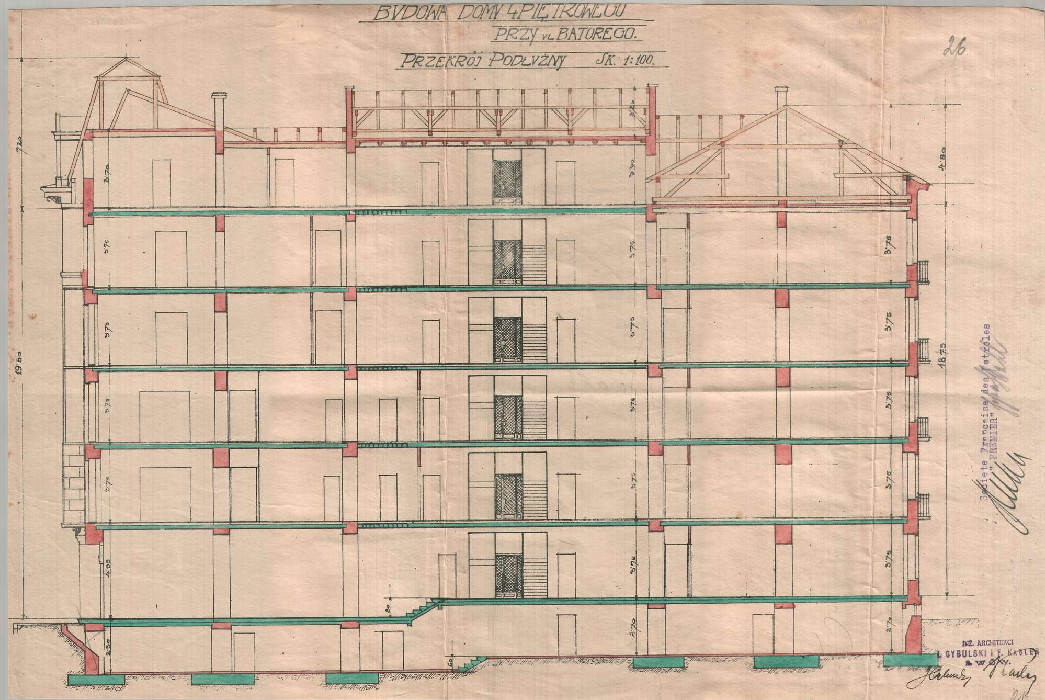
The five-story residential and office building with an attic (on the front side) housed the oil company's offices and employees' apartments.
Its overall dimensions are 23.0 x 44.0 m.
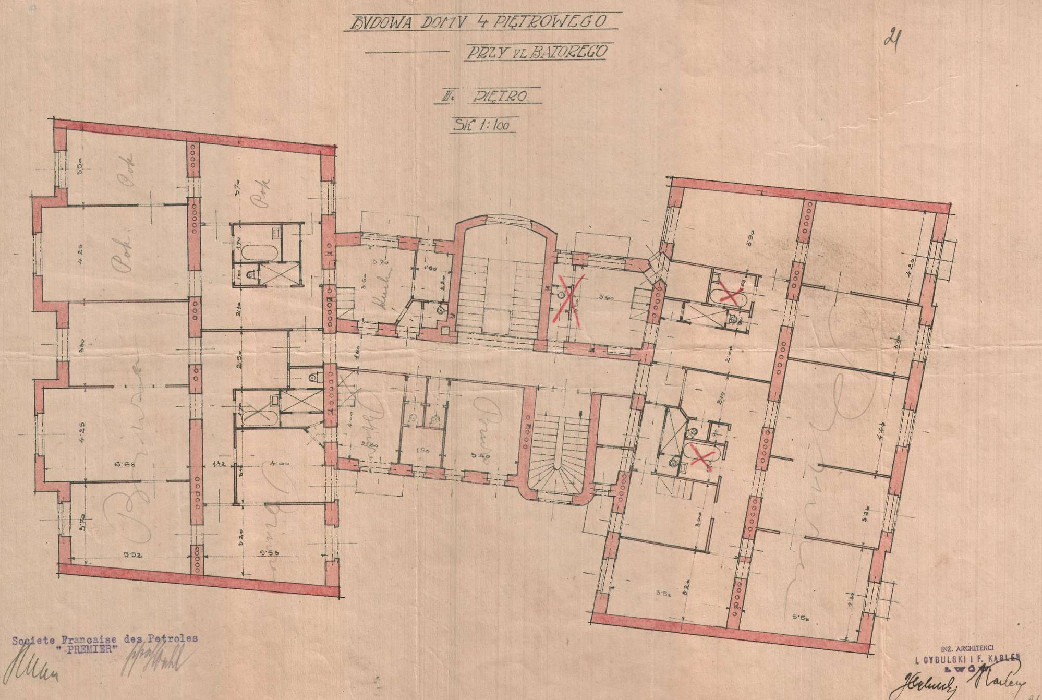
The building is constructed of brick and has a butterfly-shaped plan. In terms of its volumetric and spatial design, it consists of three blocks: the front and rear blocks in the form of irregular rectangles (from vul. Kniazia Romana and vul. Nyzhankivskoho) and a narrow central volume with staircases connecting the blocks. It forms two shaft-like courtyards with neighboring houses 24 and 28; only the northern one can be entered.
The building's layout is sectional, subordinated to its original functional purpose as it housed both offices and apartments. The central axis layout is emphasized by a staircase with a lift shaft, which is accessed through a vestibule with a narrow corridor from the main entrance (from vul. Kniazia Romana) and a vestibule from the rear block (from vul. Nyzhankivskoho, now closed). Originally, there was an additional staircase (now closed) opposite the main southern staircase, recorded in the 1914 project and in the 1972 inventory plans. The entrance from it leads only to the basement. The apartments on all floors are located along the passage in both blocks in sections. The windows face different streets and courtyards.
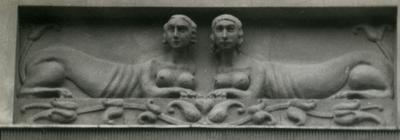
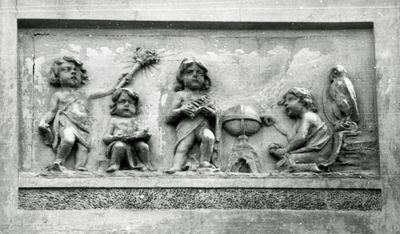
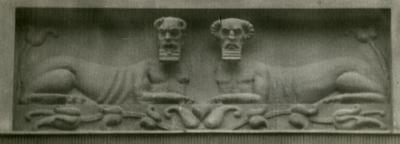
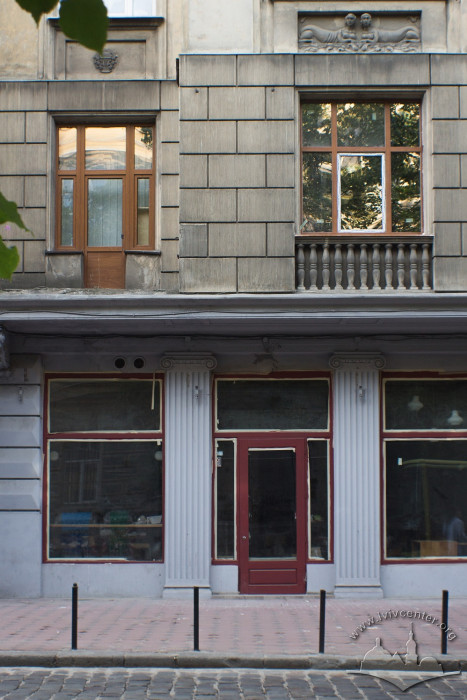
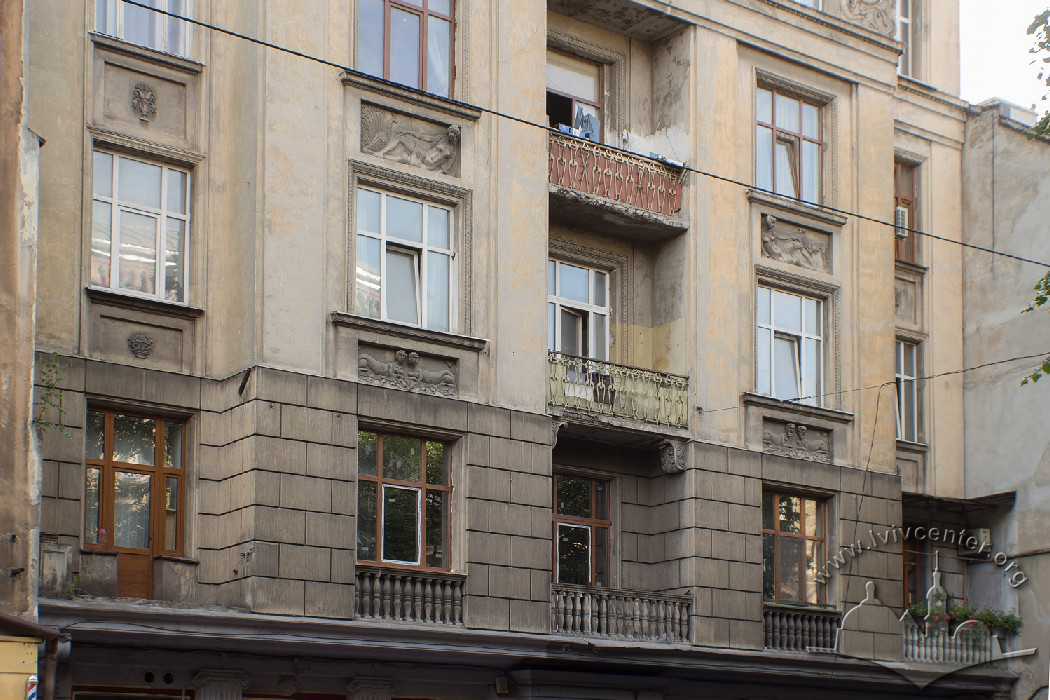
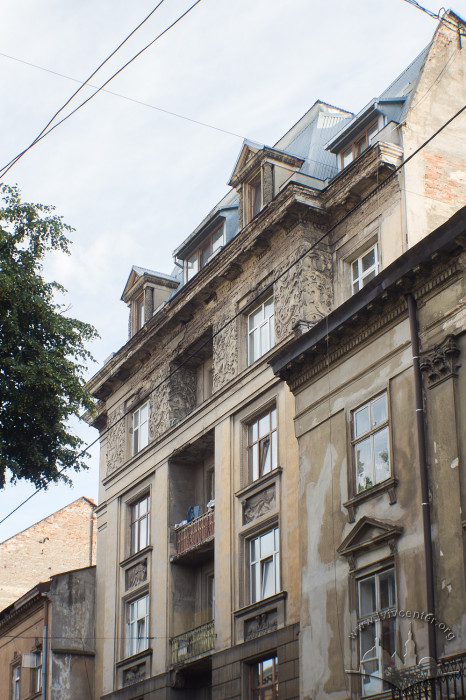
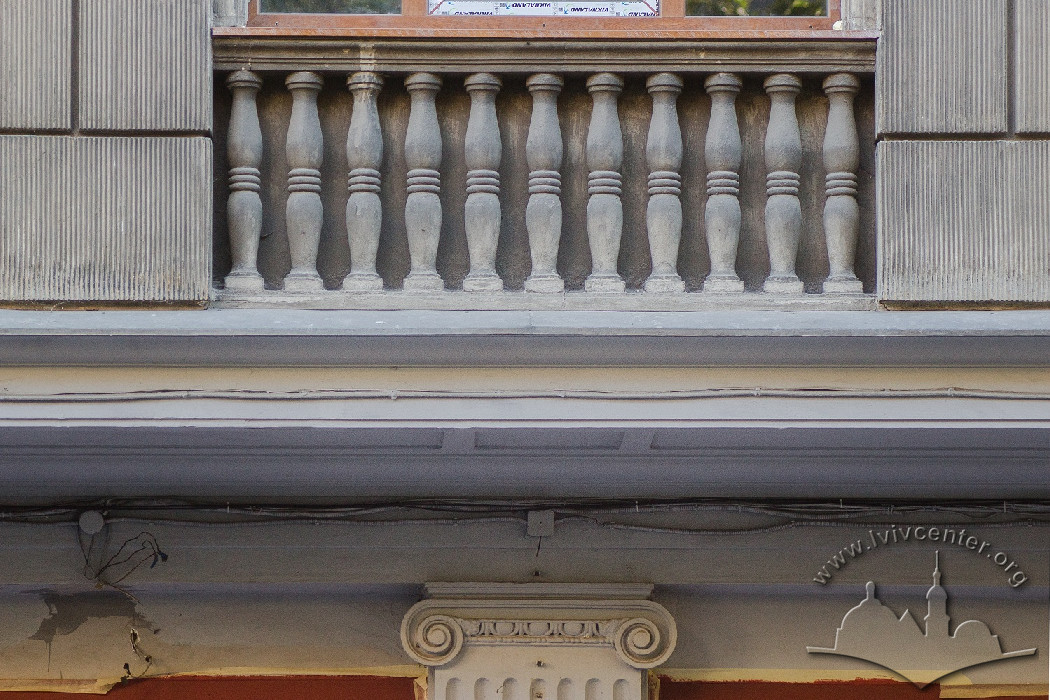
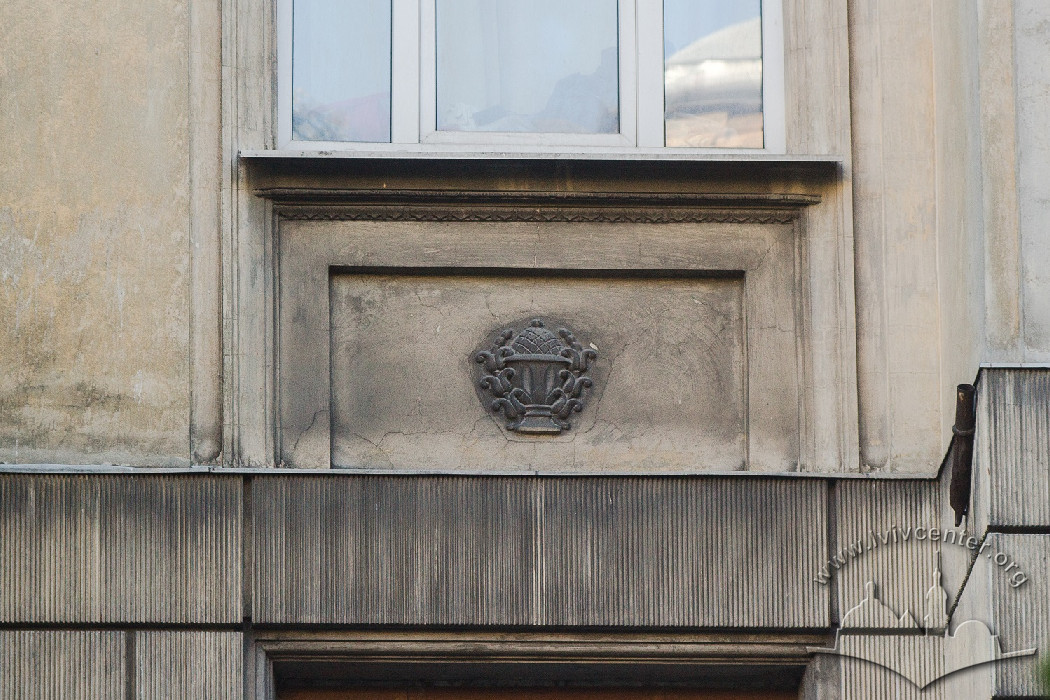
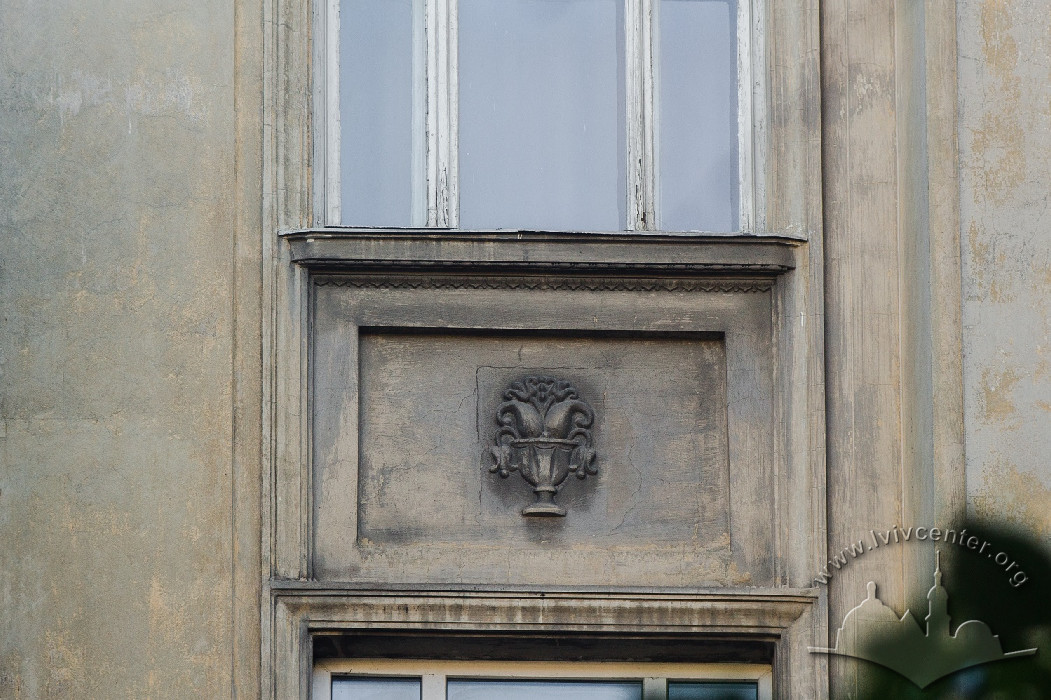
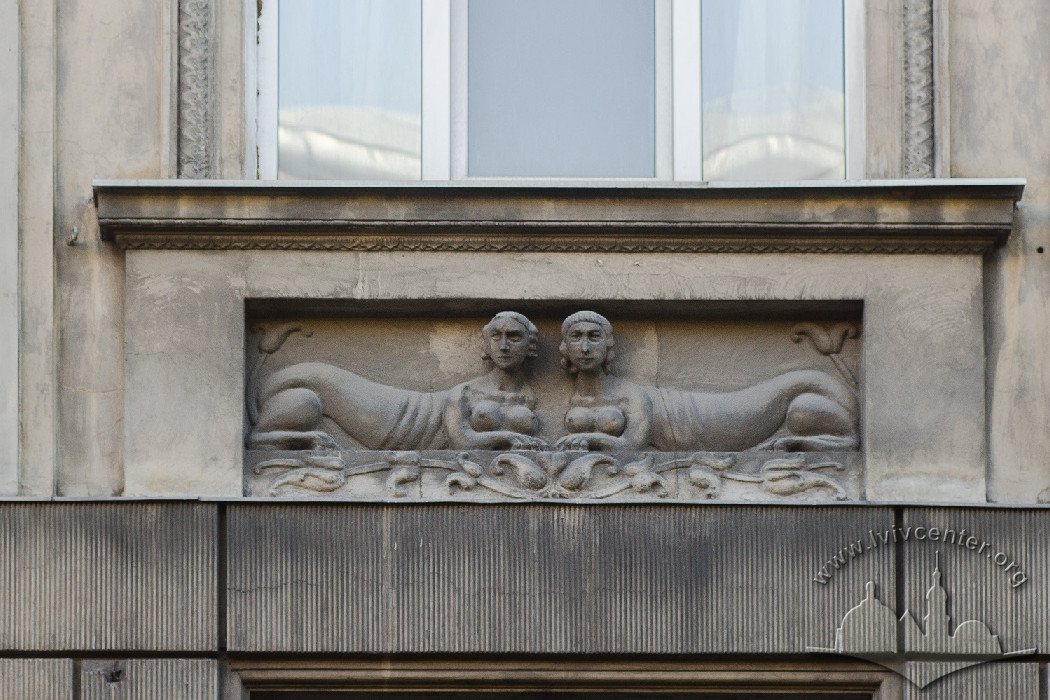
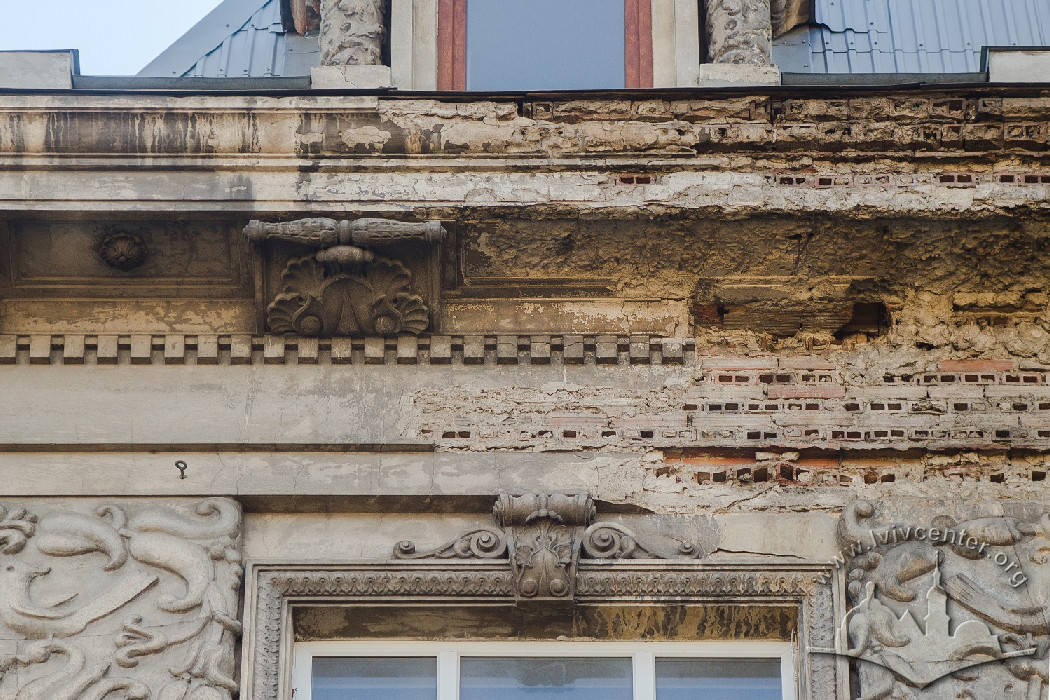
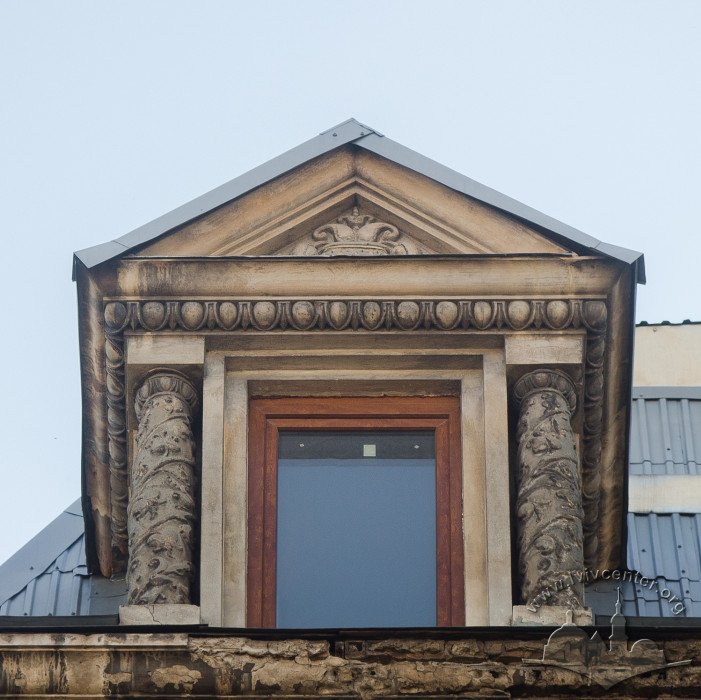
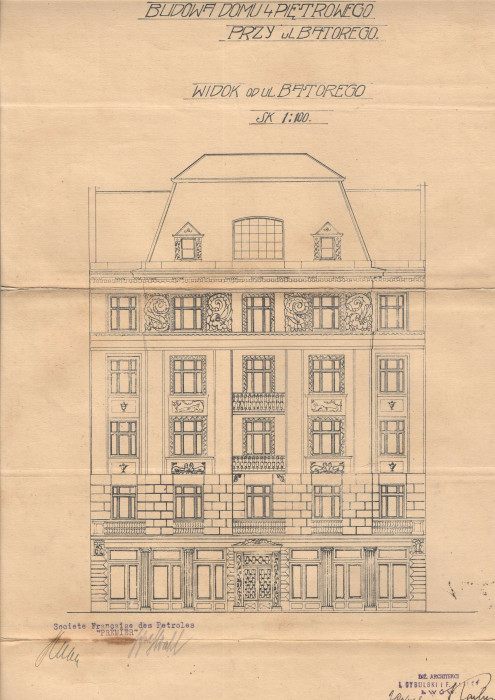
The layout of the façade facing vul. Kniazia Romana contains five axes; it is symmetrical, with a wide bay window embracing three window axes. The central axis is accentuated by loggias with metal lattices and the main entrance in a recessed portal. The façade is crowned with a simple low attic above a profiled overhanging stringcourse; the fourth and fifth floors are separated by a frieze. The recessed part of the ground floor is accentuated by a small roof. The wide shop window axes are highlighted by lisenes. The fifth floor inter-window piers of the bay window part are richly decorated with bas-reliefs featuring anthropomorphic and zoomorphic scenes cast in Roman cement. Rectangular niches under the windows of the third and fourth floors of the bay window part's extreme axes contain bas-relief sculptural compositions cast in Roman cement. The second floor balconies are decorated with stone balusters. The attic with wide low windows is accentuated due to two dormer windows embellished by decorated portals with triangular pediments.
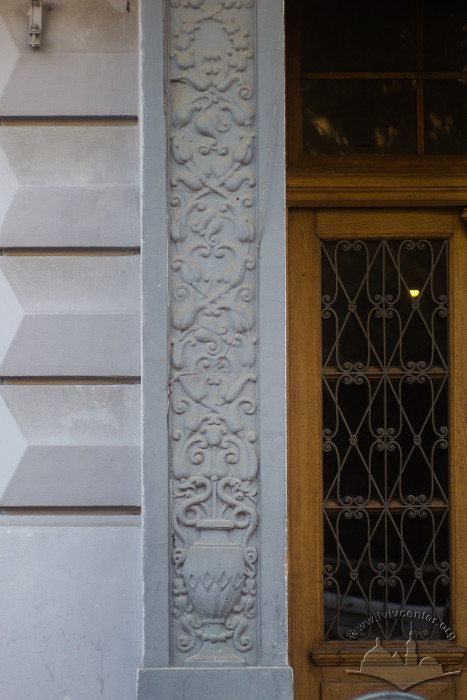
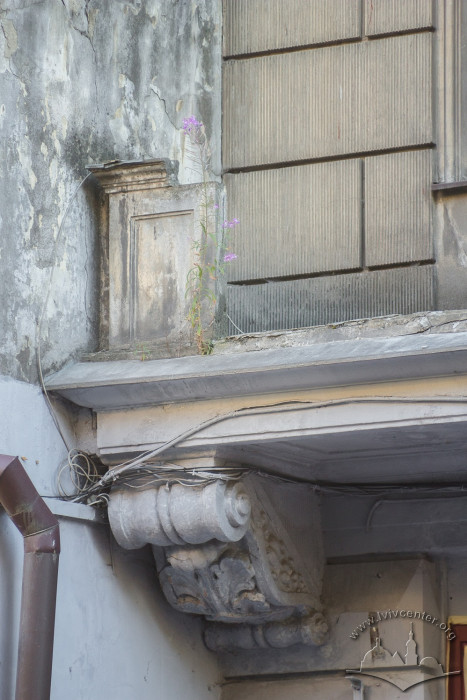
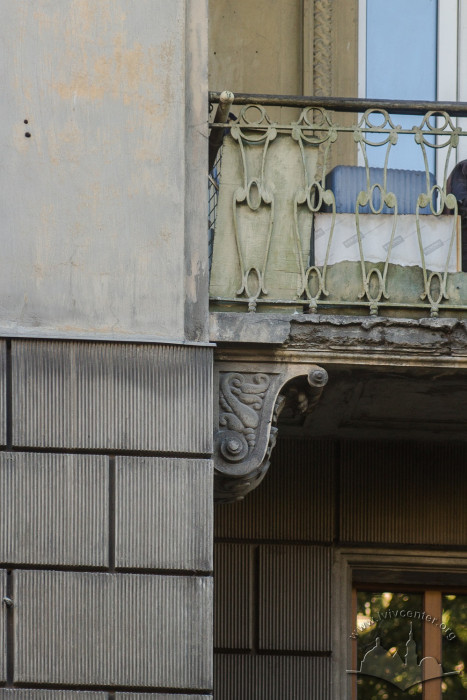
Compositionally, the rear façade (facing vul. Nyzhankivskoho) echoes the main façade; however, it is decorated more modestly. The architectural decoration is formed by window trimmings in niches, ornamental inserts above the ground floor windows and in the piers of the window axes. The ground floor is emphasised with plank rustication. The façade’s lateral axes are accentuated by balconies on consoles with metal lattices; the second floor balconies are decorated with balusters. The doors and windows have profiled trimmings and decorative inserts. The main entrance door from vul. Nyzhankivskoho is wooden. The corridor is lined with decorative tiles. The double-flight staircase has wrought iron railings. The preserved lift shaft is decorated with decorative lattices. The flat cellar ceilings are made of reinforced concrete, while the floors have flat wooden ceilings.
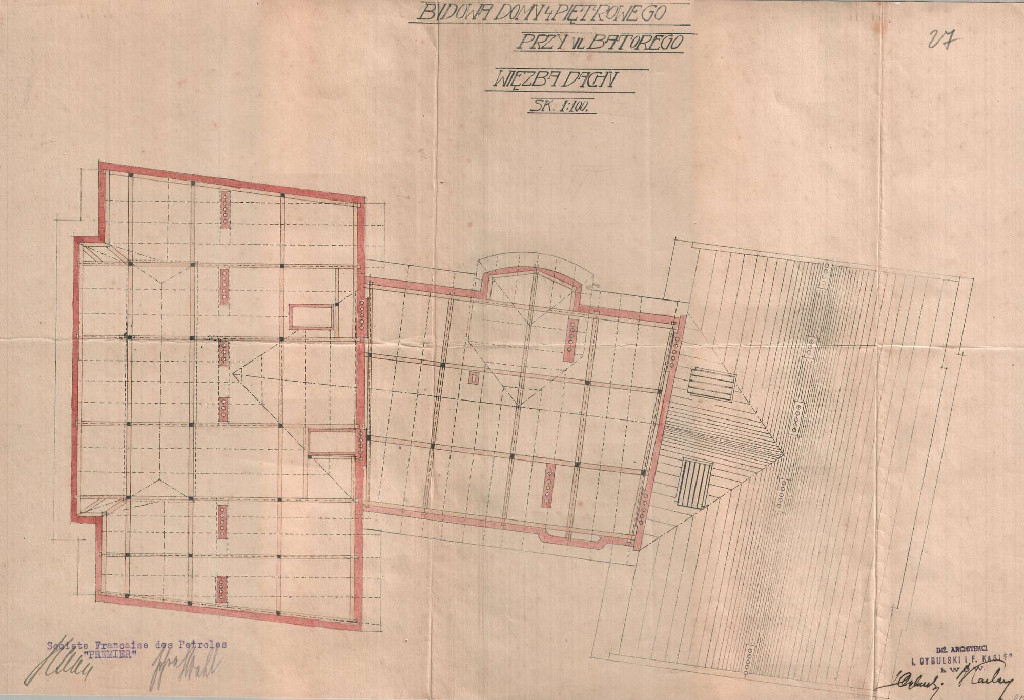
The roof structures are made of wooden rafters and beams; the roof is covered with galvanised tin.
The building's attic houses the studio of Yaroslav Shymin, a famous Lviv artist, head of the painting department of the Academy of Arts.
The building is an example of a respectable 1920s Neoclassicist office building with sculptural Art Deco decoration.People
Karol Kiselka — Lviv entrepreneur and patron of the arts in the mid-19th centuryFerdynand Kasler (1883−1943) — Lviv architect, designer of the building
Zygmunt Kurczyński (1883−1954) — a well-known Lviv sculptor, author of the Art Deco sculptural decoration of the building
Tomasz Luszczyński — owner of the plot (in 1868)
Adalbert Sadowski — owner of the plot (in 1836)
Jan Sokula — owner of the plot (in 1853)
Julian Cybulski — Lviv architect, builder of the house
Yaroslav Shymin — famous Lviv artist, head of the painting department at the Academy of Arts, owner of a workshop in the house
Sources
- Державний архів Львівської області (ДАЛО) 2/1/1006 Справу перейменовано на: Державний архів Львівської області (ДАЛО) 2/1/971 (https://e.archivelviv.gov.ua/file-viewer/227750#file-722239).
- Архітектура Львова: Час і стилі. XIII-XXI ст., ред. Юрій Бірюльов, (Львів: Центр Європи, 2008), 720.
- Павло Ґранкін, "Архітектор Юліан Цибульський", Будуємо інакше, 2000, №6, 46.
- Pawło Grankin, "Lwowski architekt Julian Cybulski (1859-1924)", Статті (1996-2007), (Львів: Центр Європи, 2010), 105.
- Jakub Lewicki, Między tradycją a nowoczesnością. Architektura Lwowa lat 1893–1918, (Warszawa: Neriton, 2005).