Vul. Sebastiana Klionovycha, 10 – residential building ID: 83
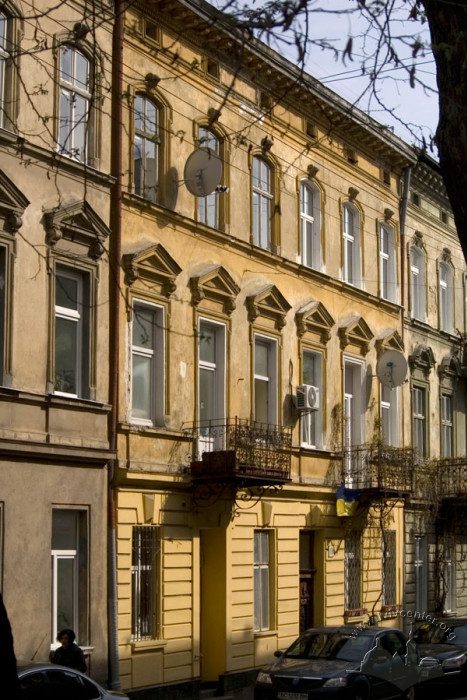
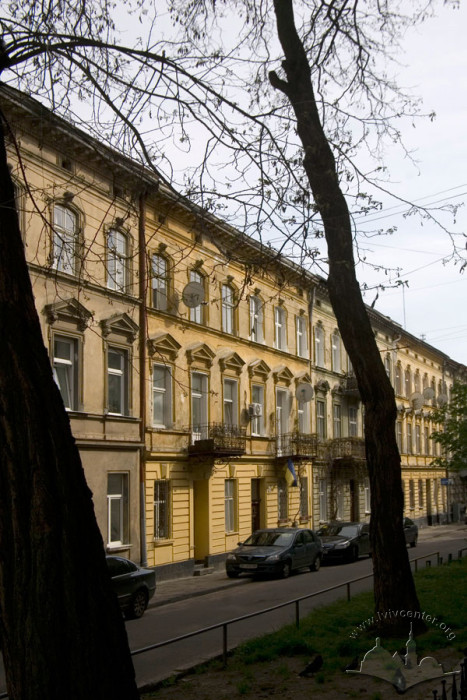
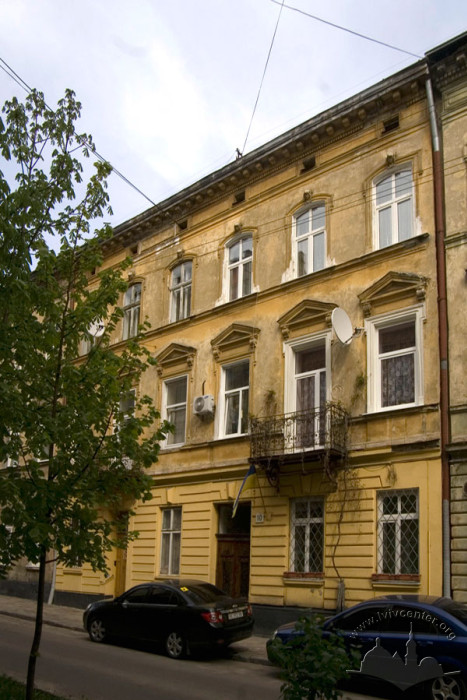
A three-story residential building integrated into the terraced block development of the street, constructed in 1897 in the Historicist style with elements of Neobaroque and Neoclassicism. The original owners were architects Jakub Sołomon Kroch and Maurycy Silberstein. On May 3, 1911, the magistrate granted permission for the addition of rear wings and the reconstruction of the main building (owned at the time by Jadwiga Herzmanek; the reconstruction design was by builder Władysław Buskiewicz). In the 1930s, Kazimiera Karnewska was the owner of the house. Today (2009), it is used as a residential building.
Story
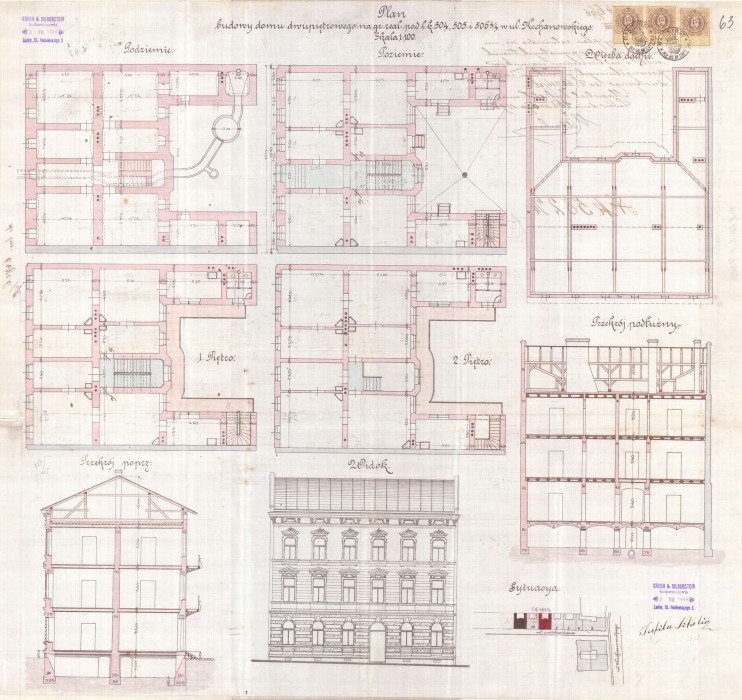
1897: On May 4, 1896, the owners of properties 504, 505, and 506 4/4, architects Jakub Sołomon Kroch and Maurycy Silberstein, requested permission from the magistrate to construct a three-story building according to their own design (completed on July 2, 1896) on urban site 6417/2, which belonged to Teofila Nikolicz. The plot was located on a newly opened side street off ul. Kochanowskiego (now vul. K. Levytskoho). Following the owners' submission on May 11, 1896, the magistrate granted permission on May 15, 1896. Before construction began, J. Kroch and M. Silberstein paid 101 zł. and 85 cents into the municipal treasury on May 6, 1896, for the right to connect to and use the sewerage system. On May 19, 1897, the owners requested a new conscription number for their building. On May 24, 1897, the house received the new conscription number 582 4/4. The neighboring house (ul. Klonowicza, 12) also received a new conscription number — 586 4/4. On October 15, 1897, the owners of the houses (ul. Klonowicza, 10 and 12) requested occupancy permits. On November 22, 1897, the owners received permission to occupy their buildings. The magistrate also certified that they had been completed on November 10, 1897.
1910–1912: On September 9, 1910, Jadwiga Herzmanek petitioned the magistrate regarding the sanitary conditions of her house at ul. Klonowicza, 10, requesting: 1) to add right and left wings and install toilets in them; 2) to remove the primitive toilets in the left wing, as well as the servants' staircase located in the right wing, and convert both vacated areas into small bathrooms; 3) to arrange a staircase to the attic within the main building, and to extend the existing staircase in the main building — which previously led only to the third floor — to the new attic entrance. The owner submitted the reconstruction project along with the original design and asked the magistrate to approve the alterations so that the work could be completed before winter. On May 3, 1911, the magistrate granted permission for the addition of the wings and the reconstruction of the main building, while stipulating that the rafters over the main stairwell leading to the attic must be made of riegel beams. The reconstruction design was prepared by builder Władysław Buskiewicz. Before construction began, the owner paid 6 crowns and 62 hellers into the municipal treasury for the use of the sewerage system due to the increased footprint of the building. On October 24, 1912, the magistrate fined builder Stanisław Litwinowicz the sum of 20 crowns for the benefit of the poor, or sentenced him to three days of arrest for the unauthorized and partial execution of the reconstruction works.
1928–1929: On July 7, 1928, the magistrate sent J. Herzmanek a reminder to restore the elevations and the stairwell of the building, which were in an unsatisfactory condition. On December 6, 1928, the magistrate threatened the owner with a fine if the restoration work was not carried out. On June 1, 1929, the magistrate certified that J. Herzmanek had restored the stairwell and the courtyard elevation back in 1928, and the principal elevation in May 1929.
1935–1936: On September 21, 1935, Szymon and Maria Chrząszcz filed a complaint with the municipal health department stating that the building adjacent to theirs at ul. Piekarska 16 (owned by Stanisława Kochanowska) was in a neglected state. The walls were stripped of plaster and the toilet windows had broken glass panes, failing to meet sanitary and hygienic requirements. On October 28, 1935, the magistrate ordered Stanisława Kochanowska to bring her building into proper order. However, by June 27, 1936, the specified works had still not been executed. On August 6, 1936, because the works were finally carried out, the Chrząszcz family, as owners of the building at ul. Klonowicza, 10, requested the magistrate to cancel the enforcement orders against S. Kochanowska, the owner of the house at ul. Piekarska 16.
1938: On June 25, 1938, the magistrate ordered the owner of the building at ul. Klonowicza, 10, Szymon Chrząszcz, to restore the principal and courtyard elevations. On October 10, 1938, the magistrate confirmed that the ordered works had been completed.
Architecture
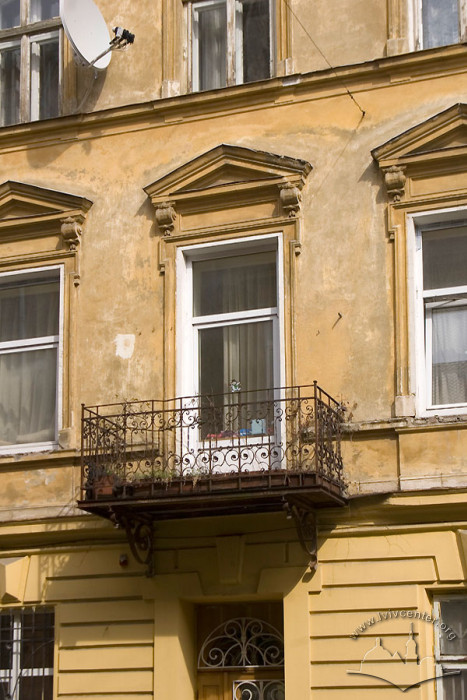
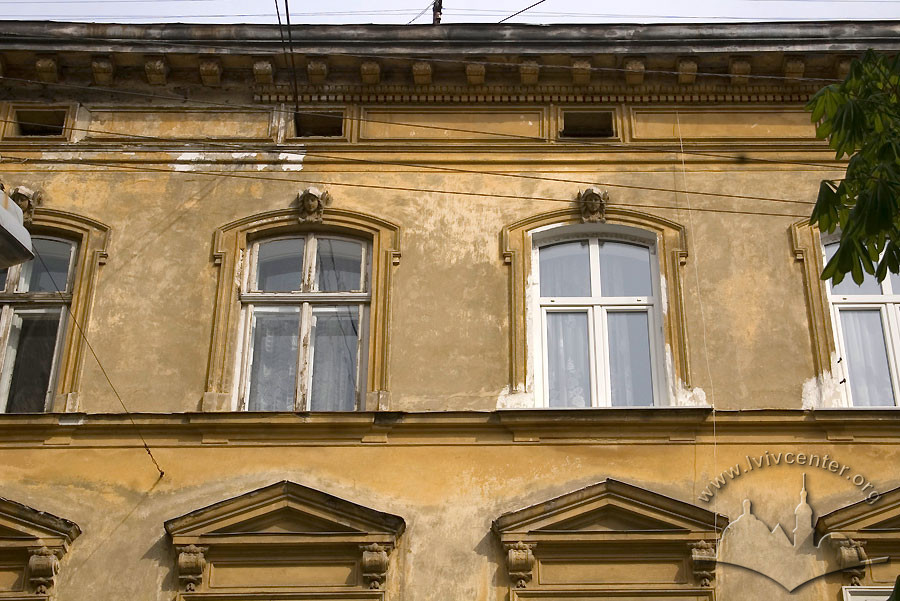
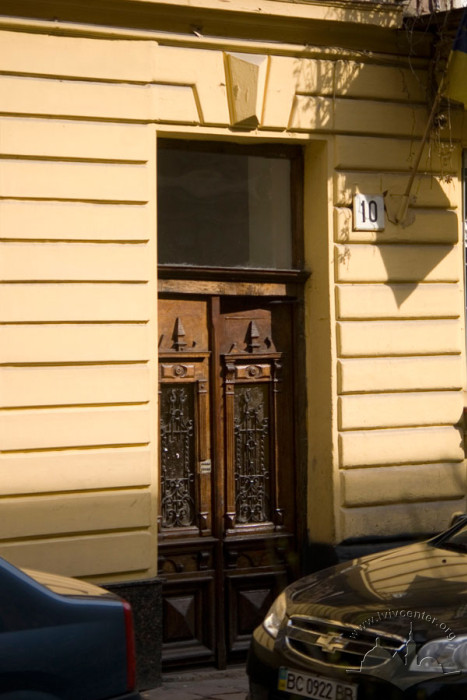
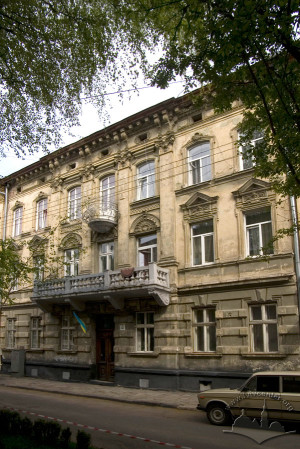
The residential building is integrated into the terraced block development of the street. It was erected in the Historicist style with elements of Neobaroque and Neoclassicism. The building is three stories tall, features a complex layout in floor plan with rear wings and an inner courtyard, and is constructed of brick and plastered. The symmetrical composition of the principal elevation is emphasized by the entrance gates, which are shifted relative to the central axis. The ground floor is highlighted by banded rustication and separated from the first floor by a profiled stringcourse. The ground- and first-floor windows are rectangular in shape; on the ground floor, they are decorated with keystones, while on the first floor feature profiled trimming and are topped by triangular pediments supported by decorative brackets. The second-floor windows have segmental arches and profiled trimming, which are adorned at the top with Neobaroque plasterwork in the form of volutes and female heads. Profiled stringcourses run along the bottom of the first-, second-, and attic-floor windows. At the first-floor level, two symmetrically positioned balconies project outward, enclosed by iron railings and supported by identical brackets. The entrance gate on the right is decorated with ironwork featuring authentic wrought elements. The building is finished with a profiled cornice decorated with a row of egg-and-dart ornament, dentils, and brackets.
Related buildings and spaces
-
Vul. Sebastiana Klionovycha, 4 – residential building
People
Szymon Chrząszcz –– co-owner of the building in the 1930s.
Maria Chrząszcz –– co-owner of the building in the 1930s.
Jadwiga Herzmanek –– owner of the building in the 1910s and 1920s.
Kazimiera Karnewska –– owner of the building in the 1930s.
Jakub Salomon Kroch –– architect, co-author of the 1896 design, and co-original owner of the building.
Maurycy Silberstein –– architect, co-author of the 1896 design, and co-original owner of the building.
Sources
- Державний архів Львівської області (ДАЛО) 2/1/4807. Справа перейменована: ДАЛО 2/1/4622. URL: https://e.archivelviv.gov.ua/file-viewer/231400#file-1918442
- Wykaz domów na obszarze miasta Lwowa. Księga adresowa Małopołski. (Lwów. Stanisławów. Tarnopól. Rocznik 1935/1936)