Vul. Halytska, 17 – residential building ID: 2331
The townhouse (old conscription No. 280, new No. 281) combined two smaller earlier properties: Domagalicz (or Strusiewicz, later Toszewicz) and the Morakowski Townhouse, the latter of which stood adjacent to the city wall. The building likely attained its current appearance after 1804 under the ownership of Gottlib Penter. By Decision No. 393 of the Lviv Regional Executive Committee on November 22, 1988, the townhouse was added to the Local Register of Monuments under protection No. 944.
Story
Seventeenth–eighteenth century — a timber-framed Domagalicz House.
Seventeenth–eighteenth century — a two-story Morakowski Townhouse.
1765 — the Morakowski Townhouse collapsed.
1766 — a design for the reconstruction of the townhouse was drafted (architect — Franciszek Kulczytski).
1786–1789 — construction of a three-story, two-axis townhouse deep into Domagalicz (or Strusiewicz) plot (owner — Anton Marger, architect — Maksymilian von Krus).
1804 — the townhouse attained its current architectural appearance.
1881 — significant reconstruction: replacement of the inter-story flooring and the roof (architect — Jan Schulz).
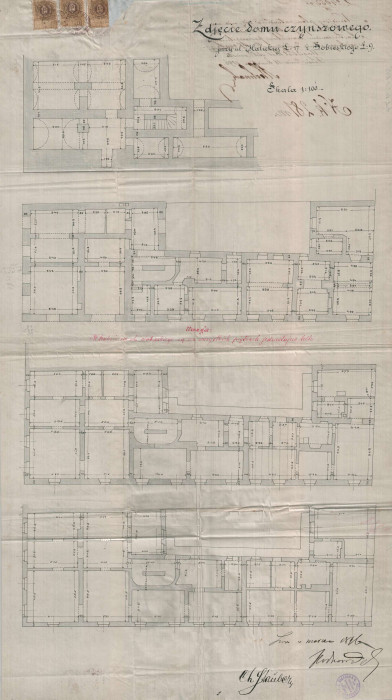
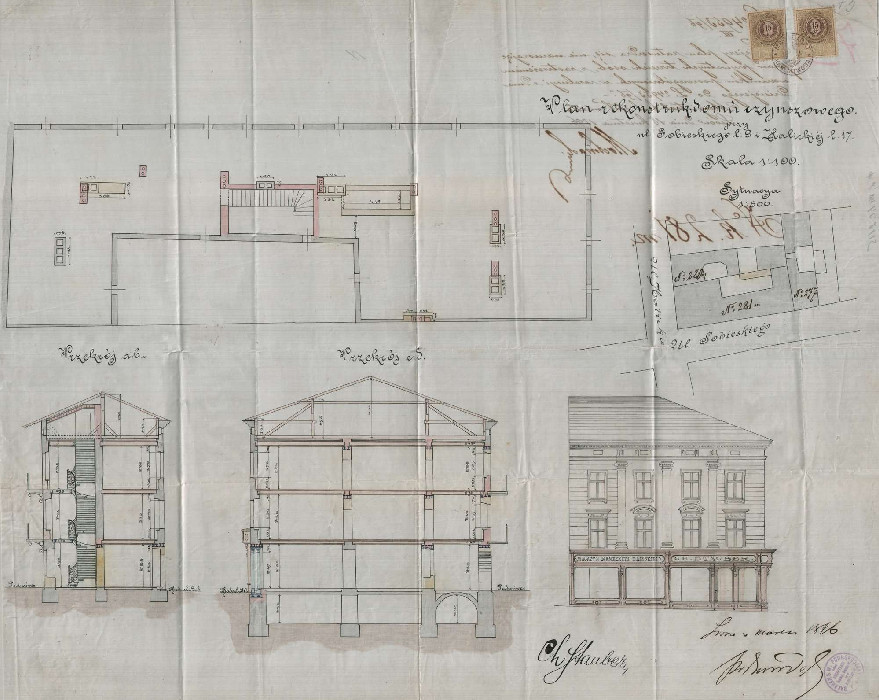
1896 — reconstruction of the stairwell (architect — Włodzimierz Podhorodecki).
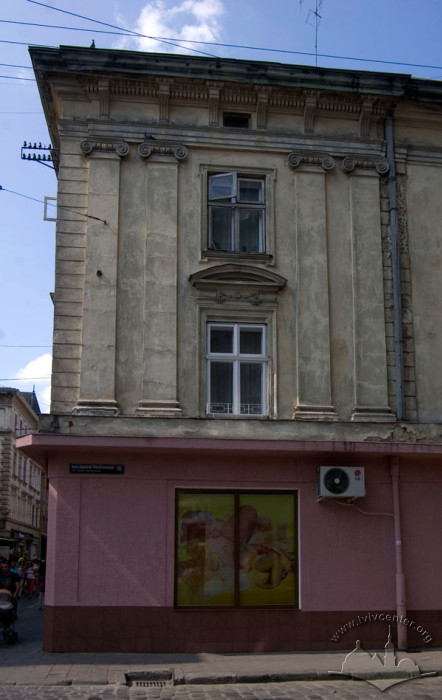
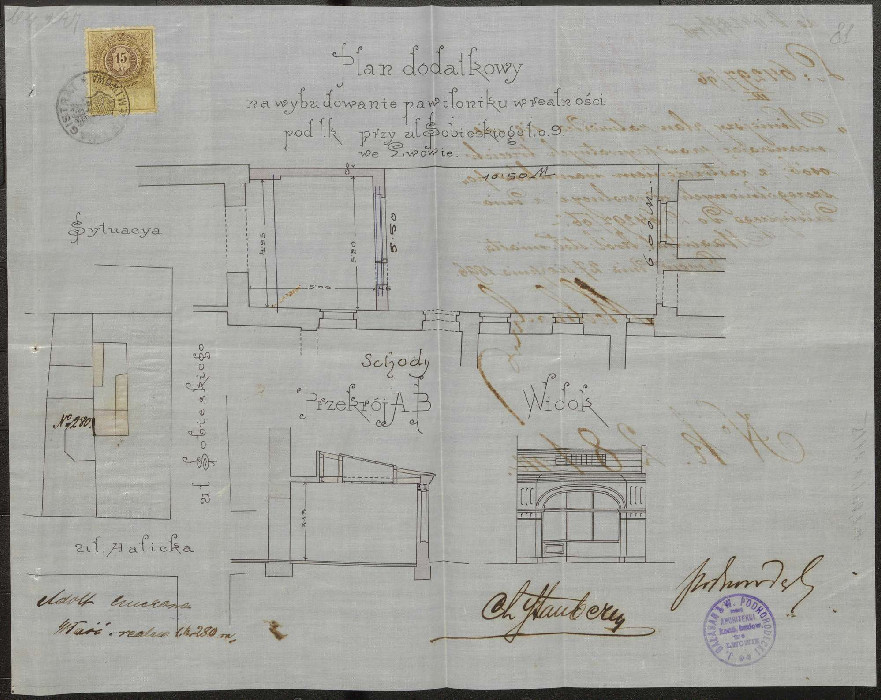
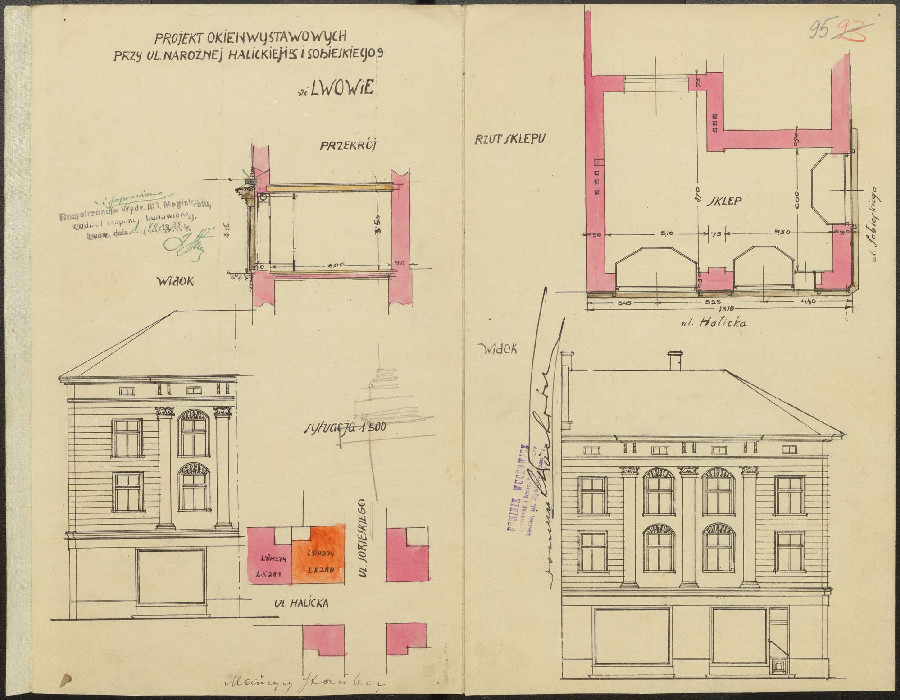
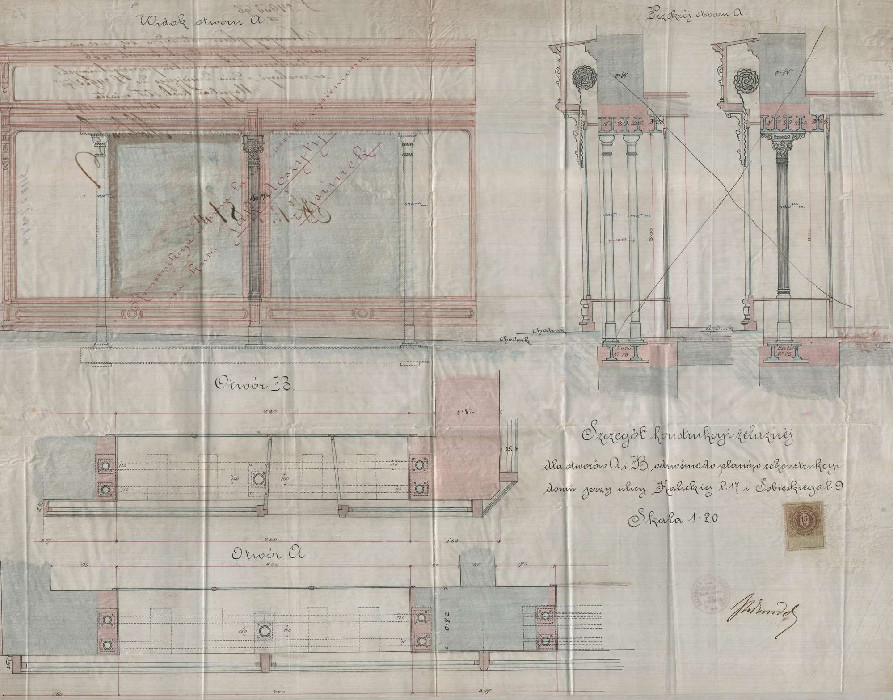
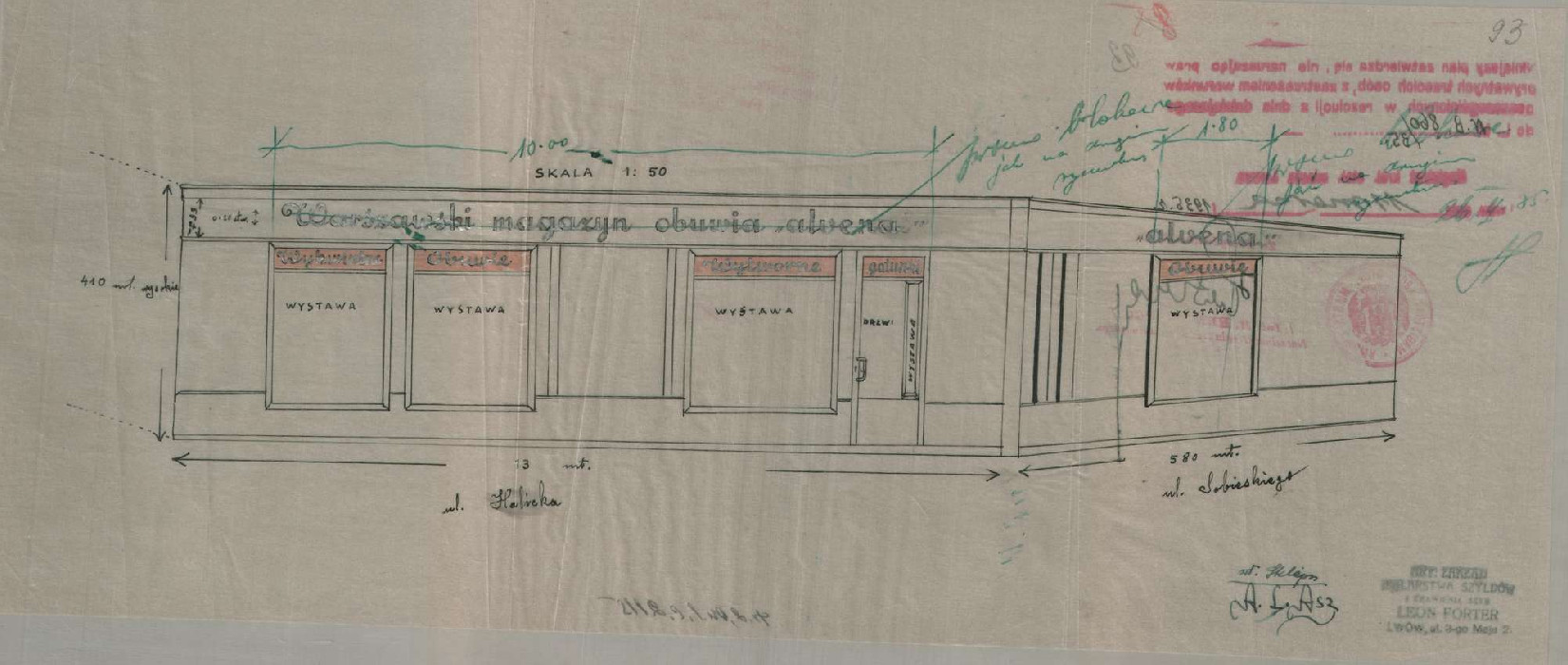
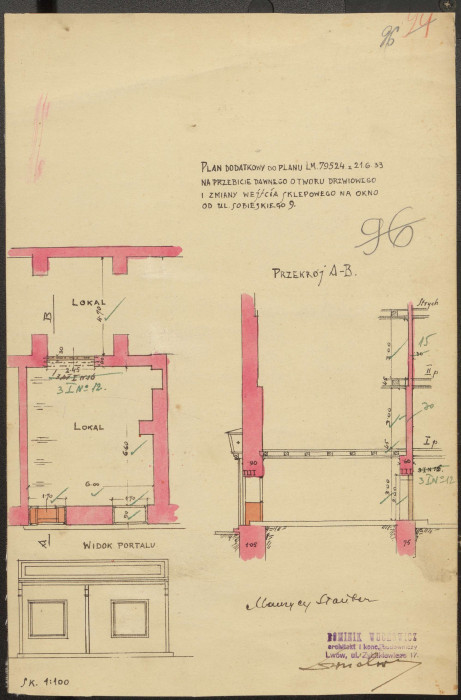
1935–1936 — installation of modern storefront windows (architect I. Menker and Solomon Keil).
The building (old conscription No. 280, new No. 281) stood near the walls of the Halytska Gate. It comprised two stone townhouses. The first one — small Domagalicz or Strusiewicz (later Toszewicz) house, measuring 9.2 cubits across the façade, and the second one — the Morakowski, 23.2 cubits long. The Morakowski Townhouse was the last building on the left side of the street and stood adjacent to the city walls. Between it and the city wall was a vaulted passage that ran alongside the wall to the city arsenal, with living quarters located above this passage. Similarly, on the opposite (even-numbered) side of the street, a similar passage along the walls led to vul. Riznytska (the beginning of vul. Teatralna). After 1777, when the city fortifications were dismantled, ul. Nowa (now vul. Brativ Rohatyntsiv) was laid out along the southern section of the wall. At that time, a portion of the Morakowski Townhouse was removed to make way for the street, while the remainder was merged with the small Domagalicz Townhouse.
Wojcech Domagalicz was a merchant who traded in fish and served as a Lviv city assessor. His son, Jan Domagalicz, was the founder of a chapel at the Roman Catholic Cathedral, built in 1645 and later dismantled by Archbishop Wacław Sierakowski in the second half of the eighteenth century. This chapel housed a miraculous icon of the Mother of God, known as the Domagalicz icon, painted by Jozef Wolfowicz.
At the beginning of the eighteenth century, the Domagalicz House consisted of two wooden stories beneath an attic, while the Morakowski house also had two stories made of stone. During the second half of the eighteenth century, both townhouses belonged to Jozef Loś, Ostryn starost. In 1765, the Morakowski Townhouse collapsed. The following year, its owner, magistrate regent Tomasz Preszer, intended to rebuild it and signed a contract with architect Franciszek Kulczycki; however, the construction never took place. In 1786, Anton Marger — a Viennese doctor of philosophy and medicine who had been teaching anatomy at Lviv University since 1784 — purchased two building plots at an auction from Franciszek Loś: the Strusiewicz plot (old conscription No. 278) and the one near the Halytska Gate (old conscription No. 279). He then commissioned a design from architect Maksymilian von Krus. On this deep, narrow plot, Krus designed a three-story, two-window townhouse. Based on the design, it appears the house was intended to stand on a plot 9.2 cubits wide — specifically, the Domagalicz or Strusiewicz parcel. In 1791, Anton Marger and his wife, Teresa, moved into the newly constructed townhouse. In 1804, Marger sold the property (new conscription No. 281) to Gottlib Penter. It was likely during Penter's ownership that the building acquired its modern appearance.
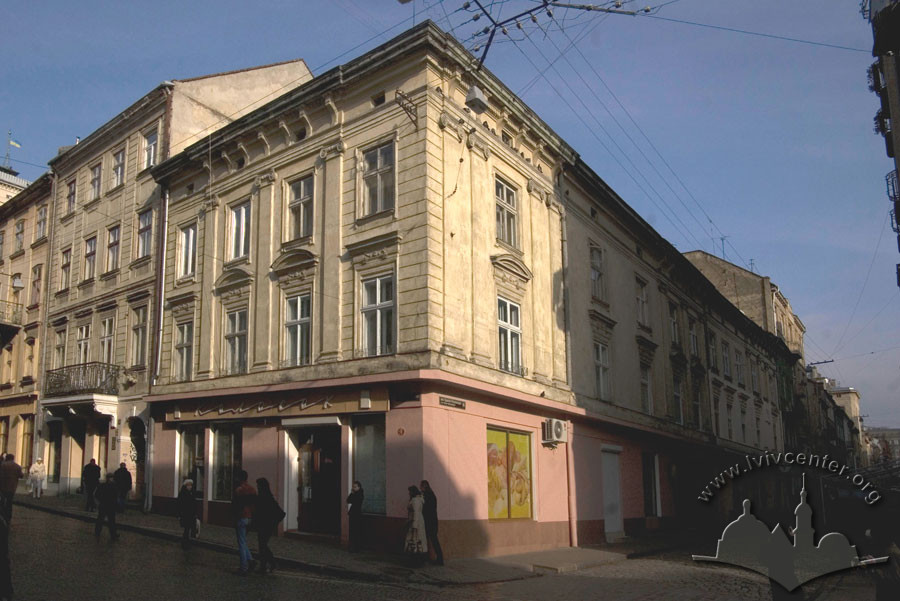
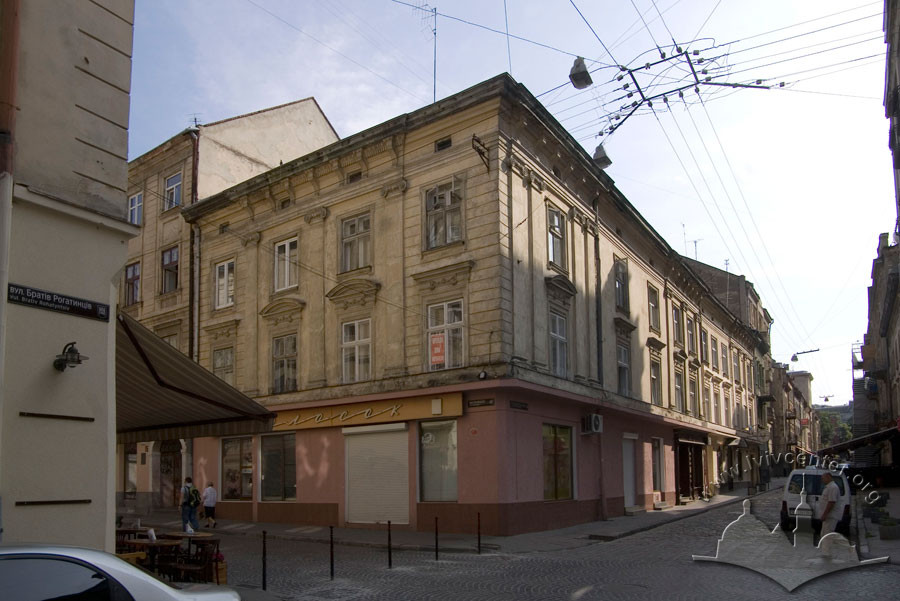
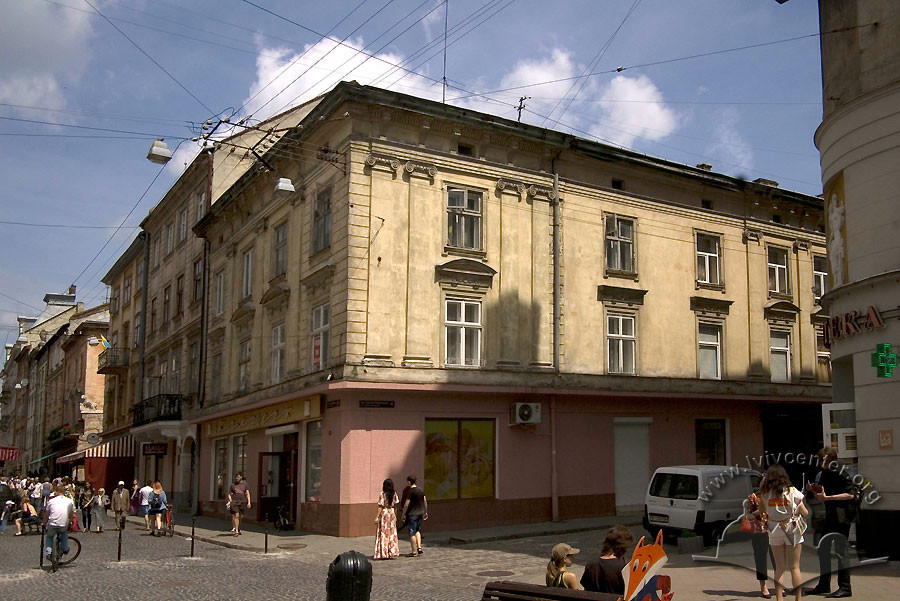
In 1881, homeowner Karolina Penter carried out several renovations, specifically replacing the floors and the roof. These repairs were overseen by architect Jan Schulz. Later, in 1896, the staircase was reconstructed according to a design by architect Włodzimierz Podhorodecki. In 1935 and 1936, the storefront windows were modernized by architects I. Menker and Solomon Keil. During this period, Schtraub's women's clothing store occupied the ground floor; during the Soviet era, it served as the "Kolosok" cooperative store.
Architecture
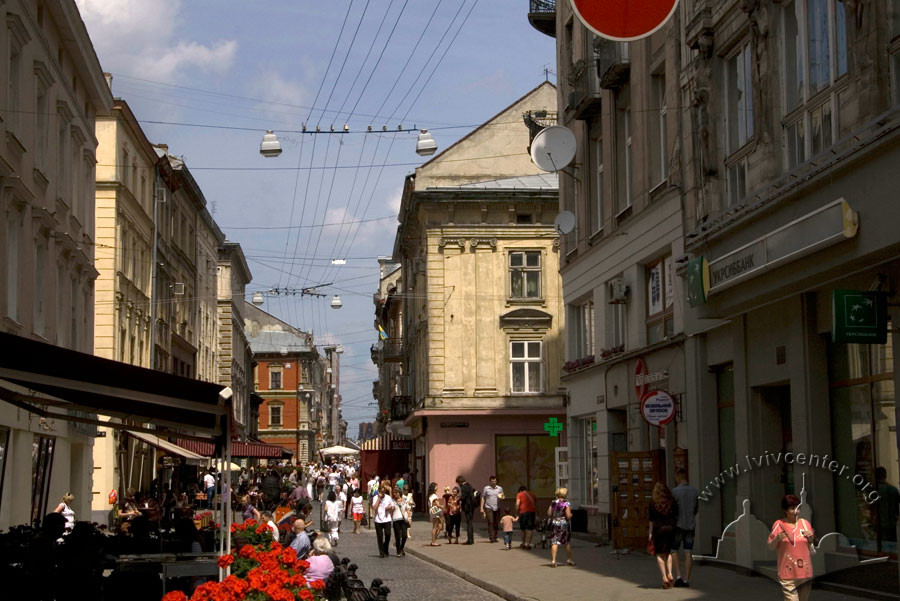
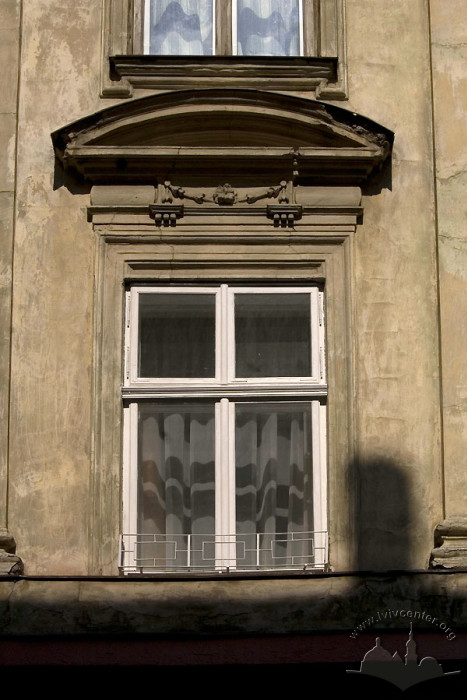
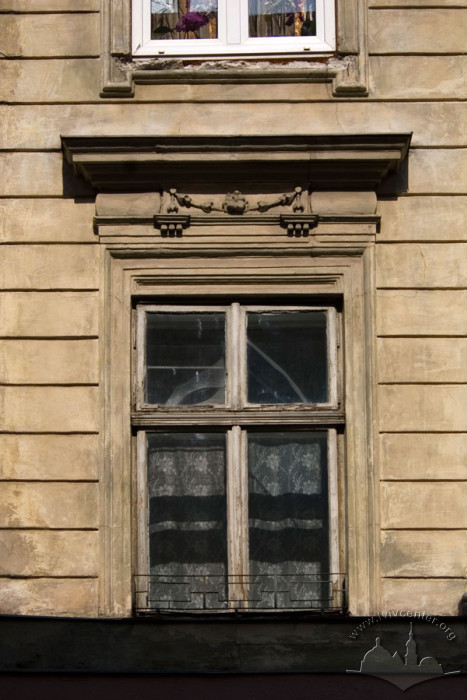
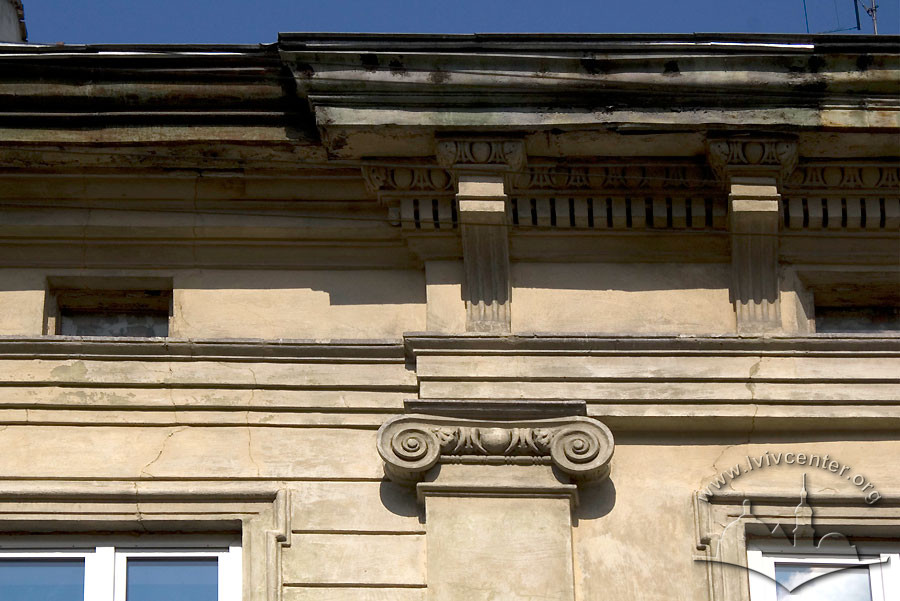
The building is situated within a city center block bounded by Halytska, Staroievreiska, Serbska, and Brativ Rohatyntsiv streets. It is a three-story, four-window structure with an entrance at vul. Brativ Rohatyntsiv 9. The ground floor level is undivided, while the upper floors are adorned with Ionic pilasters and the side surfaces feature banded rustication. The windows are decorated with both simple and segmental pediments, and the façade is topped by a cornice and an entablature with consoles. The cellars are vaulted.
People
Anton Marger — a Viennese doctor of philosophy and medicine who taught anatomy at Lviv University starting in 1784; owner of the townhouse.
Wacław Sierakowski — the Roman Catholic Archbishop of Lviv during the eighteenth century.
Wojcech Domagalicz (†1611) — a merchant and fish trader who served as a Lviv city assessor.
Włodzimierz Podhorodecki — a prominent architect who designed the staircase reconstruction project in 1896.
Gottlib Penter — owner of the townhouse as of 1804.
The Domagalicz family — a Lviv burgher family and owners of the townhouse.
J. Menke — an architect who modernized the shop windows in 1935–1936.
Jozef Wolfowicz — a painter who created the miraculous icon for the Domagalicz chapel.
Jozef Los — the starost of Ostryn, who owned both townhouses in the second half of the eighteenth century.
Karolina Penter — a homeowner who carried out renovation work in 1881.
Maksymilian von Krus — an architect who designed the three-story townhouse in 1786.
The Morakowski family — a Lviv burgher family and owners of the townhouse.
Solomon Keil — an architect who modernized the shop windows in 1935–1936.
The Strusiewicz family — a Lviv burgher family and owners of the townhouse.
Teresa Marger — wife of Anton Marger and co-owner of the townhouse.
Tomasz Preszer — an eighteenth-century owner of the townhouse and magistrate regent.
The Toszewicz family — a Lviv burgher family and owners of the townhouse.
Franciszek Los — owner of the townhouse.
Franciszek Kulczytski — a prominent eighteenth-century architect.
Schtraub — owner of a women's clothing store.
Jan Domagalicz — son of Wojcech, known as the founder of the chapel at the Roman Catholic Cathedral, built in 1645.
Jan Schulz — the architect who oversaw the renovation work on the townhouse.
Sources
- Державний архів Львівської області (ДАЛО) 2/1/2115. Справа перейменована: ДАЛО 2/1/1983. URL: https://e.archivelviv.gov.ua/file-viewer/227702#file-718536
- ДАЛО 2/1/4977.
- Борис Мельник, Ніна Шестакова, "Кам'яниці Львівського середмістя", Наукові записки. Львівський історичний музей, Випуск XII, (Львів: Новий час, 2008), 133-158.
- Володимир Вуйцик, Leopolitana II, (Львів: Класика, 2012).
- Ілько Лемко, В. Михалик, Г. Бегляров, 1234 вулиці Львова (1939–2009) (Львів: Апріорі, 2009).