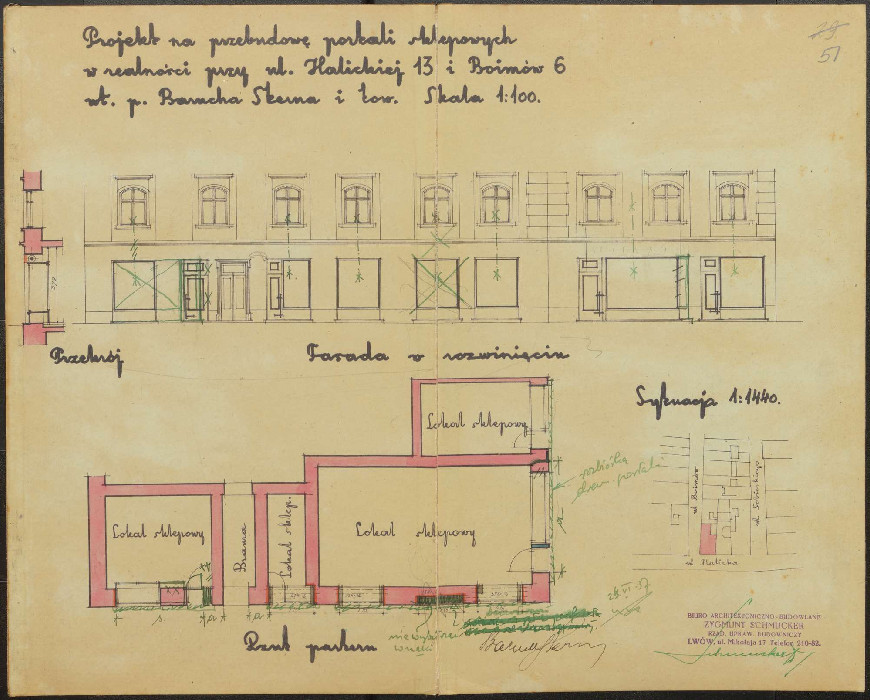
Vul. Halytska, 13 – residential building ID: 2327
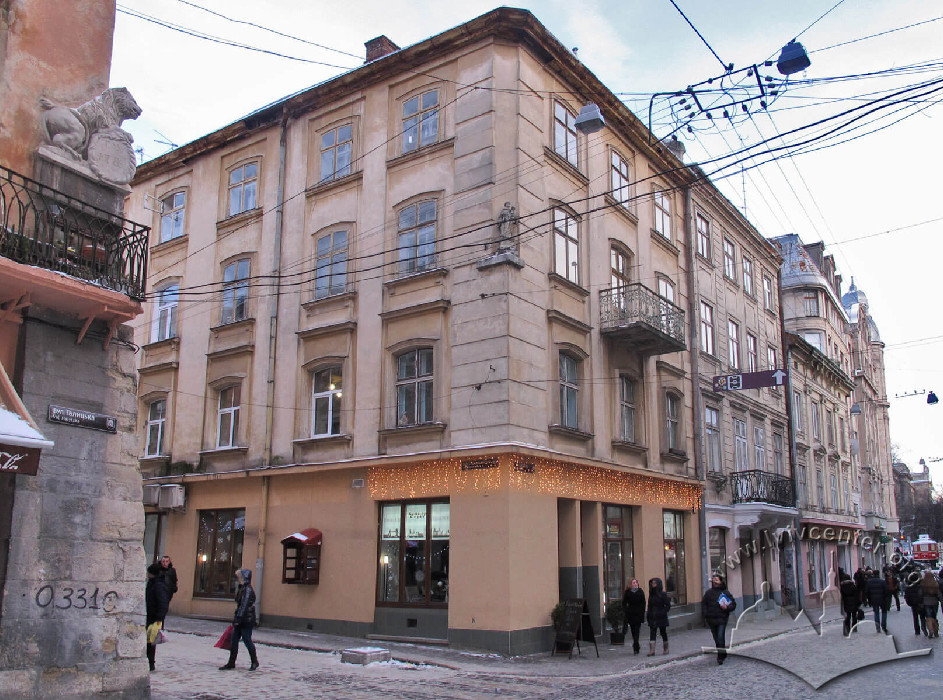
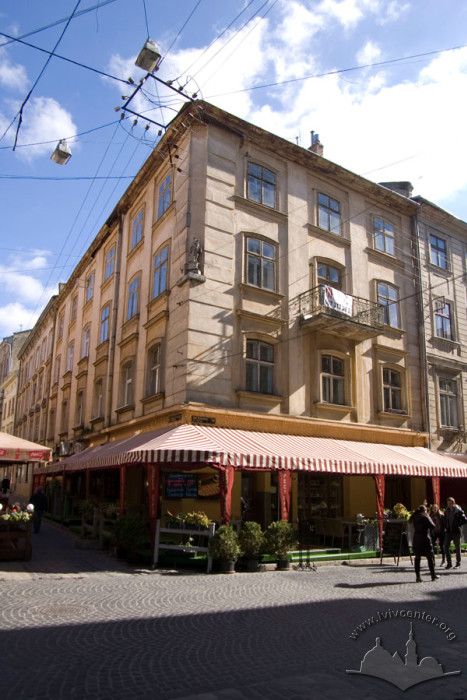
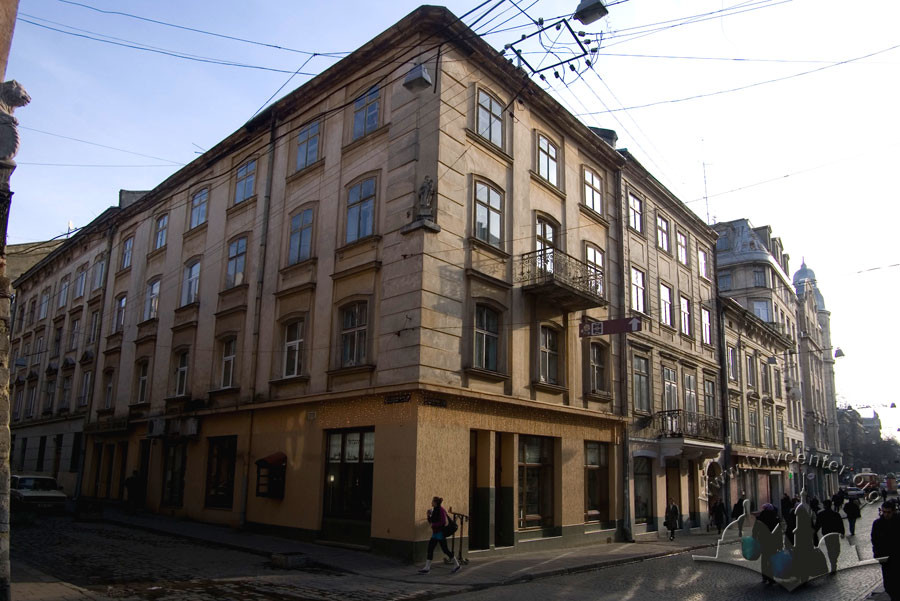
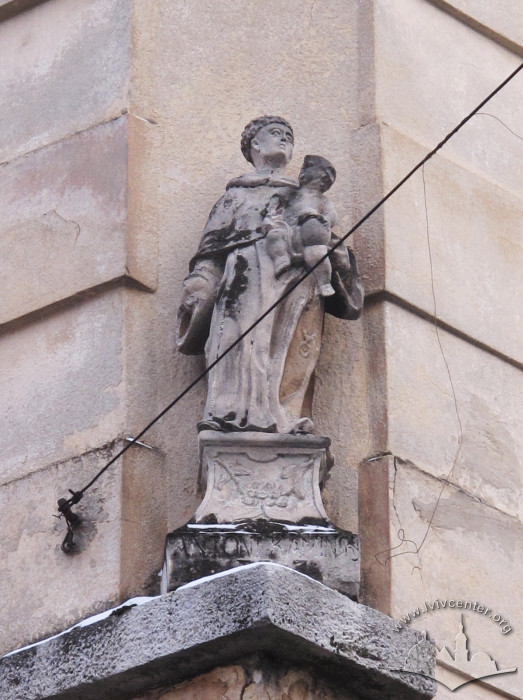
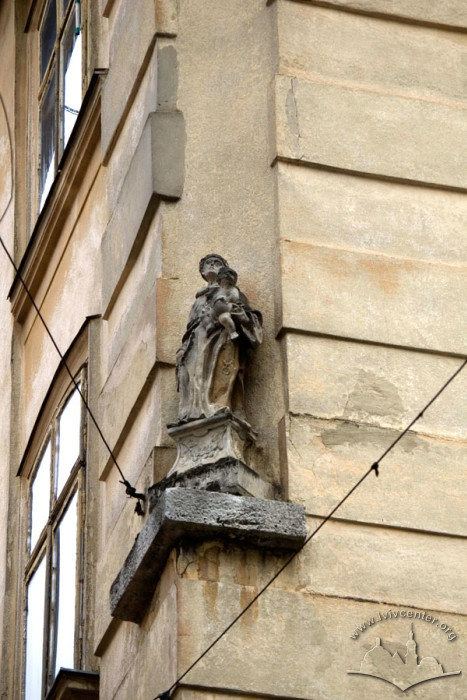
The townhouse (conscription no. 278 old, no. 279 new) at the corner of Halytska and Staroievreiska streets, known as the Mendrowicz Townhouse, was built in 1778 in the Baroque style. Its corner is highlighted by a sculpture of St. Anthony of Padua, the patron saint of one of its owners, Antoni Kamiński. By Decree No. 393 of the Lviv Regional Executive Committee (dated November 22, 1988), the building was added to the Local Register of Monuments under protection no. 1055. As of 2014, the ground floor of the townhouse houses the "Sontsevyr" grocery store.
Story
Seventeenth century — construction of the three-story Renaissance-style Mendrowicz Townhouse.
1750–1774 — the Renaissance townhouse lies in ruins.
1775 — construction of a rear wing in the courtyard.
1778 — construction of a Baroque townhouse on new foundations.
Eighteenth–nineteenth century — reconstruction of the Baroque townhouse into a four-story building, bringing it to its current appearance.
Throughout the seventeenth and eighteenth centuries, the townhouse (conscription no. 278 old, no. 279 new) was consistently known as the Mendrowicz Townhouse. It occupies a corner lot and, as of 1712, was three stories tall. In the 1750 registry of townhouses, it is mentioned as having collapsed, and it remained in that state until 1774. On July 13 of that year, at a city-sanctioned auction, it was sold as a dilapidated shell to Peter Châle, a Lviv jeweler of French descent, for 3,400 zł. In June 1775, Peter and Tekla Châle began constructing a courtyard wing. Three years later, in 1778, archival records indicate they completed a new townhouse built on entirely new foundations.
As a goldsmith, Peter Châle is known for crafting gold vestments and two diamond-encrusted gold crowns in 1773 for the icon of the Mother of Mary, installed on the main altar of the Roman Catholic Cathedral. Upon completing the townhouse in 1778, Châle transferred the property to Antoni and Justyna Kamiński. The Lviv clockmaker Antoni Kamiński had resided in the Abrekowski Townhouse (vul. Krakivska 1) since 1765. He was one of the four founders of the clockmakers' guild in Lviv and was held in high regard by his fellow citizens. A clock of his craftsmanship, bearing his signature, is preserved in the Lviv Museum of Ethnography and Crafts.
Kamiński purchased the Mendrowicz Townhouse for his sons; by 1781, it was described in records as "newly constructed on the corner." Following Antoni Kamiński's death in 1783, the building was inherited by his son, Roch, a clerk of the High Tribunal. Roch Kamiński, in turn, reconstructed the townhouse into a four-story building. As a grateful son, he placed a sculpture of St. Anthony of Padua on the corner — evidently in memory of his father, Antoni. The sculpture was likely created by one of the prominent sculptors of that era (Maciej Polejowski, Michał Filewicz, Franciszek Ołędzki, Ivan Shchurovsky, or Jan Obrocki). According to an appraisal conducted by architect Klemens Fesinger in 1804, the construction of this townhouse cost 26,563 zł. By a bill of sale dated March 15, 1807, Roch Kamiński sold his newly erected townhouse to Adam Wretowski.
In the interwar period, the ground floor housed Blumenkranz's haberdashery shop; in the post-war era, it became a store for textiles and metal hardware. Following Ukraine's independence, it has served as the "Sontsevyr" grocery store.
Architecture
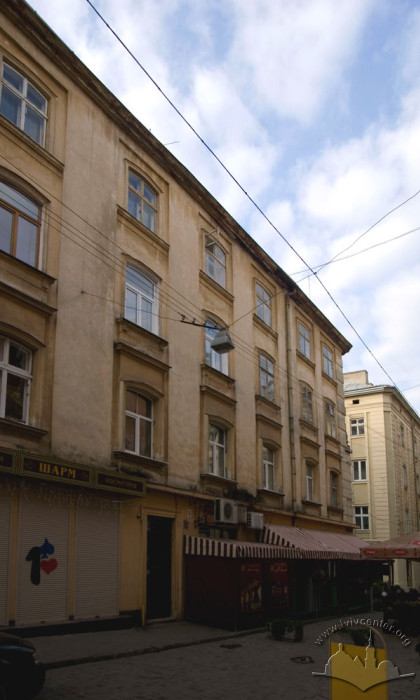
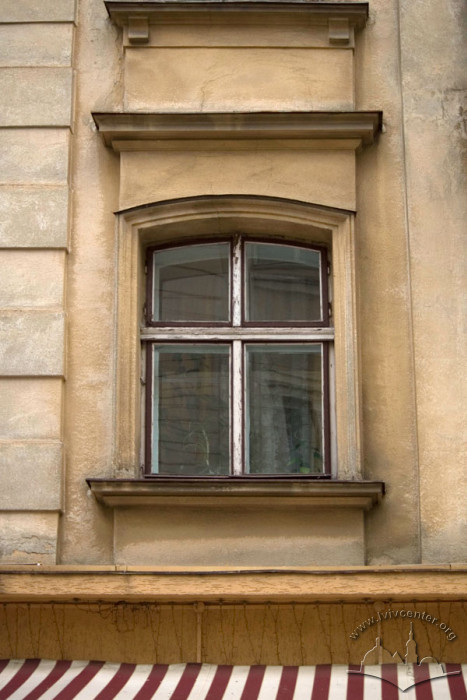
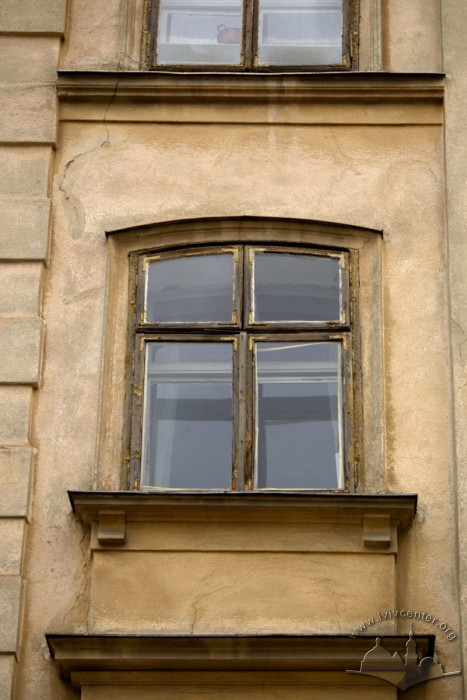
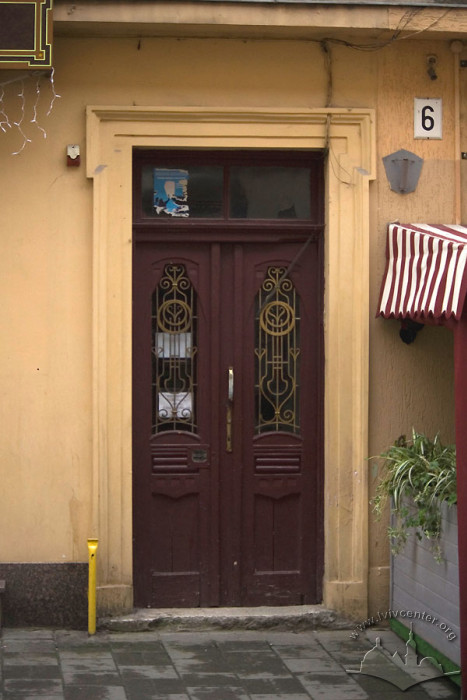
The building is located in a downtown block bounded by Halytska, Staroievreiska, Serbska, and Brativ Rohatyntsiv streets. This four-story corner building (with its entrance at vul. Staroievreiska 6) features a three-axis main façade facing vul. Halytska and a six-axis side façade. The ground floor is smooth-surfaced and highlighted by a stringcourse, while the upper floors are adorned with lesenes and the corner is rusticated. The windows are designed with segmental lintels set within profiled trimmings. A balcony with an elegant wrought-iron railing, supported without brackets, is positioned at the center of the third-floor façade. The building features a clipped corner, a hallmark of architecture from the late eighteenth to the early nineteenth centuries. A stone statue of St. Anthony of Padua is mounted at the same level, featuring an inscription and date on its pedestal: "Antoni Kamiński / 1783".
People
Adam Wretowski — owner of the townhouse starting in 1807.
Antoni Kamiński (†1783) — a clockmaker and one of the four founders of the Lviv clockmakers' guild; he resided in the Abrekowska Townhouse (vul. Krakivska 1) from 1765 and purchased the Mendrowicz Townhouse for his sons in 1778.
Blumenkranz — owner of a haberdashery shop during the interwar period.
Jan Obrocki (†1800) — a Lviv sculptor of the Rococo period.
Ivan Shchurovsky (†1820) — a Lviv sculptor of the Rococo period.
Klemens Fesinger — architect who conducted the 1804 appraisal of the reconstructed Mendrowicz Townhouse.
Maciej Polejowski — a Lviv sculptor of the Rococo period.
Mendrowicz family — owners of the townhouse during the seventeenth and eighteenth centuries.
Michał Filewicz (†1804) — a Lviv sculptor of the Rococo period.
Peter Châle — a Lviv jeweler of French descent and owner of the townhouse from 1774; he built the rear wing in 1775 and the Baroque townhouse in 1778.
Roch Kamiński — son of Antoni Kamiński and a clerk of the High Tribunal; he inherited the Mendrowicz Townhouse and reconstructed it from a three-story to a four-story building.
Tekla Châle — wife of Peter Châle and owner of the townhouse.
Franciszek Ołędzki — a Lviv sculptor of the Rococo period.
Justyna Kamińska — wife of Antoni Kamiński and owner of the townhouse starting in 1778.
Sources
- Державний архів Львівської області (ДАЛО) 2/1/1979. URL: https://e.archivelviv.gov.ua/file-viewer/228758#file-836582
- Борис Мельник, Ніна Шестакова, "Кам'яниці Львівського середмістя", Наукові записки. Львівський історичний музей, Випуск XII, (Львів: Новий час, 2008), 133-158.
- Володимир Вуйцик, Leopolitana II, (Львів: Класика, 2012).
- Ілько Лемко, В. Михалик, Г. Бегляров, 1234 вулиці Львова (1939–2009) (Львів: Апріорі, 2009).
