Vul. Marka Cheremshyny, 17 – sport complex ID: 1955
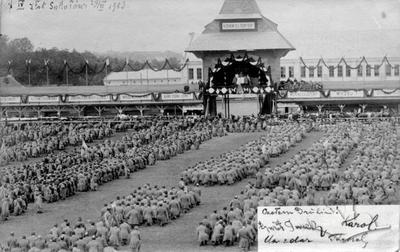
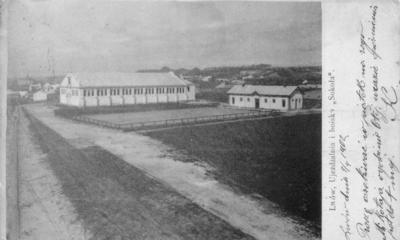
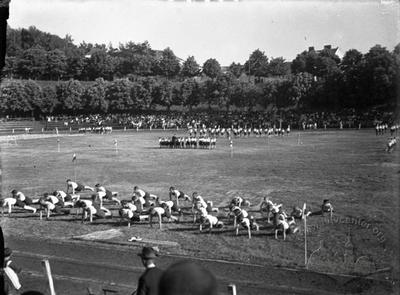
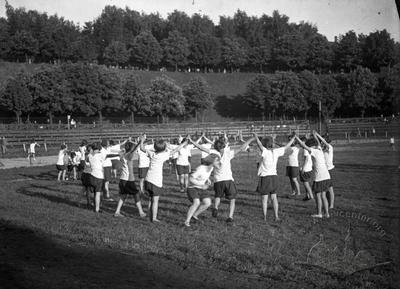
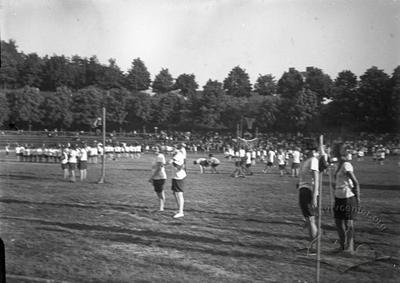
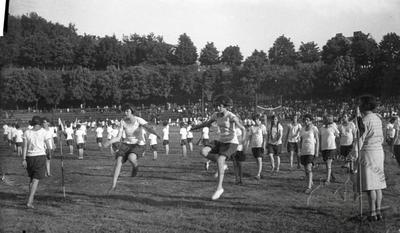
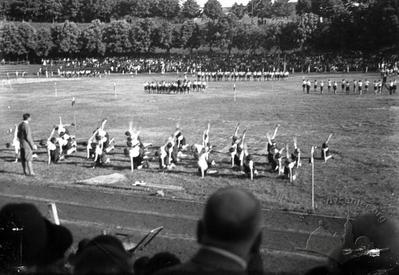
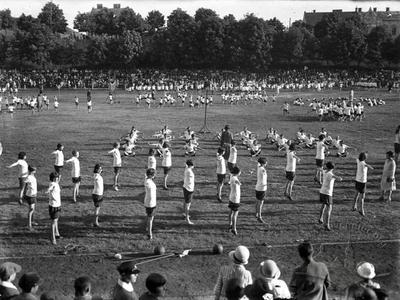
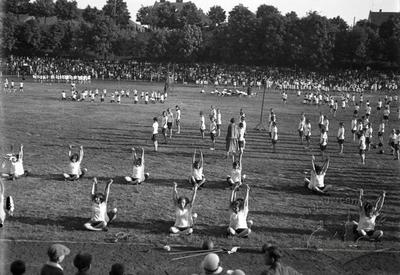
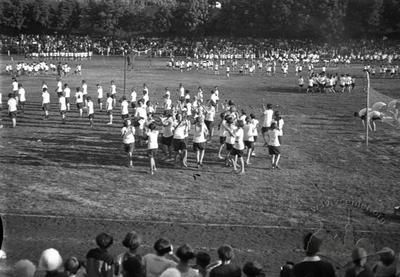
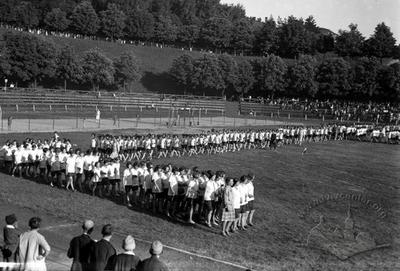
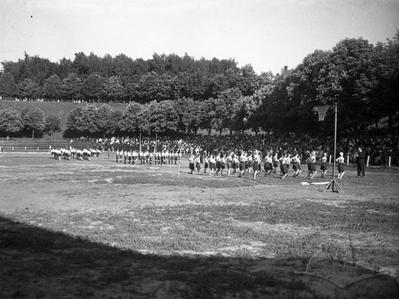
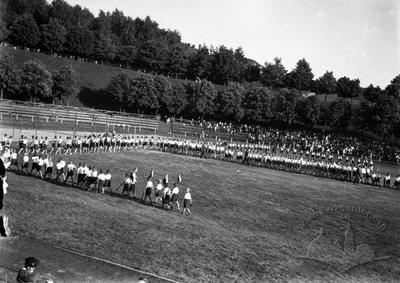
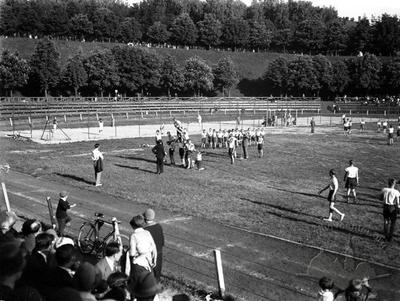
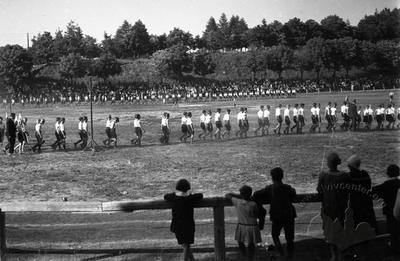
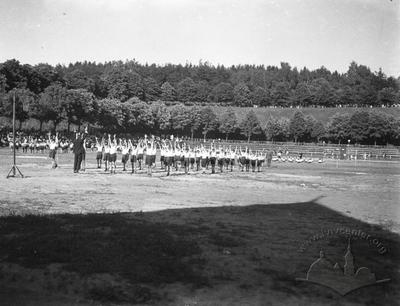
Lviv's largest stadium of the late nineteenth century was built for the Polish gymnastics society "Sokół" in 1898. Next to the stadium stood a covered wooden riding hall for equestrian sports, designed by architect and builder Ivan Levynskyi in the Zakopane style. Later, during the interwar period, it was reconstructed into a masonry brick building for athletic exercise. The complex includes a stadium, a sports palace, courts for team sports, and a throwing sector. Built between the 1950s and 1980s on the site of the former Cetnerowka manorial estate, it borders the recreational area of Pohulianka Park, the student dormitory grounds, the Hill of Glory, and the Lychakiv Cemetery. Today, it serves as one of the buildings of the Lviv State University of Physical Culture. The stadium received a new name – "Skif".
Story
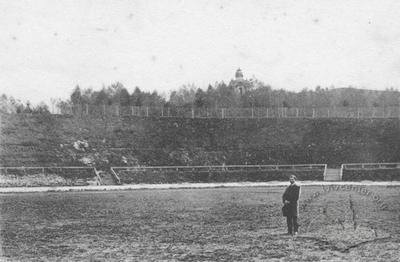
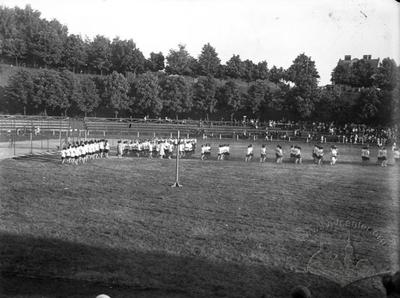
In the late nineteenth century, a stadium was constructed for the Polish society "Sokół", which was the largest in Lviv at the time (Medyński, 1937, 238). The stadium was located at the foot of the Lychakiv Park hill, its bleachers carved amphitheatrically into the slopes of the Lychakiv hill. It was intended for physical exercise and athletic meets. Adjacent to the stadium on what was then ul. Cetnerowska (now vul. M. Cheremshyny) stood a covered wooden riding hall, built in 1898 according to a design by architect Ivan Levynskyi in the Zakopane style (Orłowicz, 1925, 191; Jaworski, 100). Later, during the interwar period, the wooden riding hall was rebuilt into a masonry brick structure for sports practice.
The layout of the modern complex was initiated by university students in 1957–1959, when they cleared part of the former "Cetnerowka" manorial estate of debris dumped here during the construction of the "Hill of Glory" memorial (Трегубова, Мих, 243-244; Вуйцик, Липка, 154). First, they laid out a soccer field, followed by track-and-field lanes and sectors, and later courts for team sports. Construction work resumed in 1976. At that time, the erection of an educational and sports facility — the Sports Palace — began based on a design by architect B. Kuznietsov. In 1980, it was commissioned for use. Soon after, the "Ukraina" team (led by university instructor Roman Melekh) began holding training sessions and Ukrainian Minifootball Championship matches there. Notable among its roster was Roman Kovalchyk, who was called up to the Ukrainian national team, where he won bronze medals at the European Championship. Later, in the early 2000s, the "Halychanka" women's team held Ukrainian national handball championship matches on the Sports Palace's hardwood court. For a period of time, the main pitch of the university stadium was used by the "Sokół" rugby club (late 1990s–early 2000s).
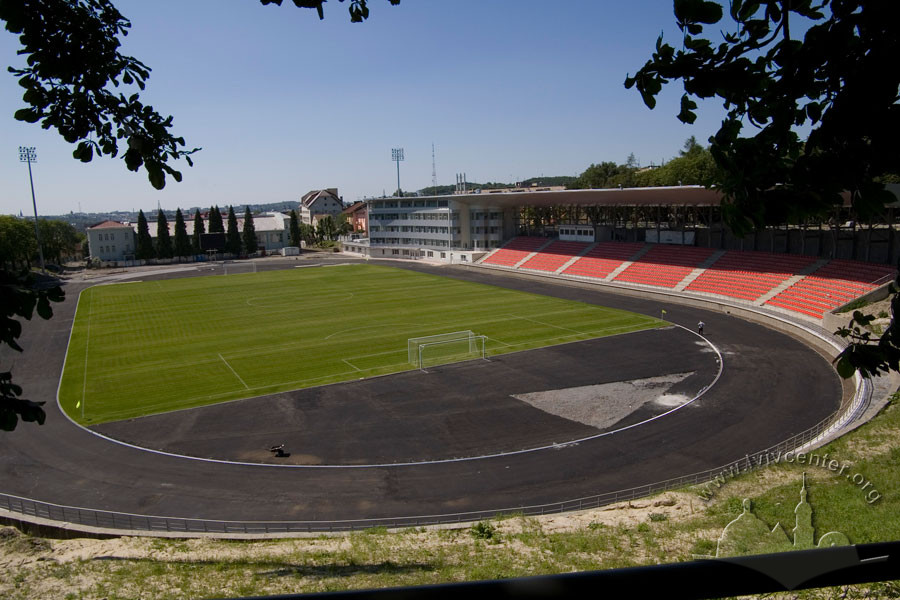
Today, the Sports Palace building houses one of the academic facilities of the Lviv State University of Physical Culture, accommodating practical and biomedical departments, an athletic hall, and space for fencing, boxing, and martial arts. The stadium, which also belongs to the Lviv State University of Physical Culture, is named "Skif".
Architecture
The complex is formed by the stadium, a throwing sector, courts for team sports, and the Sports Palace. The stadium features a grass soccer pitch encircled by track-and-field lanes and field sectors, equipped with grandstands and service facilities. In front of it, facing the Botanical Garden, are dirt courts for handball, basketball, and volleyball. The Sports Palace was erected in the style of Modernist architecture. The building features two sports halls, a swimming pool, and smaller halls for boxing, wrestling, weightlifting, competitive dance, physical therapy, and athletics, as well as auxiliary rooms: a computer research laboratory, a medical monitoring office, a public address station, a screening room, and an instructional office. The total floor area of the facility is 7,571 sq. m, of which 3,920 sq. m are dedicated to athletic exercise spaces. Located in front of the palace is a throwing sector for track-and-field equipment: hammer, shot put, discus, and javelin. The sector is currently in a state of disrepair.People
Roman Melekh –– founder and coach of the "Ukraina" minifootball team.
Roman Kovalchyk –– player for the "Ukraina" minifootball team, European Championship medalist.
Regina Shymkute –– handball player for "Halychanka" and member of the Ukrainian national team.
Olena Tymoshenkova –– goalkeeper for "Halychanka", participant in the 2008 Beijing Olympic Games.
Sources
- A. Medyński, Lwów. Ilustrowany przewodnik dla zwiedzających miasto (Lwów: Nakładem autora, 1937), 238.
- F. Jaworski, Przewodnik po Lwowie i okolicy z Żołkwią i Podgorcami z planem miasta i teatru (Lwów: Nakładem księgarni polskiej Bernarda Połnieckiego), 100.
- M. Orłowicz, Ilustrowany przewodnik po Lwowie (Lwów–Warszawa, 1925), 191.
- В. С. Вуйцик, Р. М. Липка, Зустріч зі Львовом. Путівник (Львів: Каменяр, 1987), 154.
- О. Т. Трегубова, Р. М. Мих, Львів. Архітектурно-історичний нарис (Київ: Будівельник, 1989), 243-244.
Citation
Khrystyna Kharchuk, Bohdan Mykhailyunyo. "Vul. Marka Cheremshyny, 17 – sport complex". Lviv Interactive (Center for Urban History, 2013). URL: https://lia.lvivcenter.org/en/objects/cheremshyny-17-sp/Urban Media Archive Materials