ID: 115

ID: 115
Related buildings and spaces
-
Vul. Mykhaila Hrushevskoho, 4 – Lviv National Franko University building

-
Vul. Pekarska, 9 – building of the Lviv Technical School of Light Industry

People
Organizations
-
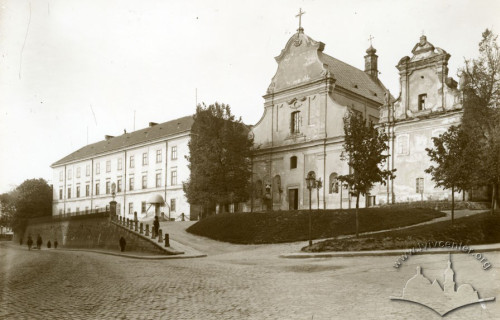
Habsburg University
The University, founded in 1784 by Joseph II on the basis of the abolished Jesuit academy, was to become the main source of professional officials for the capital of the Galician province. Stress was laid not on research, but chiefly on the training of managers. After numerous changes, in particular, the demotion of the institution status to that of a lyceum, in 1817 the university was refounded by Emperor Francis II. The institution existed in this condition till the end of 1918.
Read more -
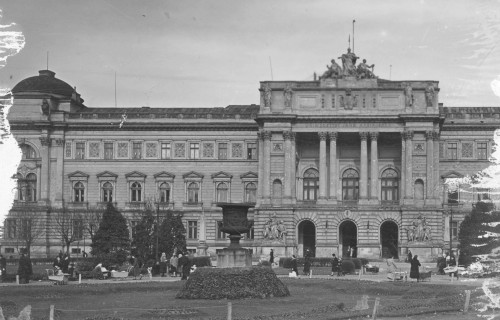
Jan Kazimierz University (Uniwersytet Jana Kazimierza)
The Franz (Francis) I University of Lviv was reorganized as the Jan Kazimierz University in 1918, after the Polish-Ukrainian war and the battles for Lviv. During the period, the University was one of the largest and most significant scientific and cultural centers of interwar Poland. It was renamed after the beginning of the Soviet occupation in 1939 into Ivan Franko State University.
Read more -
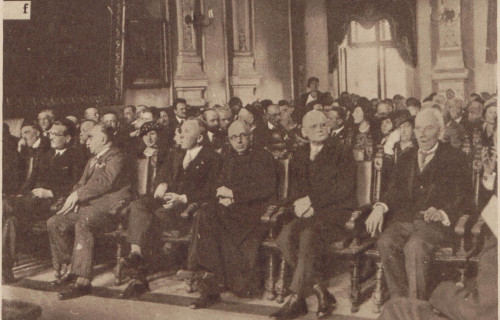
Jewish Community Museum
The Jewish Community Museum (or the Jewish Museum) functioned in Lviv in 1934–1940. It was founded by a group of collectors, philanthropists, and representatives of Jewish elites and artists, including Józef Awin, Marek and Ada Reichenstein, Ludwik Lille, and Wiktor Chajes. The museum was created as an institution within the Jewish community of Lviv, which was to be engaged in identifying, preserving, and exhibiting cultural memorabilia. The museum's collection was based on private collections and deposits from synagogues and individuals.
Read more