Vul. Zubrivska, 30 – Blessed Josaphata Hordashevska Secondary School No. 84 ID: 2435
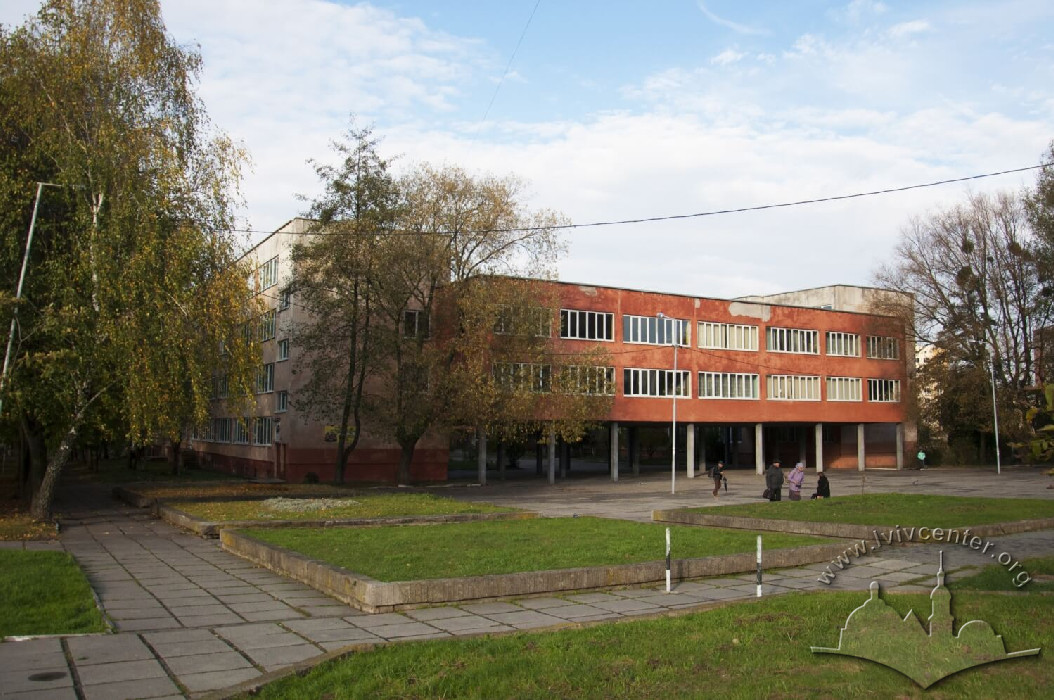
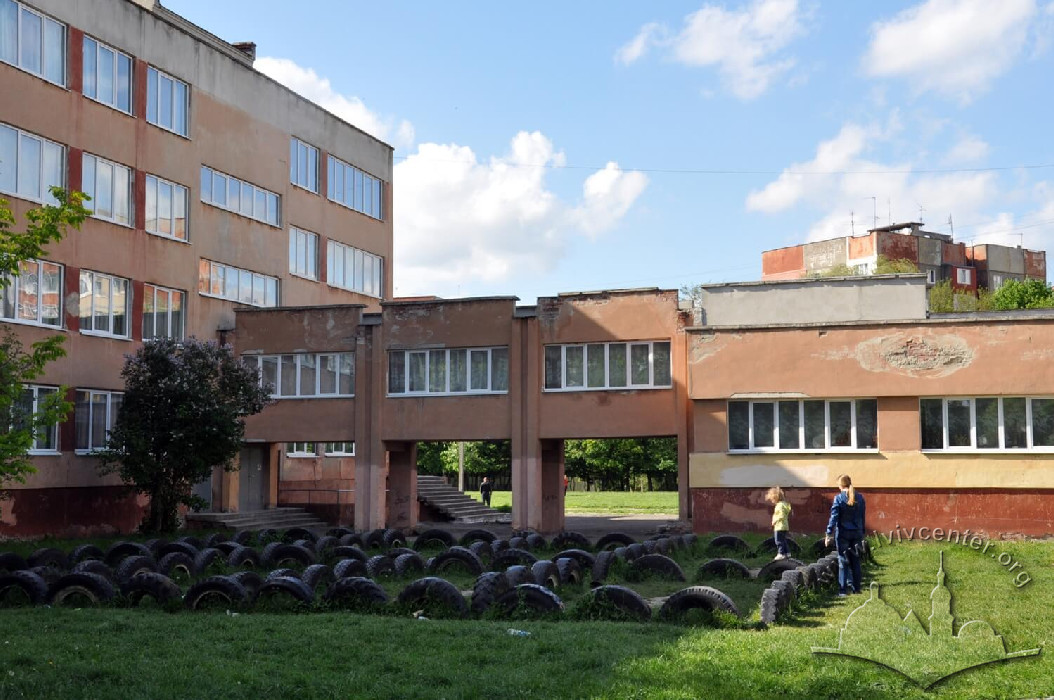
Secondary School No. 84 on vul. Zubrivska 30 was constructed in 1982. Together with another school and a kindergarten, it forms the core of the M12 micro-district, which is part of the Sykhiv mass residential development area. The building was erected according to standard design No. 222-1-278, which was partially modified. A swimming pool is attached to the school, connected to the main building by a covered walkway. Today, the school accommodates 25 classes, with a maximum capacity of 30 classes. The school serves as an active cultural center for the micro-district. The building was constructed according to the principles of industrial typology, and its stylistic features belong to Modernism.
Story
Secondary School No. 84 was constructed in 1982 –– one year after the first residents settled in Sykhiv. In 1983, the school was recognized at the Republican Competition for the Best Buildings and Complexes. For the construction of this school, the Lviv branch of Giprograd (Dipromisto) and SU-55 (Construction Directorate No. 55) of the "Lvovzhilstroy" trust were awarded an incentive prize (Съедин, Когда практика, Строительство и архитектура, 1983, №11, 10). Subsequently, a number of other secondary schools were built in new micro-districts of Lviv using this standard design.
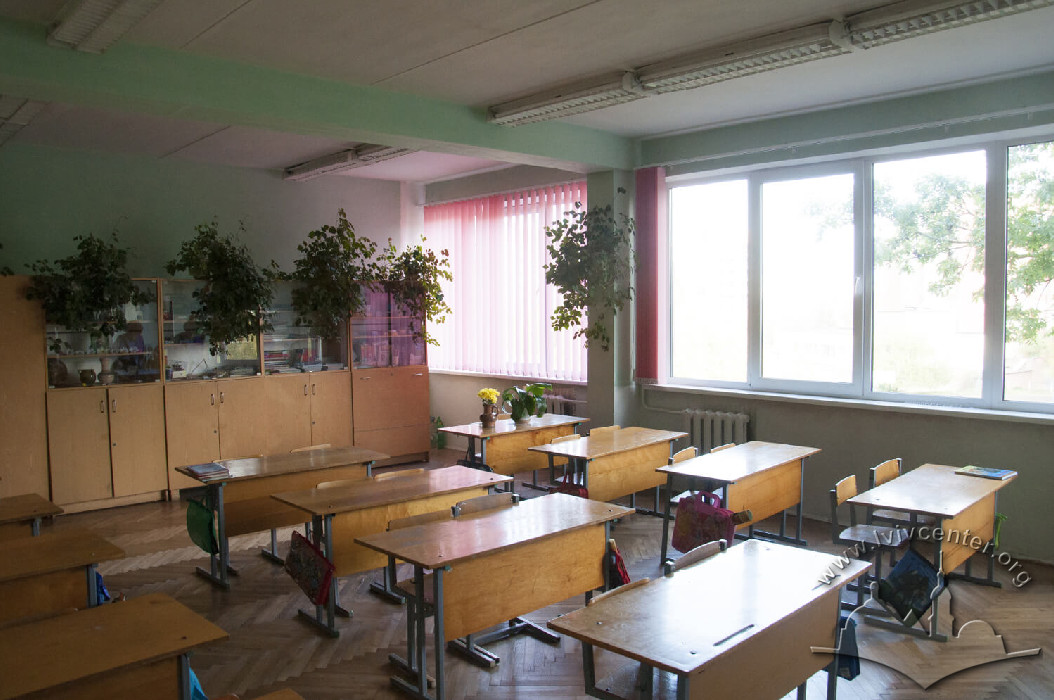
Today, Secondary School No. 84 accommodates 611 pupils in 25 classes, with a maximum capacity of 30 classes. Originally, it was a Russian-language school; in 1995, there was only one Ukrainian-language class. Today (2014), the proportion has inverted, with 19 Ukrainian-language and 6 Russian-language classes. As a second foreign language, students can choose to study either German or Polish. Since 2012, Chinese language courses have also been offered at the school. The school is attended by children from other districts of the city as well as from villages located near the southeastern borders of Lviv (Інтерв'ю, 2014).
The school serves as an important cultural center for the micro-district. In particular, it houses a museum of replicas of icons of the Virgin Mary, which is open to visitors beyond the student body. Additionally, the folk dance ensemble "Rosy Svitanku" was organized at the school, later growing into a public organization. Today, the ensemble tours many countries around the world, boasts numerous awards, and includes more than 150 students from all over Lviv.
In 2014, deputies of the Lviv City Council supported a decision made during public hearings to name Secondary School No. 84 after Blessed Josaphata Hordashevska (Інтерв'ю, 2014).
Architecture
According to the ideology of Soviet urban planning, the school in the structure of the micro-district was meant to become the center of its cultural life. It was intended to serve as the planning core of the residential unit, and pedestrian paths leading from every house in the micro-district to the school were designed not to intersect with vehicular roads. This structure was supposed to create the safest and most comfortable environment possible for children.
Secondary School No. 84 was constructed in 1982 and forms part of the M12 micro-district within the Sykhiv mass residential development area. Together with another school and a kindergarten, it forms the center of this micro-district. In the Sykhiv district, children's educational institutions were linked to one another by pedestrian promenades and boulevards, along which certain public facilities –– primarily commercial and everyday services –– were also situated (Трегубова, Львів, 1989, 232). The site of School No. 84 is adjacent to one such pedestrian boulevard, which, however, has today lost its function as an active pedestrian space due to new infill development and infrastructural changes.
Just like other public facilities, schools were built using a range of standard designs. However, special significance was attributed to the architecture of children's institutions in socialist residential districts. Taking into account their "educational and compositional significance", standard designs for children's educational facilities were frequently modified in an attempt to endow them with distinctive features (Трегубова, Львів, 1989, 240-241). Similarly, Sykhiv School No. 84 was erected according to standard design No. 222-1-278 with several changes to the layout, which were subsequently reflected on the façades.
The article "When Practice is Stronger Than Theory" (Rus. "Когда практика сильнее теории") notes regarding the 84th Sykhiv school: "During the erection of the building, the builders achieved a high quality of work and implemented a series of improvements: multi-story columns made it possible to significantly reduce the number of assembly components and increase industrial efficiency" (Съедин, Когда практика, Строительство и архітектура, 1983, №11, 10).
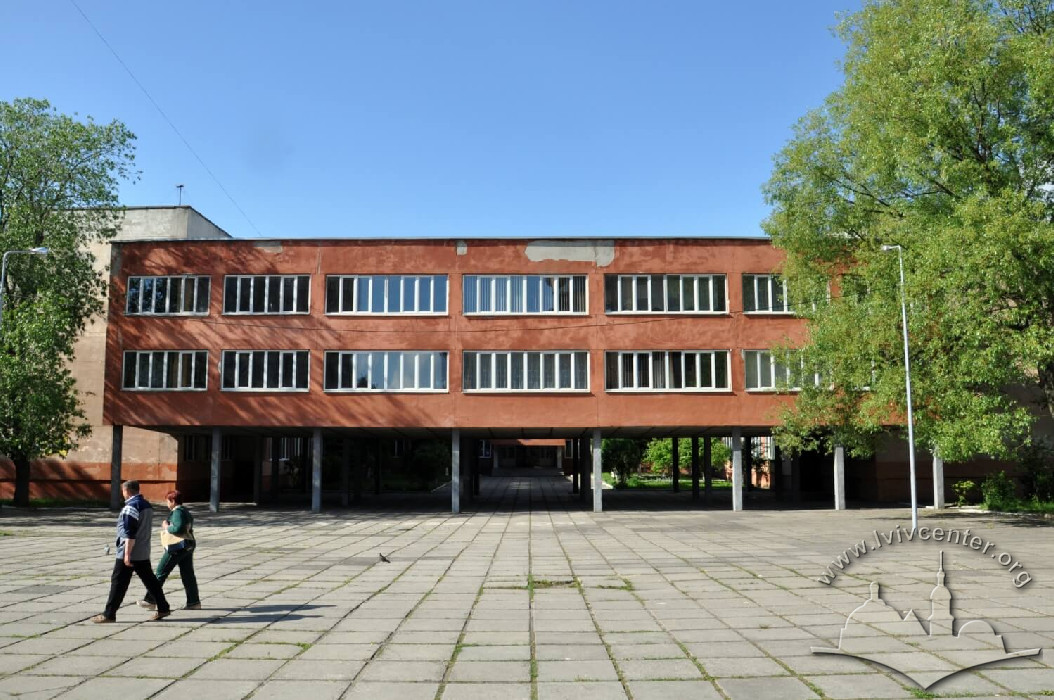
A specific feature of the Sykhiv residential district was the active application of color. The color scheme for the exterior walls of the school was selected to match the overall design: bright red-and-white planes on the façade created an active contrast against the backdrop of the green-and-grey residential buildings of the micro-district (Съедин, Когда практика, Строительство и архітектура, 1983, №11, 10).
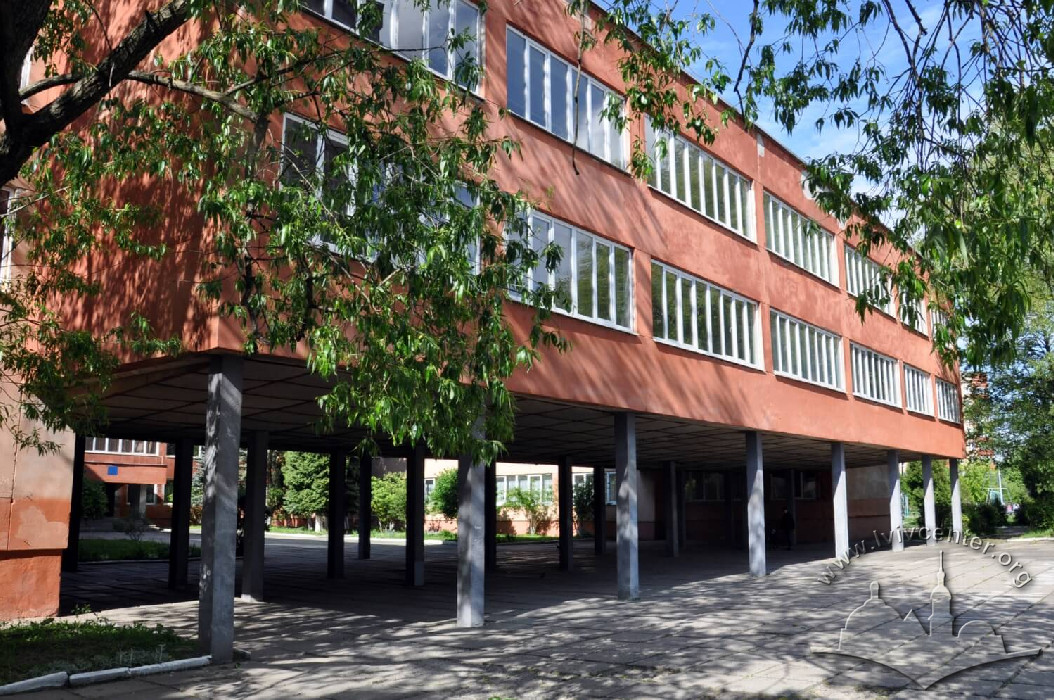
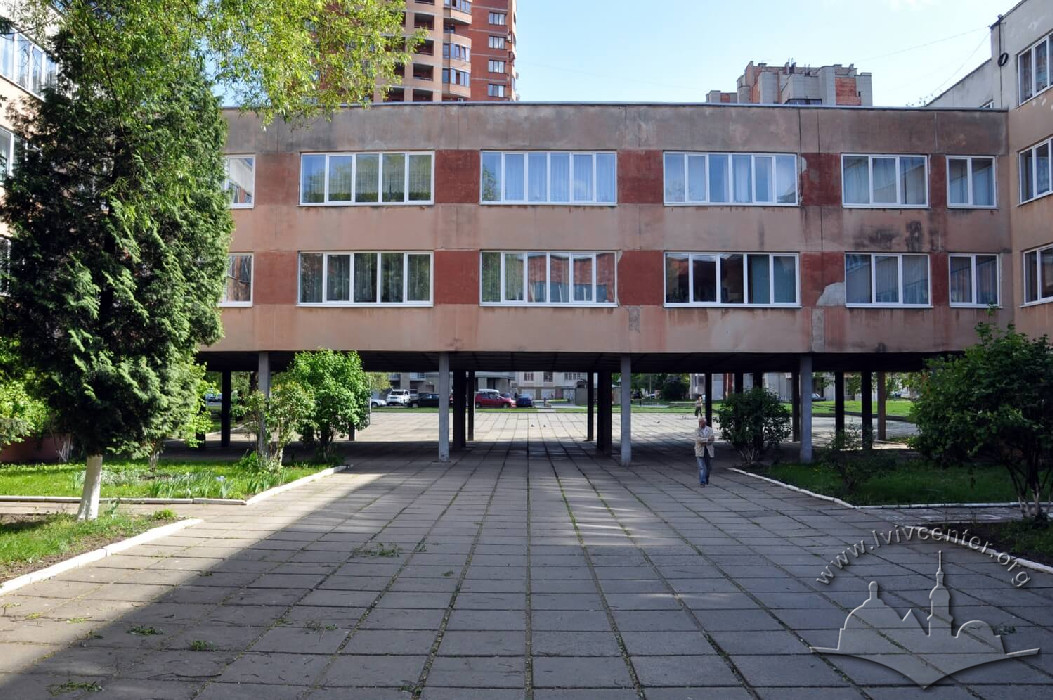
The floor plan of the school fits into a rectangle measuring 51.7 by 46.2 meters. The building has a variable height of 3 and 4 stories. The school features an open, landscaped inner courtyard measuring 23 by 23 meters. To enter it, one must pass beneath a section of the building that is raised on pilotis. The use of these column supports, along with ribbon windows and flat roofs, emphasizes the building's affiliation with Modernism. In front of the exterior southern elevation of the school, a public square is laid out for ceremonial assemblies (Съедин, Когда практика, Строительство и архитектура, 1983, №11, 10).
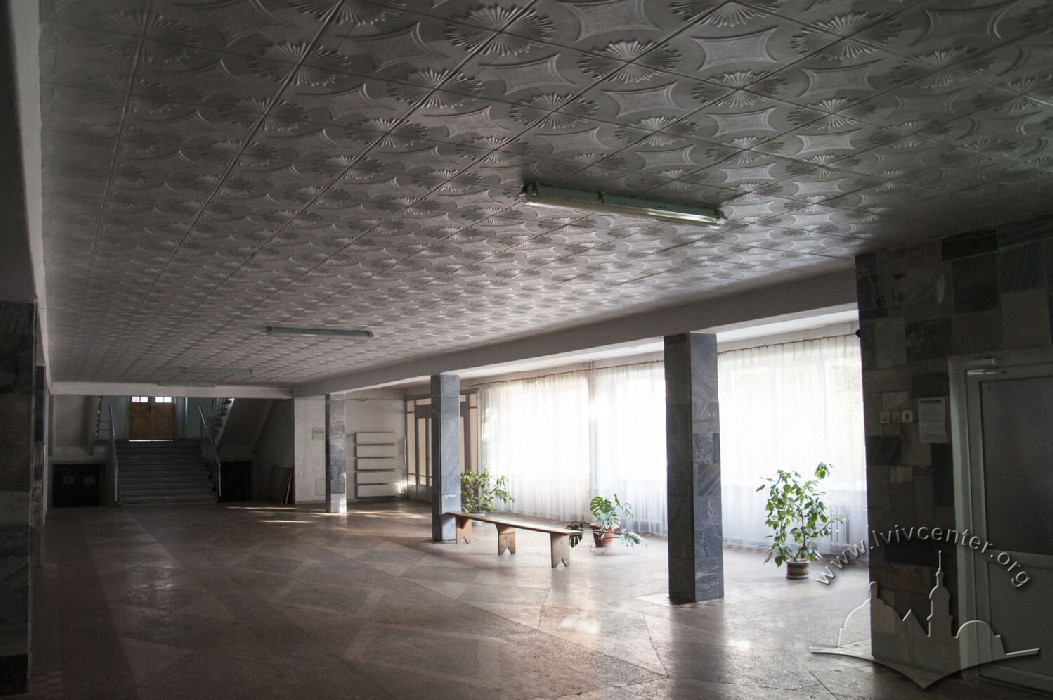
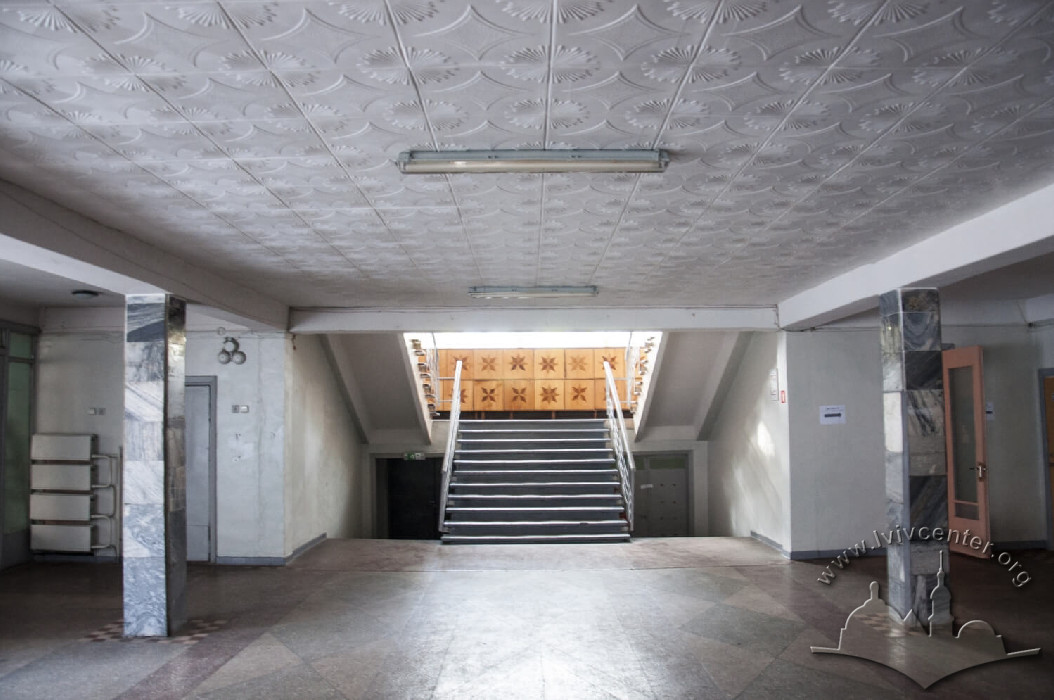
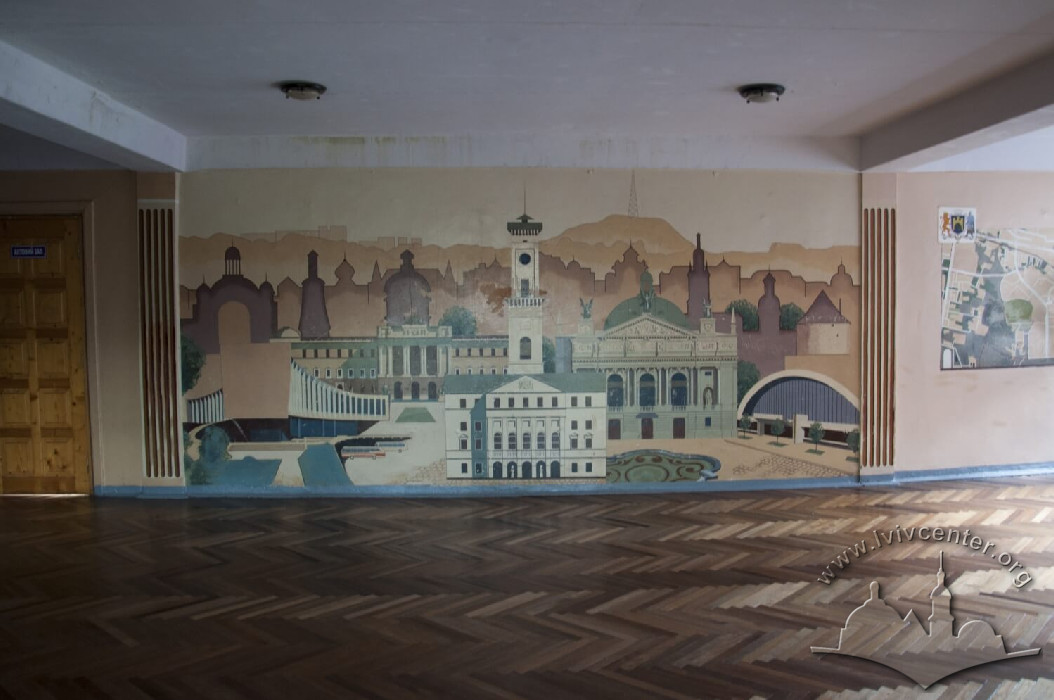
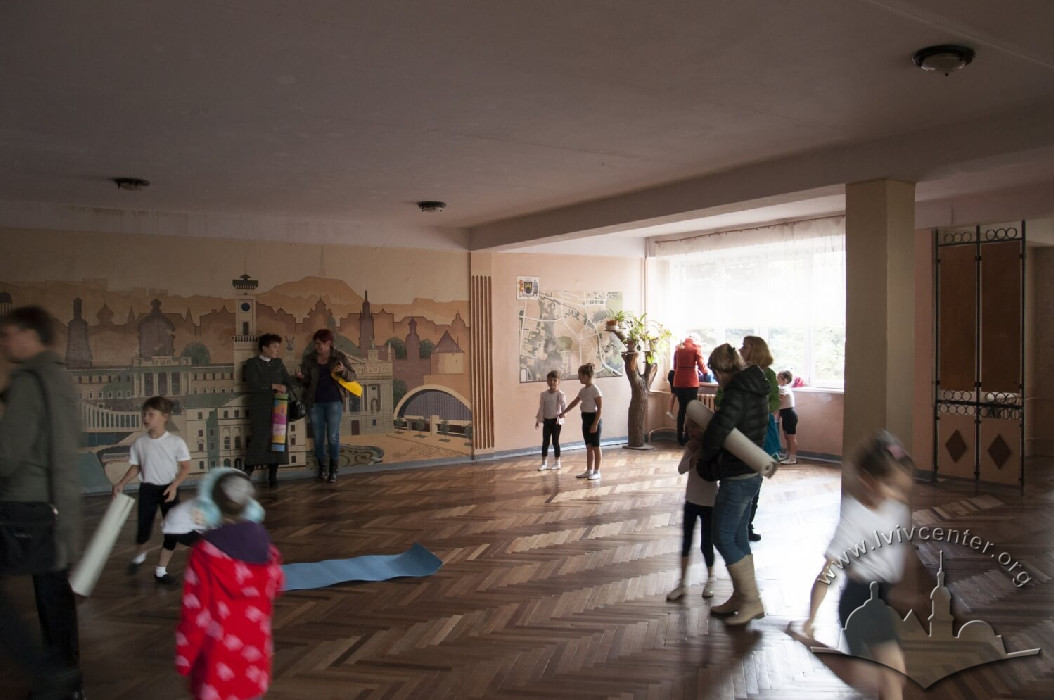
The principal entrance to the school is arranged from the inner courtyard and leads into a spacious vestibule. The ceiling of the vestibule is decorated with gypsum modules featuring a relief pattern, and it also contains contemporary wall paintings. Mosaic tiles were used for the flooring in the recreational areas on the ground floor. On the first floor, next to the main stairwell, there is a wall painting dating back to the 1980s. It depicts a collage of buildings from the historic center of Lviv, alongside structures built in the 1970s and the urban planning layout of the Sykhiv district.
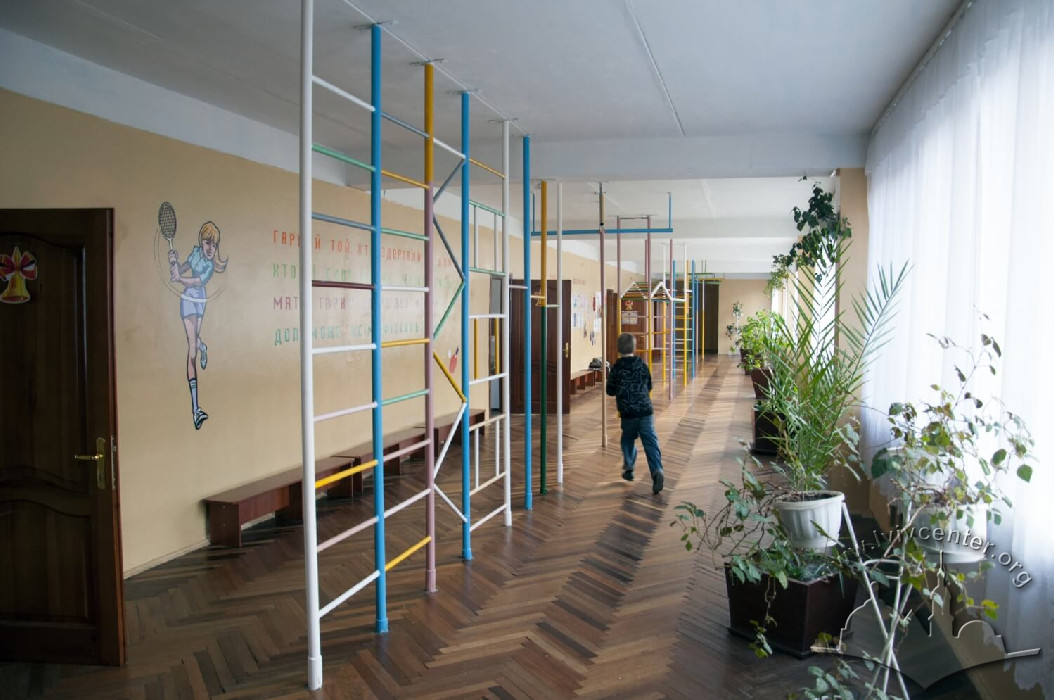
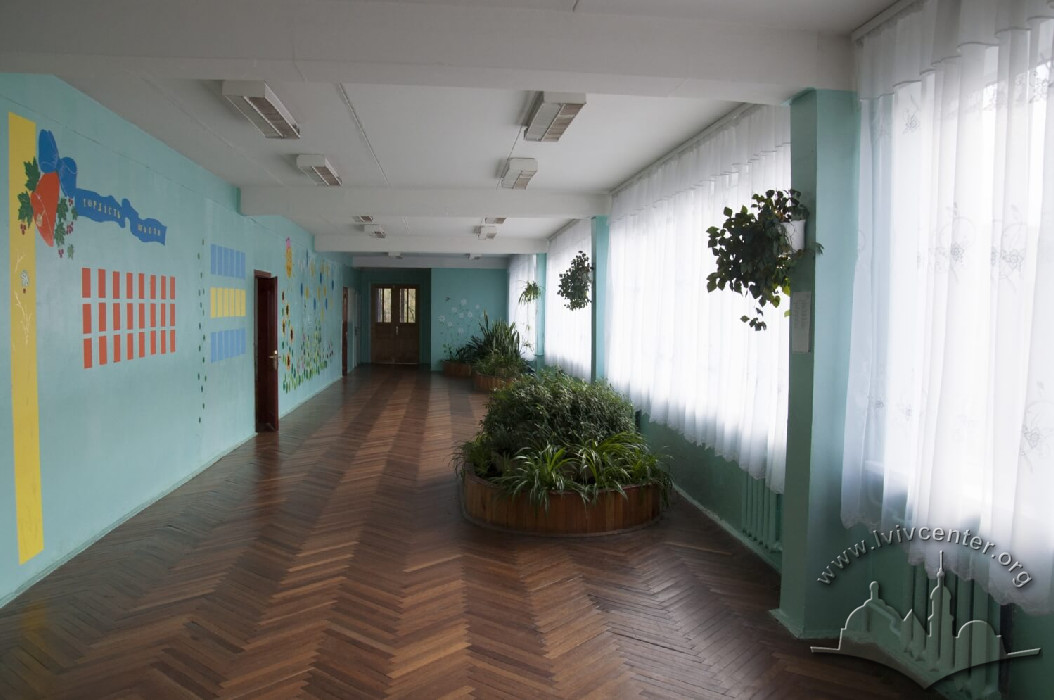
The ground floor houses administrative offices and utility rooms, a medical station, a cafeteria, workshops, recreational spaces, and other premises. Starting from the first floor, the western and eastern wings of the school are functionally divided to separate the primary and upper classes. The spaces used for recreation are galleries with a width of 4.8 meters. In addition to standard school furniture, these spaces are equipped with custom climbing structures for primary school students and are decorated with plants.
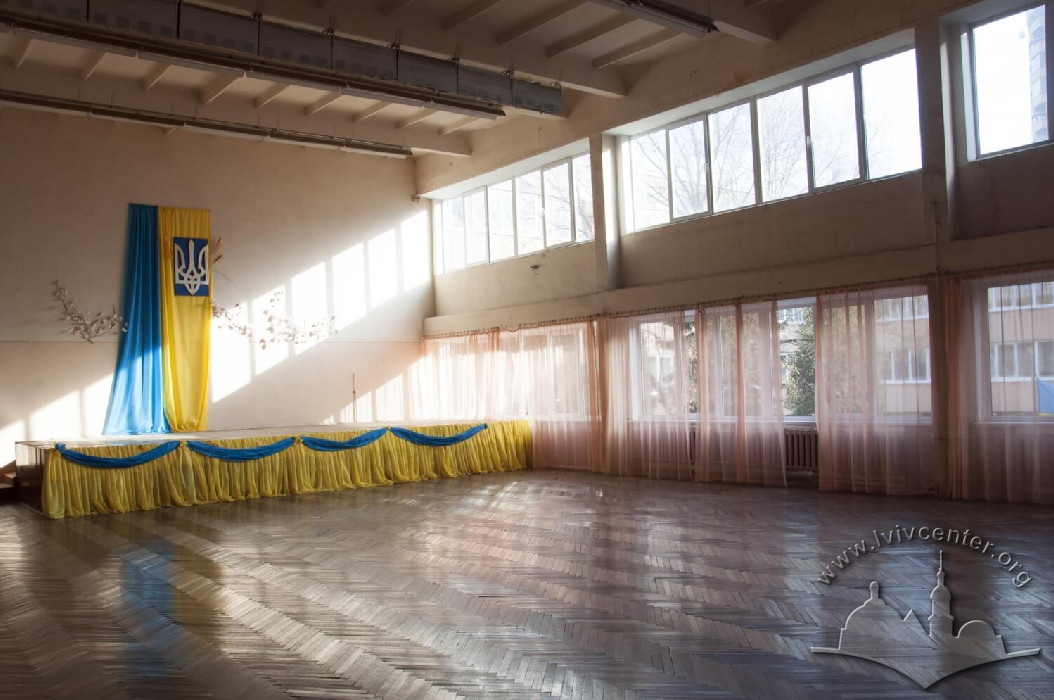
Today, the school has 3 sports halls, including a standard school gymnasium, a gym converted from a former Pioneer room, and a wrestling hall with soft flooring. The school grounds also feature a football field, an artificial turf pitch, and outdoor workout equipment (Інтерв'ю, 2014). Built in combination with the school is a swimming pool, which was a widespread practice at the time. The pool is connected to the main school building by a covered walkway. A capital renovation of the pool was carried out in 2006, and today it is used by students from several schools.
Between 2006 and 2012, the school building was modernized: a capital renovation of the roof and covering was completed, the sewerage and water supply systems were updated, and the restrooms underwent a capital overhaul. During this time, equipment was also purchased for computer labs and the library fund was replenished. In 2012, the school successfully secured a grant under the "Concessional Lending for Energy Saving" project from the Nordic Environment Finance Corporation (NEFCO). As a result, all windows and exterior doors were replaced, and the heating system was modernized with the installation of an automatic control system that adjusts based on outdoor temperatures (Слічна, Школа №84, Офіційний портал мешканців Львова, 2013).
Sources
- Технічний архів ДП ДІПМ "Містопроект", Объект № 3823.83-37, Крытый басейн для детских садов-яслей / пристройка / стены из кирпича. Типовой проект 294-3-15 (Львов: Госстрой УССР).
- Технічний архів ДП ДІПМ "Містопроект", Объект № 3823-38, Средняя школа на 30 кл. (Львов: Госстрой УССР).
- Інтерв’ю з директоркою школи №84 Юлією Харченко, 21 жовтня 2014 р.
- Слічна Г., "Школа №84 є успішним прикладом втілення заходів з енергоефективності", "Офіційний портал мешканців Львова", 2013.
- Съедин А. В., Когда практика сильнее теории, "Строительство и архитектура", 1983, №11, 4-10.
- Трегубова Т., Львів. Архітектурно-історичний нарис (Київ: Будівельник, 1989), 232.