Vul. Zelena, 59 – sports complex ID: 1966
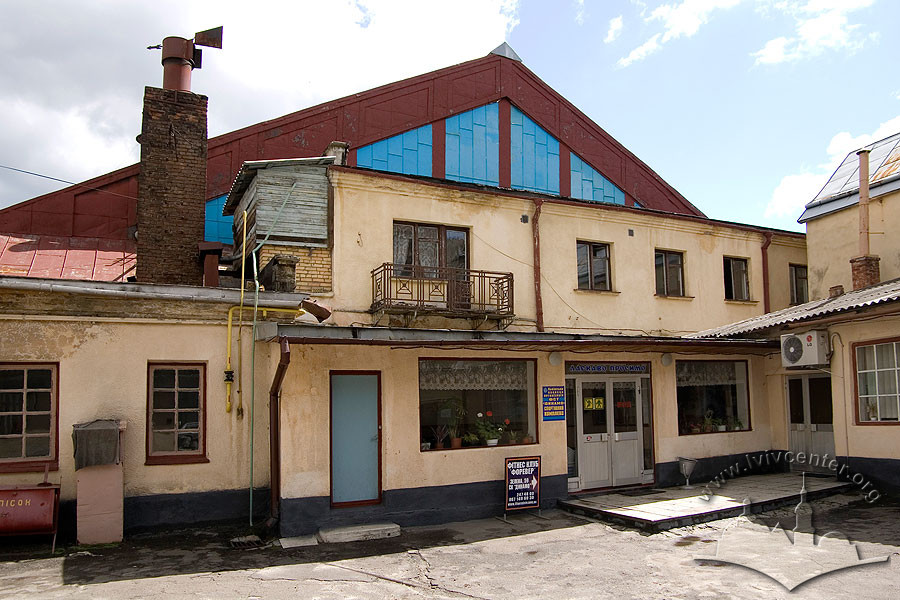
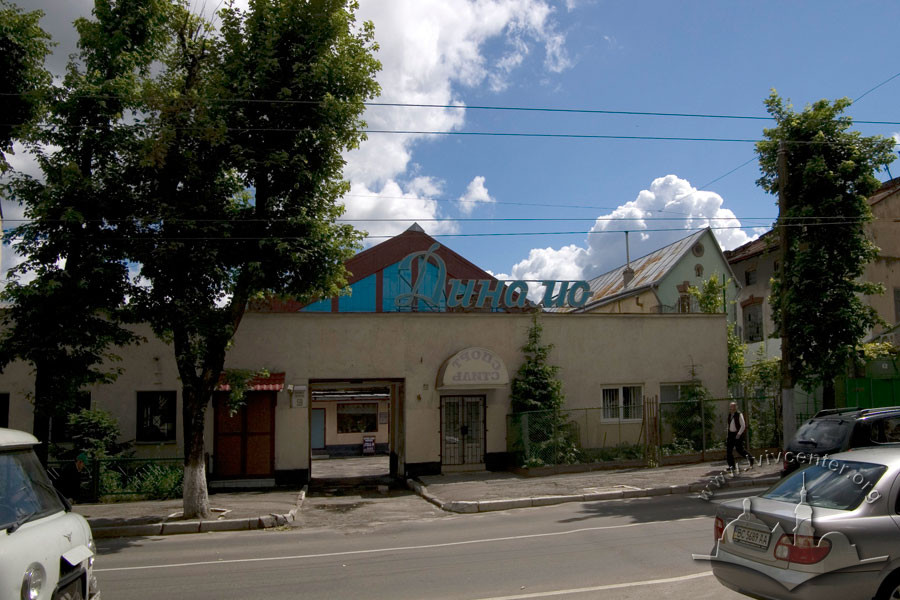
The former "Skating-Ring" sports palace was constructed in 1911 according to the design of architects Julian Pinkerfeld and Henryk Zaremba. Today, it houses the "Dynamo" sports complex, which features two tennis courts, athletics halls, and a rehabilitation center. The complex is set back within a courtyard, separated from Zelena Street by a masonry wall.
Story
The former "Skating-Ring" sports palace — created primarily as a center for the development of roller skating, a new and fashionable sport at the time — was financed by its owners, Benon Łetz and Julian Pinkerfeld, and built according to a design by architect-builders Julian Pinkerfeld and Henryk Zaremba (ДАЛО 2/1/4136:1-5; Lwów, 2001, 194). Sculptor Zygmunt Kurczyński and artists Leonard Winterowski, Włodzimierz Bielecki, and Witold Żegociński worked on the artistic decoration of the building. The grand opening of the new sports venue took place on February 12, 1911 (ДАЛО 2/1/4136:1-5).
At the time, the Lviv "Skating-Ring" was one of the largest establishments of its kind in Austria-Hungary. However, roller skating eventually failed to take root in Lviv. In 1934, the former sports venue was repurposed for industrial needs. The building housed the "Wulkogum" steam vulcanization workshop, which belonged to S. Rybka. In the post-war period, the building was used as a garage.
Today, the "Skating-Ring" building houses the "Dynamo" sports complex, complete with two tennis courts, athletics halls, and a rehabilitation center.
Architecture
The former "Skating-Ring" sports palace is set back within a courtyard, which is now separated from Zelena Street by a masonry wall. The building's structure utilized materials that were cutting-edge at the time: reinforced concrete, glass, and metal trusses.
In front of the principal elevation, where large glass panels of the roller-skating hall were mounted, stood a portico with four pairs of Tuscan order columns and a gable terminating in a smooth arch. Two small annexes projected from either side. The façade was previously adorned with a sculpture by Zygmunt Kurczyński symbolically titled "Strength."
Inside, the building featured a 1,200 m² roller-skating rink (with a capacity for 3,000 people) spanned by metal trusses, as well as a café, a restaurant, cloakrooms, and a rental station. The floor of the hall was made of American sycamore, treated with a special technology. The property was equipped with electric lighting and central heating.
The interior decoration of the "Skating-Ring" has not survived. It is known from historical descriptions that the glass roof of the main hall was previously decorated with eight stained-glass windows by artist Witold Żegociński, the iconography of which showcased the most popular sports games and dances of the early twentieth century. The stained-glass windows were executed in the Kraków workshop of Stanisław Gabriel Żeleński. The walls were decorated with 16 panels by Leonard Winterowski and bas-reliefs by Zygmunt Kurczyński, depicting the evolution of sports from ancient times to the early twentieth century. At the top, the walls of the hall were embellished with a frieze by Włodzimierz Bielecki, whose painting featured a motif of stylized flowers. Bielecki also incorporated floral ornamentation (motifs of intertwined leaves and flowers) into the wall painting above the orchestra stage.
People
Włodzimierz Bielecki –– artist.
Zygmunt Kurczyński –– sculptor.
Benon Łetz –– owner of the sports palace.
Julian Pinkerfeld –– owner of the sports palace and architect.
S. Rybka –– entrepreneur.
Henryk Zaremba –– architect.
Witold Żegociński –– artist.
Stanisław Gabriel Żeleński –– artist and stained-glass craftsman.
Leonard Winterowski –– artist.
Sources
- Державний Архів Львівської Області (ДАЛО), 2/1/4136 (Справа на будинок на вул. Зеленій, 47).
- Lwów. Turystyczny przewodnik (Lwów: Wydawnictwo “Centrum Europy”; Kraków: Wydawnictwo “Via Nowa”, 2001), 194.