Vul. Virmenska, 35 – residential building ID: 950
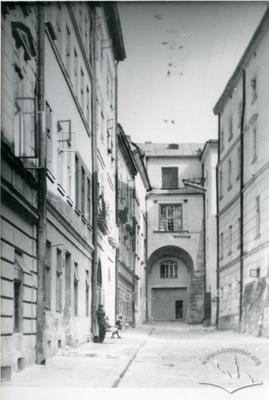
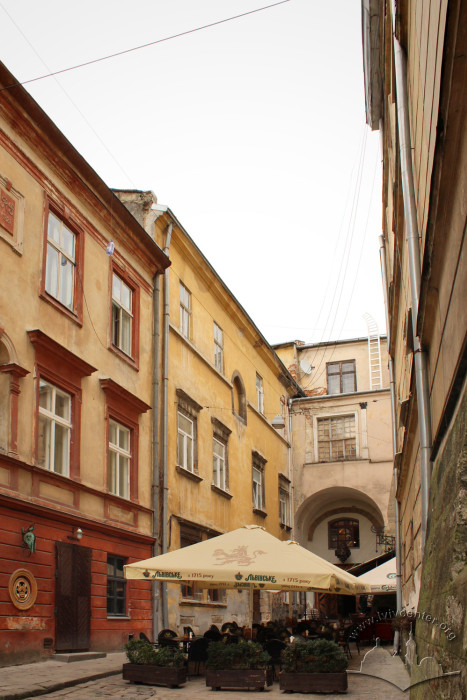
A three-story row house adjacent to the building of the former Dominican monastery. It is a Renaissance house of the seventeenth century, which preserves late Gothic cellars, as well as elements of later reconstructions. An architectural monument of national importance (protected site No. 325).
Story
Research conducted in 1988 revealed five stages of construction. The first dates back to the sixteenth century, with a cross-shaped masonry system present in the basements and ground floor rooms. The main Renaissance structure emerged in the seventeenth century on the site of two smaller buildings, marking the next phase characterized by brick masonry. This period saw the introduction of a new layout featuring a wide hallway, a spacious front room, and utility areas. A hypocaust chamber was located in the basements beneath the parlor. In the early seventeenth century, the townhouse was associated with the so-called "Norberg House", sketched by Martin Gruneweg at the beginning of the seventeenth century. Contemporary research indicates that the printer Mykhailo Slozka (1640—1649) resided there. The building underwent reconstruction in 1741, which included the addition of an escapement and a plaque above the portal. The year corresponds to the fourth construction phase. At that time, the house belonged to Dominican nuns (Tertiaries), who had been living there since at least 1709. During the fifth stage (late nineteenth century), toilets and a sewage system were installed. By this time, the building was owned by the Dominican Fathers (Conventus Leopoliensis Ordinis Praedicatorum). A document from 1872 reveals that the convent unsuccessfully attempted to expand the building's territory by removing the escarpments from ul. Skarbkowska (vul. Lesi Ukrainky), a move strongly opposed by the city magistrate. After 1945, the building was transferred to municipal ownership. Restoration of the first floor and portal was carried out in the 1970s. Subsequent restoration works were conducted in the late 1980s and the early twenty-first century.
According to Resolution No. 970 of the Council of Ministers of the Ukrainian SSR of August 24, 1963, the building is a Monument of architecture and urban planning of national importance (protected site No. 325).
Today, the building is residential.
Architecture
The monument is the final accent in the architectural ensemble of vul. Virmenska. Overall, it retains the appearance of a Renaissance townhouse with construction elements typical of the eighteenth century.
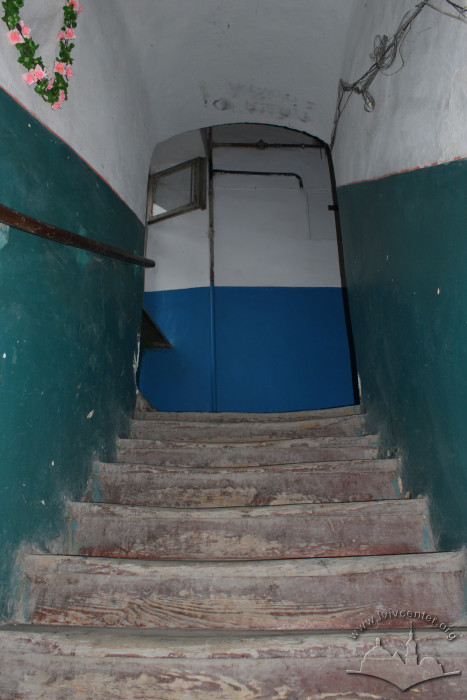
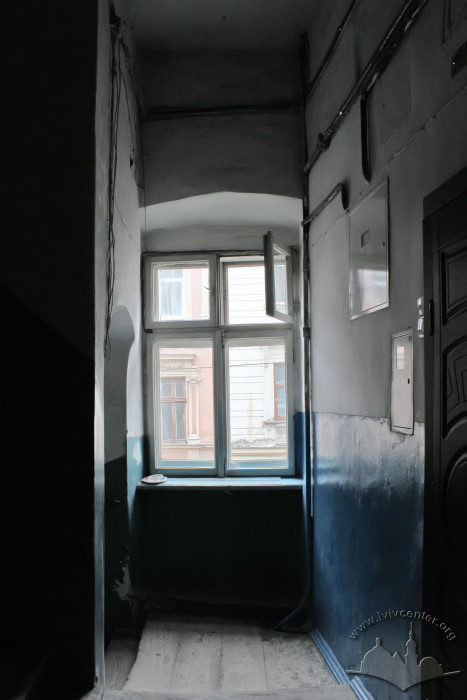
Located at the end of the upper section of the street, the building directly adjoins the structures of the former Dominican monastery. Its northern façade faces vul. Lesi Ukrainky, under the number 36. Built of brick with white stone elements, it is a three-story structure with basements, featuring a four-axis façade and a rectangular plan. The layout follows a three-part system: the central space is occupied by a wide entrance hall with a staircase, flanked by rooms on both sides. A separate entrance to the ground floor premises is from vul. Lesi Ukrainky, where the façade features an additional window axis.
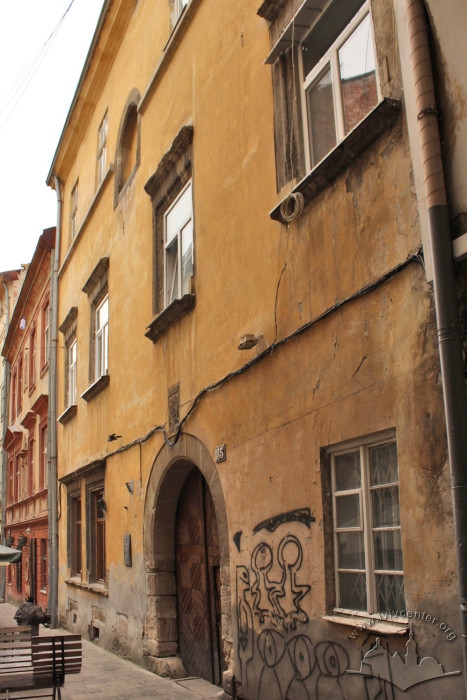
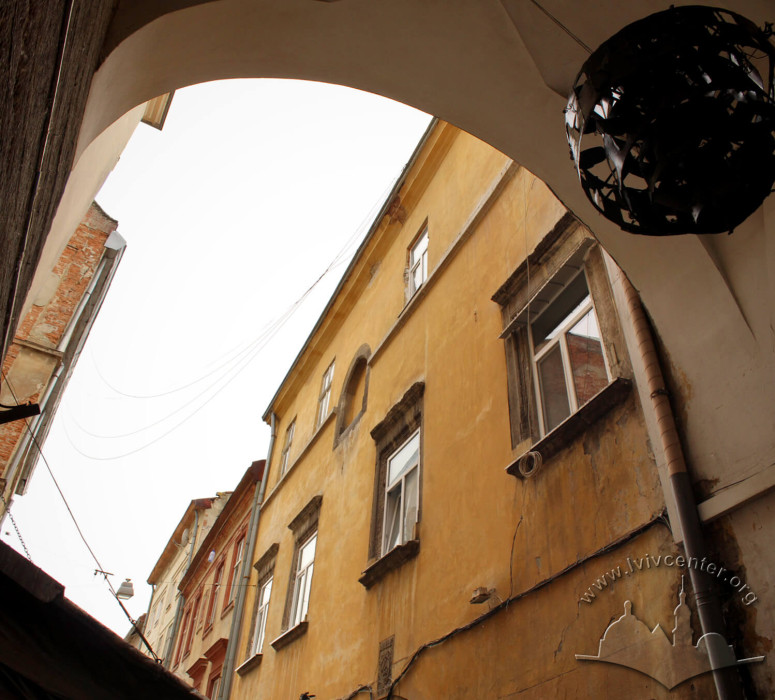
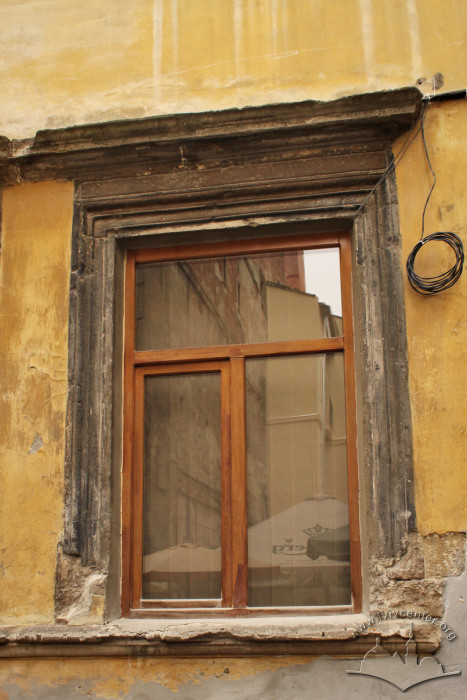
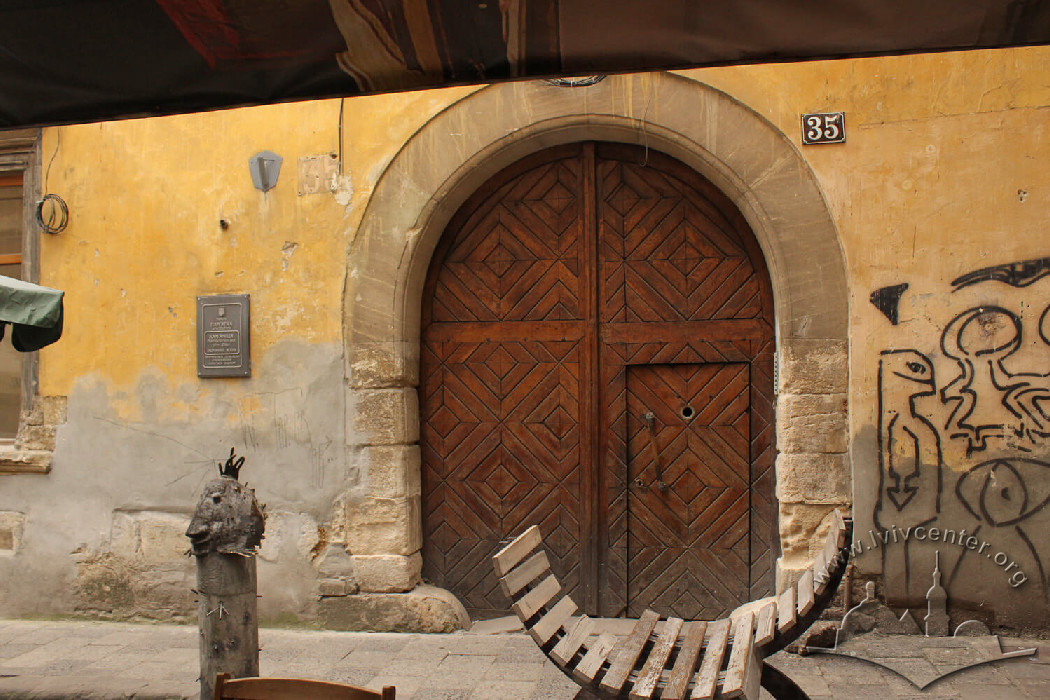
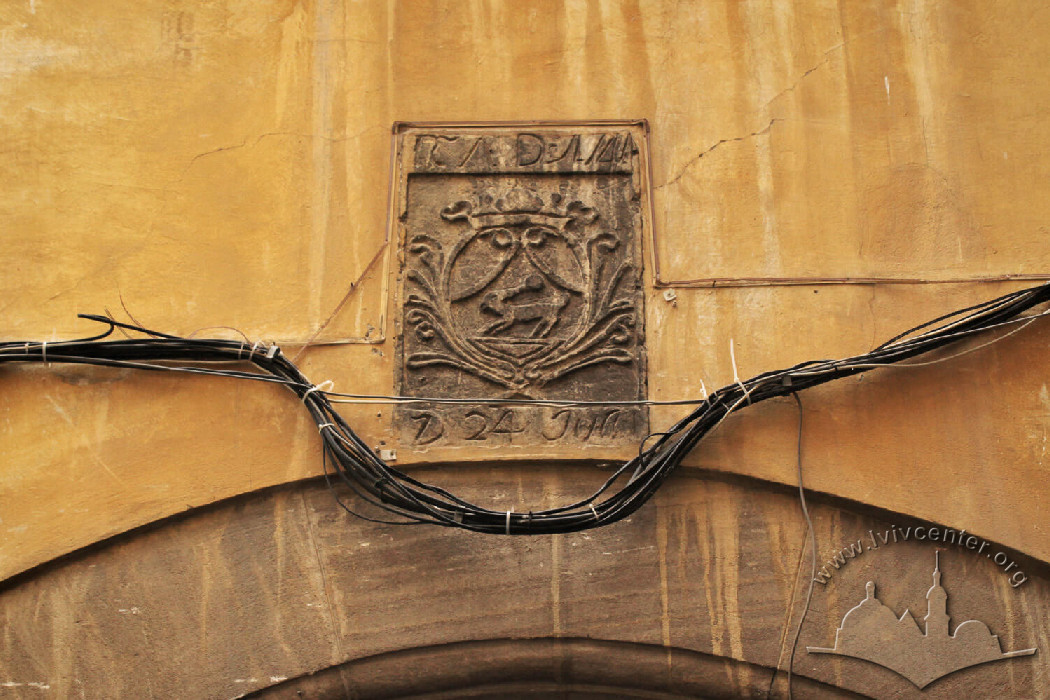
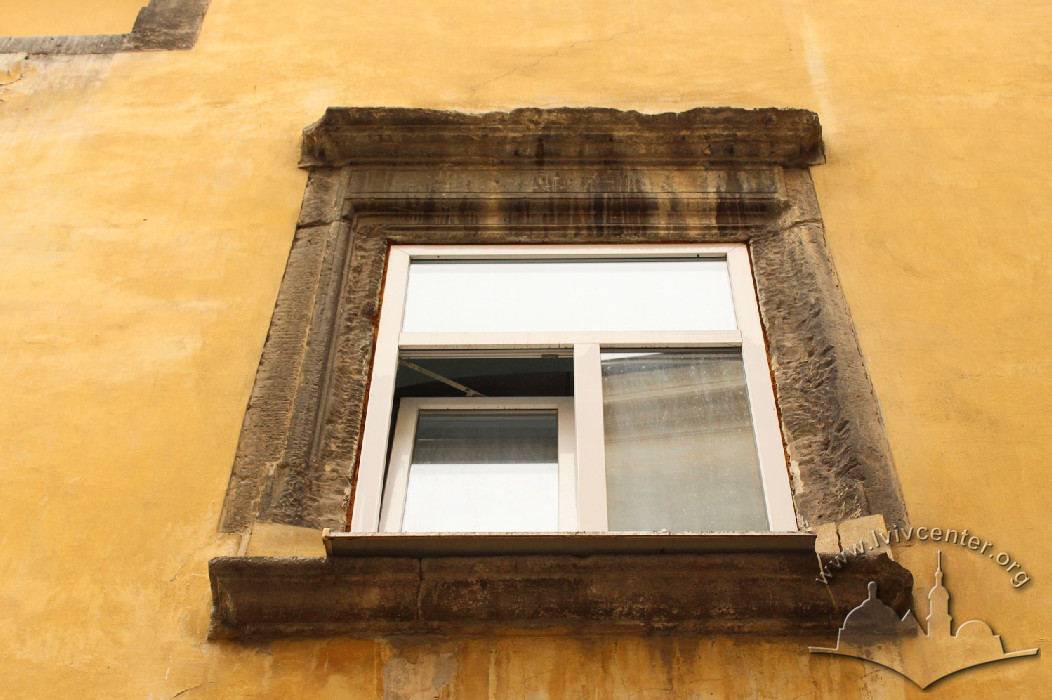
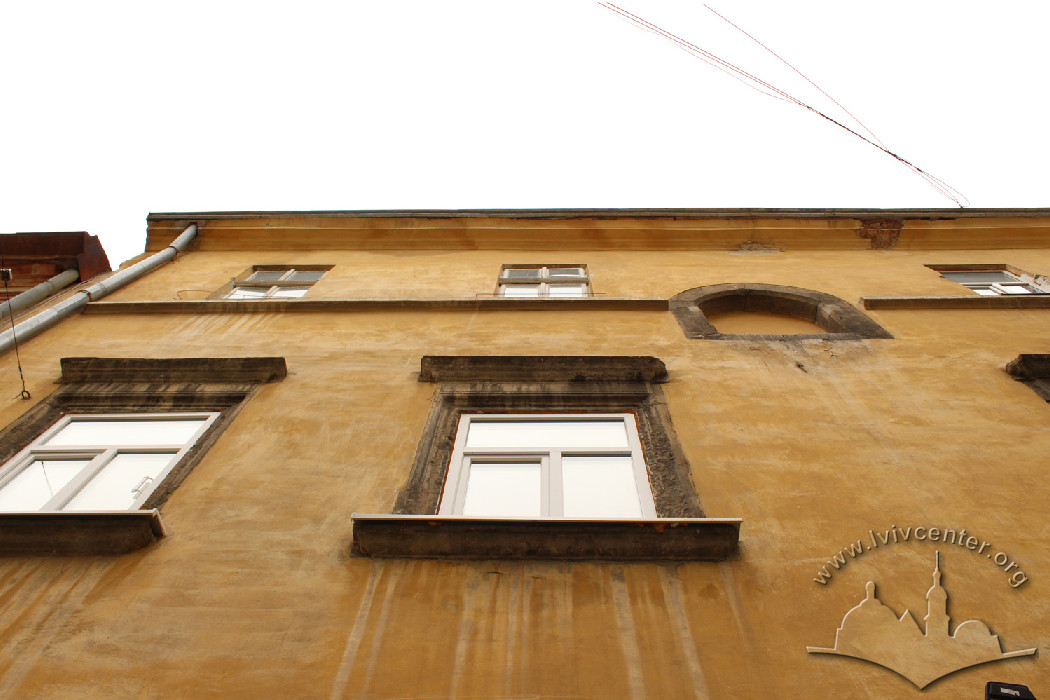
The main façade has an asymmetrical composition. The arched entrance portal is shifted to the right. On the ground floor to the left, there are paired windows with Renaissance white stone surrounds; similar individual windows are found on the second floor. The third tier is defined by a stringcourse, intersected in the center by a blind arched niche. The facade is topped by a narrow cornice. A plaque bearing the date "1741" and a coat of arms featuring a crown and a running hare is mounted above the portal. It is believed that for the Tertiary Sisters' monastery, the fleeing hare symbolized victory over lust.
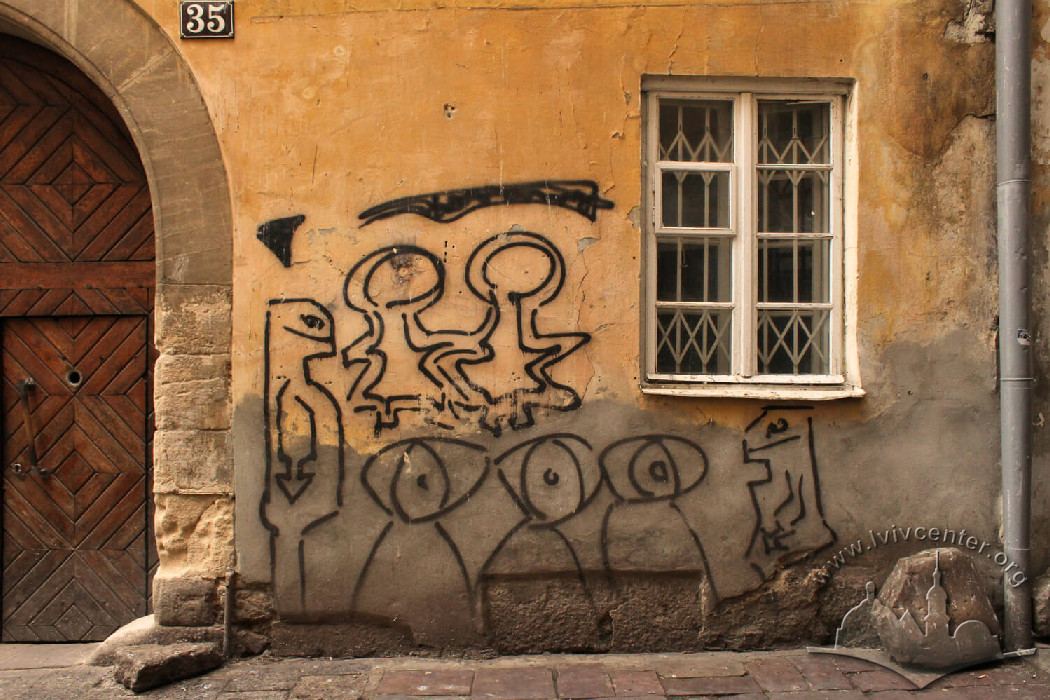
The façade facing vul. Lesi Ukrainky features stone escarpment typical of the eighteenth century, extending across the entire first tier. The entrance portal includes a lantern, while the windows of the lower tiers feature simple Renaissance-era stone frames.
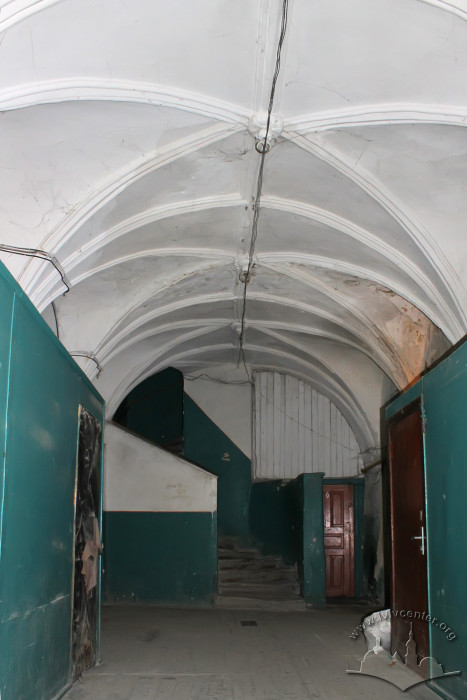
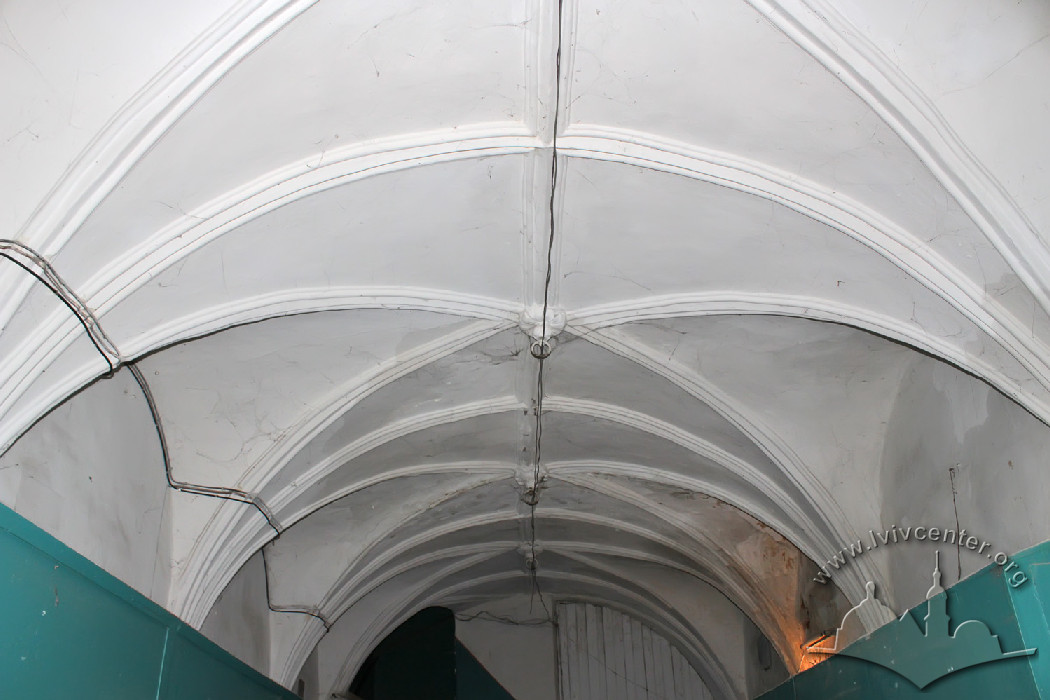
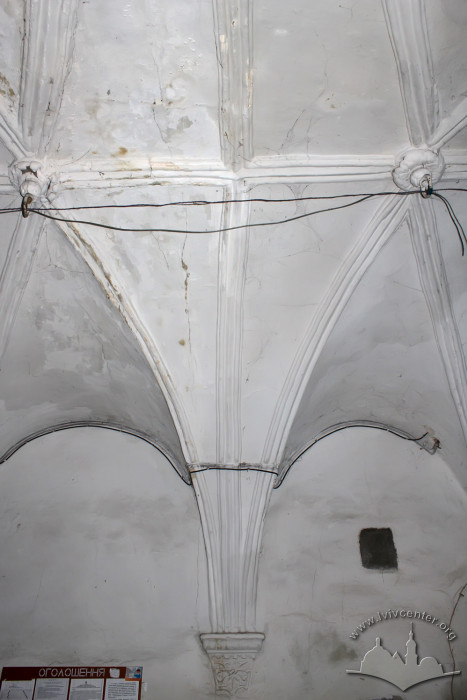
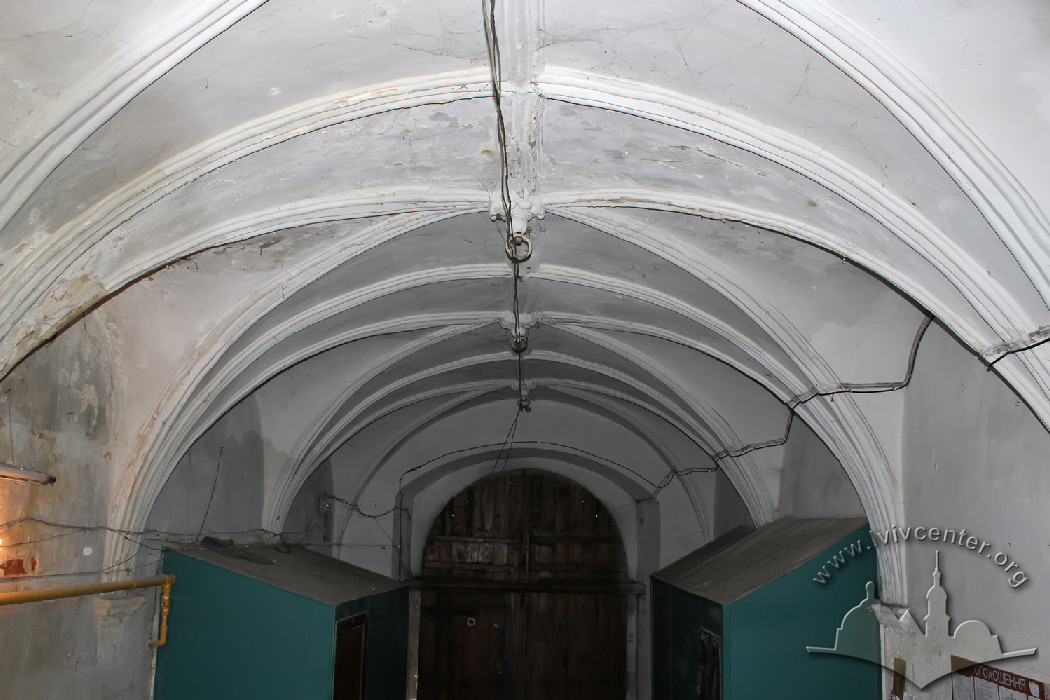
The interior design retains carved imposts and transverse ribs of the hallway's cross-vaulting. The former parlor on the ground floor features Renaissance semi-columns framing the windows. Late Gothic vaults have been preserved in the basements.
People
Martin Gruneweg (Ger.: Martin Gruneweg, Pol: Marcin Gruneweg) (1562 – after 1606) — merchant, traveler, Dominican monk, author of descriptions of Lviv, Warsaw, Kyiv, Moscow, and many other European cities.
Mykhailo Slozka (†1667) — printer and publisher, member of the Stauropegion Brotherhood.
Sources
- Державний архів Львівської області (ДАЛО) 2/1/7171.
- Науково-технічний архів ДП Ін-ту “Укрзахідпроектреставрація”, №Л-67-7.
- Володимир Вуйцик, Державний історико-архітектурний заповідник у Львові (Львів: Каменяр, 1991), 169.
- Ганна Кос, "З історії забудови вірменської дільниці у Львові", Записки Наукового товариства імені Шевченка. Праці секції мистецтвознавства, 1994, Т. CCXXVII, 295.
- Денис Зубрицький, Хроніка міста Львова (Львів: Центр Європи, 2006), 415.
- Мирон Капраль, Національні громади Львова XVI–XVIII ст. (Соціально-правові взаємини) (Львів: Піраміда, 2003), Карта 1.
- Памятники градостроительства и архитектуры УССР, Т. 3 (Киев: Будівельник, 1985), 22.