Pl. Rynok, 8 – former Bernatowicz townhouse ID: 136
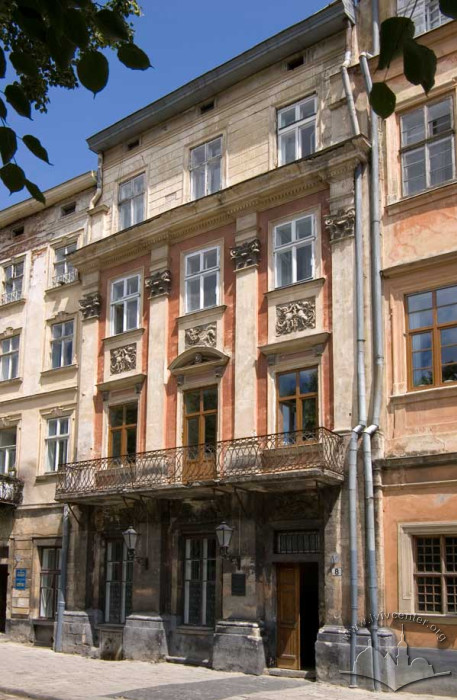
The building at pl. Rynok 8 (protection No. 326/7) is located within the territory of the State Historic-Architectural Preserve, set in the terraced development on the eastern side of the market square. It was constructed at the end of the sixteenth century. In the seventeenth century, the townhouse belonged to the wealthy Armenian Bernatowicz family. It was comprehensively rebuilt in the nineteenth century.
Story
The house at pl. Rynok 8 (conscription number 177) was built at the end of the sixteenth century. In the seventeenth century, the townhouse belonged to the wealthy Armenian Bernatowicz family. Its name, Bernatowicz, originates from these owners. The house is mentioned in archival documents from 1658, when King Jan Kazimierz exempted Krzysztof Bernatowicz, the owner of the townhouse, from military quartering and taxes. Later, Jan III exempted another owner of the townhouse, Bernard Bernatowicz, from these obligations.
In the nineteenth century, it was comprehensively rebuilt, leaving only the basement level from the original structure. In the 1840s, the townhouse was rebuilt in the Empire style according to a design by architect Fryderyk Baumann, at which time the fourth story was added.
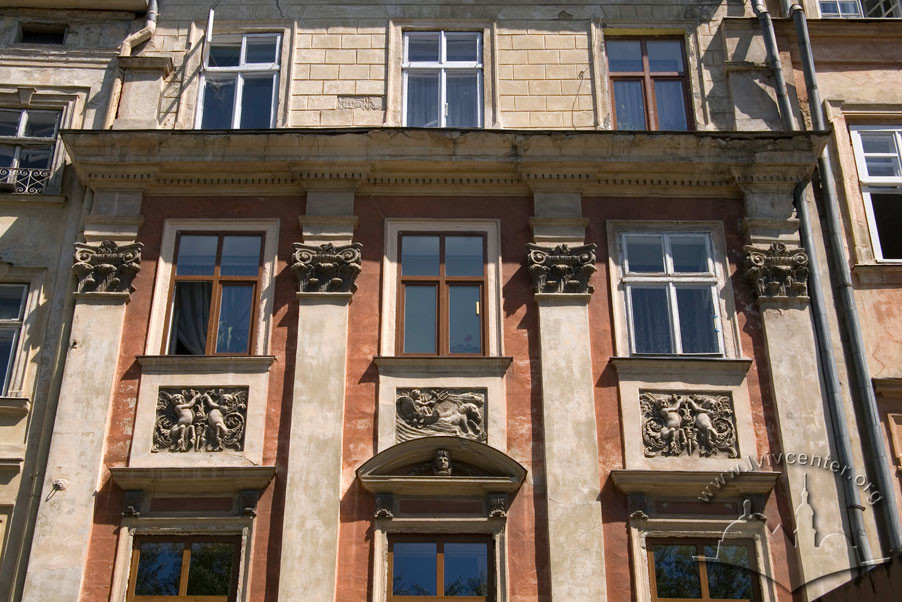
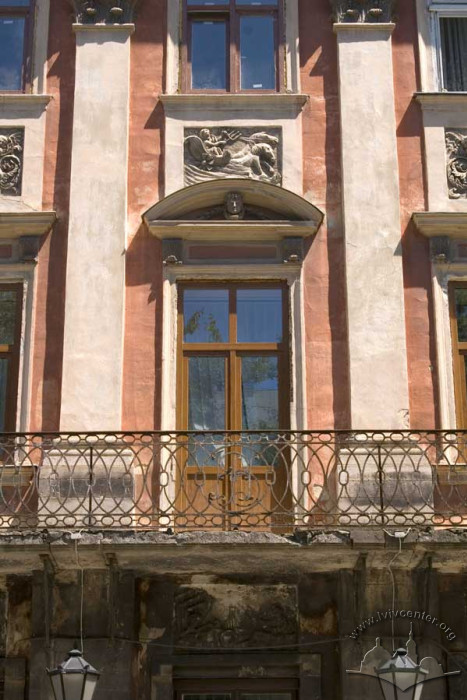
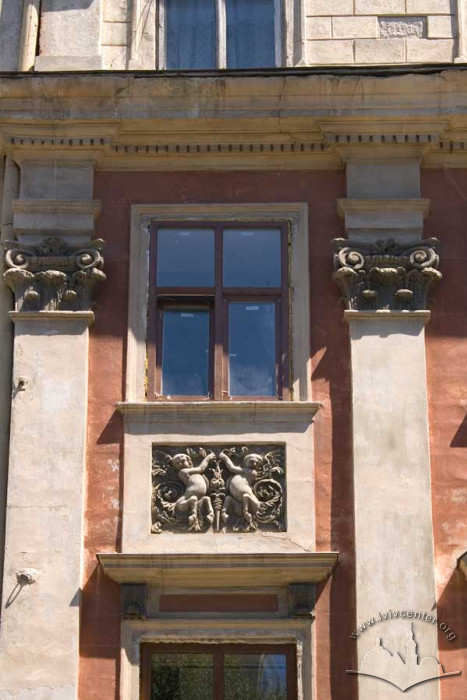
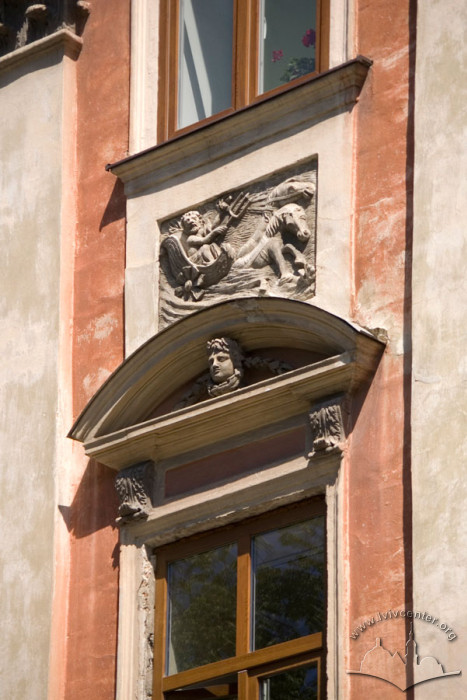
In the 1860s, the townhouse façade above the first- and second-floor windows was decorated with relief panels featuring merchant emblems, executed by the famous Lviv sculptor Havryil Krasutskyi. In 1886, the outbuildings were reconstructed according to a design by architect Wincenty Kuźniewicz, funded by owner Samuel Fischer.
In the late nineteenth and early twentieth centuries, the house was owned by Abraham Jakób and Matylda Heschelescy.
In the 1930s, Leontyn Bodek became the owner of the house. In 1935–1936, the house's façade was restored and the sewage system was connected according to a design by architect Aba (Albert) Kornblüt. Since 1946, the building has housed the Lviv Chess Club.
Architecture
The building was erected on the eastern side of pl. Rynok, in terraced development. Built of brick (foundations of stone blocks), plastered, and four stories tall, in plan it features a rectangle elongated into the depth of the plot with a narrow principal elevation, characteristic of market townhouses.
The main house in plan as a whole retains its medieval layout structure. Four bays deep; indermach (the front premises — two parlors and an entryway, an inner corridor, kitchens, and a staircase); an inner courtyard with a lateral wing; hindermach (the rear building with an outbuilding facing vul. I. Fedorova). In width, the house is tripartite: two large rooms (parlors) facing pl. Rynok, located on the left, and a driveway (entryway) on the right. On the ground floor, two parlors on the right, the kitchen, and the entryway are vaulted over with barrel vaults. Gothic pointed vaults are preserved in the basements.
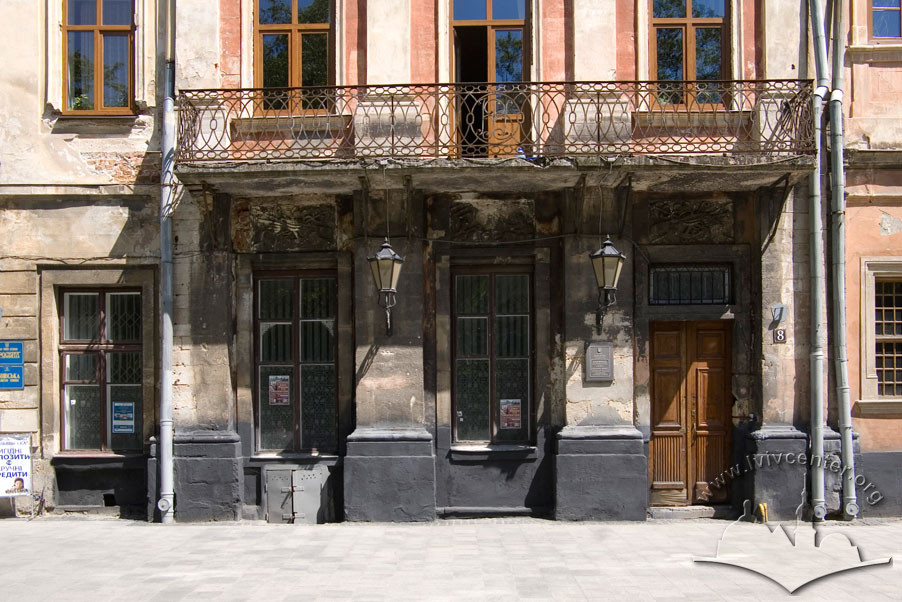
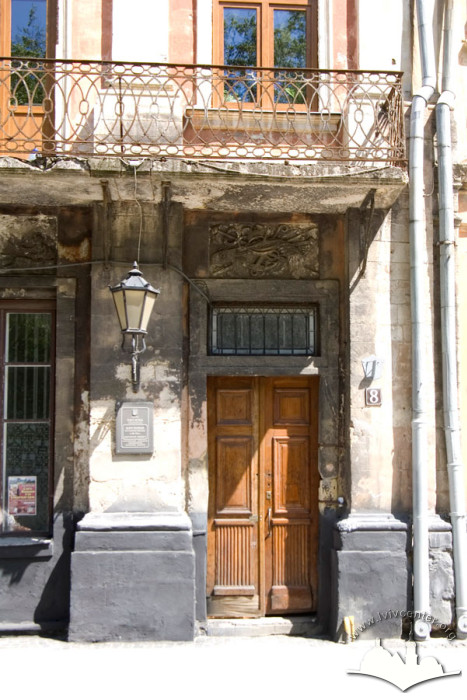
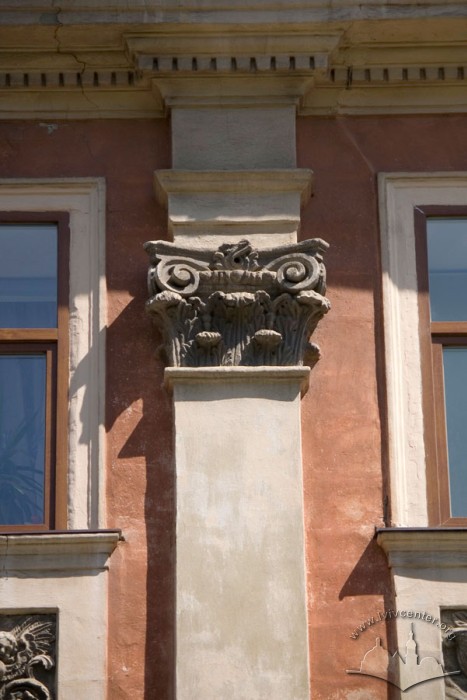
The principal elevation is three-windowed, featuring a symmetrical composition in the Empire style with an entrance portal offset to the right. The ground floor is clad in ashlar stone. On the second floor projects a balcony with a metal railing executed in the Biedermeier style. At the second- and third-story levels, the façade is vertically articulated by pilasters of the Pseudo-Corinthian order. A molded cornice runs between the third and fourth stories. Above the central entrance to the balcony is placed a segmental pediment decorated with a man's head in a laurel wreath. Above the first- and second-floor windows are relief panels featuring merchant emblems, executed by the famous Lviv sculptor Havryil Krasutskyi.
People
Fryderyk Baumann — architect, author of the reconstruction project.Bernatowicz Family — Armenian family, owners of the house.
Krzysztof Bernatowicz — owner of the house.
Leontyn Bodek — owner of the house.
Samuel Fischer — owner of the house.
Abraham Jakób Hescheles — co-owner of the house.
Matylda Hescheles — co-owner of the house.
Aba/Albert Kornblüt — architect, author of the reconstruction project.
Havryil Krasutskyi — sculptor.
Wincenty Kuźniewicz — architect, author of the outbuilding reconstruction project.
Sources
- Проект "Галіціана" (І. Жук), 2001-2002.
- Державний архів Львівської області. – Ф. 2. – Оп. 2. – Спр. 3652. Справа на будинок на пл. Ринок, 8. – С. 12, 43, 45.
- Вуйцик В. Державний історико-архітектурний заповідник у Львові. – Львів, 1991. – С. 32.
- Крип'якевич І. Історичні проходи по Львову. – Львів: вид-во "Каменяр", 1991. – С. 39.
- Мельник Б. Вулицями старовинного Львова. / Серія "Історичні місця України". – Вид. 3-тє зі змінами. – Львів: Світ, 2006. – С. 69.
- Пам'ятники градостроительства и архитектуры Украинской ССР. – В четырех томах. – Т. 3. – Киев, 1985. – С. 47.
- Трегубова Т. О., Мих Р. М. Львів. Архітектурно-історичний нарис. – Київ: "Будівельник", 1989. – С. 57.
- Barącz S. Żywoty sławnych Ormian w Polsce. – Lwów, 1856. – S. 72-73.
- Charewiczowa Ł. Czarna kamienica i jej mieszkańcy. – Lwów, 1935. – S. 25-26.
- Księga adresowa miasta Lwowa. – Rocznik szósty. – Wydawca i właściciel Reichman. – Lwów, 1902. – S. 57.
- Medyński A. Lwów. Ilustrowany przewodnik dla zwiedzających miasto. – Drugie wydanie poprawione i uzupelnione. – Lwów: nakładem autora. – 1937. – S. 87.
- Skorowidz król. stół. miasta Lwowa. – Lwów: nakladem król. stół. miasta Lwowa. – Z drukarni instytutu Stawropigialnego. – Lwów, 1889. – S. 195.
- Skorowidz król. stół. miasta Lwowa z planem miasta. – Lwów: staraniem i nakladem gminy. – Z drukarni "Dziennika Polskiego" (Dr. Felixa Wojnarowskiego) pod zarządem Fr. Kattnera. – Lwow, 1899. – S. 183.
- Wykaz domów na obszarze miasta Lwowa . – S. 66. // Księga adresowa Małopołski. – Lwów. Stanisławów. Tarnopól. Rocznik 1935/1936.