Pl. Rynok, 5 – former Haln townhouse ID: 139
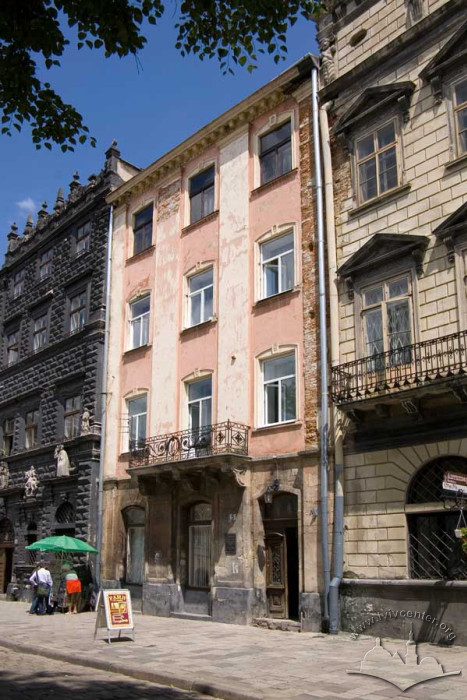
The building at pl. Rynok 5 (protection No. 326/4) is located within the territory of the State Historic-Architectural Preserve, set in the row development on the eastern side of the market square. The building was rebuilt following the fire of 1571 on the site of the ancient "Lukashewych Townhouse" between 1571 and 1577, commissioned by Lviv burgher Zofia Hanlowa (Hanl) according to a design by architect Petrus Italus from Lugano.
Story
The house at pl. Rynok 5 (conscription no. 174) was rebuilt following the fire of 1571 on the site of an old Gothic townhouse, the Hanl Townhouse, which belonged to the Hanl butcher-and-merchant family, named after its progenitor Jogann (Jan) Hanl.
Many generations of Lviv butchers rebuilt the house. One of them, Stanisław, boasted in his 1570 will that his house was valuable. However, a fire that broke out in 1571 on ul. Żydowska (now vul. I. Fedorova) spread to the eastern side of pl. Rynok and reached Dominikańska and Ormiańska streets, destroying the house of Stanisław Hanl. The reconstruction of the house took place between 1571 and 1577, commissioned by Lviv burgher Zofia Hanlowa (Hanl), widow of Stanisław Hanl, according to a design by the architect Petrus Italus from Lugano, also called Krasovskyi because he owned stone quarries in Krasiv.
Zofia Hanlowa was well known in the second half of the sixteenth century as the patron of many religious and charitable endeavors in city affairs, as well as the founder and benefactor of the Church of St. Sophia; the name Sofiivka — a city neighborhood in the upper part of modern-day vul. I. Franka — originates from her name. The fire of 1571 almost completely destroyed the previous house; only the first floor, spanned by Gothic vaults, survived.
During the 1571–1577 reconstruction, Zofia Hanl built the upper part of the townhouse at her own expense and added wings that received a porch from the courtyard. The building was also constructed with fire-resistant walls. It is considered the first three-story building on pl. Rynok, which was surrounded by one- and two-story houses at the time. It featured a verandah in the courtyard. Sixteenth-century documents indicate that the building's façade was decorated with white-stone carvings, columns, and cornices. It is also known that the first Jesuits in Lviv settled in this house, having arrived at the invitation of Archbishop Jan Dymitr Solikowski. Before building their own church, the Jesuits benefited from the hospitality of the devout landlady, whose contributions are recorded in Jesuit chronicles.
Beginning in 1595, the Hanl Townhouse changed its name and owners. From that time until the eighteenth century, it belonged to the Łukaszewicz family and was known as the Łukaszewicz Townhouse. It subsequently belonged to other owners, including the magistrate, from whom it passed into the hands of Dr. Marcin Nikanor Anczewski. Numerous rebuildings and reconstructions altered the house; today, only fragments of the first floor survive. From Anczewski, the townhouse passed to the granddaughter of his first wife, Regina Ożgiewiczowa, and later to the Castelli family, from whom the name of the Lviv neighborhood Kastelivka originates.
In 1677, Anna Dorota Chrzanowska (née Frezen) resided here. The house later belonged to Father Wieliński, the Zawadzki family, and the Rzewuski family.
In the nineteenth century, the house was owned by Edward Nikorowicz, at whose expense the main section of the house was reconstructed in 1883–1884, including the addition of a fourth story, the addition of a staircase and water closets to the rear section, and the construction of a three-story lateral wing. The project was executed by architect Stanisław Olexiński. During this reconstruction, the façade was plastered.
In the late nineteenth and early twentieth centuries, the house belonged to Samuel Reich and Jonas Löwenherz. At their request, architect Henryk Salwer created a reconstruction project for the main part of the house in 1910. In the early twentieth century, architect Henryk Orlean prepared survey drawings of the building. In 1911, funded by owner Samuel Reich, the main house and outbuildings were reconstructed according to architect Henryk Orlean design. It is likely that the staircase in the main section of the house was reconstructed at this time, illuminated by a roof lantern installed at roof level.
In 1913, master builder Antoni Fleischl executed a project for the reconstruction of a restaurant on the ground floor of the building. The last private owner of the townhouse was Laura Reich.
After 1926, the building became municipal property and was connected to adjacent townhouses to house a museum exhibition.
Architecture
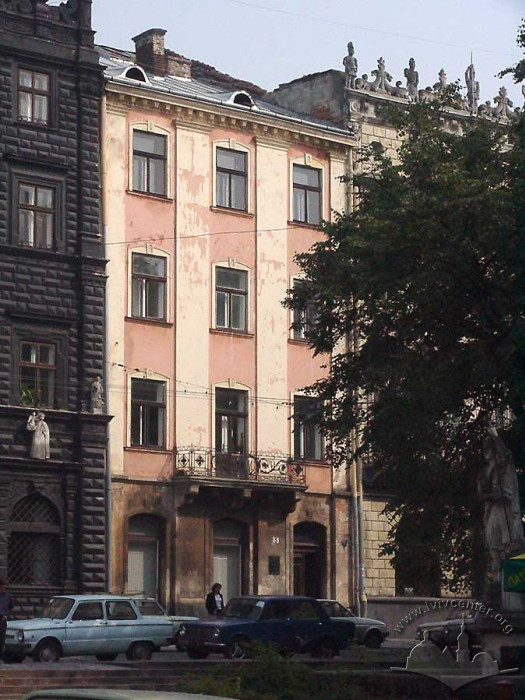
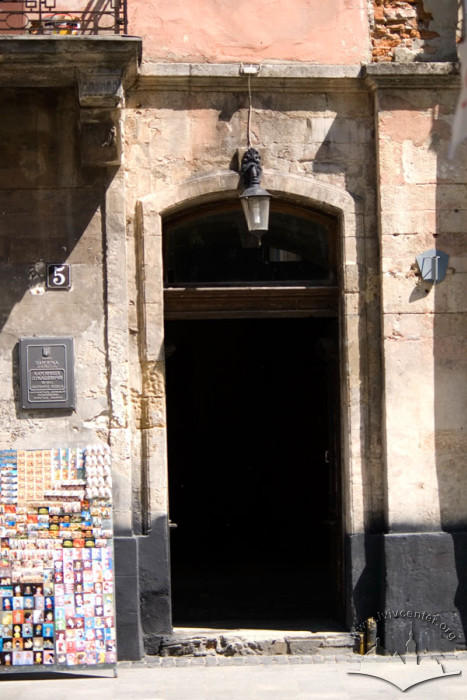
The townhouse was erected on the eastern side of pl. Rynok, featuring an elongated configuration in plan. The structure is brick, four stories tall, with a façade laid in ashlar stone at the ground-floor level and plastered above.
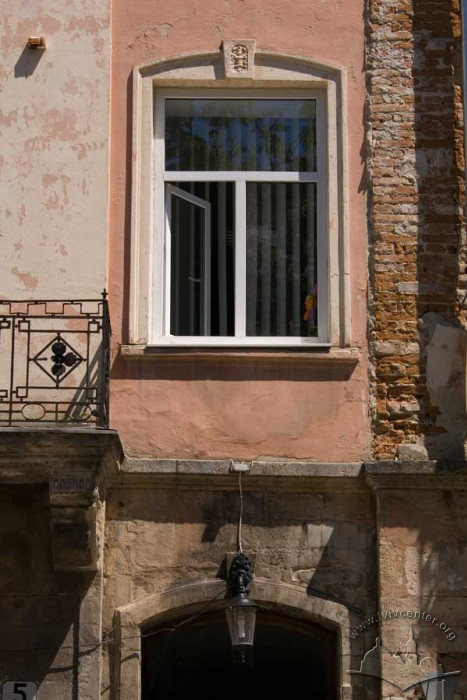
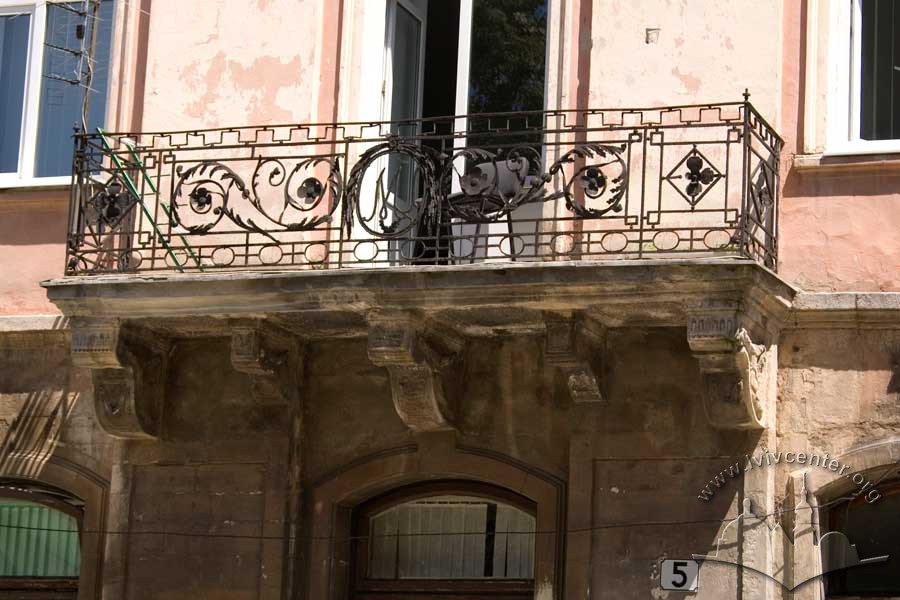
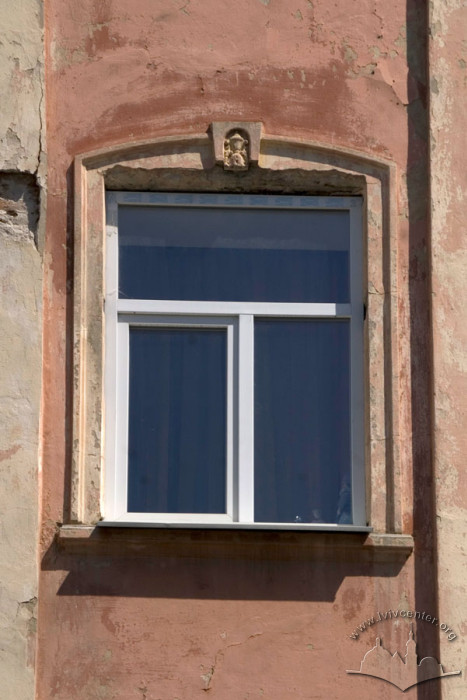
The Neoclassical façade of the building is the result of the nineteenth-century reconstruction. The original Renaissance decoration was lost during alterations. The façade wall is articulated by wide pilasters running its full height from the second to the fourth floor. A balcony is centered on the second floor. Rectangular windows (three per story) feature modest molded trimmings.
People
Marcin Nikanor Anczewski –– doctor, owner of the house.
Castelli –– family, owners of the house.
Antoni Fleischl –– master builder, author of the ground-floor restaurant reconstruction project.
Stanisław Hanl –– owner of the house.
Zofia Hanlowa (Hanl) –– owner of the house.
Petrus Italus from Lugano, also known as Krasovskyi –– architect, author of the reconstruction project.
Łukaszewicz Family –– burgher family, owners of the house.
Jonas Löwenherz –– owner of the house.
Regina Ożkiewiczowa –– owner of the house.
Stanisław Olexiński –– architect, author of the reconstruction project.
Henryk Orlean –– architect, author of the reconstruction project.
Samuel Reich –– owner of the house.
Laura Reich –– owner of the house.
Henryk Salwer –– architect, author of the reconstruction project.
Sources
- Проект "Галіціана" (І. Жук), 2001-2002.
- Державний архів Львівської області. – Ф. 2. – Оп. 2. – Спр. 3649. Справа на будинок на пл. Ринок, 5. – С. 39-42, 55, 112, 196, 227-228, 246-252.
- Проектний план житлового будинку на пл. Ринок, 5 // Центральний Державний історичний архів України у м. Львові. – Ф. 742 [Колекція карт і планів]. – Оп. 1. – Планшет №97. – Спр. 1199. – Арк. 1-6.
- Мельник Б. Вулицями старовинного Львова. / Серія "Історичні місця України". – Вид. 3-тє зі змінами. – Львів: Світ, 2006. – С. 64.
- Пам'ятники градостроительства и архитектуры Украинской ССР. – В четырех томах. – Т. 3. – Киев, 1985. – С. 46.
- Charewiczowa Ł. Czarna kamienica i jej mieszkańcy. – Lwów, 1935. – S. 21-24.
- Charewiczowa Ł. Mieszczka lwowska XVІ w. Zofia Hanlowa. Ruś Czerwona. – T. 1. – Lwów, 1935. – S. 26-56.
- Jaworski F. Czarna Kamienica we Lwowie. – Sztuka. – Zeszyt II. – Lwow, 1912. – S. 61-64.
- Łoziński W. Patrycyat i mieszcznstwo. – Wyd. II. – Lwow, 1892. – S. 158.
- Łoziński W. Sztuka lwowska. – Lwow, 1898. – S. 37.
- Medyński A. Lwów. Ilustrowany przewodnik dla zwiedzających miasto. – Drugie wydanie poprawione i uzupelnione. – Lwów: nakładem autora. – 1937. – S. 86.
- Skorowidz król. stół. miasta Lwowa z planem miasta. – Lwów: staraniem i nakladem gminy. – Z drukarni "Dziennika Polskiego" (Dr. Felixa Wojnarowskiego) pod zarządem Fr. Kattnera. – Lwow, 1899. – S. 183.
- Wykaz domów na obszarze miasta Lwowa . – S. 66. // Księga adresowa Małopołski. – Lwów. Stanisławów. Tarnopól. Rocznik 1935/1936.