Pl. Rynok, 3 – former Wilczek townhouse ID: 141
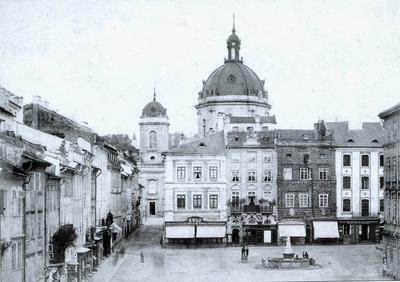
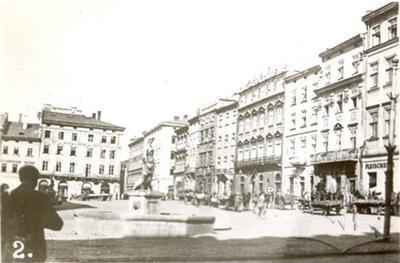
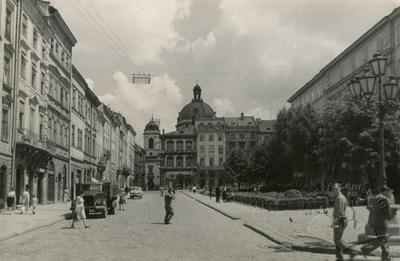
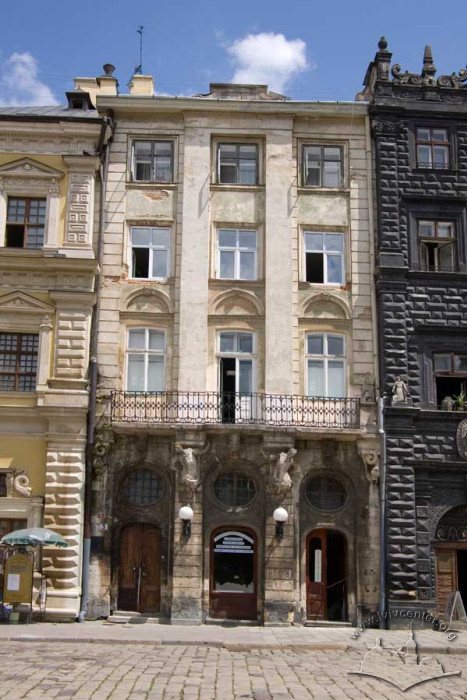
The building at pl. Rynok 3 (protection No. 326/2) is located within the territory of the State Historic-Architectural Preserve, set in the row development on the eastern side of the market square. It is a typical market townhouse that belonged to the Wilczek family of patricians in the second half of the sixteenth century. In the eighteenth century, it was rebuilt in the Baroque style according to a project by the renowned Lviv architect Piotr Polejowski for the magnate Rzewuski family.
Story
The house at pl. Rynok 3 (conscription no. 172) belonged to the Wilczkowie patrician family in the second half of the sixteenth century and was known as the Wilczek Townhouse after its owner until the end of the eighteenth century.
The building also had other names — Bzowska and Valentynivska. In 1580, a third of this townhouse passed into the hands of the son-in-law of Lviv councilor Walenty Wilczek: the Italian Urbano della Ripo Ubaldini, a relative of Pope Sykst V and Cardinal Oktawian Ubaldini. Urbano Ubaldini took part in a conspiracy against the Medici. The plot failed; to escape persecution, Ubaldini was forced to leave Florence and found refuge in Kraków. From there, he arrived in Lviv, where he obtained town citizenship.
In Lviv, Ubaldini engaged in trade and maintained close ties with another Italian merchant, Sebastiano Montelupo. The latter's son, Domenico Montelupo, organized the first postal service in Lviv in 1629. The portion of the house that Ubaldini received as the dowry of his wife, Anna Wilczkówna, was inherited by his son, the assessor Joann Ubaldini. In 1663, Joann sold another portion of the Wilczek Townhouse to the Lviv merchant Walenty Bzowski for 5,000 zł. After its new owner, the building was called the Bzowska Townhouse for a time.
Three years later, Bzowski bought out the remaining part from another co-owner, Jan Gęsiorowicz. One of Bzowski's heirs — Kazimierz Bzowski, a mansionar (chamberlain) of the Church of St. Catherine at the Low Castle — sold the second portion of the Wilczek Townhouse in 1713 to the magnate Stanisław Matiasz Rzewuski.
The rear section of the Wilczek Townhouse facing ul. Ruska boczna (now vul. I. Fedorova) belonged to the Armenian Lyskevych family and was known as the Lyskevychivska Townhouse, later acquiring the name Kryve Kolo ("Crooked Circle") after the winding street that ran past the Dominican Church. Adjacent to the Lyskevychivska Townhouse stood the Nesterovychivska or Krasovska Townhouse, which belonged in the seventeenth century to Mykola Krasovskyi, a prominent member of the Stavropigian Brotherhood.
After Mykola Krasovskyi's death, his wife Anastasiia entered the Kyiv-Pechersk Monastery, and ownership of the townhouse passed to Mykola's sister. Around 1725, Adam Rzewuski, Castellan of Podlasie and owner of the neighboring Korniakt Townhouse at the time, purchased the Krasovska Townhouse.
Subsequently, Adam's son, Michał Józef Rzewuski, bought the Lyskevychivska house, combined the two townhouses, and extensively rebuilt them to form the present building at vul. I. Fedorova 8. To secure ownership of the entire urban site, Michał Rzewuski bought out the remainder of the rear Kryve Kolo townhouse from the Armenian Brotherhood of St. Gregory in 1729. Deodat Nykorovych and Mariianna Kobachevska signed the contract on behalf of the brotherhood. Michał Rzewuski intended to rebuild the townhouse into a lavish magnate residence, but his death in 1770 cut the project short.
Following the magnate's death, his wife Franciszka rebuilt the two-story main house and the rear townhouse into a single four-story structure. The townhouse has reached our time in this form. The reconstruction design was created by the prominent Lviv architect Piotr Polejowski. Construction work began in 1770, and by June 1772, the principal elevation facing pl. Rynok was completed. The façade decoration was finished on August 5 of the same year.
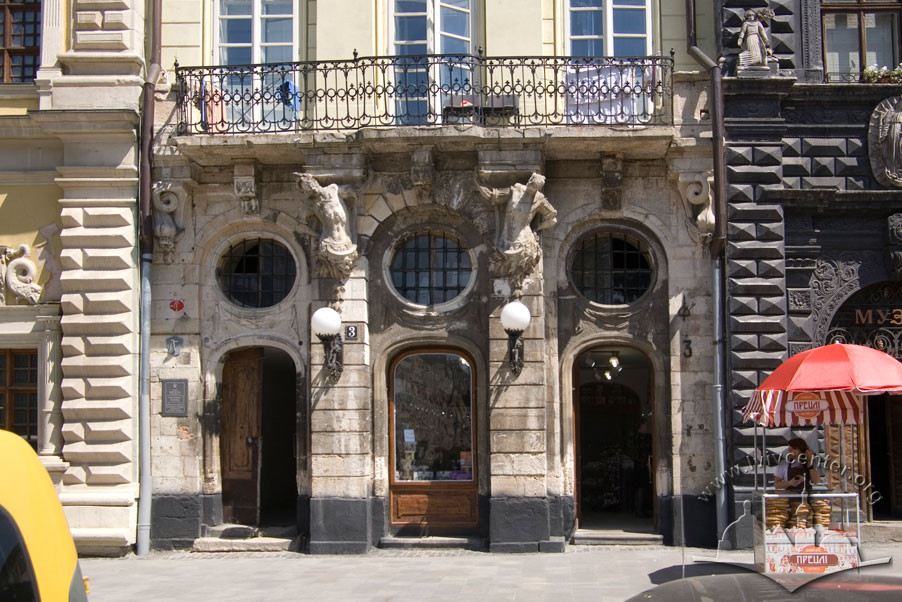
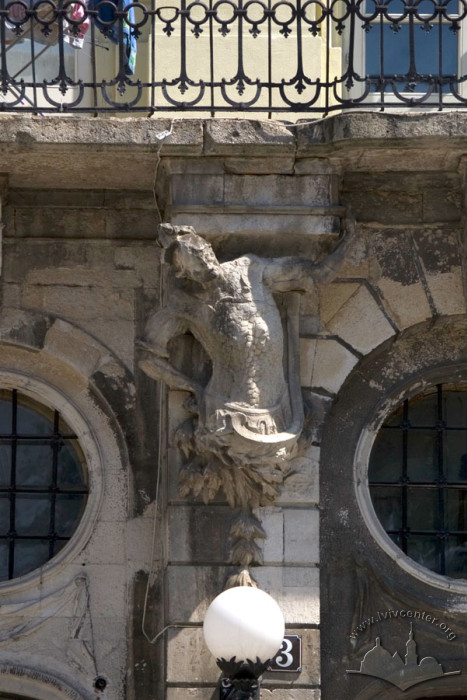
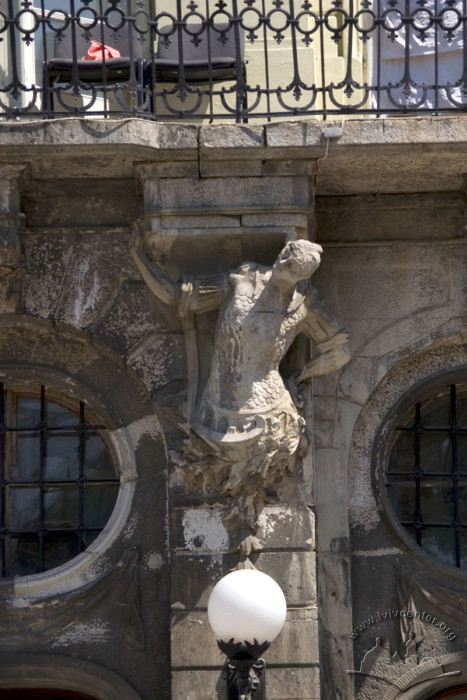
The white-stone herms (sculptures of knight atlantes) supporting the balcony, the "Genii" sculptural group on the balcony, and the "Glory" sculptural group on the attic were executed by the sculptor Franciszek Olędzki. The pedestal for the "Glory" group was carved by the stonemason Andrzej Osowski.
The sculptural decoration of the façade represents some of the finest examples of Lviv Baroque sculpture. The metal balustrade for the attic and the balcony was crafted by the Lviv locksmiths Piotr Senkowacki and Jacek Ziajko. At the beginning of 1774, interior finishing work began, concluding in 1775. The artists Stanisław Stroiński, Tomasz Hertner, and Martyn Bilobryskyi, as well as the woodcarver Jan Szczurowski, contributed to these works. The tiled stoves were built by master Dominik Piątkowski. Due to subsequent restorations and numerous alterations, the historic interior has not survived. The Rzewuski family held the house until 1823.
Upon the death of the last Rzewuski — Kazimierz — the townhouse passed to Count Józef Lanckoroński and Countess Ludwika Lanckorońska. In 1834, Count Stanisław Skarbek, renowned in Lviv as the founder of the city theater (now the Maria Zankovetska Theater), purchased the house from them, living here until 1840.
The following year, Count Stanisław Skarbek sold the townhouse to Franciszek Ricci, as Skarbek himself moved into the completed theater premises. Ricci's heirs — Tomasz, followed by Leon Kazimierz — owned the house until the 1930s. A drawing from the early twentieth century by architect Alfred Kamienobrodzki depicting the house survives to this day. In the 1930s, the house belonged to Dawid Kessler.
Architecture
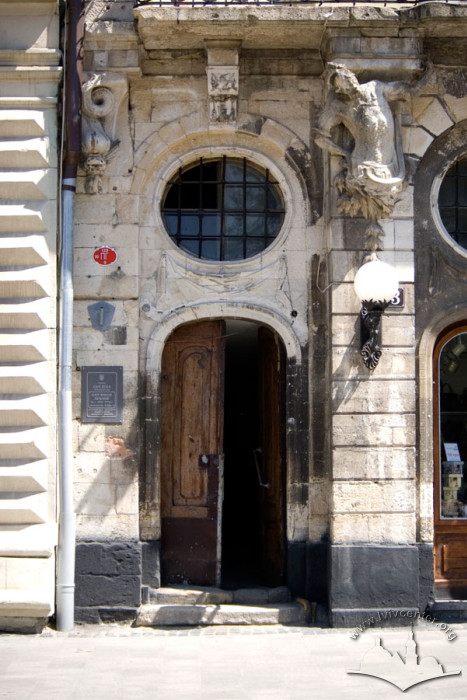
The building is erected on the eastern side of pl. Rynok within row development. Built of stone and brick (with foundations of stone blocks) and plastered, this four-story structure features a rectangular plan elongated into the depth of the site, with a narrow principal elevation typical of market townhouses.
The main house largely retains its medieval layout structure in plan. It extends four bays deep: the front main section (indermach — comprising a large parlor, entryway, interior corridor, staircase, and kitchens); an inner courtyard with a lateral wing; and the rear section (hindermach — the rear building facing present-day vul. I. Fedorova, 8). In width, the house is divided into two sections: one large room (parlor) facing pl. Rynok, positioned to the left of the driveway (entryway).
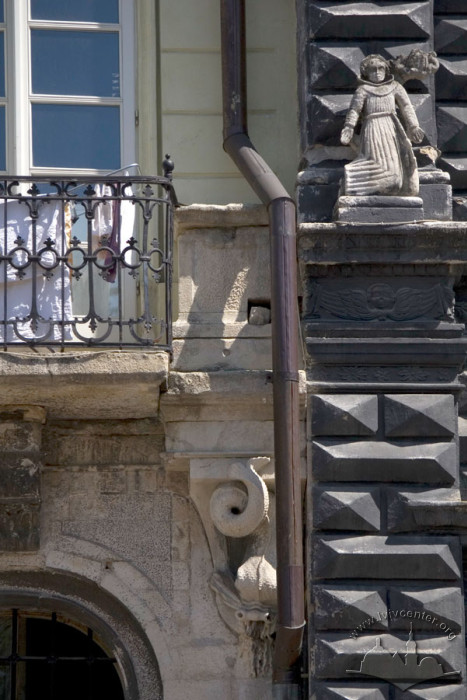
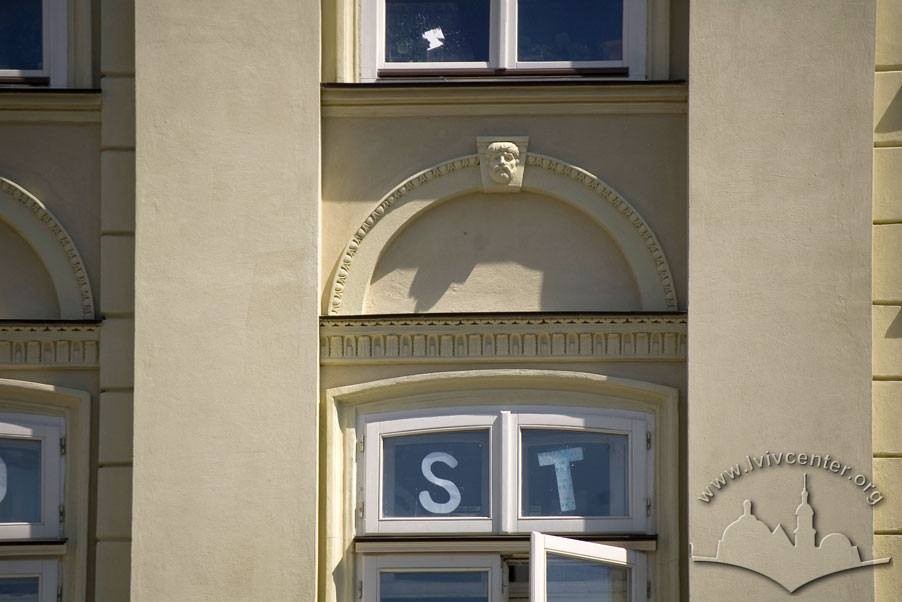
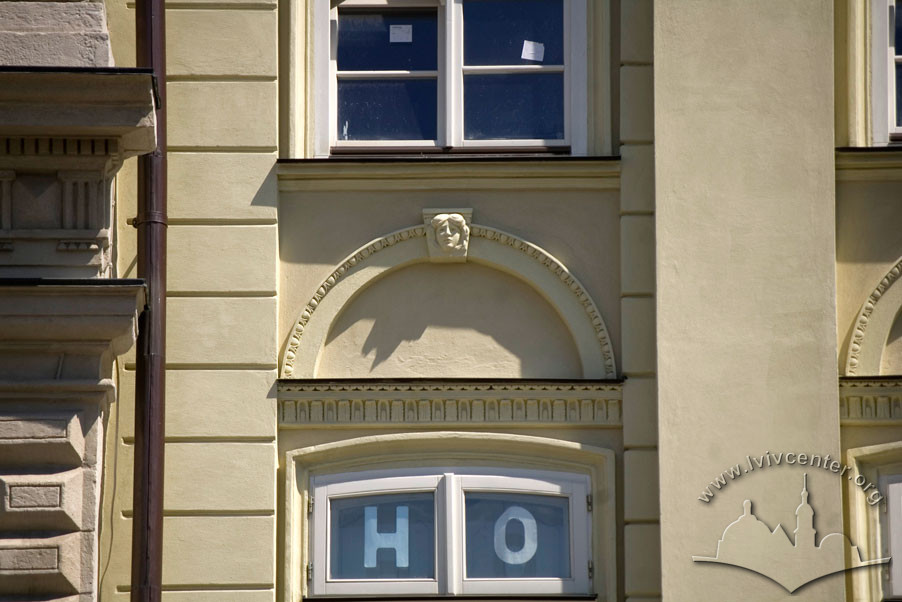
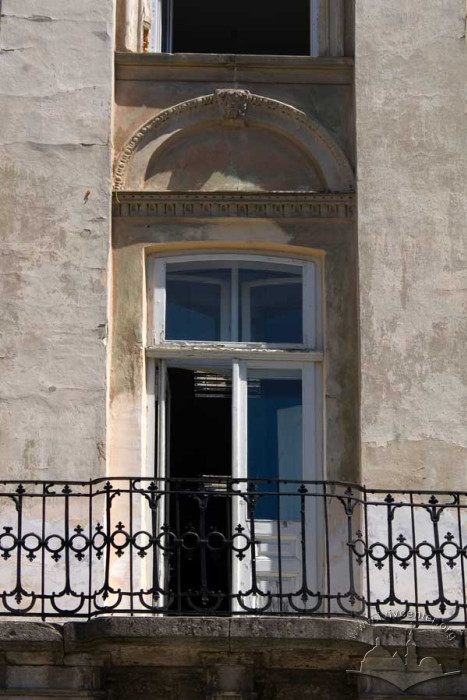
The principal elevation features three window bays with a symmetrical composition, standing out among the townhouses on the east side of pl. Rynok for its understated elegance. It is one of the few townhouses that has preserved its Baroque architectural form intact. The ground floor is clad in ashlar stone; the second-floor balcony with "Genii" sculptures, supported by herms in the form of knight atlantes, serves as the base for the upper stories. The second-floor balcony is decorated with openwork Baroque railings (by locksmiths Piotr Senkowacki and Jacek Ziajko). The architectural design of the upper stories is treated rather austerely. Clear vertical divisions created by plain and rusticated lesenes at the second-story level are supported by window archivolts to balance the round Baroque transom lights above the ground-floor doors.
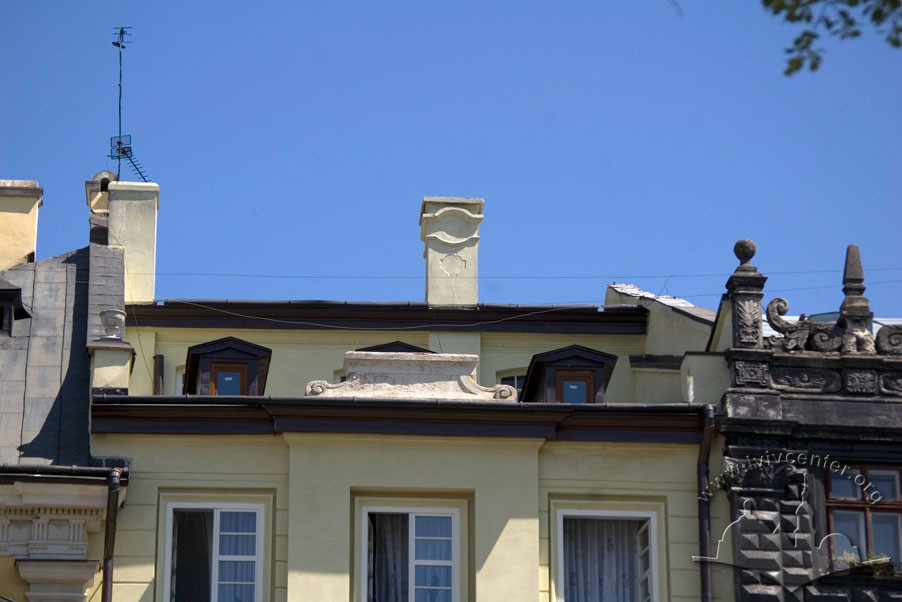
The façade terminates in an attic topped with the "Glory" sculptural group. The sculptural decor of the façade was carved by the sculptor Franciszek Olędzki, while the pedestal for the "Glory" group was stone-carved by stonemason Andrzej Osowski.
People
Martyn Bilobryskyi –– artist.
Kazimierz Bzowski –– chamberlain (mansionar) of the Church of St. Catherine; co-owner of the house.
Walenty Bzowski –– co-owner of the house.
Tomasz Hertner –– artist.
Jan Gęsiorowicz –– co-owner of the house.
Dawid Kessler — owner of the house.
Józef Lanckoroński –– Count; owner of the house.
Ludwika Lanckorońska –– Countess, wife of Józef; owner of the house.
Franciszek Olędzki –– sculptor.
Andrzej Osowski –– stonemason.
Dominik Piątkowski –– master builder who executed the tiled stoves.
Piotr Polejowski –– architect; author of the reconstruction design.
Franciszek Ricci –– owner of the house.
Tomasz Ricci –– son of Franciszek Ricci; co-owner of the house.
Leon Kazimierz Ricci –– son of Franciszek Ricci; co-owner of the house.
Michał Józef Rzewuski –– owner of the house.
Franciszka Rzewuska –– wife of Michał Józef Rzewuski; owner of the house.
Stanisław Matiasz Rzewuski –– co-owner of the house.
Piotr Senkowacki –– locksmith.
Stanisław Skarbek –– Count, founder of the city theater; owner of the house.
Stanisław Stroiński –– artist.
Jan Szczurowski –– woodcarver.
Urbano della Ripo Ubaldini –– son-in-law of Walenty Wilczek, relative of Pope Sixtus V and Cardinal Octavian Ubaldini; owner of the house.
Joann Ubaldini –– son of Urbano and Anna; assessor, owner of the house.
The Wilczek Family –– patrician family; owners of the house.
Walenty Wilczek –– Lviv councilor.
Anna Wilczkówna –– wife of Urbano della Ripo Ubaldini; owner of the house.
Jacek Ziajko — locksmith.
Sources
- Проект "Галіціана" (І. Жук), 2001-2002.
- Центральний державний історичний архів у м. Львові (далі – ЦДІА у м. Львові). – Ф. 52. – Оп. 2. – Спр. 801. – С. 1-34.
- ЦДІА у м. Львові. – Ф. 181. – Оп. 2. – Спр. 1722. – Арк. 2.
- ЦДІА у м. Львові. – Ф. 181. – Оп. 2. – Спр. 1637. – Арк. 1.
- Вуйцик В. Державний історико-архітектурний заповідник у Львові. – Львів, 1991. – С. 32.
- Вуйцик В. С., Липка Р. М. Зустріч зі Львовом. Львів: Каменяр, 1987. – С. 48.
- Вуйцик В. С. З історії львівських кам'яниць. Ринок, 3 // Вісник інституту "Укрзахідпроектреставрація". – Львів, 2004. – №14. – С.117-123.
- Вуйцик. В. С. Львівські етюди // Жовтень. – Львів, 1984. – №6. – С. 97-100.
- Крип'якевич І. Історичні проходи по Львову. – Львів: вид-во "Каменяр", 1991. – С. 36.
- Мельник Б. Вулицями старовинного Львова. / Серія "Історичні місця України". – Вид. 3-тє зі змінами. – Львів: Світ, 2006. – С. 61-62.
- Пам'ятники градостроительства и архитектуры Украинской ССР. – В четырех томах. – Т. 3. – Киев, 1985. – С. 44.
- Charewiczowa Ł. Czarna kamienica i jej mieszkańcy. – Lwów, 1935. – S. 18-20.
- Medyński A. Lwów. Ilustrowany przewodnik dla zwiedzających miasto. – Drugie wydanie poprawione i uzupelnione. – Lwów: nakładem autora. – 1937. – S. 84.
- Skorowidz nowych i dawnych numerów realności, nazw ulic i placów król. stół. miasta Lwowa wedlug Rady meijskiej w r. 1871 z urzędowych źródeł zestawiony. Lwów: nakładem Karola Wilda. – 1872. – S. 206.
- Skorowidz król. stół. miasta Lwowa z planem miasta. – Lwów: staraniem i nakladem gminy. – Z drukarni "Dziennika Polskiego" (Dr. Felixa Wojnarowskiego) pod zarządem Fr. Kattnera. – Lwow, 1899. – S. 183.
- Wykaz domów na obszarze miasta Lwowa . – S. 66. // Księga adresowa Małopołski. – Lwów. Stanisławów. Tarnopól. Rocznik 1935/1936.