Vul. Mykoly Lysenka, 45 – The Chapel of St. Cosmos and Damian (Former Chapel of the Holy Family ID: 1574
Former address: vul. Kurkowa 45 (conscription No. 56 4/4); address until 1912 – 37 ul. Kurkowa, the former Convent of the Franciscan Sisters of the Family of Mary (Pol. ss. Franciszkanek Rodziny Marii). Today (as of 2010), it serves as the Chapel of the Holy Unmercenaries Cosmas and Damian of the Ukrainian Greek Catholic Church (UGCC). It is an Architectural monument of local significance, protection No. 1625 – listed in the registry as the 1st Infectious Diseases Hospital (monastery of the church) from the seventeenth century (a question mark is noted next to the century in the official registry).
Story
On the 1844 map of Lviv and its suburbs, small buildings are depicted on this urban site.
In 1888, Countess Karolina Raczyńska, who came from the Bavarian princely family of Oettingen-Wallerstein, and her husband Karol Edward purchased the property, which contained two small masonry houses. The property became home to the nuns of the Discalced Carmelite Convent of Poznań, which had been shut down by the Prussian authorities. In 1889–1890, a small Neoromanesque chapel dedicated to Our Lady of Perpetual Help and a convent were constructed for them according to a design by Józef Kajetan Janowski. The convent proved too small for the Discalced Carmelites, and at the Raczyńskis' expense, a new convent with a church was built for them on ul. Krzyżowa Street (now vul. Generala Chuprynky 70). The Carmelites relocated there at the end of 1895.
Subsequently, the convent on ul. Kurkowa was purchased in 1897 by the Franciscan Sisters of the Family of Mary, an order founded in 1857 in St. Petersburg by Archbishop Zygmunt Szczęsny Feliński. In 1903, the expansion of the convent was carried out by Ivan Levynskyi's firm. In 1946, the Franciscan sisters departed for Poland, and an infectious diseases hospital was established on the premises. The chapel, stripped of its original decoration, functioned as a "Red Corner" (a Soviet propaganda and recreation room). In 1998, the chapel was handed over to the Greek Catholics. Today (as of 2010), it is the Chapel of the Holy Unmercenaries Cosmas and Damian of the UGCC, while the former convent buildings house a ward of the infectious diseases hospital.
Architecture
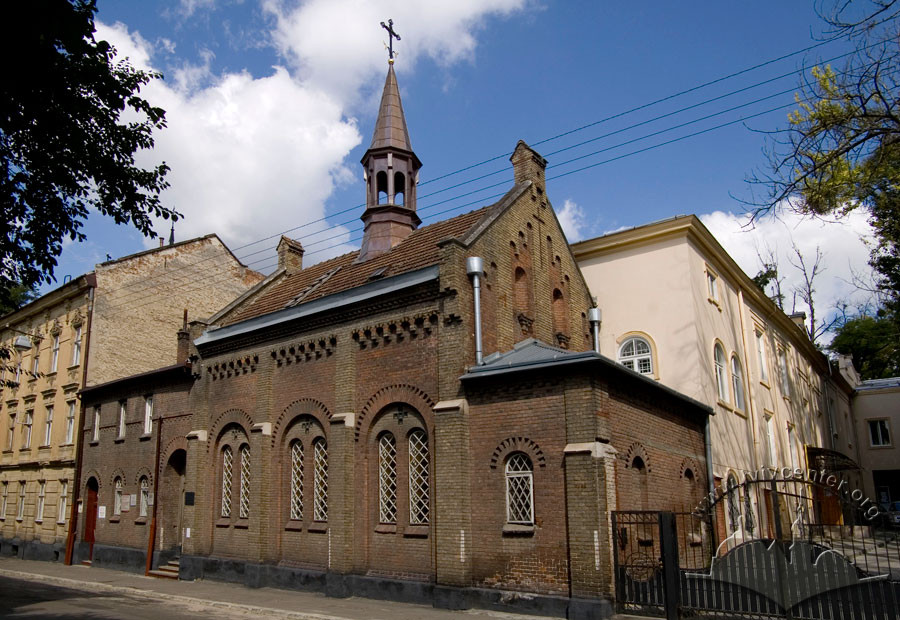
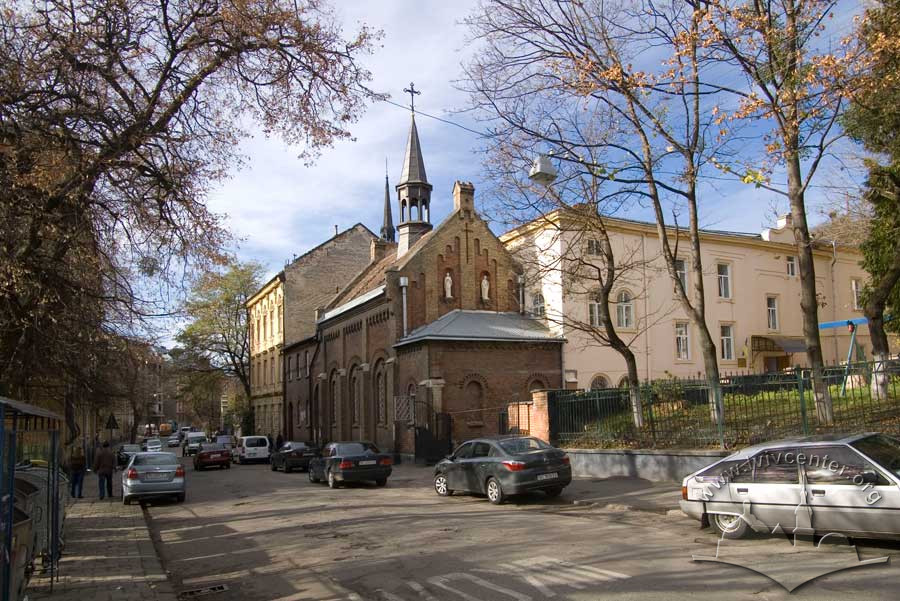
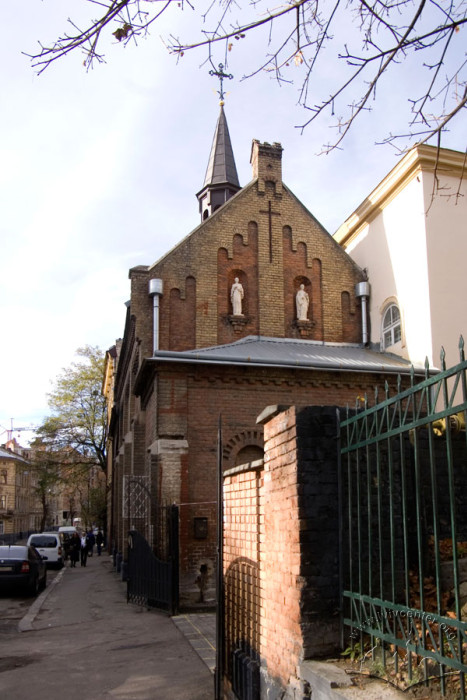
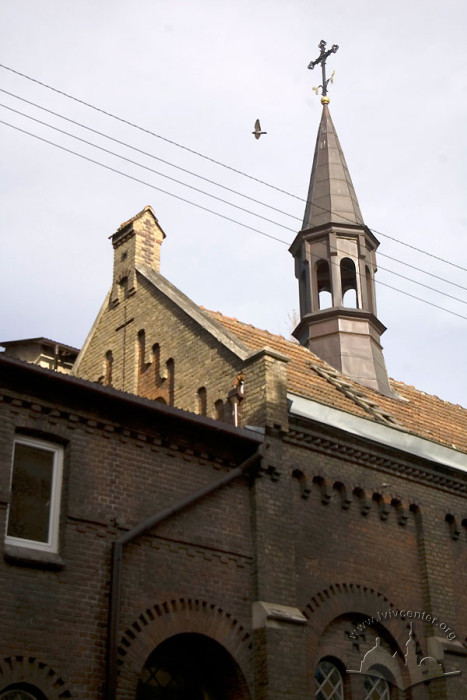
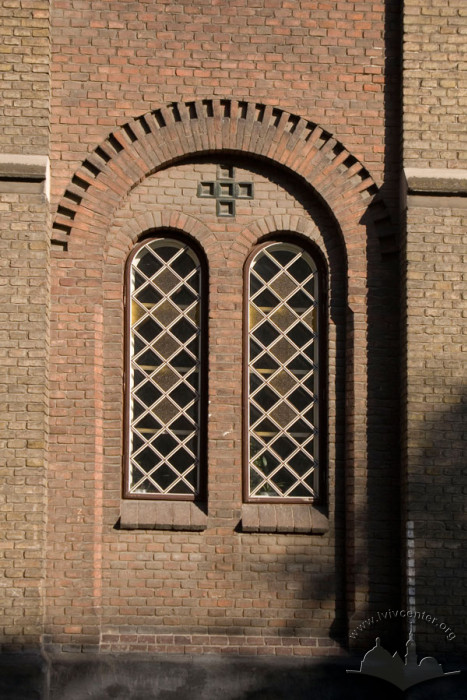
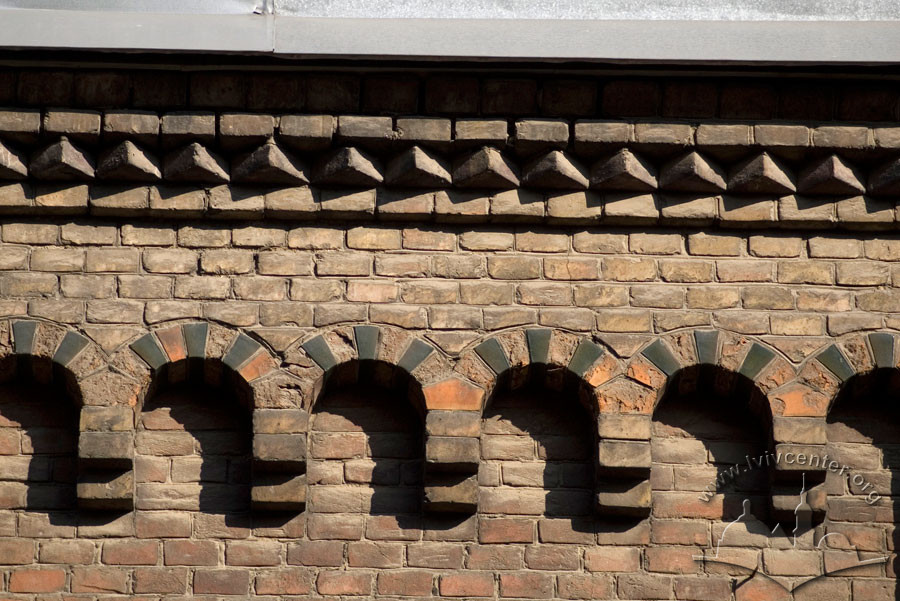
The chapel was built in 1889–1890 according to a design by Józef Kajetan Janowski in the Neoromanesque style. Its side elevation faces vul. Lysenka. The walls are laid with brown and ocher brick. The windows of the chapel, featuring chamfered window trimmings, are arranged in pairs within shallow niches with semicircular terminations. The roof is covered with roof tiles. On the ridge of the roof sits a pointed spire, which was recently re-clad in sheet copper. The interior was painted at the beginning of the twenty first century by artists B. Balytskyi and Yu. Hereha.
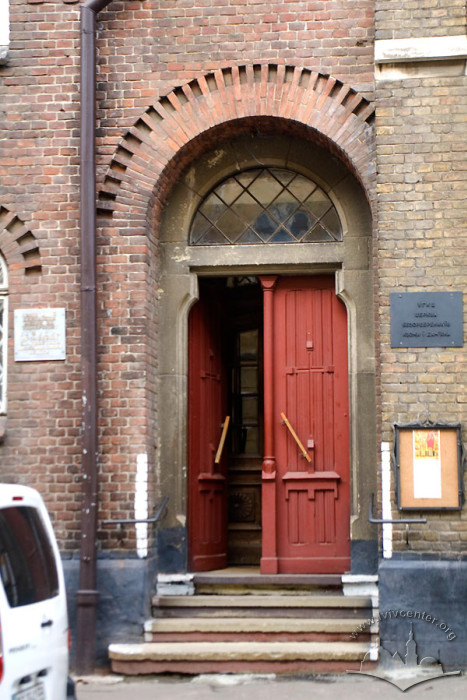
Adjoining the chapel on the left is a two-story entrance lodge, while attached to the right side of the chapel and running perpendicular to the street is a two-story block of cells from the former convent, featuring a rectangular layout.
People
Anna Glixeli –– property owner in 1871.S. Trzmielewska and Zenopolska –– property owners until 1888.
Congregation of the Sisters of the Family of Mary –– property owner in 1916.
Sources
- Czerner O. Lwów w dawnej rycinie i planie. – Wrocław–Warszawa–Kraków, 1997.
- Kościoły i klasztory Lwowa z wieków XIX i XX / Red. J.K. Ostrowski. – Kraków, 2004 – S. 125-134.
- Księga adresowa Król. stol. miasta Lwowa. – Lwów, 1902.
- Lwów. Ilustrowany przewodnik. – Lwów: Centrum Europy, 2003. – 320 s..
- Skorowidz król. stoł. miasta Lwowa z oznaczeniem podziału miasta. Nazw ulic I placów, oliczbowania domów numerami konskrypcyjnemi i orientacyjnemi z wymienieniem właścicieli realności – tudzież nazw i numerówdawniejszych. – Lwów: Nakładem król. stoł. miasta Lwowa, z drukarni Instytutu Stauropigiańskiego, 1889.
- Skorowidz król. stol. miasta Lwowa – Lwów, 1916.
- Skorowidz nowych i dawnych numerów realności, tudzież nazw ulic i placów król. stoł. miasta Lwowa... – Lwów, 1872.
- Spigel J.R. Skorowidz adresowy Król. stol. miasta Lwowa. – Rocznik II: Rok 1910. – Lwów, 1909.