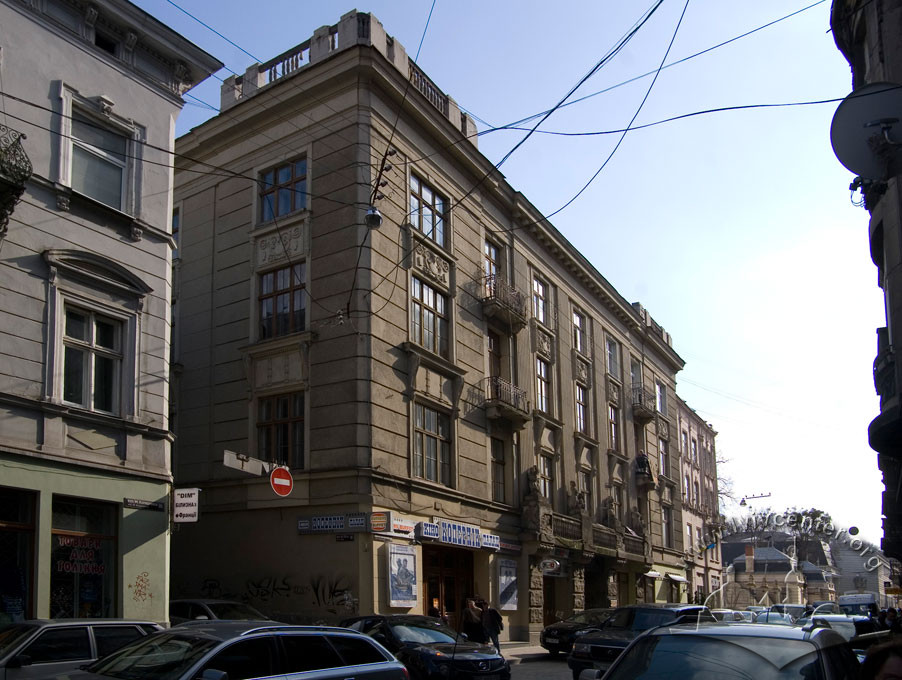
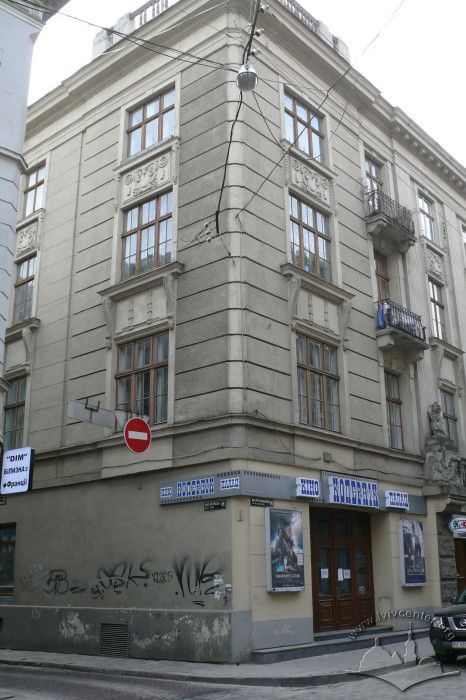
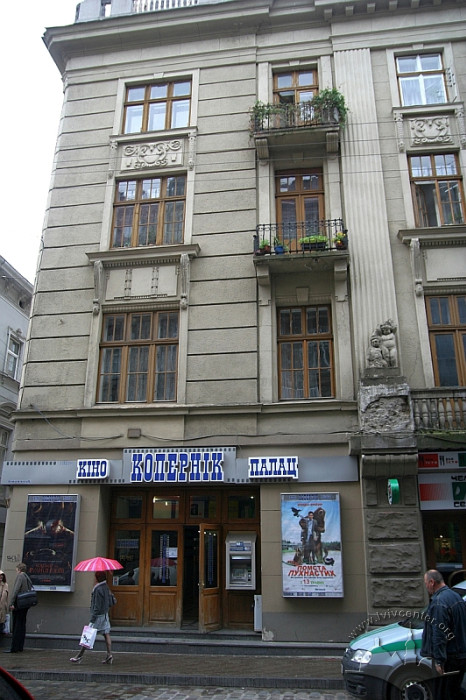
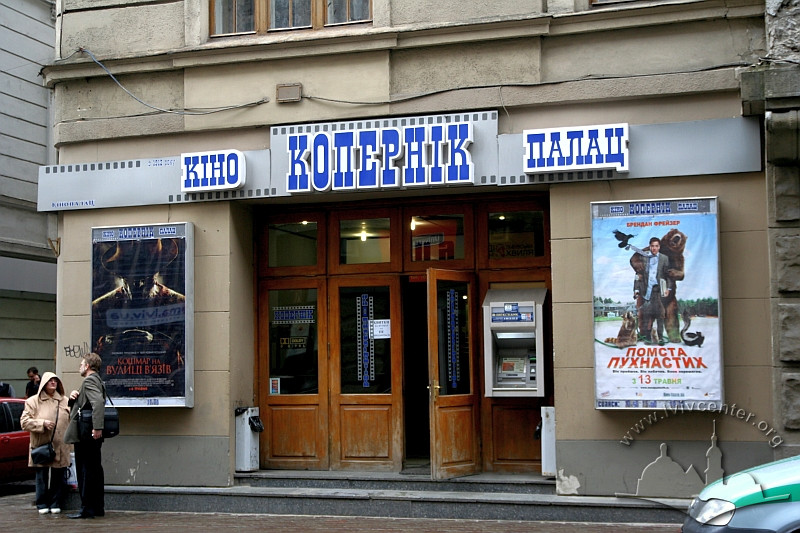
Vul. Mykoly Kopernyka, 9 – cinema "Kinopalats Kopernyk" ID: 1621
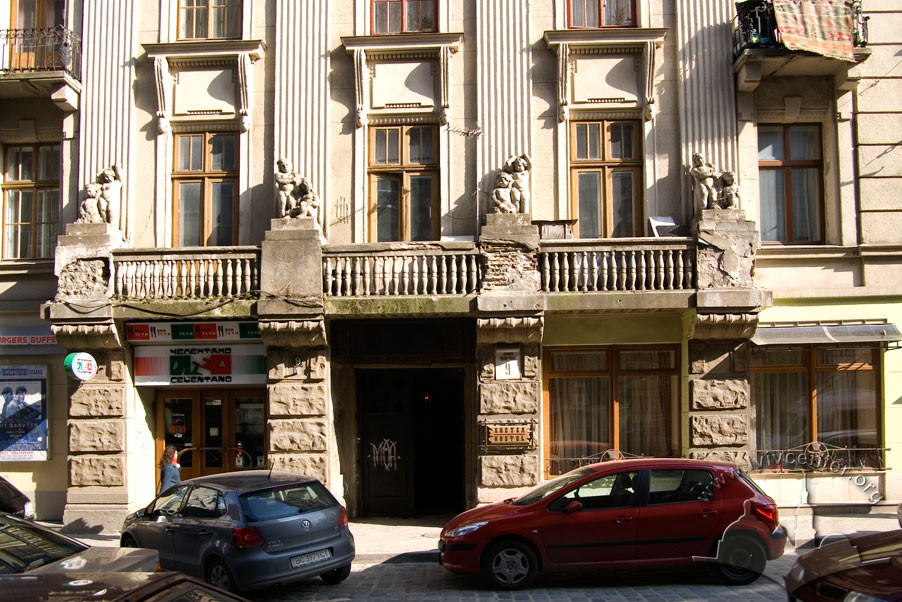
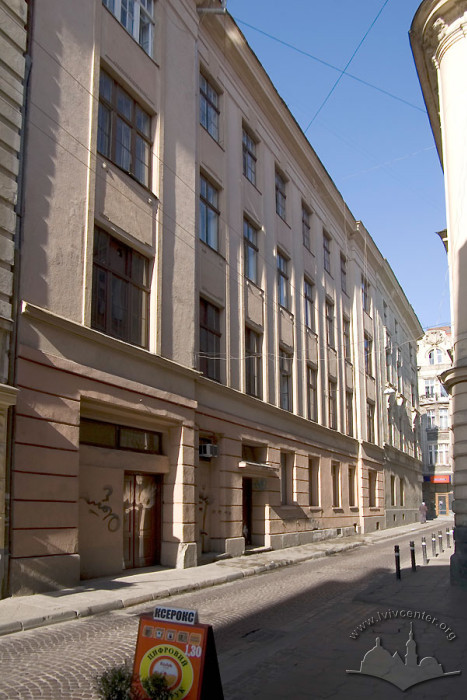
A cinema founded in 1912 operates in the building at 9 Kopernyka St. Throughout its 100-year history of activity, the cinema changed its names and owners: "Sans-Rival" (1912), "Kopernik" (1912–1941, 1944–1946), "Studio" (1941–1944), "Kopernik" (1944–1946), "Kopernik Cinema" (1946–2004), and "Kinopalats Kopernyk" (since 2004).
Story
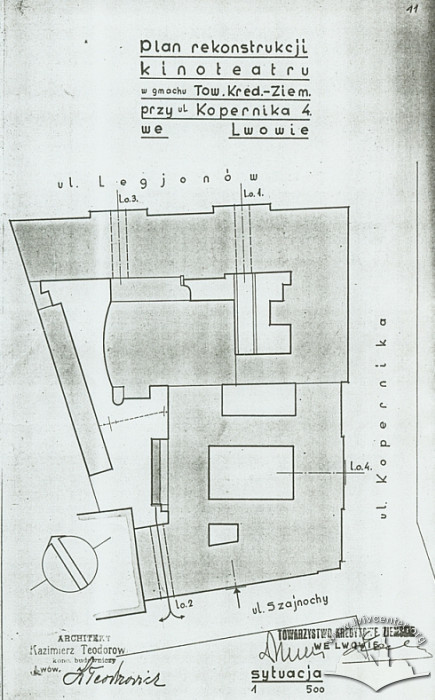
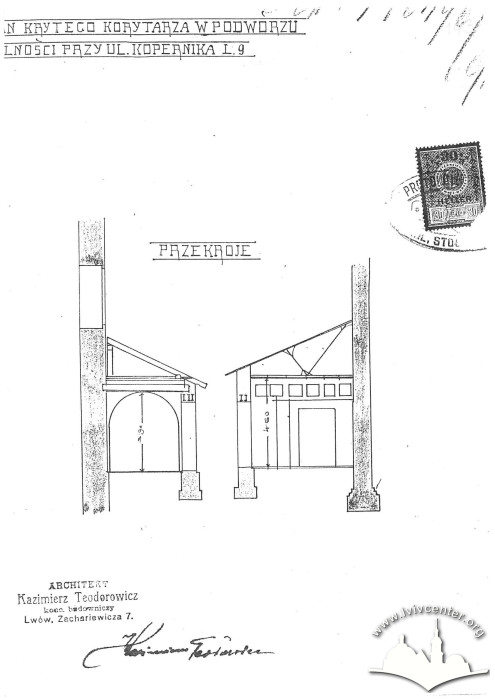
The cinema at vul. Kopernyka 9 is one of the oldest Lviv cinemas that remains operational to this day. It was founded in 1912 as "Sans-Rival". The design for the reconstruction of the building to house a cinema was executed by architect Kazimierz Teodorowicz, and the works to adapt the building lasted nearly an entire year.
"Kopernik", 1912–1941
As early as 1912, due to its location, the cinema received the name "Kopernik". It was owned by engineer Edward Burnatowicz. Until the 1920s, the license for this cinema was issued to the Piotr Skarga Society (which operated in the building at modern-day 3 Teatralna St.). At the time of its opening, the cinema featured one of the best auditoriums in the city.
Lviv film premieres frequently took place at the "Kopernik". For instance, in 1913, the premiere of the film Quo vadis? was held here. Films based on real events were also screened. In February 1918, a film about the sinking of the ship Titanic was shown, accompanied by music from Richard Wagner's opera The Flying Dutchman. In March of the same year, the cinema showed a film about the circus titled In the Deadly Arena (Pol. Na śmiertelnej arenie).
The auditorium, which contained 425 seats, also hosted theatrical productions and scientific gatherings. Thus, in 1914–1939, lectures of Lviv Polytechnic and the university were held in the cinema. Additionally, in the 1930s, the Lviv film club "Awangard" organized film screenings at the "Kopernik".
During an inspection of this cinema in 1925, a number of deficiencies were identified: non-compliance with the standards for distance between rows, dirty and scratched walls of the hall, slippery stairs in the projection booth, and too many armchairs in the loges. It is known that in 1925, there were plans to carry out a reconstruction of the cinema according to the design of architect Eugeniusz Czerwiński.
In 1926, the cinema passed into the ownership of Tadeusz Kuchar, the son of Ludwik Kuchar, and Mieczysław Thumen became the manager. Subsequently, in the late 1930s, "Kopernik" was owned by Paweł Meller and Leon Schechter.
In the 1930s, the number of spectator seats was 425: 317 in the orchestra pit (stalls) and 108 on the balcony. In the fall of 1930, "Kopernik" became the third sound cinema in the city of Lviv.
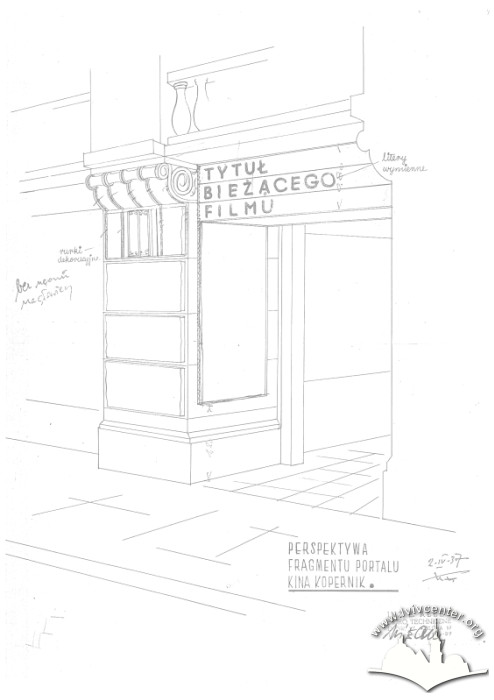
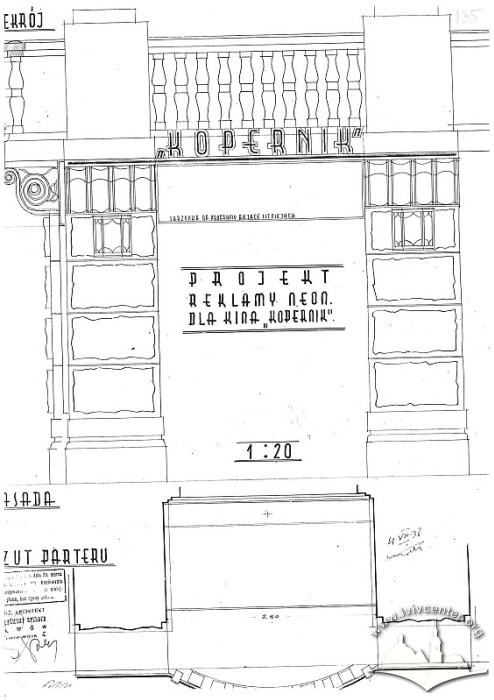
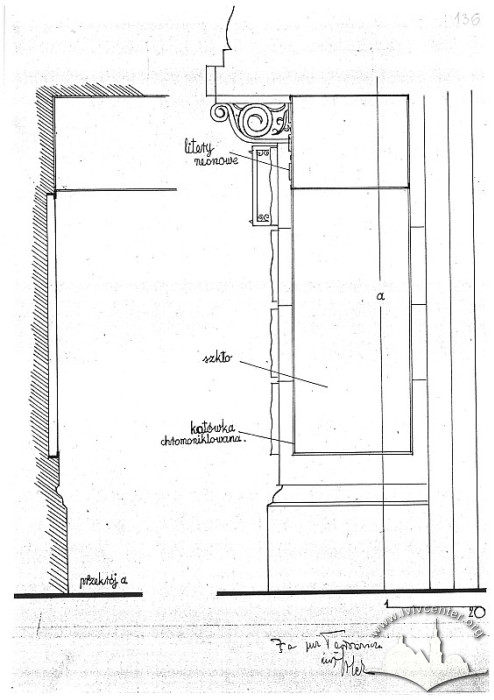
In 1937–1938, two designs were developed to improve the appearance of the cinema. The first provided for the arrangement of a typical billboard sign with changeable letters fixed on a backlit matte surface, while the second envisioned a neon sign reading "Kopernik" on the frieze beneath the balcony and the arrangement of illumination for the pilaster decor using neon tubes that would follow the profile of the decorative element. The author of the latter design was architect Zygmunt Sperber.
In a report by the Lviv Starostwo compiled in 1939, it was noted that this cinema was developing successfully.
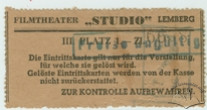
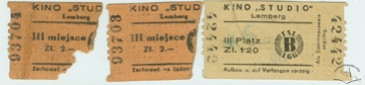
"Studio", 1941–1944
During the German occupation in 1941–1944, the cinema operated under the name "Studio". The auditorium contained 454 seats.
"Kopernik" (1944–1946), "Kopernik Cinema" (1946–2004)
From 1944, the name "Kopernik" was restored, and from 1946, the official name became the "Kopernik Cinema". The entrance was relocated to the left part of the façade. In the post-war years, the technical condition of the cinema was far from the best. Nevertheless, the "Kopernik Cinema" belonged to the first-category cinemas where screenings of the city's newest films took place. Before the film sessions, performances by a jazz orchestra were held. Political lectures were also frequently delivered here prior to film screenings. For a certain period after the end of World War II, this cinema held the status of a children's cinema. However, it did not enjoy popularity among students. This was obviously due to an overly ideologized repertoire, and besides, there was another children's cinema in Lviv at that time — "Pioner" (modern-day pl. Generala Hryhorenka 5).
"Kopernyk Kinopalats" (since 2004)
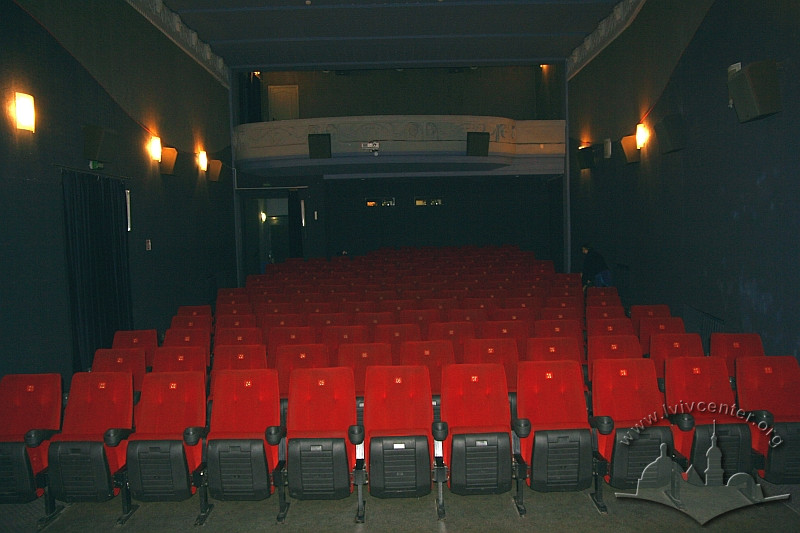
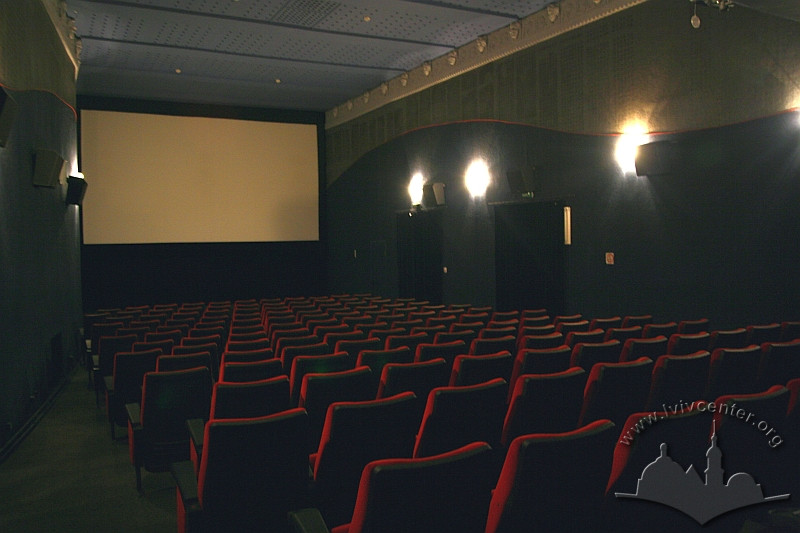
In January 2004, the cinema joined the private cinema network "Kinopalats", while retaining the name "Kopernyk". The founder and owner of the network is Bohdan Batrukh (a film distributor and owner of the film dubbing studio "Le Doyen Studio"). In 2004, a large-scale reconstruction of the cinema was carried out, replacing equipment and seats. The auditorium of the "Kopernyk Kinopalats" is designed for 173 seats. As of February 2012, tickets cost from 20 to 40 UAH.
In 2009, digital projection equipment and a 3D cinema screening system were installed in the cinema.
The hall is equipped with a Dolby Digital Surround EX™ and JBL™ system, and a panoramic screen. The auditorium features soft armchairs, and 8 sofas are installed on the balcony. The cinema operating hours are from 9:00 AM to 12:00 AM.
Selected Repertoire
January 25, 1925 — Conflict (Konflikt)
November 19, 1925 — Conan Doyle
March 24, 1926 — 2000 Meters Under the Sea (2000 metrów pod wodą)
September 1, 1939 — Son of Frankenstein (USA, 1939)
September 8, 1939 — The Battle of the Marne (France, 1938)
November 13, 1946 — absent from the program
November 20, 1946 — The Hero's Brother (USSR, 1940)
May 13, 1948 — The Red Tie (USSR, Soyuzdetfilm, 1948)
May 31, 1949 — The Station Master (USSR, Mezhrabpom-Rus, 1925)
May 12, 1955 — matinee session Hello, Moscow (USSR, Mosfilm, 1945), evening session — Papa, Mama, the Maid and I (France, 1954)
August 9, 1958 — matinee The Calling, evening — Mr. Anatol's Hat (Poland, 1957)
November 4, 1958 — matinee session Pavel Korchagin (USSR, Kyiv Feature Film Studio, 1956), evening session — The Sailor from the Comet (USSR, Mosfilm, 1958)
March 23, 1965 — Jack Frost (Morozko) (USSR, Gorky Film Studio, 1964)
February 13, 2012 — The Firecrosser (Ukraine, 2012)
February 14, 2012 — War Horse (UK, USA, 2011)
Telephone Numbers
1929 — 3-83
1936 — 203-83
1943 — 203-83
1949 — 2-60-91
1954 — 2-60-91 and 2-89-86
1955 — 2-60-91 and 2-89-86
2010 — 297-51-77
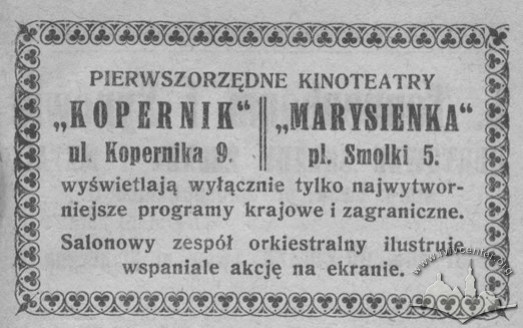
""Cinematograph Kopernik" at 9 Kopernika St. Parlor orchestra. Excellent program. Starts at 4 o'clock, on Saturdays, Sundays, and holidays at 3 o'clock". (Путеводитель по г. Львову (Львов, 1914–1915))
End of October 1942. From a memorandum of the head of the propaganda department to the governor of the District of Galicia on the methods of recruiting labor for Germany. "...Cinema "Studio". The first screening did not take place. The second screening was attended by 27 spectators, the third by 42. On the previous day, there were 400 visitors. Prior to the third screening, the police arrived, attempting to take the spectators along with the cinema workers. Eventually, the service personnel of the cinema were released; 3 visitors were taken. From the cinema staff, the manager was detained, who is to be released...". (Радянський Львів: 1939–1955. Документи й матеріали (Львів: Книжково-журнальне видавництво, 1956))
Advertisement "Cinema Kopernik" Lviv, number 9 Kopernika Street Is a gathering center for the most discerning public, because it screens the finest novelties from the field of cinematographic art. Moving dramas from daily life, parlor comedies full of humor are illustrated by a selected orchestra. The hall is heated". (Театральне мистецтво (Львів, 1922, Випуск 1))
Architecture
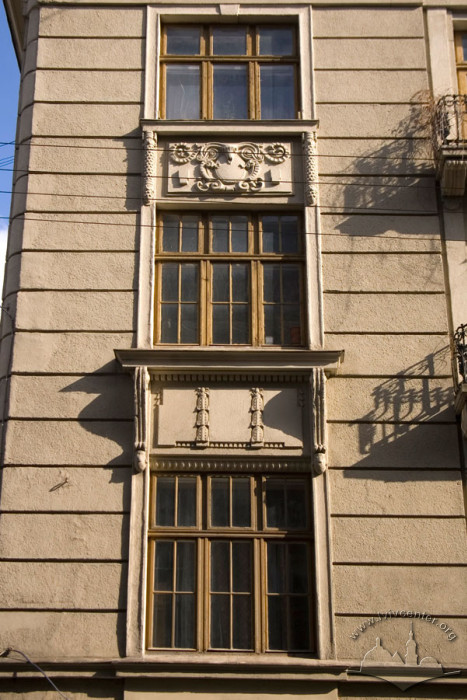
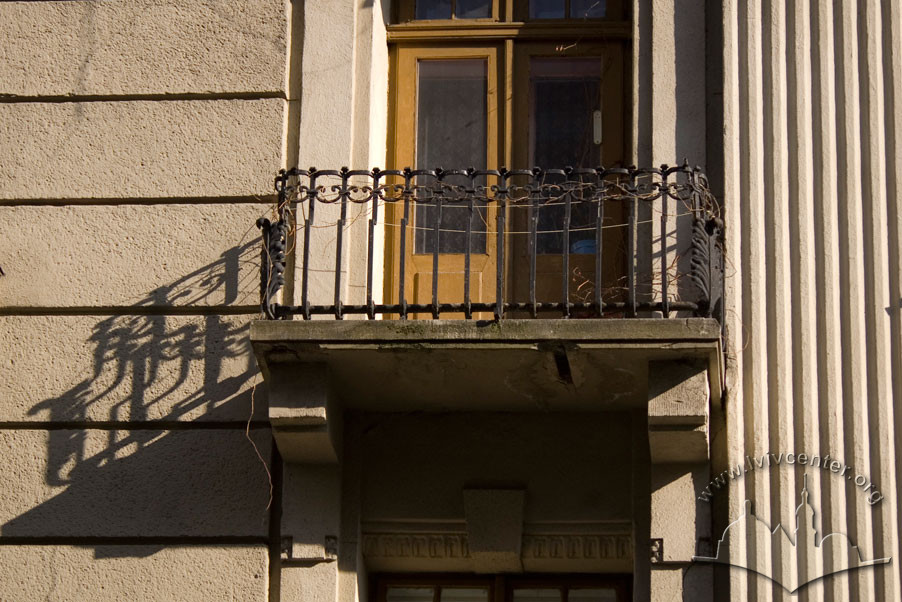
A double-height hall with a balcony. Original decorative elements are preserved: rosettes on the cornices and garlands with mascarons on the balcony enclosure.People
Bohdan Batrukh — film distributor, owner of the film dubbing studio "Le Doyen Studio", founder and owner of the "Kinopalats" network, which has included the "Kopernyk" cinema since 2004.
Edward Burnatowicz — engineer who owned the "Kopernik" cinema in 1912–1926.
Eugeniusz Czerwiński — architect according to whose design the reconstruction of the cinema was planned to be carried out in 1925.
Tadeusz Kuchar — son of Ludwik Kuchar, owner of the cinema from 1926 until the late 1930s.
Paweł Meller — from the late 1930s, co-owner of the "Kopernik" cinema along with Leon Schechter.
Leon Schechter — from the late 1930s, co-owner of the "Kopernik" cinema along with Paweł Meller.
Zygmunt Sperber — architect, author of one of the designs to improve the appearance of the cinema.
Kazimierz Teodorowicz — architect who in 1912 executed the design for the reconstruction of the building at vul. Kopernyka 9 to house a cinema.
Mieczysław Thumen — manager of the cinema from 1926 until the late 1930s.
Organizations
-
Ruslan newspaper
The newspaper Ruslan was a Ukrainian daily socio-political periodical published in Lviv in 1897-1914; the mouthpiece of conservative and clerical circles, it was an unofficial print of the Ukrainian Christian-social movement.
Read more
Sources
- Chwila, 1939.
- Dziennik Polski, 1938, №249.
- Kurjer Lwowski, 1918, №121.
- Kurjer Lwowski, 1918, №74.
- Kurjer Lwowski, 1926, №68.
- Słowo Polskie, 1923, №25.
- Słowo Polskie, 1923, №318.
- Taschenjahrbuch 1943: Für den deutschen Generalgouvernement (Krakau: ZKW Druck, 1943).
- Вільна Україна, 1946: №227, 232.
- Вільна Україна, 1949, №105.
- Вільна Україна, 1958, №260.
- Вільна Україна, 1965, №57.
- Державний архів Львівської області (ДАЛО) 1/56/158.
- ДАЛО 7/3/638.
- Збірка П. Ґранкіна.
- Львов: Справочник (Львів: Вільна Україна, 1949).
- Львовская Правда, 1948, №112 р.
- Львовская Правда, 1955, №111.
- Львовская Правда, 1958, №170.
- Радянський Львів: 1939–1955. Документи й матеріали (Львів: Книжково-журнальне видавництво, 1956).
- Справочник Львовской АТС (Львов, 1954).
- Центральний державний архів у Львові (ЦДІАЛ) 146/32/501
- ЦДІАЛ 190/1/13
- Barbara Gierszewska, “Kino i film we Lwowie do 1939 roku” (Kielce: Wydawnictwo Akademii Świętokrzyskiej, 2006).
- http://kopernik.kinopalace.lviv.ua/kinonetwork/
- Роман Генега, Радянський кінематограф у Львові в перше повоєнне десятиліття, Український історичний журнал, 2011, №2, 106-122.