Vul. Konovaltsia, 3 – residential building ID: 1376
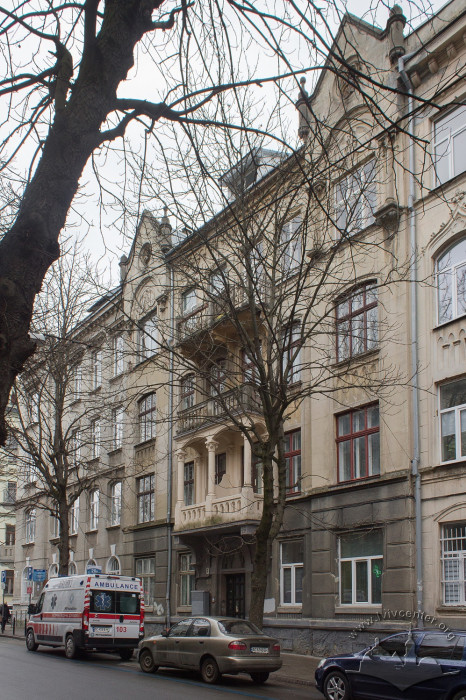
This four-story building was constructed between 1911 and 1913 as a tenement house, designed by the skilled bricklayer Kasper Julian Draniewicz. It is an example of Neo-Gothic architecture and a local architectural landmark. Today it remains a residential building.
Story
During the 19th century, the area between what are now vul. Bandery, vul. Konovaltsia, vul. Kyivska, and vul. Hlyboka was occupied by one large plot with conscription number 81 ¼. It belonged to the Dominican monastery. In the early 20th century, this plot was divided into smaller plots for housing construction. Several plots on ul. Sapiehy (now vul. Bandery) and ul. 29 Listopada (now vul. Konovaltsia) were purchased by Kasper Draniewicz and his wife Marya. Draniewicz was a licensed skilled bricklayer and ran a construction company. They built residential buildings here, some of which were sold fairly quickly; the buildings at vul. Konovaltsia 1, 3, 5, and 7 remained in their possession for a longer period of time. According to address books, Kasper and Marya lived in these houses: first at No. 7, and later at No. 1. All these houses were built in approximately the same style; they have similar layouts and façades, differing only in details.
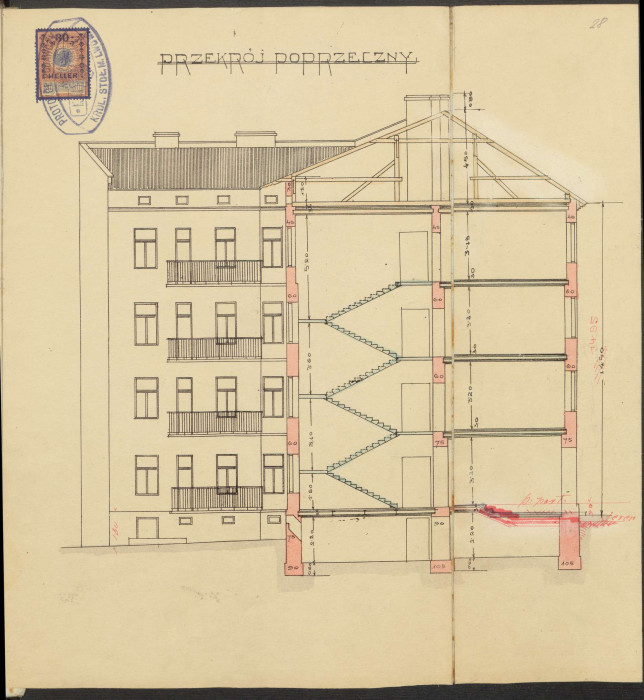
The design of the house in question was approved by the Lviv Magistrate in September 1911 (ДАЛО 2/1/3354:1). Changes were made during construction; they were approved in March 1913 (ДАЛО 2/1/3354:3). In September 1913, the Magistrate issued a permit for the building to be occupied (ДАЛО 2/1/3354:6).
The building was home to engineer Jan Forst, a graduate of Lviv Polytechnic, who had been working as an assistant in the city's Construction Authority since 1912. According to a newspaper announcement, by 1918 he had already opened his own technical office, which was engaged in assessing buildings damaged during the war, as well as designing various technical structures (Kurjer Lwowski, 1918, No. 58, p. 8). In the interwar period, the house was owned by Izabella Forstowa, probably Jan Forst’s wife.
Although the house had (at least initially) eight apartments, the 1935 address book of Lviv records more residents. It is possible that the servants' rooms located at the edge of the wing, or some of them, were converted into separate single-room apartments. For example, in 1937, there were advertisements in newspapers for renting "bachelor apartments" here (Przegląd realności, 1937, No. 42, p. 3).
In the summer of 1938, the commissioner of the city’s building inspection service, who inspected the houses on this street, found that the house had dirty and dilapidated courtyard façades, staircases, and hallway walls, a courtyard covered with potholes, and a destroyed fence (ДАЛО 2/1/3354:7). The owners were given 14 days to make repairs. Izabella Forstowa quickly replied that she had recently taken out a loan to repair the house. She had planned to borrow 2,500 zlotys, but the bank only gave her 1,500, which was only enough to repair the leaking roof. She asked to postpone the repair requirement until the following year, 1939 (ДАЛО 2/1/3354:9). However, neither the city authorities nor the provincial government were interested in these financial problems: the owner received a reminder that she had either to carry out the specified work within 14 days or to pay a fine of 100 zlotys (ДАЛО 2/1/3354:13).
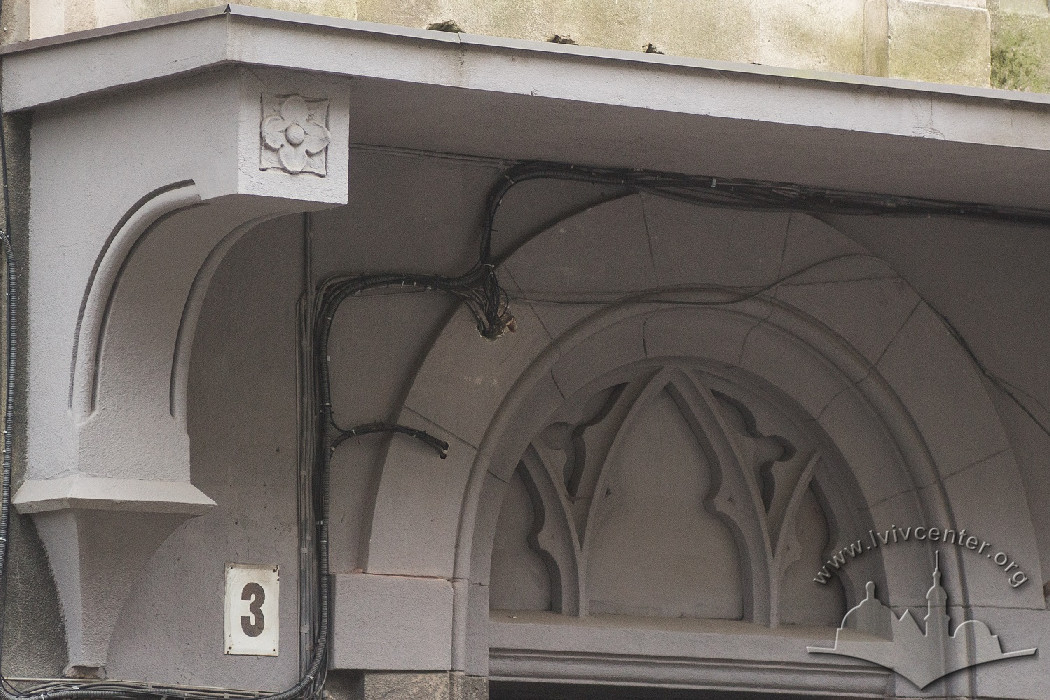
It is unknown what happened to the Forsts during the Second World War. Apparently, the house was nationalized in 1939-1941; it was probably remodeled in the 1940s and 1990s. Despite the destruction of some elements due to atmospheric factors, the façade has been preserved without major changes. The overlight above the door was bricked up, and the window woodwork was partially replaced with metal-plastic.
According to Resolution No. 130 of the Lviv Oblast Executive Committee dated February 26, 1980, the building was listed as an architectural monument of local significance. Thus, until recently, this building was the only monument in its neighborhood; in the 2020s, the building at vul. Konovaltsia 7 also became a monument of local significance.
Architecture
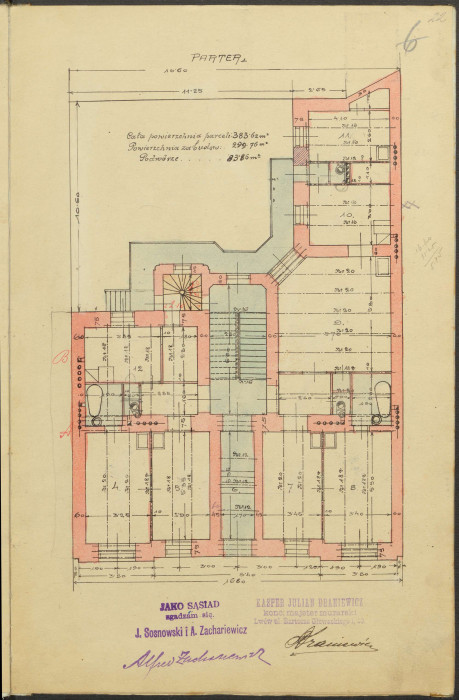
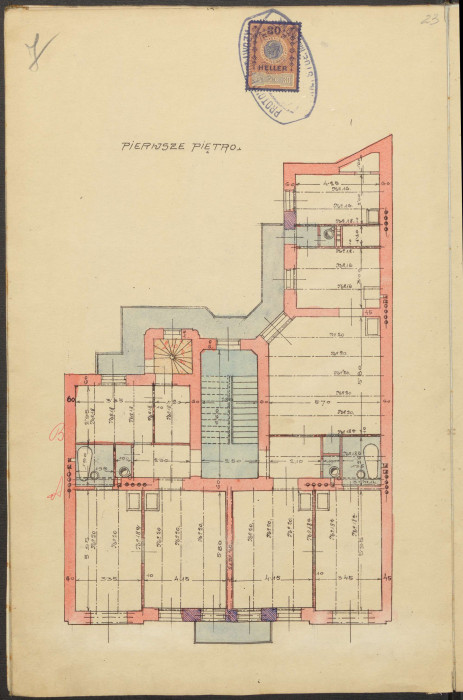
The four-story row building has an L-shaped layout. It is built of brick, with ceilings made of metal beams (according to drawings from 1911), a concrete staircase, metal back stairs, and a wooden rafter-and-post roof structure. Heating was provided by stoves in each of the habitable rooms.
The building originally had eight apartments, two on each floor — a two-room apartment on the left and a three-room apartment on the right. Each had a kitchen, separate bathrooms, and a maid's room next to the kitchen. The main double-flight staircase is made of reinforced concrete; next to it a back wooden spiral staircase was planned. The latter provided access to the apartments through the maids' rooms.
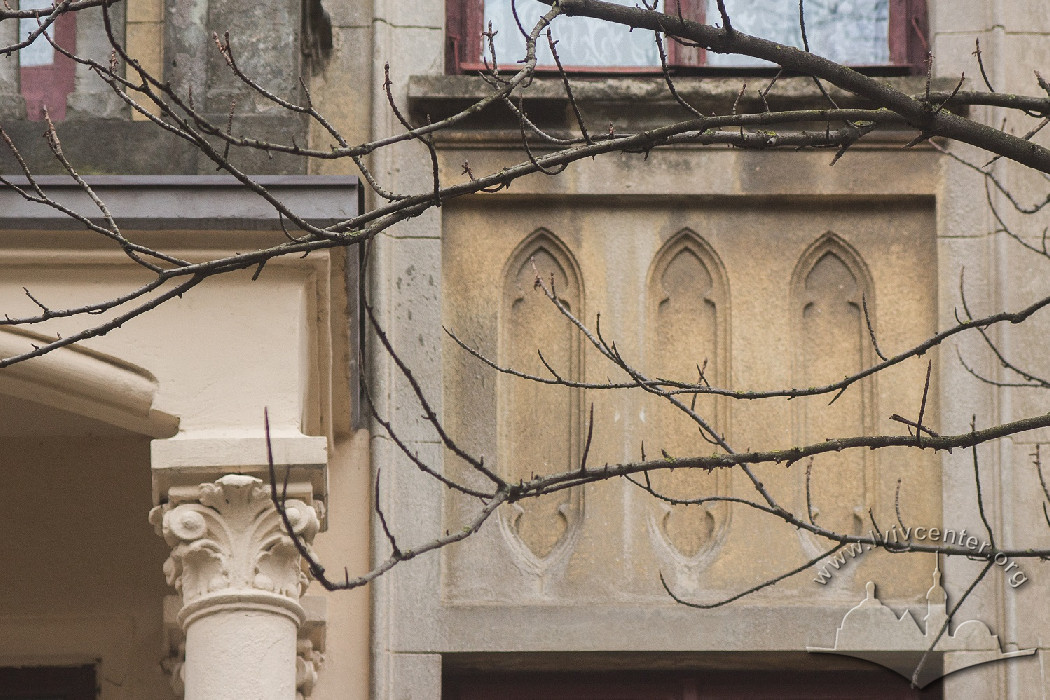
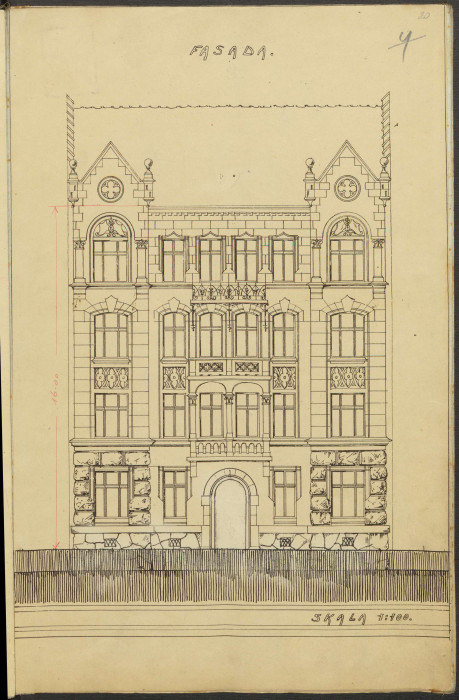
The building’s façade is richly decorated in the Neo-Gothic style. All the buildings constructed by Draniewicz in 1911–1913 in this quarter (vul. Konovaltsia 1–7, vul. Yaponska 16) are designed in this style. Several buildings in the neighboring quarter, between vul. Bandery, vul. Starytskoho, and vul. Yefremova, built by other individuals, are also Neo-Gothic.
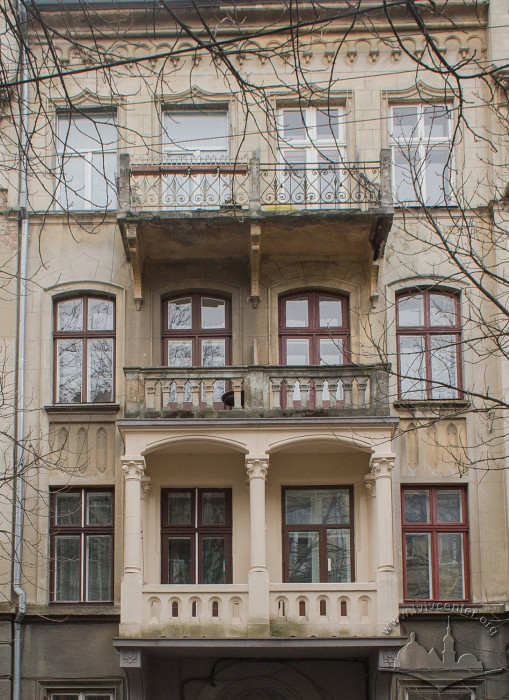
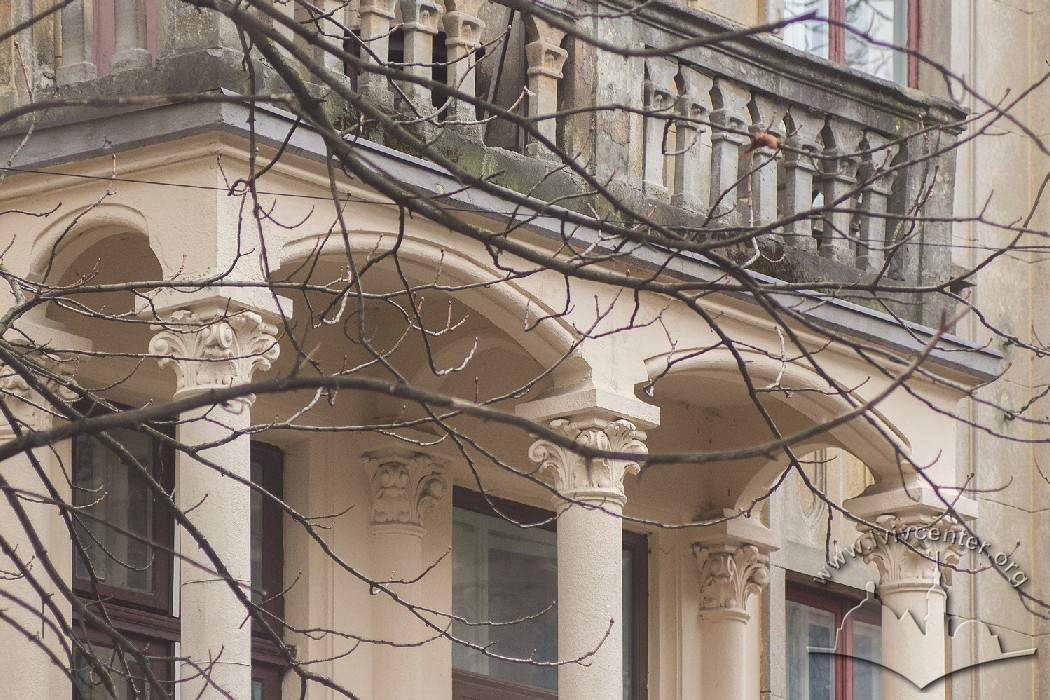
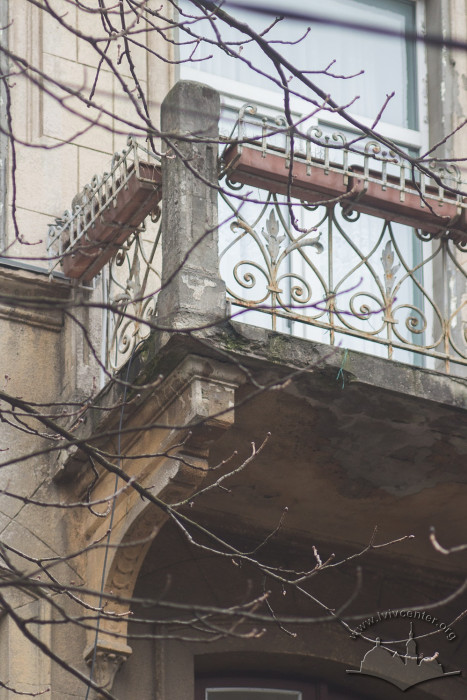
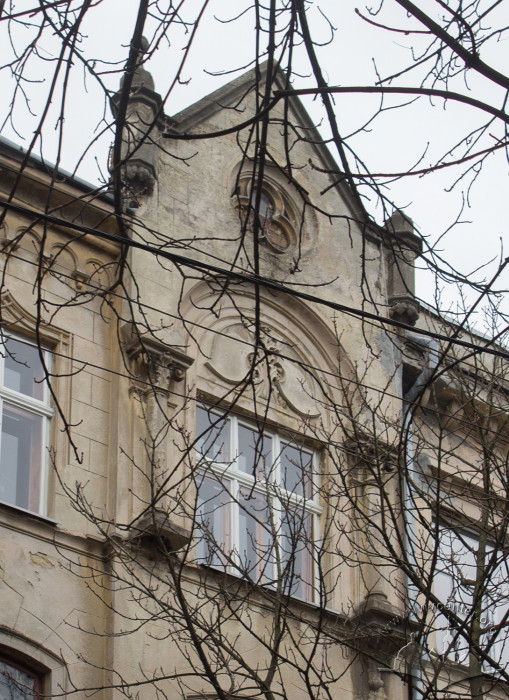
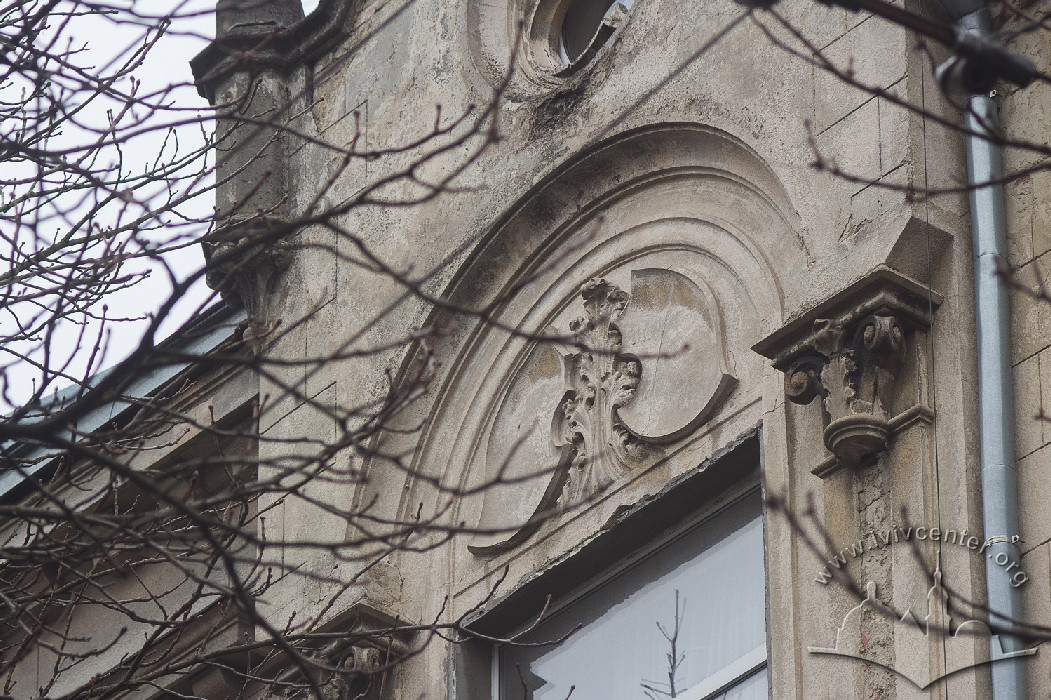
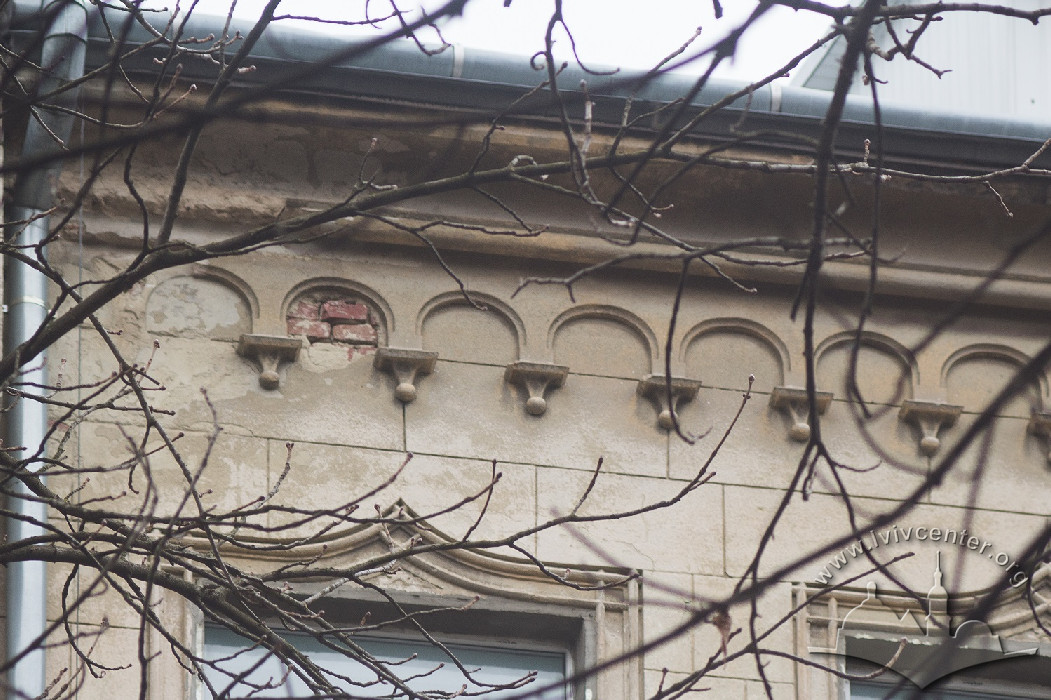
The façade composition is symmetrical and tectonic. The ground floor is separated by a cornice and decorated with massive rustication imitating broken stone. The main entrance is located in the center; there are thin avant-corpses crowned with pediments at the edges of the façade. The windows are mostly rectangular; the entrance door and the third floor windows are arched. The overlight in the main portal, the planes between the second and third floor windows, as well as the attic windows are filled with tracery.
Related buildings and spaces
-
Vul. Konovaltsia, 1 – former residential building

-
Vul. Konovaltsia, 7 – residential building

People
Osyp Bodnarowycz — a journalist who lived in the
building (1935).
Stanisława Bukowska — a widow who lived in the building
(1935).
Edward Gliniański — a civil servant who lived in the
building (1935).
Franciszek Danilowicz — an employee of the Polish State
Railways who lived in the building (1935).
Jan Danilowicz — a municipal judge who lived in
the building (1935).
Kasper Julian Draniewicz — a licensed skilled bricklayer who
designed the project of the building and co-owned it together with his wife.
Marya Draniewicz — Kasper Draniewicz’s wife who
co-owned the building.
Wiktor Koral — a driver who lived in the
building (1935).
Jan Krasicki — a Polish State Railways official
who lived in the building (1935).
Michał Małaszniak — a driver who lived in the
building (1935).
Adolf Mehr — a clerk who lived in the building
(1935).
Mina Mehr — a clerk who lived in the building (1935).
Juliusz Preczep — a merchant who lived in the
building (1935).
Stanisław Skaza — a retired Magistrate advisor who
lived in the building (1935).
Zdzisław Strzembosz — a Galician Savings Bank employee
who lived in the building (1935).
Julia Suchowa — a property owner who lived in the
building (1935).
Izabela Forstowa — the owner of the building in the
interwar period.
Jan Forst — an engineer who lived in the building.
Sources
- Державний архів Львівської області (ДАЛО) 2/1/3354. URL: https://e.archivelviv.gov.ua/file-viewer/230133#file-1353852
- "Egzamina dojrzałości", Gazeta Lwowska, 1903, Nr. 144, s. 4
- Księga adresowa Małoposki, 1935.
- Kurjer Lwowski, 1918, Nr. 58, s. 8.
- "Pokoje kawalerskie", Przegląd realności i mieszkań, 1937, Nr. 42, s. 3
- Skorowidz adresowy król. stoł. miasta Lwowa, 1916.
- Szematyzm urzędników i sług gminy król. stoł. miasta Lwowa na rok 1914.