Vul. Konovaltsia, 1 – former residential building ID: 1375
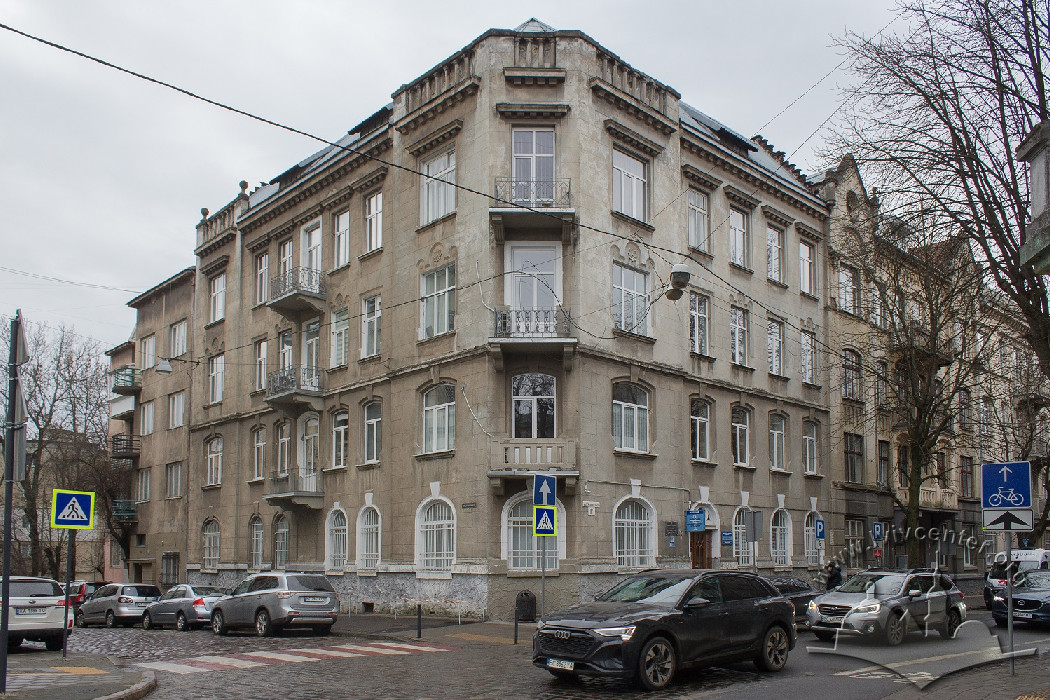
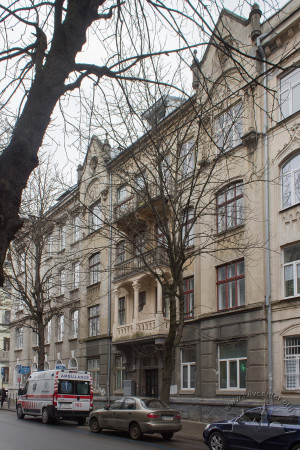
This Historicist-style four-story corner building was built in 1911–1913. It was designed by Kasper Draniewicz, a skilled bricklayer who owned the building together with his wife Marya until 1939. Initially, it was a residential building with eight apartments. Since at least the 1950s, it has housed a dermatology and venereology clinic.
Story
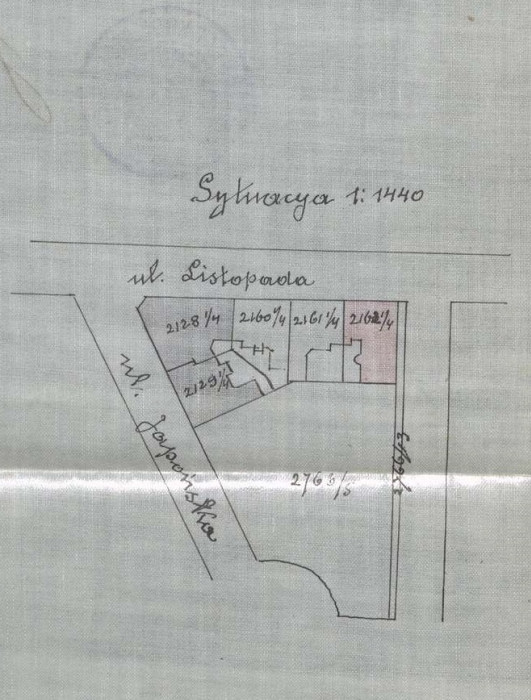
The plot of land on which this building stands was formed during the parcelling of land that belonged to the Dominican monastery in the 19th century. The large plot covered the area between the present-day vul. Konovaltsia, vul. Bandery, vul. Hlyboka, and vul. Kyivska and was marked with conscription number 80 ¼.
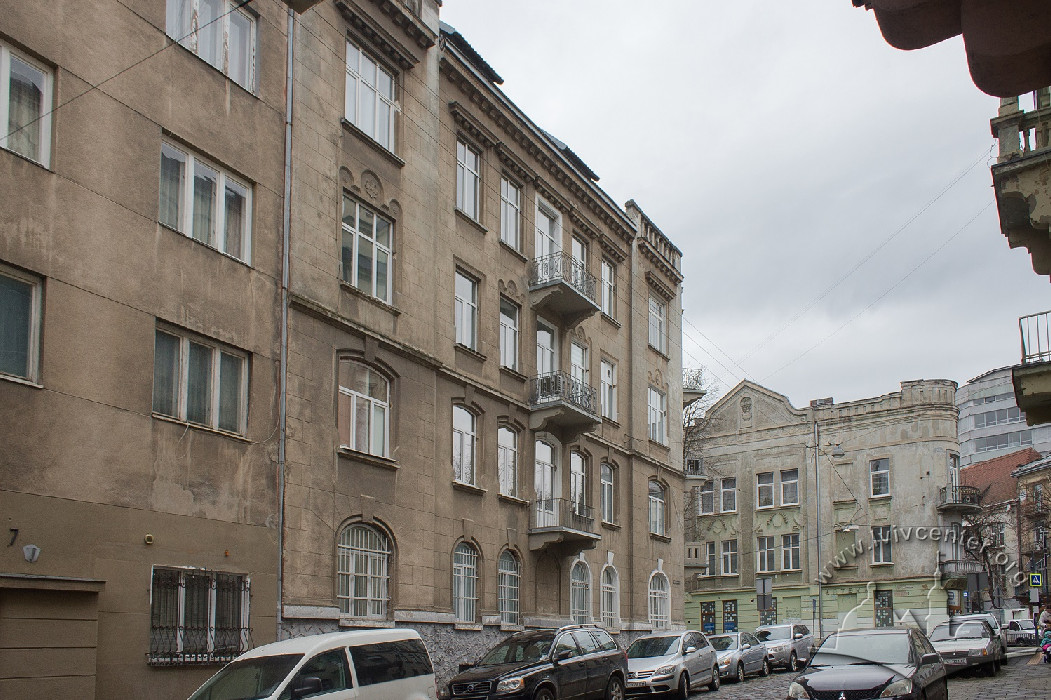
Around 1910, Kasper Julian Draniewicz and his wife Marya purchased part of this estate, which previously had no buildings, only gardens. They built houses 1, 3, 5, and 7 on what is now vul. Konovaltsia, as well as the adjacent house 16 on vul. Yaponska. All five houses are four-story buildings with a similar layout and a similar façade composition; all are decorated in the Neo-Gothic style.
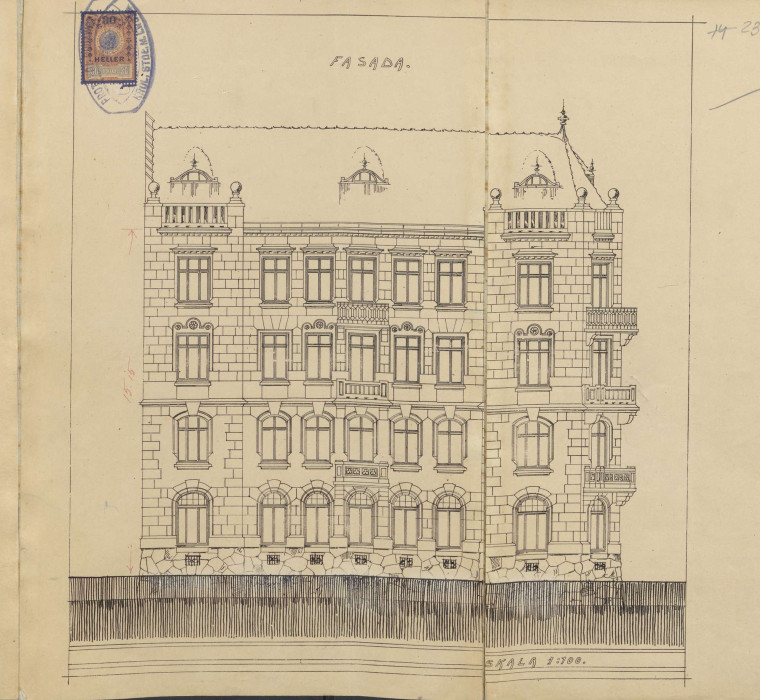
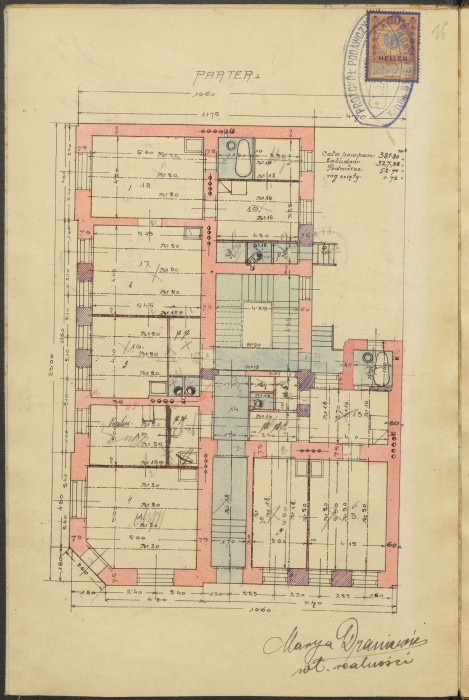
In the summer of 1911, the Draniewiczs submitted the designs for these houses to the city’s Construction Authority for approval (ДАЛО 2/1/3352:1). During construction, changes were made, which were additionally approved in the spring of 1913 (ДАЛО 2/1/3352:6). In late August – early September of the same year, the owners received permits for using these houses (ДАЛО 2/1/3352:5). House 1 was assigned conscription number 2162 ¼.
Shortly after the completion of all construction work, the Draniewiczs sold these houses to new owners, keeping house 1 for themselves. The purchase and sale contracts for these houses have not been preserved in the archives.
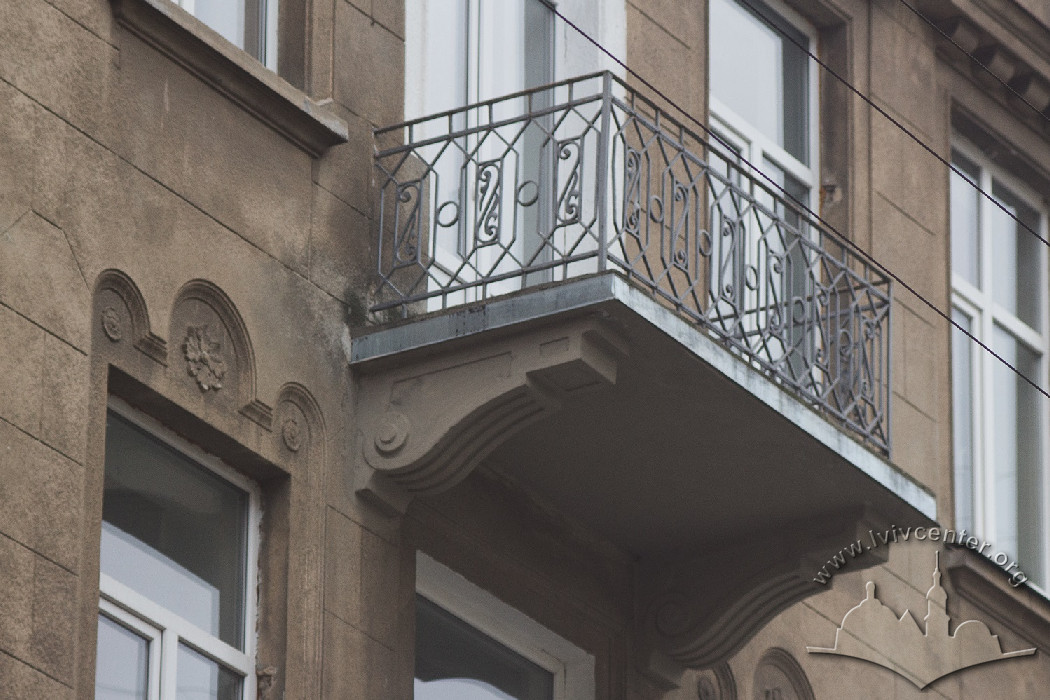
In June 1938, an inspector from the city’s Construction Authority passed by the street and noticed that the balcony consoles on house 1 were cracked. A letter was sent to the owner demanding that they be repaired so that they would not pose a falling hazard. Kasper Draniewicz, who was then living in Zimna Woda in the Musia villa (perhaps his summer residence), asked to postpone the repair requirement until May 1939. In particular, he argued that since the time of the building's construction, the entire façade had blackened, and therefore the repair of the consoles would inevitably require the repair of the entire façade so that they would not stand out against its background too much. This meant significant expenses that Draniewicz could not afford at that time. Also, citing the summer season and the departure of most tenants out of town, he emphasized the likelihood of thefts from apartments if scaffolding were installed (ДАЛО 2/1/3352:11-13).
The fate of the Draniewicz family during the Second World War is unknown. In the 1940s or early 1950s, the building was adapted for new needs. By 1955, the Scientific Research Institute of Dermatology and Venereology and the Regional Venereological Dispensary were already operating there (Reference Book, 1955). It is likely that an additional entrance (now bricked up) to the building from vul. Starytskoho was built at that time. After some time, the institutions expanded to the neighboring house 5, where they still operate today, in 2025.
In general, the building has retained its authentic appearance from the outside. The window and door woodwork, as well as the original roof, have been lost, and it is most likely that the building’s interior has also been altered due to the conversion of the apartments into a medical facility. Of the five houses in this quarter built by the Draniewicz family, only one (No. 3) is an architectural monument of local significance, entered in the register of monuments in 1980. Perhaps this house was the best preserved at that time.
Architecture
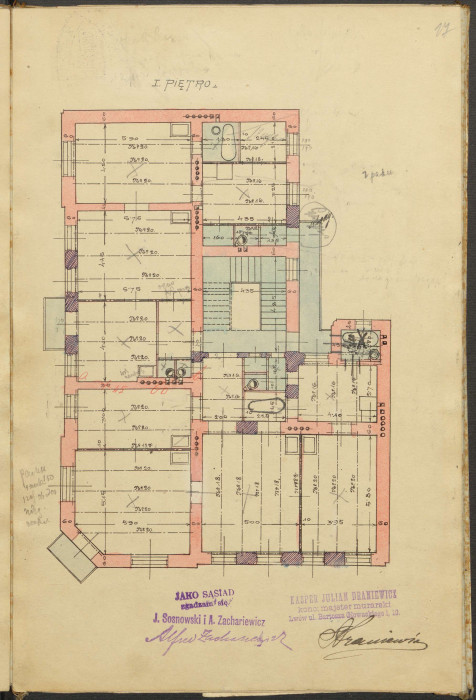
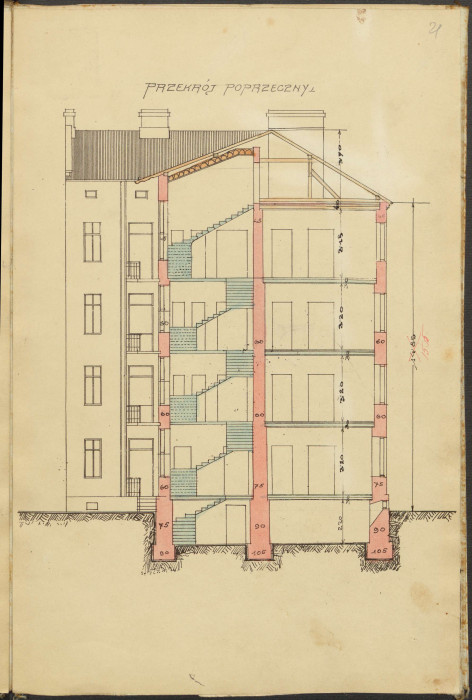
The four-story corner building has a longer façade facing vul. Starytskoho and a shorter one with the main entrance facing vul. Konovaltsia. It is built of brick, its ceilings made of metal beams (according to the 1911 drawings), with a concrete staircase, metal back stairs, and a wooden rafter-and-post roof structure. The authentic roofing (according to the drawings, it was supposed to be ceramic tiles) has been lost and replaced with corrugated metal. The roof has dormer windows.
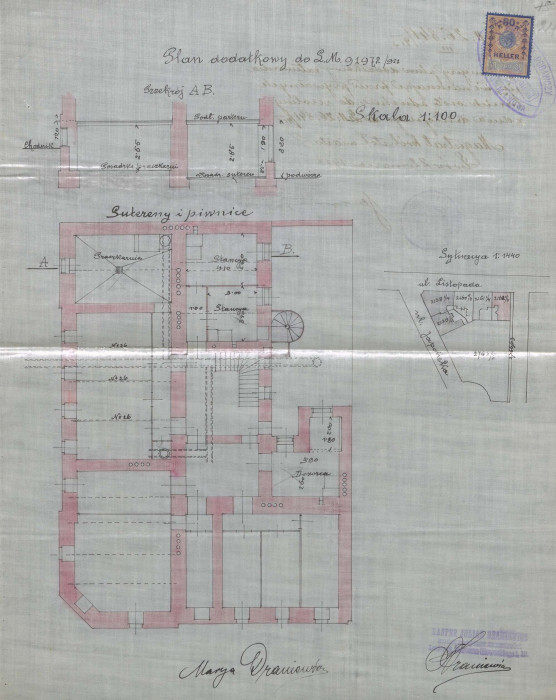
Originally, there were eight apartments in the building, seven of which were rented out by the owners. There were two apartments on each floor: one with three rooms and the other with four rooms. The rooms were interconnected and heated by stoves. Each apartment also had a kitchen, a maid's room, a separate toilet, and a bathroom. The back staircase was not originally planned. The service entrance was to be arranged via the main staircase through a side door to one apartment or through a small open gallery to the other apartment. However, according to additional drawings from 1913, a spiral staircase facing the courtyard was added. The semi-basement floor housed a laundry room, a room for the caretaker, and two small habitable rooms.
The buildings are designed in the Historicist style, dominated by Neo-Gothic features that imitate defensive architecture. Given the years of construction, namely 1911–1913, these buildings are often referred to as examples of "rational Secession" (a term coined by Yuriy Biriuliov). However, there are no overt Secession features in this building, either in the details or in the composition. In particular, the composition of the façades is conservatively symmetrical and tectonic, while Secession is characterized by atectonicity and fanciful floral ornaments.
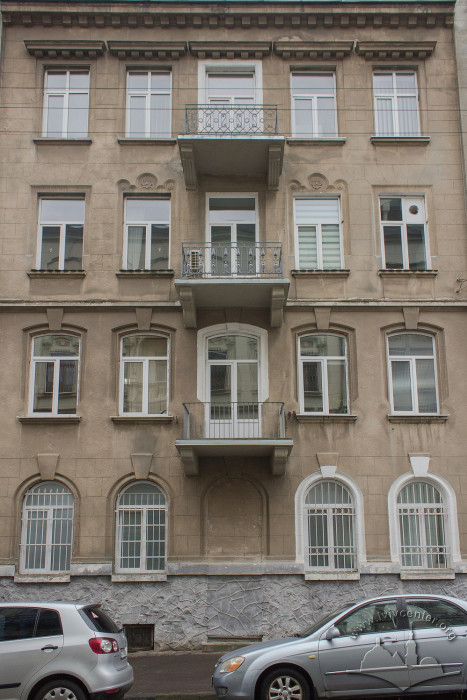
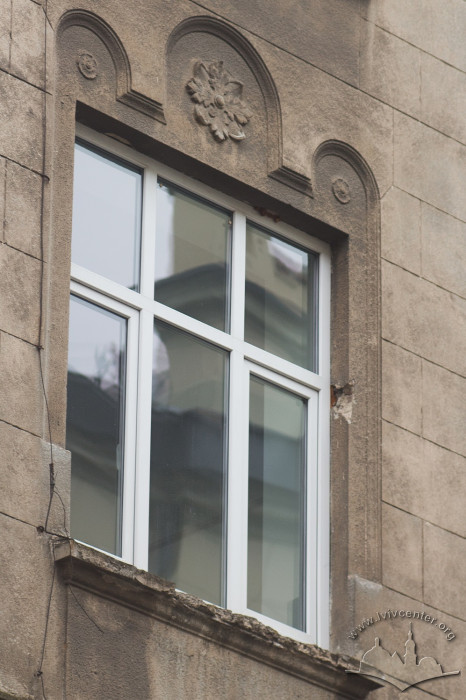
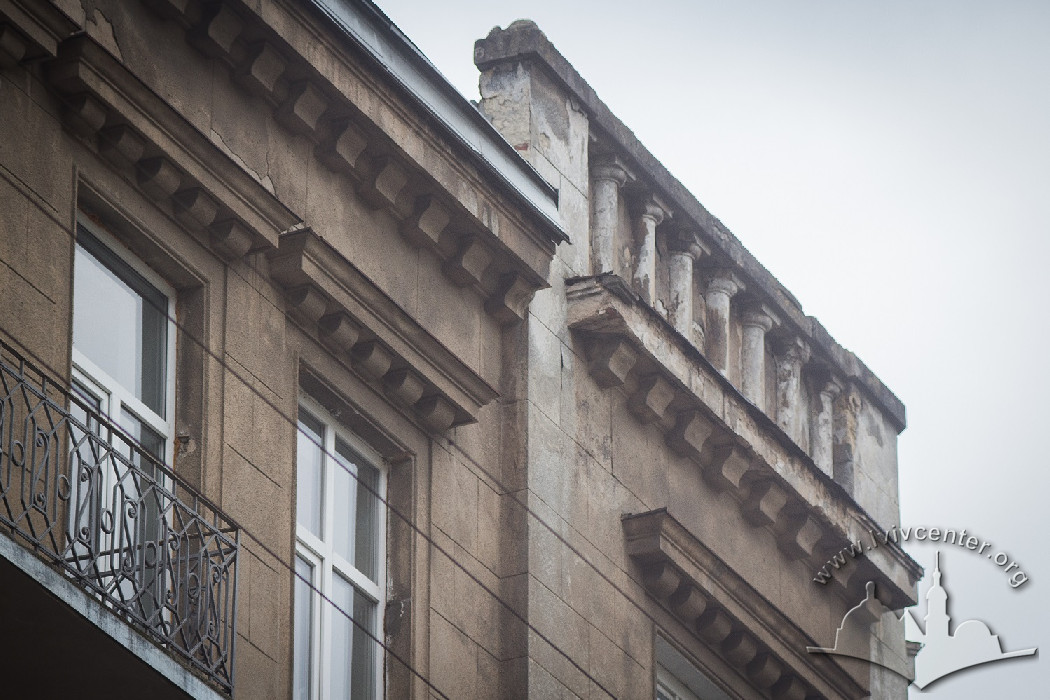
The symmetry of the façades, together with the use of side avant-corpses (thin ones in this case), is a typical technique of Historicism — Neo-Renaissance and Neo-Baroque in Lviv, starting in the 1880s. The façades have finely rusticated surface, the base being more massive, with broken stone imitation emphasizing the tectonics. The arched windows — semi-oval on the ground floor and segmented on the second floor — have decorative keystones. The third and fourth floors are separated by an inter-floor stringcourse on the façades. The windows above have rectangular openings. The façades are topped with cornices having massive denticles, which imitate the consoles of medieval castles rather than the small denticles of ancient order architecture. The avant-corpses are crowned with attics having massive imitated balustrades. The balconies, located in the center of the façade and on the cut corner, have massive consoles (probably made of Roman cement) and openwork metal railings.
Related buildings and spaces
-
Vul. Konovaltsia, 3 – residential building
People
Jan Akselrad — a civil servant who lived in the
building (1935).
Herman Baran — a tailor who lived in the
building (1935).
Felicja Brzeska — a retired theater actress who
lived in the building (1935).
Franciszek Wojnarowicz — a bandmaster who lived in the
building (1935).
Abraham Goldberg — a retired railway employee who
lived in the building (1935).
Agata Dolna — an embroidery instructor who
lived in the building (1935).
Kasper Draniewicz (1867-after 1939) — a skilled
bricklayer and building contractor, a co-owner, designer and resident of the
building in 1911-1939.
Marya Draniewicz — wife and partner of Kasper
Draniewicz, a co-owner and resident of the house.
Ignacy Kahane — a candidate for attorney who
lived in the house (1935).
Anna Kukulska — a private servant who lived in the building (1935).
Stefan Moszczeński — an intern doctor who collaborated
with the social insurance department in Lviv on the eve of the Second World War
and lived in this building (1939).
Marya Nowakowska — a cooperative manager who lived
in the building (1935).
Darja Pisecka — a clerk who lived in the building
(1935).
Władysław Furdzyn — a functionary of the Municipal
Electric Works who lived in the building (1935).
Sources
- Державний архів Львівської області (ДАЛО) 2/1/3352:21. URL: https://e.archivelviv.gov.ua/file-viewer/230131#file-1354909
- Księga adresowa Małopołski (Lwów. Stanisławów. Tarnopól, 1935–1936).
- Ilustrowany informator miasta Lwowa (Lwów, 1939).
- Львів. Довідник (Львів: Книжково-журнальне видавництво, 1955).