Vul. Kniazia Romana, 5 – building of Lviv Polytechnic National University ID: 325
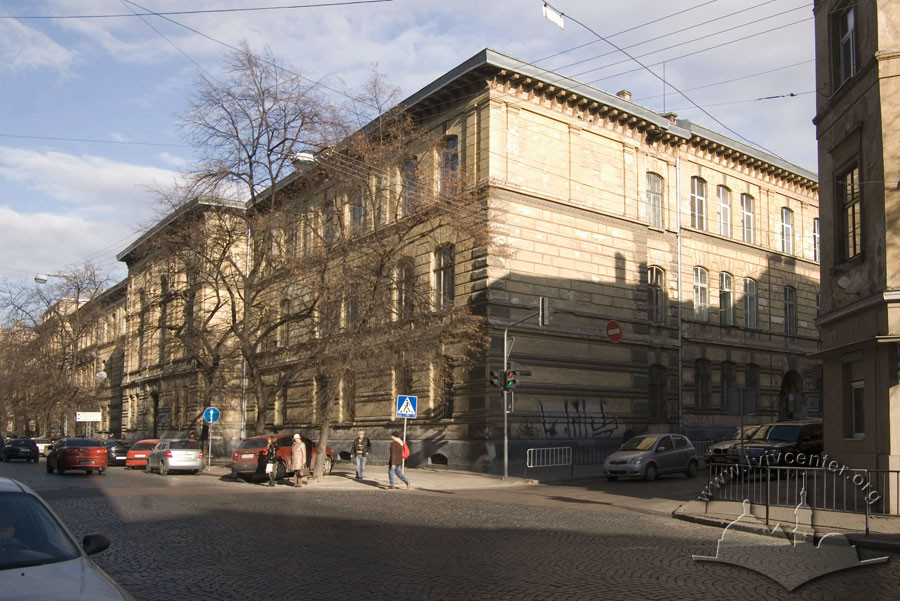
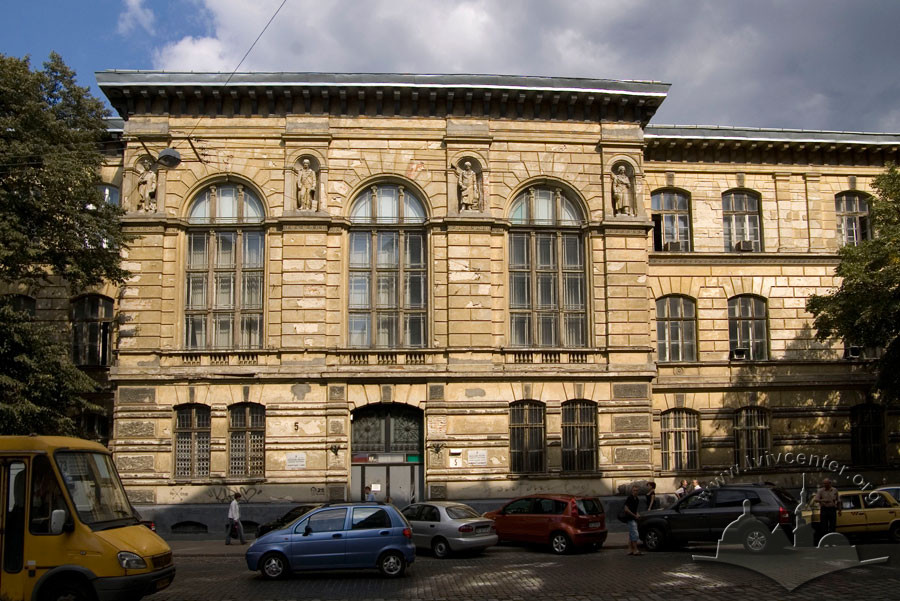
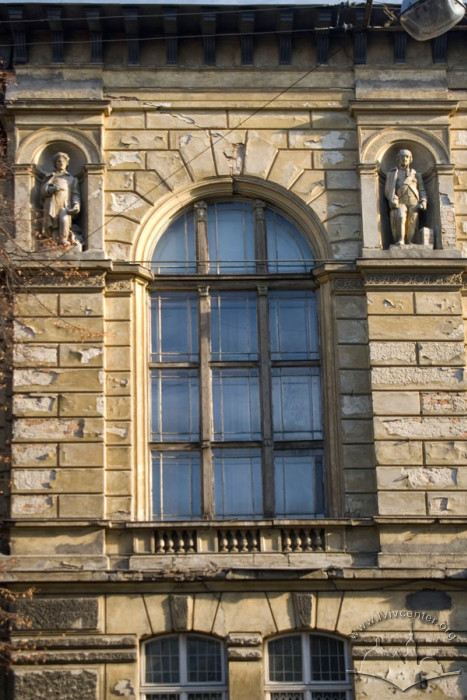
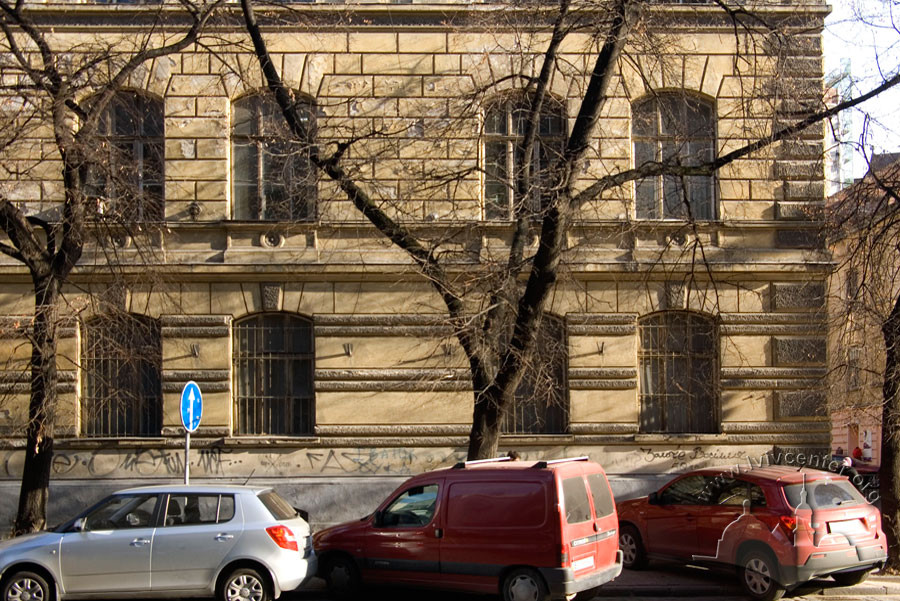
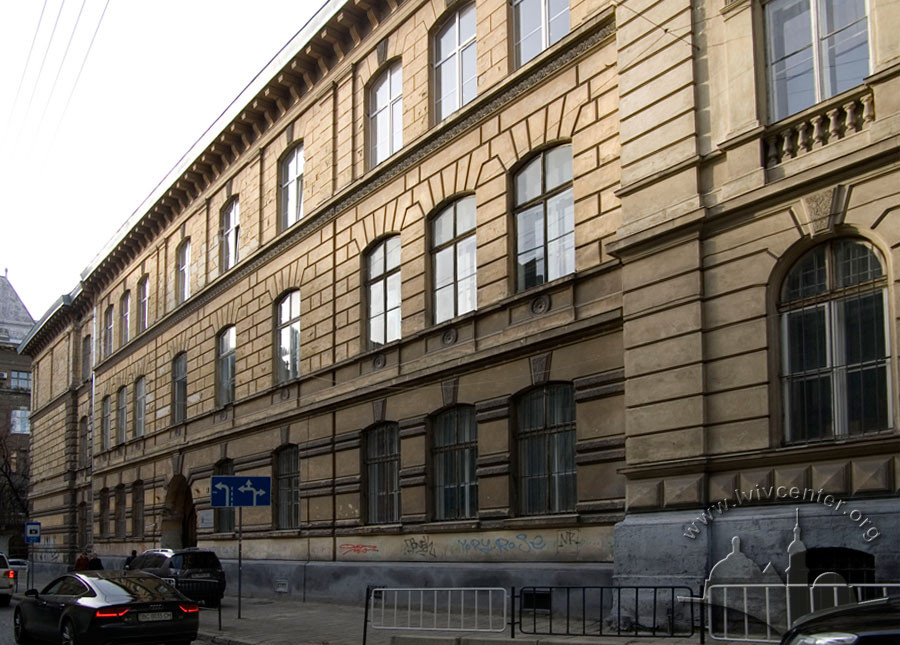
The former Franz Joseph Gymnasium (1876, architect Juliusz Hochberger). Full-length sculptural portraits of figures of Polish culture are placed within niches beneath the cornice (sculptor Tadeusz Barącz). The building's style is Historicism (Neorenaissance). Today (2009), it serves as a research institute of Lviv Polytechnic National University (building No. 20).
Architecture
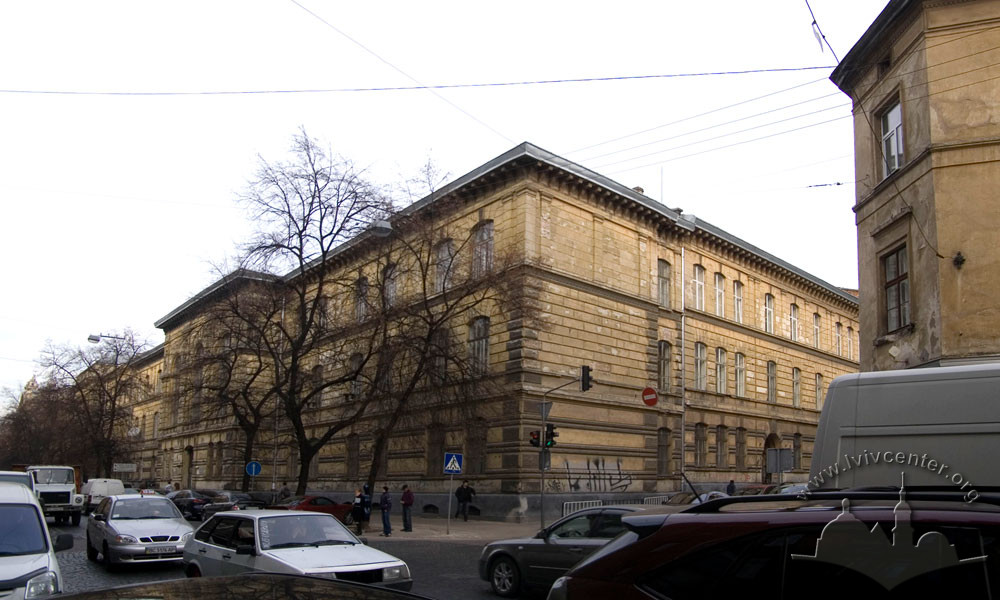
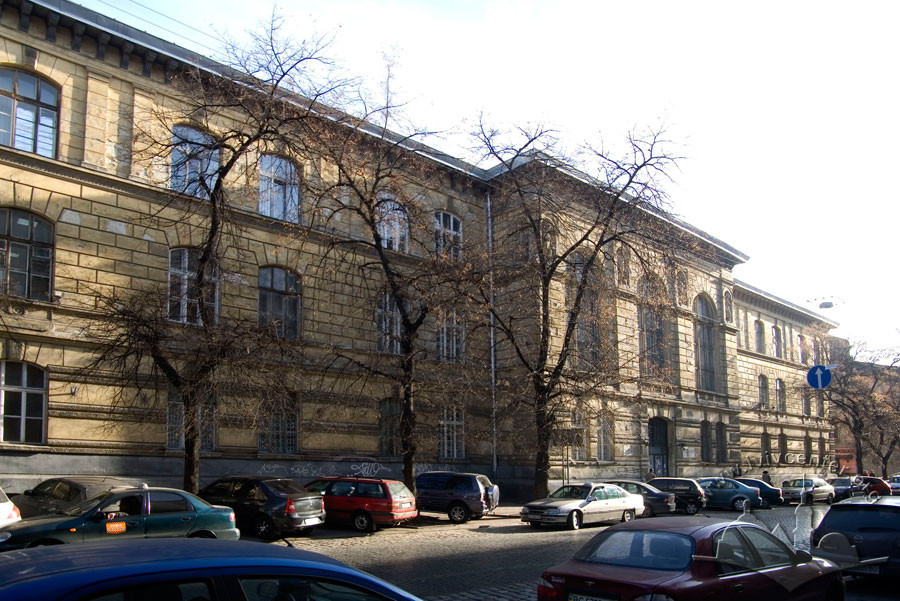
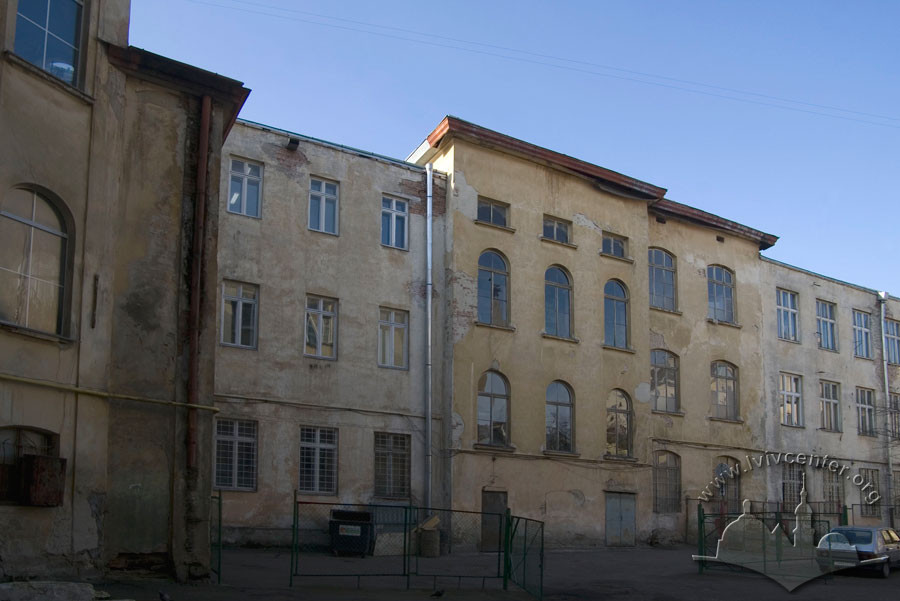
The building occupies a corner urban site, at the intersection of Kniazia Romana (which its principal elevation faces) and Shukhevycha streets (side façade). The building is three stories tall, constructed of brick, plastered, adorned with rustication, and has an L-shaped floor plan.
The principal elevation is symmetrical. The axis of symmetry is emphasized by the prominent projection of a central avant-corps articulated by pilasters, featuring three large arched windows of the assembly hall. Within the niches beneath the cornice, full-length sculptural portraits of figures of Polish culture are placed (crafted by sculptor Tadeusz Barącz). The façade is finished with a full entablature.
The internal layout is of a corridor type, with double-loaded rooms. Within the interior complex, the largest space is the assembly hall, featuring a coffered ceiling and molded wall decoration. Marble was utilized in the design of the vestibule.
People
Tadeusz Barącz –– sculptor and painter. The full-length sculptural portraits of Polish cultural figures placed in the niches beneath the cornice were crafted by Barącz.
Stefan Grabiński –– polish fantasy and horror writer, creator of the famous cycle of railway short stories The Motion Demon (Pol. Demon ruchu). He was the author of an innovative concept of literary fantasy termed metaphysic fiction. Stefan Grabiński taught at this gymnasium.
Organizations
-

Provincial School Board of Galicia
An institution supervising primary, secondary, and vocational education in the crown land. The Board was headed by the governor of Galicia or his appointed deputy and operated from 1868 to 1921.
Read more