Vul. Halytska, 15 – residential building ID: 2329
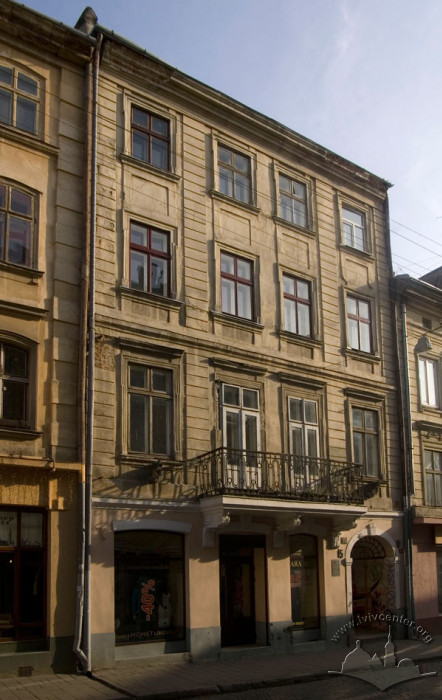
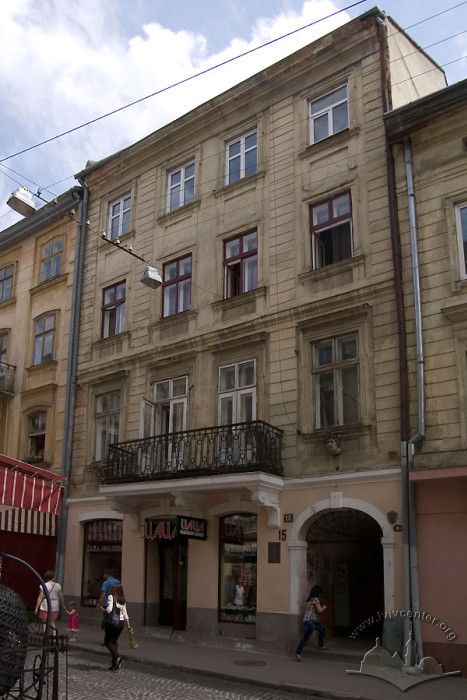
The Baroque townhouse (old conscription No. 279, new No. 280) at vul. Halytska 15 was built in 1789 by Stefan Zavalkevych, a Ukrainian doctor of both laws and an apostolic scribe. It was erected on the foundations of an earlier Gothic townhouse. The building has survived to the present day practically unchanged, retaining the stylistic purity of its era's architecture, with the exception of minor modifications to the ground-floor spaces to accommodate retail use. By Resolution No. 442 of the Council of Ministers of the Ukrainian SSR, dated September 6, 1979, the townhouse was added to the National Register of Monuments under protection No. 1285.
Story
Sixteenth century — construction of a two-story townhouse.
1786–1789 — construction of a four-story townhouse in the Late Baroque style on the site of the previous building, having its cellars with Gothic portals preserved.
1870s — the shingle roof of the townhouse was replaced with a tin one.
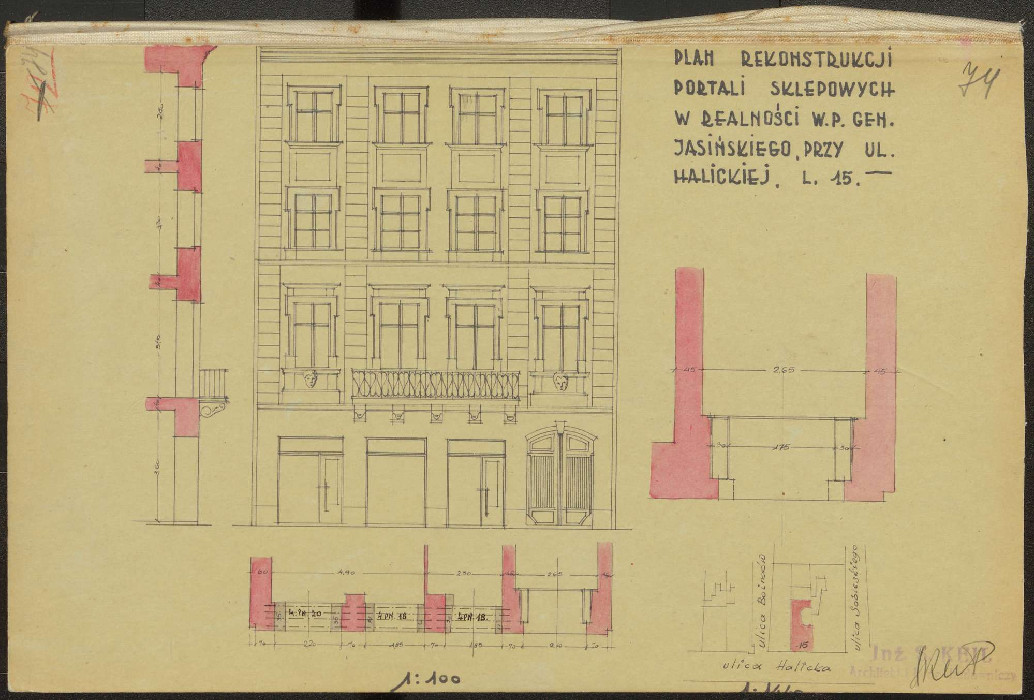
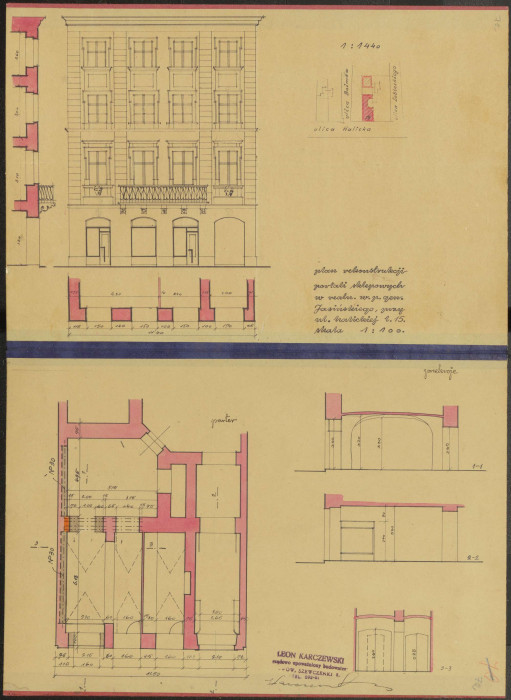
1936 — reconstruction of the storefront windows (architect — Solomon Keil).
1937 — installation of openwork wrought-iron grilles in the carriage gateway.
The townhouse (old conscription No. 279, new No. 280) was built in 1789 on the site of an earlier two-story building, having its cellars with Gothic portals preserved. Two historical names became attached to the property: Sponer and Obrocki. In 1639, the sculptor Melchior Erlemberg lived in the Sponer townhouse. Later, from the second half of the seventeenth century until the early eighteenth century, it was home to the Lviv assessor Mateusz Obrocki. Two members of this family — brothers Ivan and Mikołaj Obrocki — were prominent sculptors in Lviv. By the second half of the eighteenth century, the old townhouse had fallen into complete ruin and frequently changed owners. In 1777, the property passed from Piotr Łoś, the deputy pantler of Zhydachiv, to a Ukrainian councilor of Lviv magistrate, Oleksandr Stazhevskyi. He, in turn, transferred the property to another Ukrainian, Stefan Zavalkevych, who was a doctor of both laws as well as an apostolic scribe. As a member of the Stauropegion Institute, Zavalkevych also carried out the duties of an administrator. The Zavalkevych couple was later immortalized in portraits painted by the artist Ostap Biliavskyi.
Between 1786 and 1789, Stefan Zavalkevych dismantled the two-story ruin and constructed a new four-story townhouse upon its original foundations and cellars. In 1805, the property was registered to Anna Onyshkevych (née Stazhevska). Under a sales contract dated July 20, 1805, Anna Onyshkevych, along with Andriy Stazhevskyi and Stefan Zavalkevych, sold the real estate to Franciszek Ksawery Ilsinger for 120,000 zł. By 1818, it was owned by Teofil Pentener.
During the 1870s, the building's shingle roof was replaced with tin. The townhouse has survived to the present day virtually unchanged, retaining the architectural purity of its era, with the exception of minor modifications to the ground-floor spaces for commercial use. The storefront windows were reconstructed in 1936 following a design by architect Solomon Keil, and in 1937, the entrance gateway was fitted with openwork wrought-iron grilles, a fragment of which remains in the upper section.
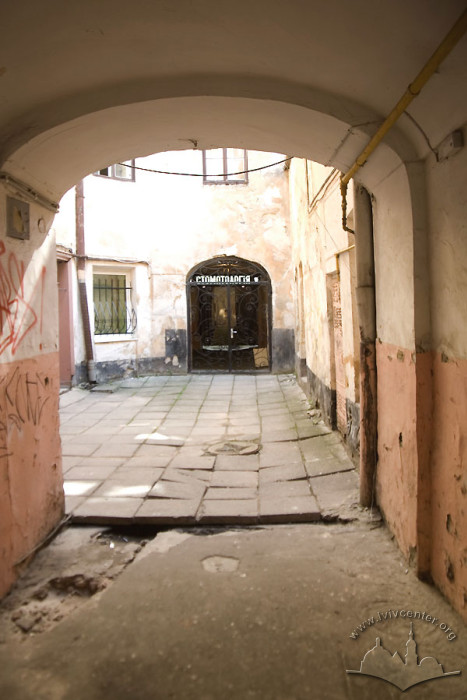
In the interwar period, the ground floor housed Handelman's clothing store and Krach's shoe store. During the Soviet era, it became home to the "Kinofotoamator" shop. As of 2014, the ground floor of the main building houses the "Tsatsa" clothing boutique, while the ground floor of the middle wing contains a dental office accessible through the main gateway.
Architecture
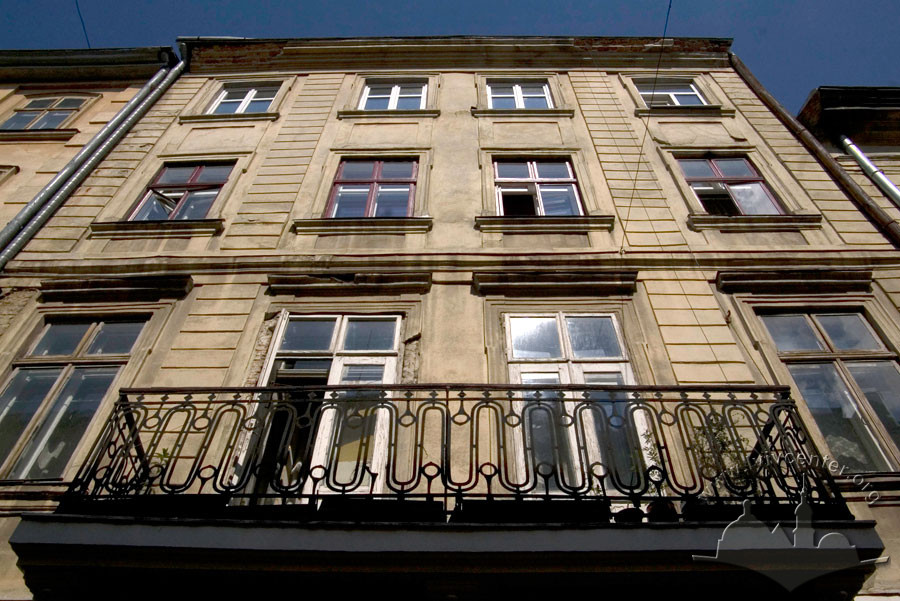
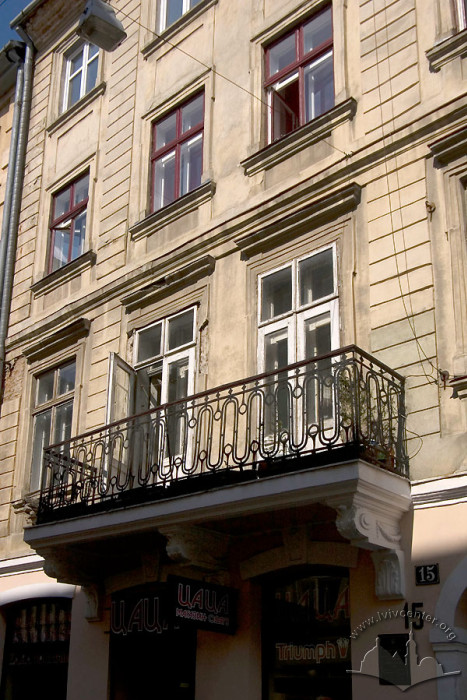
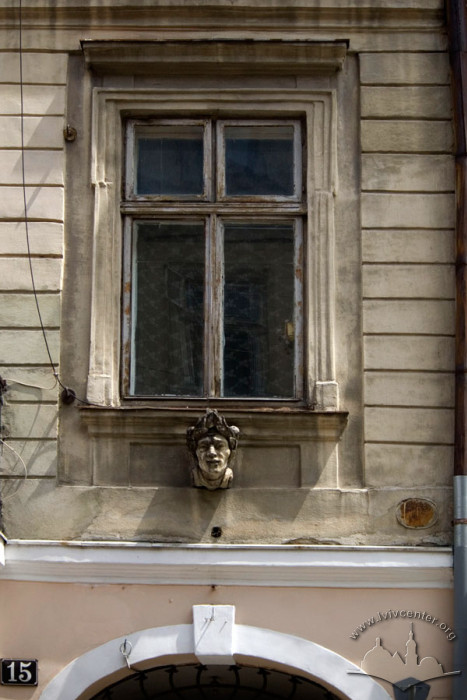
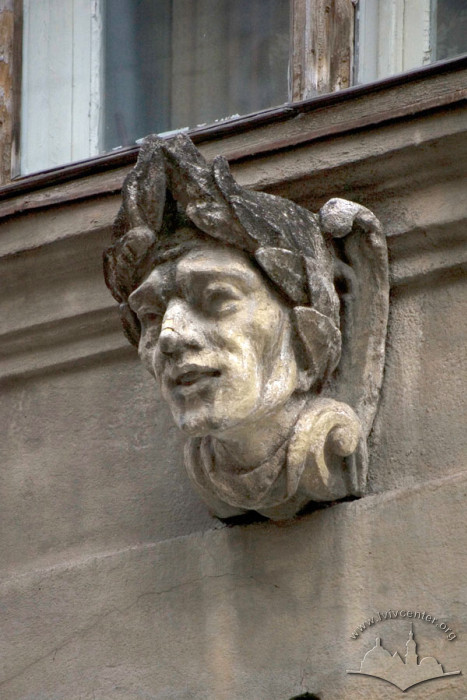
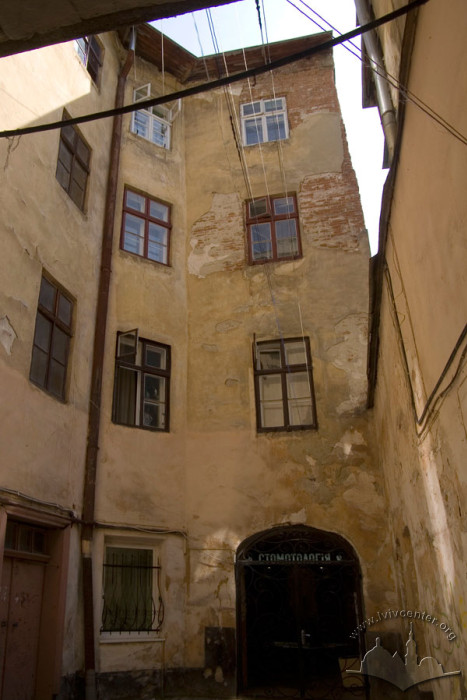
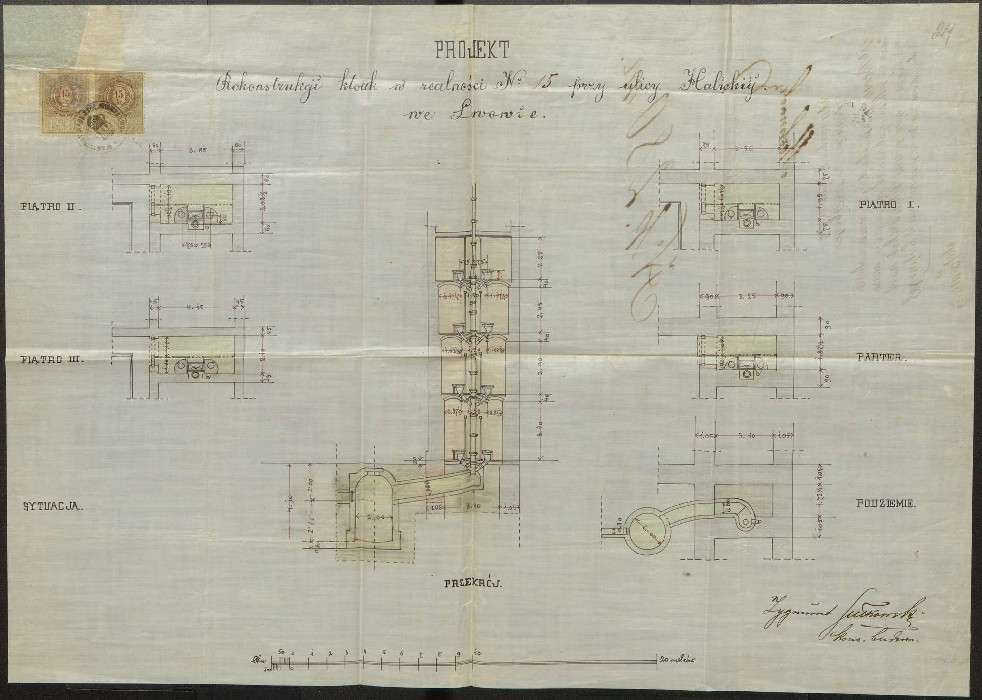
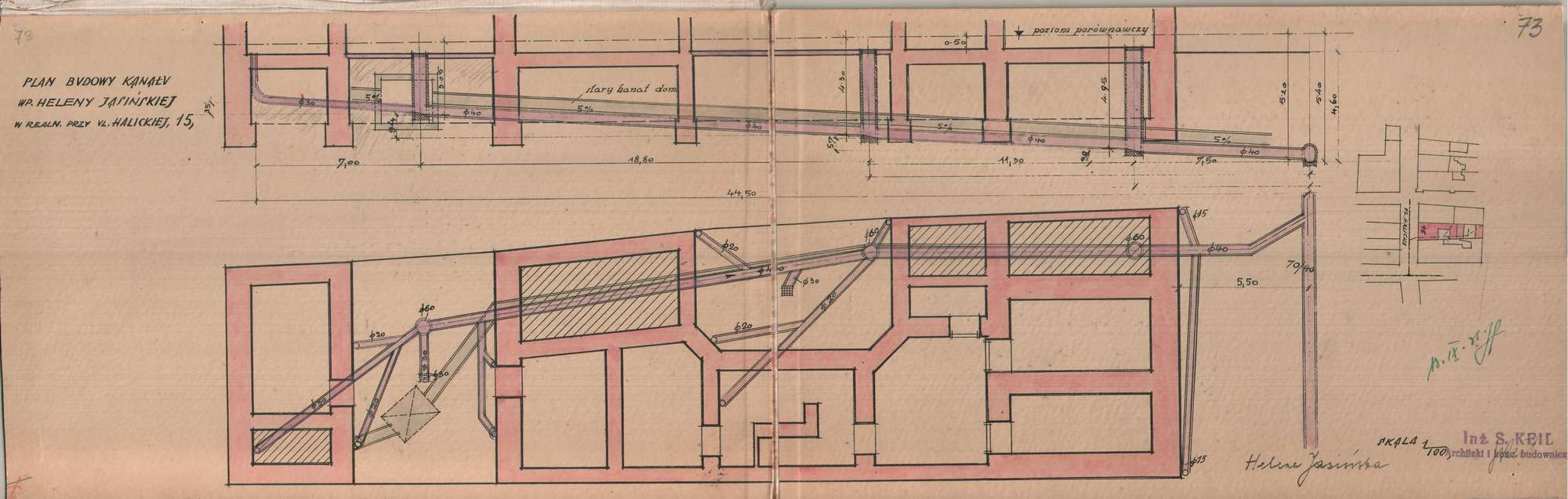
The building is situated within a downtown block bounded by Halytska, Staroievreiska, Serbska, and Brativ Rohatyntsiv streets. It is a four-story, four-axis structure featuring a semi-circular arched entrance gateway offset to the right. Constructed from stone and brick on stone foundations, the design incorporates white stone elements and has a deep, elongated floor plan. The complex consists of the main townhouse, an L-shaped wing, and a rear wing; together, these form two enclosed "well-courts" linked by a connecting passageway. The main façade is detailed with rusticated lesenes and crowned by a profiled brick cornice, with horizontal string courses accentuating the first and second stories. The artistic centerpiece of the façade is a balcony featuring a wrought-iron railing, supported by three molded brackets (reconstructed in 2005 following a collapse on June 4, 1995). Sculptural accents on the otherwise understated façade include symmetrically placed, three-dimensional male heads positioned beneath the second-story windows on either side of the balcony. The windows themselves feature rectangular lintels and are framed by profiled portals with linear pediments.
The townhouse has preserved its original floor plan. A stairwell with wooden steps and a vaulted ceiling leads to the fourth floor. The cellars are constructed of stone and brick and covered by lunette vaults; original white-stone Gothic portals remain intact. The ground-floor ceilings also feature lunette vaults with transverse arches. The passageways in the main building and the middle wing are covered by three-centered brick vaults supported by transverse arches. The façades of the wings are plain, featuring balconies in the second courtyard. The building's roofs utilize a wooden rafter-and-beam system and are covered in sheet metal.
Ultimately, the house maintains the characteristic structure of medieval urban plot development.
People
Ostap Biliavskyi — a Ukrainian Baroque painter.
Melchior Erlemberg — a sculptor who lived in the townhouse in 1639.
Handelman — owner of a clothing store during the interwar period.
Franciszek Ksawery Ilsinger — owner of the townhouse.
Salomon Keil — an architect responsible for the 1936 reconstruction of the storefront windows.
Krach — owner of a shoe store during the interwar period.
Piotr Łoś — the deputy pantler of Zhydachiv and owner of the townhouse until 1777.
Jan Obrocki — a prominent Lviv sculptor.
Mateusz Obrocki — a Lviv assessor who resided in the townhouse from the second half of the 17th century to the early 18th century.
Mikołaj Obrocki — a prominent Lviv sculptor.
Anna Onyshkevych (née Stazhevska) — owner of the townhouse.
Teofil Pentener — owner of the townhouse.
Andriy Stazhevskyi — owner of the townhouse.
Oleksandr Stazhevskyi — a Ukrainian councilor of the Lviv magistrate and owner of the townhouse starting in 1777.
Stefan Zavalkevych — a Ukrainian doctor of both laws, an apostolic scribe, and a member of the Stauropegion Institute.
Sources
- Державний архів Львівської області (ДАЛО) 2/1/211. Справа перейменована: ДАЛО 2/1/1981. URL: https://e.archivelviv.gov.ua/file-viewer/228760#file-834106
- Борис Мельник, Ніна Шестакова, "Кам'яниці Львівського середмістя", Наукові записки. Львівський історичний музей, Випуск XII, (Львів: Новий час, 2008), 133-158.
- Володимир Вуйцик, Leopolitana II, (Львів: Класика, 2012).
- Ілько Лемко, В. Михалик, Г. Бегляров, 1234 вулиці Львова (1939–2009) (Львів: Апріорі, 2009).
- Памятники градостроительства и архитектуры УССР, Т. 3 (Киев: "Будівельник", 1985), 24-25.