Vul. Halytska, 12 – residential building ID: 2326
Throughout its history, the townhouse has been known by several different names: the Aberman, Eustachiuż, Schneider, and Benzdorf Townhouse. The current townhouse at vul. Halytska 12 (conscription no. 20 old, no. 16 new) was built by Franciszek Nowakowski in 1792. It was constructed in the Late Baroque style — the so-called Nutzbau — on the site of an earlier building, preserving its original foundations and cellars.
Story
Sixteenth century — construction of a three-story townhouse.
1792 — Franciszek Nowakowski built the portion of the townhouse facing vul. Brativ Rohatyntsiv (constructed by builders Johann Heltzel and Jozef Zemler).
1801 — restoration of the townhouse.
Nineteenth century — reconstruction of the three-story townhouse, including a one-story courtyard wing.
1872 — reconstruction of the staircase and roof (architect — Johan Miechl).
1874 — addition of a fourth story and reconfiguration of the interior layout (architect — Emmanuel Gall).
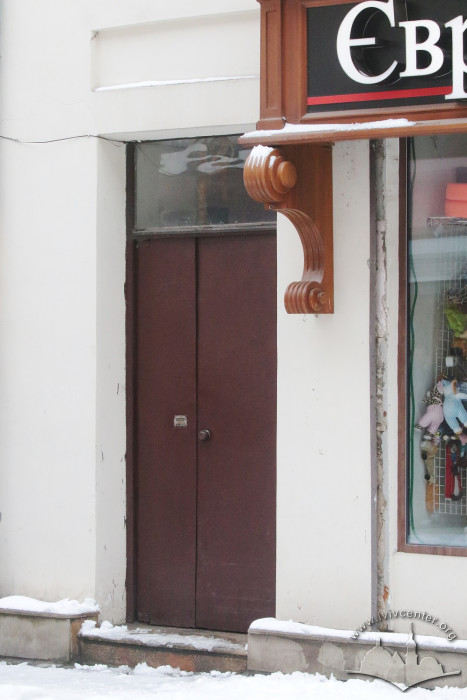
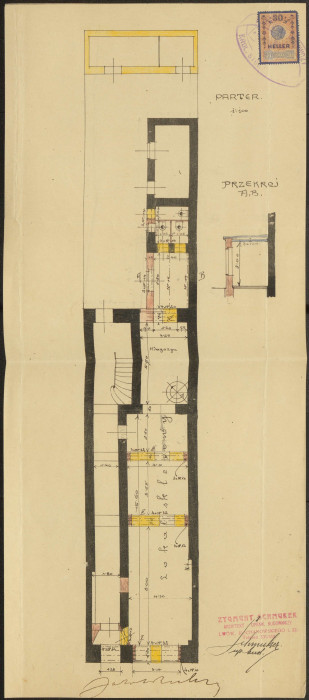
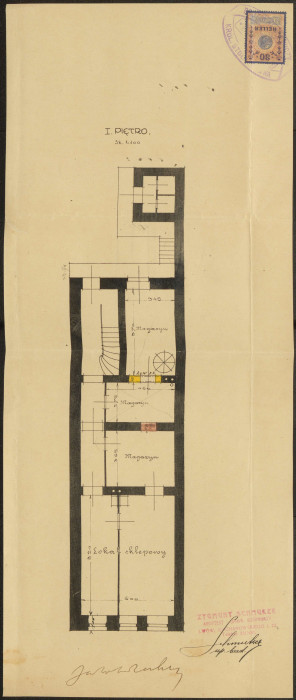
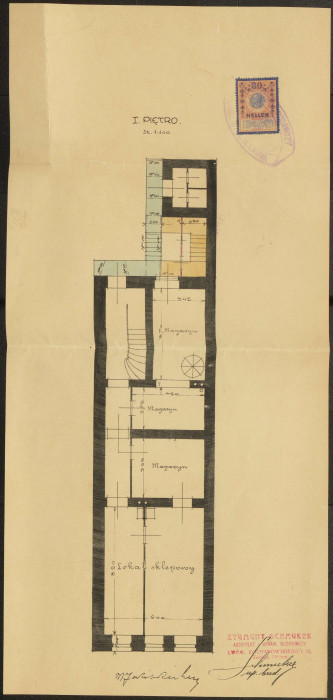
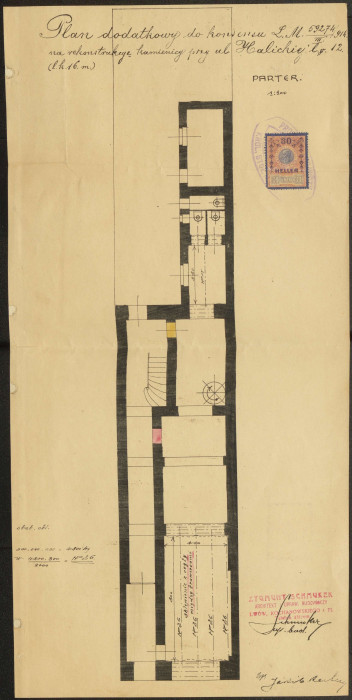
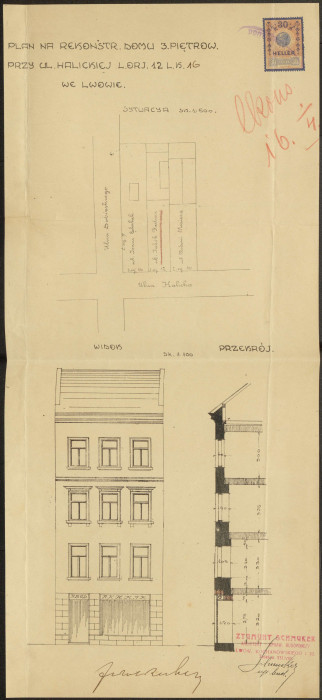
1914 — renovation involving modifications to the storefront displays, the entrance, and the main façade.
The townhouse (conscription no. 20 old, no. 16 new) once stood by the Halytska Gate. Over time, it was recorded under various names: the Aberman, Schneider, and Benzdorf Townhouse. From 1647 to 1662, it was owned by a pharmacist named Błażej; later (1686–1703), it belonged to Eustachiuż Aberman, before passing to a saddler named Benzdorf. In the first half of the eighteenth century, Salomon Benzdorf's townhouse was owned by the tailor Jakób Maier, who was known as Schneider. His daughter, Anna, was married to the saddler Jerzy Schneider. After her husband's death, Anna remarried Salomon Benzdorf, a master saddler, after whom the building became known as the Benzdorf Townhouse. As a craftsman, Benzdorf represented the interests of his guild in the city magistrate as a member of the "Council of Forty Men" (Pol. Kolegium czterdziestu mężów).
A portion of the townhouse — long known as the Aberman Townhouse — was co-owned by Salomon Benzdorf and the Lviv painter Stanisław Otosielski, along with his wife, Katarzyna (née Jachimowicz). The artist Otosielski was a student and assistant to the renowned Ukrainian painter Bazyli Petranowicz; under Petranowicz's direction, he worked on the iconostasis for the Basilian Monastery in Buchach. In 1765, he performed decorative painting at the Discalced Carmelite Monastery in Terebovlia, which included the Holy Sepulcher and twelve portraits for the monastery gallery.
In 1779, a portion of Jakób Benzdorf's townhouse passed to Franciszek Nowakowski, a furrier and member of the "Council of Forty Men"; by June 19, 1783, Nowakowski had purchased the property in its entirety. The Lviv surgeon Franciszek Hryglewicz resided there until 1787. By the end of the century, the building had fallen into a state of disrepair. On October 23, 1792, master masons Johann Heltzel and Jozef Zemler conducted an appraisal of Franciszek Nowakowski's newly constructed townhouse, valuing the new construction at 3,500 florins. However, this project did not involve the main street-facing building, but rather a section located on the street perpendicular to Halytska — modern-day vul. Brativ Rohatyntsiv.
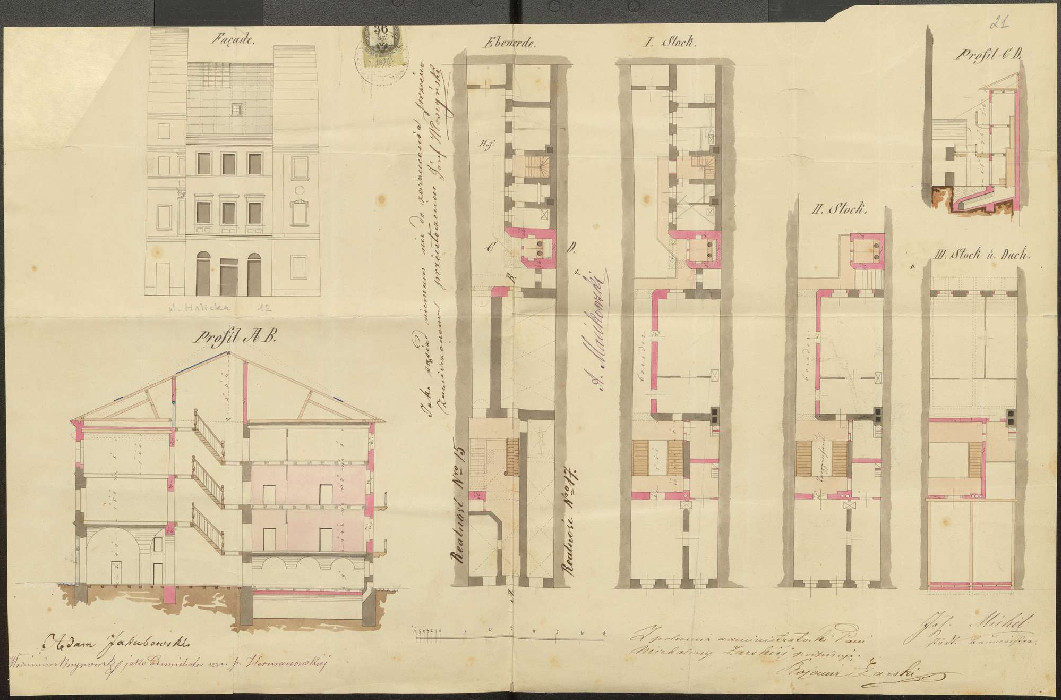
Throughout the nineteenth century, several reconstruction projects took place at the townhouse. At the time, it was a three-story building with a ground floor wing. In 1872, the staircase and roof were reconstructed (аrchitect — Johann Miechl). Two years later, in 1874, a fourth story was added. The owner at the time, Adam Jakubowski, received the construction permit on May 1, 1874, and the work was completed by October 22 of the same year. During this project, the interior layout was reconfigured (architect — Emanuel Gall). The next major renovation occurred in 1914, involving modifications to the storefront displays, the entrance, and the main façade.
In the interwar period, the building housed the Pezen corset factory, Goldschein's jewelry store, and Szokalska's clothing shop. In 1927, it also served as the headquarters for the Union of Ukrainian Merchants, led by Chairman Yevhen Martynets and his deputy, Roman Zubyk.
During the Soviet times, the ground floor housed a secondhand commission shop and a rubberized apparel store.
Architecture
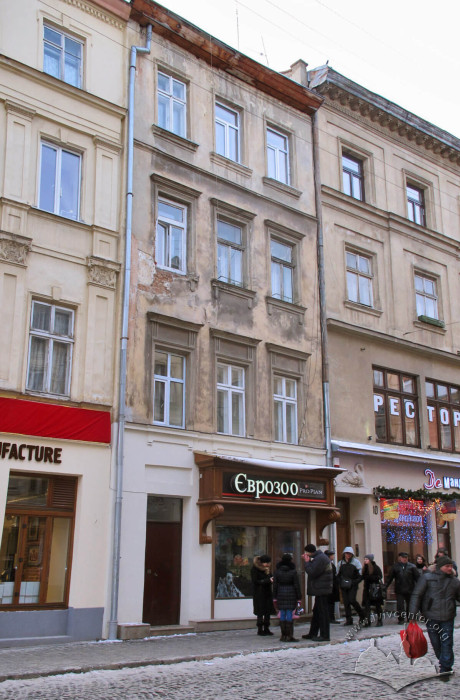
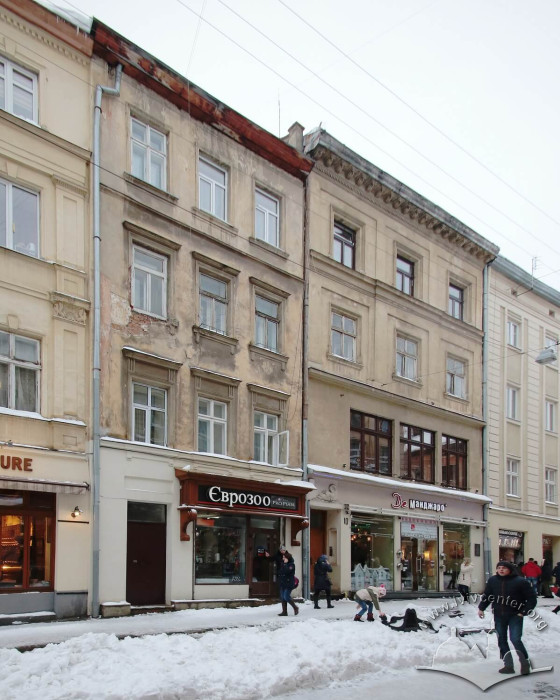
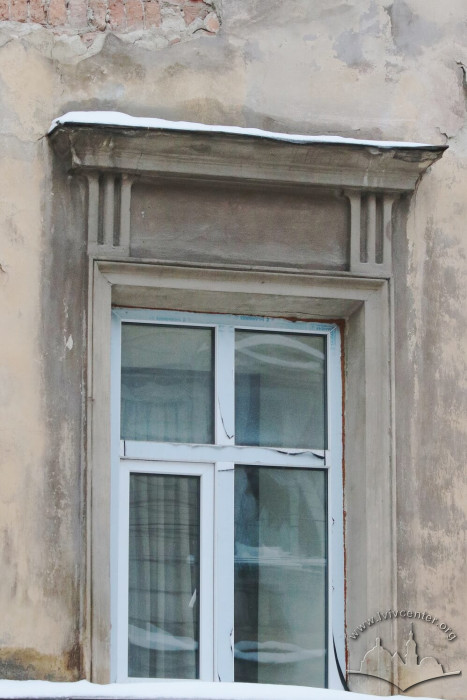
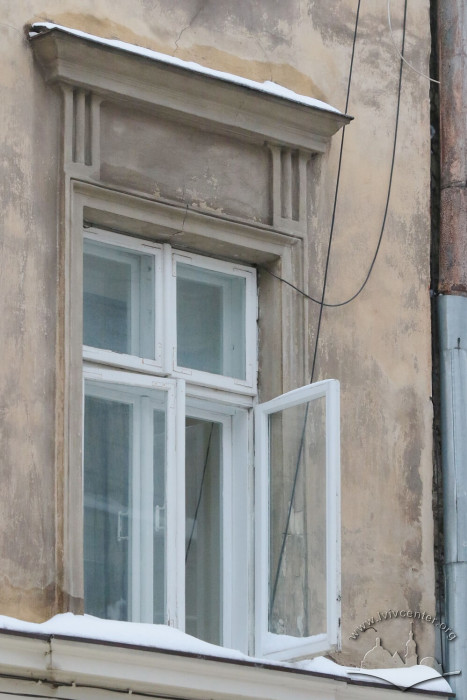
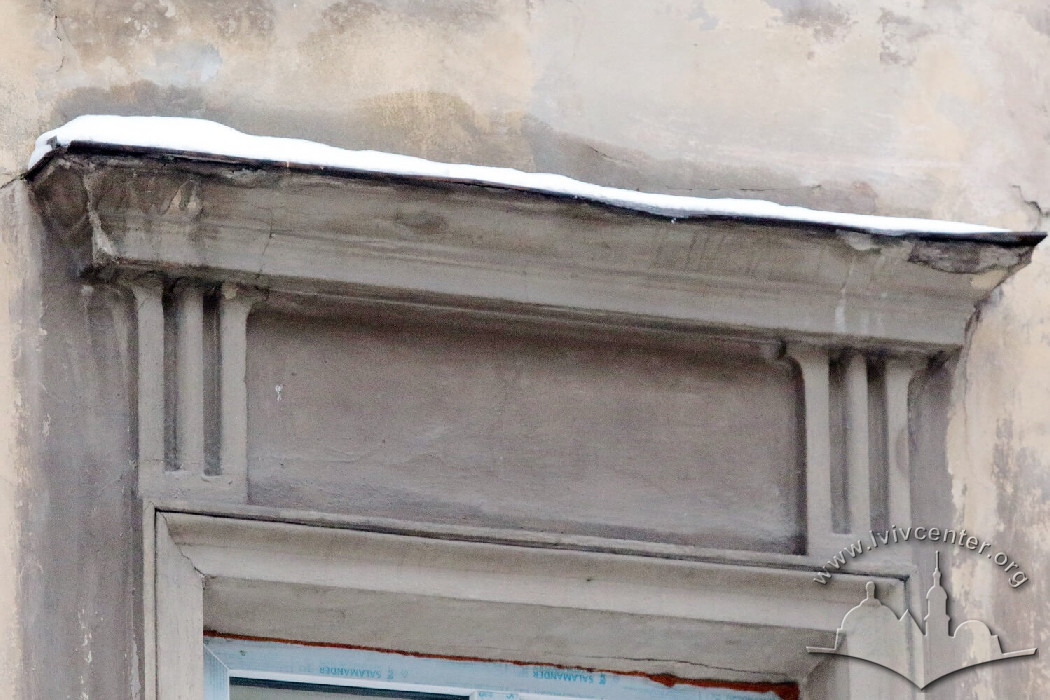
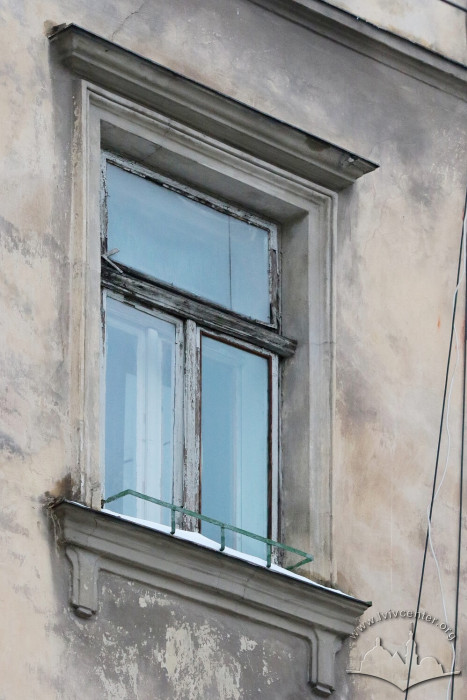
The building is situated within a block bounded by Halytska, Staroievreiska, and Brativ Rohatyntsiv streets, and Mitskevycha Square. It was constructed in the Baroque style. This four-story, three-axis building features a stringcourse that highlights the fourth floor. The façade is architecturally understated and lacks vertical divisions; its only ornamentation consists of profiled window trimmings on the second and third floors. The cellars are vaulted, while the upper floors feature flat ceilings.
People
Adam Jakubowski — owner of the townhouse as of 1874.
Anna Majer — wife of Jerzy Schneider, and later of Salomon Benzdorf.
Błażej — a pharmacist who owned the townhouse from 1647 to 1662.
Bazyli Petranowicz — a renowned Ukrainian painter.
Goldschein — owner of a jewelry store during the interwar period.
Emmanuel Gall — architect responsible for the 1914 restoration of the main façade and storefronts.
Yevhen Martynets — chairman of the Union of Ukrainian Merchants.
Eustachiusz Aberman — owner of the townhouse from 1686 to 1703.
Jerzy Schneider — Lviv burgher and saddler; owner of the townhouse.
Johann Heltzel — master mason.
Johan Miechl — architect who designed the 1872 reconstruction of the staircase and roof.
Jozef Zemler — master mason.
Katarzyna Jachimowicz — wife of the painter Stanisław Otosielski.
Pezen — owner of a corset manufacturing workshop during the interwar period.
Roman Zubyk — deputy Chairman of the Union of Ukrainian Merchants.
Salomon Benzdorf — saddler and member of the "Council of Forty Men" (Pol. Kolegium czterdziestu mężów); owner of the townhouse.
Stanisław Otosielski — Lviv painter.
Teodor Polański — Ukrainian bell-founder.
Franciszek Hryglewicz — Lviv surgeon who resided in the townhouse until 1787.
Franciszek Nowakowski — furrier and member of the "Council of Forty Men" (Pol. Kolegium czterdziestu mężów); owner of the townhouse starting in 1783.
Szokalska — owner of a clothing shop during the interwar period.
Jakób Benzdorf — owner of the townhouse.
Jakób Maier — tailor and owner of the townhouse.
Sources
- Державний архів Львівської області (ДАЛО) 2/1/2109. Справа перейменована: ДАЛО 2/1/1978 URL: https://e.archivelviv.gov.ua/file-viewer/228757#file-835965
- ЛНБ ім. В. Стефаника НАН України, відділ рукописів, ф. Баворовських, спр. 619/11, арк. 329, 331.
- Księga adresowa król. stoł. miasta Lwowa (Lwów, 1913).
- Борис Мельник, Ніна Шестакова, "Кам'яниці Львівського середмістя", Наукові записки. Львівський історичний музей, Випуск XII, (Львів: Новий час, 2008), 133-158.
- Володимир Вуйцик, Leopolitana II, (Львів: Класика, 2012).
- Ілько Лемко, В. Михалик, Г. Бегляров, 1234 вулиці Львова (1939–2009), (Львів, 2009).