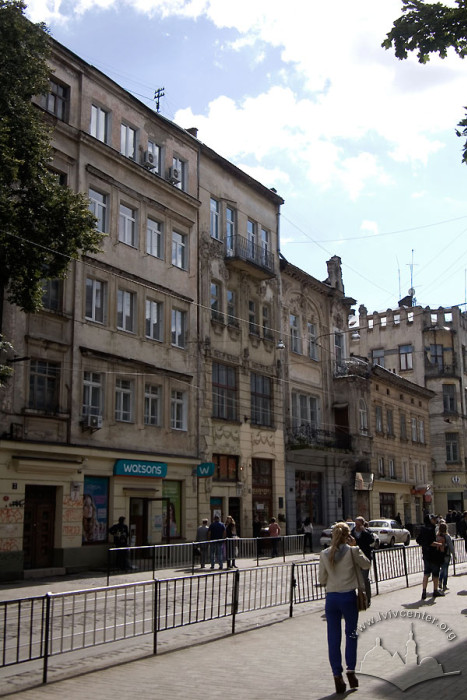
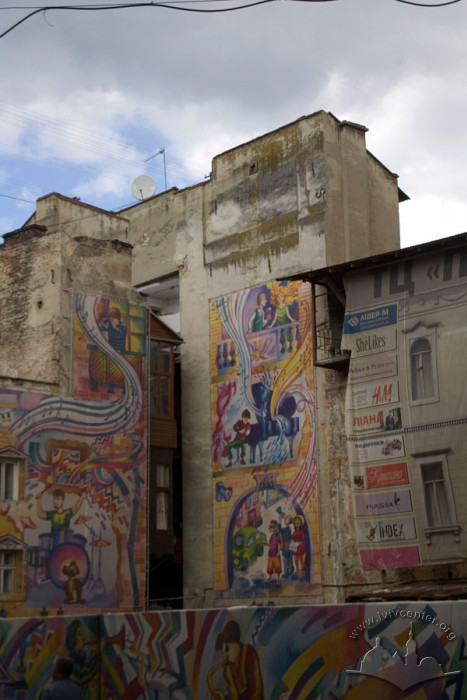
Vul. Petra Doroshenka, 9 – residential building ID: 866
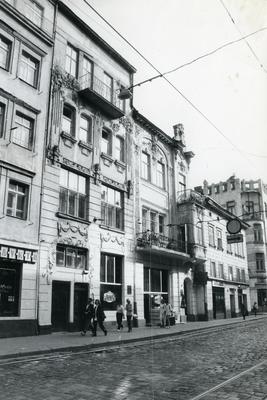
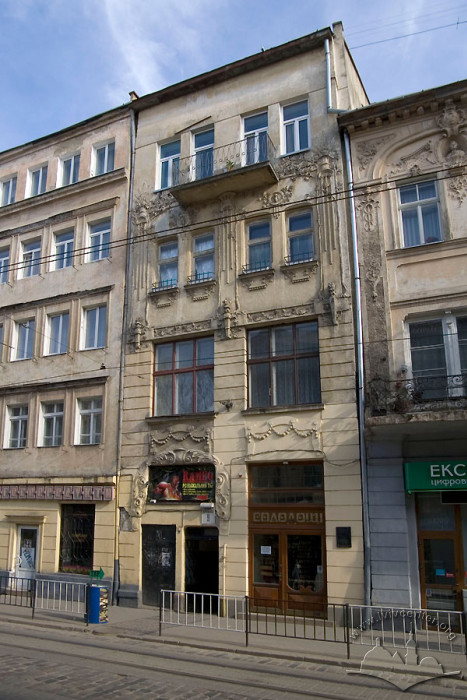
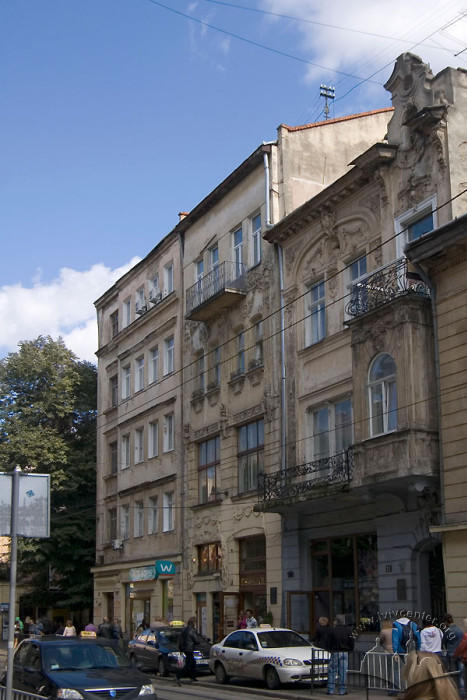
One of the first Secessionist tenement houses in Lviv, this building was constructed in 1899–1900 according to a design by either Alfred Zachariewicz or Ivan Levynskyi for Herman Bak. A third floor was later added based on a 1927 design. During the Soviet era, a famous pub called "Rubtsi po-lvivsky" operated here on the ground floor. People would visit to savor this "Lviv exoticism" — tripe soup (flyachky). It was later converted into the popular bar "Haryachi Buterbrody", which closed in the spring of 2008.
Architecture
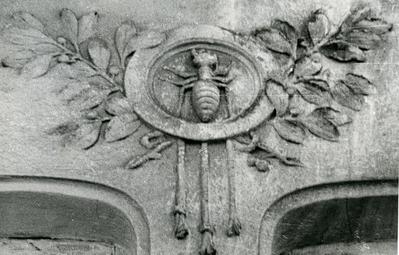
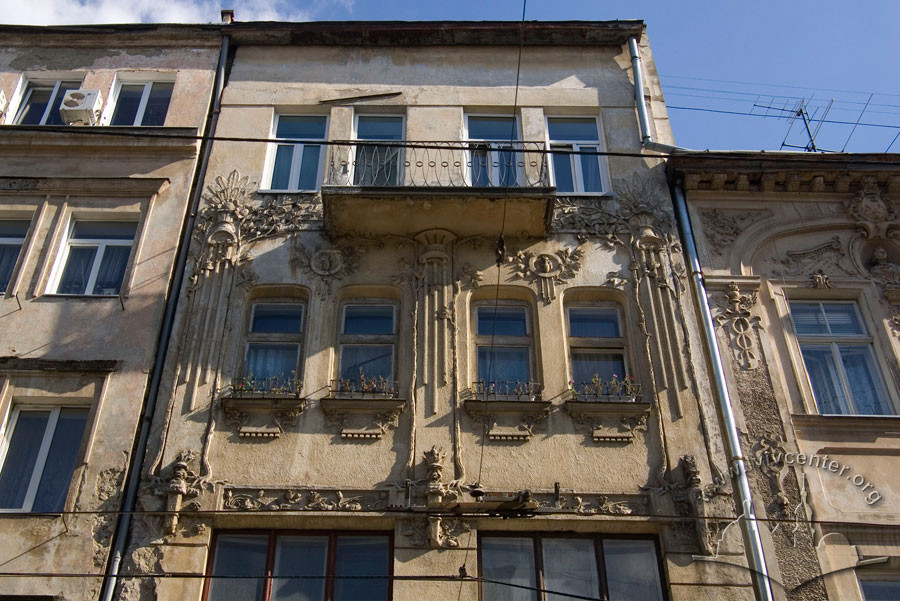
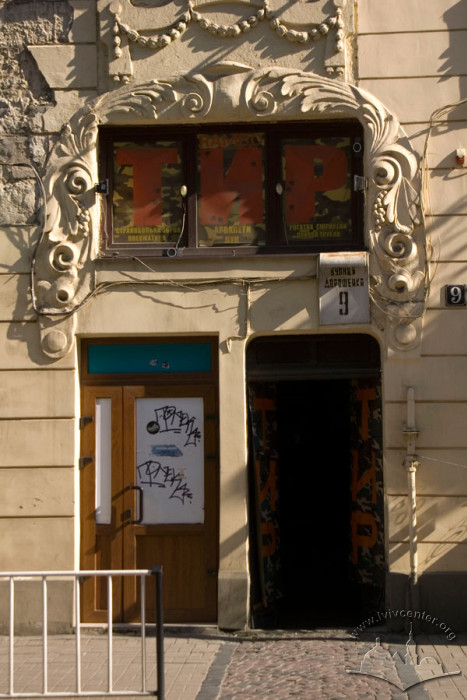
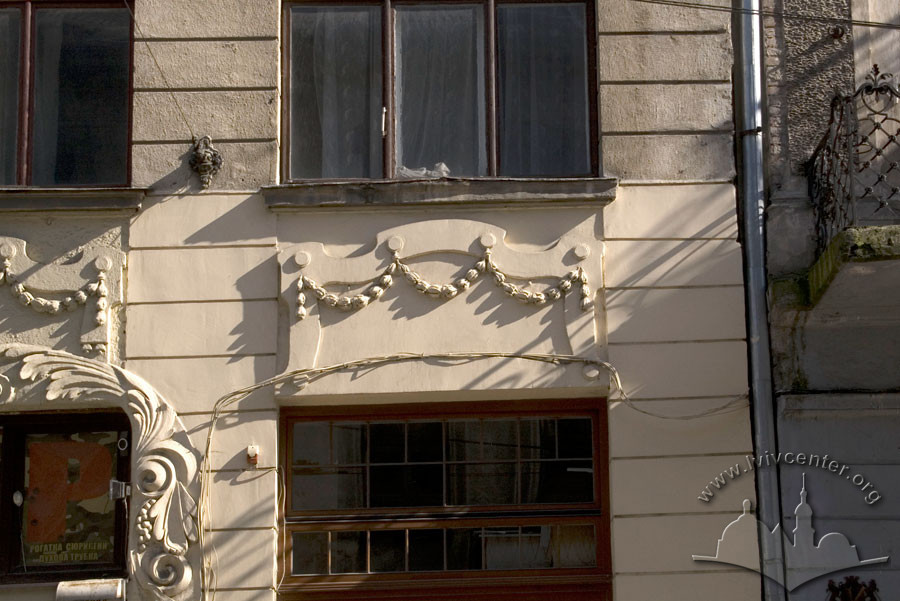
The building was constructed in the Secessionist style. It is a four-story, brick, and plastered structure with an elongated rectangular plan. The interior layout is predominantly of the enfilade type. The symmetrical composition of the principal elevation is slightly offset by an entrance portal shifted to the left. This portal features a transom window above, decorated with plasterwork floral ornaments. The first and second floors are rusticated. At the third-floor level, the façade is vertically articulated with lesenes adorned with palmettes at the top and decorative torches at the bottom. The second-floor windows are large and rectangular. The third-floor windows feature profiled trimmings that are slightly rounded at the top and crowned with decorative cartouches. Additionally, the windows of the second and third floors are embellished with decorative floral insets and garland inserts.
Related buildings and spaces
-
Vul. Petra Doroshenka
Sources
- Державний Архів Львівської Області (ДАЛО) 2/1/3728
- Львів. Туристичний путівник (Львів: Центр Європи, 1999), 180.
- Lwów. Ilustrowany przewodnik (Lwów: Centrum Europy – Wrocław: Via Nowa, 2001), 105.