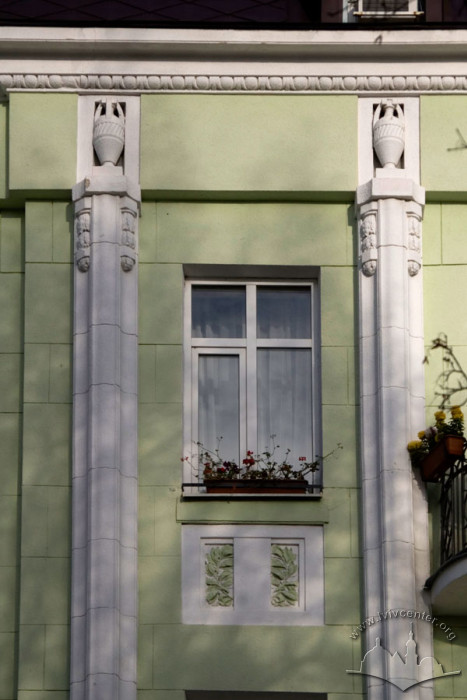
Vul. Petra Doroshenka, 77 – residential building ID: 714
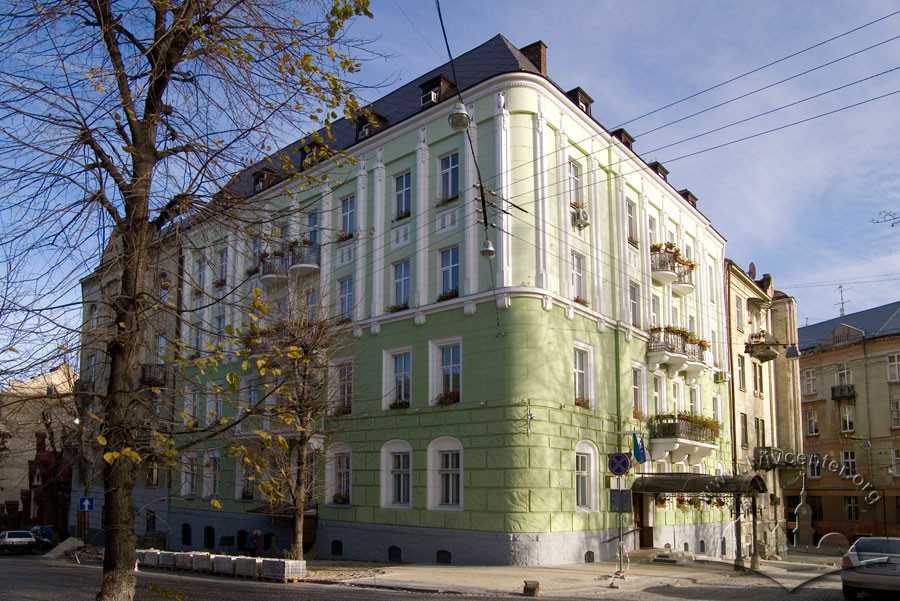
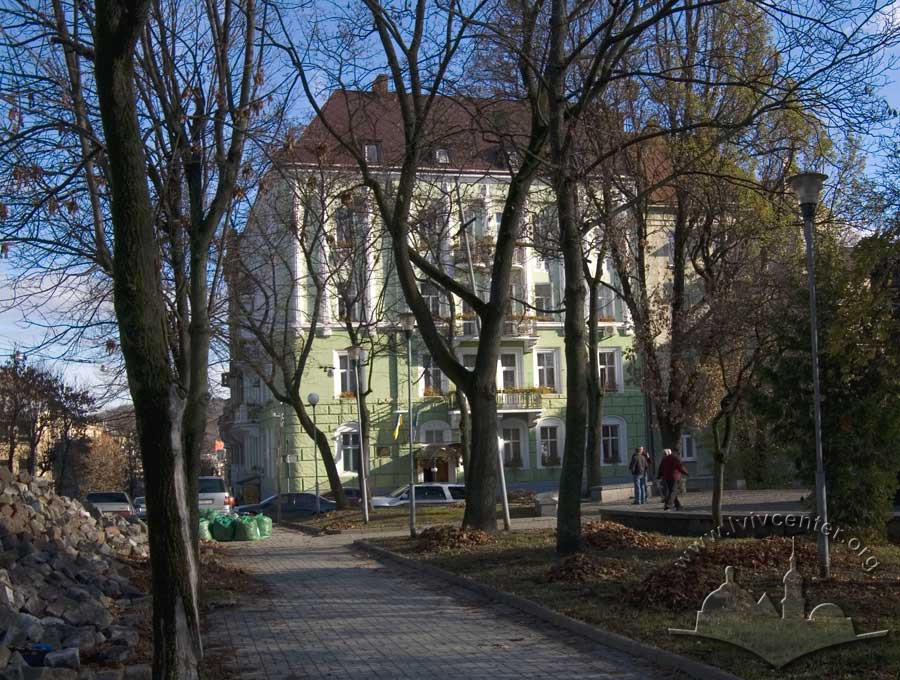
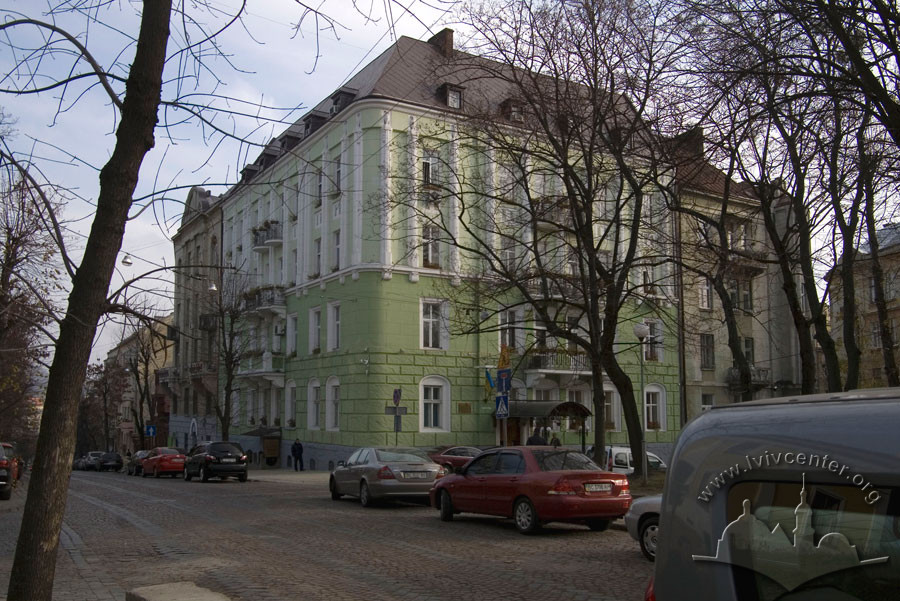
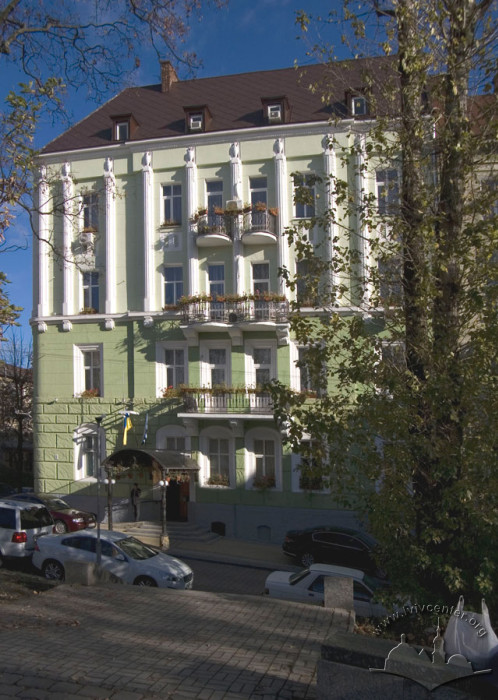
This residential building is located at the corner of vul. Doroshenka and pl. Shashkevycha. It was constructed in 1911 according to a design by architect Józef Piątkowski for A. Zalewska and S. and V. Jankowski. The renowned architect Tadeusz Obmiński (1874–1932) once lived in this building, which stands as a characteristic example of Art Nouveau architecture.
Architecture
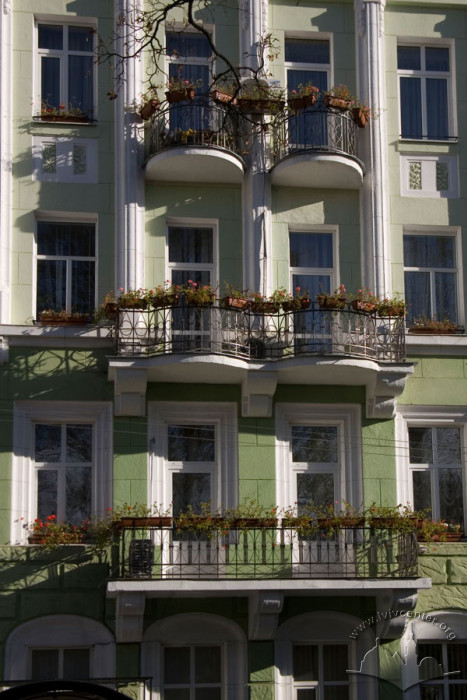
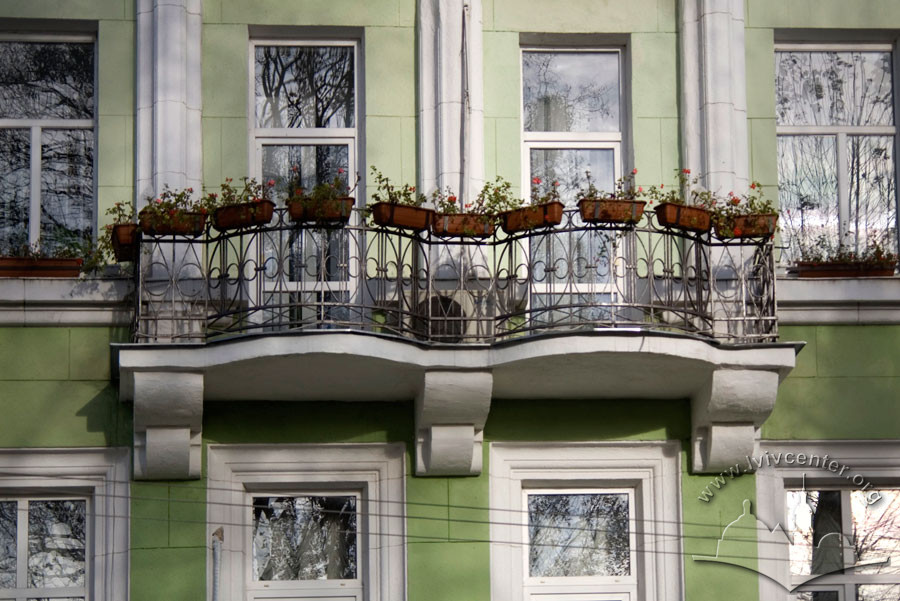
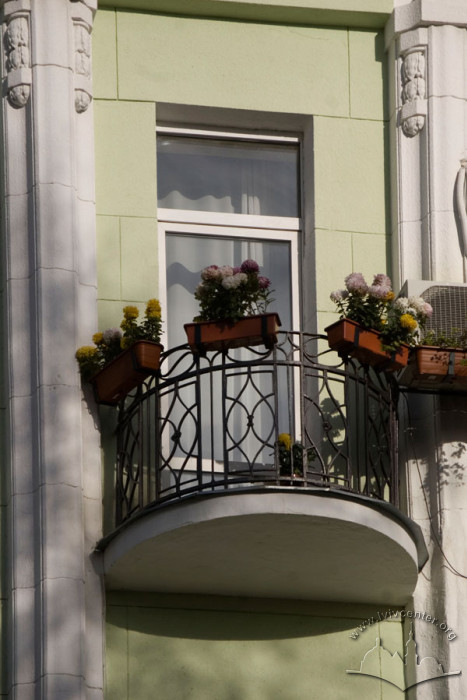
The compositional arrangement of the façades is tailored to the building's corner location. The façades feature rustication, and a profiled cornice runs between the second and third floors. The third and fourth floors are articulated by pilasters topped with decorative vases. The façade facing vul. Doroshenka is accented at the second-floor level by a rectangular balcony supported by plasterwork corbels with a concrete railing. At the third and fourth-floor levels, segmental balconies project, featuring Art Nouveau metal grilles. The entrance portal, adorned with profiled trimming, is located on the façade facing pl. Shashkevycha. The building is finished with a profiled cornice decorated with a band of egg-and-dart molding.
Rectangular, vertically elongated windows are regularly arranged across the façade planes. The first and second-floor windows feature profiled trimming, with those on the first floor including archivolts. Decorative panels with floral ornamentation are positioned beneath the fourth-floor windows. Overall, the building remains a characteristic example of Art Nouveau architecture.
Related buildings and spaces
-
Vul. Petra Doroshenka