https://lia.lvivcenter.org/en/objects/doroshenka-47/Vul. Doroshenka, 47 – residential building
Vul. Doroshenka, 47 – residential building
ID:
711
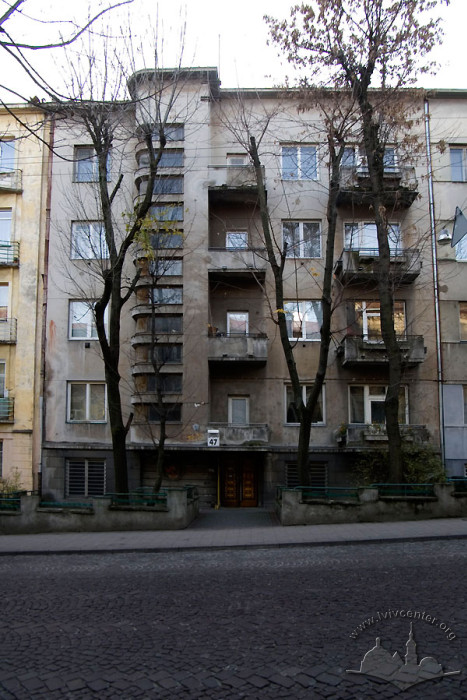
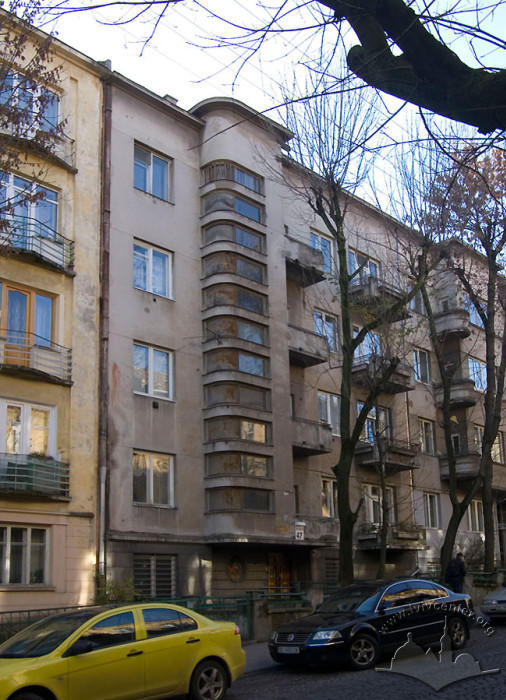
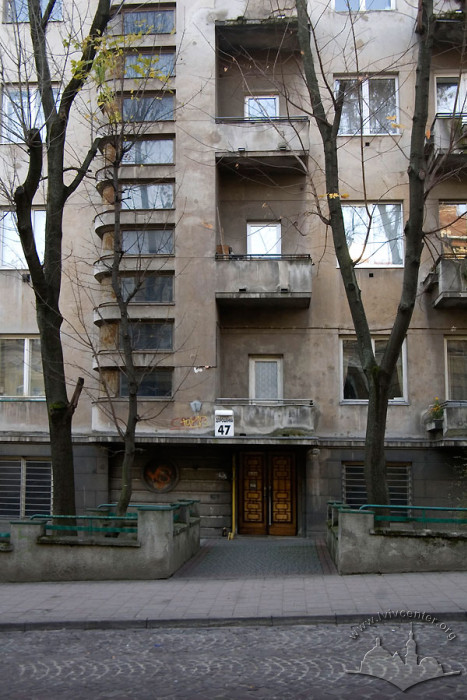
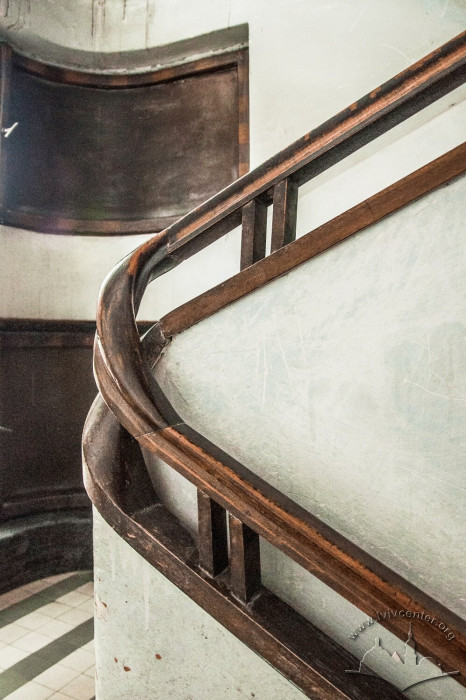
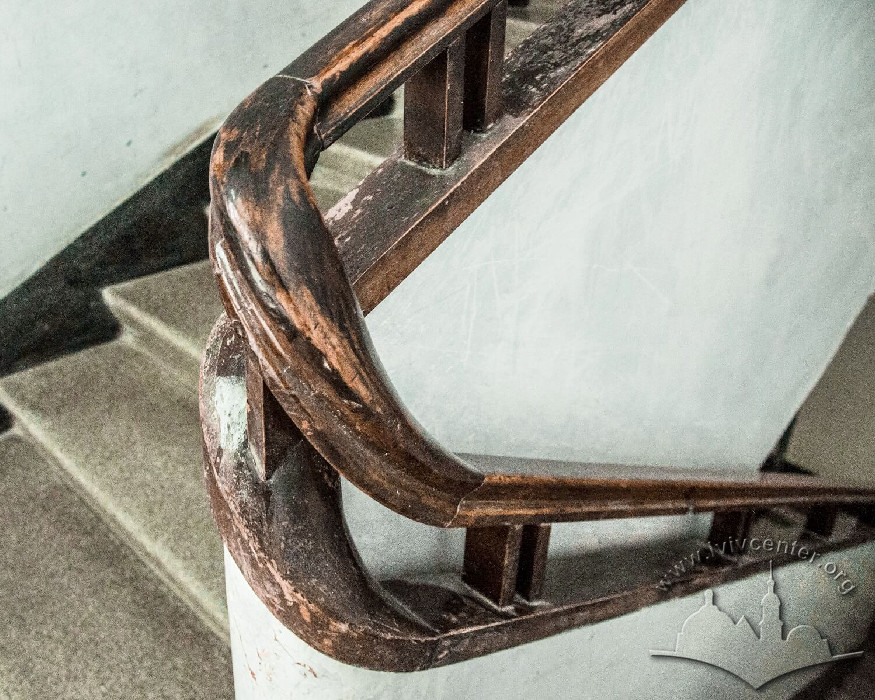
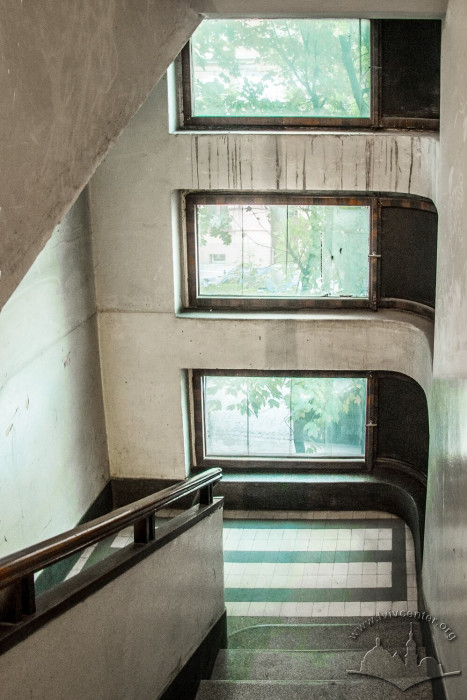
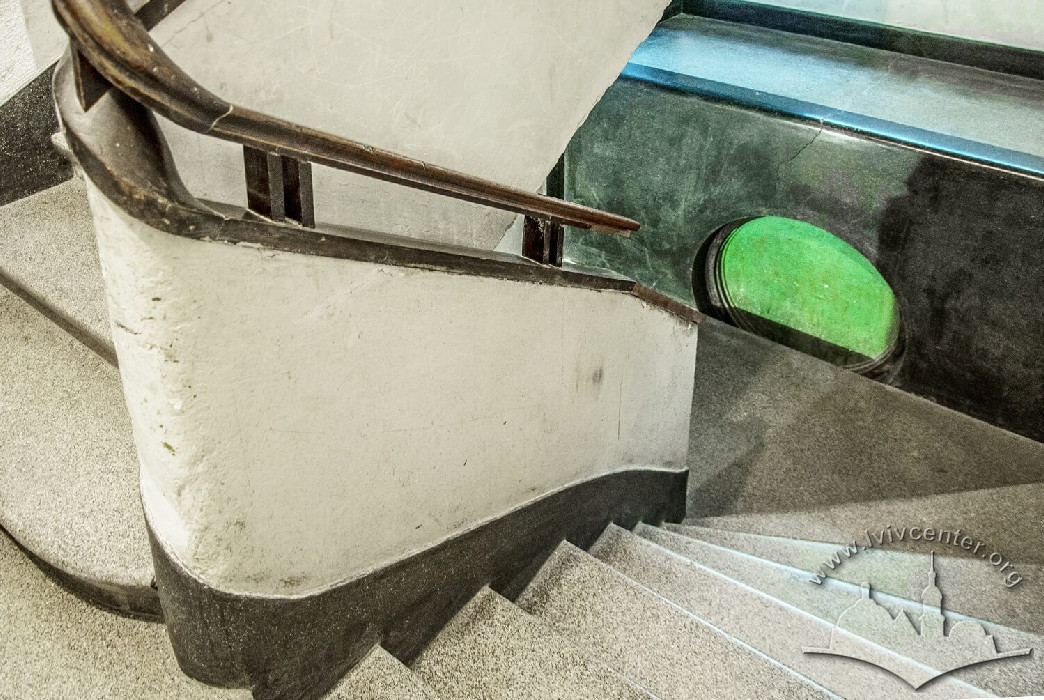
This residential building, set back from the building frontage line and situated on complex terrain, was constructed according to a 1935–1936 design by architect Henryk Sandig for Józef and Stanisław Rauch.
Architecture
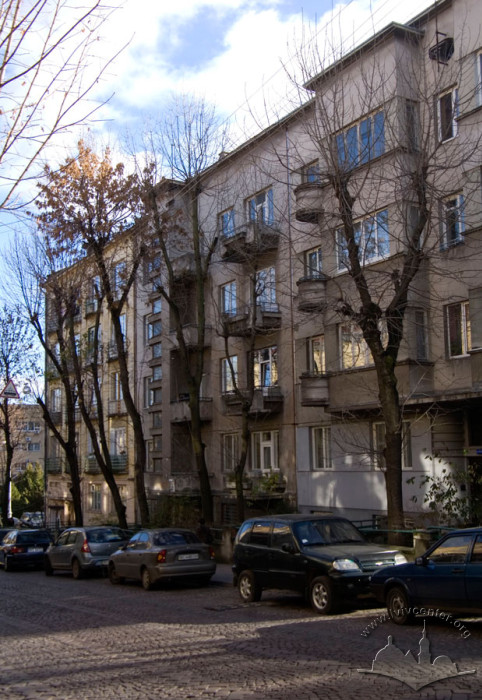
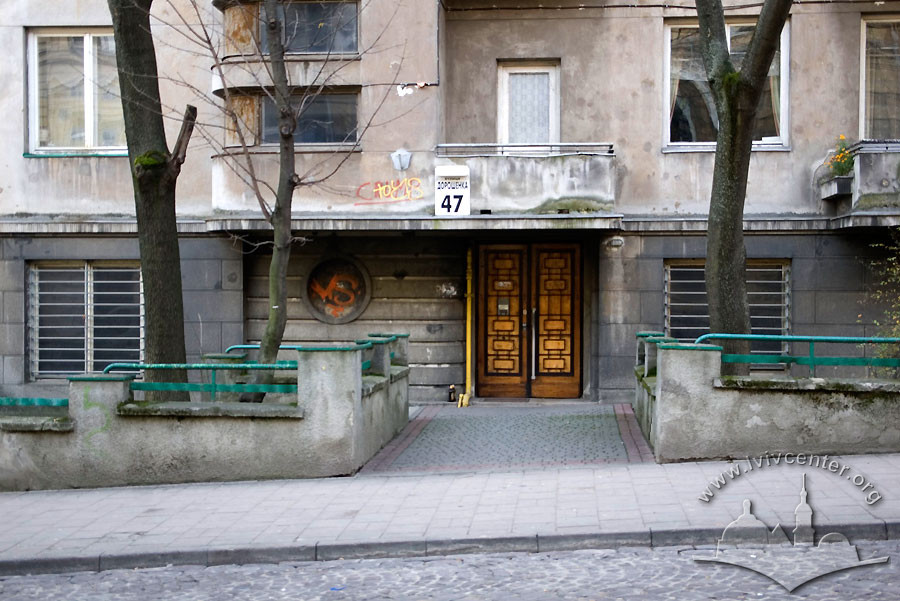
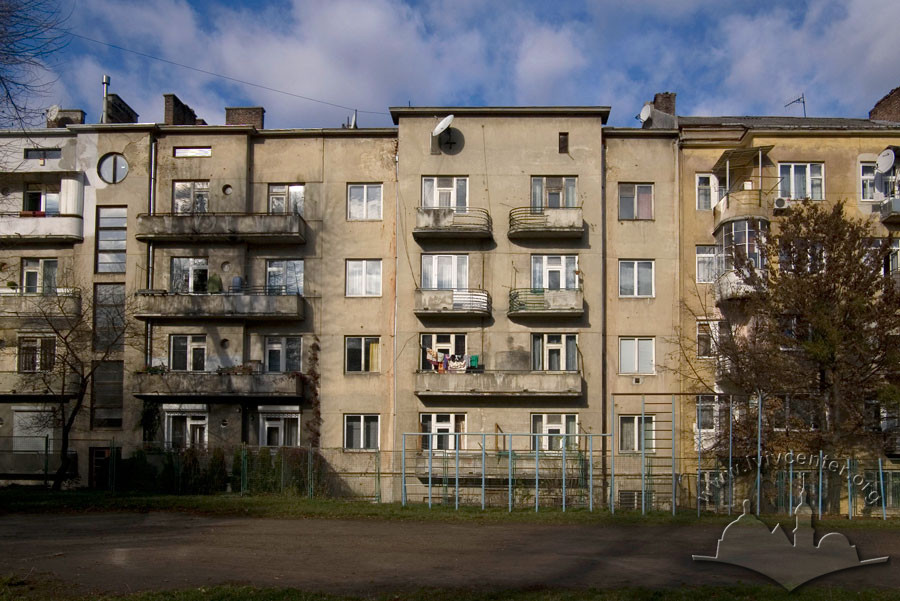
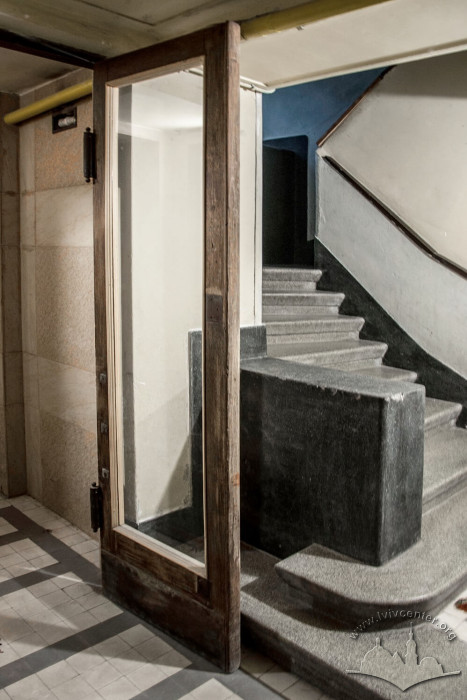
The building was constructed in the Functionalist style. It is a five-story brick structure, plastered, and nearly rectangular in layout. The internal layout is of a sectional type. The asymmetrical composition of the principal elevation is emphasized on the left side by a vertical staircase projection with a semicircular corner finish, and on the right by a rhythmic sequence of protruding balconies. The first floor is decorated with banded rustication. The main entrance is recessed into the plane of the façade wall.
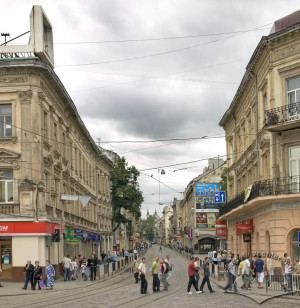
Petra Doroshenka Street lies between Svobody Boulevard and Bandery Street. Its previous names were: Sykstuska (or Sixtuska Gasse up to 1938), Obrony Lwowa (1938-1940), Sykstusstrasse (1941-1944), and Zhovtneva (1940, 1944-1992). This street arose in place of a road that once led from the medieval city walls to the estate of Erasm Sikst/Erazm Sykst, mayor of Lviv in the early seventeenth century and famous medical doctor. In the early twentieth century, the Historicist rental houses were partly replaced by Jugendstil buildings, and later Constructivist ones. 1894 saw an electric tram line being laid in the lower part of the street, leading from the Central Train Station to the Hetmanski Bulwarks, where it forked, leading to the Galician County Fair in Sofijówka, and through the Rynok Square to Lychakiv/Łyczaków. In November 1918 bitter fighting went on for the building of the Main Post Office between Ukrainian and Polish troops.