Vul. Petra Doroshenka, 32 – residential building ID: 707
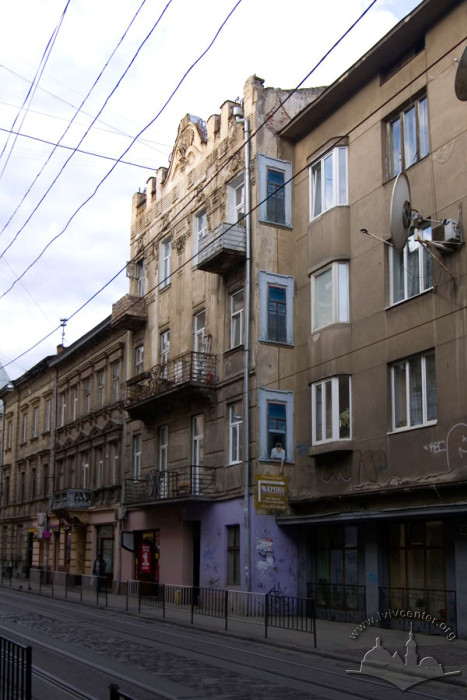
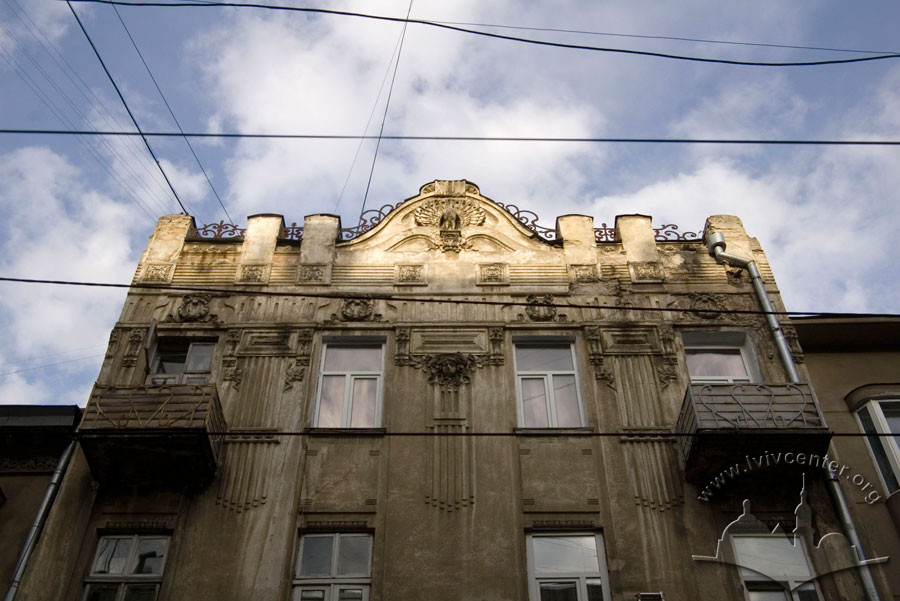
This residential building, constructed in 1907-1908 according to the design by architect Artur Schleyen, is part of the street's perimeter development. Between 1933 and 1934, a reconstruction of the shop portals was carried out according to a design by architect Henryk Sandig. Until 1939, the building housed the "Ars" art printing press.
Architecture
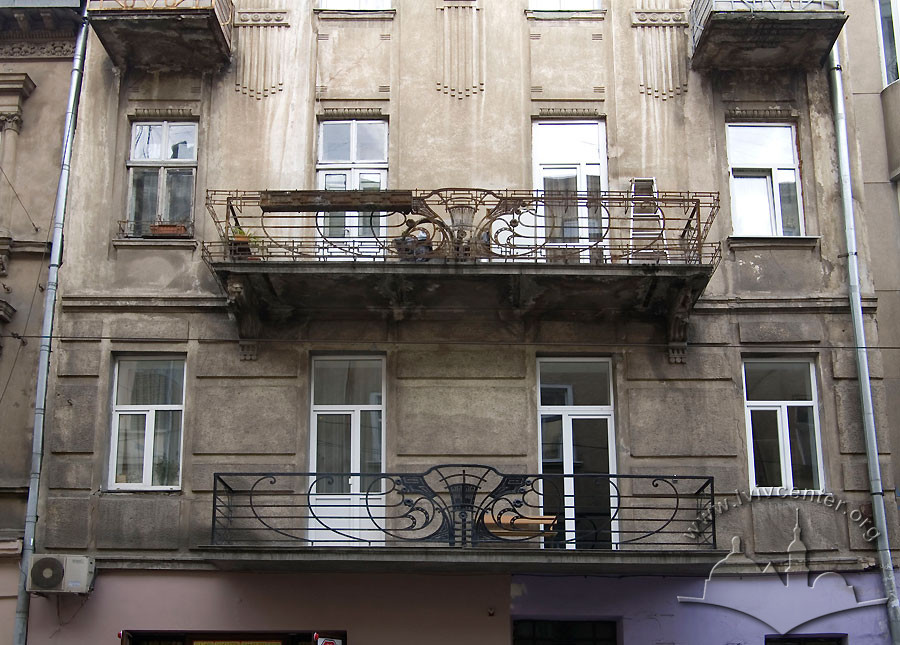
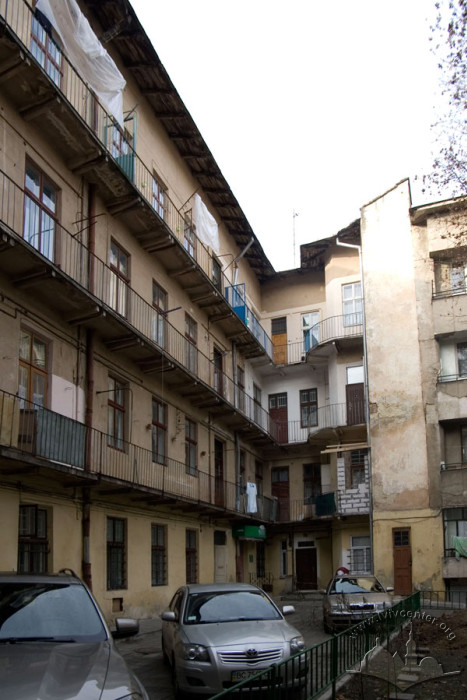
The building is constructed in the Secessionist style. It is a four-story, brick, and plastered structure, nearly square in plan, with an L-shaped wing. The interior follows an enfilade layout. The symmetrical composition of the principal elevation is slightly offset by an entrance portal shifted to the left. At the second, third, and fourth floors, balconies project from the façade, enclosed by wrought iron Secessionist grilles in the shape of bows. On the fourth floor, a central plasterwork mascaron is featured, with laurel wreaths and plasterwork decorative insets placed above the windows. Lesenes descend vertically between the windows of this level. The windows themselves are unframed; on the third floor, they are topped by an egg-and-dart belt. The building is crowned by an attic that transitions in the central section into a gable with a smooth silhouette. The gable is topped with a wrought iron grille and features a plasterwork peacock — a classic Secessionist symbol of luxury.
Related buildings and spaces
-
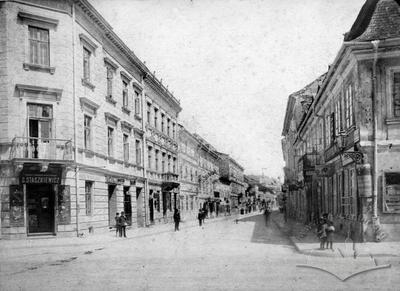
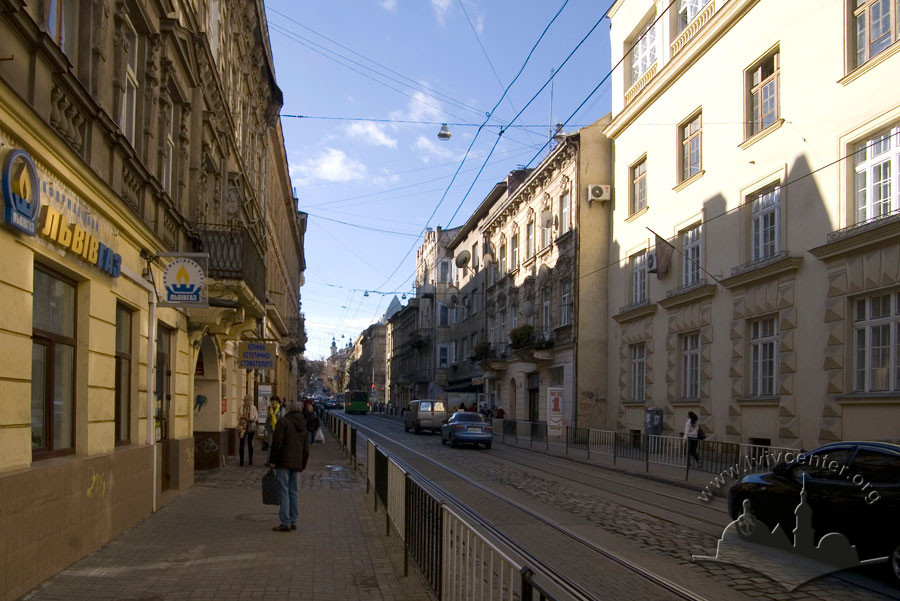
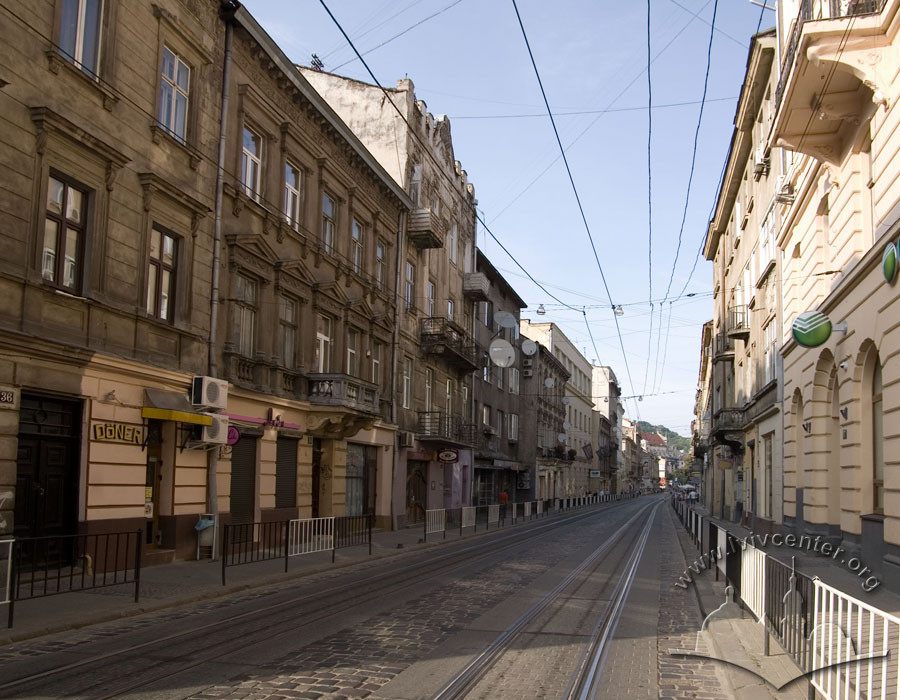
Vul. Petra Doroshenka
Sources
- Державний архів Львівської області (ДАЛО) 2/1/3751
- Львів. Туристичний путівник (Львів: Центр Європи, 1999), 182-183.
- Lwów. Ilustrowany przewodnik (Lwów: Centrum Europy – Wrocław: Via Nova, 2001), 106.