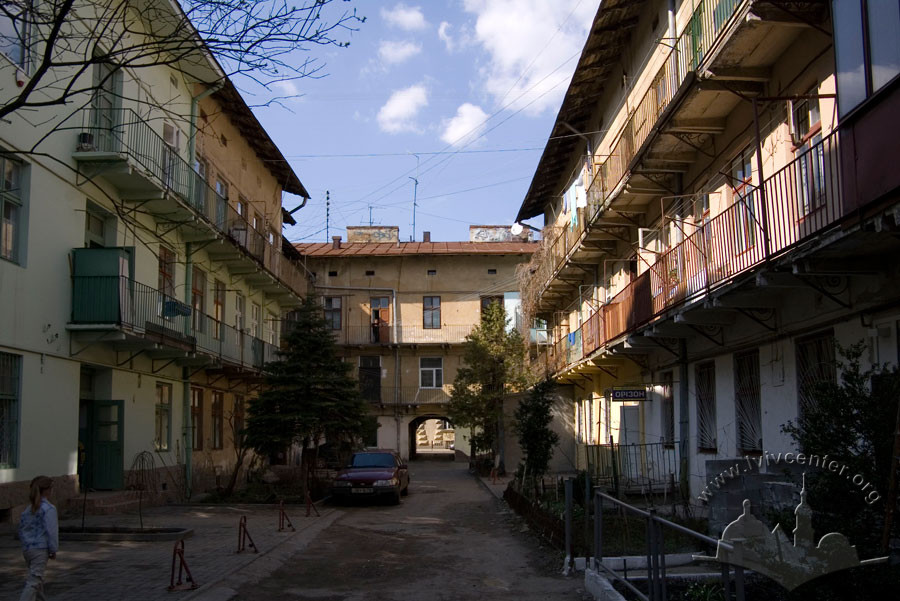
Vul. Petra Doroshenka, 31 – residential building ID: 725
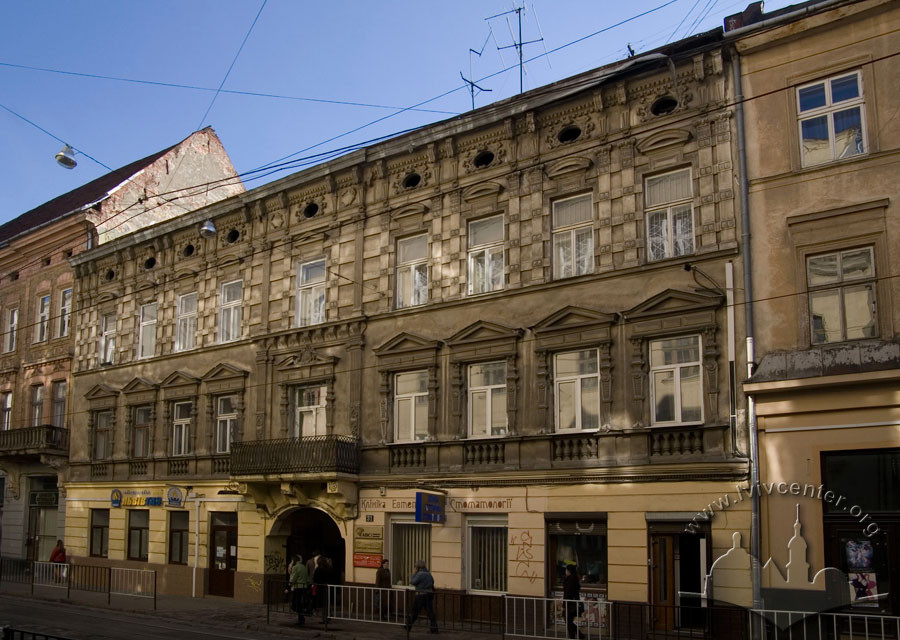
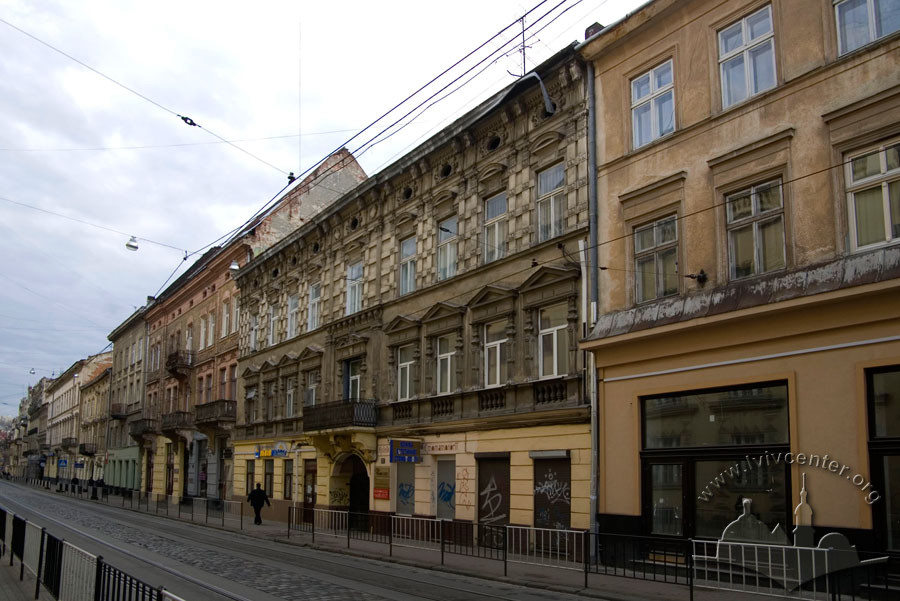
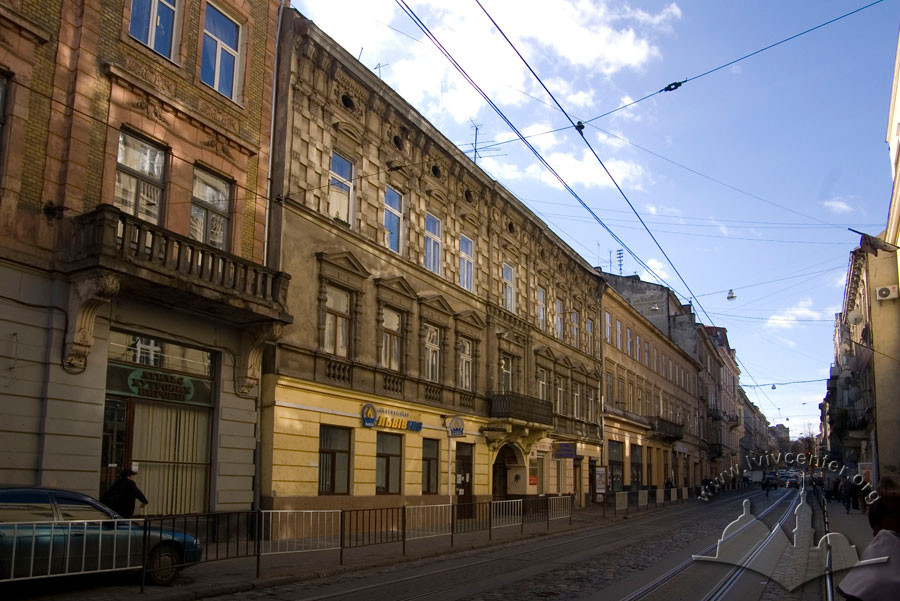
This residential building, part of the street's perimeter development, was built in 1873 for Aron Philip according to a design by architect Alfred Kamienobrodzki. In 1890, a three-story addition was constructed. From 1920 to 1934, the building was owned by Jakób Landau. In 1934, the shop portals were reconstructed based on a design by architect Janusz Graf. Between 1935 and 1936, a shop portal reconstruction project was executed by architect Solomon Keil. It is known that the building once housed the "D. Frushtman" firm's store (1911) and the "Lebrose" confectionery.
Architecture
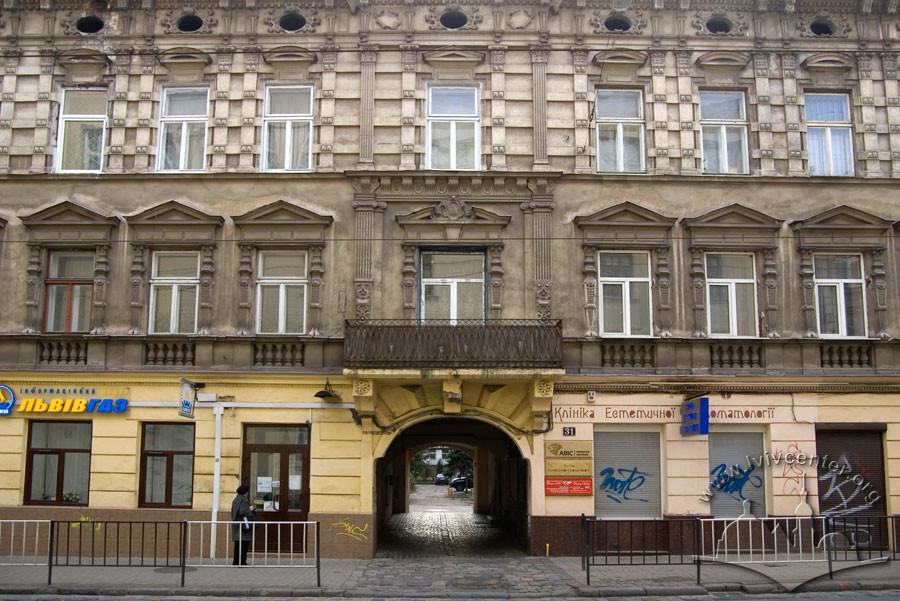
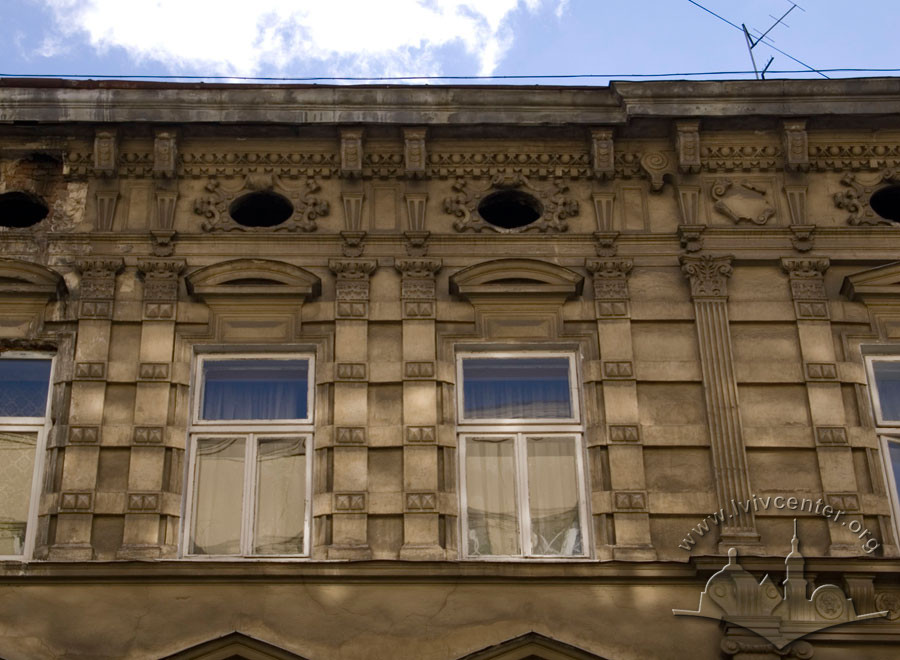
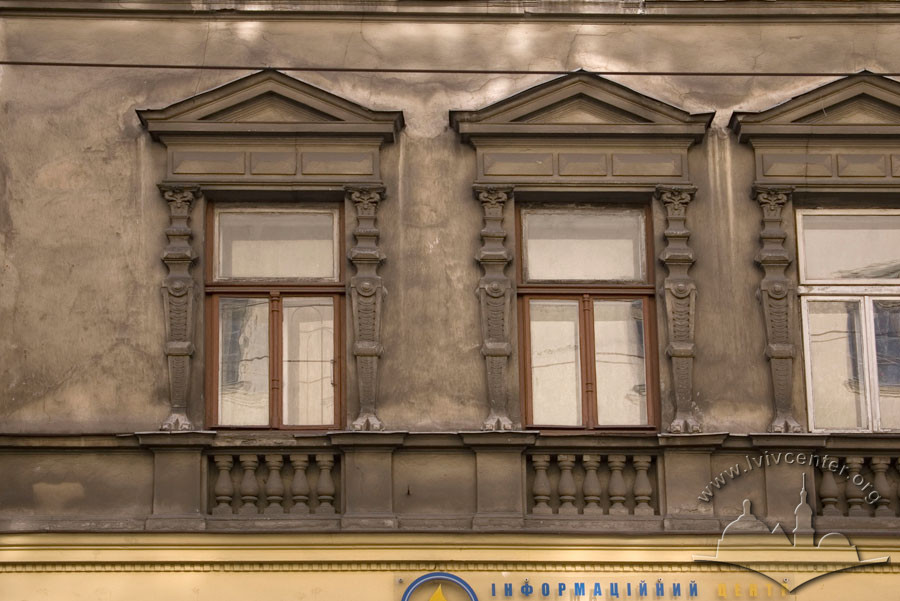
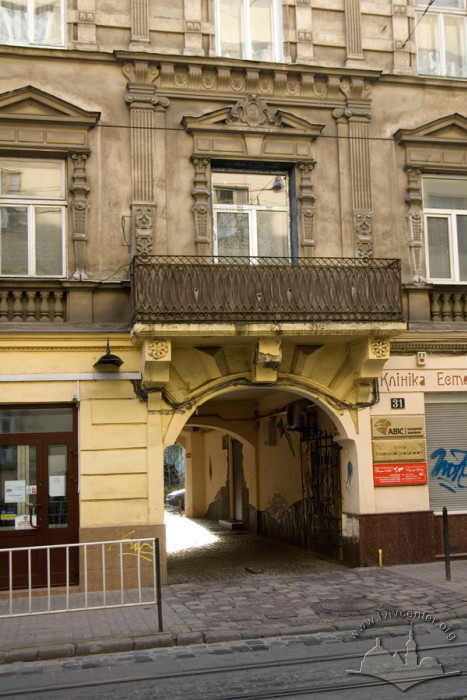
Built in the style of Historicism, the building is a three-story, brick, and plastered structure with a rectangular plan and wings. The interior follows an enfilade layout. The principal elevation features a symmetrical composition with a centrally located entrance portal, characterized by plasterwork framing and wrought iron grilles, topped by a balcony with wrought iron railings on massive plasterwork brackets. The first floor is rusticated. Profiled stringcourses run between the first and second floors, as well as between the second and third. The windows feature profiled trimmings; on the second floor, they are topped by triangular pediments with diamond rustication insets beneath them. The central second-floor window features a broken triangular pediment with a heraldic cartouche in the center, adorned with plasterwork. Beneath the second-floor windows is an inset featuring a row of balusters. Above the third-floor windows are segmental pediments, also with diamond rustication insets beneath them. Stylized pilasters, emphasized by banded rustication and adorned with egg-and-dart on capitals, are positioned between the third-floor windows. Oval-shaped attic windows are decorated with plasterwork cartouches. The building is topped by a profiled cornice supported by profiled brackets with an egg-and-dart belt.
Related buildings and spaces
-
Vul. Petra Doroshenka