Vul. Petra Doroshenka, 23 – residential building ID: 722
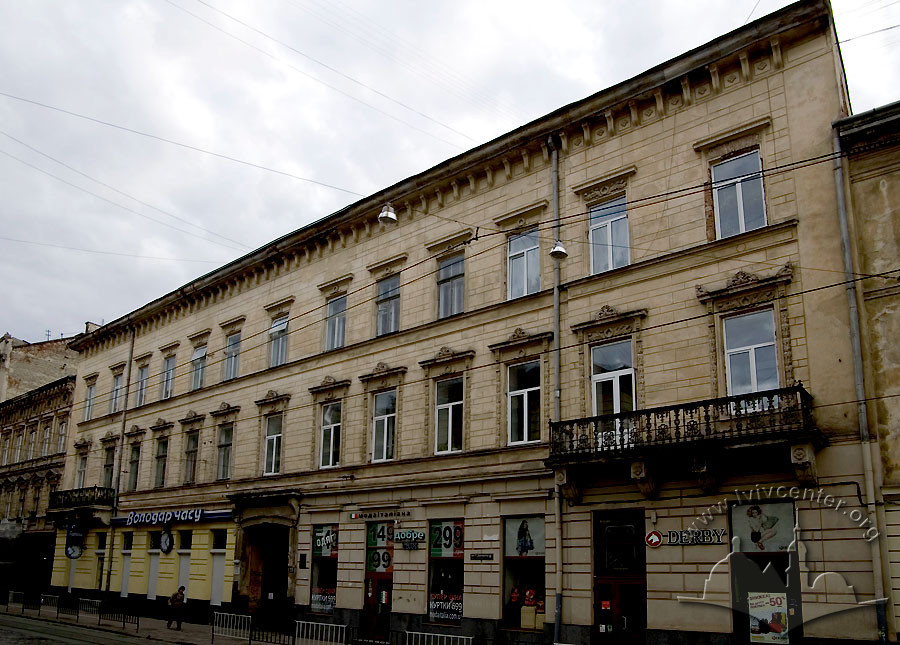
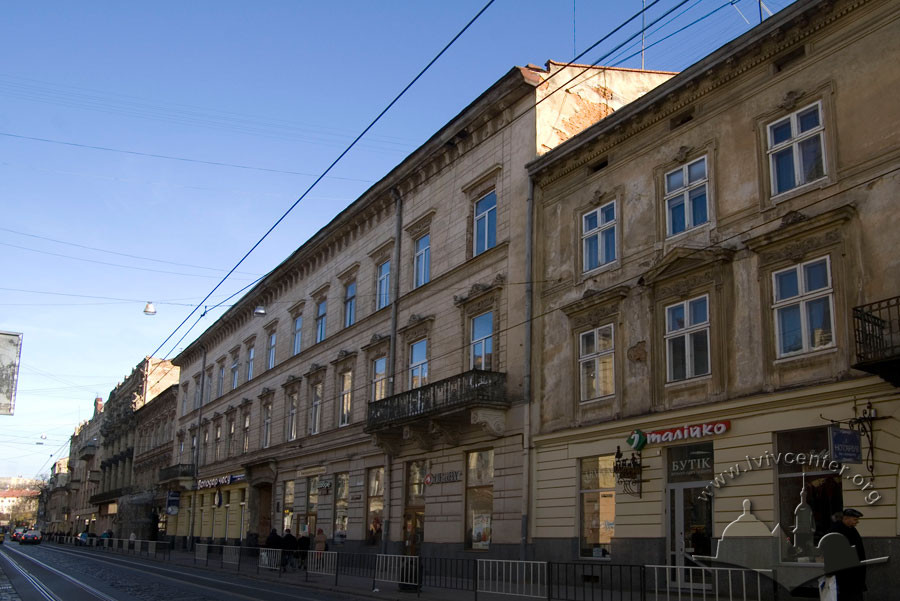
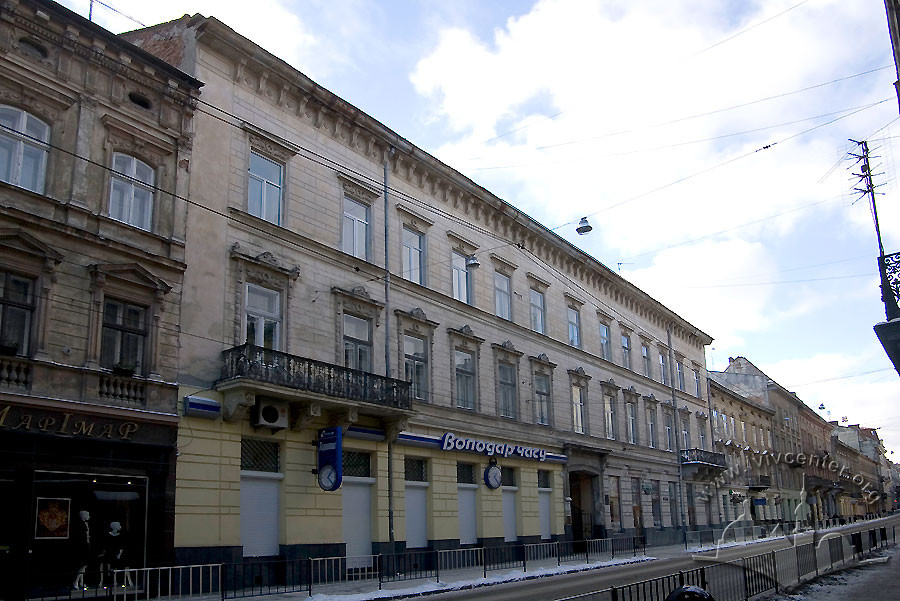
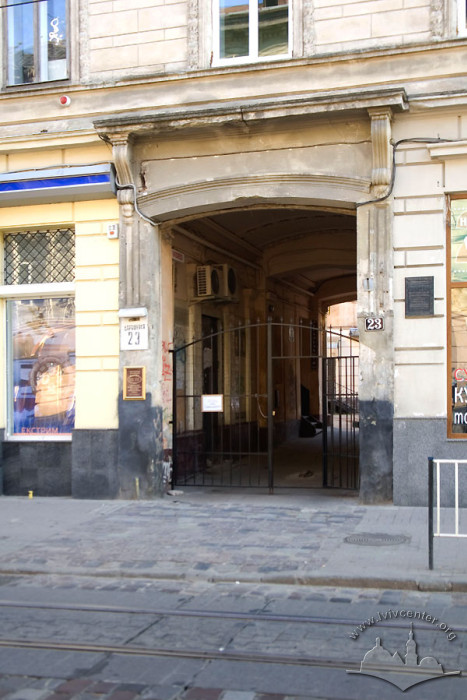
This residential building, part of the street's perimeter development, was constructed in 1846 and later rebuilt according to an 1889 design. The entrance portal partially retains its original decorative framing from the time of construction. In 1894, a reconstruction of the shop portals was carried out according to a design by architect Alfred Kamienobrodzki. A subsequent reconstruction of these portals took place in 1936, following a design by architect Antoni Graf. In an older building that previously stood on this site, Józef Polman, a master of daguerreotypes, operated Lviv's first photographic studio starting in 1843. From 1907 to 1939, it housed the warehouse and shop of the Mund brothers' ceramic factory, which produced tiles and facing slabs for many tenement houses.
Architecture
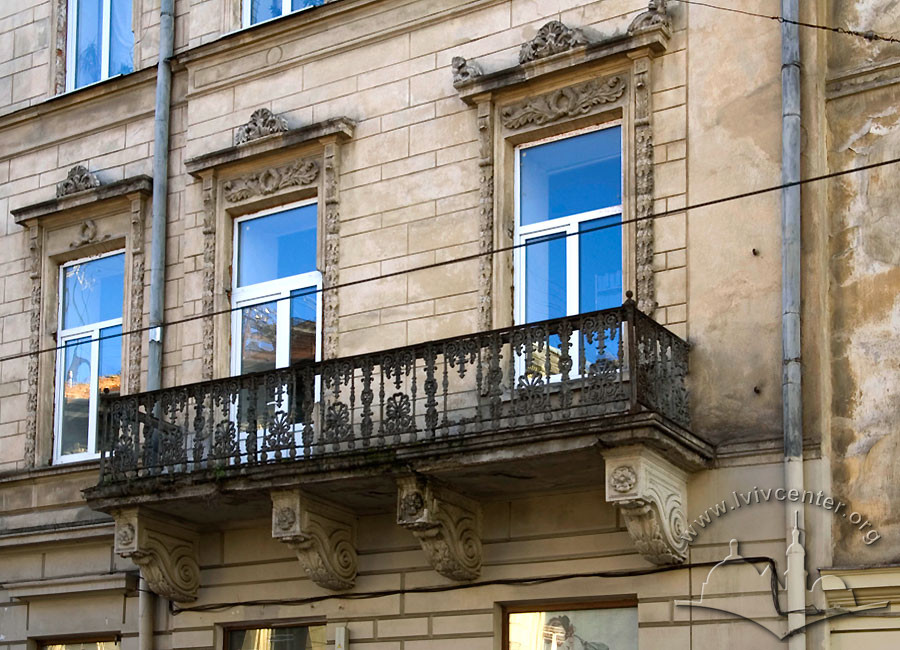
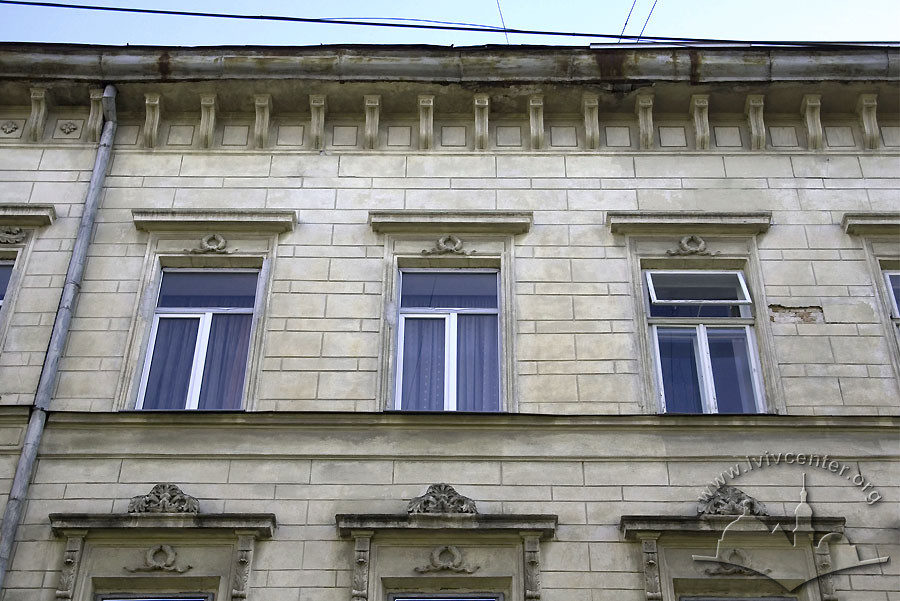
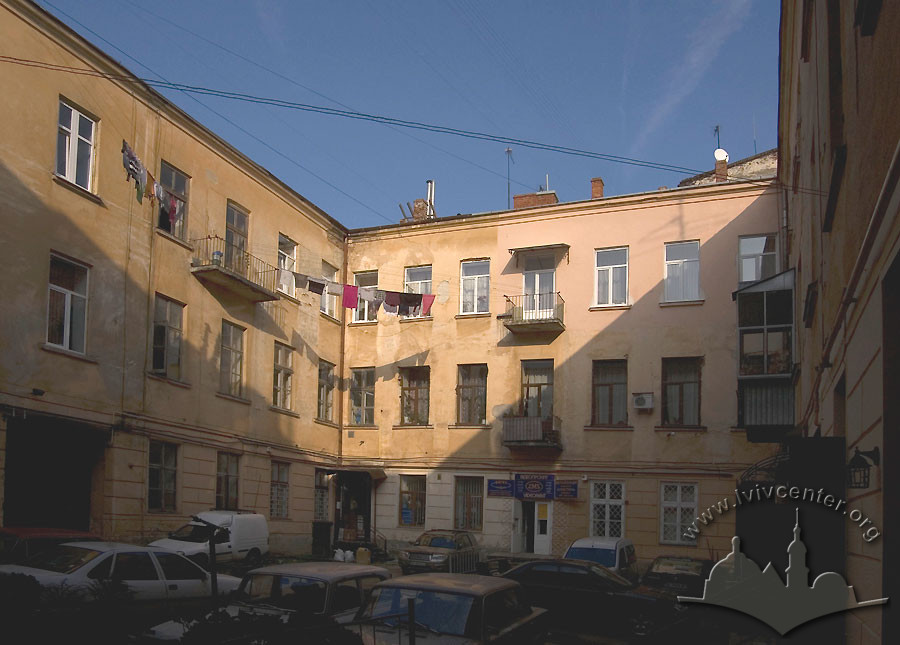
Built in the Classicist style, it is a three-story, brick, and plastered building, nearly square in plan, featuring an inner courtyard. The original layout was of the enfilade type, but it is now sectional. The composition of the principal elevation is symmetrical, with two side protruded sections. The first floor is rusticated, while the second and third floors feature light rustication. In the side sections at the second-floor level, there are balconies on plasterwork brackets with cast metal railings. The windows on the first and second floors have profiled surrounds, decorated on both sides with vertical profiled strings of oak leaves and laurel wreaths at the top, crowned by linear pediments. The entrance gate features a profiled surround with a segmental top, above which sits a linear pediment on two plasterwork brackets with volutes. Pseudo-Tuscan pilasters remain in the building's driveway, topped by plasterwork insets. The driveway ceiling consists of segmental spans decorated with plasterwork rosette insets. The building is topped by a deep-projection profiled cornice supported by plasterwork brackets.
This landmark is a characteristic example of nineteenth-century Lviv residential architecture.
Related buildings and spaces
-
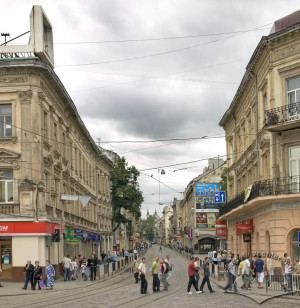
Vul. Petra Doroshenka
Sources
- Державний архів Львівської області (ДАЛО) 2/1/3742
- Львів. Туристичний путівник (Львів: Центр Європи, 1999), 181.
- Lwów. Ilustrowany przewodnik (Lwów: Centrum Europy – Wrocław: Via Nova, 2001), 38.