Vul. Petra Doroshenka, 16 – residential building ID: 718
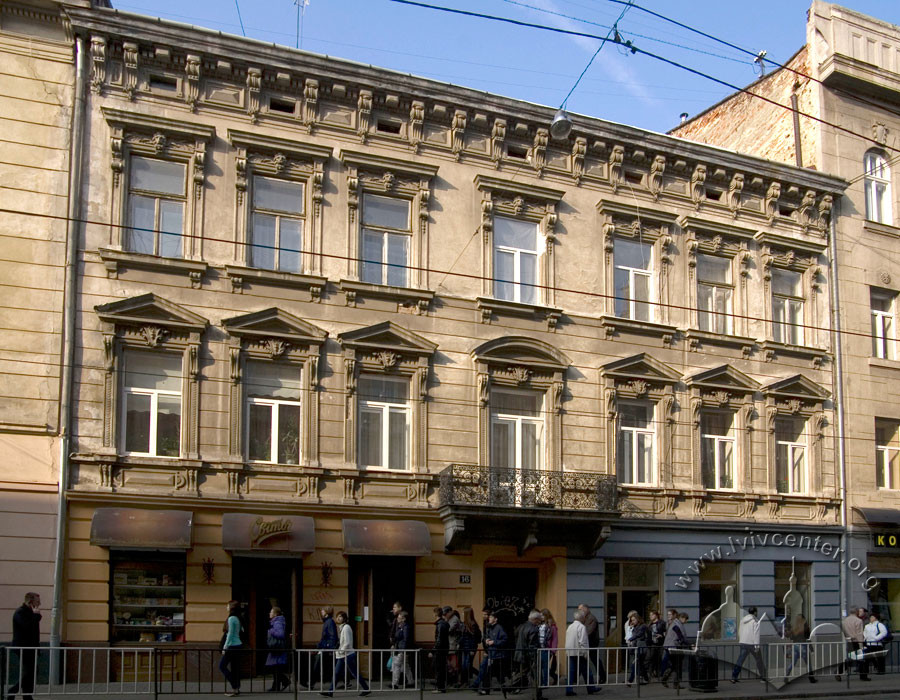
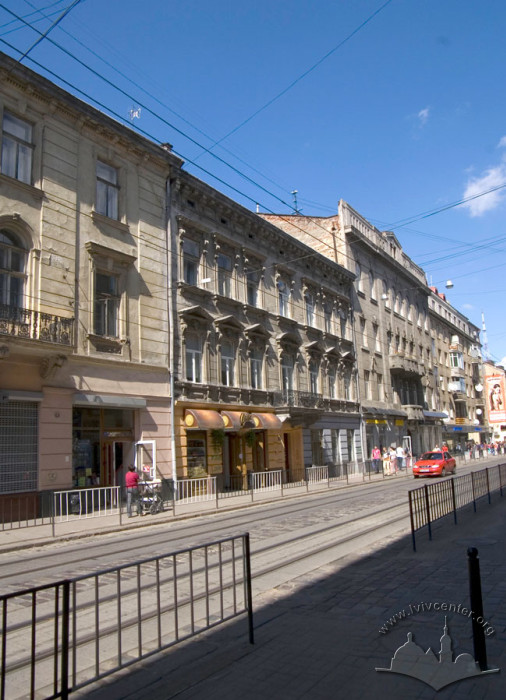
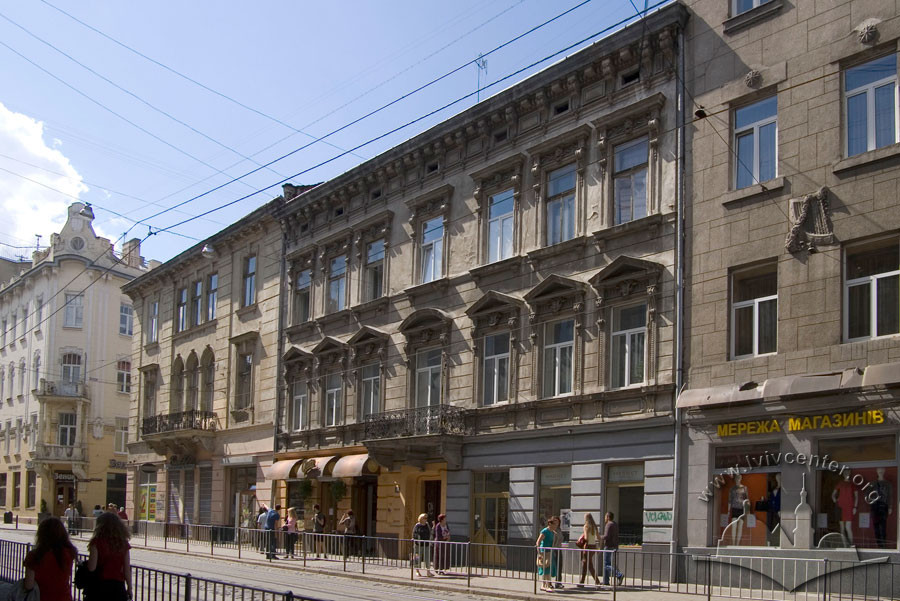
This residential building is part of the street's perimeter development, constructed in 1890's. The architect is unknown. The renowned Jewish artist Wilhelm Wachtel lived in this house between 1910 and 1912.
Architecture
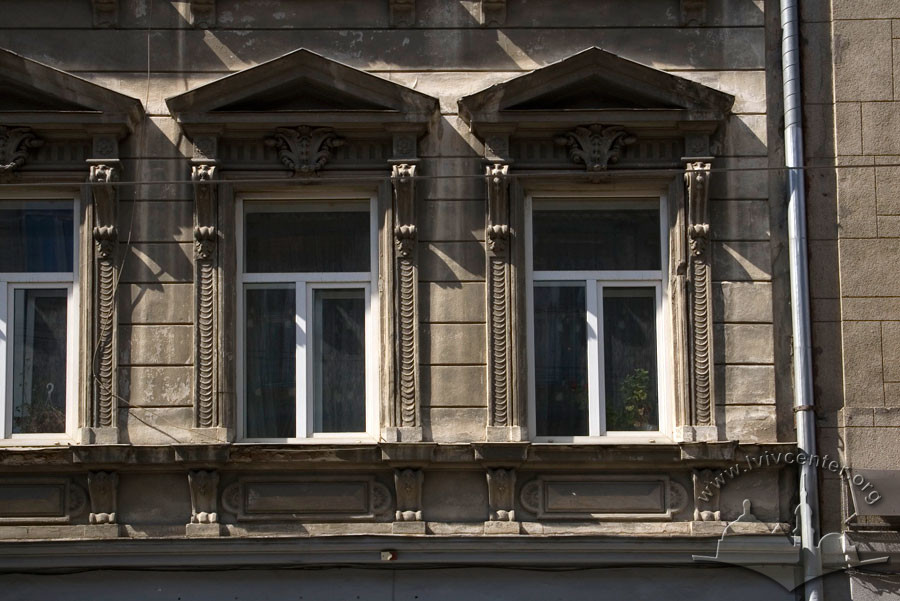
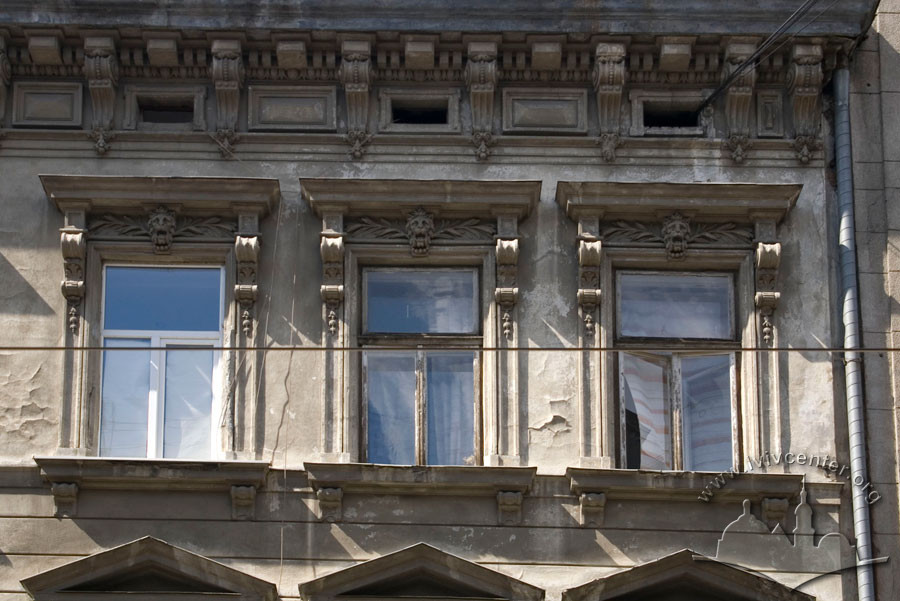
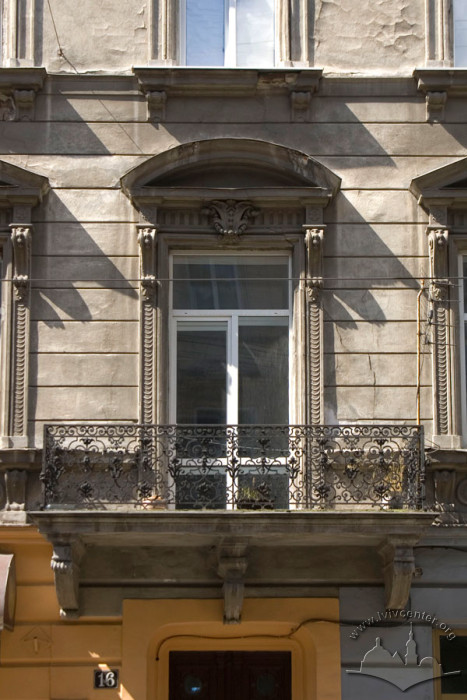
Constructed in the style of Historicism, it is a three-story, brick, and plastered structure with a rectangular plan. The interior layout is of the enfilade type. The composition of the principal elevation elevation is symmetrical, featuring a centrally located entrance portal with a profiled surround, topped by a balcony with wrought iron railings on plasterwork brackets. The first and second floors are decorated with banded rustication. The first-floor windows are storefront windows. The windows on the second and third floors feature profiled trimmings; on the second floor, they are topped by triangular pediments with plasterwork cartouches in the center, while the third-floor windows have linear pediments decorated with mascarons in the form of lion heads in place of keystones. The central window of the second floor is emphasized by a segmental pediment. Beneath the second-floor windows are insets featuring diamond rustication, adorned on the sides with rosettes and shelves in the form of volutes; the third-floor windows feature similar shelves. Insets with diamond rustication are also placed between the attic windows. The building is crowned by a plasterwork cornice with brackets and an egg-and-dart belt.
Related buildings and spaces
-
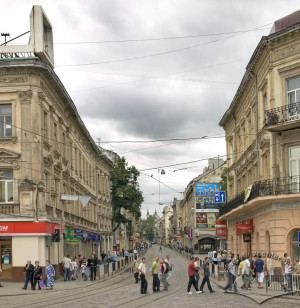
Vul. Petra Doroshenka
People
Franz Doppler — austrian composer, flutist, conductor, and teacher. He authored 6 operas, 15 ballets, overtures, cantatas, chamber-instrumental and concert compositions, transcriptions, arrangements, and orchestrations. Born on October 16, 1821, in Lemberg (Ger. Lemberg, today Lviv) — died on July 27, 1883, in Baden, near Vienna. The Doppler brothers spent their childhood in the previous house at this address.
Karl Doppler — composer, flutist, conductor, and music teacher. Born on September 12, 1825, in Lemberg — died on March 10, 1900, in Stuttgart. The Doppler brothers spent their childhood in the previous house on this site.
Sources
- Державний архів Львівської області (ДАЛО) 2/1/3736
- Lwów. Ilustrowany przewodnik (Lwów: Centrum Europy – Wrocław: Via Nova, 2001), 106.