Vul. Petra Doroshenka, 15 – residential building ID: 868
This building is a prominent example of Lviv Secession. It was constructed between 1906 and 1907 by the firm of Zygmunt Kędzierski and Michał Ulam, following a design by Tadeusz Obmiński for Józef Haussmann. It is an Architectural monument (No. 735-M).
Story
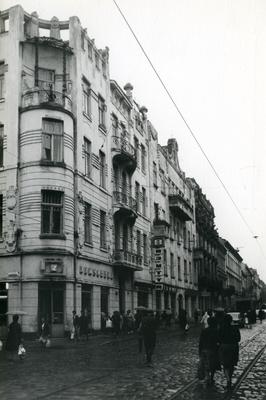
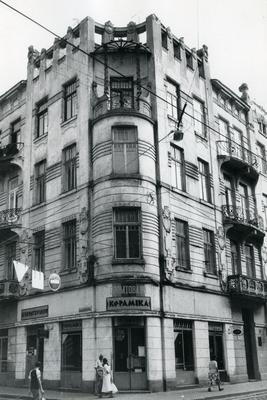
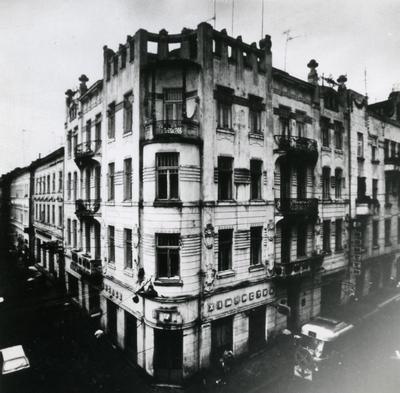
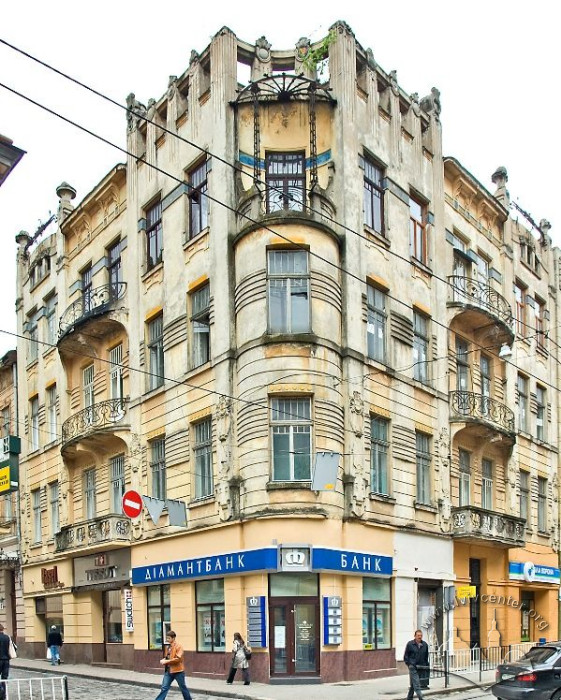
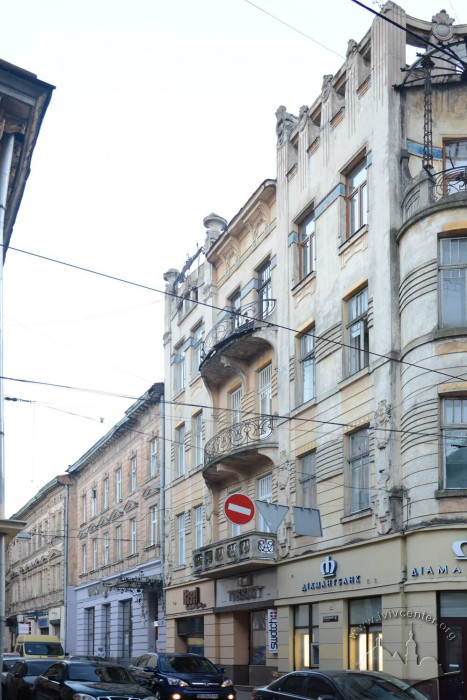
This four-story building was erected at the corner of present-day Doroshenka and Bankivska streets (formerly Sykstuska and Szajnochy streets, respectively). Following the Segal House, it is one of the first Secessionist residential buildings in Lviv. It was designed in 1906 in the architectural bureau of Zygmunt Kędzierski and Michał Ulam; the design author was Tadeusz Obmiński. The client was the merchant Józef Haussmann, who owned the previous building at this location.Architecture
The four-story, brick building incorporates reinforced concrete structures and follows an L-shaped, sectional plan.
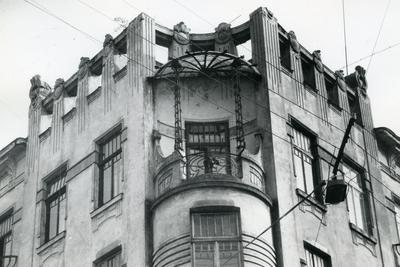
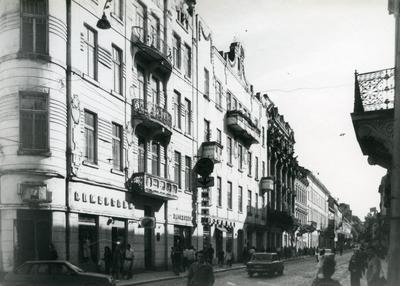
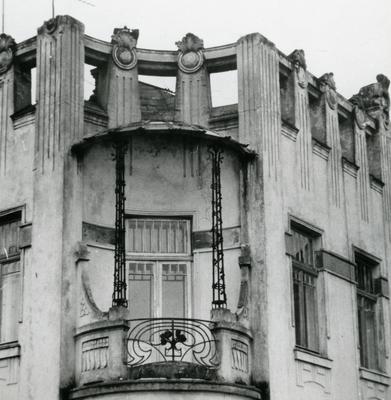
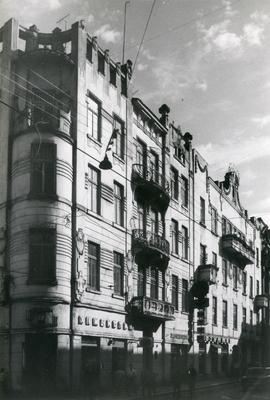
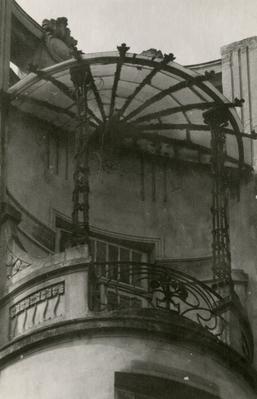
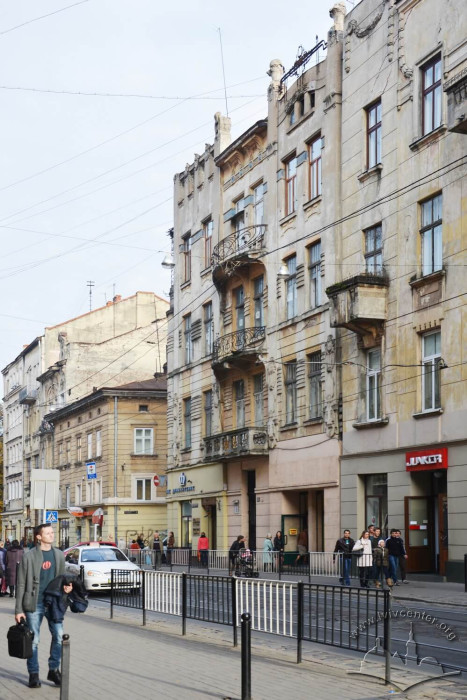
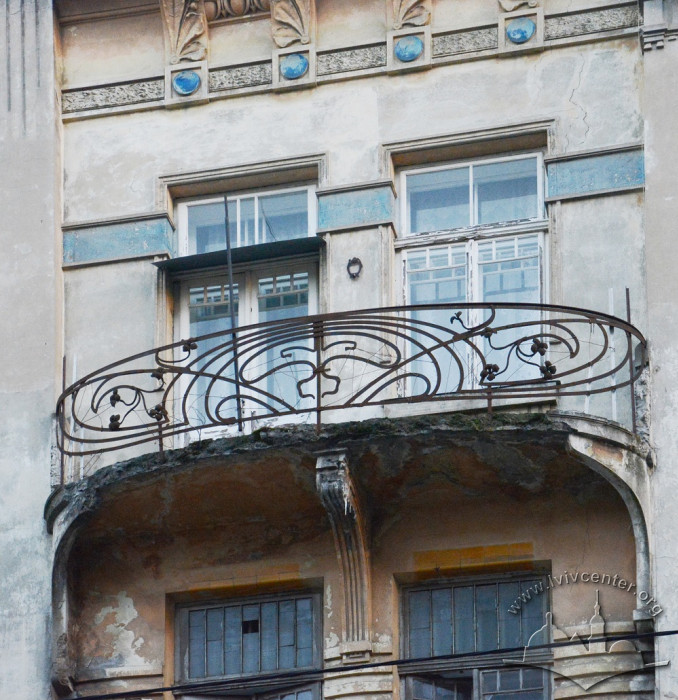
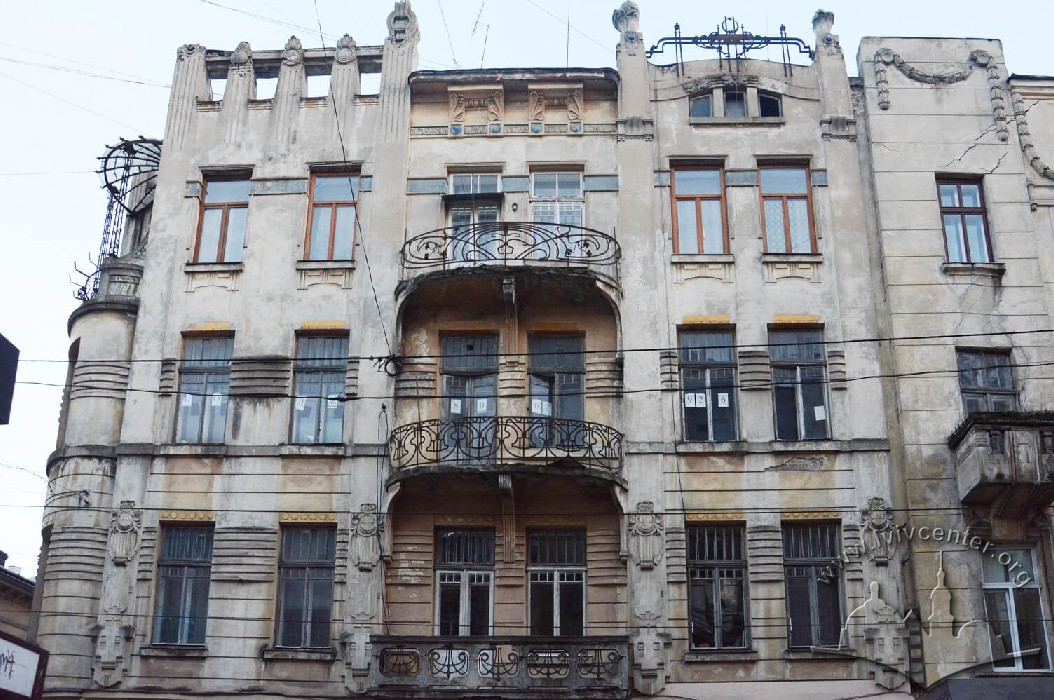
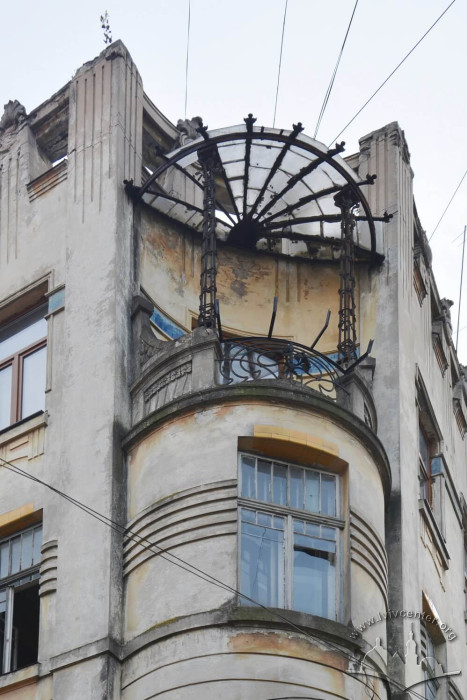
It features two similar six-window façades. They are nearly symmetrical, featuring balconies on the central axis and slender protruded sections at the sides. The façades are joined by a rounded corner section, which features a whimsically shaped balcony on the fourth floor with curved grilles, colored ceramics, and a glass canopy on stem-like metal supports. The side protruded sections and the corner are topped by a profiled decorative attic with openwork wrought iron grilles.
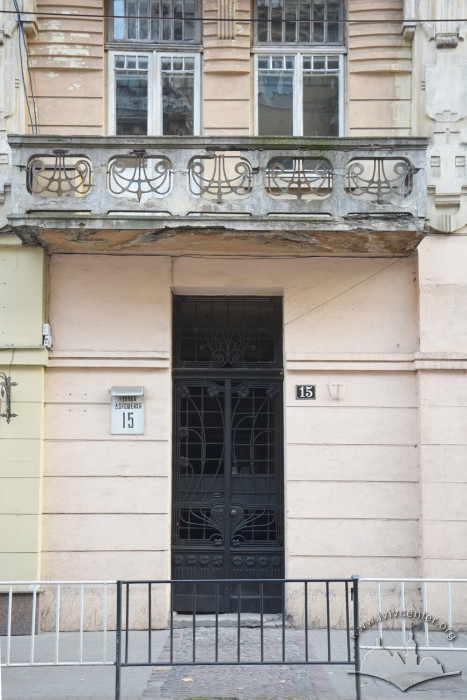
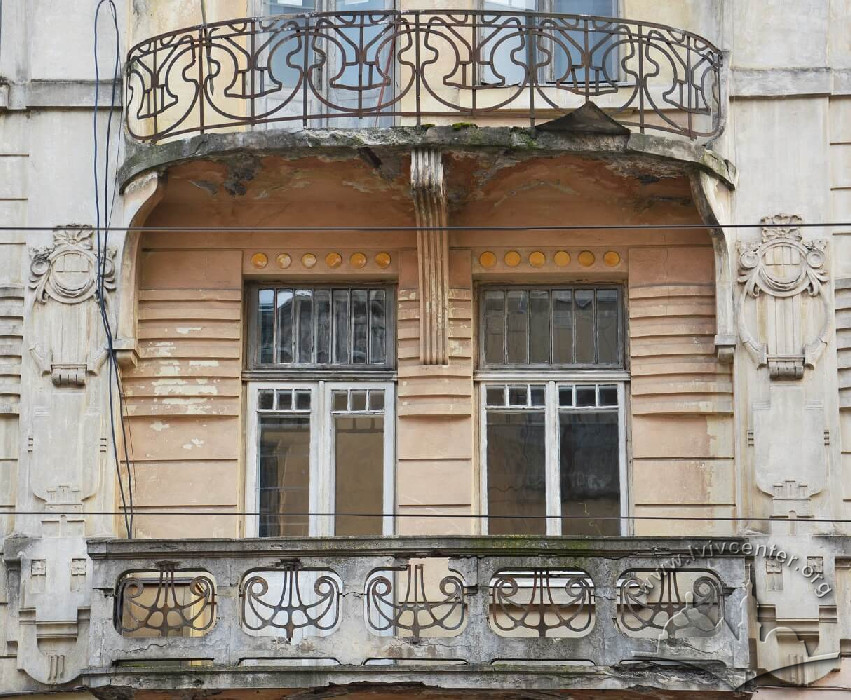
The first-floor premises are intended for commercial use. The façades are rusticated at the level of the first two floors. All window openings are rectangular, complemented by window frames with an original pattern. The third and fourth-floor balconies follow a curved (segmental) plan and are enclosed by bent grilles. The façades feature numerous profiled decorative elements with refined patterns. These include cartouches in the form of lyres, profiled stringcourses, as well as ceramic insets above the second and third-floor windows, a majolica frieze between the fourth-floor windows, and the openwork attic railing.
Overall, the building is a striking example of Lviv residential architecture from the early twentieth century and stands as one of the city's prominent Secessionist structures.
Related buildings and spaces
-
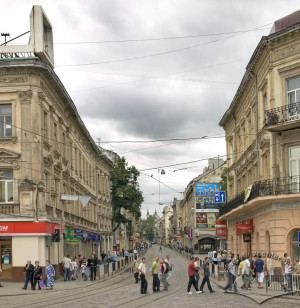
Vul. Petra Doroshenka
Sources
- Державний архів Львівської області (ДАЛО) 2/1/ 3735
- Юрій Бірюльов, Мистецтво львівської сецесії, (Львів: Центр Європи, 1999), 68-70.
- Jakub Lewicki, Między tradycją a nowoczesnością. Architektura Lwowa lat 1893-1918, (Warzawa: Neriton, 2005), 252-256
- Yulia Bohdanova, Żanna Komar, Secesja we Lwowie, (Kraków: Wysoki Zamek, 2014), 115-121
Citation
Khrystyna Kharchuk. "Vul. Petra Doroshenka, 15 – residential building". Lviv Interactive (Center for Urban History, 2008). URL: https://lia.lvivcenter.org/en/objects/doroshenka-15/Urban Media Archive Materials