Vul. Petra Doroshenka, 14 – residential building ID: 716
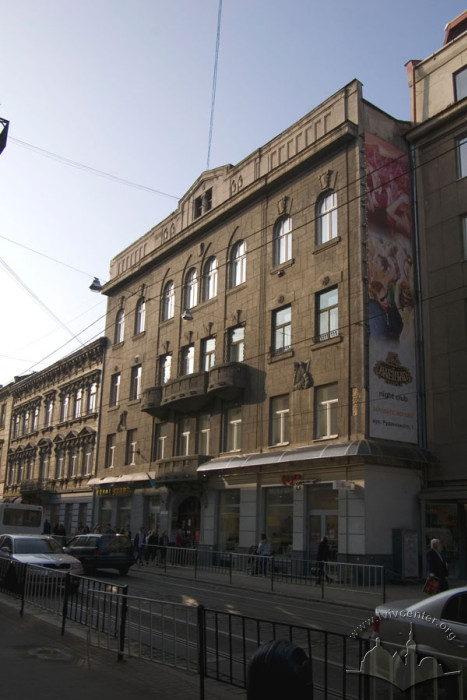
This residential building was constructed for attorney Adolf Menkes according to a 1911 proposed design by architect Henryk Salwer. The static calculation of the structural elements was performed in 1912 by architect Józef Awin, while the sculptural decor was executed by Zygmunt Kurczyński.
Architecture
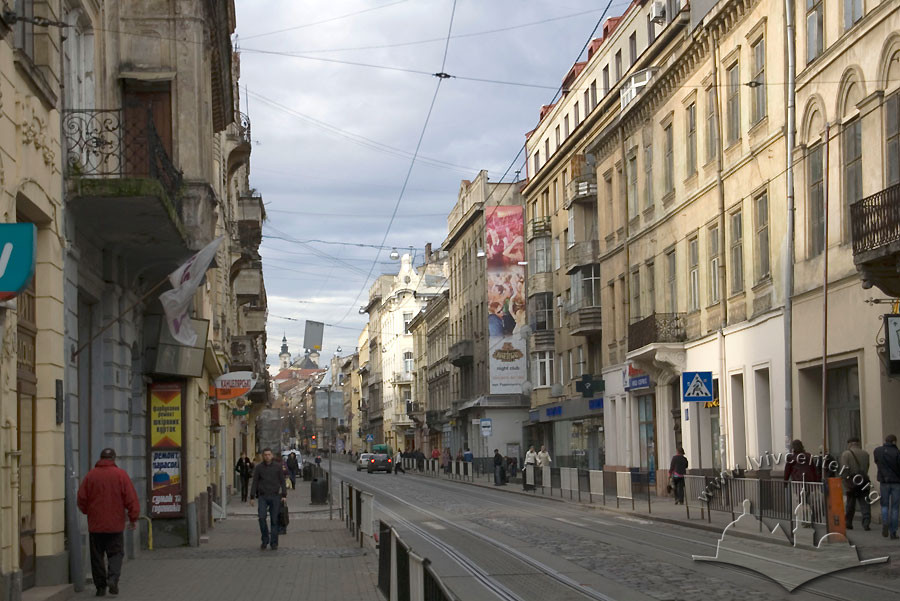
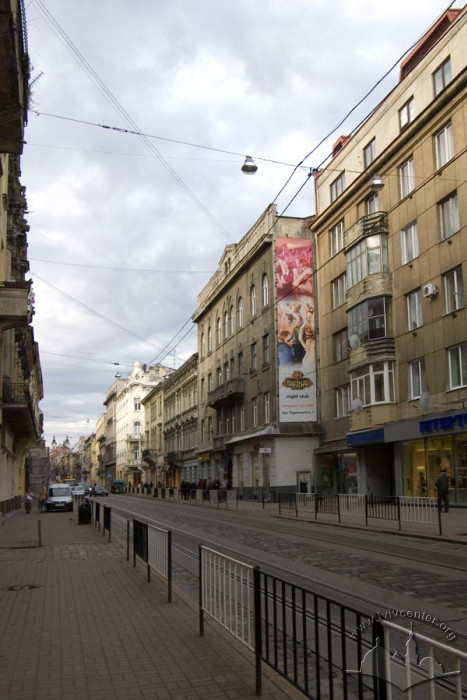
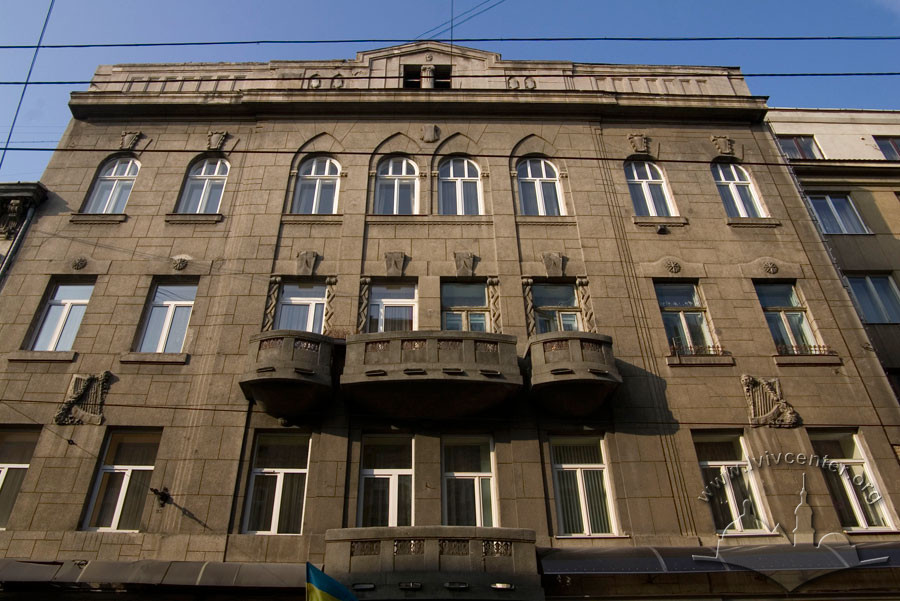
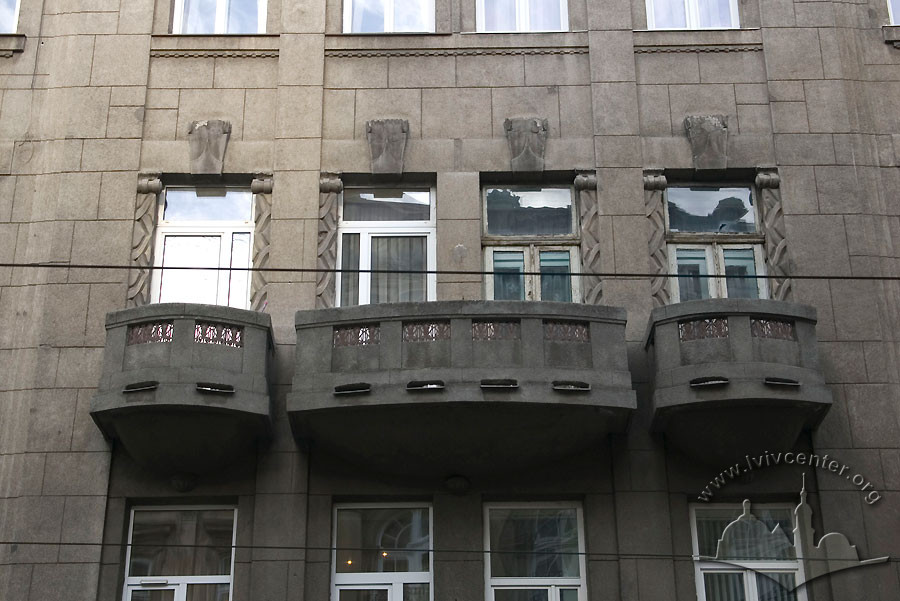
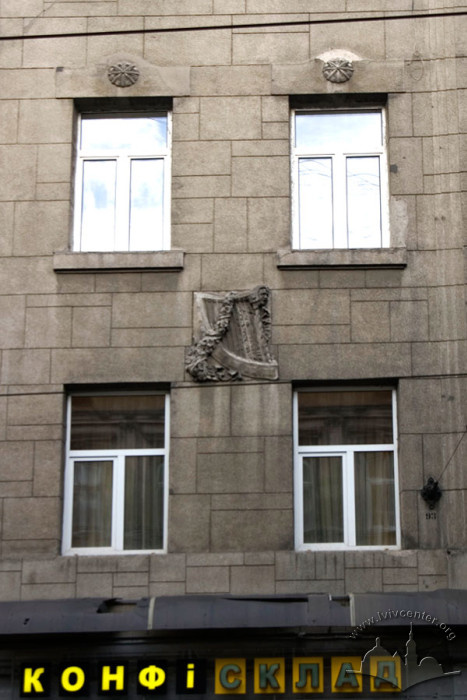
The building was constructed in the Modern style. It is a four-story, brick, and plastered structure with a complex planning layout that includes an interior courtyard. The internal layout is of a sectional type. The composition of the principal elevation is symmetrical, featuring a central protruded wall section. The entrance gate, located on the central axis, is decorated at the top with a profiled mascaron adorned with flower garlands. The first floor is punctuated by large store windows and emphasized by banded rustication. At the second-floor level, a balcony projects with a plasterwork railing; at the third-floor level, there are three balconies with plasterwork railings and sub-balcony bowls. On the fourth floor of the protruded section, the arched windows feature stylized Gothic trimmings , while the windows in the side sections are also arched and topped with keystones. Between the windows of the second and third floors are two insets depicting a harp adorned with garlands. The building is topped by a high attic featuring a central small triangular gable with a paired window divided by a stylized Ionic pilaster.
Related buildings and spaces
-
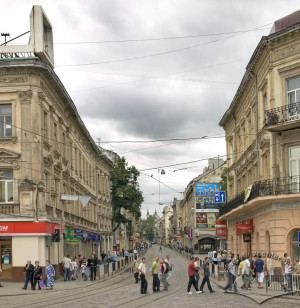
Vul. Petra Doroshenka
People
Sources
- Державний архів Львівської області (ДАЛО) 2/1/3734
- Львів. Туристичний путівник (Львів: Центр Європи, 1999), 180.
- Lwów. Ilustrowany przewodnik. (Lwów: Centrum Europy – Wrocław: Via Nova, 2001), 106.