Vul. Petra Doroshenka, 11 – residential building ID: 865
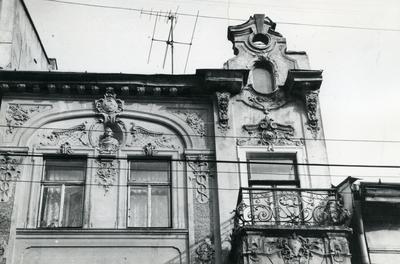
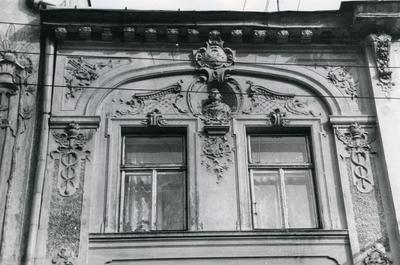
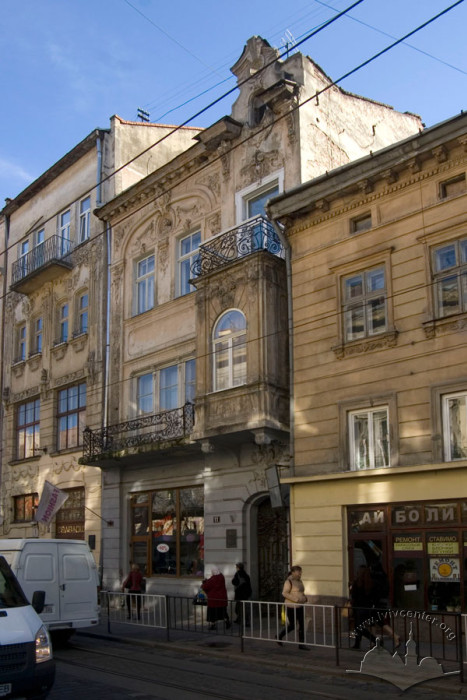
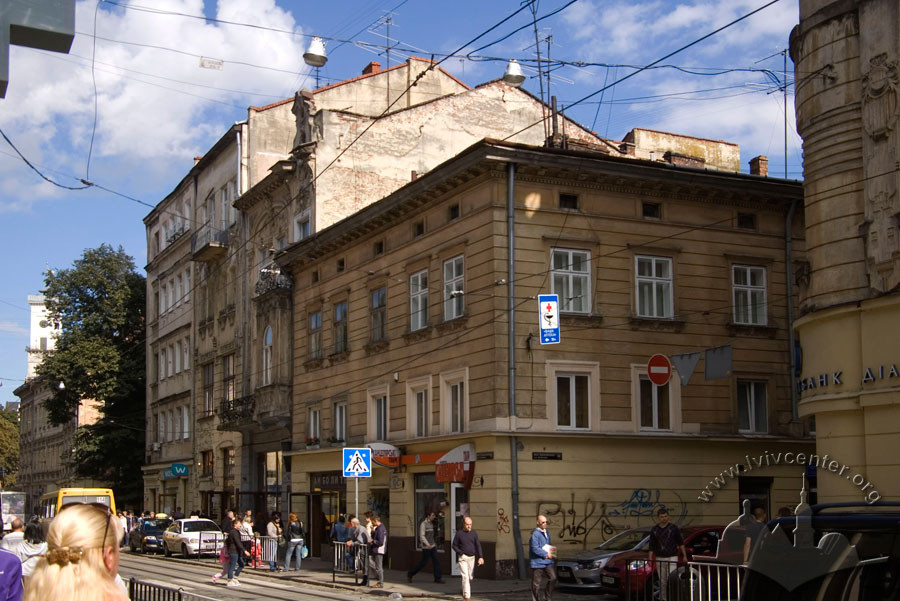
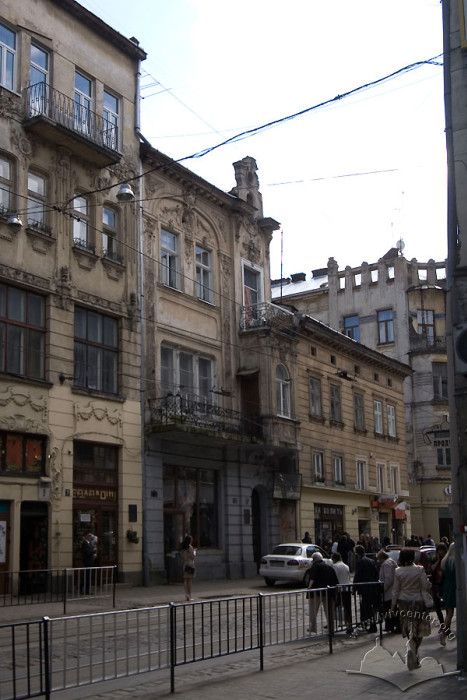
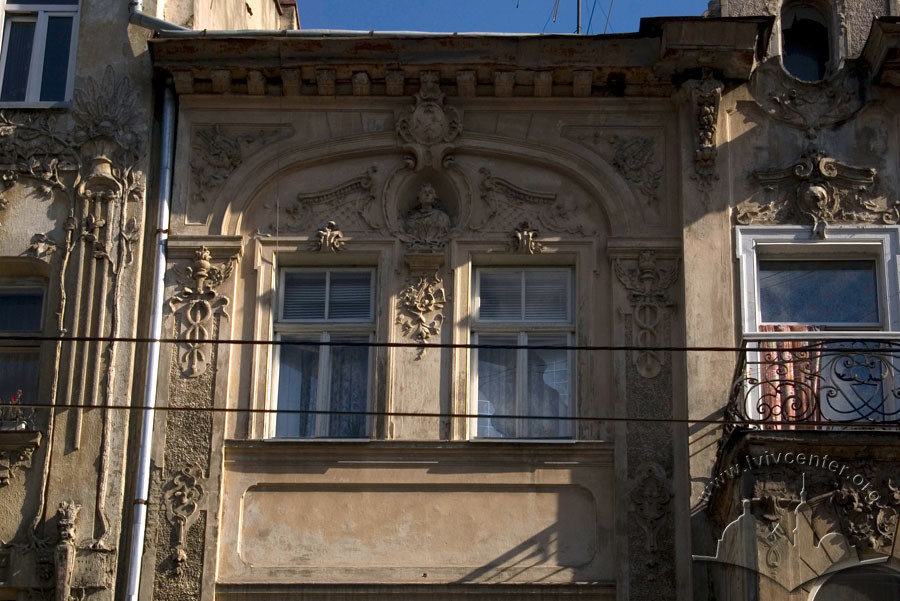
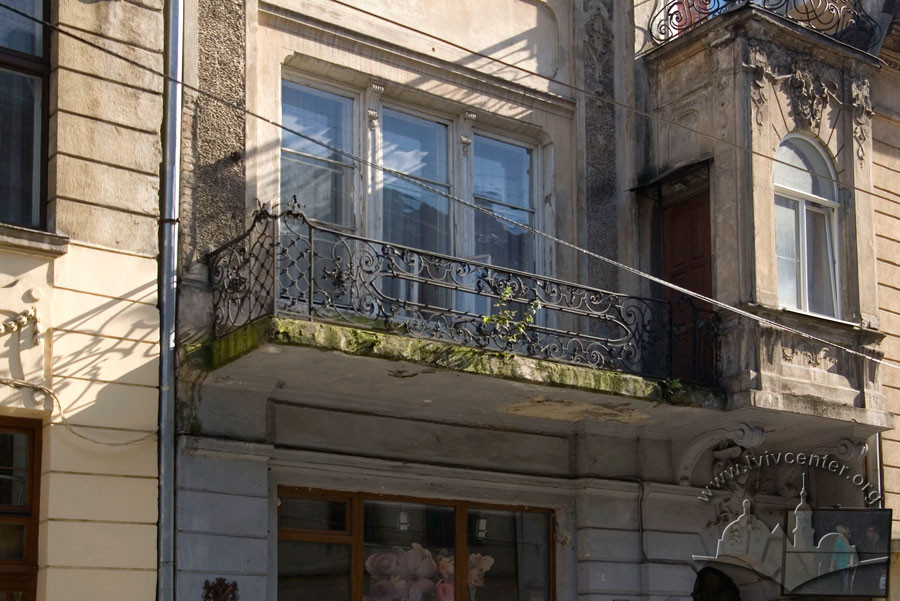
"Chopin House" constructed in 1898 for Sabina Herszeles according to a design by architect Karel Boublík. The building is adorned with a bust of Frédéric Chopin, which was not only an expression of the owners' tastes but also served as a unique advertisement for Herszeles' piano and musical instrument company. Directly across the street was another large musical instrument store operated by Józef Wechsler's firm, which also owned music shops on the central streets of Kraków and Warsaw. In the previous tenement house that occupied this site before "Chopin House" was built, Lviv's first photography (daguerreotype) salon, run by Joseph Pohlmann, was located in 1843.
Architecture
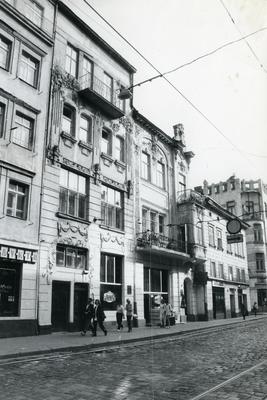
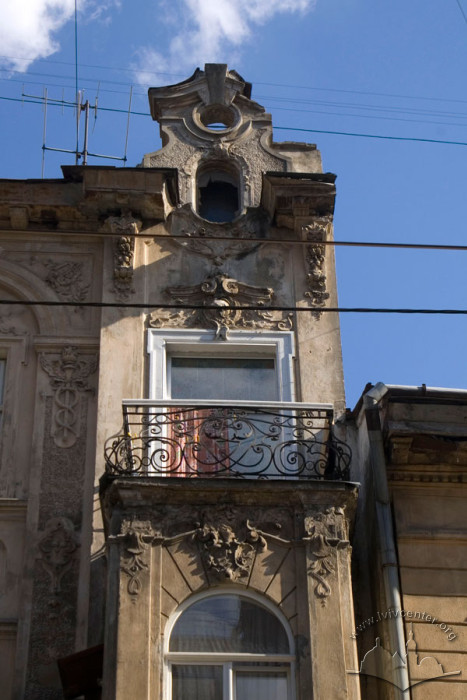
The building was designed in the Secessionist style. It is a three-story, brick, and plastered structure with a nearly rectangular plan. The interior layout is predominantly of the enfilade type. The composition of the principal elevation is asymmetrical, featuring a side recessed part and an entrance portal shifted to the right. The first floor is rusticated. At the second-floor level, a bay window on profiled brackets projects from the façade, topped at the third-floor level by a balcony enclosed with wrought-iron Secessionist grilles. The bay window is illuminated by a half-circular window with a heraldic cartouche and decorated with pilasters and ornamental plasterwork. In the main section of the building, a balcony with wrought-iron S-shaped grilles projects from the second floor. The second and third floors of this section are vertically articulated by two pilasters connected at the top by an archivolt, which is decorated at its center with a heraldic cartouche; beneath this, in an oval niche, is the bust of F. Chopin. The windows of the second and third floors feature profiled trimmings; on the third floor, they are adorned with plasterwork cartouches in place of keystones. The building is crowned by a profiled cornice with brackets and a lucarne above the recessed section.
Related buildings and spaces
-
Vul. Petra Doroshenka
Sources
- Державний Архів Львівської Області (ДАЛО) 2/1/3731
- Львів. Туристичний путівник (Львів: Центр Європи, 1999), 180.
- Lwów. Ilustrowany przewodnik (Lwów: Centrum Europy – Wrocław: Via Nowa, 2001), 105.