Vul. Vitovskoho, 35 – residential building ID: 2684
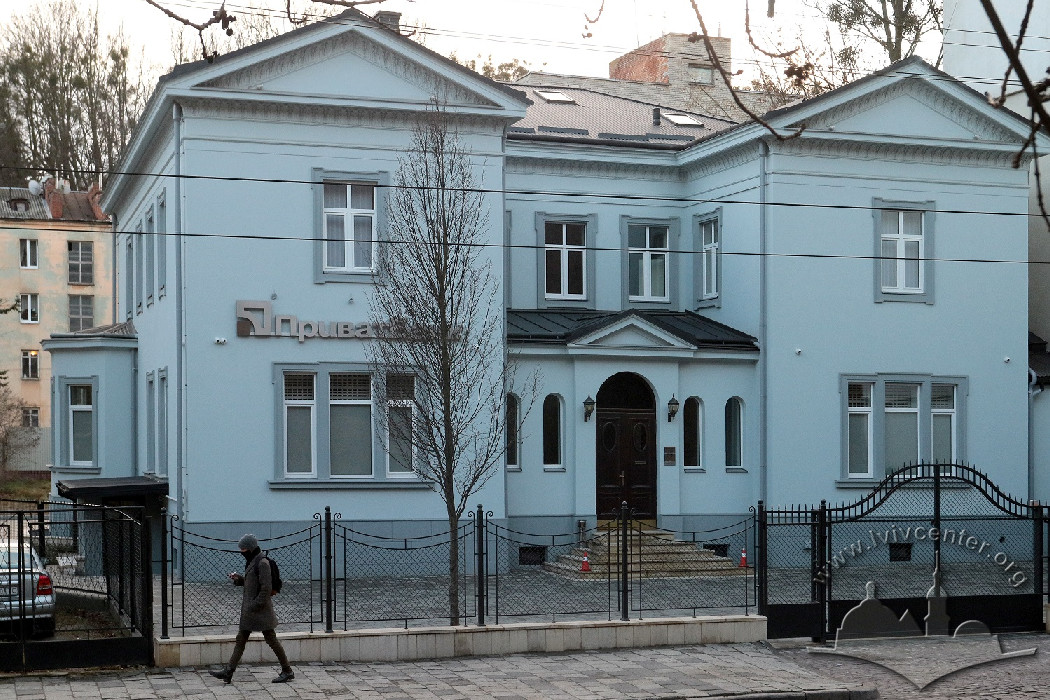
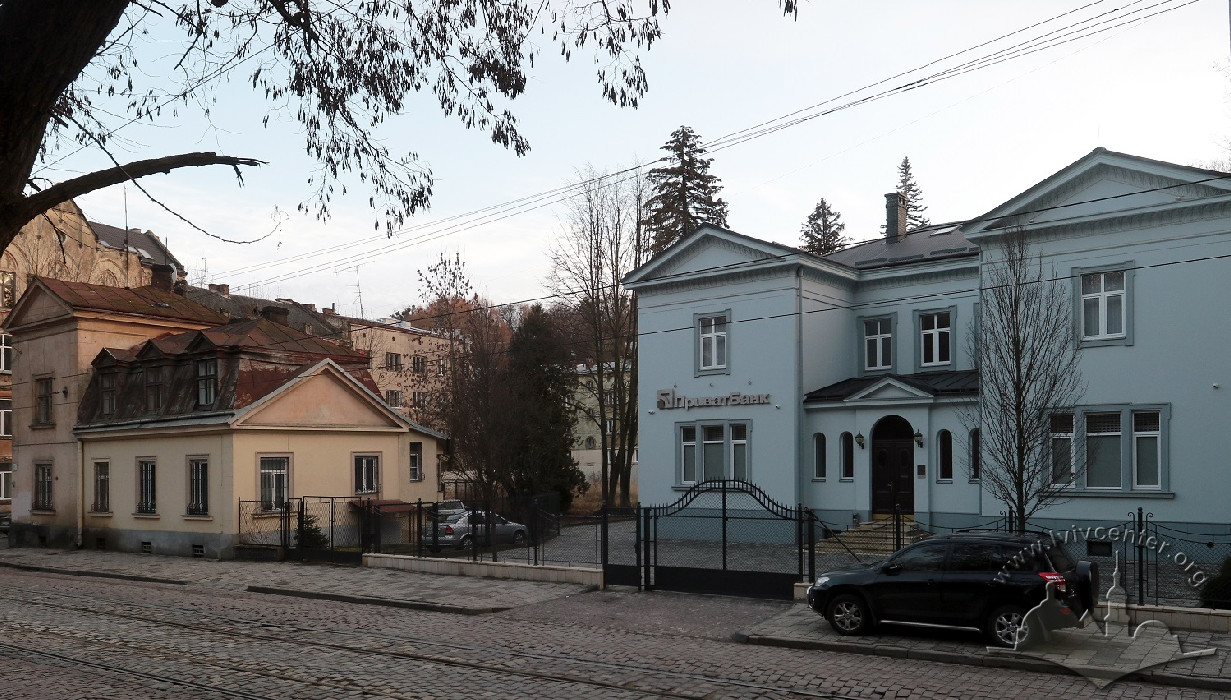
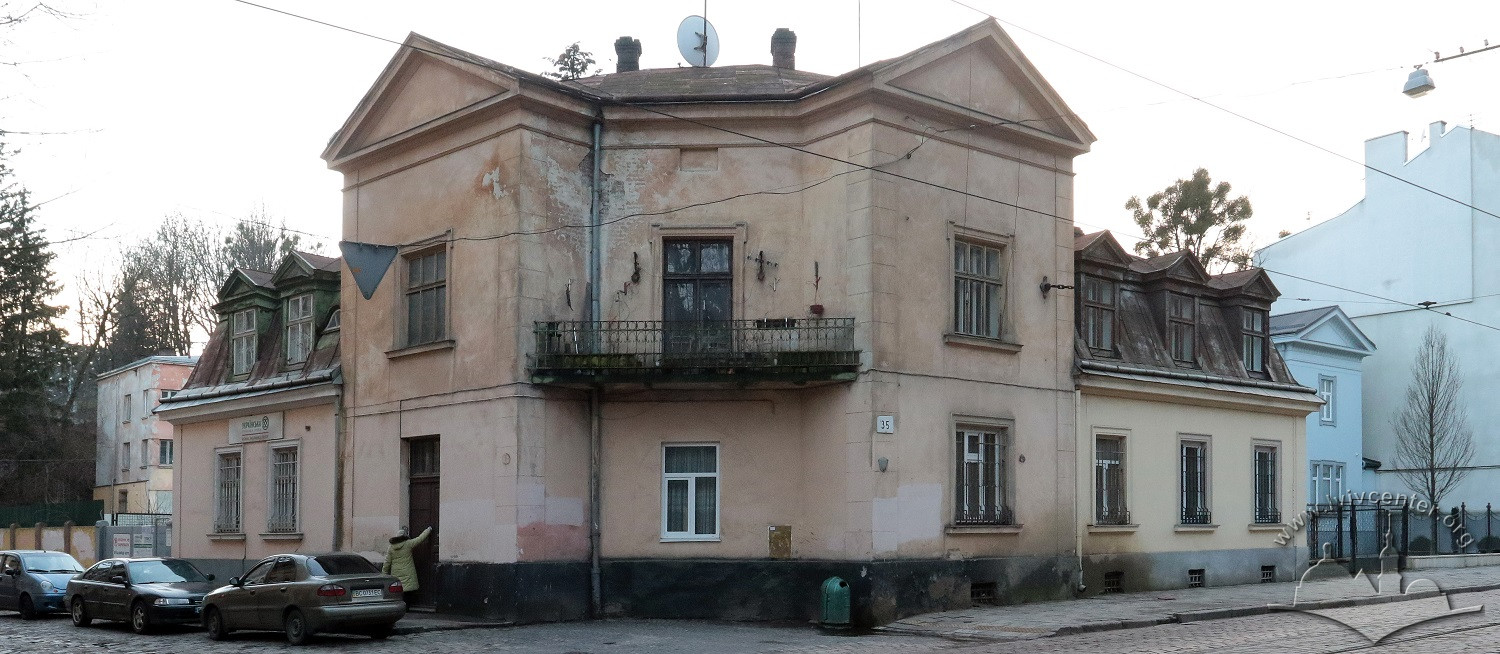
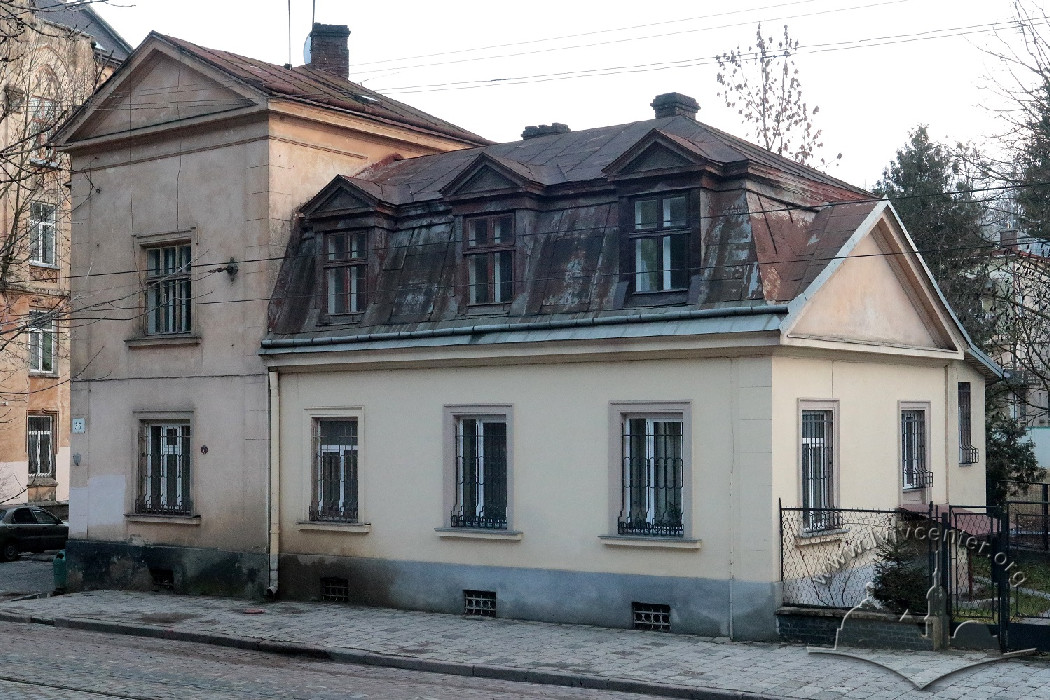
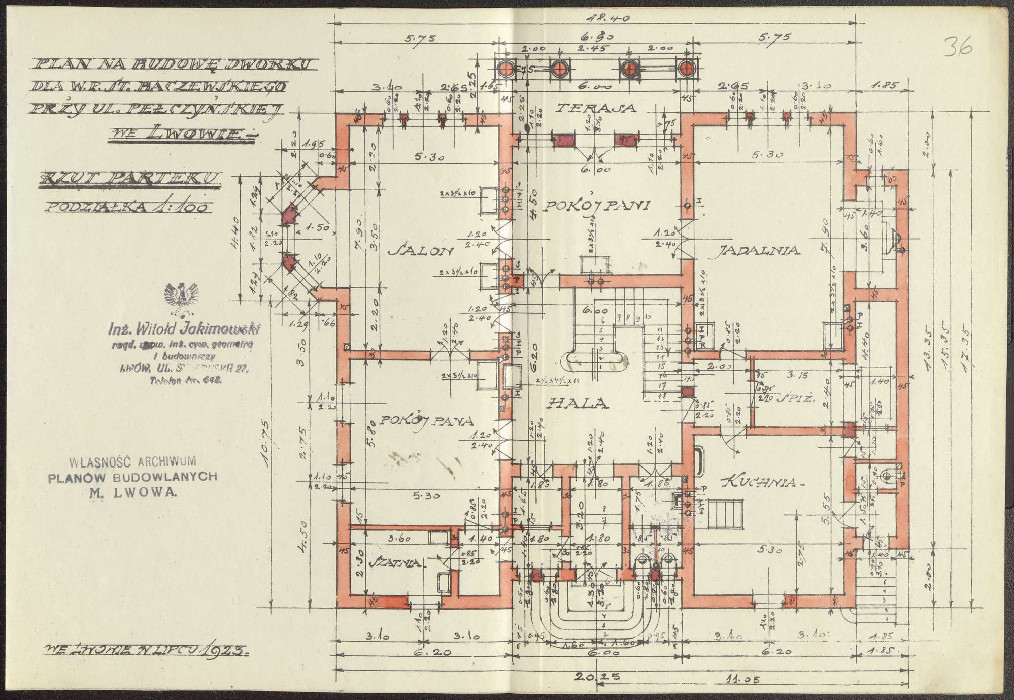
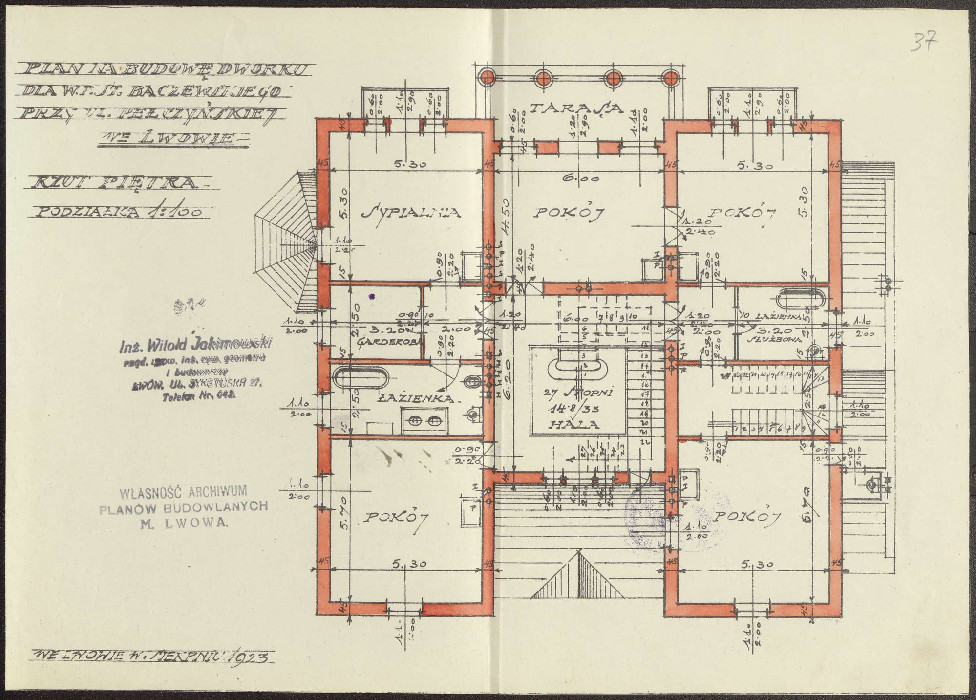
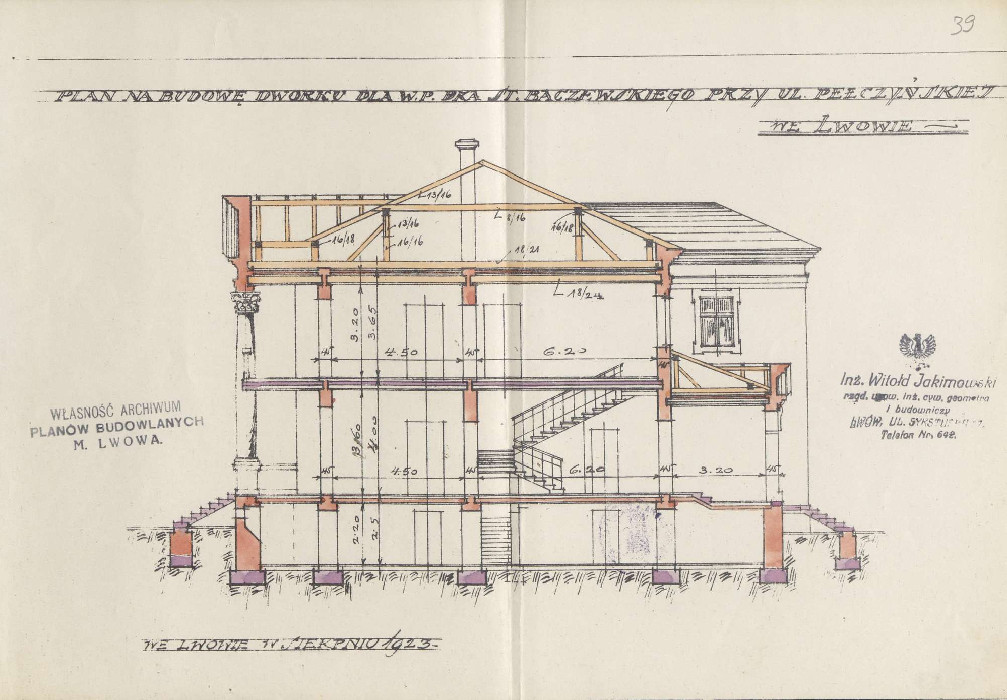
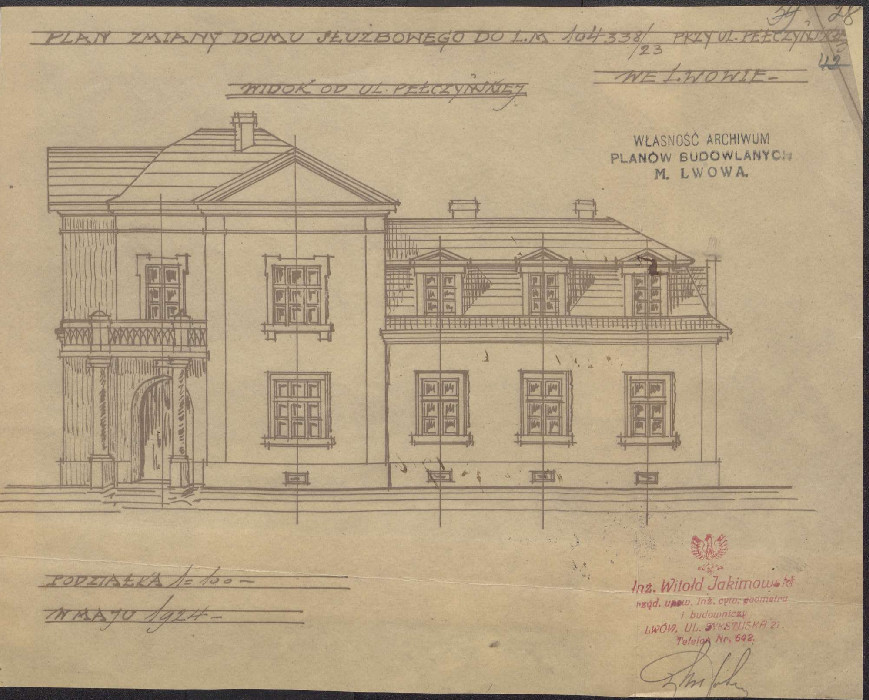
The buildings at vul. Vitovskoho 35-35a are a former villa and a service building that belonged to the owner of a famous distillery, Stefan Baczewski. They were built in 1924-1926 under a project designed by engineer-architect Witold Jakimowski and are united by common Neo-Classicist architectural features.
Story
The area where Stefan Baczewski had a villa built in the 1920s is located between the Panieński and Pełczyński ponds, which were drained after the First World War. These ponds were a place of recreation for Lviv residents. The name of the Panieński pond is related to the Dominican convent to which it belonged, while the name Pełczyński came from the owners of this area, the Pełk family.
Vul. Vitovskoho (then ul. Pełczyńska) and the parallel vul. Zarytskykh (ul. Obertyńska), which arose above the Soroka stream, were parcelled for development in the early 20th century. Short streets named Turecka, Grecka and Bułgarska were then laid between them. In the early 1920s, after the Soroka stream and the Pełczyński pond were drained, vul. Vitovskoho began to be paved and built up with tenement houses within the defined building frontage line.
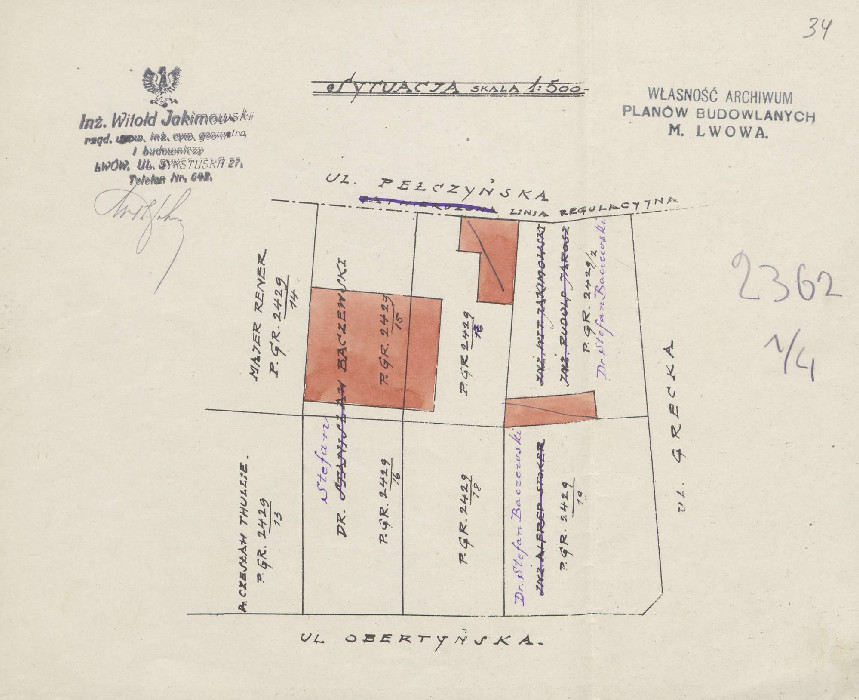
In 1923, Dr. Stefan Baczewski, the owner of a famous distillery, bought a large area limited by ul. Pełczyńska (in the north), ul. Obertyńska (in the south) and ul. Grecka (in the east) from the city. The area consisted of 16 parcels, where he planned to build a "small palace" (pol. dworek). Baczewski gave part of small parcels bordering ul. Obertyńska and ul. Grecka to the city to lay streets there and had earthworks done on these streets out of his own pocket. For this, the city made a road paving around his plot at its own cost and expense.
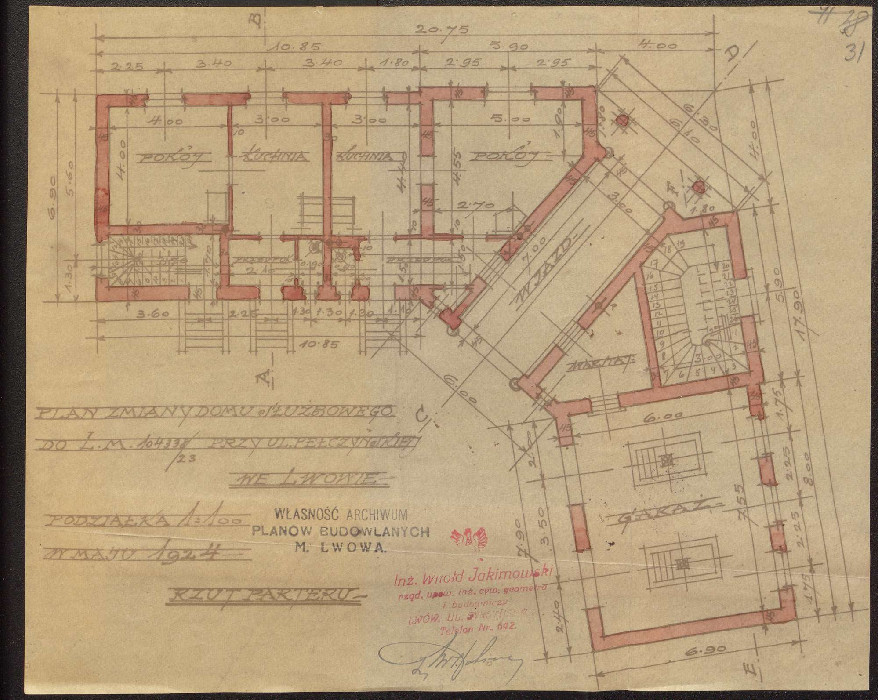
Six of the building parcels acquired by Baczewski (nos. 2429/2, 2429/15, 2429/16, 2429/17, 2429/18, 2429/19) were intended for construction of tenement houses. Immediately after the purchase of the plot in 1923, Baczewski commissioned Witold Jakimowski to develop a project for the construction of three buildings: a villa, a service building with a caretaker's apartment and garages with a temporary barrack and a warehouse for materials. The service building and garages were designed separately on two parcels 2429/16 and 2429/2. The project was approved on August 22, 1923, but only for the villa and the temporary warehouse. The construction of service buildings and garages was not allowed due to the construction of ul. Grecka (now vul. Hretska) and ul. Obertyńska (now vul. Zarytskykh). The villa was built in accordance with the building norms set for Lviv in 1885.
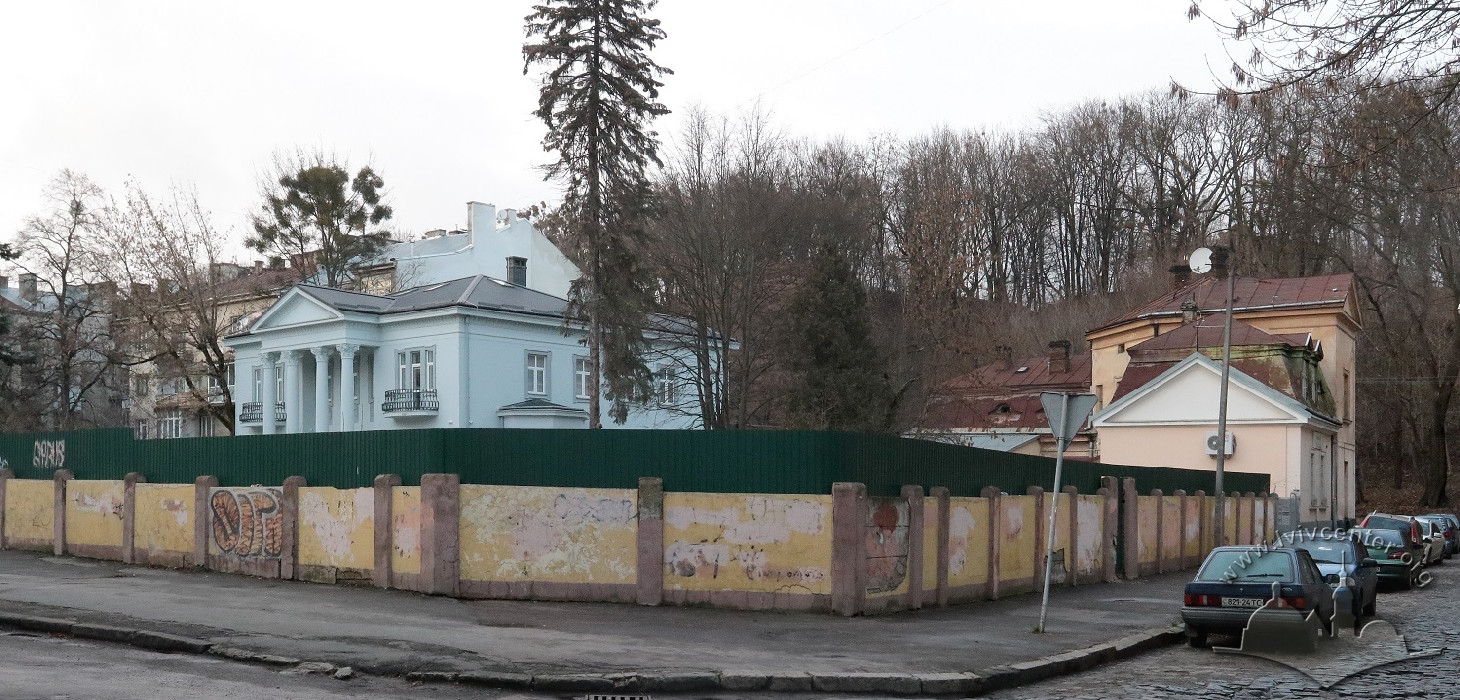
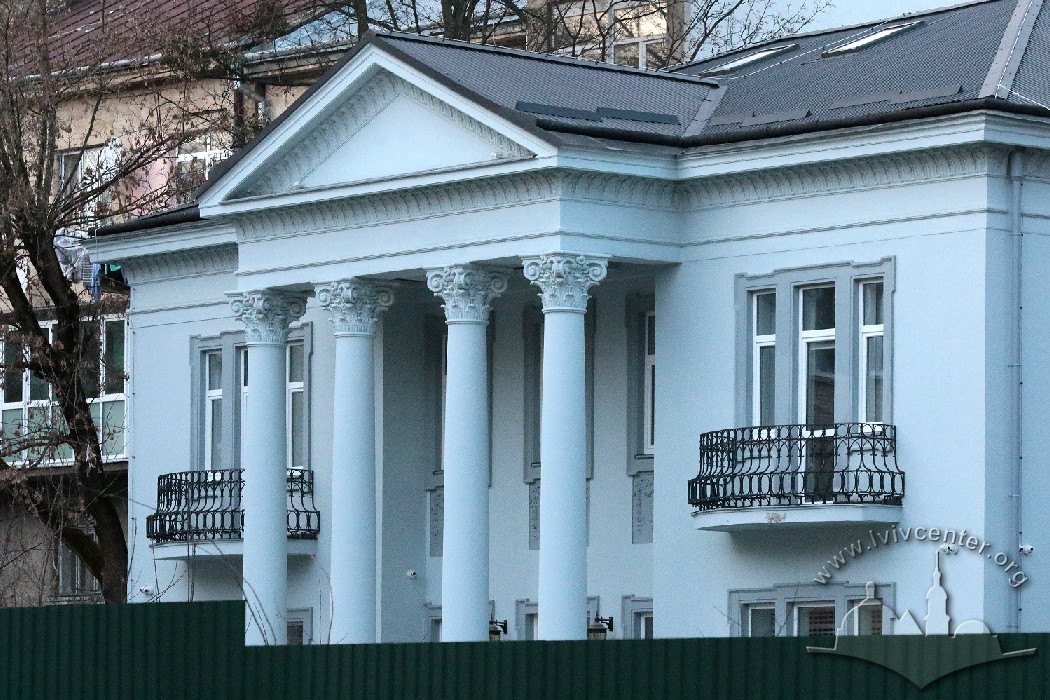
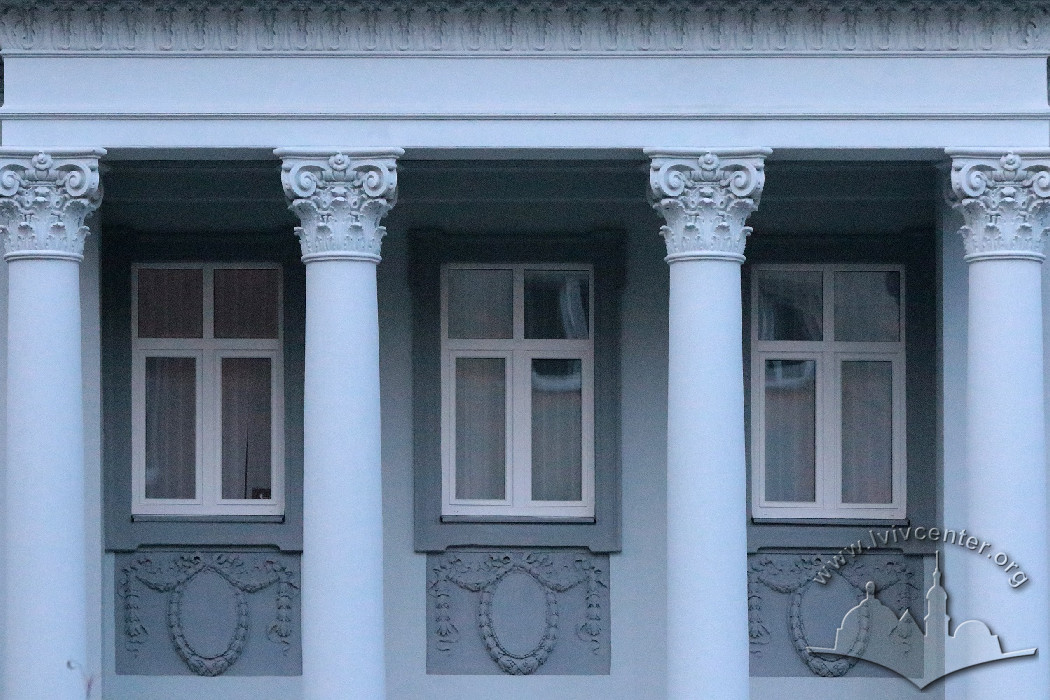
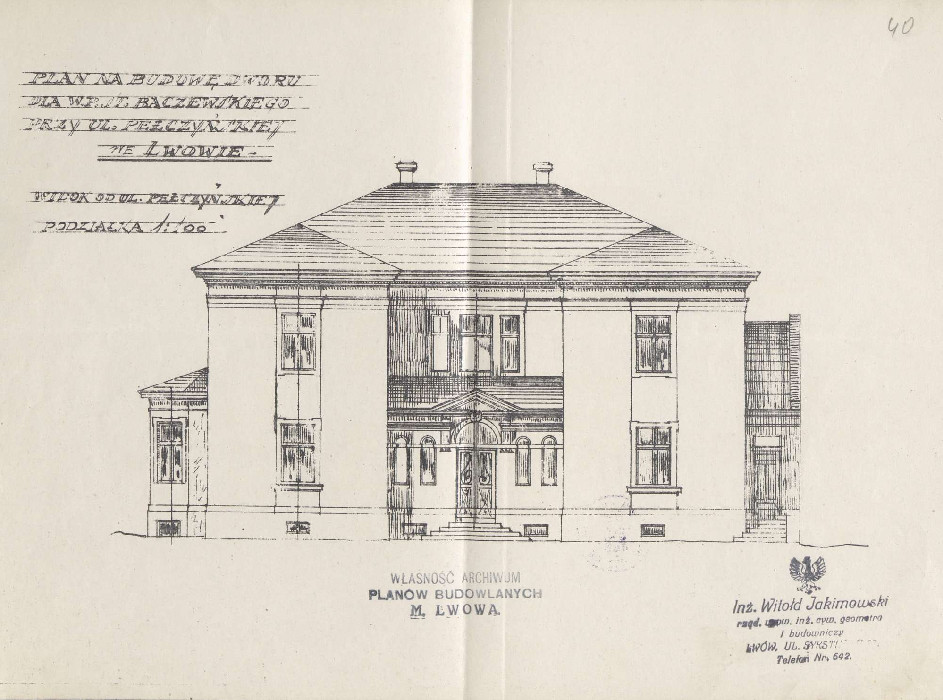
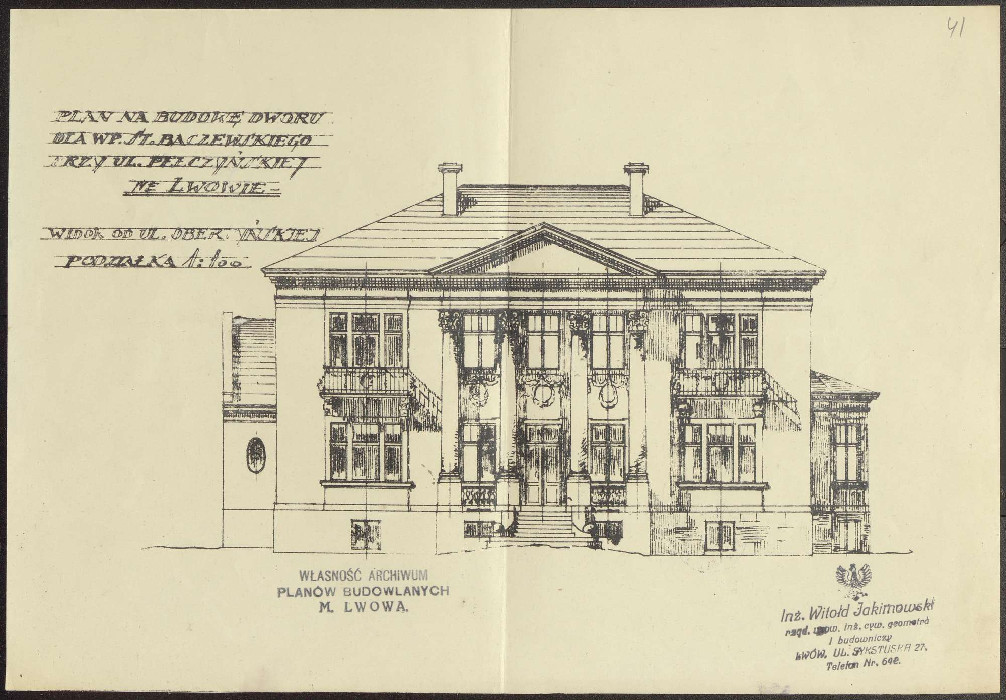
In the summer of 1924, Baczewski's villa was built. It looked like a Classicist-style two-story small palace with a columned portico topped with a triangular pediment overlooking ul. Obertyńska (now vul. Zarytskykh) and with two lateral wings topped with triangular pediments facing ul. Pełczyńska (now vul. Vitovskoho). Installation works were carried out; in particular, chimneys and stoves were manufactured by the company of J. Bliszowski. On August 12, 1924, Baczewski received permission to move into the villa. The service building had not yet been built at that time; a separate project was developed for it. The villa housed the Honorary Consulate of Austria as Stefan Baczewski had been the Honorary Consul of this country since January 4, 1924.
In late 1924, gas lighting was installed in the streets surrounding Baczewski’s plot – ul. Obertyńska, ul. Grecka, ul. Pełczyńska – at the expense of the city and the plot owner, consisting of inlet pipes and lanterns (night and half-night ones).
On March 26, 1926, Baczewski applied to the magistrate once again. He asked not to be charged for the lighting of ul. Grecka and ul. Obertyńska as compensation for the free land provided to the city for the regulation of ul. Pełczyńska. When the new regulation line of ul. Pełczyńska was established, Baczewski ceded several small plots (nos. 2436/4, 7976/2, 2436/10, 2436/11, 7866/8) as well as parts of some plots (nos. 2429/2, 7266/7, 2429/12) in order to expand the street.
On May 18, 1926, the magistrate gave permission for the use of the newly constructed service building with servants’ apartments and garages. It was located at the corner of ul. Pełczyńska and ul. Grecka and was built according to general requirements, with a few exceptions. In particular, kitchens, bathrooms and toilets had to be made of concrete or vaulted with the use of channel bars and ventilated by pipes put above the roof.
On July 27, 1926, after the construction of an estate consisting of a villa and a service building on these parcels, changes were made in relevant documents regarding the parcellation of Baczewski's plot.
With the beginning of the Second World War, the works of several generations of the Baczewski family were completely destroyed. In September 1939, NKVD officers arrested Stefan Baczewski and his cousin Adam; Nazi aircraft bombed the Baczewski factory at Znesinnia; the rest of the surviving equipment and supplies were looted. In 1940, Stefan Baczewski was shot dead in Katyn.
After the arrest of Stefan Baczewski, the Soviet authorities nationalized his villa and a kindergarten was set up there, which operated until Ukraine became independent in 1991. Adaptation works were carried out in the premises; the façades were decorated, in particular, the colour scheme was changed. The service building became residential.
On December 13, 1991, by the resolution of the Lviv Regional Executive Committee number 671 Stefan Baczewski's villa was included among the monuments of cultural heritage of local significance under the protection number 2033-M.
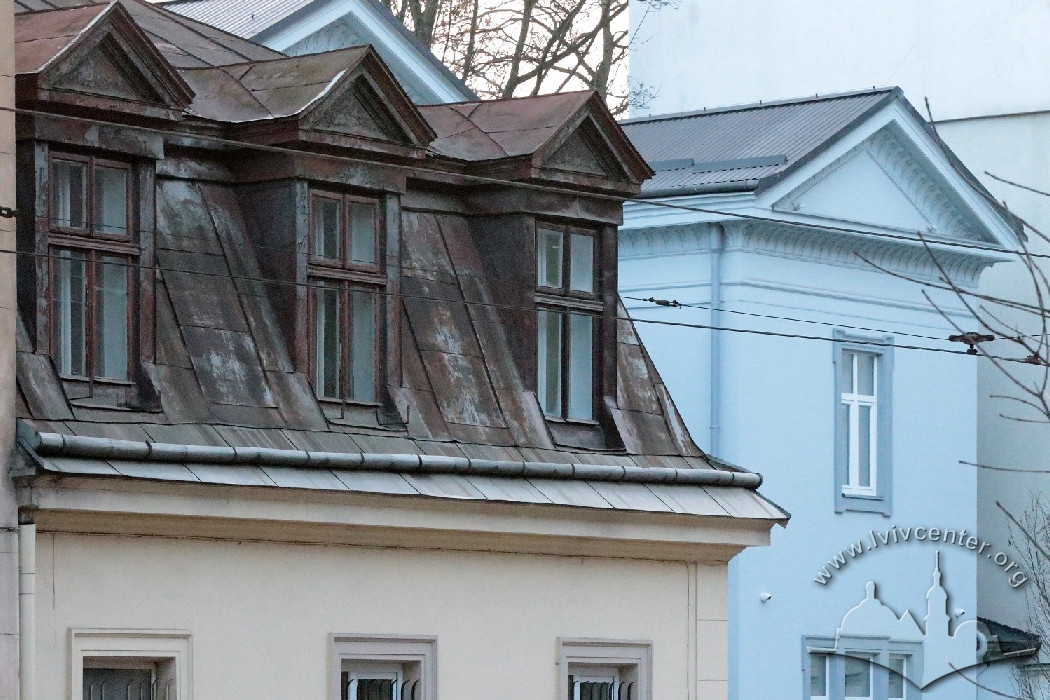
From the early 1990s to 2014, the villa belonged to the PJSC Brokbiznesbank. At that time, repairs and adaptations were carried out. In 2016, the house was purchased by the Kas Consulting company. In 2018, the new owners renovated the building, neglecting its status of a monument. A redevelopment was carried out; the ceiling, roof structures, all window and door woodwork were replaced, a glass structure overlooking vul. Vitovskoho was added and the façades were repainted dark grey. All these works were described by the project author, architect Ihor Hryzliuk, as follows: “We have replaced the floors and engineering networks, which were in an emergency condition. In this way, the internal layout of the structure was made to prevent the destruction of the building. In order to reconstruct the façade, studies of all plaster layers were carried out. It turned out that the building used to be grey and was repainted yellow during the Soviet era, when there was a kindergarten there." Iryna Hirna's professional plaster research revealed a counterfeit marbling of the columns and the grey-and-blue colour of the walls. For the unlawful actions, the Lviv City Council imposed a fine of 170 thousand hryvnias on the PE Kas Consulting, which after a trial decreased to 17 thousand hryvnias.
In 2019, the villa building became the property of the Pleyada Lviv LLC; in 2020, the new owners renovated the façades, inviting architects Yuriy Dubyk and Viktor Los. The proposed colour design is based on the restorer Iryna Hirna’s research.
Architecture
The area where Stefan Baczewski had a villa built in the 1920s is located between the Panieński and Pełczyński ponds, which were drained after the First World War. These ponds were a place of recreation for Lviv residents. The name of the Panieński pond is related to the Dominican convent to which it belonged, while the name Pełczyński came from the owners of this area, the Pełk family.
Vul. Vitovskoho (then ul. Pełczyńska) and the parallel vul. Zarytskykh (ul. Obertyńska), which arose above the Soroka stream, were parcelled for development in the early 20th century. Short streets named Turecka, Grecka and Bułgarska were then laid between them. In the early 1920s, after the Soroka stream and the Pełczyński pond were drained, vul. Vitovskoho began to be paved and built up with tenement houses within the defined building frontage line.
In 1923, Dr. Stefan Baczewski, the owner of a famous distillery, bought a large area limited by ul. Pełczyńska (in the north), ul. Obertyńska (in the south) and ul. Grecka (in the east) from the city. The area consisted of 16 parcels, where he planned to build a "small palace" (pol. dworek). Baczewski gave part of small parcels bordering ul. Obertyńska and ul. Grecka to the city to lay streets there and had earthworks done on these streets out of his own pocket. For this, the city made a road paving around his plot at its own cost and expense.
Six of the building parcels acquired by Baczewski (nos. 2429/2, 2429/15, 2429/16, 2429/17, 2429/18, 2429/19) were intended for construction of tenement houses. Immediately after the purchase of the plot in 1923, Baczewski commissioned Witold Jakimowski to develop a project for the construction of three buildings: a villa, a service building with a caretaker's apartment and garages with a temporary barrack and a warehouse for materials. The service building and garages were designed separately on two parcels 2429/16 and 2429/2. The project was approved on August 22, 1923, but only for the villa and the temporary warehouse. The construction of service buildings and garages was not allowed due to the construction of ul. Grecka (now vul. Hretska) and ul. Obertyńska (now vul. Zarytskykh). The villa was built in accordance with the building norms set for Lviv in 1885.
In the summer of 1924, Baczewski's villa was built. It looked like a Classicist-style two-story small palace with a columned portico topped with a triangular pediment overlooking ul. Obertyńska (now vul. Zarytskykh) and with two lateral wings topped with triangular pediments facing ul. Pełczyńska (now vul. Vitovskoho). Installation works were carried out; in particular, chimneys and stoves were manufactured by the company of J. Bliszowski. On August 12, 1924, Baczewski received permission to move into the villa. The service building had not yet been built at that time; a separate project was developed for it. The villa housed the Honorary Consulate of Austria as Stefan Baczewski had been the Honorary Consul of this country since January 4, 1924.
In late 1924, gas lighting was installed in the streets surrounding Baczewski’s plot – ul. Obertyńska, ul. Grecka, ul. Pełczyńska – at the expense of the city and the plot owner, consisting of inlet pipes and lanterns (night and half-night ones).
On March 26, 1926, Baczewski applied to the magistrate once again. He asked not to be charged for the lighting of ul. Grecka and ul. Obertyńska as compensation for the free land provided to the city for the regulation of ul. Pełczyńska. When the new regulation line of ul. Pełczyńska was established, Baczewski ceded several small plots (nos. 2436/4, 7976/2, 2436/10, 2436/11, 7866/8) as well as parts of some plots (nos. 2429/2, 7266/7, 2429/12) in order to expand the street.
On May 18, 1926, the magistrate gave permission for the use of the newly constructed service building with servants’ apartments and garages. It was located at the corner of ul. Pełczyńska and ul. Grecka and was built according to general requirements, with a few exceptions. In particular, kitchens, bathrooms and toilets had to be made of concrete or vaulted with the use of channel bars and ventilated by pipes put above the roof.
On July 27, 1926, after the construction of an estate consisting of a villa and a service building on these parcels, changes were made in relevant documents regarding the parcellation of Baczewski's plot.
With the beginning of the Second World War, the works of several generations of the Baczewski family were completely destroyed. In September 1939, NKVD officers arrested Stefan Baczewski and his cousin Adam; Nazi aircraft bombed the Baczewski factory at Znesinnia; the rest of the surviving equipment and supplies were looted. In 1940, Stefan Baczewski was shot dead in Katyn.
After the arrest of Stefan Baczewski, the Soviet authorities nationalized his villa and a kindergarten was set up there, which operated until Ukraine became independent in 1991. Adaptation works were carried out in the premises; the façades were decorated, in particular, the colour scheme was changed. The service building became residential.
On December 13, 1991, by the resolution of the Lviv Regional Executive Committee number 671 Stefan Baczewski's villa was included among the monuments of cultural heritage of local significance under the protection number 2033-M.
From the early 1990s to 2014, the villa belonged to the PJSC Brokbiznesbank. At that time, repairs and adaptations were carried out. In 2016, the house was purchased by the Kas Consulting company. In 2018, the new owners renovated the building, neglecting its status of a monument. A redevelopment was carried out; the ceiling, roof structures, all window and door woodwork were replaced, a glass structure overlooking vul. Vitovskoho was added and the façades were repainted dark grey. All these works were described by the project author, architect Ihor Hryzliuk, as follows: “We have replaced the floors and engineering networks, which were in an emergency condition. In this way, the internal layout of the structure was made to prevent the destruction of the building. In order to reconstruct the façade, studies of all plaster layers were carried out. It turned out that the building used to be grey and was repainted yellow during the Soviet era, when there was a kindergarten there." Iryna Hirna's professional plaster research revealed a counterfeit marbling of the columns and the grey-and-blue colour of the walls. For the unlawful actions, the Lviv City Council imposed a fine of 170 thousand hryvnias on the PE Kas Consulting, which after a trial decreased to 17 thousand hryvnias.
In 2019, the villa building became the property of the Pleyada Lviv LLC; in 2020, the new owners renovated the façades, inviting architects Yuriy Dubyk and Viktor Los. The proposed colour design is based on the restorer Iryna Hirna’s research.
People
Sources
- Державний архів Львівської області (ДАЛО) 2/1/3185-б. Справа перейменована: ДАЛО 2/1/3028. URL: https://e.archivelviv.gov.ua/file-viewer/229807#file-1220704
- Карта Львова 1936 року.
- Кадастрова карта Львова 1849 року
- Księga adresowa Małopołski. Lwów. Stanisławów. Tarnopól, 1935–1936
- Polskie Towarzystwo Politechniczne we Lwowie. Księga pamiątkowa. 1877-1927 (Lwów, 1927).
- Przemysław Włodek, Adam Kulewski, Lwów. Przewodnik, ( Pruszków: Oficyna Wydawnicza "Rewasz", 2006).
- Микола Драк, Фірма Бачевських у Львові і розвиток лікеро-горілчаної промисловості в Галичині (1782-1939), (Львів, 2004), 38.
- Борис Мельник, Довідник перейменувань вулиць і площ Львова, (Львів, 2001).