Vul. Vicheva, 2 — Holy Protection Monastery of Sisters of the Studite Rule of the Ukrainian Greek Catholic Church ID: 1521
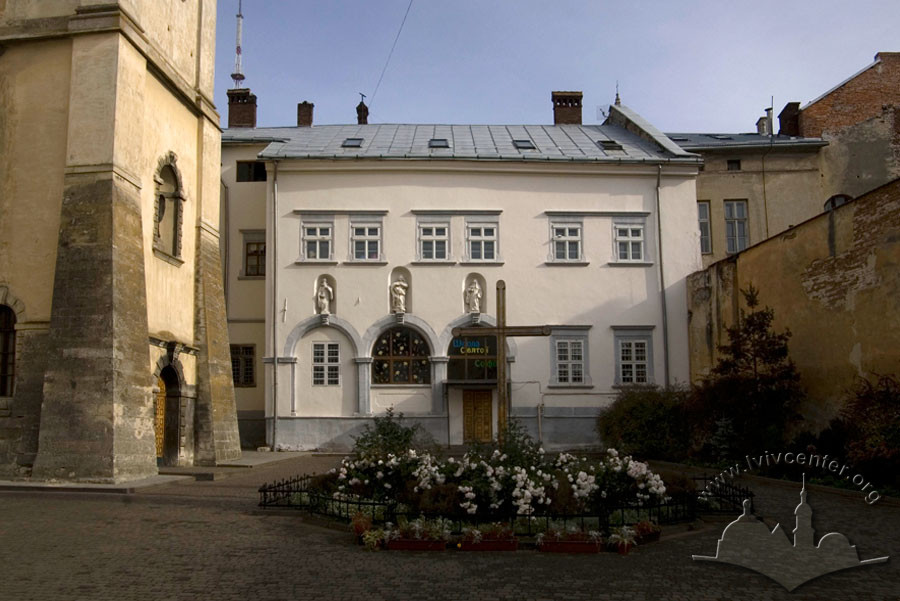
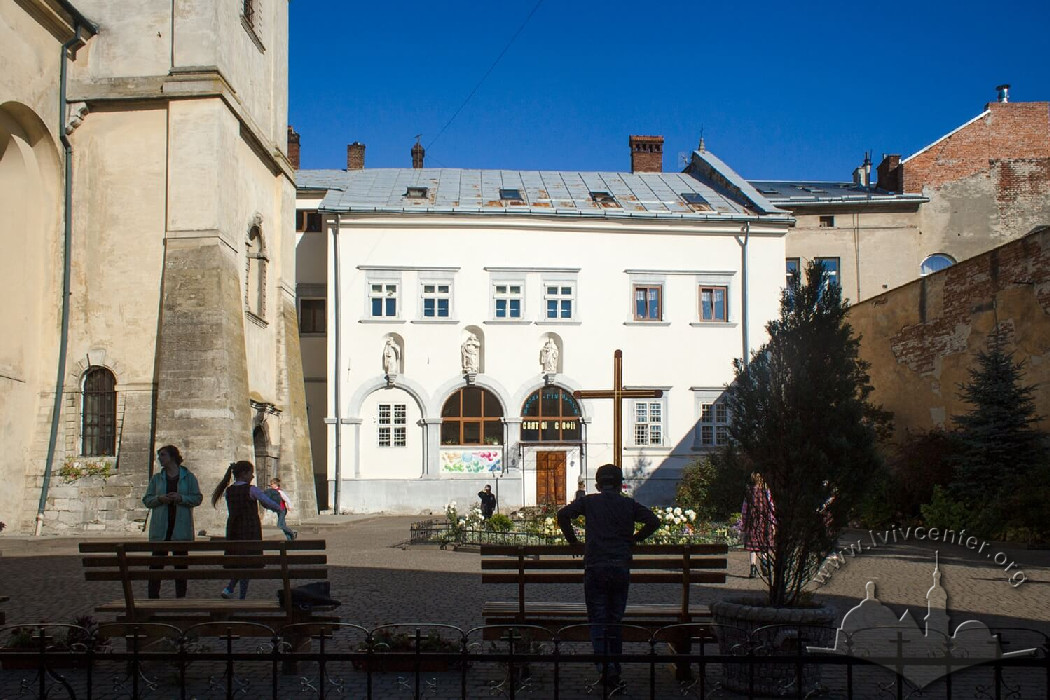
The former Benedictine Sisters Monastery on what was Vicheva (Benedictine) Square. Conscription No. 541 ¾. The monastery was built between 1597 and 1616 through the foundation of Stanislav Saporovsky, based on a design by Paweł Rzymianin. A girls' school has operated on the premises since the early nineteenth century. As of 2010, the church and the main building belong to the Holy Protection Monastery of the Sisters of the Studite Order of the Ukrainian Greek Catholic Church (UGCC). The monastery houses the St. Sophia School as well as a school of music and theology. Since 1963, the Church of All Saints (No. 369/1) and the Holy Protection Monastery (No. 369/2) have been designated as Architectural monuments of national significance; the residential building in the monastery courtyard is listed as a monument of local importance (No. 38, since 1985).
Story
Founded in 1593, the Benedictine convent in Lviv was established by nobleman Stanisław Saporowski for his three daughters, who decided to become nuns. The Renaissance Church of All Saints was built between 1597 and 1616 according to a design by Paweł Rzymianin. The church was damaged by fire in 1623 and restored by architect Jan Pokorowicz by 1627, with the addition of a tower. After the fire of 1748, the complex was restored by builder Marcin Urbanik.
Located outside the city fortifications, the monastery served as an independent defensive complex. Previously, the monastery's farm and residential buildings, as well as its gardens and orchards, occupied a large walled area and extended to the present-day streets of Uzhhorodska and Zamkova, formerly known as Klasztorna.
At the beginning of the nineteenth century, the Benedictine sisters opened a school for girls at the monastery. In particular, a new functionalist style building was constructed for it in 1930 on the side of ul. Piesza.
In the early 1960s, School No. 19 was constructed in the monastery garden based on a standard architectural design. In 1975, archaeological excavations conducted by R. Bahrii on this site uncovered a substantial cultural layer dating from the eleventh–fourteenth centuries. Among the discoveries was a bronze stylus — an ancient tool used for writing on wax tablets.
Architecture
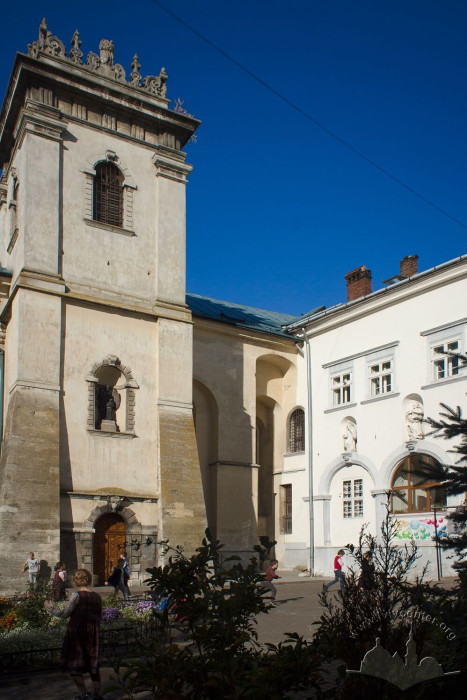
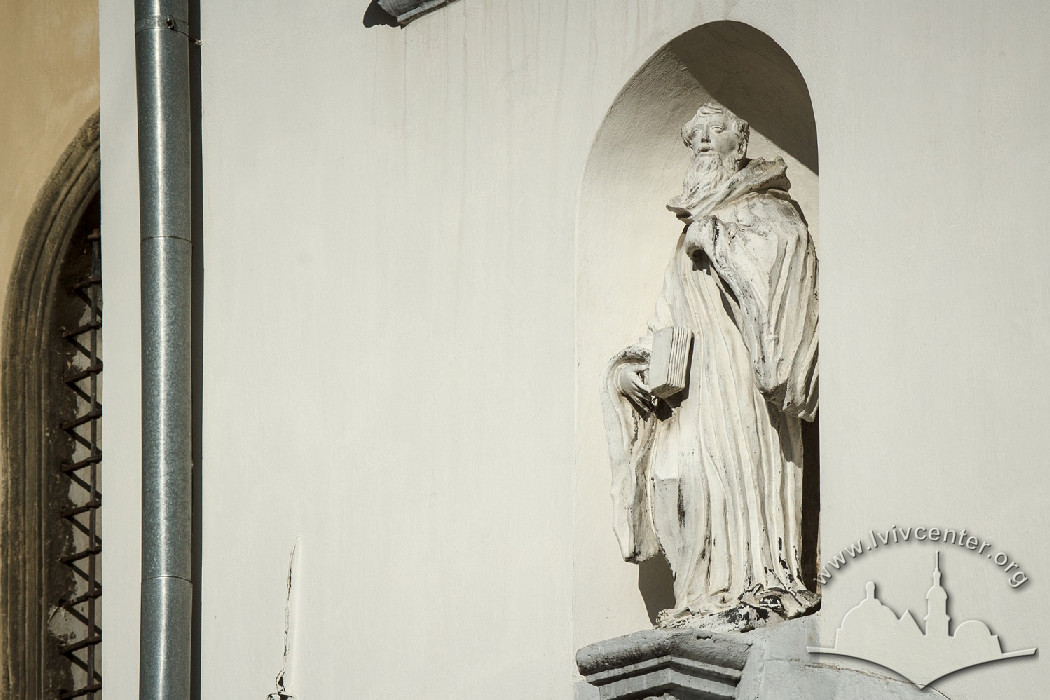
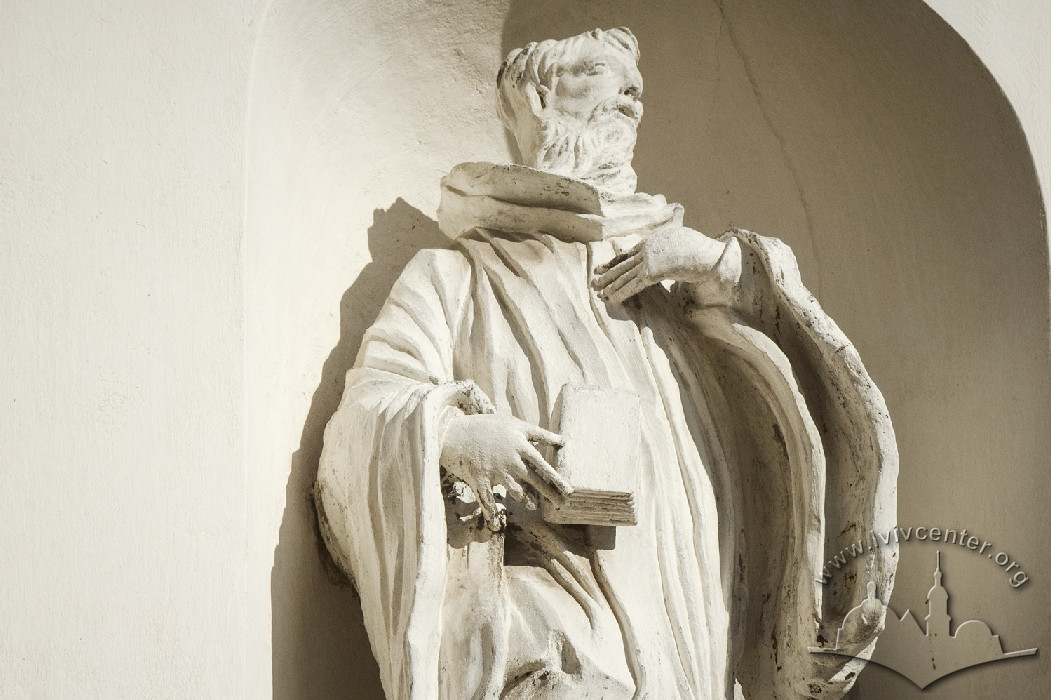
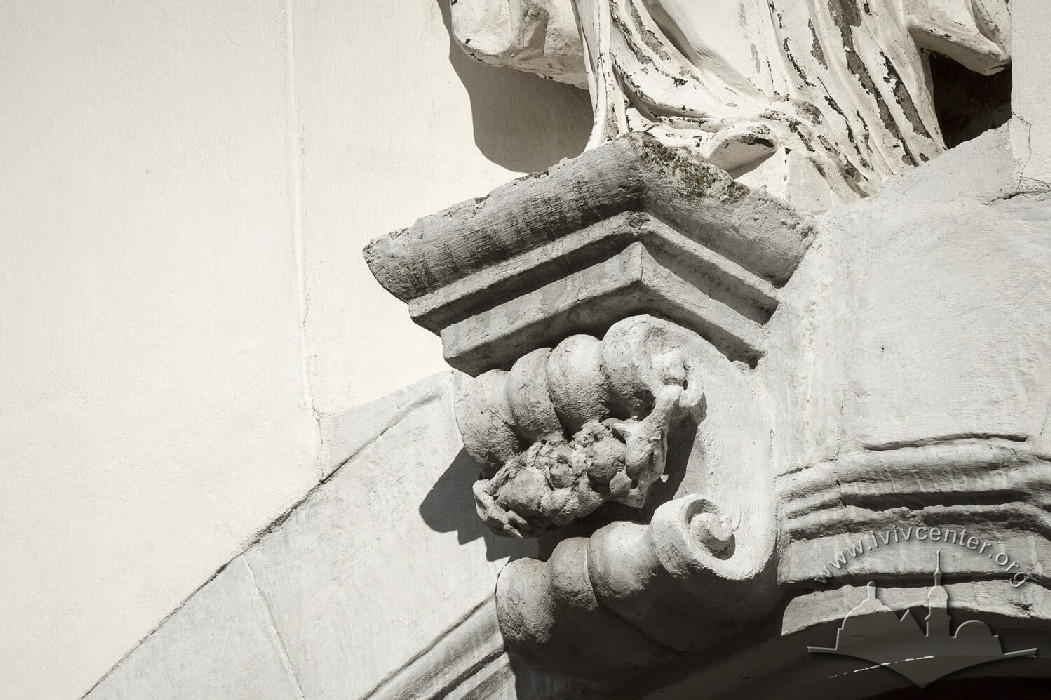
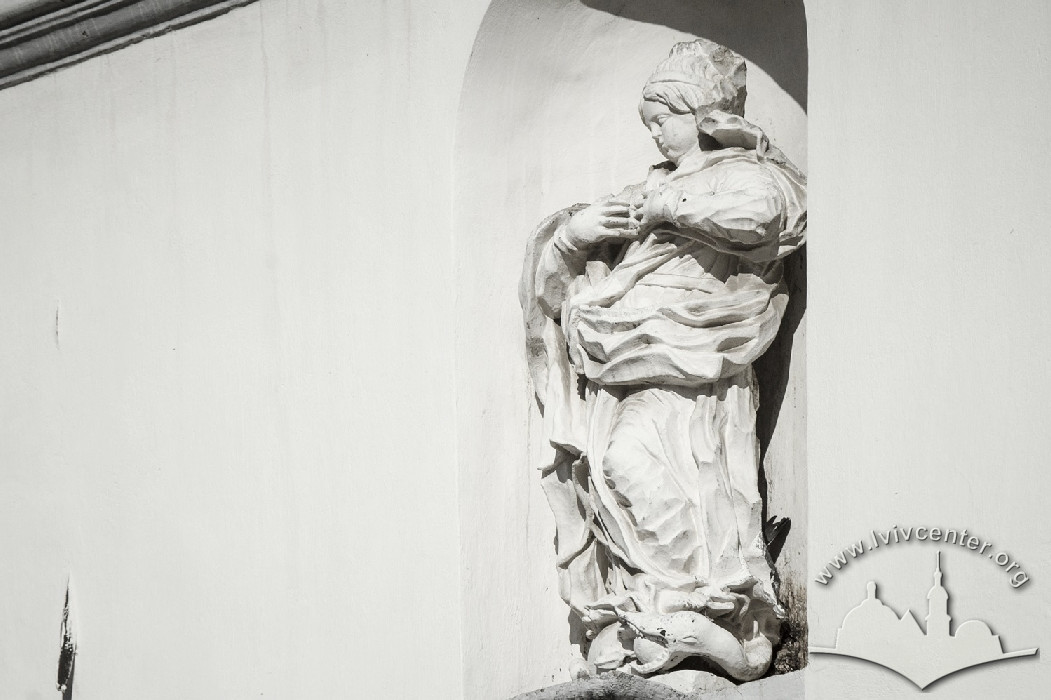
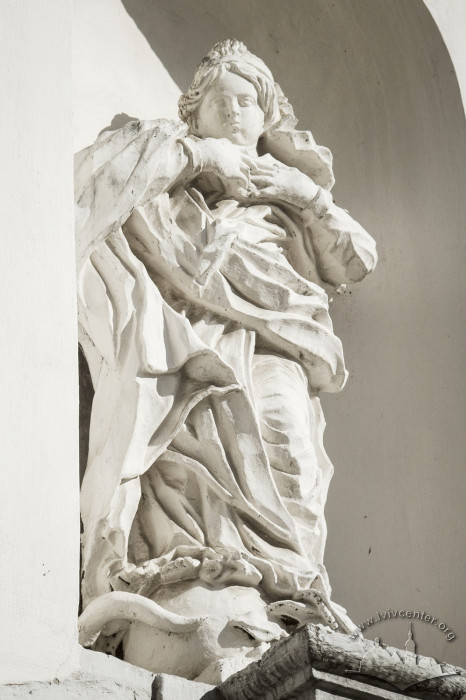
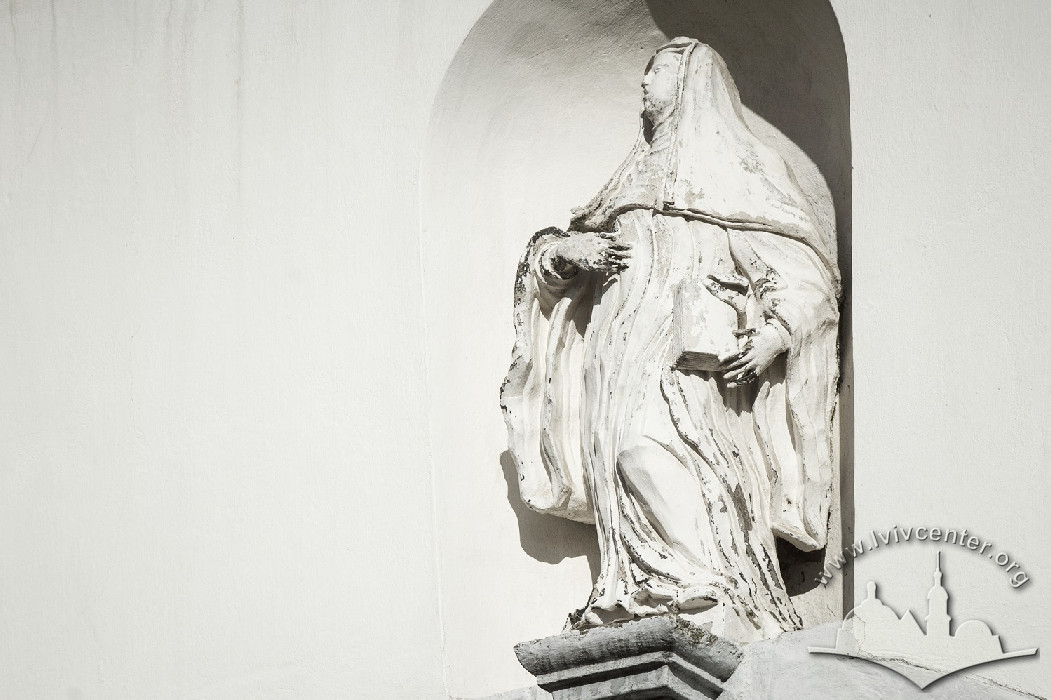
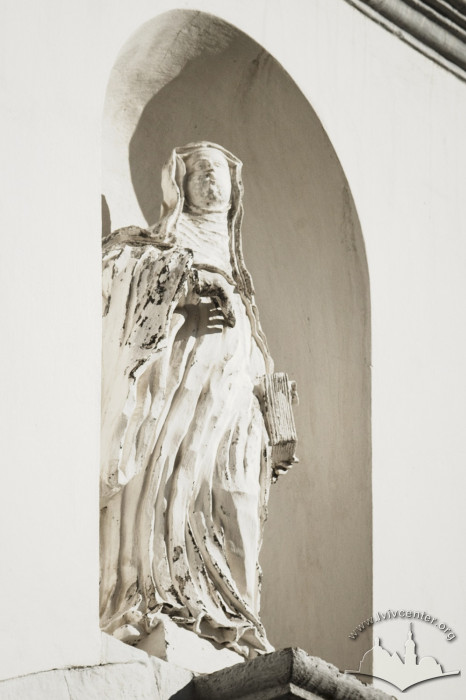
A rectangular tower adjoins the single-nave brick church with its hexagonal apse and rooftop flèche from the southeast. Both the church and the tower are reinforced with escarpments and decorated with white stone carved portals and an attic in the Mannerist style. The attic was once decorated with a figure of the Virgin Mary, which is currently slated for restoration. A sculpture of the Guardian Angel is set within a niche in the south wall of the tower.
A semi-circular arch, decorated with carved rosettes, rises between the nave and the altar. In 1906, a new Renaissance altar was made according to the design of Jan Tarczałowicz, which was destroyed during the Soviet era. Today, the building serves as the Church of the Protection of the Holy Virgin, belonging to the Ukrainian Greek Catholic Church. A new altar featuring an iconostasis has since been constructed within the church.
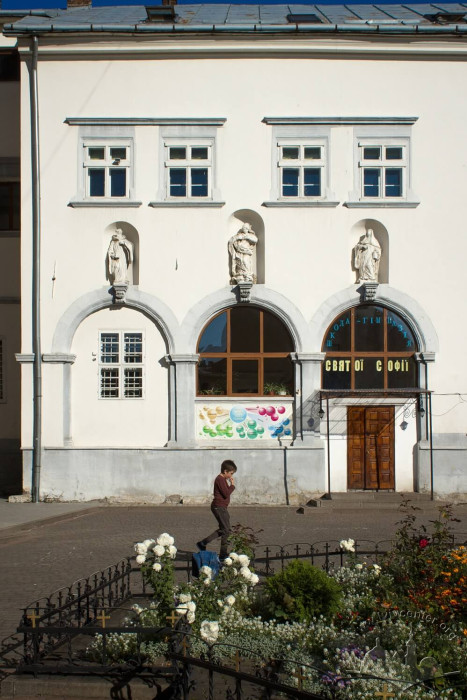
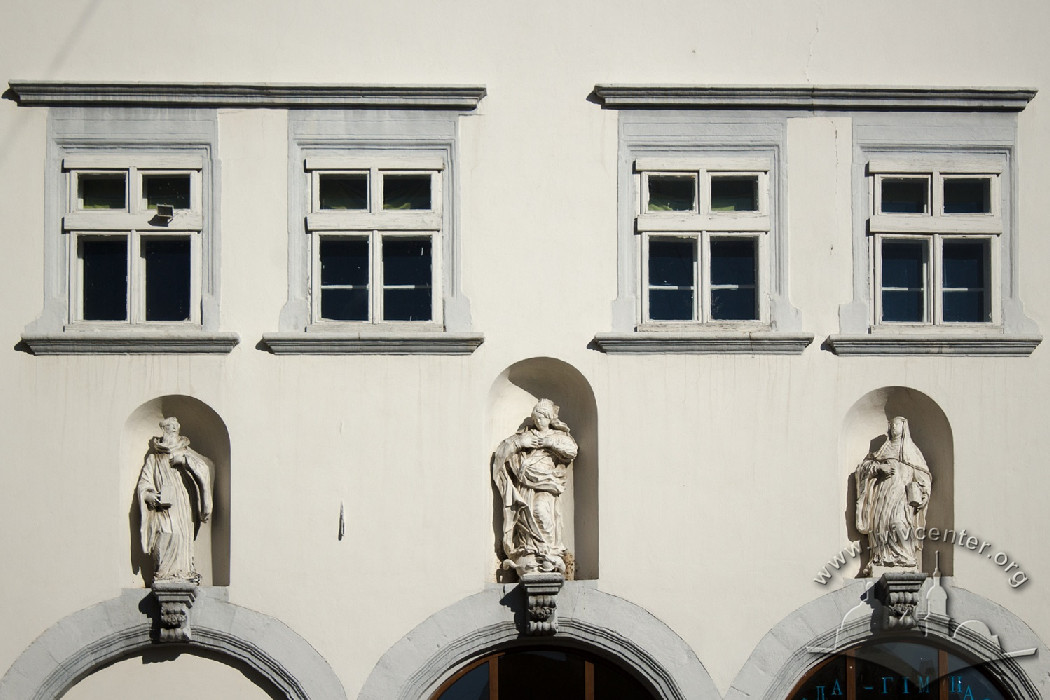
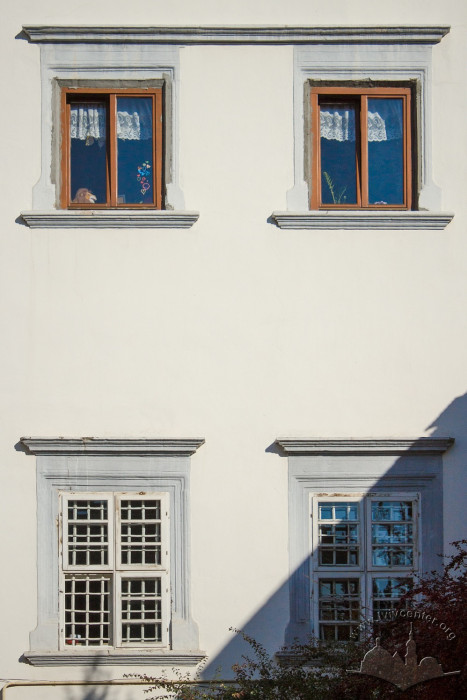
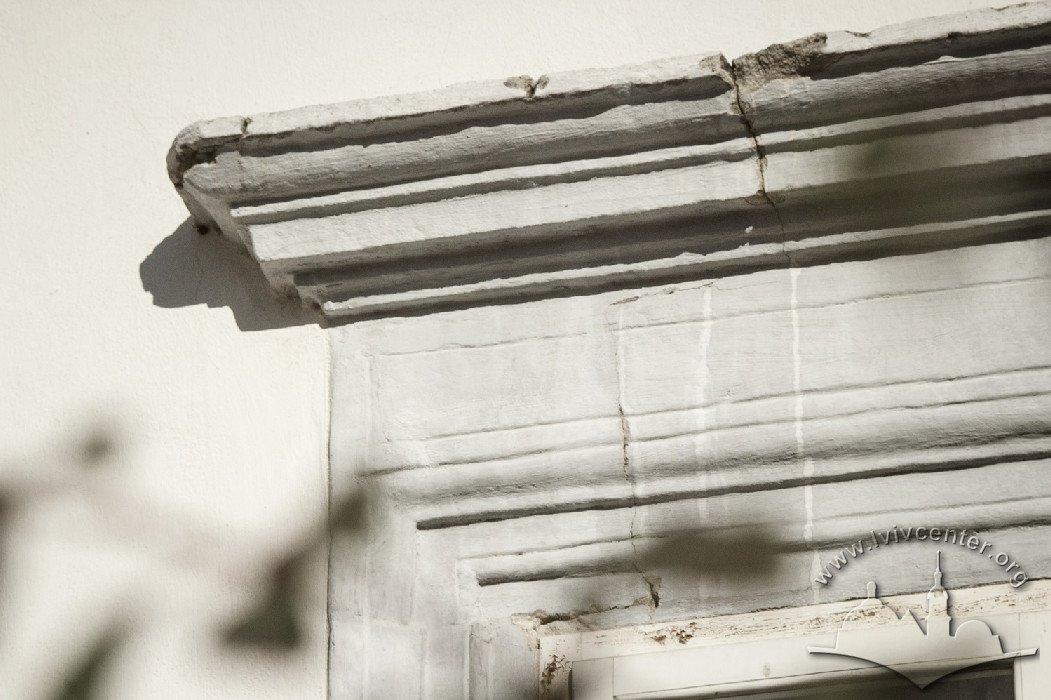
Adjacent to the church on the southeast side is a Renaissance monastery building, constructed between 1612 and 1687. It features loggia arches, white stone portals, and sculptures, as well as an original construction of groin vaults supported by a single pillar. It is a pity that the ancient arcades were bricked up. Perhaps this gained a few rooms, but it ruined the unique appearance of the monastery courtyard.
Between 1608 and 1610, the Benedictine Monastery was enclosed by a high wall, portions of which, along with the entrance gate, have survived to this day. On the exterior, above the gate portal, there is a preserved icon of the Assumption of the Blessed Virgin Mary. On the inside, there is a badly damaged image of Archangel Michael. Adjacent to the gate is a two-story chaplain's house, originally built in 1780 and reconstructed in 1882.
Several residential and farm buildings from the nineteenth century have been preserved in the monastery courtyard.
People
The residential buildings belonging to the monastery were inhabited by the school director, Father Józef Boryczko, the catechist, Father Stanisław Sokołowski, the official of the Regional Department Bronisław Macieszkiewicz, as well as opera artists Antonina and Włodzimierz Malawski and theater artist Franz Münzlinger. The monastery buildings also housed the workshop of renowned sculptor Antoni Sulima Popiel, creator of the Adam Mickiewicz monument in Lviv.