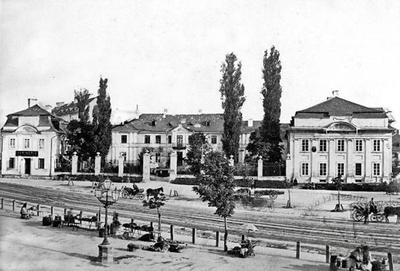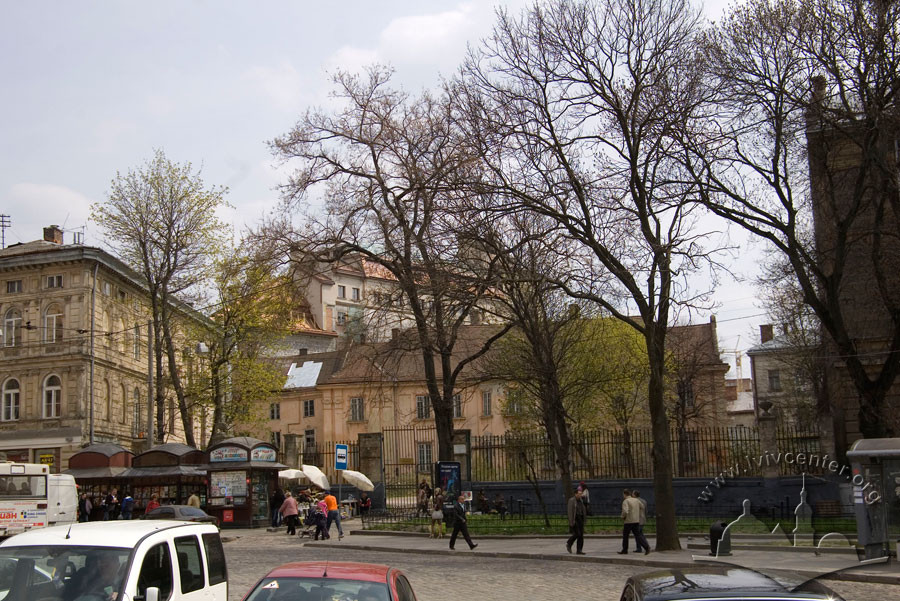
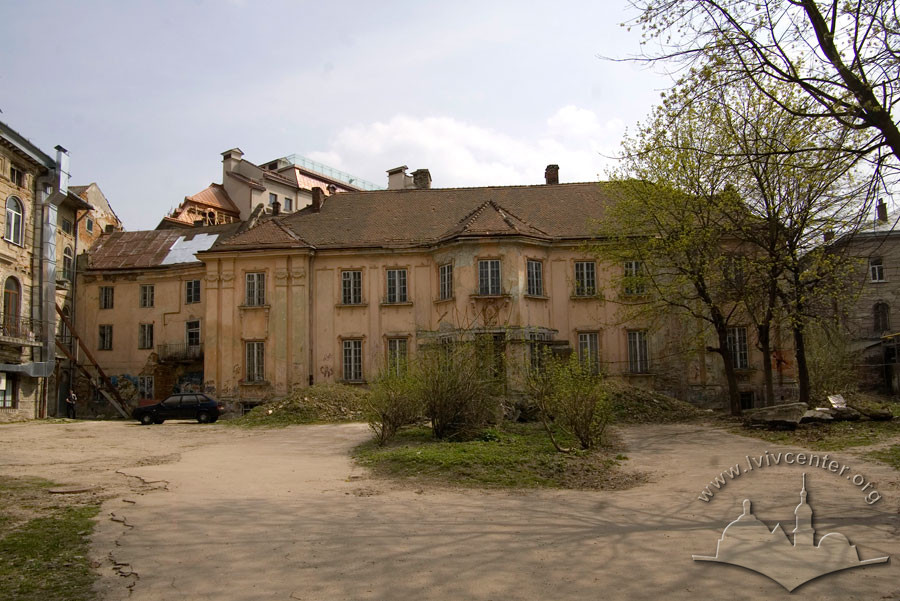
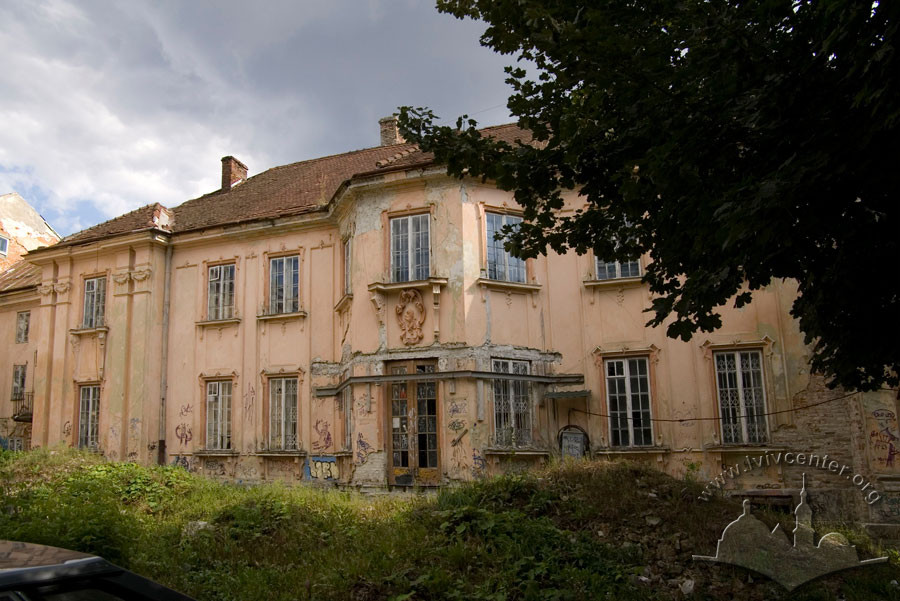
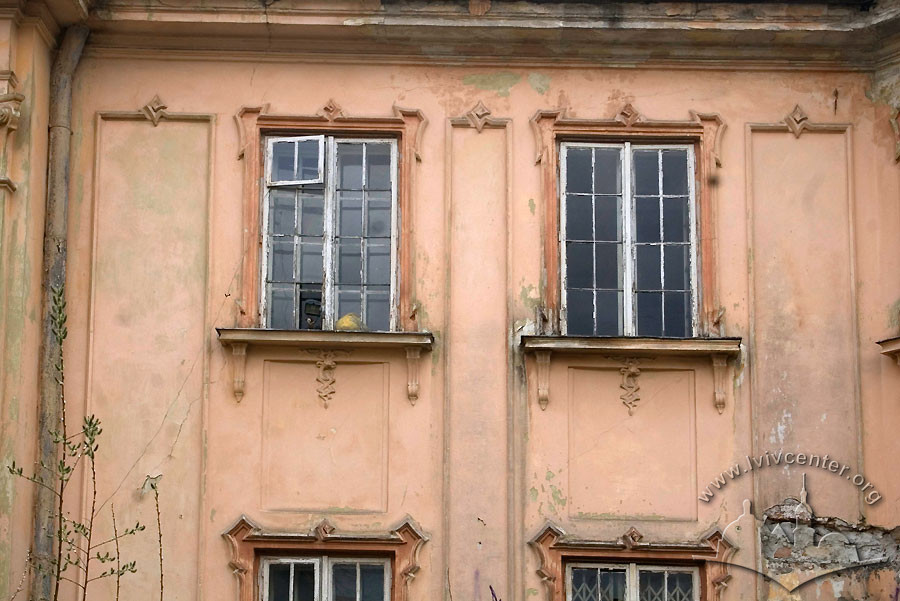
Pl. Halytska, 10 – Library of Ivan Franko National University of Lviv, former Biesiadecki Palace ID: 412
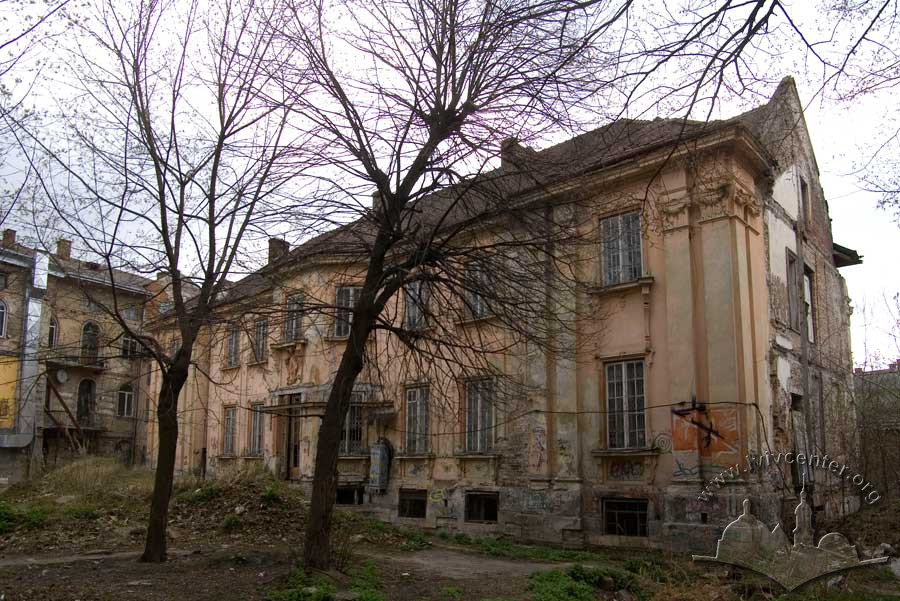
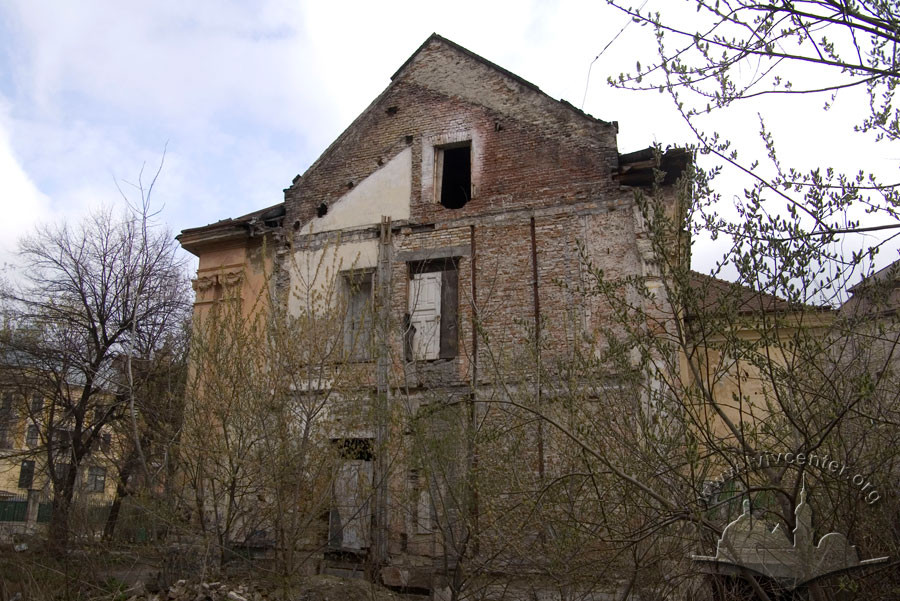
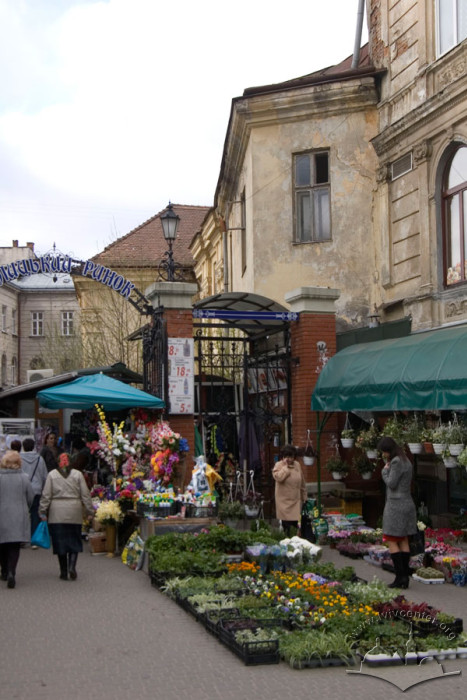
The former Biesiadecki Palace (also formerly owned by the Bielski, Potocki, and Komorowski families; currently housing a library) was built in the early eighteenth century. It underwent major changes over the years: a reconstruction in 1756 by architect Pierre Ricaud de Tirregaille; an interior renovation in the 1820s by architect Fryderyk Bauman; and a further reconstruction in 1934 by architect Jan Bagieński. The architectural styles include Rococo, Empire (in the interior), and Neoclassicism.This standalone building is set back within the property behind a garden, which is separated from the square by a stone wall with an entrance gate. It is a prime example of eighteenth- and nineteenth-century urban palace architecture. Despite various renovations, the monument has preserved its original structural core.
Story
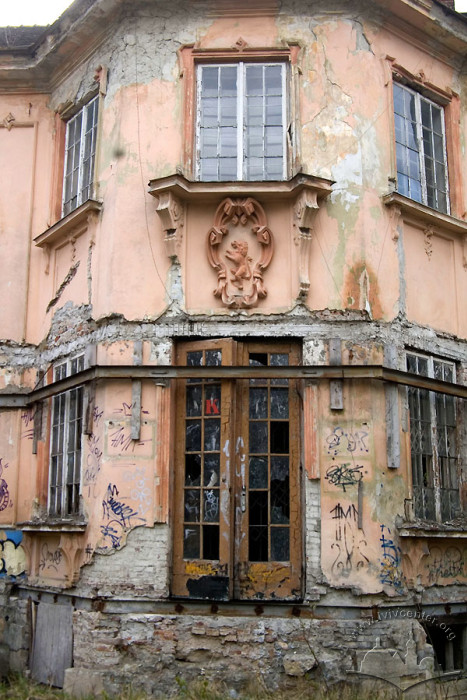
This brick-masonry, plastered, two-story structure is centered by a prominent polygonal avant-corps. The floor plan is nearly rectangular, and the building is capped with a mansard roof. The windows feature trimming adorned with Rocaille decorative elements. Positioned above the main entrance is a stone cartouche displaying a coat of arms.
The interior layout follows an enfilade-and-hall arrangement, which has been partially modified into a corridor-sectional plan. The central hall preserves its sculptural and decorative ornamentation from the first third of the nineteenth century (possibly the work of Johann Schimser).
As a prime example of eighteenth- and nineteenth-century urban palace architecture, the monument has preserved its original structural core despite subsequent renovations.
People
Jan Bagieński — architect, engineer, and educator. In 1934, the building was reconstructed according to his design.
Witold Rawski Jr. — architect, sculptor, and painter. He supervised the 1934 palace reconstruction, which was carried out based on the design by Jan Bagiński.
Tadeusz Błotnicki – sculptor, art critic, and essayist. He was the creator of the fountain featuring the stone figure of the Svitezianka in the small park adjacent to the Bielski Palace.