Vul. Kravchuka, 6 – residential building ID: 2469
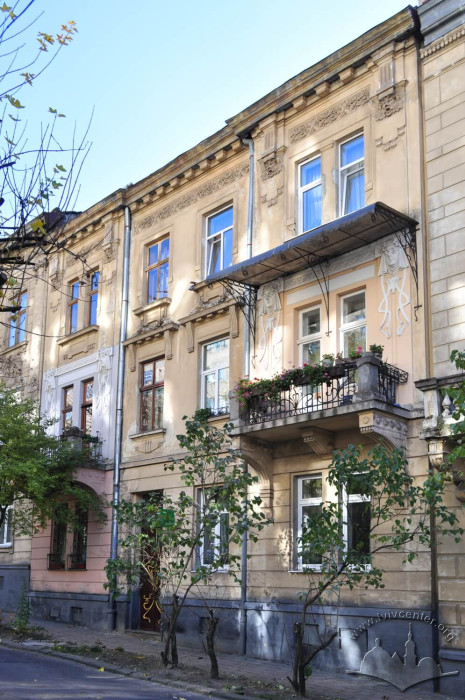
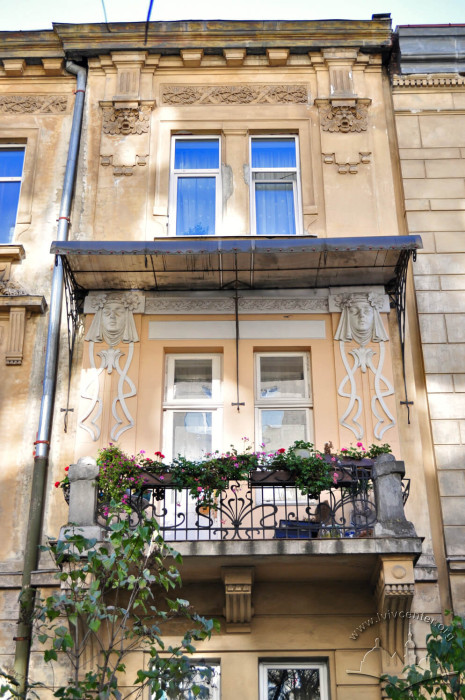
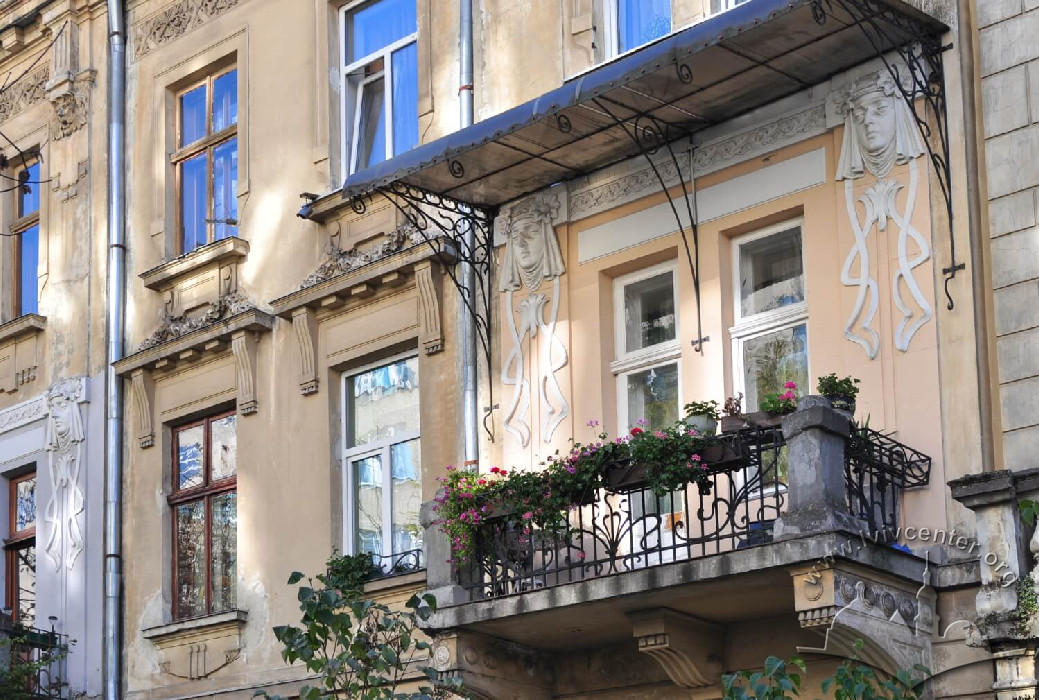
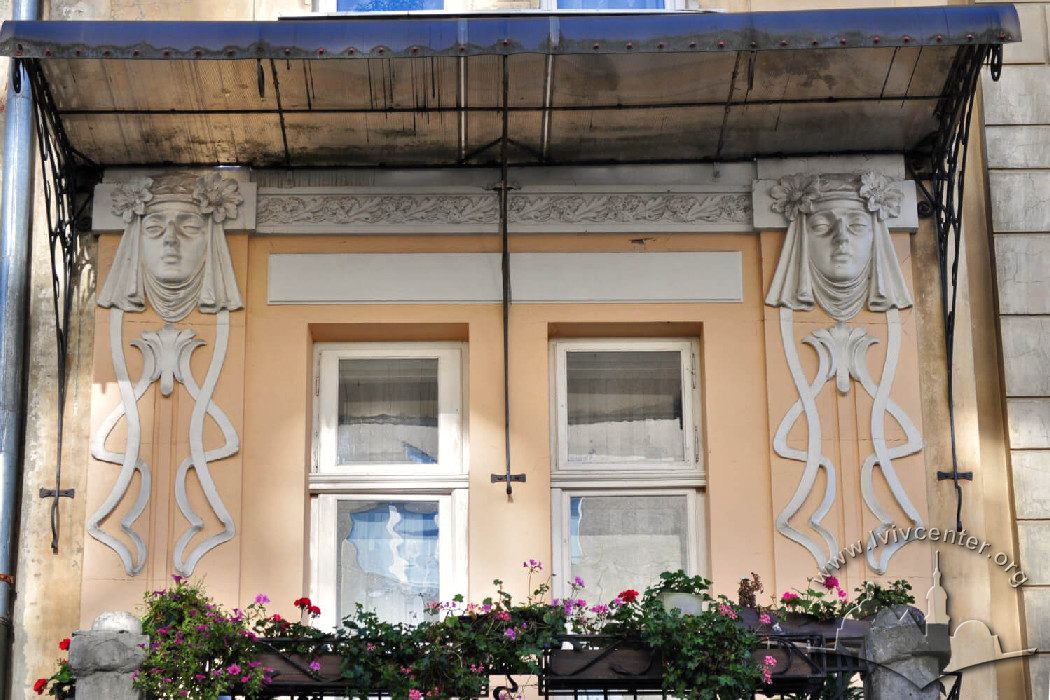
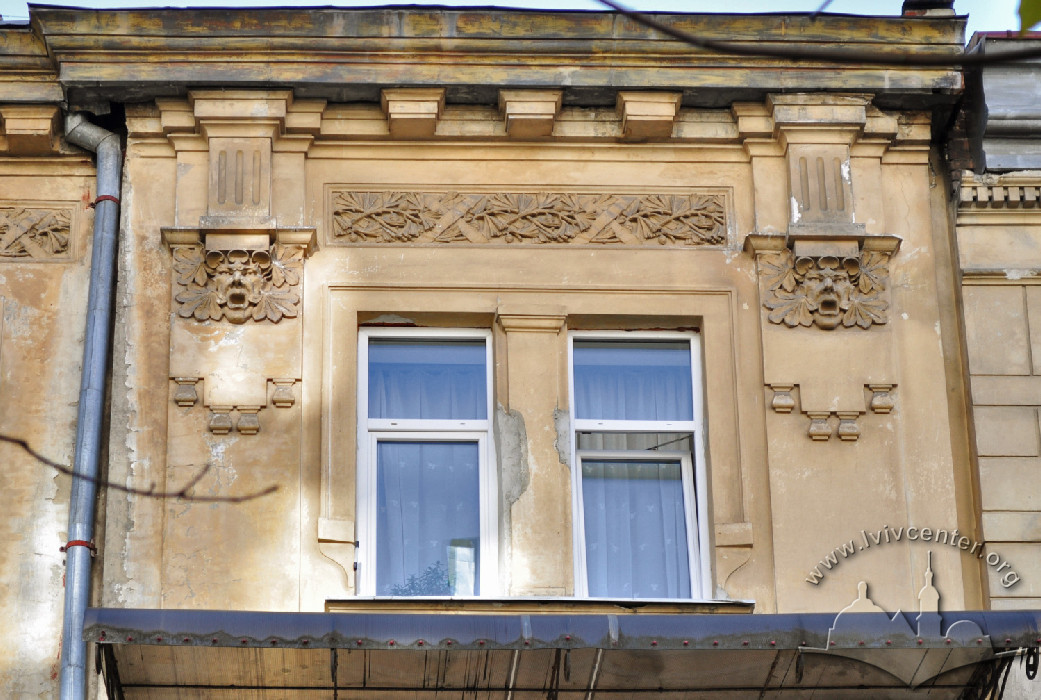
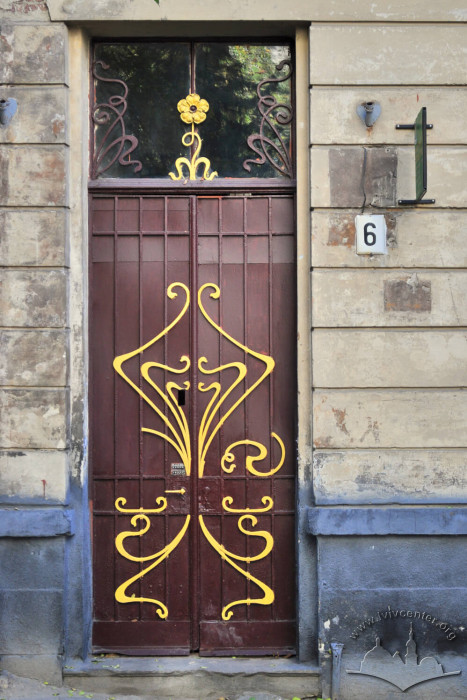
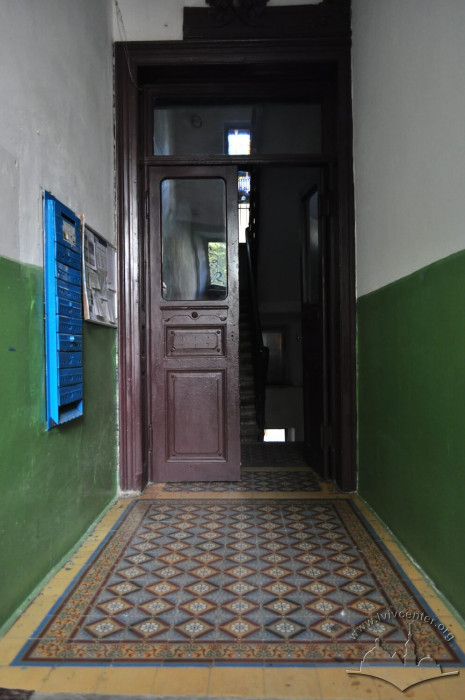
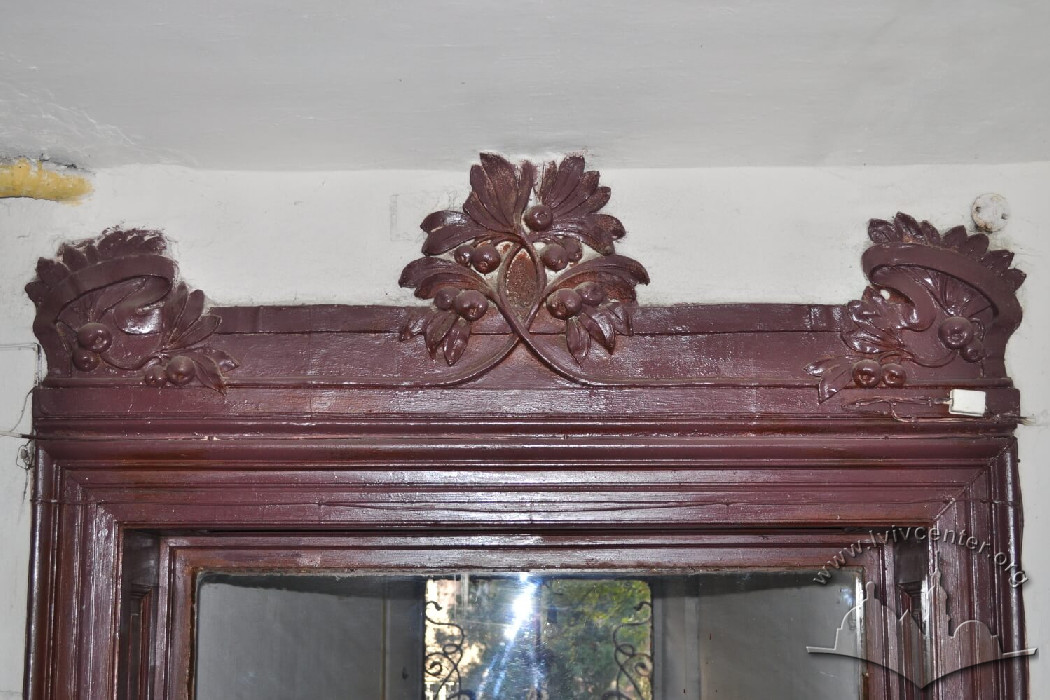
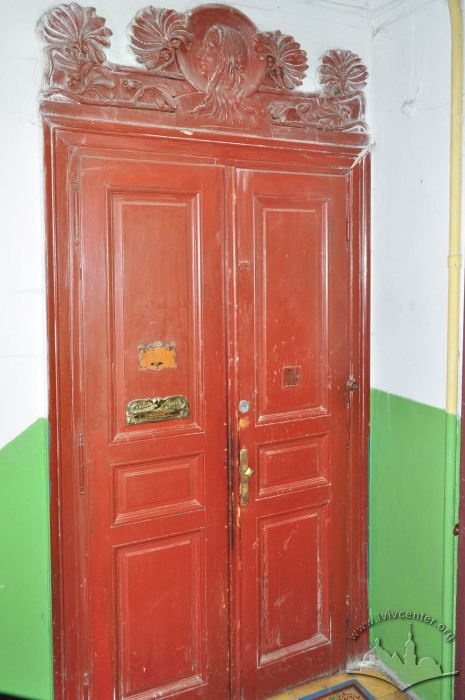
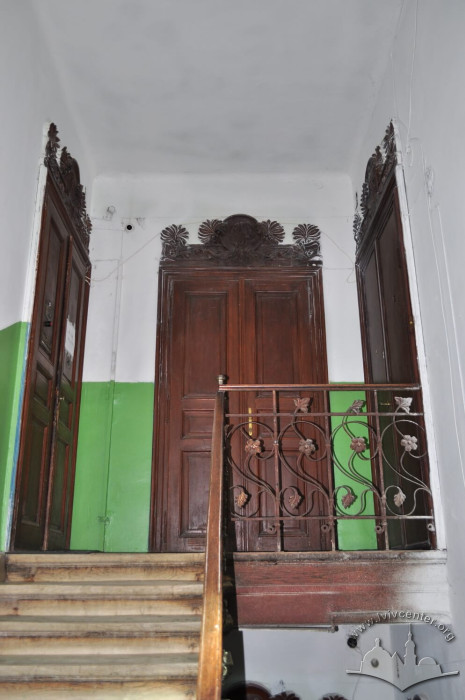
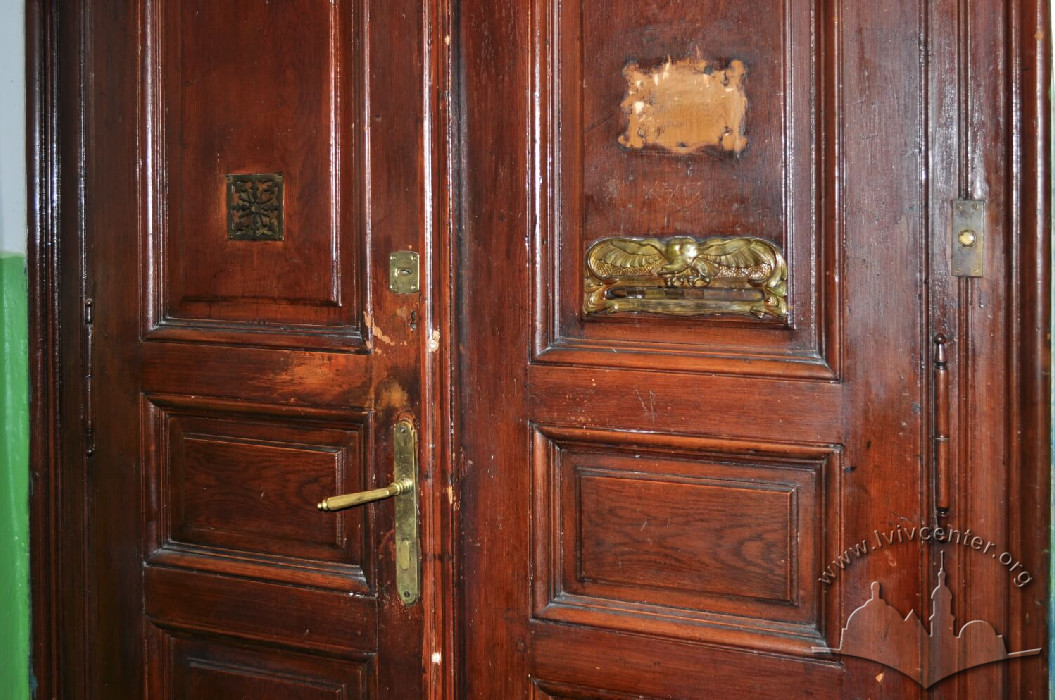
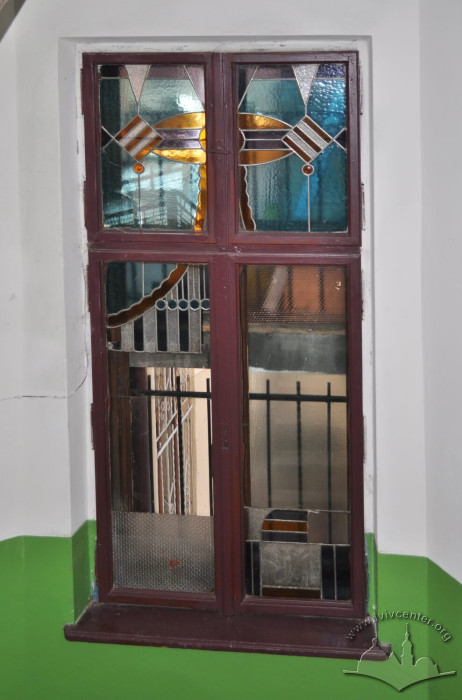
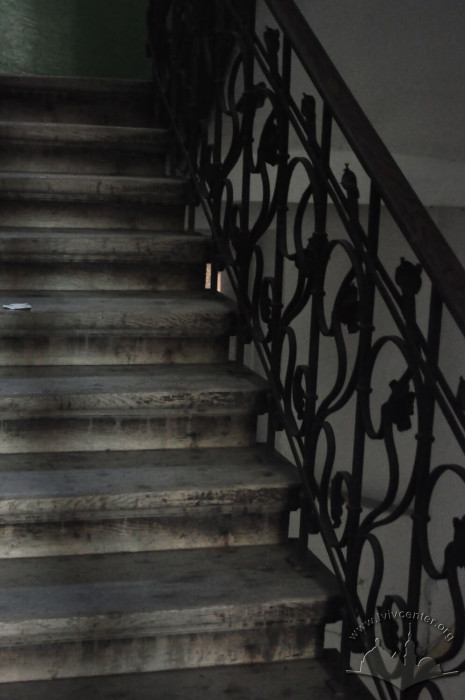
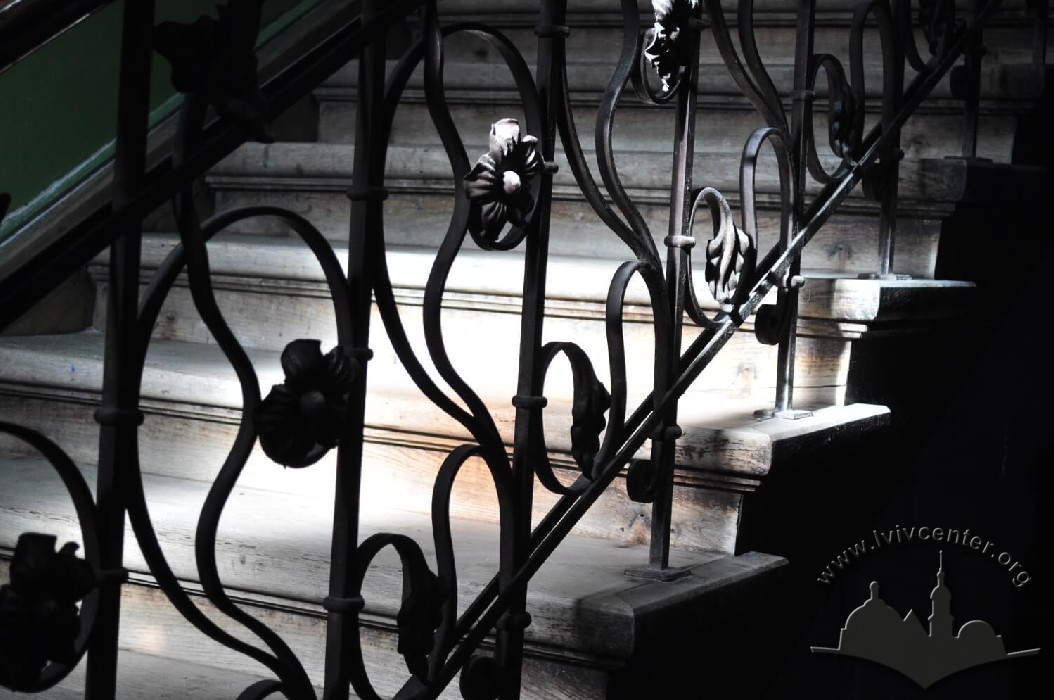
One of the former houses of the engineer Franciszek Goląb (architect Andrzej Goląb’s son), it was built by the first architect of the newly laid vul. Kravchuka, August Bogochwalski, in 1905-1906. The house’s façade and interior are designed in the early (ornamental) Secession style. In particular, the staircase interior has preserved Secession overdoors, stained-glass windows, door details, and Secession paintings under a layer of plaster, which need to be cleaned and restored. The building is an architectural monument (protection number 1072-M).
Story
1900 — laying of vul. Kravchuka (ul. Bonifratrów).
14 July 1905 — approval of the building's design drawings.
March 1906 — water supply and sewerage systems connected to the newly
built building.
25 August 1906 — the magistrate certifies the completion of the
construction.
1920s-1930s — redevelopment of the second and third floors with three
apartments on each floor (instead of two).
1938 — a request to repair the main façade.
Vul. Kravchuka, vul. Sevastopolska and vul. Verkhratskoho appeared at the turn of the 20th century due to the work of architect and entrepreneur Andrzej Gołąb (Melnyk, 2011). For example, on the detailed 1892 map of Lviv by J. Chowaniec, the area behind the former military hospital appears undeveloped and planted with trees; on the 1895 map by J. Chowaniec, the laid-out ul. Hoffmanna (now vul. Patriarkha Yaremy) is already marked. Only the 1900 map shows three still unnamed parallel streets (present-day vul. Kravchuka, vul. Verkhratskoho and vul. Sevastopolska) branching off from ul. Hoffmanna. The parcellation of these streets was not yet shown.
Thus, vul. Kravchuka was laid around 1900 right behind the former military hospital, which had been added to the former Bonifratres’ monastery. Accordingly, until 1946, the street was named after the Bonifratres’ order and was built up in line with the designs of August Bogochwalski in 1900-1908. However, Andrzej Goląb, who died in 1903, was not directly involved in the design of vul. Kravchuka architecture, as stated in some sources (e.g. Melnyk, 2011). Perhaps Andrzej Goląb's role was to lay out the plots in accordance with the neighbouring streets. So, as evidenced by archival files and the monogram ‘GF’ on the cartouches of house 4, the buildings on vul. Kravchuka were commissioned and owned by the architect's son, Franciszek Goląb, an engineer.
In 1946, the street was renamed in honour of Konstantin Tsiolkovsky, the founder of theoretical cosmonautics. In 1993, its name was changed in honour of the mathematician Mykhailo Kravchuk, a full member of the Taras Shevchenko Scientific Society and the Ukrainian Academy of Sciences who was repressed in 1937.
The history of the house at vul. Kravchuka 6 begins on 3 July 1905, when the owner Franciszek Goląb, a senior engineer at the governor's office, asked for permission to build a three-storey building (conscription number 900 4/4) on the ground parcel 6459/10. At that time, the street did not have a name, as Goląb just described its location (as a side street from ul. Hoffmanna behind the Military Hospital) and the magistrate's approval refers to the street as the ‘newly designed Side Hoffmanna street’ (ДАЛО, 2/3/593:1, 2).
The location plan shows that the house is adjacent to the house on ul. A. Goląba (now vul. Verkhratskoho) with conscription number 855 4/4 (parcel 6459/15) from the rear, while on the sides it is adjacent to two plots owned by Franciszek Goląb (as the plan shows), which do not yet have conscription numbers. The rest of the parcels on the street are marked in the same way, which suggests that house 6 was the first to be built on the newly designed street, except, of course, for the corner house 2 (conscription number 827 4/4) from the previously built-up ul. Hoffmanna (now vul. Patriarkha Yaremy).
On 14 July 1905, the design drawings of the building were approved, signed by August Bogochwalski (with his signature and a seal reading ‘Koncesyonowany budowniczy we Lwowie’) and by Franciszek Goląb as the owner (ДАЛО, 2/3/593, 3, 4).
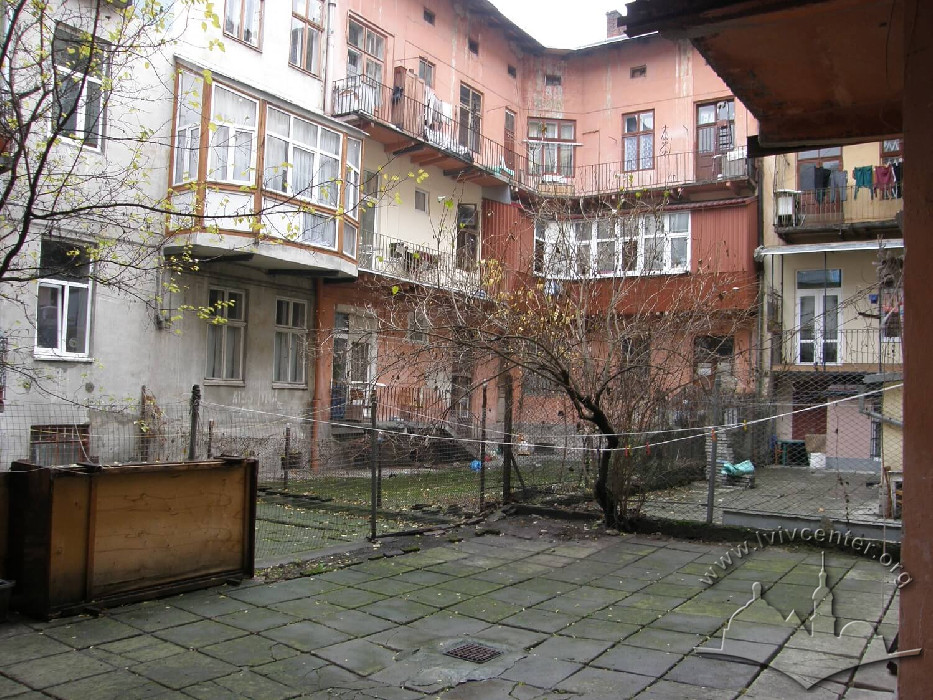
The analysis of the 1905 location plan shows that at that time, the L-shaped house 5 was already built on the neighbouring vul. Verkhratskoho (architect A. Goląb); then house 6 on vul. Kravchuka was built and later, in 1906 (ДАЛО, 2/3/594:14), houses at vul. Kravchuka 4 and at vul. Verkhratskoho 7 were added to these two, forming a common square courtyard. That is, the idea of creating a common interior space for the four houses was initiated by A. Goląb and implemented by A. Bogochwalski.
On 3 March 1906, the water supply and sewerage system was connected, paid for by the owner (ДАЛО, 2/3/593:7). On 25 August 1906, the magistrate certified that the construction of the building at vul. Kravchuka 6 was completed (ДАЛО, 2/3/593:8).
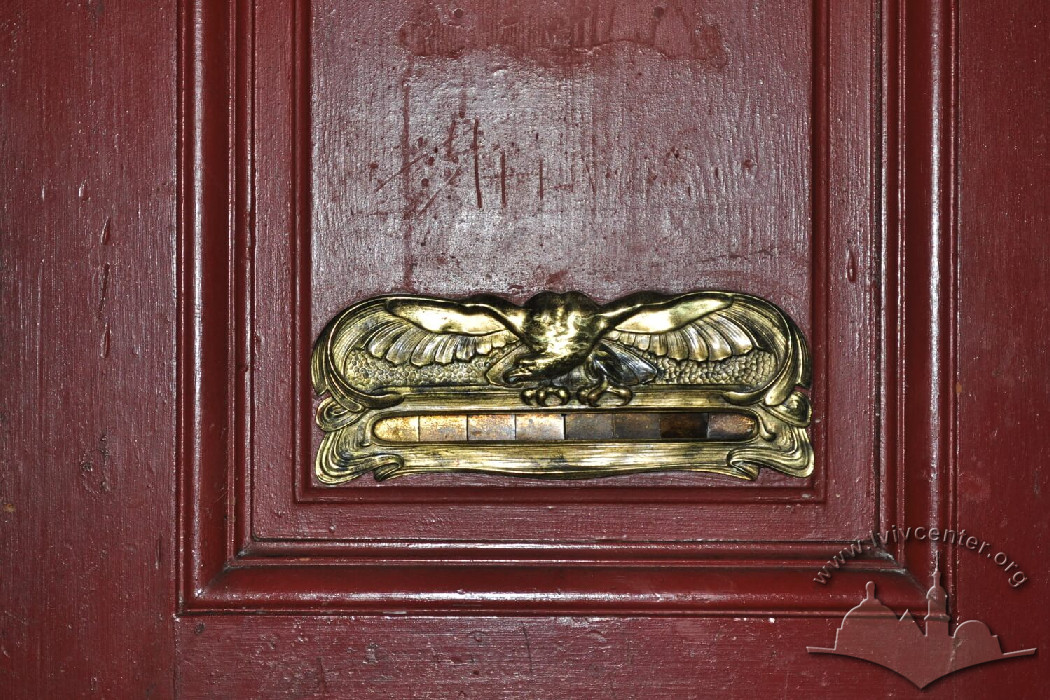
In the 1920s and 1930s, two apartments on the second and third floors were redeveloped into three smaller and less comfortable ones. There is no confirmation of this fact in the archival file, but it can be confirmed by field research. All three entrances have identical trimming with an overdoor, but the central (newer) entrance lacks the Secession details present on all other doors of the building, such as mailboxes and windows. Therefore, it can be argued that the redevelopment took place after the Secession period and before the Soviet period, namely in the 1920s and 1930s, when craftsmen could professionally make the portal in the style of the interior without duplicating the exquisite Secession details, probably considered unnecessary in a cheaper apartment.
On 4 July 1938, the construction authority addressed the owner, Jadwiga Gergowicz, with a claim that the main façade was dirty and shabby and demanded that it be restored under the threat of a 50 zloty fine or 3 days in jail.
Today, the building remains fully residential. It is listed as an architectural monument of local significance (protection number 1072-M).
Architecture
The townhouse was originally built as a tenement one, where the apartments on all floors were rented out exclusively for residential use. It has retained its function.
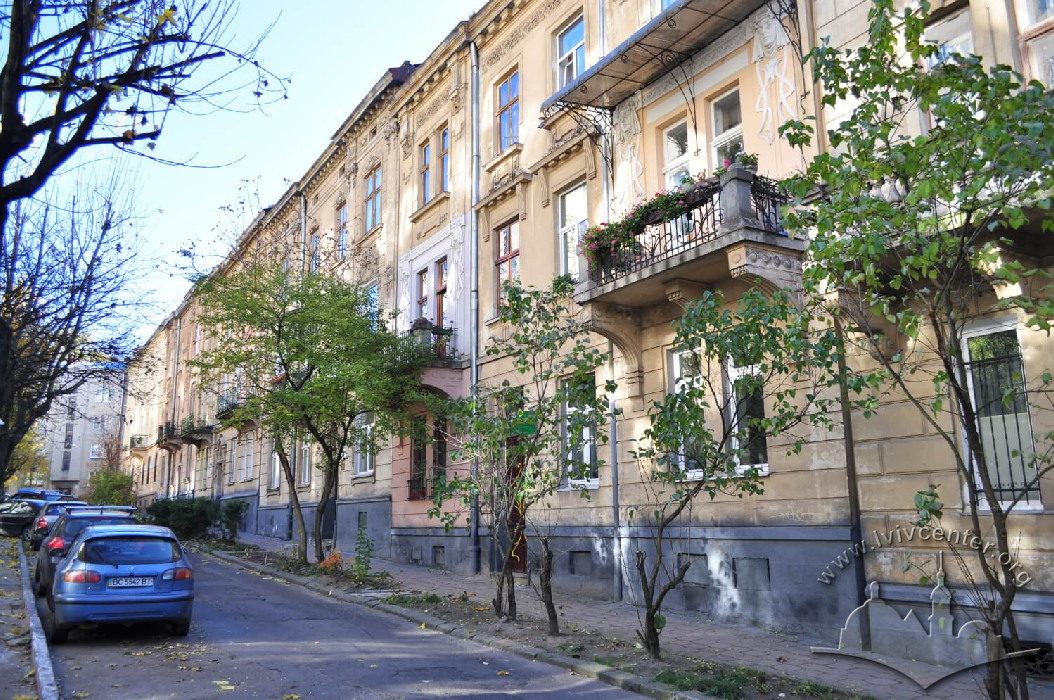
The house is located closer to the beginning of the row housing on the even-numbered side of vul. Kravchuka, whose façades demonstrate the transition from late Neo-Baroque Historicism to early Secession. On the sides, the house is adjacent to houses 4 and 8, while on the rear it borders on the plot of the house at vul. Verkhratskoho 7. On the other side of vul. Kravchuka there is the large green complex of the Central Military Clinical Hospital, which was added in the 1970s to the military hospital after the reconstruction of the Bonifratres’ monastery.
The six-window three-storey façade has a symmetrical layout, with a slight deviation due to the leftward shift of the entrance portal. The main axis is accentuated by side two-window avant-corpses typical of the architecture of the turn of the 20th century. Initially, the architect intended the façade to be designed in the Historicist style, as presented in the only design drawing of the façade (ДАЛО, 2/3/593:3, 4). Obviously, during the construction process, the architect's tastes changed and the ornamental (early) Secession decor was mechanically superimposed on the Historicist metric layout. The façade metricity is somewhat damaged by the variable width of the windows: two narrow ones on the side avant-corpses and two wide ones on the recessed part of the façade.
People
August Bogochwalski (1864–1909) — Lviv architect who designed a number of buildings in Lviv in the late historicist and Secession styles, including residential buildings at 4–14 Kravchuk Street.
Andrzej Gołąb (1837–1903) — Lviv architect and owner of a large construction company who was actively involved in the construction of historicist residential buildings in the Lychakiv district of Lviv between 1887 and 1903.
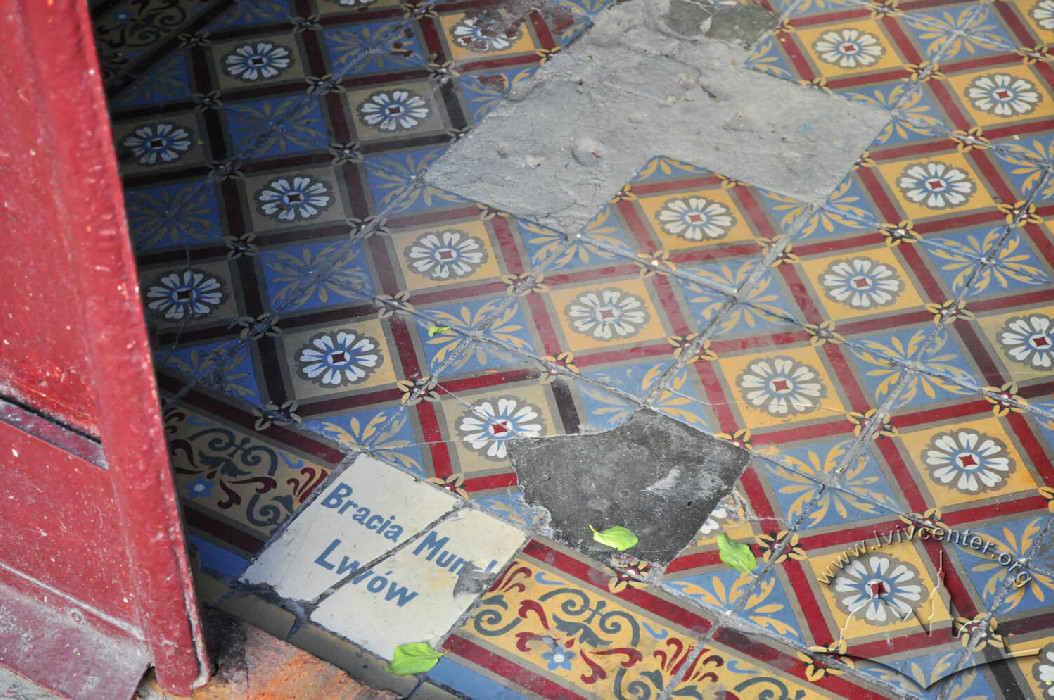
The brothers Jakub and Mawrycy Mund (Bracia Mund) — owners of a Lviv ceramic tile workshop, whose products were used to decorate many Lviv houses, including the flooring of house number 6 on Kravchuka Street.
Franciszek Gołąb — son of Andrzej Gołąb, senior engineer of the governorate in Lviv, project customer and first owner of the house.
Jadwiga Gergowicz — owner of the house in 1938.
Sources
- Державний архів Львівської області (ДАЛО) 2/3/593.
- ДАЛО 2/3/594.
- Ігор Мельник, "Вулиці будівничого Ґоломба", Новий погляд, 01.04.2011.
- Найновіший детальний план королівського столичного міста Львова 1892 року авторства Ю. Хованьця з переліком із 132 громадських будівель (Львів: Коштом книгарні Германа Альтенберга, 1892).
- Ростислава Грималюк, Вітражі Львова кінця XIX — початку XX століття (Львів: Афіша, 2004).
- Plan król. stoł. miasta Lwowa (План Львова близько 1895 року авторства Ю. Хованьця) (Львів: Коштом Міської ради, 1895).
- Plan król. stoł. miasta Lwowa, 1900.
Citation
Tetiana Kazantseva, "Vul. Kravchuka, 6 – residential building", Transl. by Andriy Masliukh, Lviv Interactive, (Center for Urban History, 2015). URL: https://lia.lvivcenter.org/en/objects/kravchuka-6/