Vul. Kravchuka, 14 – residential building ID: 2473
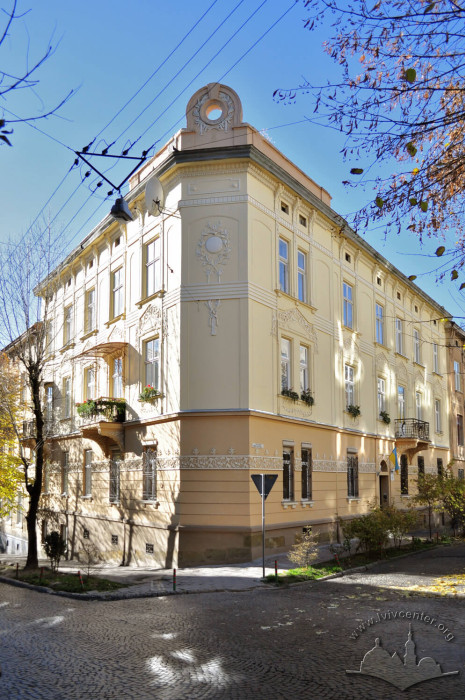
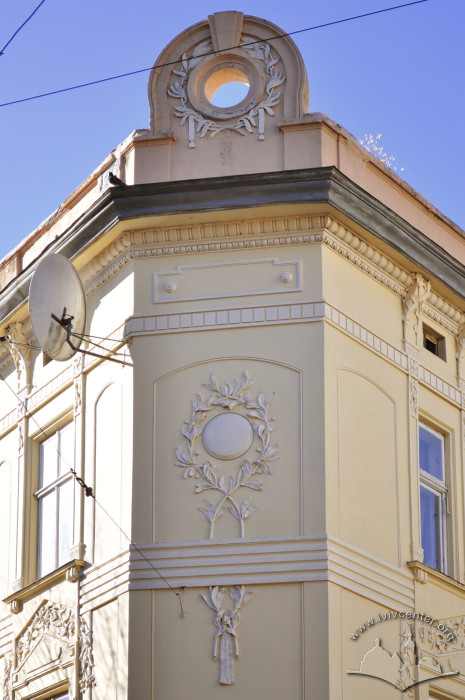
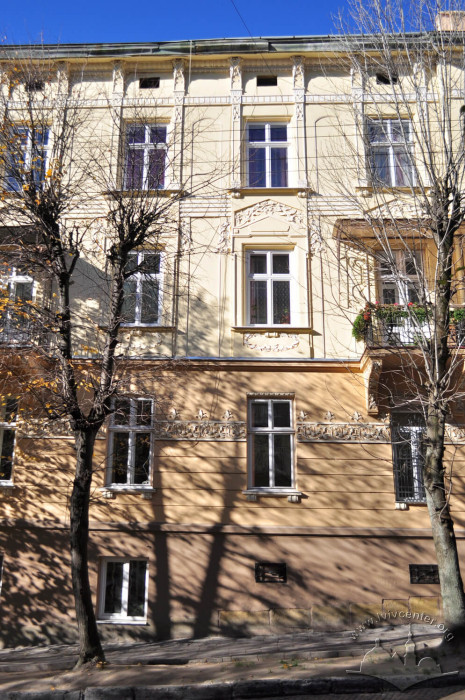
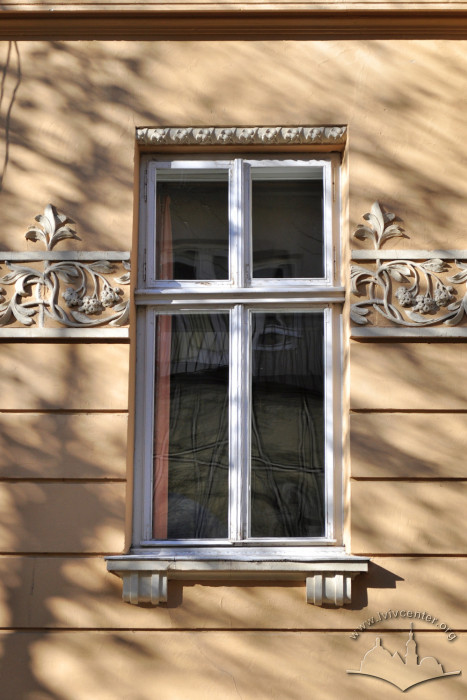
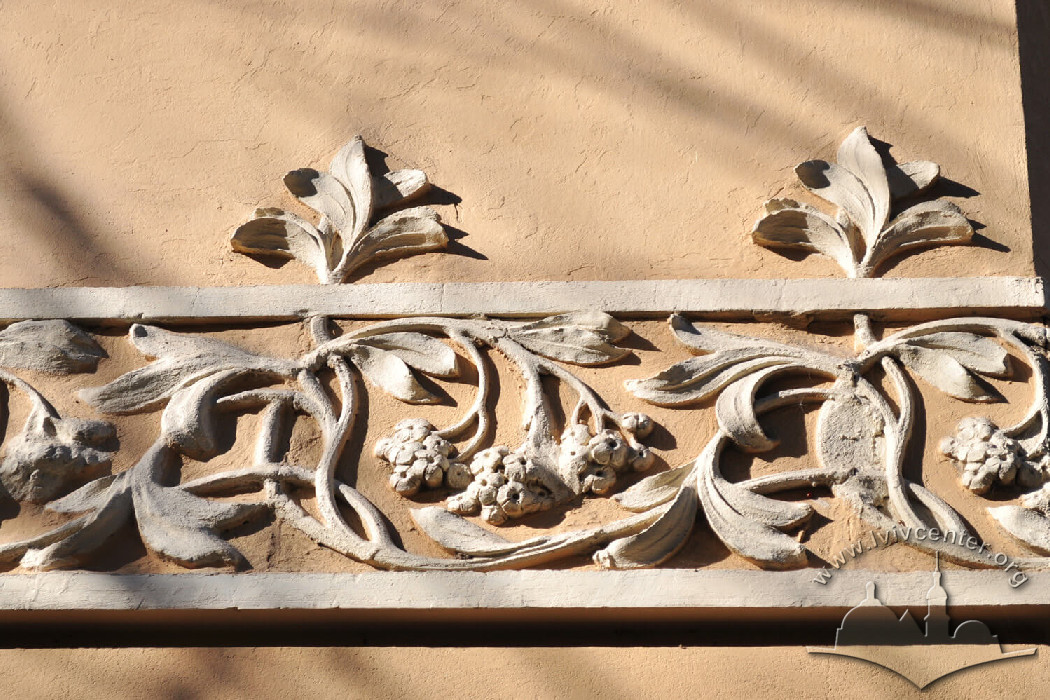
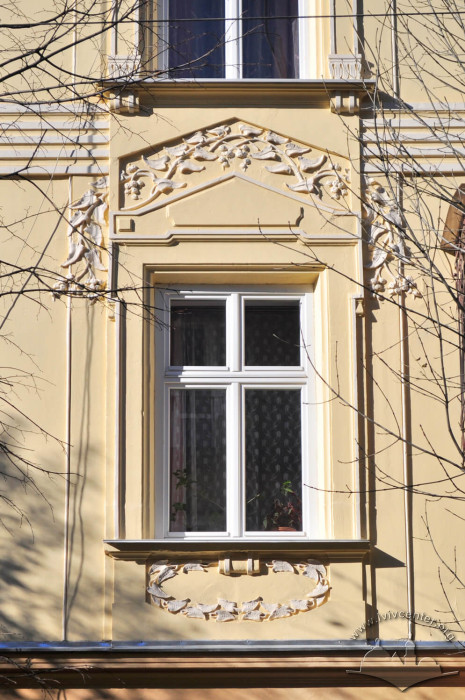
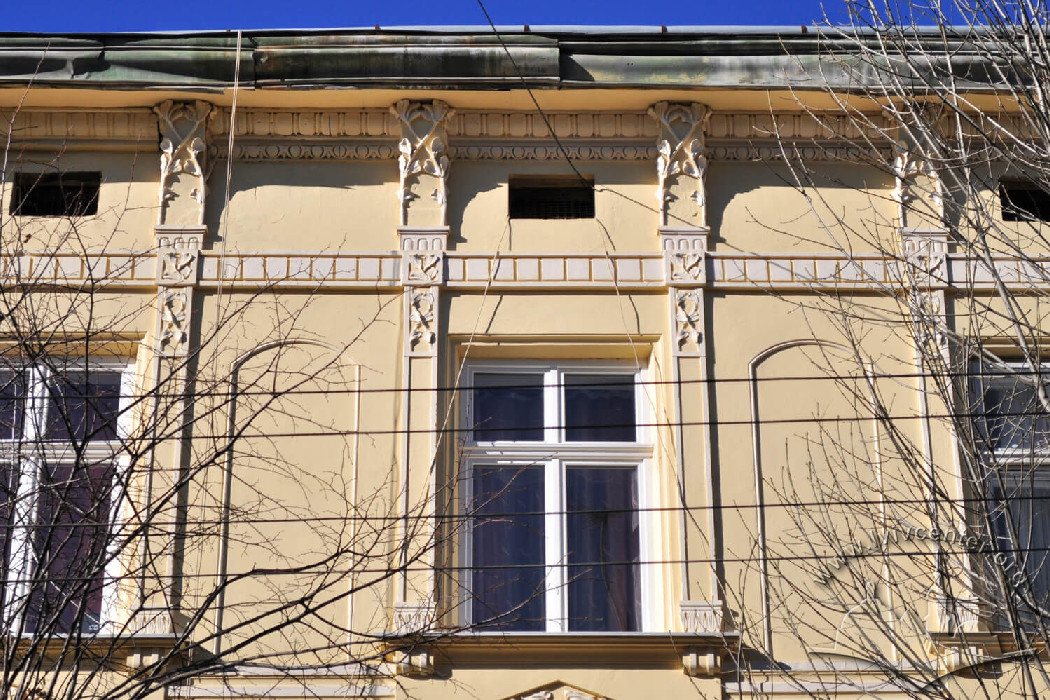
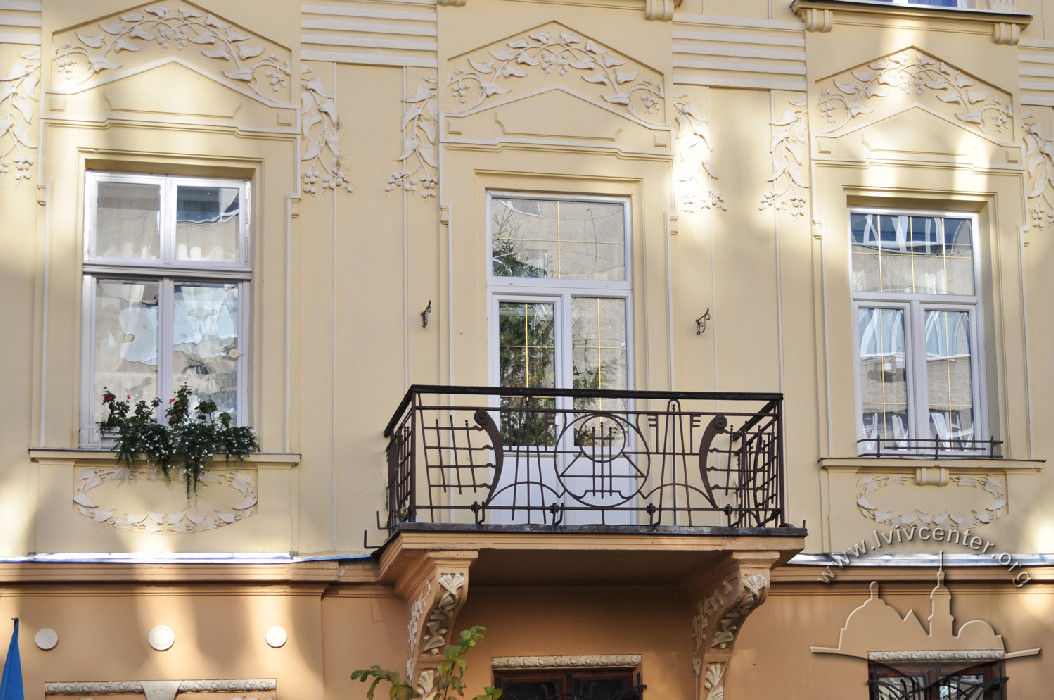
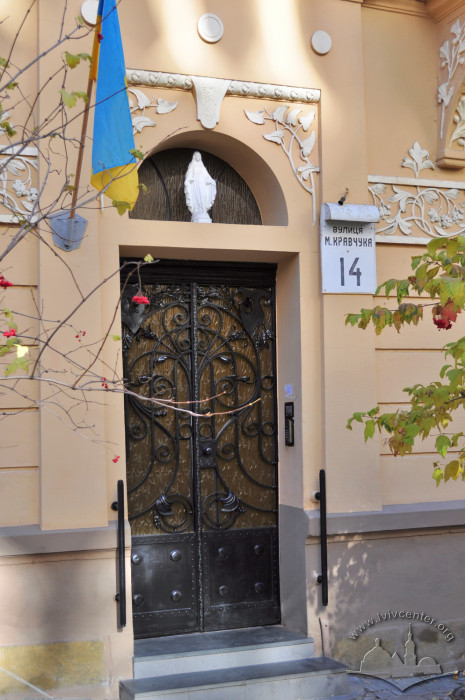
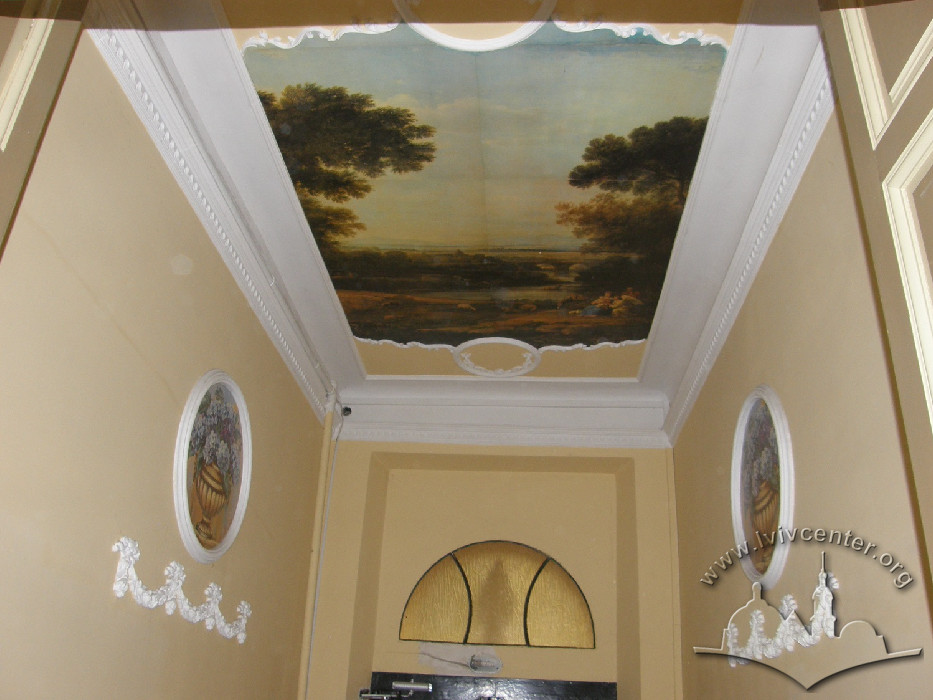
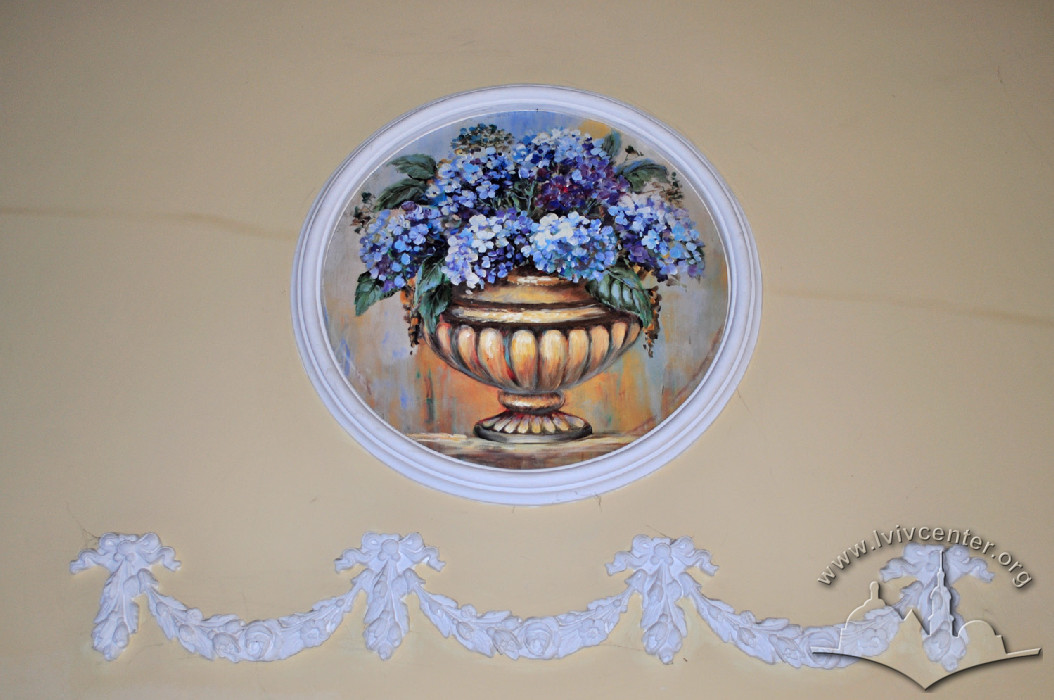
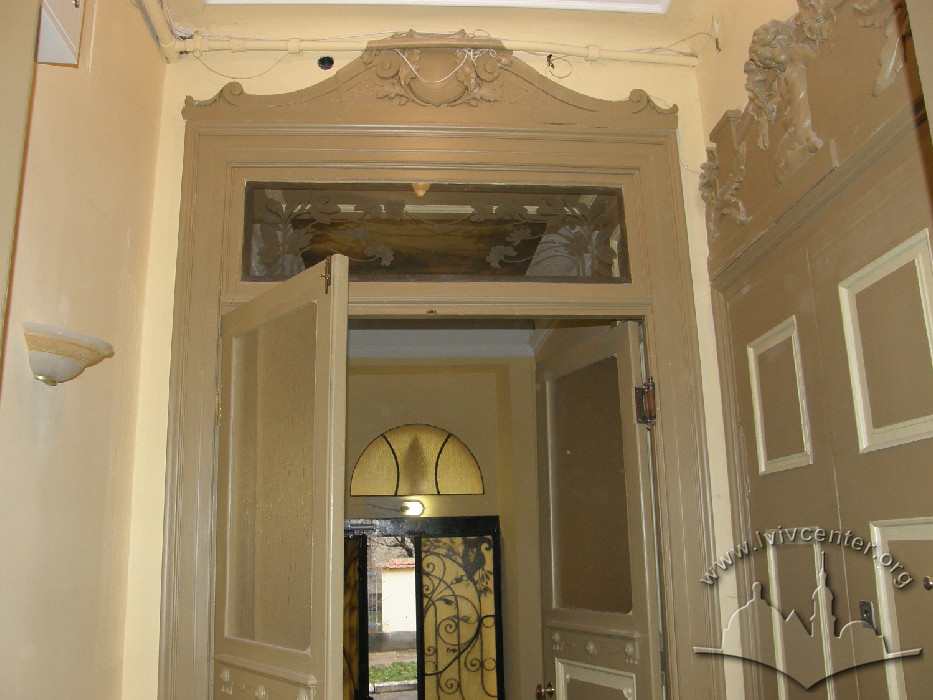
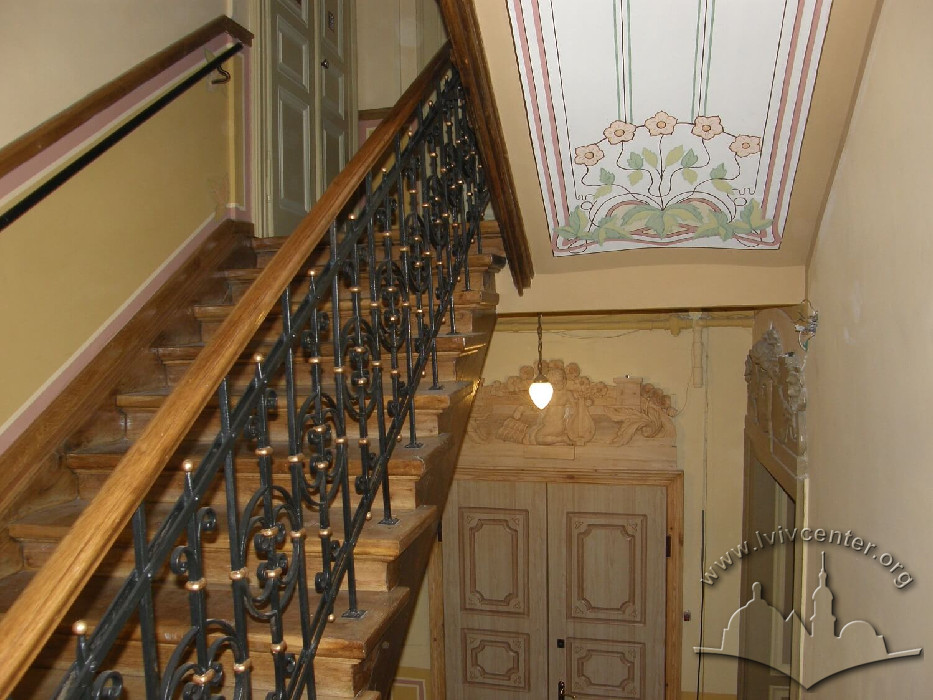
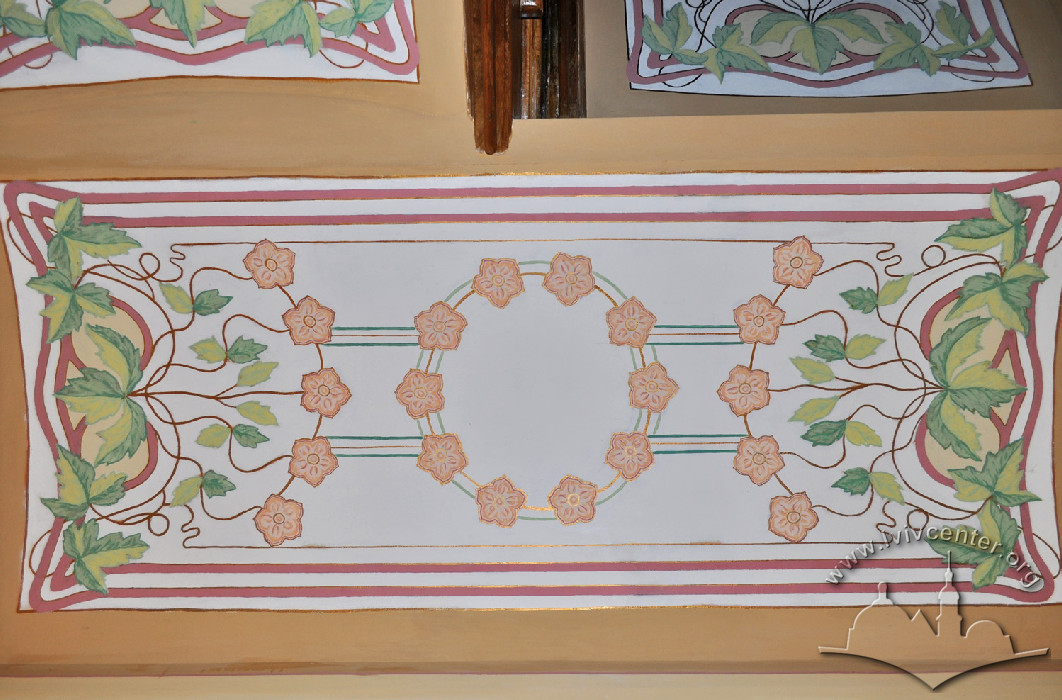
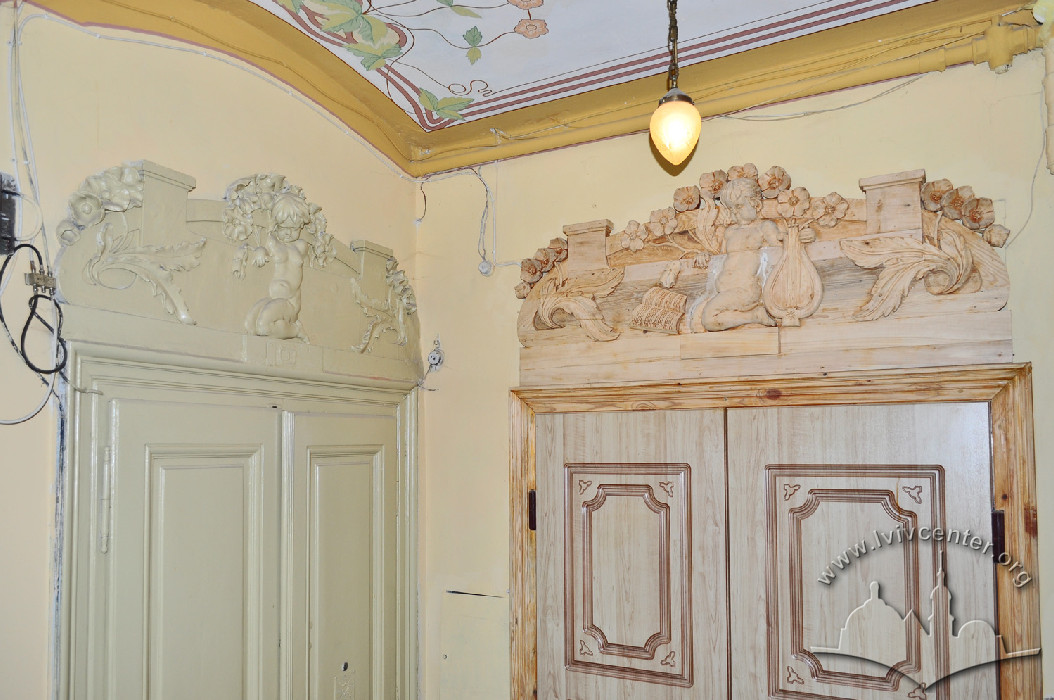
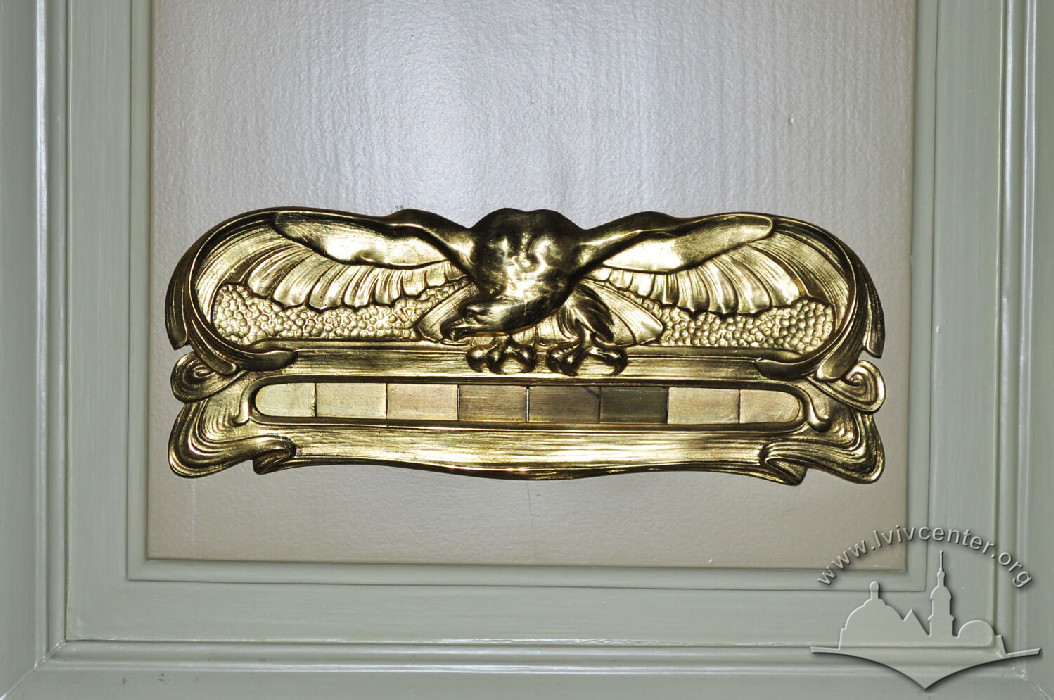
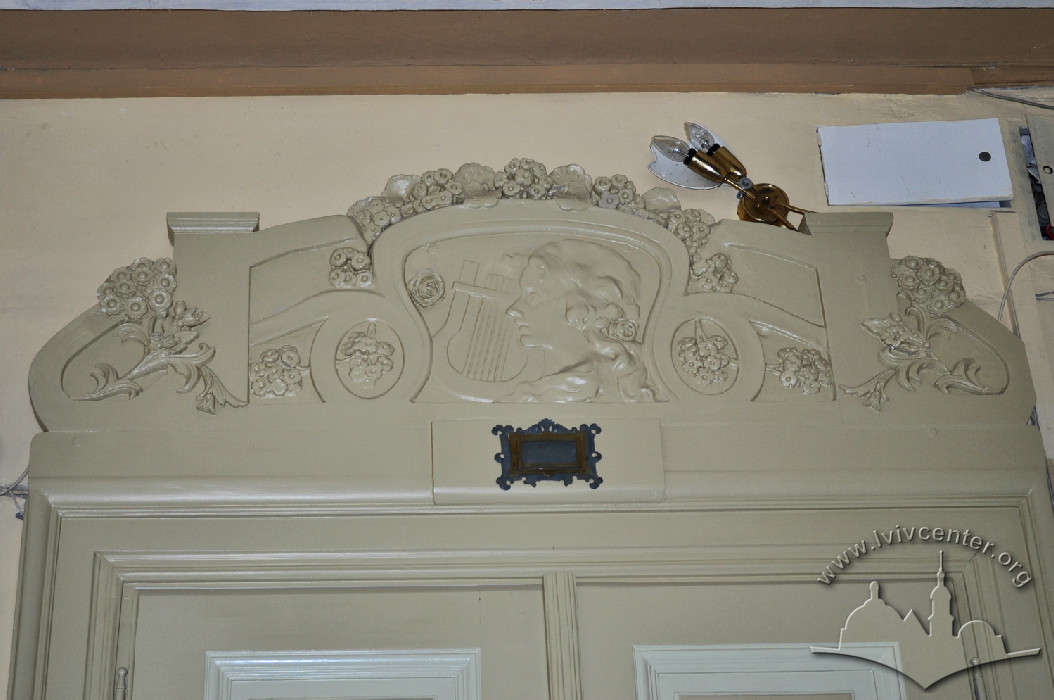
One of the former houses owned by the engineer Franciszek Goląb (architect Andrzej Goląb's son) was built at the corner of vul. Kravchuka and vul. Chernihivska by the architect August Bogochwalski in 1906–1907. The townhouse's façade and interior are designed in the style of the early (ornamental) Secession. The façade features a rhythmic layout, a variety of stucco ("lilac" theme) and wrought iron elements that have been preserved. The unique interior of the house preserves oil paintings of the vestibule ceiling and fragments of paintings on the staircase walls and ceiling, as well as Secession overdoors and bronze details like those in other houses on the street. The building is listed as an architectural monument (protection number 1076-M).
Story
1900 — vul. Kravchuka (ul. Bonifratrów) is laid out.
17 March 1906 — the owner Franciszek Goląb requests permission to build
a townhouse according to the submitted drawings.
24 February 1906 — approval of the building's design drawings.
14 August 1907 — the magistrate certifies the completion of the
construction.
23 August 1907 — the magistrate grants permission to use the building.
Vul. Kravchuka, vul. Sevastopolska and vul. Verkhratskoho appeared at the turn of the 20th century due to the work of architect and entrepreneur Andrzej Gołąb (Melnyk, 2011). For example, on the detailed 1892 map of Lviv by J. Chowaniec, the area behind the former military hospital appears undeveloped and planted with trees; on the 1895 map by J. Chowaniec, the laid-out ul. Hoffmanna (now vul. Patriarkha Yaremy) is already marked. Only the 1900 map shows three still unnamed parallel streets (present-day vul. Kravchuka, vul. Verkhratskoho and vul. Sevastopolska) branching off from ul. Hoffmanna. The parcellation of these streets was not yet shown.
Thus, vul. Kravchuka was laid around 1900 right behind the former military hospital, which had been added to the former Bonifratres’ monastery. Accordingly, until 1946, the street was named after the Bonifratres' order and was built up in line with the designs of August Bogochwalski in 1900–1908. However, Andrzej Goląb, who died in 1903, was not directly involved in the design of vul. Kravchuka architecture, as stated in some sources (e.g. Melnyk, 2011). Perhaps Andrzej Goląb's role was to lay out the plots in accordance with the neighbouring streets. So, as evidenced by archival files and the monogram ‘GF’ on the cartouches of house 4, the buildings on vul. Kravchuka were commissioned and owned by the architect's son, Franciszek Goląb, an engineer.
In 1946, the street was renamed in honour of Konstantin Tsiolkovsky, the founder of theoretical cosmonautics. In 1993, its name was changed in honour of the mathematician Mykhailo Kravchuk, a full member of the Taras Shevchenko Scientific Society and the Ukrainian Academy of Sciences who was repressed in 1937.
The history of the townhouse at vul. Kravchuka 14 begins on 17 March 1906, when the owner Franciszek Goląb, a senior engineer at the governor's office, asked for permission to build a three-storey corner house (conscription number 911 4/4) on the ground parcel 6459/6. At that time, the street did not have an official name, so Goląb describes its location as the first street connecting ul. Hoffmanna and ul. Głowińskiego, the so-called ul. Bonifratrów. Officials name it in a similar way (ДАЛО, 2/3/597:1,7). F. Goląb notes that he is the owner of the neighbouring parcels, i.e. house 12 on vul. Kravchuka (conscription number 910 4/4, ground parcel 6459/7), and house 15 on vul. Verkhratskoho (earlier ul. A. Goląba) on ground parcel 6459/19. Only a month earlier, on 3 February 1906, F. Goląb began to draw up documents for the construction of houses 8, 10, 12 on this street (ДАЛО, 2/3/594:1, 2; ДАЛО, 2/3/595:1, 2; ДАЛО, 2/3/596:1, 2).
On 7 April 1906, the design drawings of the house, signed by A. Bogochwalski (without the architect's or constructor's seal) and Franciszek Goląb (the owner), were approved (ДАЛО, 2/3/597:9-12).
On 5 August 1907, F. Goląb requested permission to use two houses at once, numbers 12 and 14 (ДАЛО, 2/3/596:9; ДАЛО, 2/3/597:8). On 12 August 1907, the water supply system pressure was tested and permission was granted to use the water supply system for two houses at once, numbers 12 and 14 (ДАЛО, 2/3/596:11). On 14 August 1907, the magistrate certifies that the construction was completed; on 23 August 1907, simultaneously with house 12, permission to use the house is granted (ДАЛО, 2/3/597:8). For comparison, the construction of houses 8 and 10 was completed just half a month earlier, on 27 July 1907 (ДАЛО, 2/3/594:1, 2; ДАЛО, 2/3/595:8).
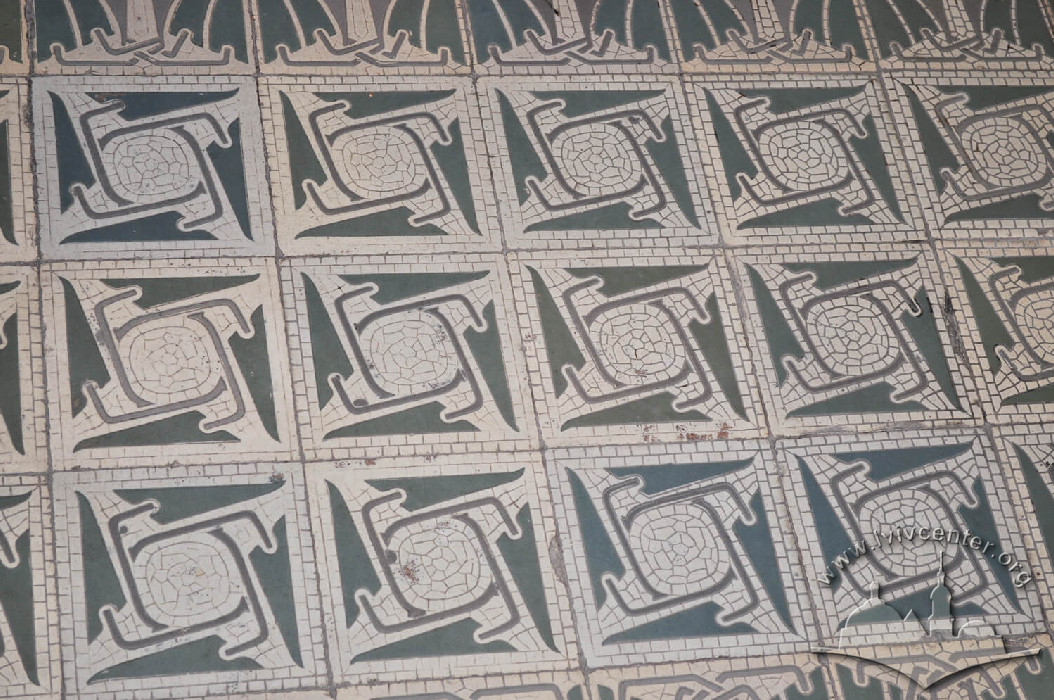
In 2014–2015, the building was thoroughly renovated at the expense of the residents without the involvement of specialists. As a result, the authentic interior design was completely distorted: the paintings in the vestibule and staircase were washed off and repainted (without reproducing the colouring and simplifying the pattern), carpentry and lamps of an inappropriate style were installed, authentic floor tiles were partially replaced with modern ones, etc. These works irreparably destroyed the unique interior in the decorative Secession style, which had not been described by researchers. A positive aspect of the repairs is the restoration of the staircase's structure and surface, including the wrought iron fencing and oak parquet.
Today the house remains fully residential. It is included in the list of architectural monuments of local significance (protection number 1076-M).
Architecture
The townhouse was originally built as a tenement house, where the apartments on all floors were rented out exclusively for residential use. It has retained its function.
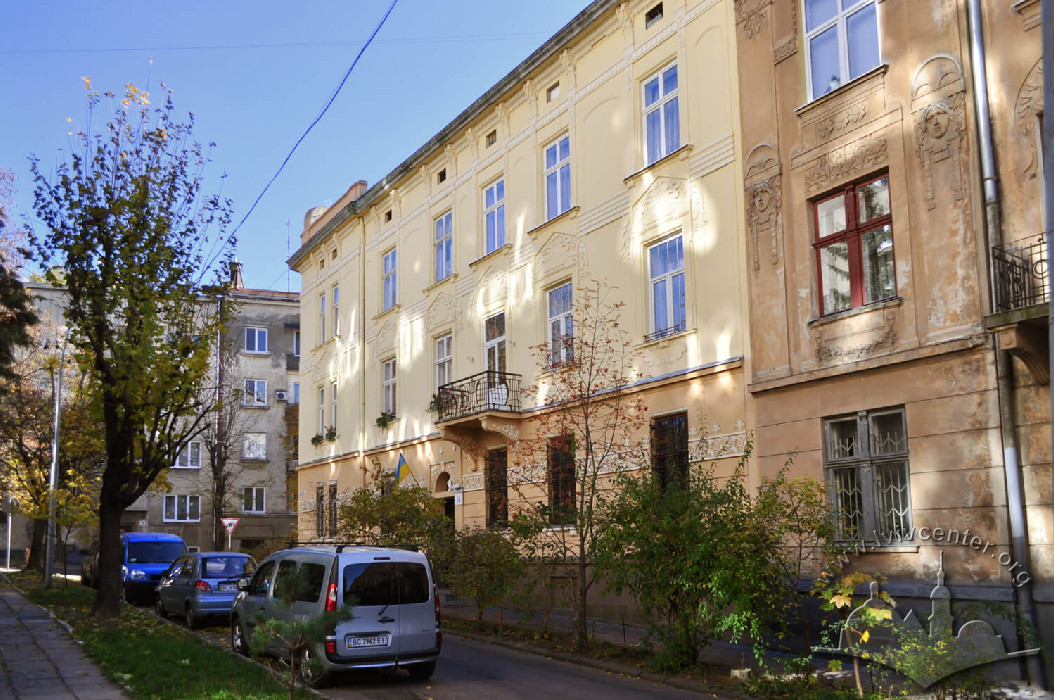
The house is located at the end of a row of three-storey buildings on the even-numbered side of vul. Kravchuka, at the corner of vul. Chernihivska. On the right side, the house is adjacent to house 12 on vul. Kravchuka; on the left side it is adjacent to the house located at the corner of vul. Chernihivska and vul. Verkhratskoho 15. Vul. Kravchuka and vul. Verkhratskoho were built in a mixed style of late Historicism and early Secession. On the other side of vul. Kravchuka there is the large green complex of the Central Military Clinical Hospital, which was added to the military hospital after the reconstruction of the Bonifratres monastery in the 1970s. Four-storey houses 15 and 17 on vul. Chernihivska, located opposite, were built in the Functionalist style.
Initially, the architect intended that, like the other houses on vul. Kravchuka, the façades of this cornerstone building would be designed in the Neo-Baroque style (with some elements of Biedermeier), as shown in the design drawing (ДАЛО, 2/3/597:12). A similar architectural language (as in the project) was used in the design of the façades of houses 8-10 on vul. Kravchuka. According to the project, the lower tier and pilasters of the second and third floors were to be divided by banded rustication, while the connected window trimmings were to be crowned with curved pediments. Instead, during the construction process, the architect's tastes changed, and the metrical Historicist layout underwent some transformation. The new façade decor in the decorative Secession style had certain connections with the Neo-Renaissance decor; in particular, the stylised Neo-Renaissance pediments present on the design drawings of the façades of all the buildings on the street were finally implemented (ДАЛО, 2/3/593:4; ДАЛО, 2/3/594:13; ДАЛО, 2/3/595:11; ДАЛО, 2/3/596:14).People
August Bogochwalski (1864–1909) — Lviv architect who designed a number of buildings in Lviv in the late historicist and Secession styles, including residential buildings at 4–14 Kravchuk Street.Andrzej Gołąb (1837–1903) — Lviv architect and owner of a large construction company who was actively involved in the construction of historicist residential buildings in the Lychakiv district of Lviv between 1887 and 1903.
Sources
- Державний архів Львівської області (ДАЛО) 2/3/593.
- ДАЛО 2/3/594.
- ДАЛО 2/3/595.
- ДАЛО 2/3/596.
- ДАЛО 2/3/597.
- Ростислава Грималюк, Вітражі Львова кінця XIX — початку XX століття (Львів: Афіша, 2004).
- Ігор Мельник, "Вулиці будівничого Ґоломба", Новий погляд, 01.04.2011.
- Найновіший детальний план королівського столичного міста Львова 1892 року авторства Ю. Хованьця з переліком із 132 громадських будівель. (Львів: Коштом книгарні Германа Альтенберга, 1892).
- Plan król. stoł. miasta Lwowa (План Львова близько 1895 року авторства Ю. Хованьця). (Львів: Коштом Міської ради, 1895).
- Plan król. stoł. miasta Lwowa, 1900.
Citation
Tetiana Kazantseva. "Vul. Kravchuka, 14 – residential building". Transl. by Andriy Masliukh. Lviv Interactive (Center for Urban History, 2015). URL: https://lia.lvivcenter.org/en/objects/kravchuka-14/