Vul. Konovaltsia, 19 – residential building ID: 2697
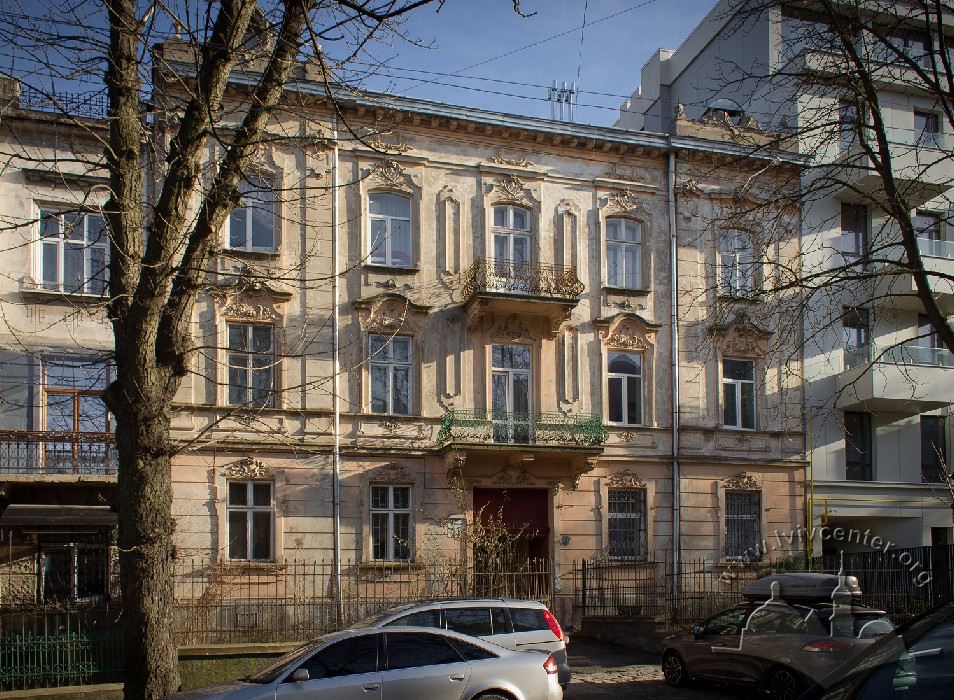
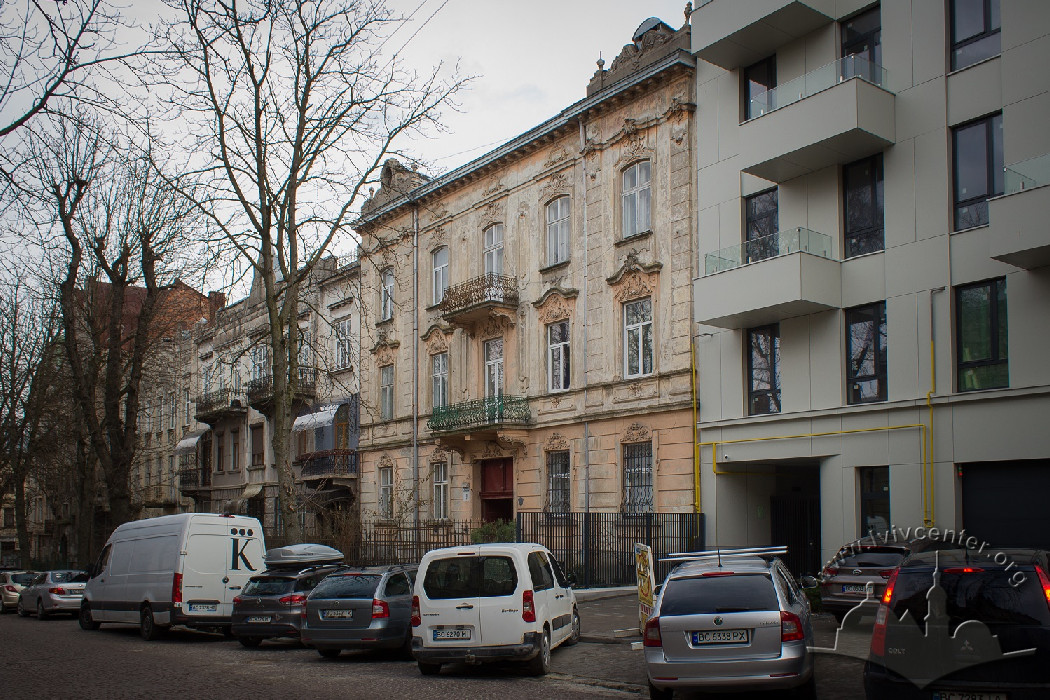
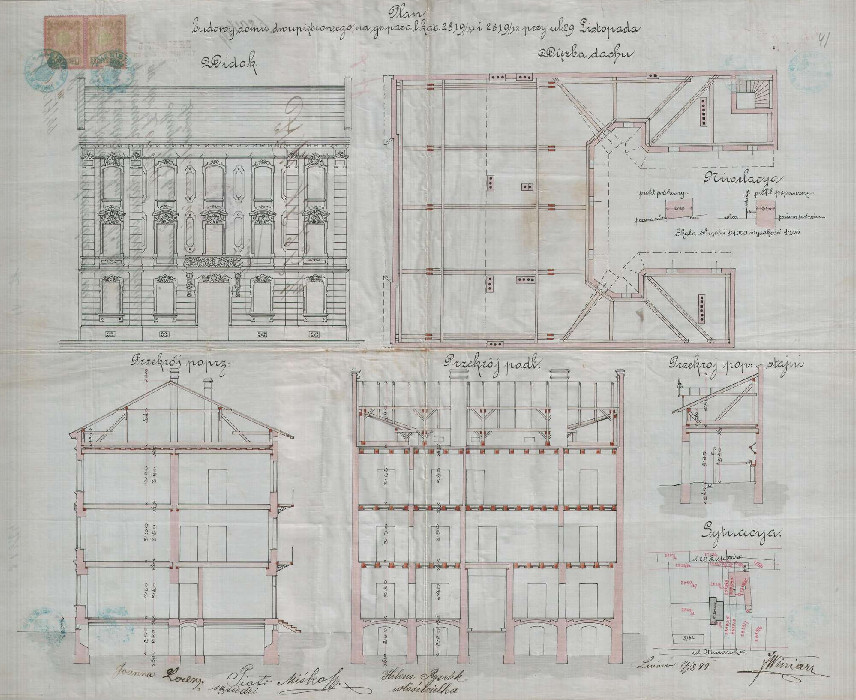
This three-story building in the Historicist (Neo-Baroque) style was built in 1899-1901; designed by Ignacy Wieniaż and commissioned by Helena Rysiak. Today (2025), the building is used exclusively for residential purposes.
Story
Helena Rysiak was the wife of Jakub Rysiak, a licensed master builder who designed and built many residential buildings in Lviv in the late 19th and early 20th centuries. Helena managed most of the houses built by Rysiak, purchasing land plots and selling completed townhouses. In particular, due to their efforts, apartment buildings appeared on what are now vul. Kotliarevskoho 26-26a and vul. Nechuya-Levytskoho 17-19.
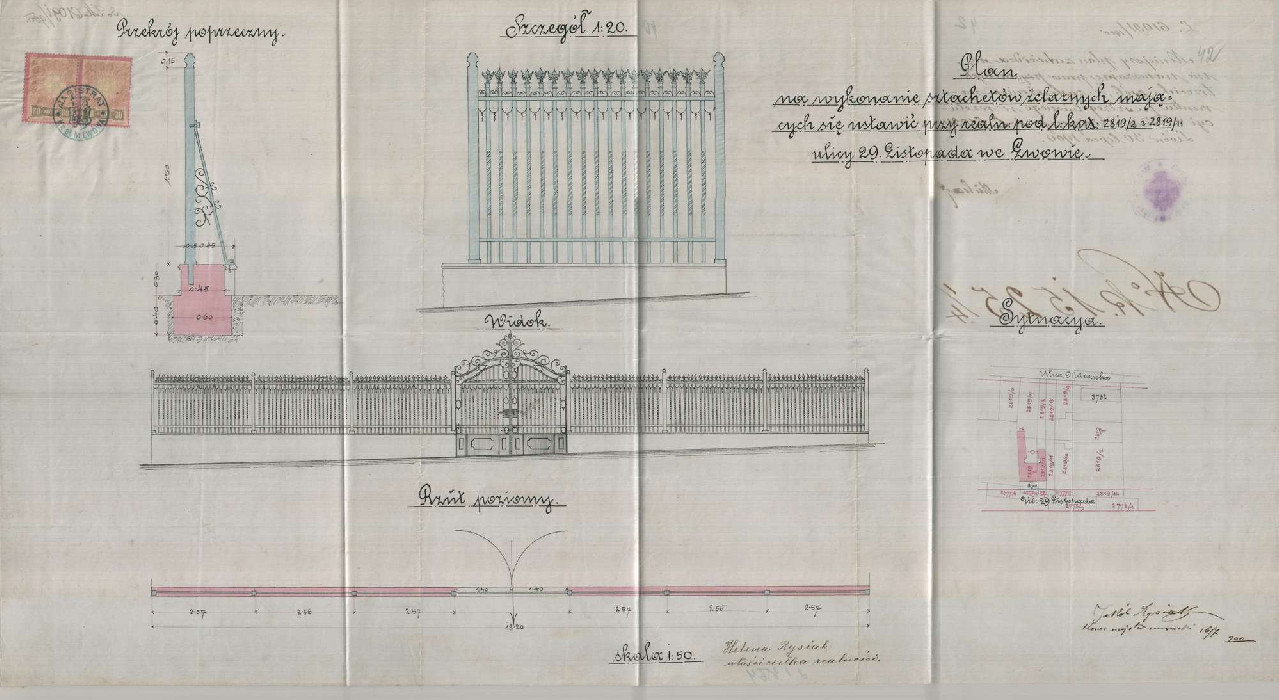
In this case, on ul. 29 Listopada (now vul. Konovaltsia), Helena purchased part of a parceled plot with conscription number 86¼. The building was designed not by her husband Jakub but by architect Ignacy Winiarz. The drawings were approved in September 1899 (ДАЛО 2/1/3371:3); the construction was completed in January 1901 (ДАЛО 2/1/3371:1). As evidenced by the drawings, before the construction began, work was carried out to level the site (ДАЛО 2/1/3371:40). In the summer of 1900, Jakub Rysiak drew up a design for a brick fence with iron pickets, which was implemented (ДАЛО 2/1/3371:42). The projects were approved by neighbors: Joanna Lorenz who owned the neighboring house 21 and Piotr Miskoff who owned the property facing what is now vul. Yefremova. The new property was assigned a new conscription number 1525 ¼.
There were two apartments on each floor, which the owner rented out while she herself lived at ul. Lenartowicza 12 (now vul. Nechuya-Levytskoho). It is evident that the first tenants were supposed to move in as early as the spring of 1901; their names, however, are not recorded in the 1901 and 1902 address books of Lviv.
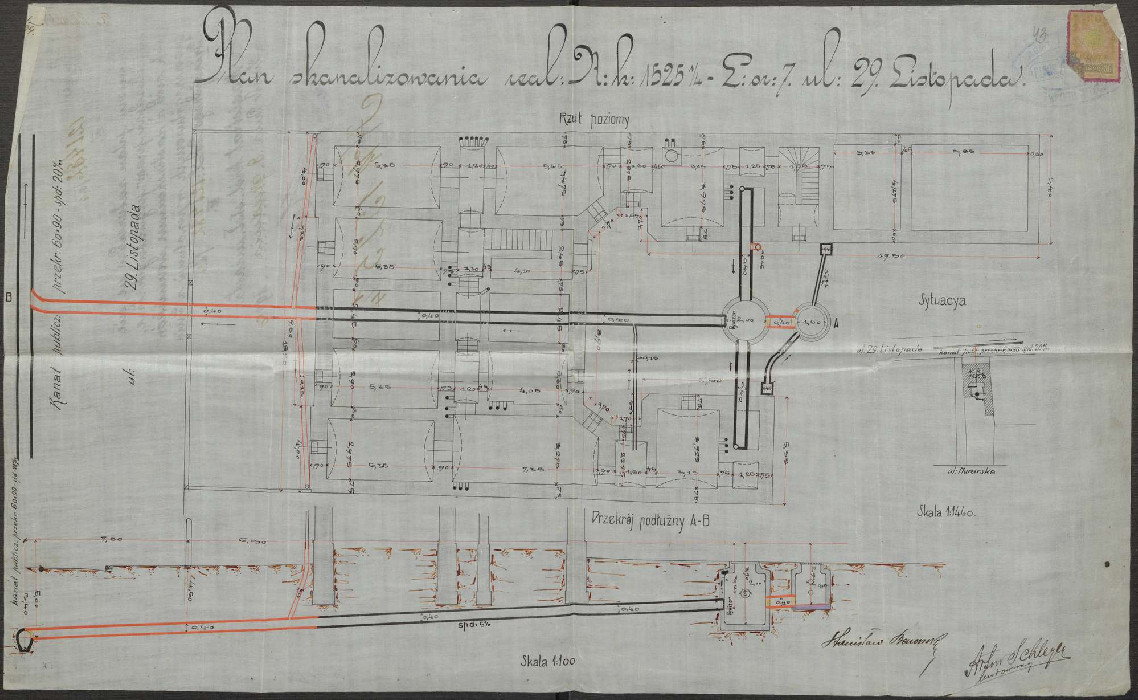
The house was not initially connected to the city sewer system, as it had not yet been laid on the street at that time. Thus, the toilets were designed outside, sewage flowing into a brick collection tank in the courtyard. In the summer of 1902, "after numerous complaints from the neighbors", the district police station appealed to the Magistrate with a request to require Helena Rysyak to rebuild the sewage ditches on her property. According to these complaints, the owner released toilet waste onto the surface of two streets, ul. 29 Listopada and ul. Murarska, at night, thus "poisoning the entire neighborhood". Engineers from the Magistrate's construction department, who arrived for an inspection, saw that the ditches were connected to rain gutters rather than a cesspool and concluded that the neighbors' complaints were unfounded (ДАЛО 2/1/3371:4-5).
In 1904, Stanisław Beneschek, an employee of the tax administration, became the new owner of the house. At the end of the year, he connected the house to the newly laid centralized sewage system. The project was carried out by Artur Schleyen, an architect and constructor, member of the Lviv City Council (ДАЛО 2/1/3371:43).
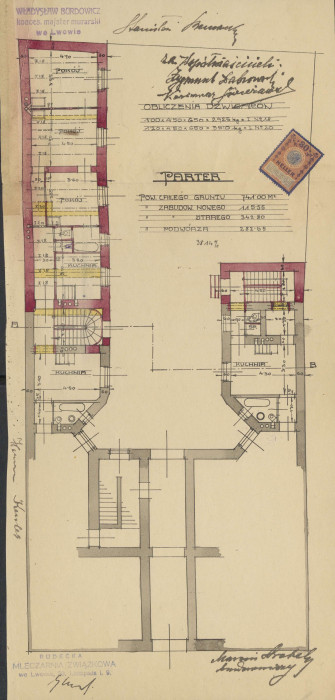
In 1912, the house was purchased by Kazimierz and Anna Swieżawski and Zygmunt and Ilda Dąbrowski, each of whom became the owner of a quarter of the property. They planned to renovate the building. Most of the documents in the archive file were drawn up and signed by Swieżawski, a district judge and mortgage clerk at the Galician Savings Bank. He described in unusual detail what work they planned to do: to install electrical cables and gas pipes, to install electrical and gas equipment, to build bathrooms with gas boilers inside the apartments, and to add appropriate water and sewage pipes.
The old wing with a stable was demolished and replaced with a three-story residential wing divided into three apartments. New back stairs, rooms for servants, storage rooms, and toilets were also added to the house. The old "porches" — that is, the galleries on the rear façade — were planned to be demolished and replaced with metal and concrete structures, but the galleries were abandoned during the reconstruction process (ДАЛО 2/1/3371:18, 22). The owners received permission to carry out this work in March 1912 (ДАЛО 2/1/3371:25); the reconstruction was completed during the summer (ДАЛО 2/1/3371:34). A separate project for the reconstruction of the sewage system was approved. The projects were designed by Marcin Strobel and carried out by Władysław Burdoń, a licensed master builder.
The archive does not contain any documents about any renovation work carried out in the interwar period, but, most likely, it did take place. The 1935 address book lists Roman Łodziński as the owner of the house. Today (2025), the exterior of the house has changed little, except for the metal-plastic window frames. The Neo-Baroque attics, which do not appear in the original drawings, have been significantly damaged due to atmospheric factors and lack of repairs. Inside, the house has obviously been redesigned more than once, particularly after nationalization in 1939 and privatization in the 1990s.
Architecture
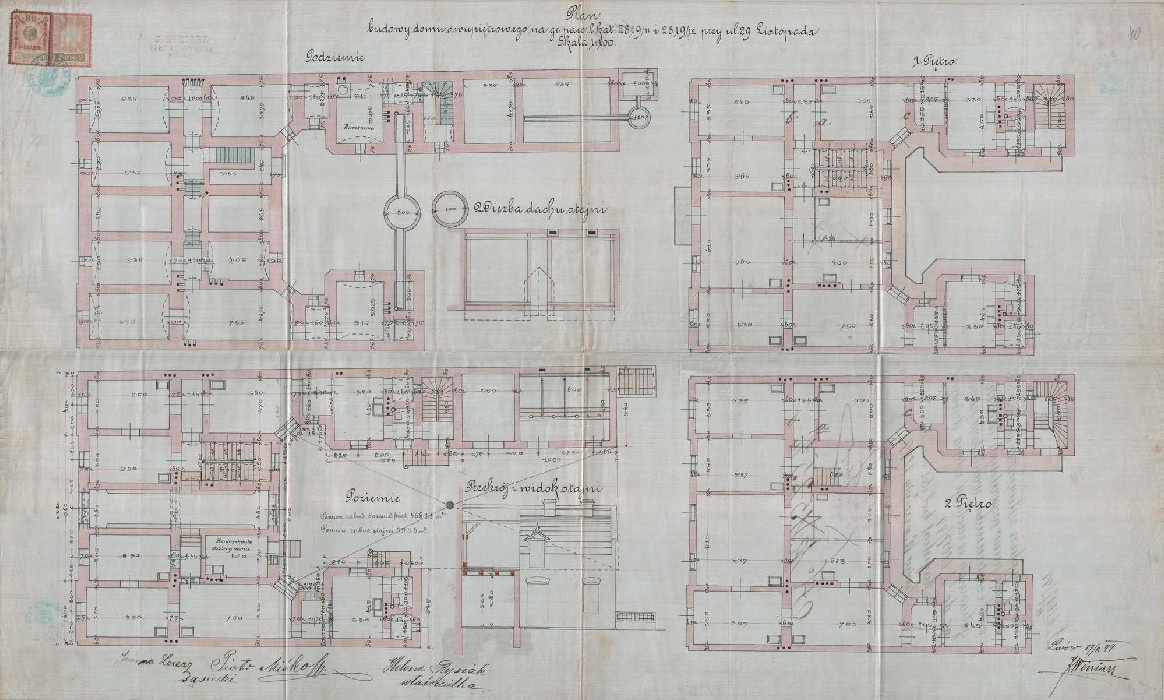
The three-story U-shaped building is constructed of brick and plastered on the outside. According to the drawings from 1899, it has segmented brick vaults above the basements and wooden ceilings between the floors and in the attic. Originally, it had wooden galleries supported by metal brackets. It is covered with a gable tin roof with two lunette windows within the attics.
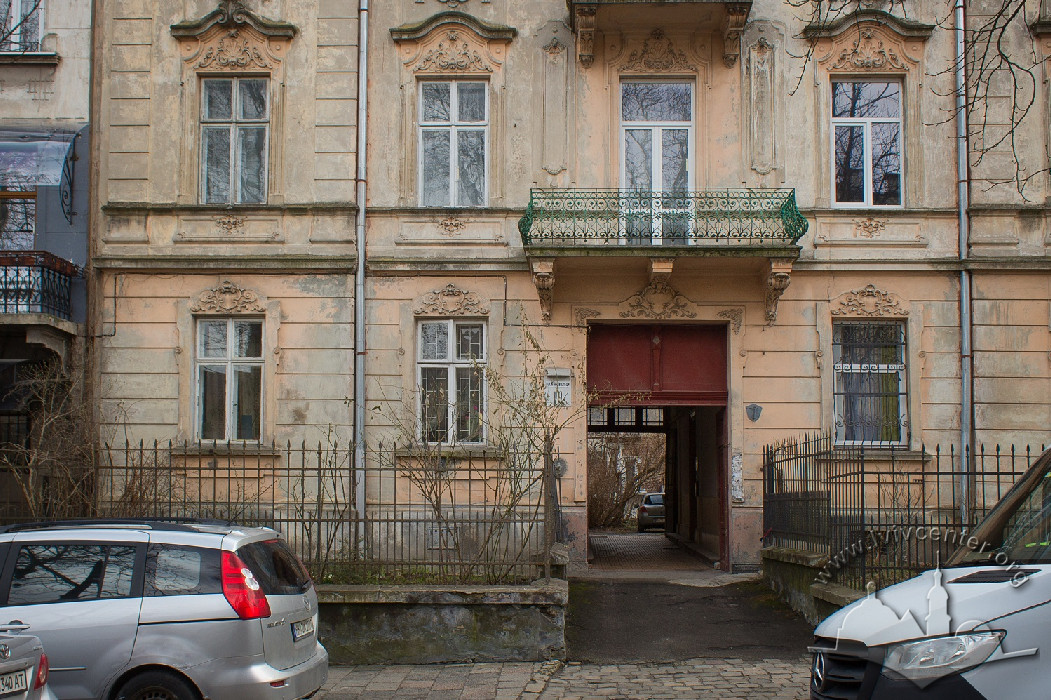
The house features the Historicist (Neo-Baroque) style. The five-axis façade is symmetrical. In the middle, there is a passage to the courtyard. The symmetry is emphasized by balconies above the gate, as well as two thin side avant-corpses topped with attics. It has a traditional tectonic composition: the ground floor is rusticated and separated by an inter-floor cornice. The façade above is smooth, with finely rusticated lesenes on the avant-corpses. All openings are rectangular in shape. The windows have profiled trimmings complemented by stucco ornaments. The second floor windows also have curved sills, while those on the third floor are curvilinear. The façade is topped with an entablature. The attics used to be curvilinear, with oval windows in the center flanked by stone vases. The attics were not included in the 1899 design but were added during the construction, which lasted until January 1901.
The building was constructed 6 meters back from the street’s frontage line, like all the neighboring buildings on the street, which was a requirement of the city authorities. Accordingly, there are front gardens in front of it, separated from the street by a high iron fence on a foundation. According to the 1900 drawing, an ornamented wrought-iron gate was also planned here, which was most likely not implemented.
According to the initial design, the building contained six apartments, two on each floor. On the ground floor, they were three-room apartments with kitchens and toilets outside. On the second floor, one of the apartments was enlarged to five rooms. The ground floor also housed the caretaker's quarters, a carriage house, and a stable. According to the 1912 reconstruction project, the stable was demolished and replaced with a residential wing containing a three-room apartment with kitchens and bathrooms added to each of its three floors.
People
Stanisław Beneschek —
owner and resident of the building (1904-1912).
Władysław Brodacki —
an employee of the Provincial Department who lived in the building (1904).
Władysław Burdoń — a
licensed master builder who renovated the building in 1912.
Stanisław Wyszyński —
an engineer who lived in the building (1914).
Ignacy Winiarz
(1850-1914) — an architect who designed the project of the building.
Orest Hladkyj —
a certified engineer-architect who lived in the building (1942).
Kazimierz Gubrynowicz
— a bookseller who lived in the building (1904).
Zygmunt Dąbrowski —
a co-owner of the building and its resident from 1912.
Idalia Dąbrowska —
a co-owner of the building and its resident from 1912.
Władysław Krenzel —
a railway employee who lived in the building (1904).
Roman Łodziński —
owner of the building (1935).
Edward Moszyński —
a director of the municipal land surveying service who lived in the building
(1904).
Józef Munk — a
retired senior tax official who lived in the building in 1914.
Józef Nemeth —
an engine driver who lived in the building (1904)
Aleksander Nemetz — a railway telegraph operator who lived in the building
(1904).
Antoni Pendiuk —
a court clerk who lived in the building (1914).
Zygmunt and Józef
Rejmański — capitalists (including a secretary of the court tribunal) who
lived in the building (1914).
Antoni Reczuch —
a court official who lived in the building (1914).
Helena Rysiak —
the first owner of the building until 1904.
Jakób Rysiak — a probable co-owner of the building
(until 1904) who designed its fence.
Stanisław Sawicki —
a postal worker who lived in the building (1914).
Anna Swieżawska
— a co-owner and resident of the building from 1912.
Kazimierz Swieżawski
— a clerk at the Galician Savings Bank who co-owned the building and lived
there from 1912.
Jan Swirski —
a forest inspection commissioner who lived in the building (1914).
Stanisław Sokalski —
an employee of the Galician Governor’s Office who lived in the building (1914).
Marcin Strobel — author
of the 1912 reconstruction project.
Wincenty Tołłoczko —
a mine manager who lived in the building (1914).
Stanisław Troskolański
— a master of pharmacy who lived in the building (1904).
Karol Cysarz —
an assistant professor who lived in the building (1904).
Artur Schleyen —
an architect and constructor who designed the project to connect the building
to the city sewer system.
Jan Czuczman —
a gymnasium teacher who lived in the building (1914).
Ludwika Szudurska —
a widow who lived in the building (1914).
Sources
- Державний архів Львівської області (ДАЛО) 2/1/3371. URL: https://e.archivelviv.gov.ua/file-viewer/230150#file-1351823
- Amtliches Fernsprechbuch für den Distrikt Galizien (Deutsche Post Osten, 1942).
- Księga adresowa król. stoł. miasta Lwowa (1904).
- Księga adresowa król. stoł. miasta Lwowa (1914).