Vul. Halytska, 7 – former Altemajer townhouse ID: 2322
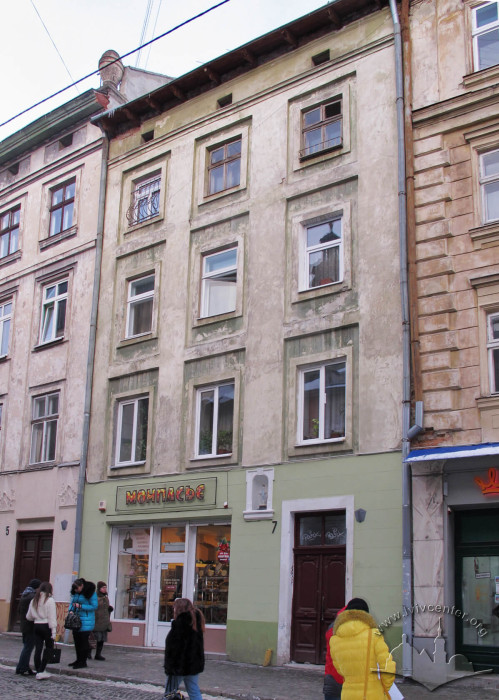
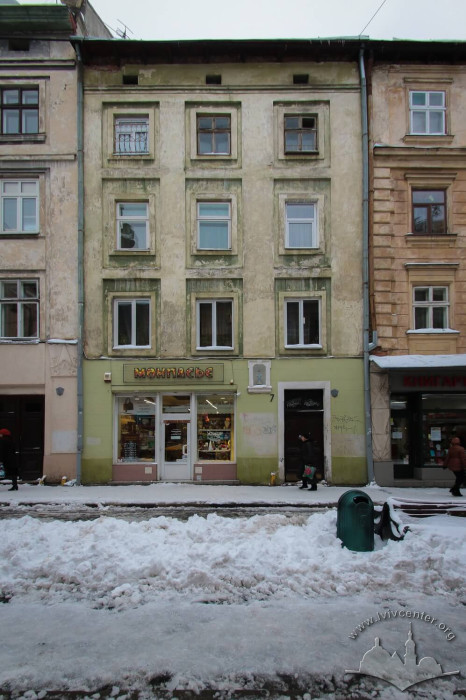
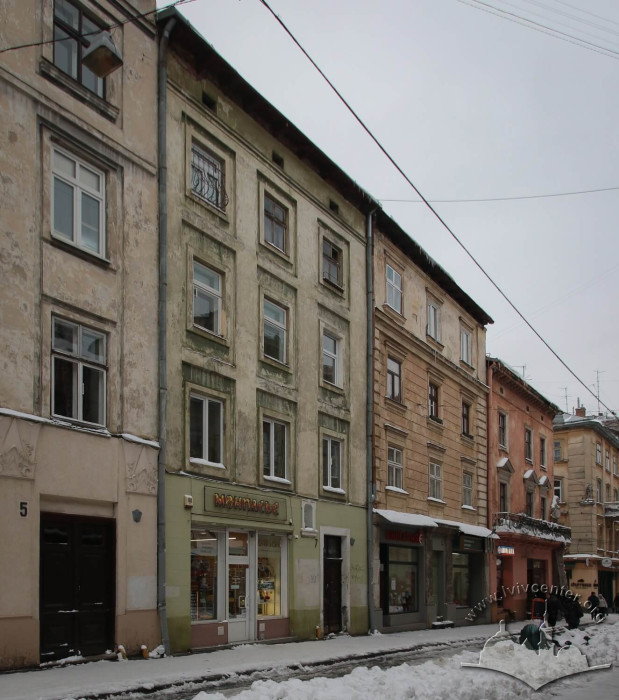
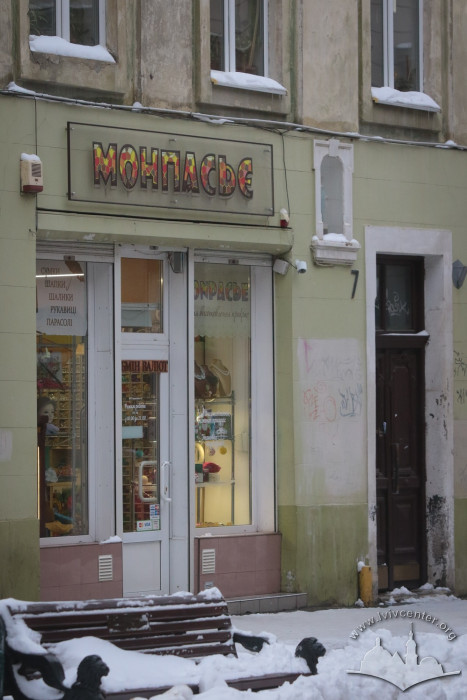
The Altemajer Townhouse (old conscription no. 230, new no. 242) was historically owned by various Lviv burghers. The current building dates to 1787; it was commissioned by Jan Baczyński and constructed by the builder Anton Kosyński. In 1988, the townhouse was added to the Local Register of Monuments under protection number 873. Various shops have long occupied the building's ground floor. Since 2012, it has housed a costume jewelry store.
Story
Sixteenth century — construction of a three-story townhouse with a façade width of 14.2 cubits.
Early eighteenth century — The wing was in ruins.
1766 — intent to rebuild the townhouse; debris was cleared, and construction materials began to be delivered.
1785 — construction of the current townhouse by Jan Baczyński, based on a design by Anton Kosyński.
1882 — reconstruction of the townhouse, including the replacement of the shingle roof with a tin one and the installation of dormer windows (architect — Kroch).
1895 — shop windows were installed along the entire façade.
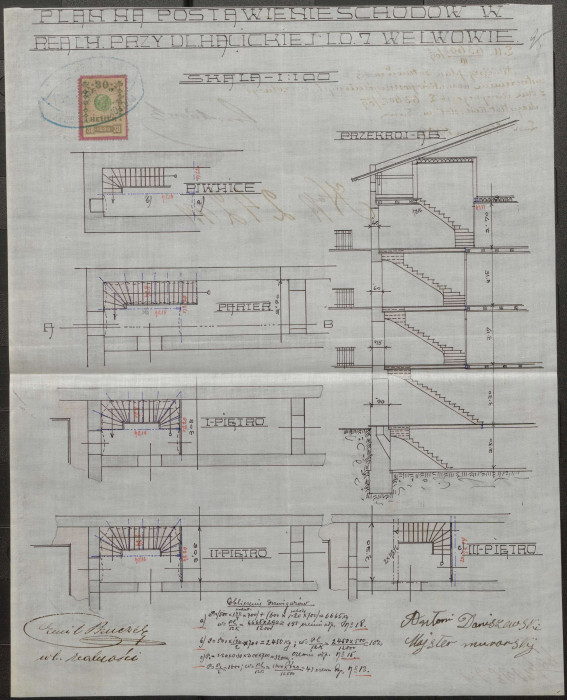
1909 — new stairs were installed (master mason — Anton Daniszewski).
The Altermajer Townhouse (old conscription no. 230, new no. 242) was named after Jan Altmajer, who became its owner in 1647. From 1620 to 1638, it belonged to Erazm Sykst, and from 1639 to 1646, it was known as the Brykadchivska house. At the beginning of the eighteenth century, it was a three-story building with a ruined courtyard wing and a façade measuring 14.2 cubits. By 1766, it was owned by the Roman Catholic Archbishop Stefan Mikulski. Because of its poor condition at the time, Mikulski intended to rebuild the townhouse from the ground up. That same year, he cleared the debris and began bringing in building materials. However, it appears the construction never took place, as in 1782, the building — then under a new owner, Aleksander Żytkiewicz — was still described as a ruin. After Żytkiewicz, it passed to Ivan Zarytskyi, who in 1785 sold the plot or ruins of the Altemajer Townhouse and "The Tower" (townhouse no. 5) for 7,200 zł to the Ukrainian Jan Baczyński.
Jan Baczyński was a councilor of the Lviv magistrate and, as of January 21, 1789, a member of the Stauropegion Institute. That same year, he took the position of second vice-senior, and the following year, first vice-senior. During his seniority, the Korniakt Bell Tower was renovated (1792–1795), and in 1801, the construction of the townhouse at conscription no. 193, adjacent to the Assumption Church, was completed. Baczyński served as the first senior of the Stauropegion in 1790 and from 1801 to 1816. A portrait of him, painted in 1789 by the Ukrainian Lviv artist Ostap Biliavskyi, has been preserved for posterity.
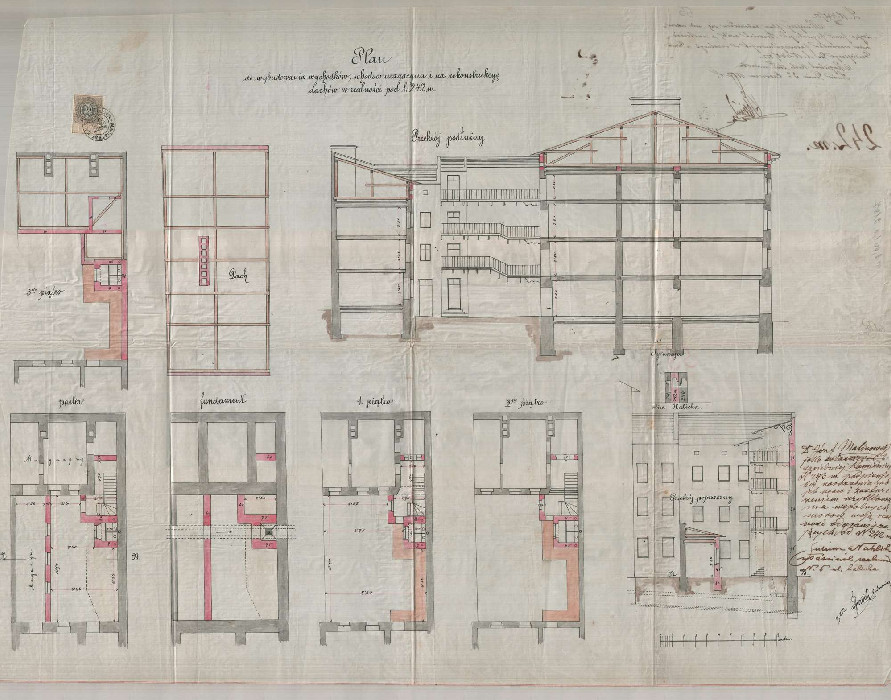
After acquiring the ruined property, Baczyński began its reconstruction that very year. The design, dated 1785, was created by master mason Anton Kosyński, who also oversaw the construction. The building's current appearance corresponds to that original preserved design. Baczyński lived in the house until the end of his days.
Minor repairs were carried out throughout the nineteenth century. In 1882, a reconstruction was performed by architect Jakub Sołomon Kroch, which replaced the shingle roof with a tin one; in 1895, shop windows were installed along the entire façade. New stairs were added in 1909 by master mason Anton Daniszewski. By 1910, the ground floor housed two shops: Majer Meisner's "Women's Lingerie" and Mojzesz Max Berger's "Men's Fashionable Clothing." Getzel Bardach's jewelry workshop also operated in the building. At that time, residents included entrepreneur Leon Kitsch, trade representative David Selzer, broker Marcus Zimmermann, and the widow Laura Margosches. During the interwar period, the building housed Ożmiński's grocery store and Sznek's clothing shop; during the Soviet era, it was home to the "Olymp" sporting goods store. In 2012, the "Monpacie" costume jewelry shop opened on the premises.
Architecture
The building is situated on a plot within the southern block adjacent to Rynok Square, bounded by Halytska, Staroievreiska, and Serbska streets.
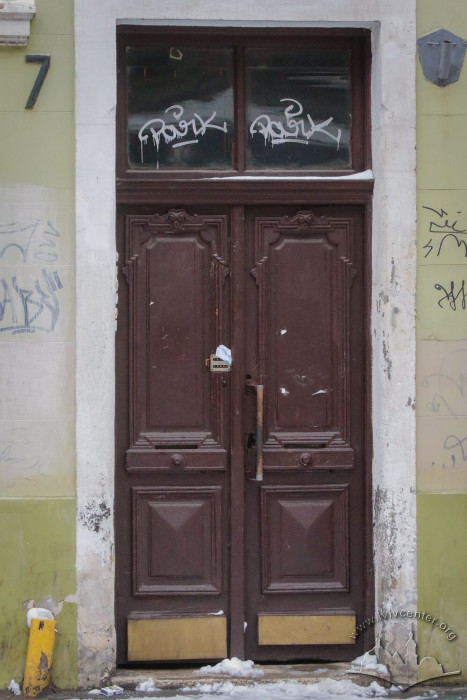
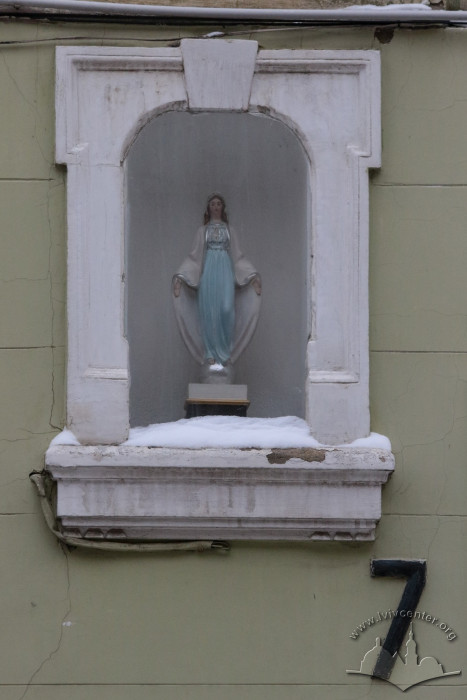
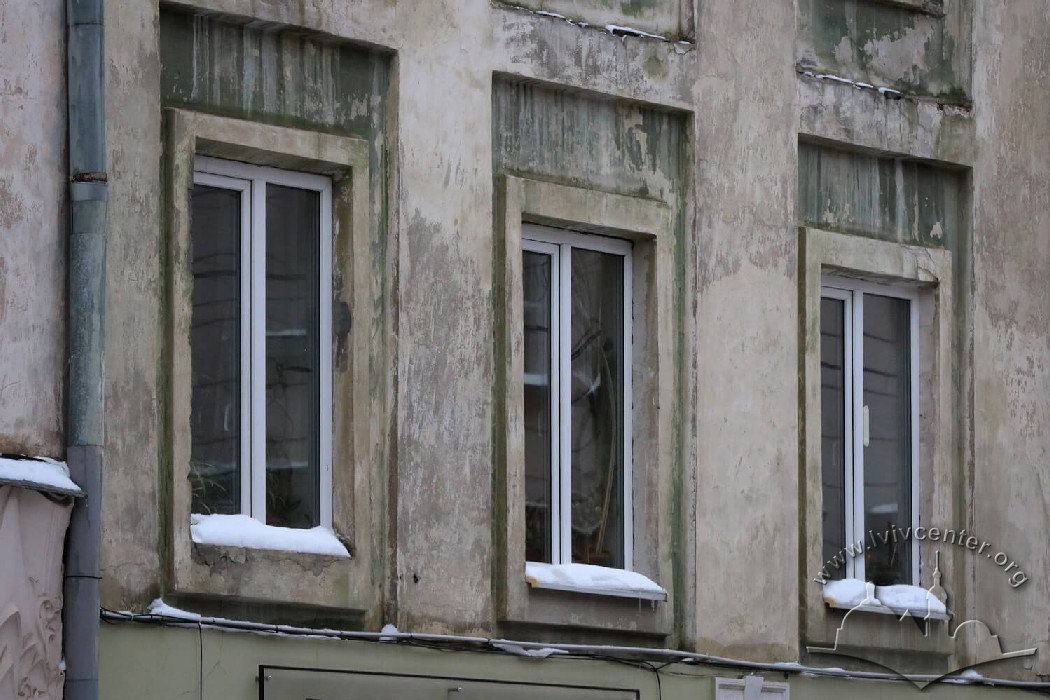
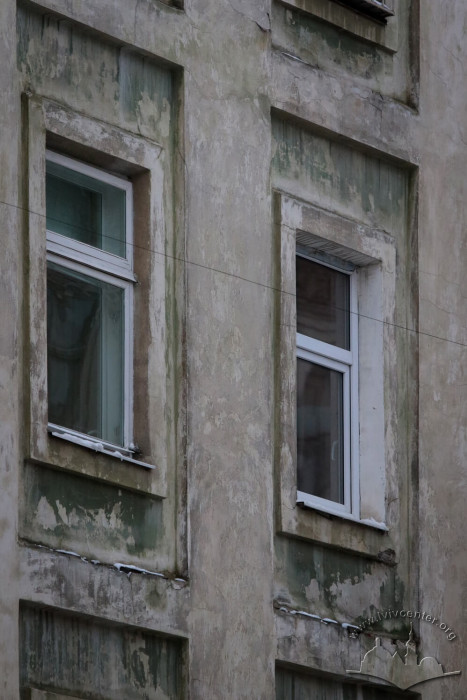
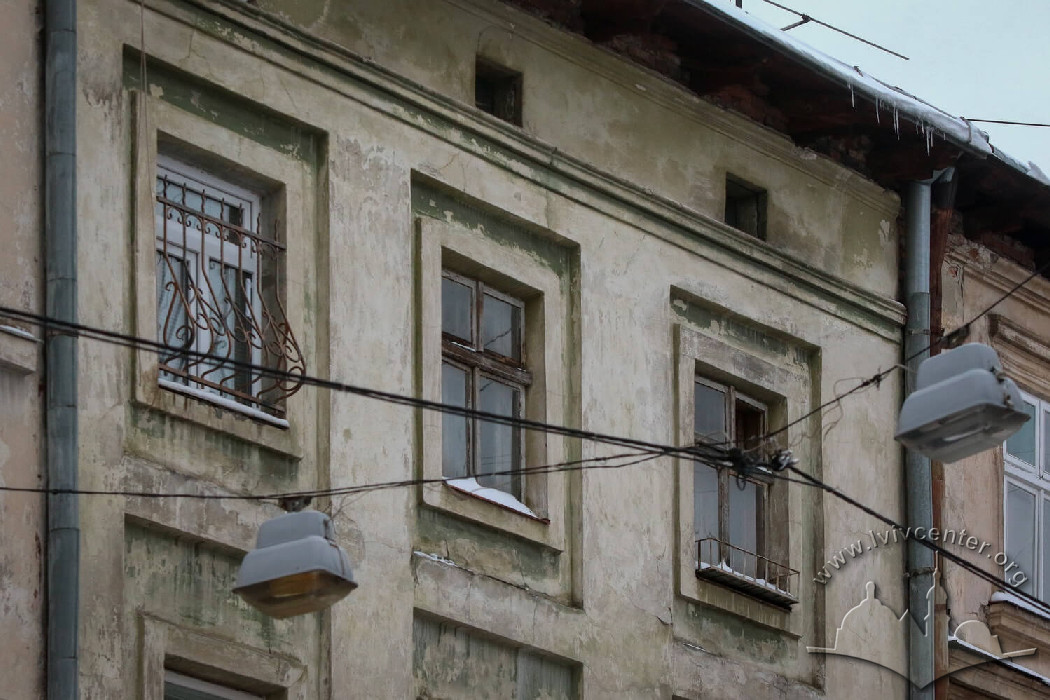
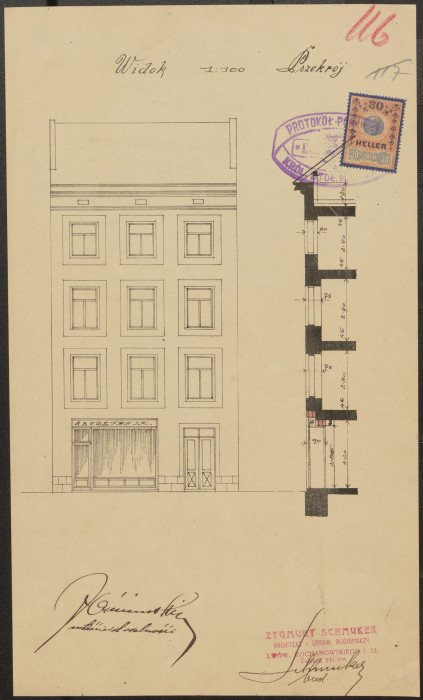
This four-story townhouse features a three-window façade, designed similarly to townhouse No. 5. The ground floor is constructed of hewn stone, while the upper stories are decorated with lesenes and horizontal stringcourses that create rectangular niches. The windows are finished with simple trimmings. The entrance is offset to the right; to the left of the doorway's upper level, a small niche with a stone trimming has been preserved. The building retains distinct Baroque features characteristic of residential architecture.
People
Anton Daniszewski — master mason who installed new stairs in 1909.
Anton Kosyński — master mason who designed the construction plans and oversaw the building's erection in 1785.
Getzel Bardach — owner of a jewelry workshop located in the townhouse.
Dawid Selzer — trade representative who resided in the townhouse in 1910.
Erazm Sykst — owner of the building from 1620 to 1638.
Jan Baczyński — owner of the building from 1785; councilor of the Lviv magistrate, member of the Stauropegion Institute (from 1789), and first vice-senior (1790, 1801–1816).
Ivan Zarytskyi — regional lawyer, Ukrainian, member of the Stauropegion Institute, and owner of the building until 1785.
Laura Margosches — resident of the townhouse in 1910.
Leon Kitsch — a private entrepreneur who resided in the townhouse in 1910.
Majer Meisner — owner of the "Women's Lingerie" shop.
Markus Zimmermann — a broker who resided in the townhouse in 1910.
Mojzesz Maks Berger — owner of the "Men's Fashionable Clothing" shop.
Ożmiński — owner of a grocery store during the interwar period.
Alexander Żytkiewicz — owner of the building from 1782.
Ostap Biliavskyi — Ukrainian painter who produced a portrait of Jan Baczyński in 1789.
Stefan Mikulski — Roman Catholic Archbishop who owned the townhouse from 1766.
Sznek — owner of a clothing store during the interwar period.
Jakub Sołomon Kroch — Builder who performed the 1882 reconstruction, replacing the shingle roof with a tin one.
Jan Altmajer — owner of the original seventeenth-century townhouse and the namesake of the building.
Sources
- Державний архів Львівської області (ДАЛО) 2/1/2107. Справа перейменована: ДАЛО 2/1/1974. URL: https://e.archivelviv.gov.ua/file-viewer/228753#file-838461
- Księga adresowa król. stoł. miasta Lwowa (Lwów, 1910).
- Борис Мельник, Ніна Шестакова, "Кам'яниці Львівського середмістя", Наукові записки. Львівський історичний музей, Випуск XII, (Львів: Новий час, 2008), 133-158.
- Володимир Вуйцик, Leopolitana II (Львів: Класика, 2012).
- Володимир Вуйцик, Державний історико-архітектурний заповідник у Львові, (Львів, 1991), 42, 169