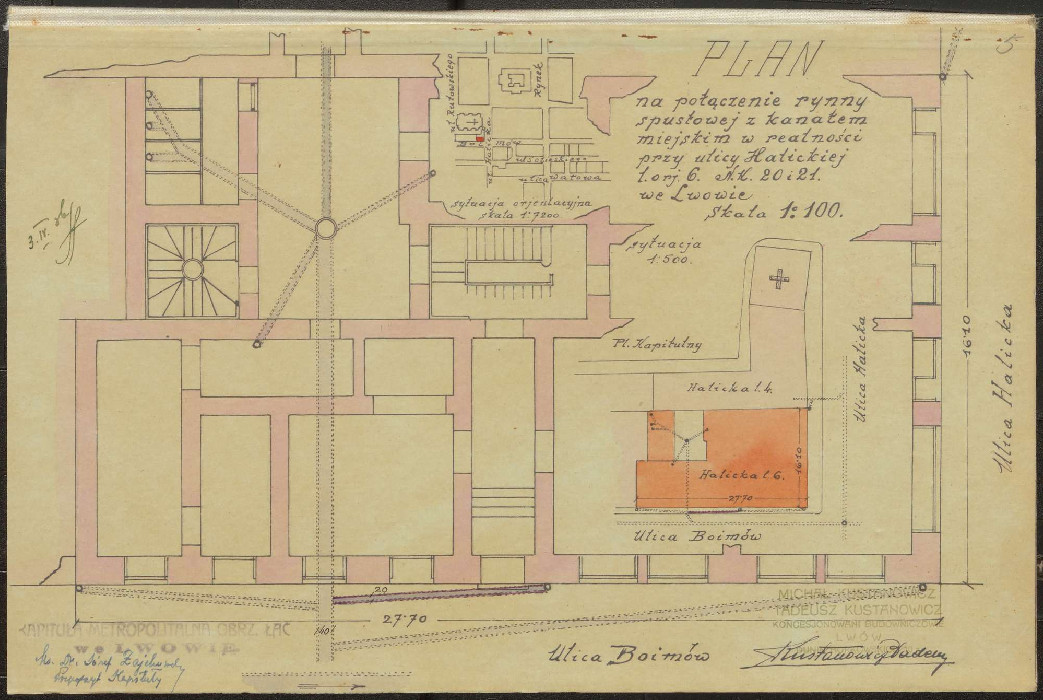
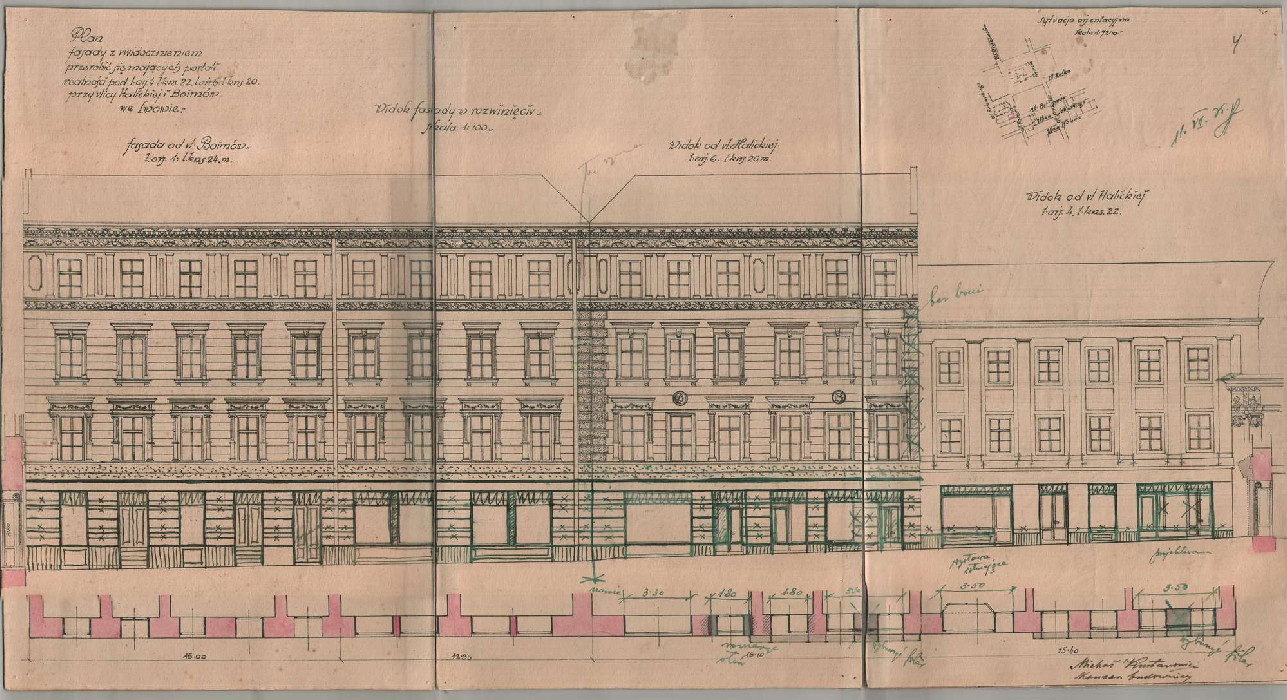
Vul. Halytska, 6 – former Awenstock townhouse ID: 2219
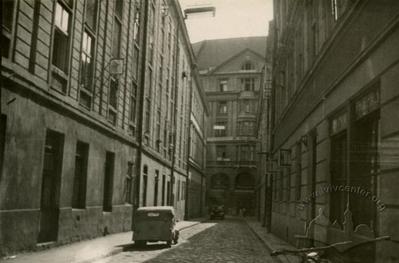
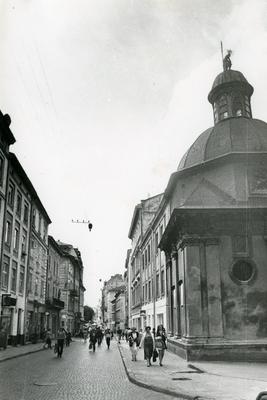
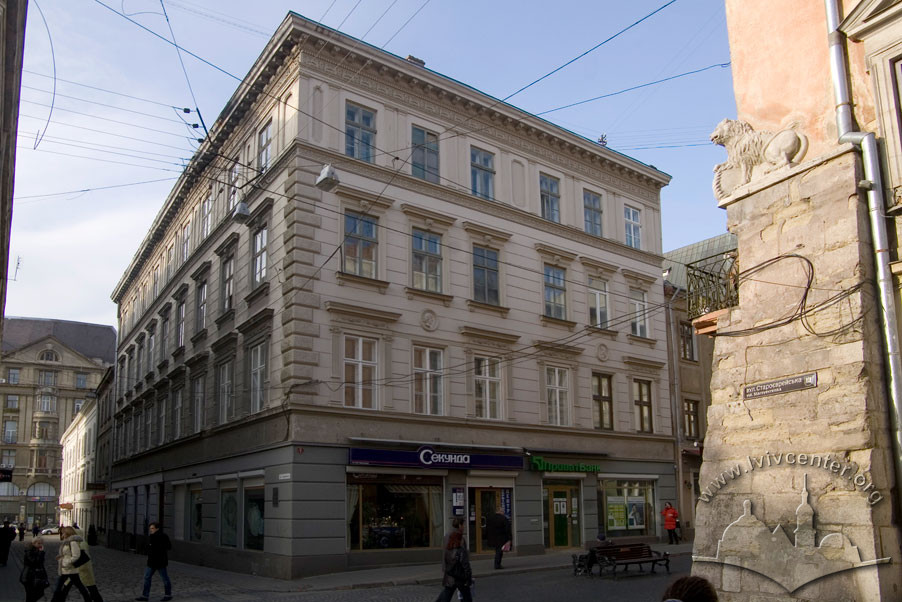
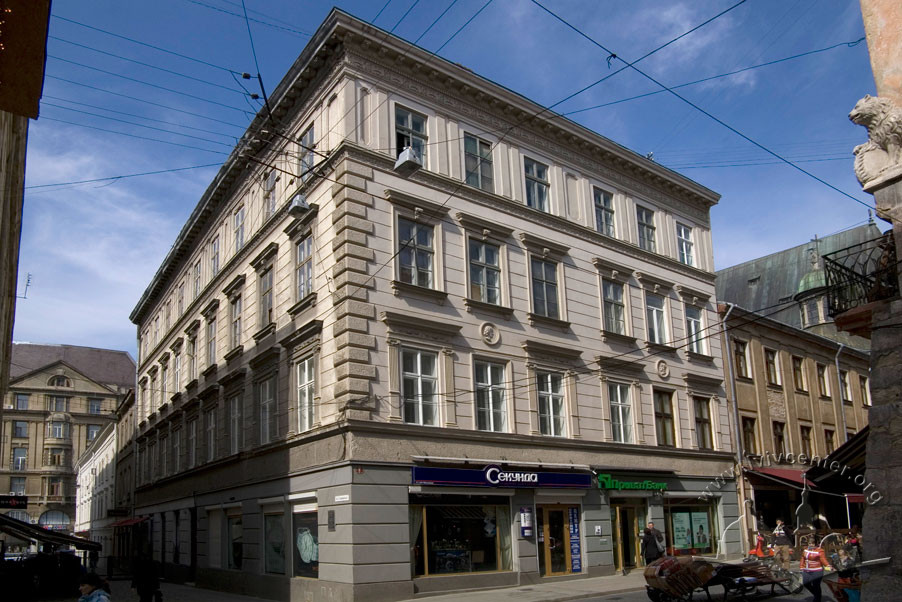
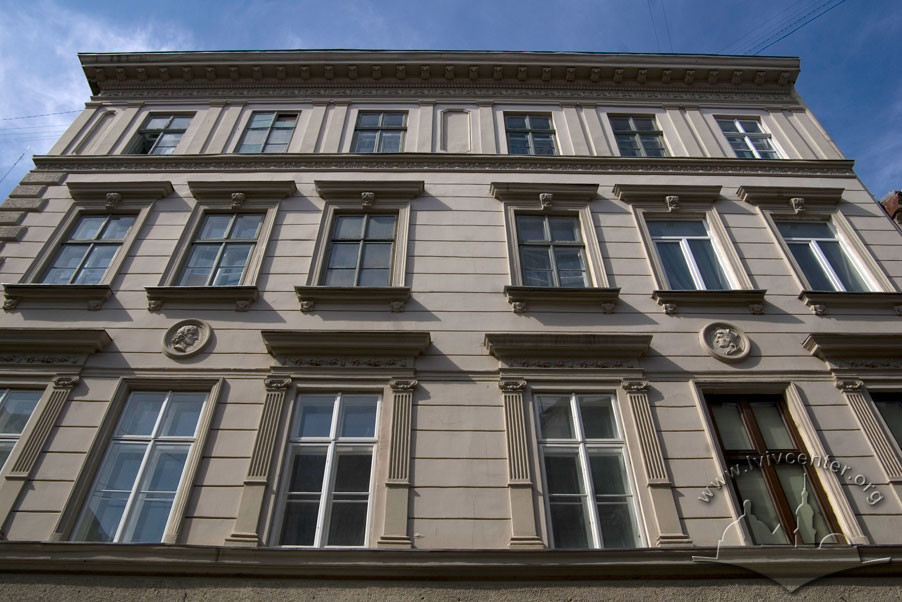
The four-story building at the corner of vul. Halytska and vul. Staroievreiska was constructed in 1883, designed by architect Zygmunt Kędzierski and commissioned by the Roman Catholic chapter. Previously, two townhouses stood on this site, which were merged into one in 1792. It was designed in the Historicist style (Neorenaissance). Today, the building is residential, with shops and a bank branch located on the ground floor.
Story
The historical name of the building — the "Awenstock Townhouse" — originates from the surname of one of its early owners, Awenstock.
Incorporated into the structure of the building, identified by old conscription numbers 26–27 (new numbers 20–21), are two historical townhouses: the corner one at conscription no. 20, owned by Balcer Hrabowski as of 1664, and the aforementioned Awenstock — house at no. 21. The latter stood on a very narrow plot of land. In the eighteenth century, the owners included Franciszek Nowakowski, preceded by Aberman, and followed by the saddler Benzdorf. At that time, both buildings were three stories tall. In 1682, the Awenstock Townhouse was occupied by Grzegorz Nedbałowicz, an archer, who was referred to as an "architector" in the Latin text. In 1703, the painter Michał Boguszewicz lived here; he was a member of a renowned family of painters tracing its lineage back to the sixteenth-century artist Bogusz. In 1734, mrs. Boguszewa, the widow of M. Boguszewicz, is mentioned in records.
Following the Boguszewicz family, the Awenstock Townhouse was occupied in 1766 by Ivan Czerniawski, a watchmaker from Zhovkva. After Czerniawski, the house passed to Kazimierz Potakowski, who in 1792 constructed a new four-story townhouse at a cost of 76,440 zł. Judging by such a significant sum, Potakowski merged the two townhouses into one.
The current building was constructed in 1883 according to the design of architect Zygmunt Kędzierski. The cost of construction was 28,150 guldens. The house belonged to the Roman Catholic Chapter of Lviv. In the early twentieth century, the ground floor housed several shops: Jan Sosin's smoked meats, Adam Kauczyński and Leon Oberski's haberdashery and toys, and the mechanic Jan Lauruk's shop for razors and skis.
Architecture
The building is situated on a wide plot within a city-center block bounded by Halytska, Staroievreiska, Teatralna streets, and Katedralna Square. It is a four-story corner building.
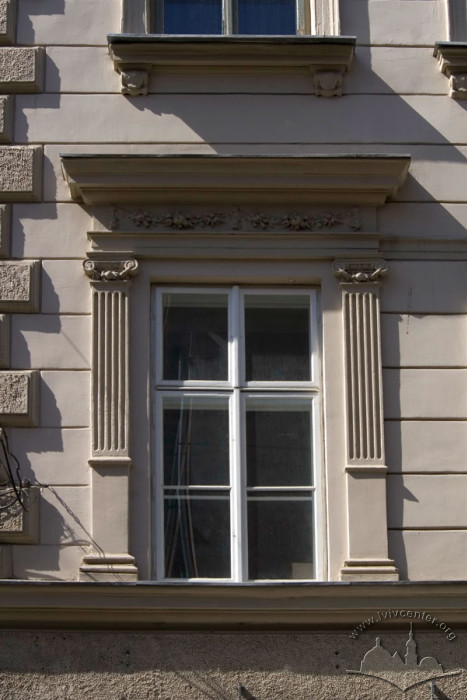
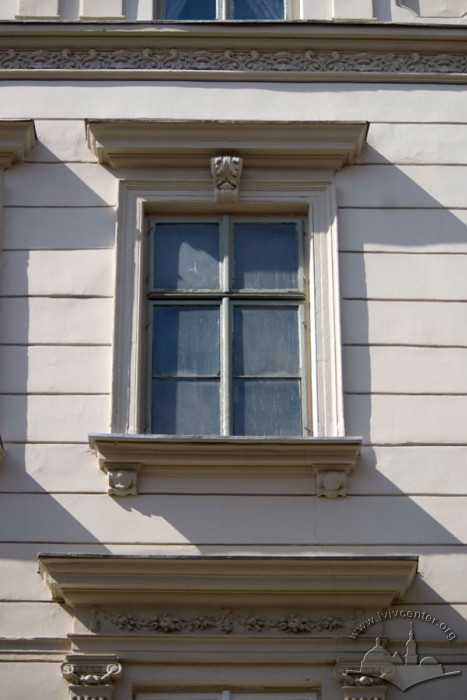
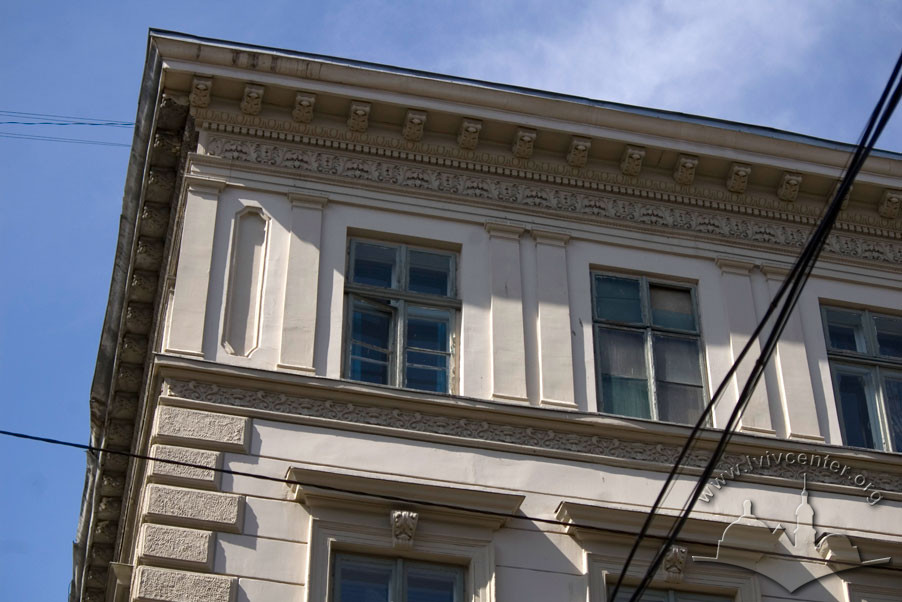
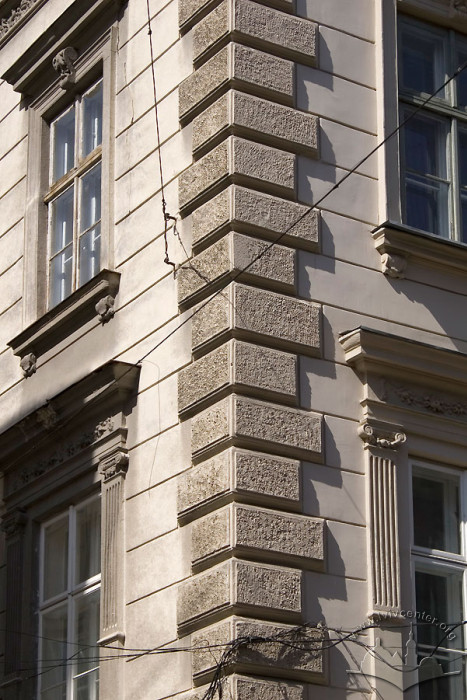
The façade ornamentation incorporates Neorenaissance elements. The fourth floor is emphasized by an ornamental cornice, while the ground floor features a simple one. The first through third floors are finished with linear rustication, whereas the fourth floor is decorated with Tuscan order pilasters. On the second floor, the windows are adorned with Ionic pilasters and profiled trimmings with pediments.
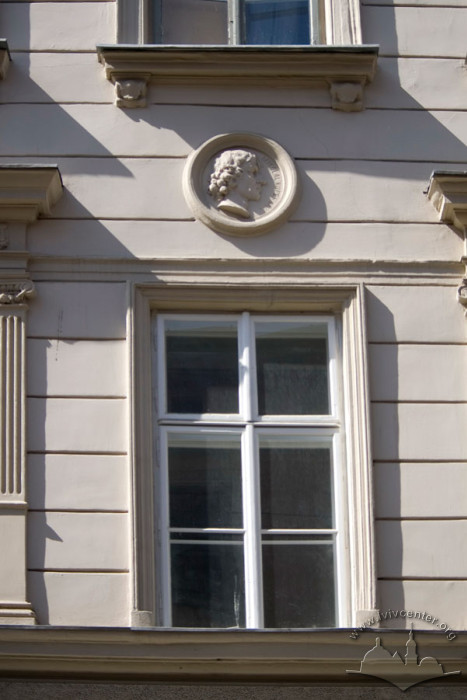
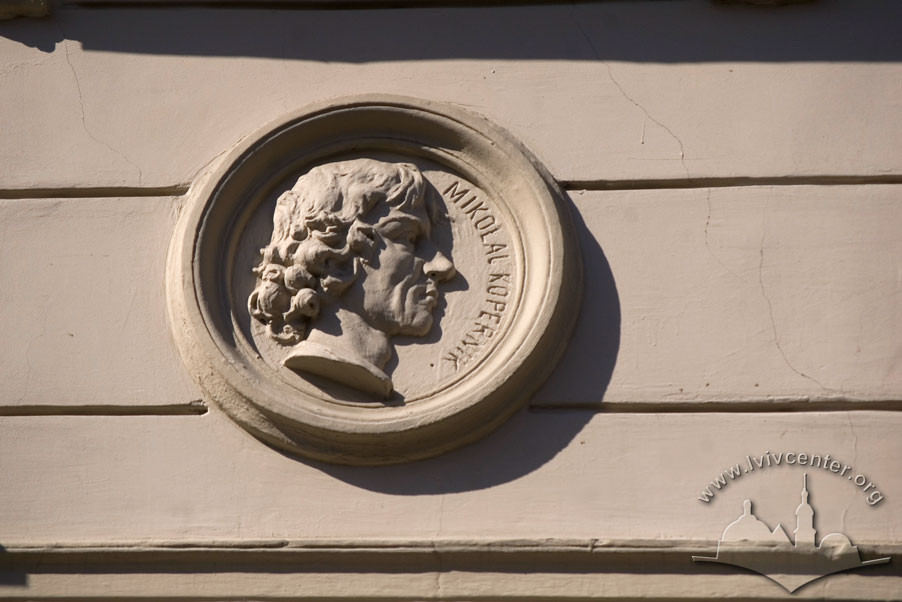
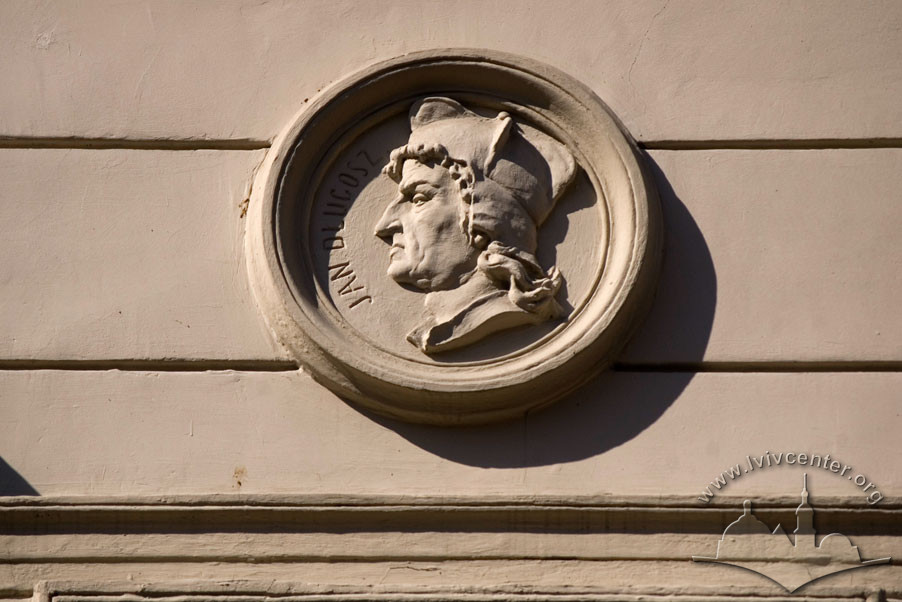
The second floor is further embellished with circular medallions featuring relief portraits of Mikołaj Kopernik and Jan Długosz. The façade is crowned by a lavish cornice decorated with intricate ornamentation and a modillion frieze.
Sources
- Державний архів Львівської області (ДАЛО) 2/1/1973. URL: https://e.archivelviv.gov.ua/file-viewer/228752#file-838252
- Центральний державний історичний архів України, м. Львів (ЦДІАУЛ) 197/2/260.
- Володимир Вуйцик, Leopolitana II (Львів: Класика, 2012).
- Борис Мельник, Ніні Шестакова, "Кам’яниці Львівського середмістя", Наукові записки. Львівський історичний музей. Випуск XII. (Львів: Новий час, 2008), 133-158.