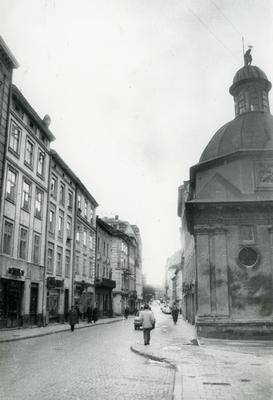
Vul. Halytska, 5 – former Kisiołka townhouse ID: 2218
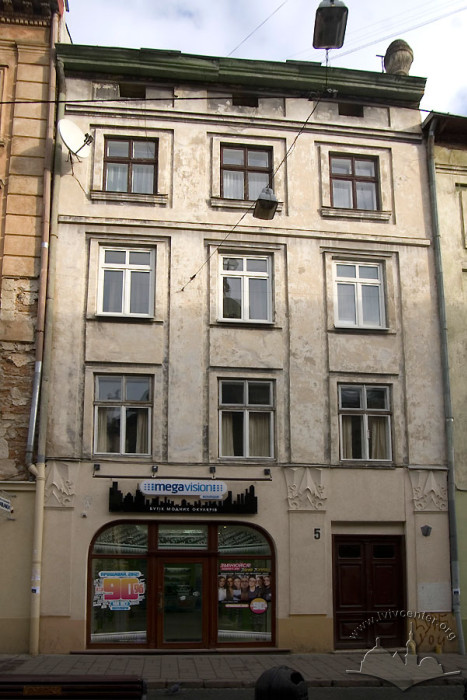
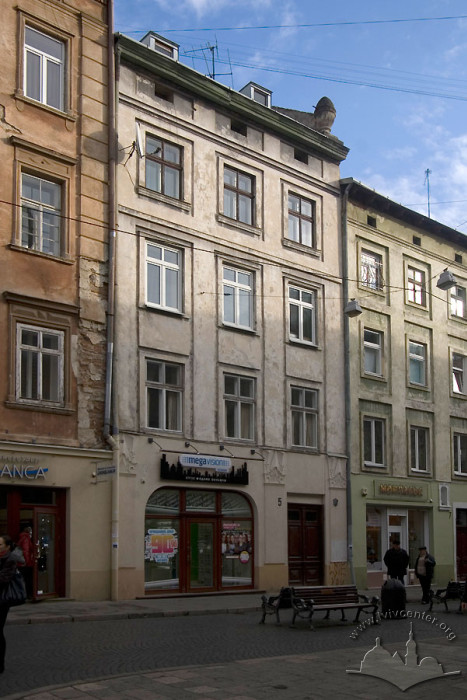
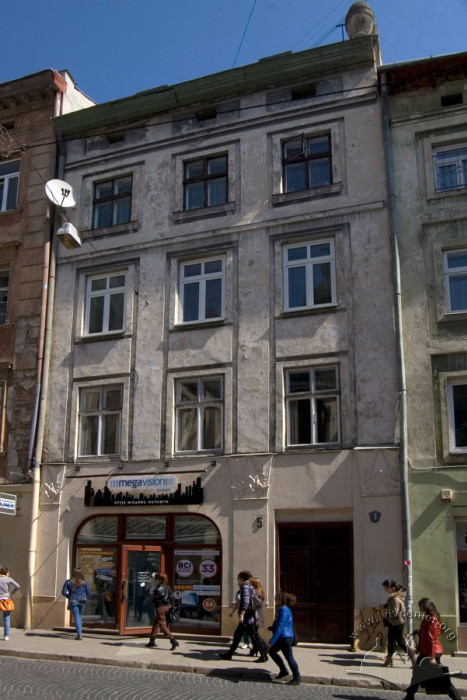
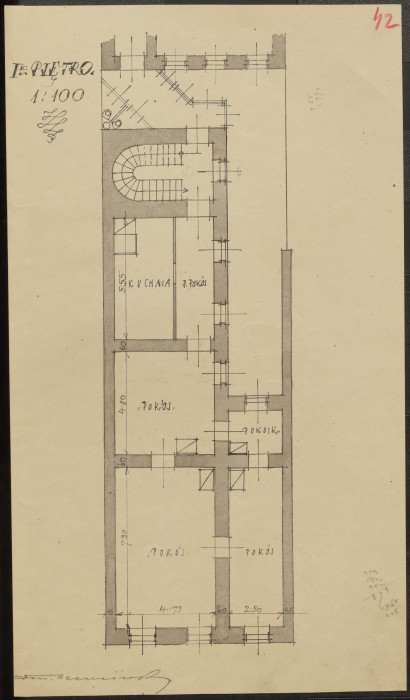
The four-story building, located among terraced houses on vul. Halytska, was built on the ruins of a previous townhouse in 1787. Its owner at that time was Andrzej Andzułowski, an Armenian wine merchant. The building is designed in the restrained, laconic forms characteristic of late eighteenth-century tenement houses and features Art Deco elements. It is an Architectural monument of local importance (protected site No. 873). Today, it is a residential building, with shops occupying part of the ground floor.
Story
The building at vul. Halytska 5 once had conscription numbers 229 (old) and 241 (new).
Earlier, in the sixteenth century, the building was known as 'The Tower' (Bashta). Magistrate records from 1568 report that "Ioan Sykst leased a portion of his Lenartivska house, called "The Tower," located next to the house of the late Franciszek Antosiowicz, to Bartłomiej Szombek, a councillor from Kraków, for six hryvnias".
In the seventeenth-eighteenth centuries, the building was called "Kisiołkowska" after its owner, Kisiołka. It had three floors and a façade nineteen cubits wide. In 1767, it was home to Alexander Żytkiewicz, a member of the city council from the College of Forty Men (Pol. Kolegium czterdziestu mężów), then, in 1780, to Zelkiewicz, and then to Jan Baczyński, a magistrate advisor and active member of the Stauropegion Brotherhood.
At that time, the building was in a state of disrepair. In 1787, Baczyński sold the ruin to Andrzej Andzułowski, an Armenian wine merchant. That same year, Andzułowski rebuilt it from the foundations, together with the wing that extended to the rear of the building at 20 Rynok Square. In a transaction document dated August 26, 1789, Andzułowski gifted the newly built tenement house to his wife Eufrozyna née Arakielowicz. According to an estimate made in 1791 by architect Klemens Fesinger, the cost of construction was 22,310 zł. After the death of Eufrozyna Andzułowski (1824), the house passed to Stanisław Czerwiński.
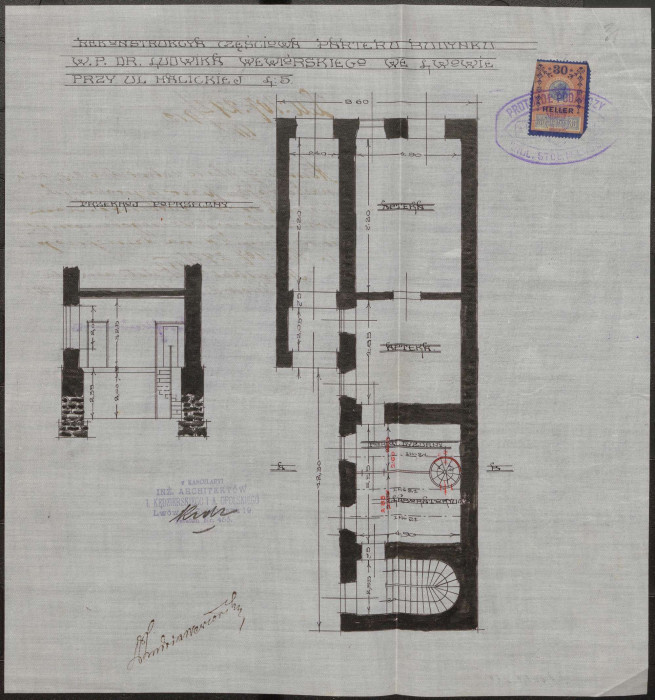
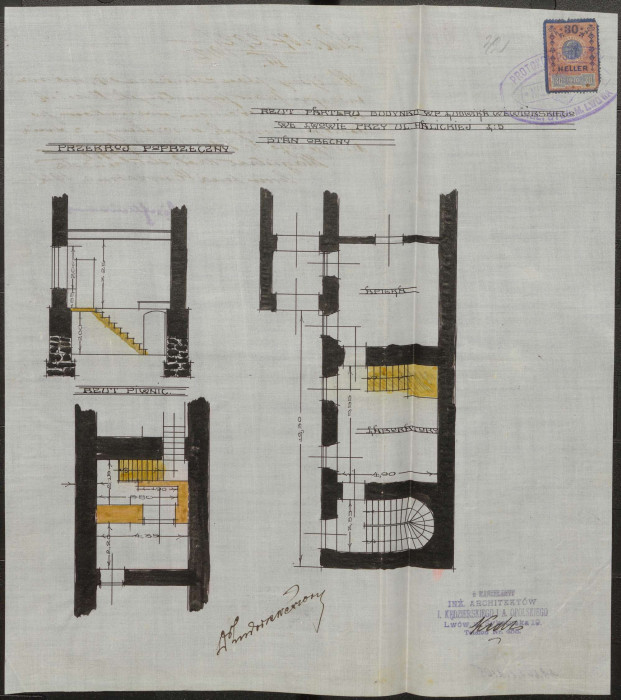
At the beginning of the twentieth century, the building housed Dr. Jan Ludwik Wewjórski's pharmacy "Under the Golden Eagle" (Pol. Pod orłem złotym). The Wewjórski family lived in the house: the owner of the pharmacy, Jan Ludwik, engineer Ignacy, and Polytechnic student Janusz Wewjórski, as well as bank cashier Felicjan Chrząszczyński.
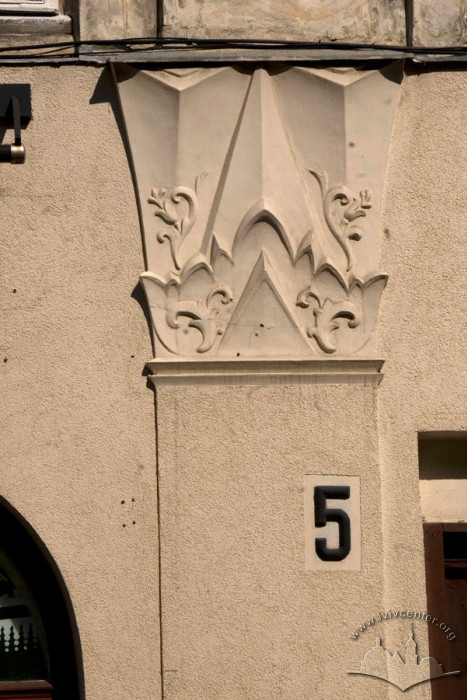
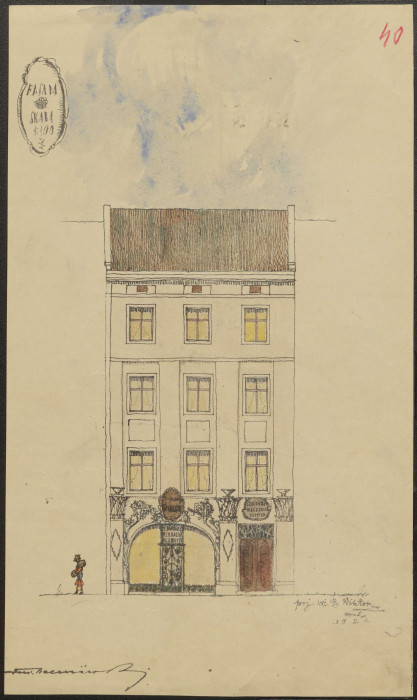
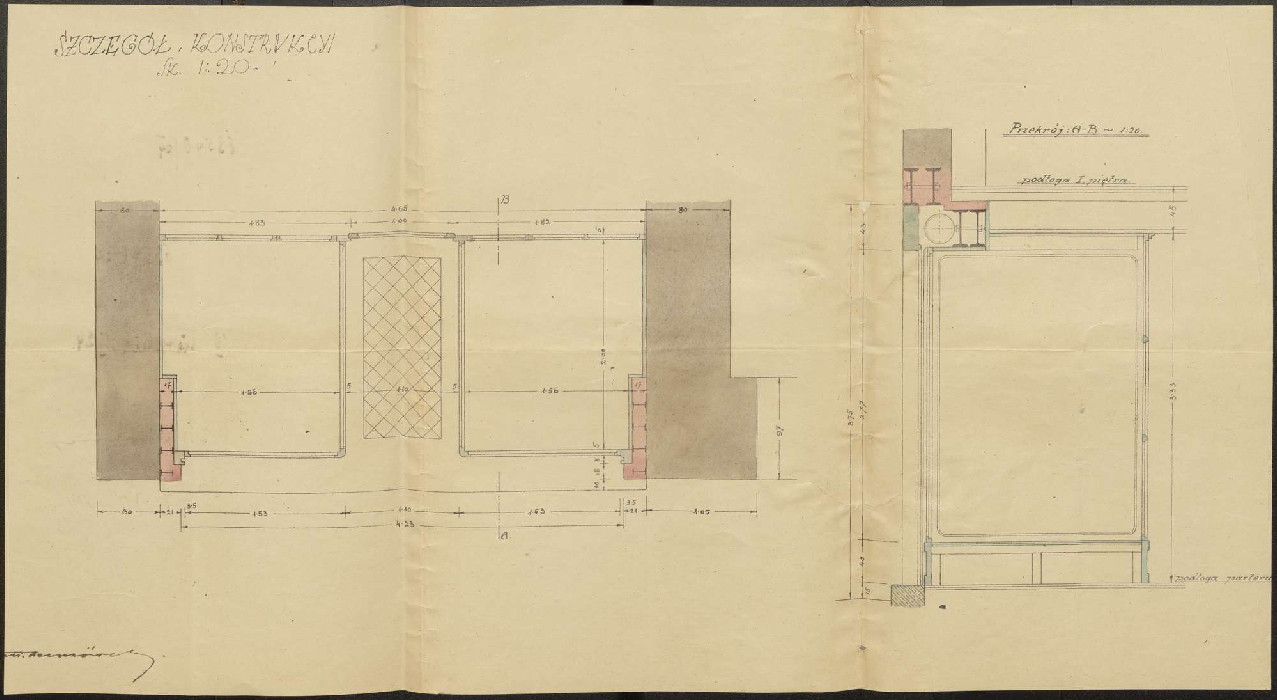
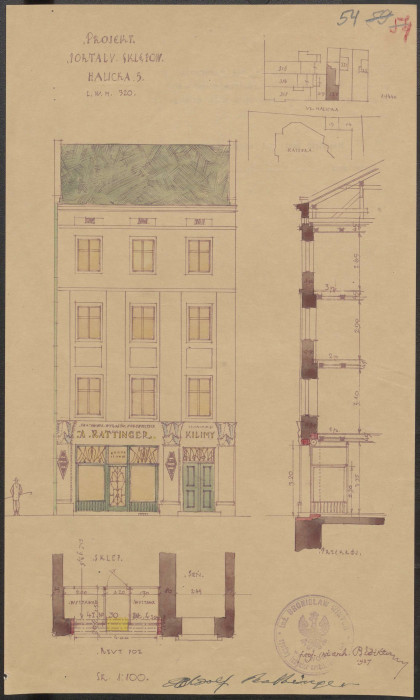
At that time, some changes were made to the façade. In 1927, the ground floor was decorated in the Art Deco style according to a design by architect Bronisław Wiktor.
In 1988, the building was included in the local register of monuments under protection number 873.
Architecture
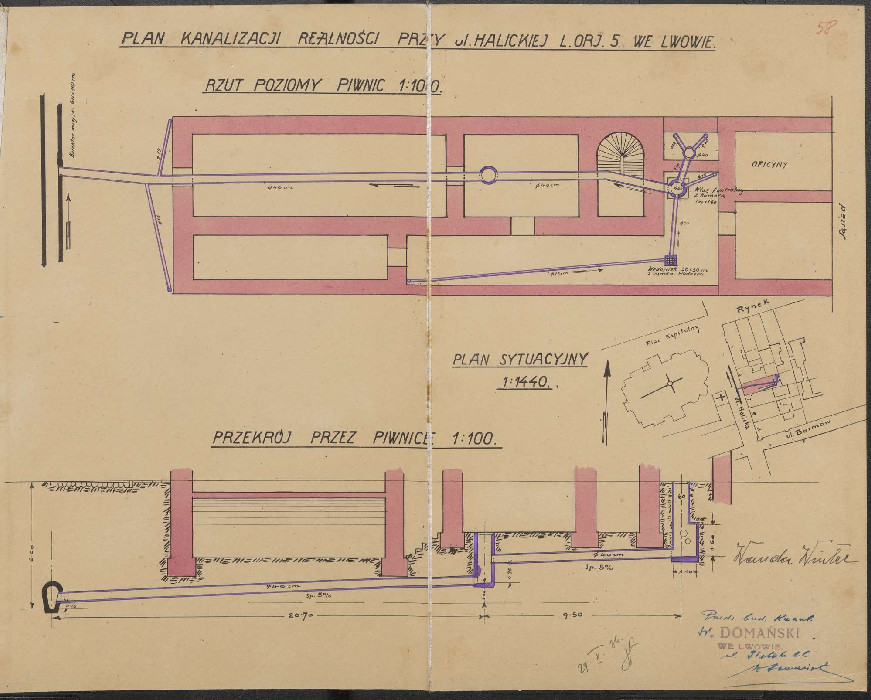
The building is located on a plot in the southern market district, bounded by Halytska, Staroievreiska, and Serbska streets.
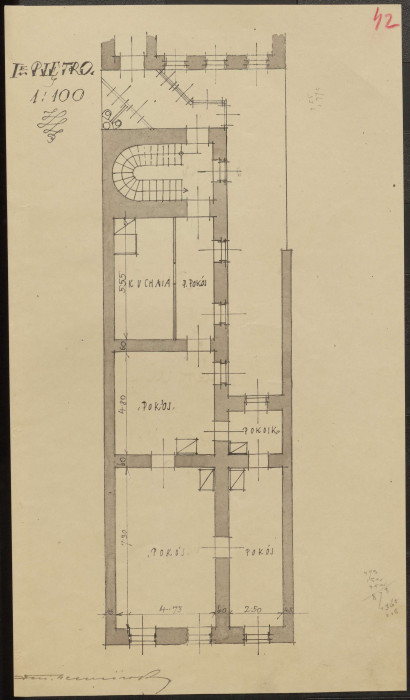
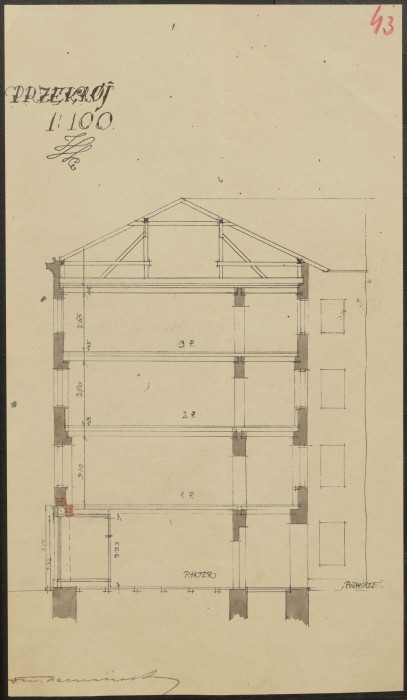
As of today (2014), the building is a four-story, three-axis structure.
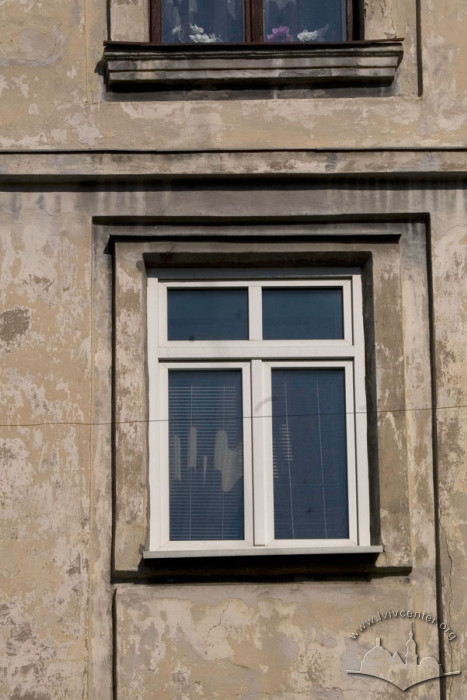
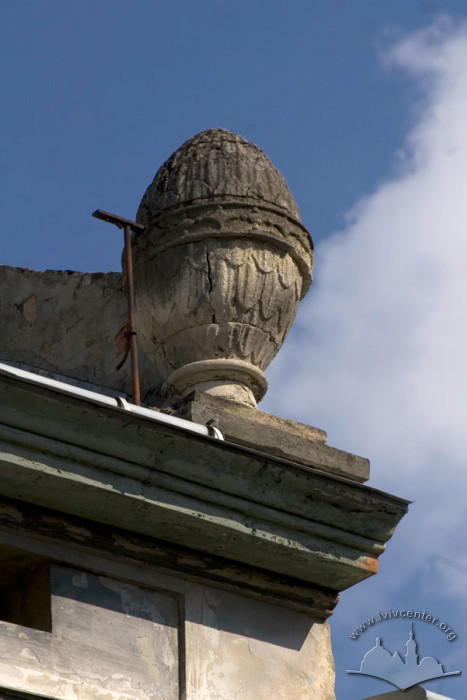
The façade is designed in dry, laconic forms. It is diversified by lesenes, between which windows in simple trimmings are cut. The fourth floor is emphasized by a cornice. The roof above the cornice is crowned with stylish metal grilles and corner stone vases (the vase on the left corner is lost). The entrance gate is shifted to the right.
Sources
- Державний архів Львівської області (ДАЛО) 2/1/1972. URL: https://e.archivelviv.gov.ua/file-viewer/228751#file-839706
- Центральний державний історичний архів України, м. Львів (ЦДІАУЛ) 52/2/379.
- ЦДІАУЛ 52/2/445.
- Володимир Вуйцик, Leopolitana II (Львів: Класика, 2012).
- Борис Мельник, Ніна Шестакова, "Кам'яниці Львівського середмістя", Наукові записки. Львівський історичний музей. Випуск XII. (Львів: Новий час, 2008), 133-158.