Vul. Halytska, 3 – residential building ID: 2216
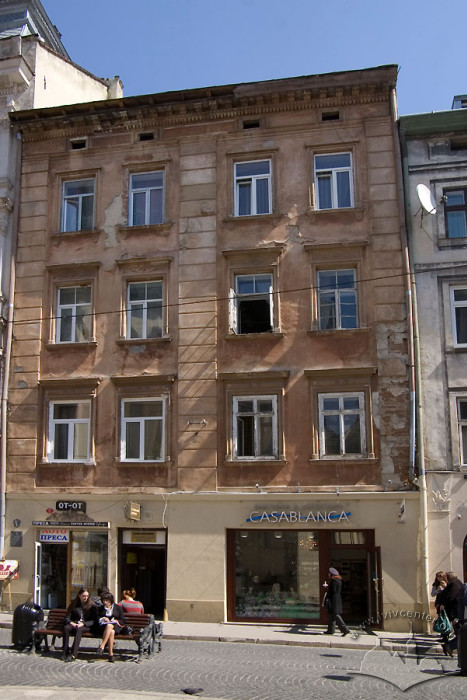
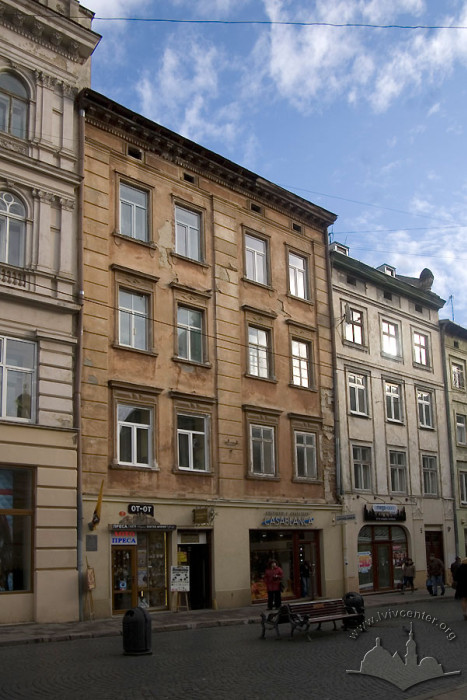
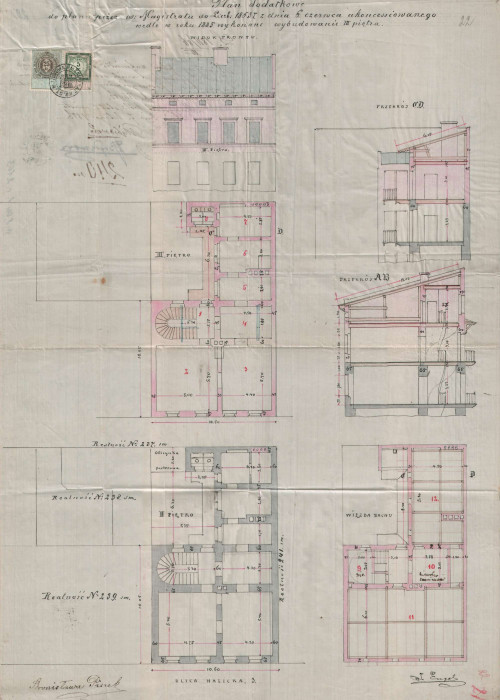
The building at its current address, vul. Halytska 3, was constructed in 1781 after the demolition of the previous seventeenth-century townhouse, known as the "Edvertivska". Initially, the building had three floors, but in 1885, a fourth floor was added according to a design by architect Jozef Engel. The main façade of the building is designed in the style characteristic of the Zopfstil style, which was widespread in German-speaking countries at the end of the sixteenth century. The townhouse is listed in the National Register of Monuments (No. 1281).
Story
Vul. Halytska is a former trade route that once passed through Lviv, connecting cities in the Middle East with Western Europe. Its name, "Plathea Halicensis", first appears in documents from 1384. The plot on which the house stands began to be developed in the sixteenth century.
In the seventeenth century, the building was called Edvertivska, after Edward Menke, its owner in 1666, and this name remained until the second half of the eighteenth century. At that time, the building had three floors and a façade measuring nineteen ells. In 1767, it belonged to Stanisław Ludczyński, a Lviv magistrate. In 1775, Ludczyński sold it to tailor Franciszek Nowakowski. Then, in 1781, Nowakowski demolished the old building and built a new one from the foundations, also three stories high. According to a case file from 1827, porcelain and stoneware were sold in a shop called "Under the Golden Sun" located in the building.
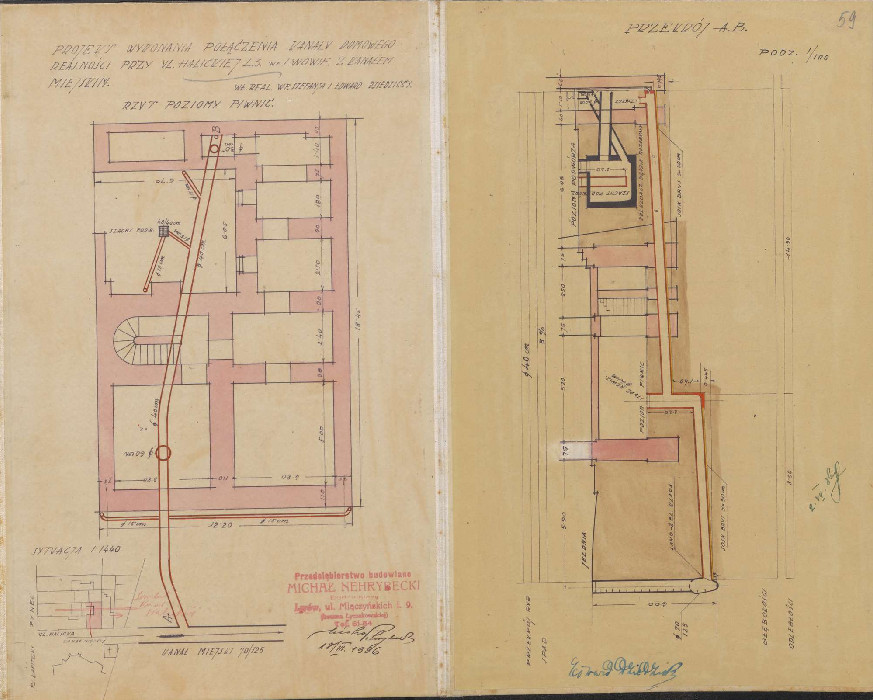
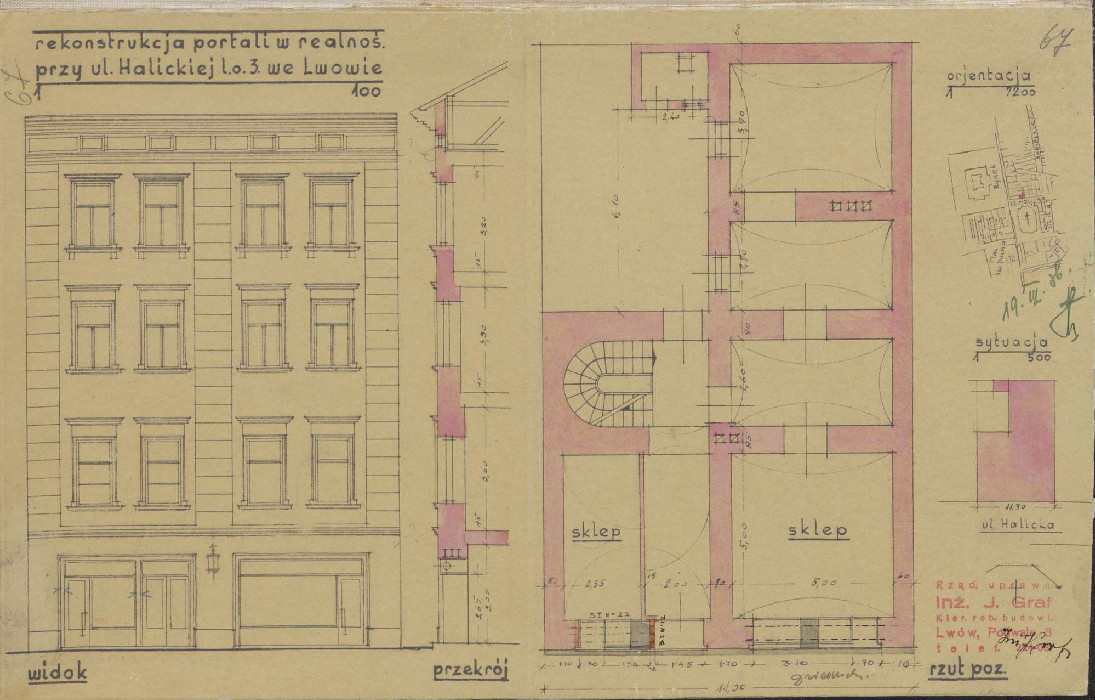
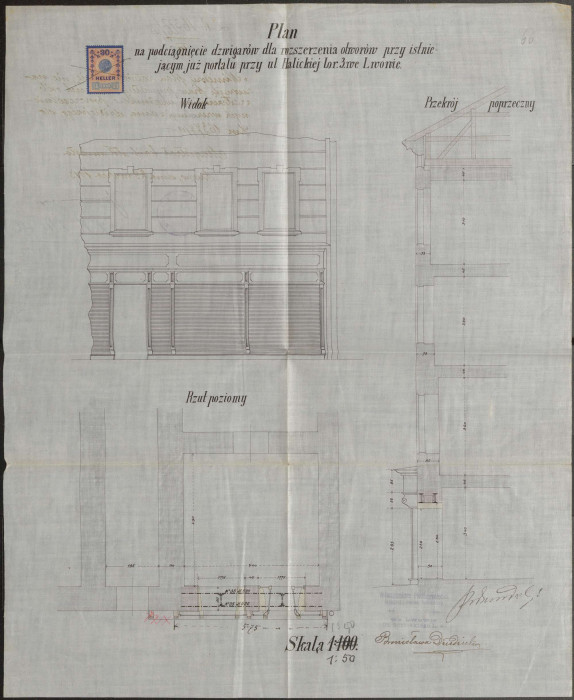
The building acquired its present appearance in 1885, after the fourth floor was added. The design, approved on June 6, 1885, was created by architect Jozef Engel. On January 11, 1886, the owner, Bronisława Pisztek, informed the magistrate about the completion of the extension and requested permission to move in. In 1895, a shop window was installed, which was expanded in 1913.
In 1910, the building was home to private trader Eliasz Aschkenazy, magistrate official Wincenty Dziędzielewicz, distributor for the Zinger company Józef Nowacki, merchant Ignacy Rak, and clothing designer Sara Tand. The ground floor housed Leon Felix's jewelry workshop, Władysław Bażant's "Spices and Delicacies" shop, and Joel Jolles' shoe store.
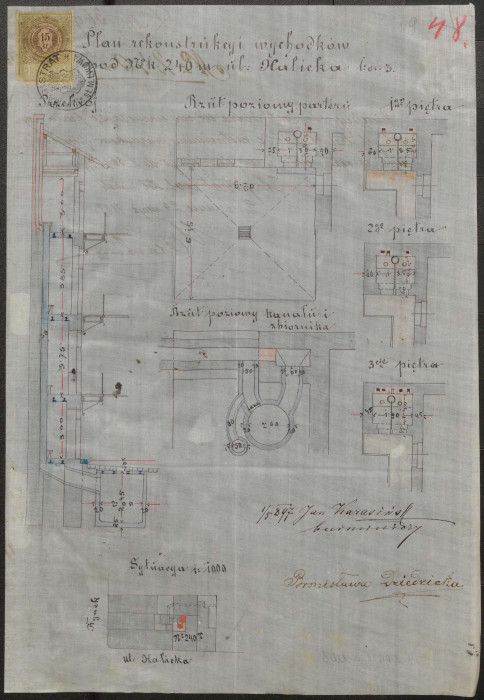
The building was once marked with conscription numbers 228 (old number)and 240 (new number). By Resolution No. 442 of the Council of Ministers of the Ukrainian SSR dated September 6, 1979, the building was included in the National Register of Monuments under protection number 1281.
Architecture
The building is located on a plot in the southern market quarter, bounded by Halytska, Staroievreiska, and Serbska streets.
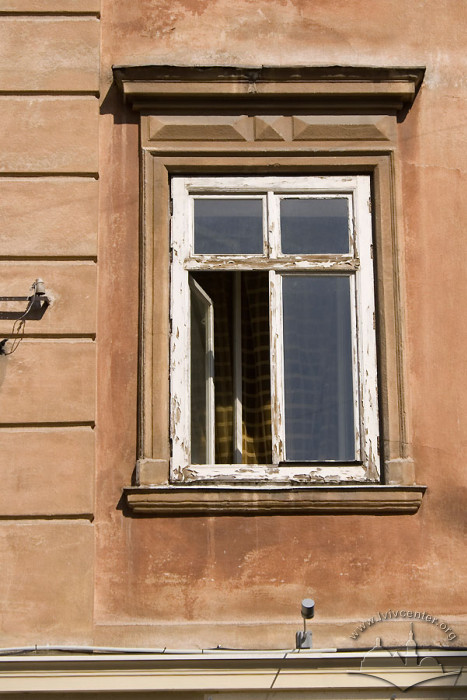
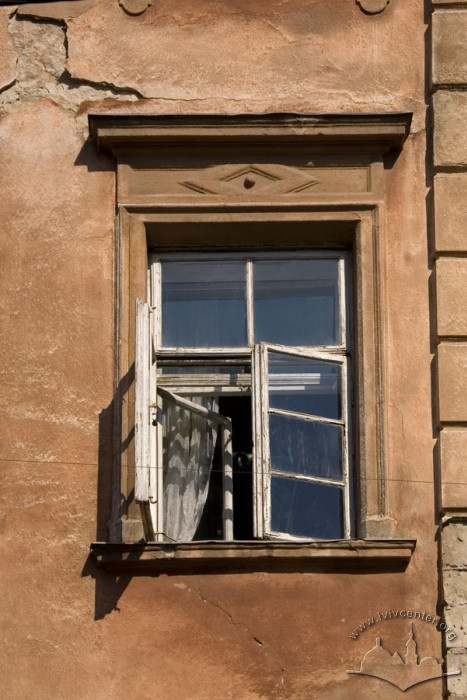
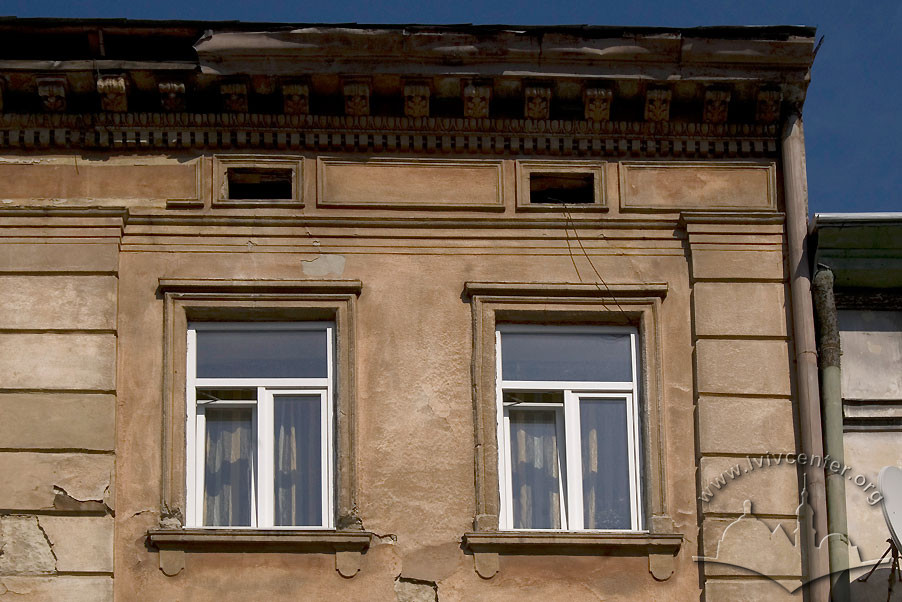
The building has four floors and four axes, with the main entrance shifted to the left. On the façade, the upper floors are united by three rusticated pilasters. The first floor is separated by a cornice. The windows are decorated with profiled trimming featuring window sills. The cornice is decorated with dentils, egg-and-dart ornaments, and a corbel frieze.
Sources
- Державний архів Львівської області (ДАЛО) 2/1/2103. Справа перейменована: ДАЛО 2/1/1970. URL: https://e.archivelviv.gov.ua/file-viewer/228749#file-834763
- Центральний державний історичний архів України, м. Львів (ЦДІАУЛ) 52/2/369.
- ЦДІАУЛ 52/2/847.
- ЦДІАУЛ 52/2/1077.
- Володимир Вуйцик, Leopolitana II (Львів: Класика, 2012).