Vul. Halytska, 11 – former Ohorzałkowski townhouse ID: 158
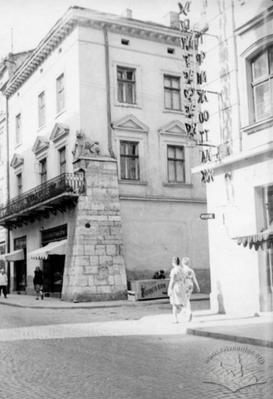
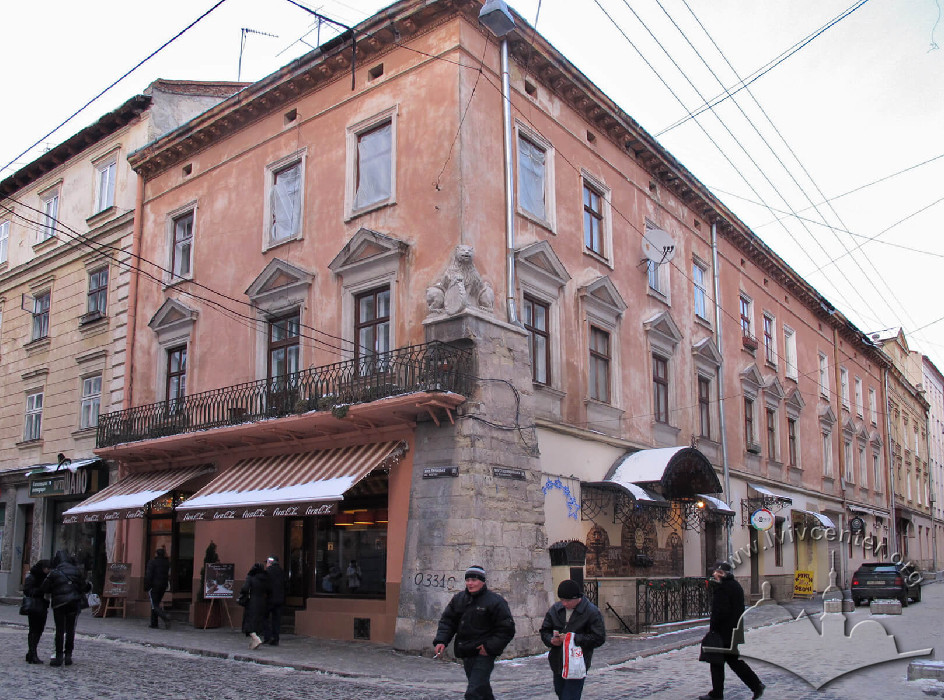
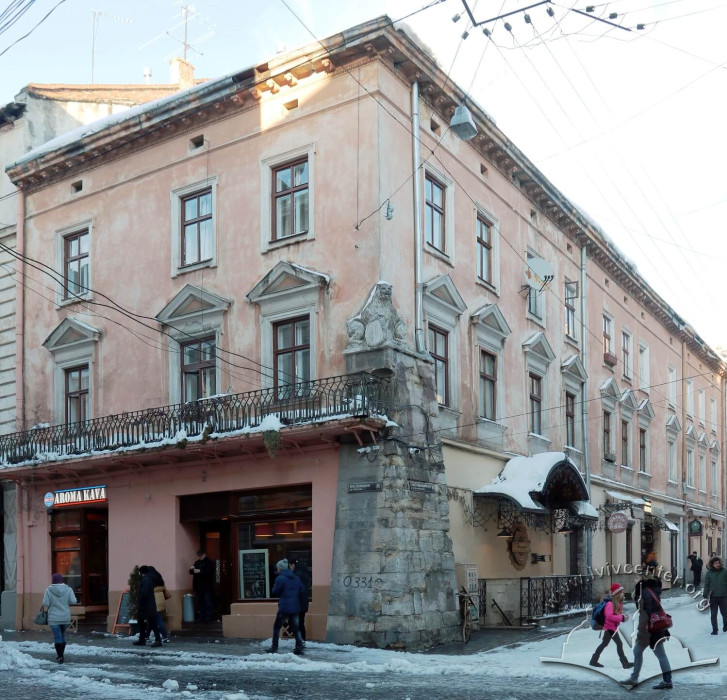
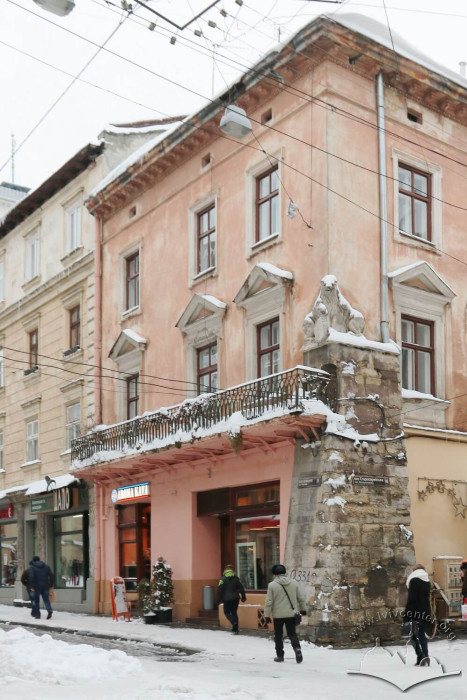
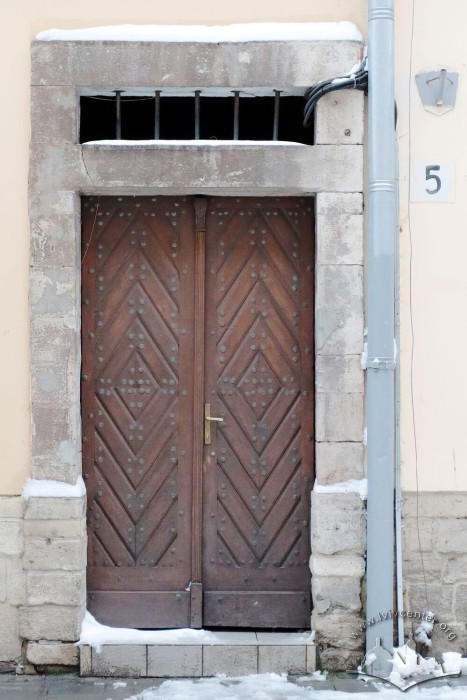
The Ogozałkowski Townhouse (conscription no. 232 old, no. 244 new) was built in the eighteenth century in the Baroque style on the foundations of an older building. It is widely known for its corner relief of a lion. Throughout its history, the property has belonged to various owners: the Ogorzałkowski (seventeenth century), the Ozgewicz family, the Krzyżowski, and later the Moruński. By Decree No. 442 of the Council of Ministers of the Ukrainian SSR (dated September 6, 1979), the building was added to the National Register of Monuments under protection no. 1284.Currently (as of 2014), the ground floor faces vul. Halytska houses the "Tsyfra" electronics store and a fast-food cafe. The "Khors" cafe is located within the vaulted cellars, with its entrance at vul. Staroievreiska 5.
Story
Sixteenth century — construction of the original two-story townhouse.
Late eighteenth century — construction of a three-story, Late Baroque townhouse on the original foundations.
1758 — the building was destroyed.
1765 — reconstruction of the townhouse by owner Jakób Moruński.
1786–1791 — extensive renovation in the Nutzbau style by owner Tobiasz Wajgel.
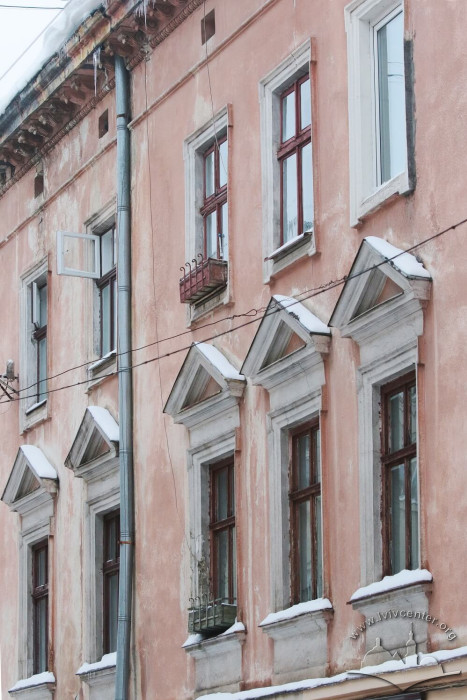
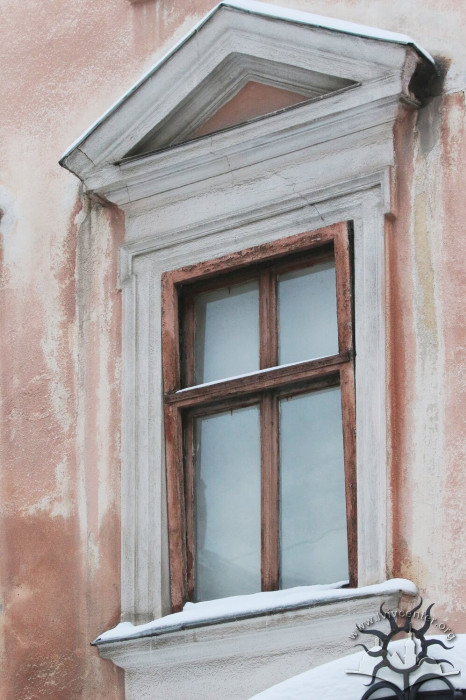
1875 — reconstruction of the roof and decoration of the façades. Windows were adorned with profiled trimmings and pediments, reconfigured to open inward.
Early 2000s —the ground floor got converted into the "De Mandjaro" fast-food restaurant.
The townhouse (conscription no. 232 old, no. 244 new) occupies a corner lot, with its entrance at 5 Staroievreiska Street. The facade facing vul. Halytska measured 18.2 cubits, while the side along modern-day vul. Staroievreiska measured 67 cubits. Its earliest known names were Ogozałkovska (seventeenth century), later Ozgewiczowska and Krzyżowsca, and subsequently Moruńscy. At the beginning of the eighteenth century, the building was two stories tall.
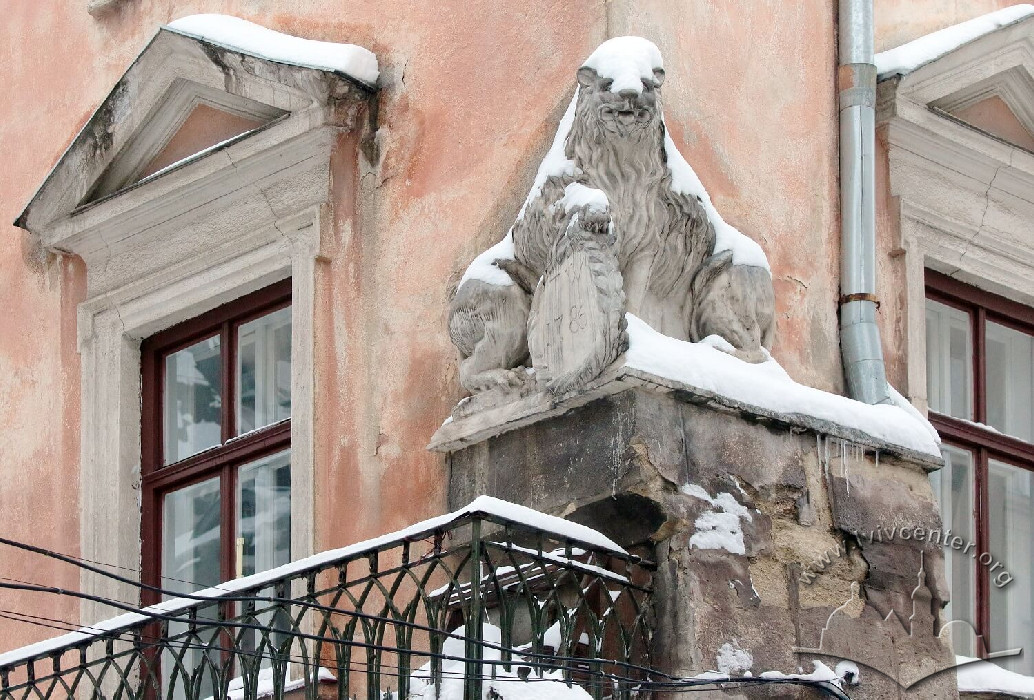
In 1765, the city sold the Ozgewiczowska Townhouse — which had been lying in total ruin for eight years — to Jakób Moruński, a sword-bearer, for 3,000 zł. From 1748 to 1757, Moruński had resided in the Robertowski Townhouse (at 2 Rynok Square). After restoring the newly acquired building on vul. Halytska, Jakób Moruński turned it over to his son-in-law, Petro Lubkovsky, who was married to his daughter Kateryna. Under a sales contract dated January 2, 1786, Petro and Kateryna Lubkovsky sold the property for 22,000 zl to a wine merchant named Tobiasz Wajgel. Shortly after, the merchant Weigel began an extensive reconstruction of the house, which was fully completed by 1791. During this renovation, the corner of the building was adorned with a sculptural relief of a lion with one head and two bodies. On May 13, 1791, master builders Jozef Zemler and Franc Grel conducted an appraisal of the townhouse. According to their measurements, the main façade spanned 5 fathoms and 4 feet, while the side façade measured 17 fathoms and 3 feet. The total cost of construction amounted to 18,200 guldens.
Tobiasz Wajgel lived in this townhouse for the rest of his life. On February 6, 1812, Barbara (Wajgel by her first marriage, Landsteter by her second) transferred a portion of the townhouse to Jacób Pach; in March 1825, Pach's house was put up for auction for 30,000 guldens.
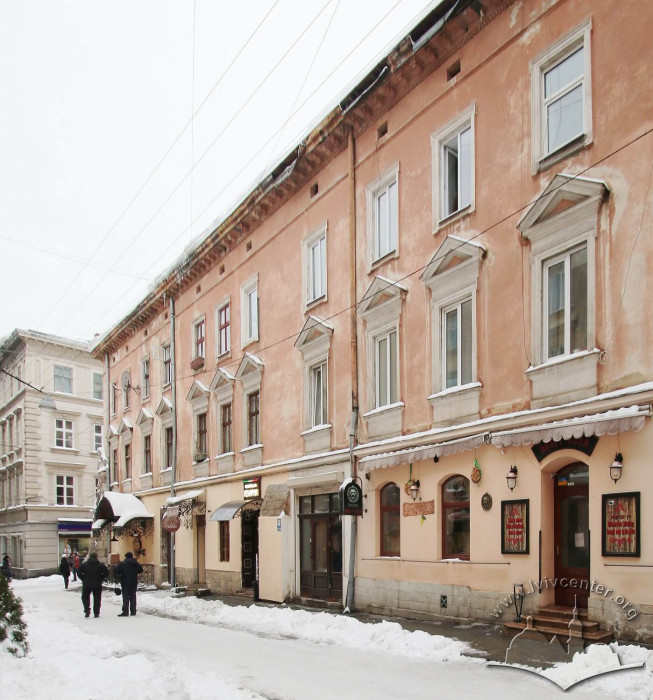
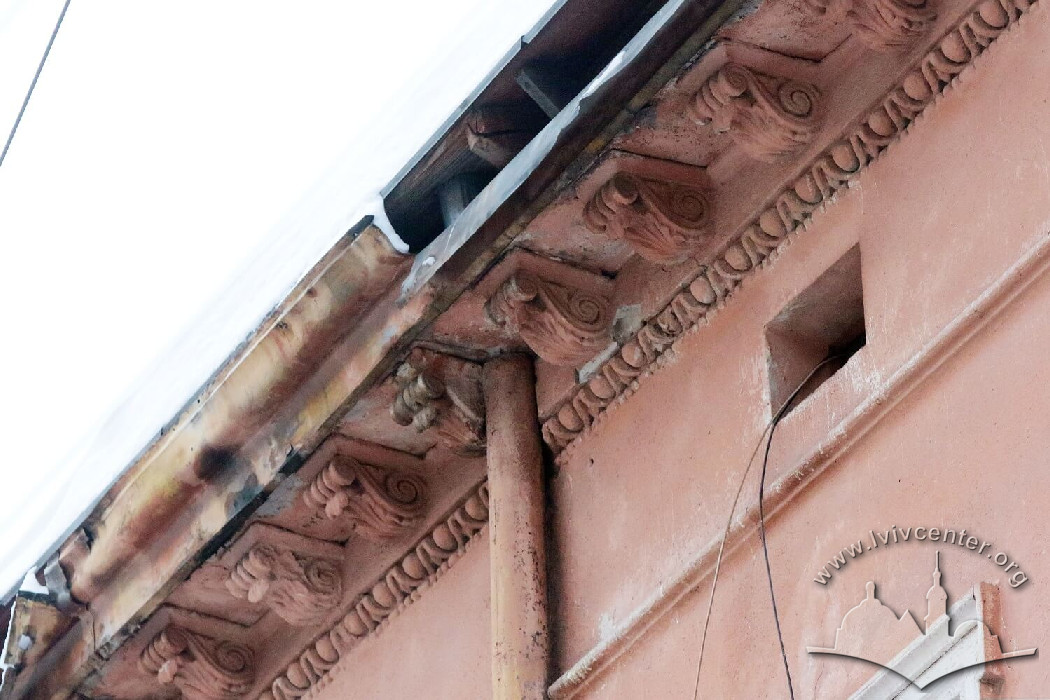
The house built by Tobiasz Wajgel in 1791 did not always look as it does today. During that period, German and Austrian architecture influenced local construction in Lviv, bringing an extreme utilitarianism that evolved into a distinct style known as Nutzbau. This style was typically used for middle-class residences, with façades stripped of ornamentation except for lesenes and subtle horizontal divisions. This can be seen on buildings No. 3, 4, 7, and 8 on this same street. This trend persisted until the second half of the nineteenth century, when architectural "excess" took hold. At that time, late eighteenth-century façades were decorated with order pilasters, profiled window trimmings with pediments, and ornate crowning cornices. Consequently, in 1875, the owner of this townhouse, Marya Bobori, not only reconstructed the roofs — raising them to a higher elevation — but also updated the façades. She adorned the windows with profiled trimmings with pediments and reconfigured the windows themselves to open inward (in older buildings, they typically opened outward).
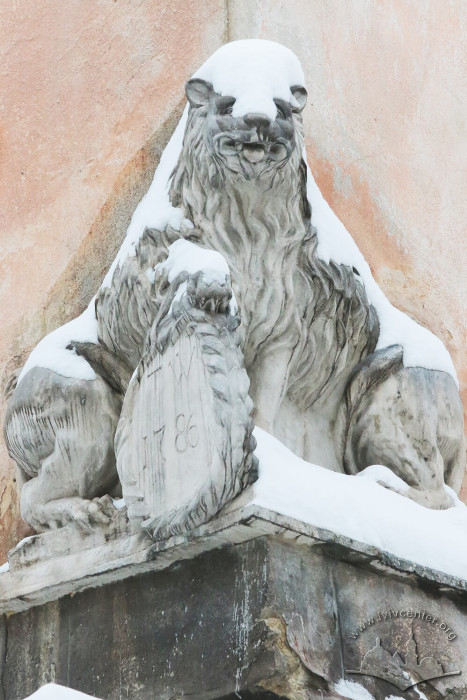
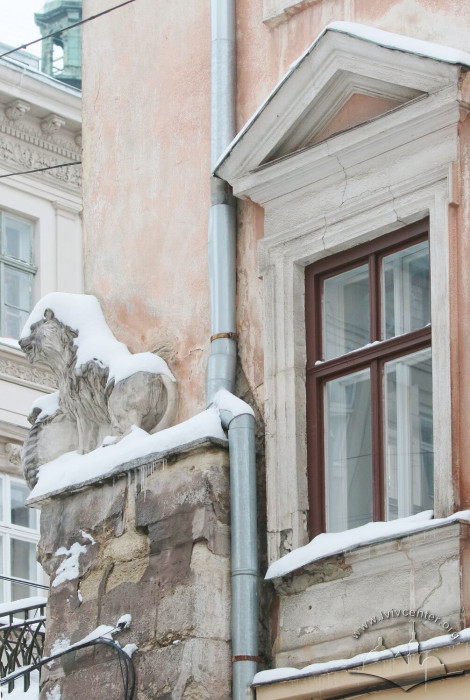
During the 2007 restoration of the lion sculpture, conducted by Polish conservator Janusz Smaza, the date of its installation was revealed: 1786, along with the initials T. W. (Tobiasz Wajgel).
In the early twentieth century, the ground floor housed two shops: Józef Brüg's women's boutique and Maks Pops' "Men's Fashionable Goods"; during the Soviet era, it became the "Kulttovary" store. As of 2014, the ground floor facing vul. Halytska is home to the "Tsyfra" electronics store and a fast-food cafe, while the "Khors" cafe is located in the vaulted cellars with its entrance at vul. Staroievreiska 5.
Architecture
The building is situated on a lot within the southern block adjacent to the Rynok Square, bounded by Halytska, Staroievreiska, and Serbska streets.
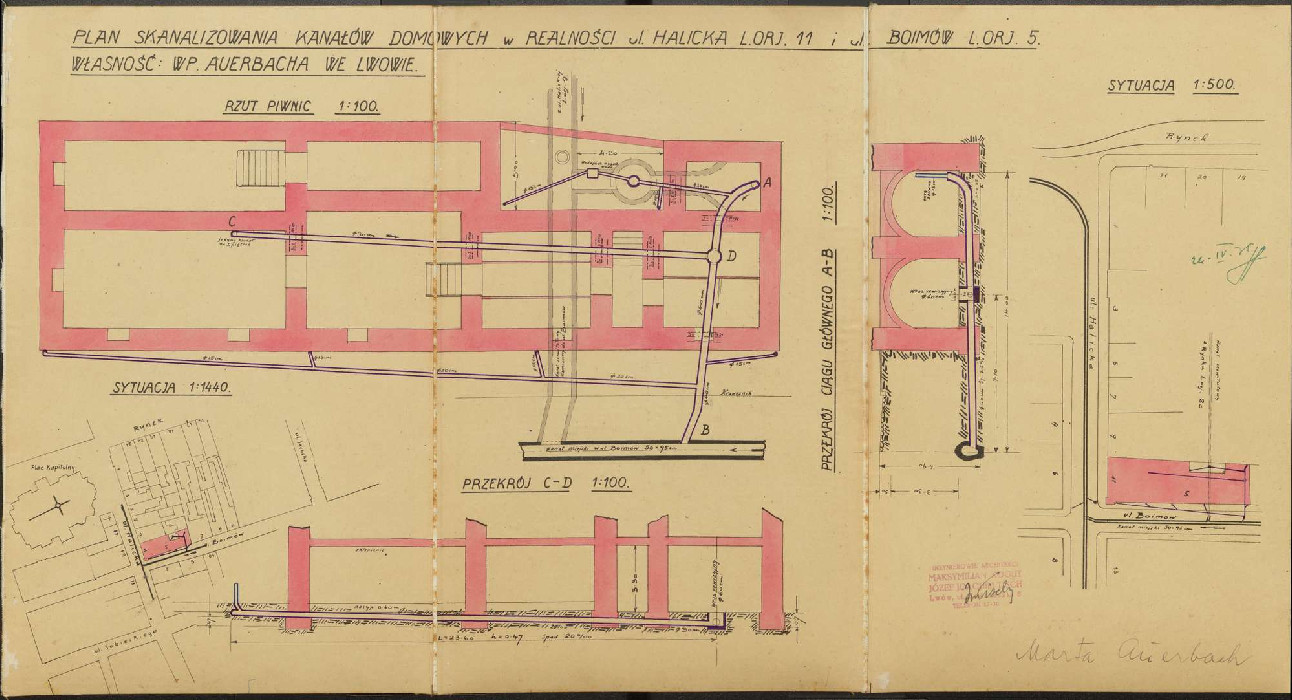
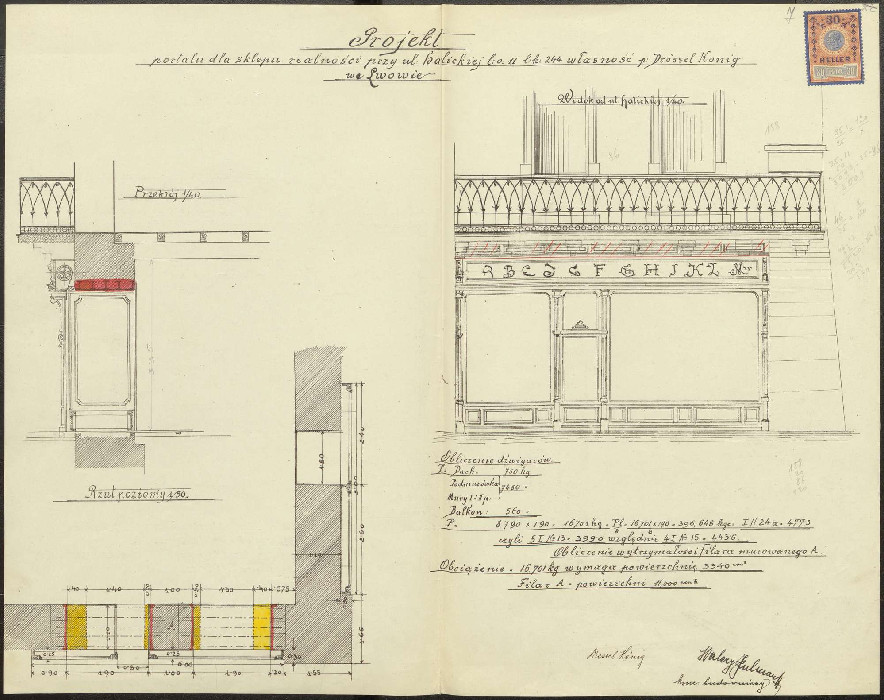
The building is a corner structure, three stories high, featuring three axes, and extending significantly along vul. Staroievreiska. The second-floor windows are adorned with substantial triangular pediments, while those on the third floor feature profiled trimming. At the second-floor level, there is a balcony supported by simple metal consoles, featuring an elegant wrought-iron balustrade. The original decorative stone brackets were removed in 1900 during the installation of storefront displays, partly because several of them had been damaged. The corner of the building is reinforced up to the top of the first floor by a massive hewn stone buttress, which is topped with a stone sculpture of a two-bodied lion dating to 1786. This lion sculpture on the vul. Halytska side sits atop the buttress, forming a single, seamless architectural unit. The building preserves its medieval layout along with its vaulted cellars and ground-floor interiors.
People
Barbara Wajgel (by her first marriage), Landsteter (by her second marriage) — owner of a portion of the townhouse.
Jozef Zemler — master builder responsible for the extensive reconstruction of the townhouse in the late eighteenth century.
Kateryna Lubkovska (née Moruńskich) — daughter of Jakób Moruński and wife of Petro Lubkovsky.
The Krzyżowski family — owners of the townhouse during the eighteenth century.
Maks Pops — owner of the "Men's Fashionable Goods" shop, located on the ground floor in the early twentieth century.
Marya Bobori — owner of the townhouse until 1875.
The Moruński family — owners of the townhouse during the eighteenth century.
The Ogorzałkowski family — owners of the townhouse during the seventeenth century.
The Ozgewicz family — owners of the townhouse during the seventeenth century.
Piotr Lubkowski — son-in-law of Jakób Moruński and a subsequent owner of the townhouse.
Tobiasz Wajgel — a wine merchant and owner of the townhouse from 1786 to 1812; he oversaw its major reconstruction.
Franc Grel — master builder who worked on the extensive reconstruction of the townhouse in the late eighteenth century.
Józef Brüg — owner of the women's clothing boutique located on the ground floor in the early twentieth century.
Jakób Moruński — a sword-bearer from and owner of Ozgewiczowska Townhouse starting in 1765.
Jacób Pach — owner of the townhouse until 1825.
Janusz Smaza — a Polish conservator who restored the iconic lion sculpture in 2007.
Sources
- Державний архів Львівської області (ДАЛО) 2/3/130. Справа перейменована: ДАЛО 2/1/1977. URL: https://e.archivelviv.gov.ua/file-viewer/228756#file-834360
- Gazeta Lwowska, 1825, Dodatek №26.
- Księga adresowa król. stoł. miasta Lwowa (Lwów, 1913).
- Борис Мельник, Ніна Шестакова, "Кам'яниці Львівського середмістя", Наукові записки. Львівський історичний музей. Випуск XII, (Львів: Новий час, 2008), 133-158.
- Володимир Вуйцик, Leopolitana II, (Львів: Класика, 2012).
- Григорий Островский, Львов, (Ленинград: Искусство, 1982), 81.
- Памятники градостроительства и архитектуры УССР, Т. 3 (Киев: “Будівельник”, 1985), 23.