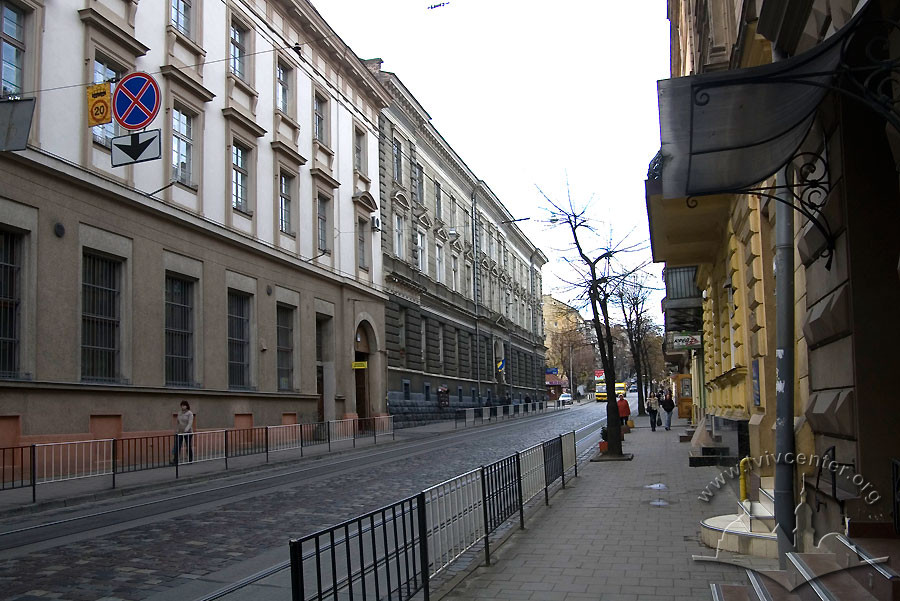
Vul. Petra Doroshenka, 41 – building of Ivan Franko Lviv National University ID: 709
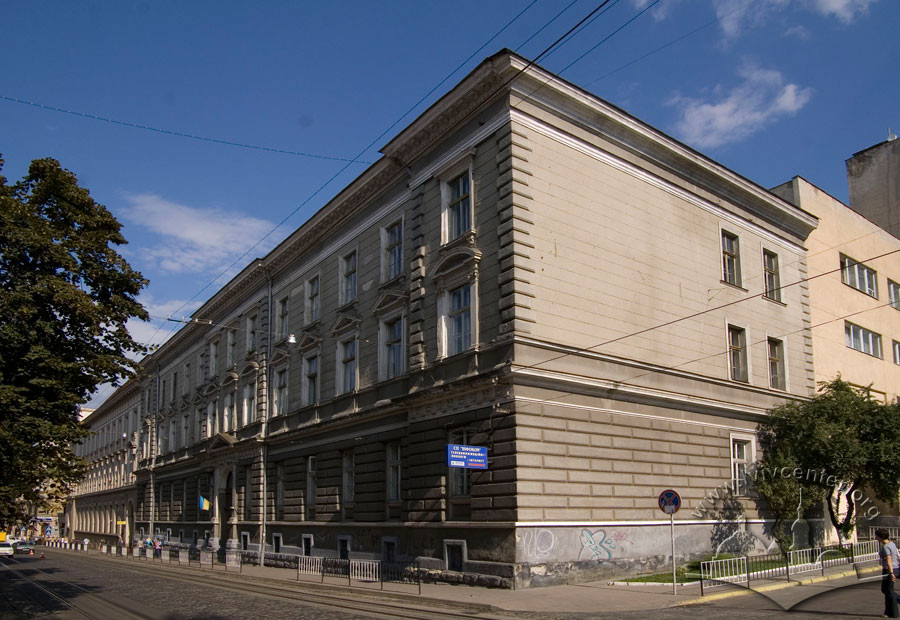
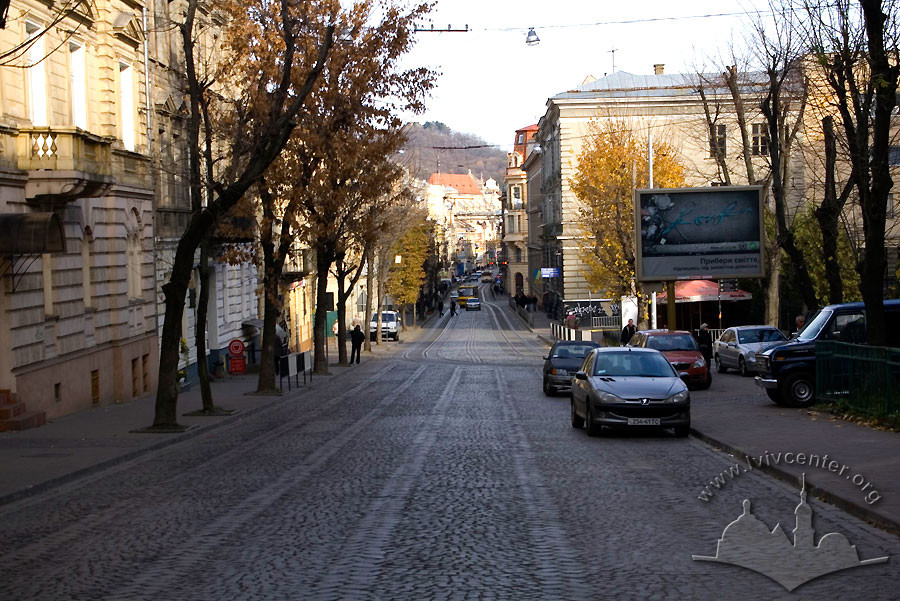
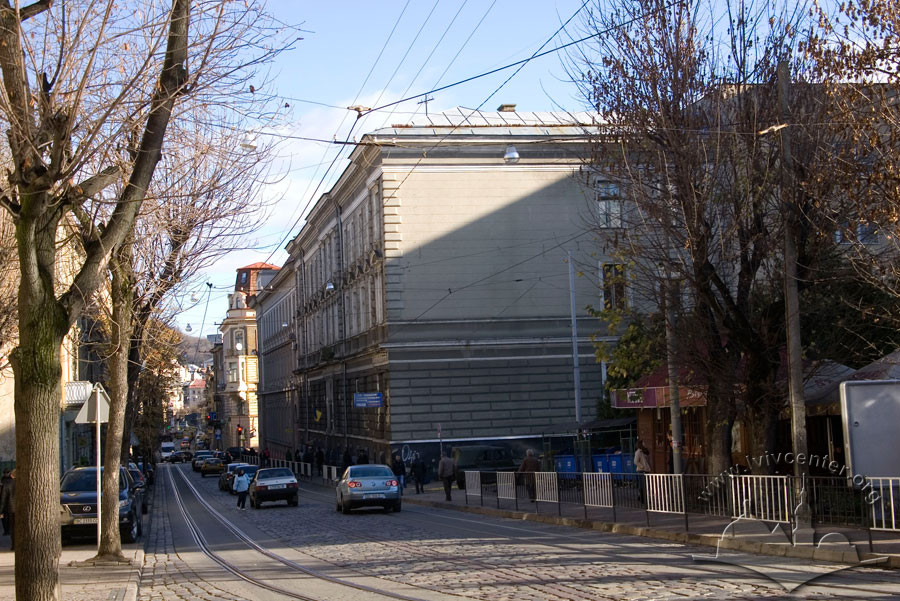
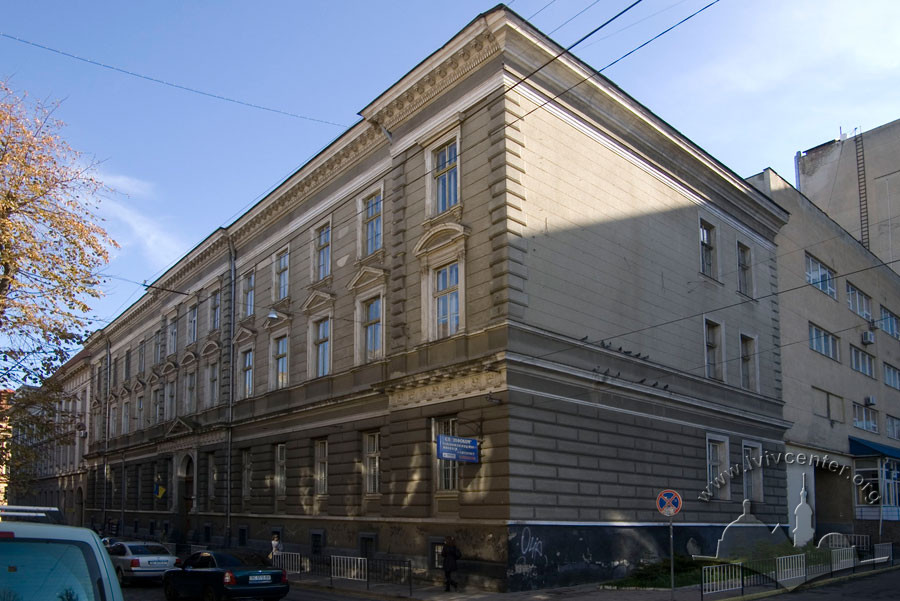
The building, part of the street's perimeter development, stands flush against the Main Post Office and the contemporary facilities of the Telegraph-Telephone Station and the "UTEL" company (vul. Doroshenka 43). Until 1945, the structure was located within the park of the Greek Catholic Theological Seminary. It was constructed in 1889 following the design of architect Sylwester Hawryszkiewicz. From 1927 to 1939, the seminary chapel housed the Holy Spirit iconostasis, painted by Petro Kholodnyi Sr. (currently preserved in the National Museum). Today, the premises house the Faculty of Geography and the Department of Foreign Languages of the Ivan Franko Lviv National University.
Architecture
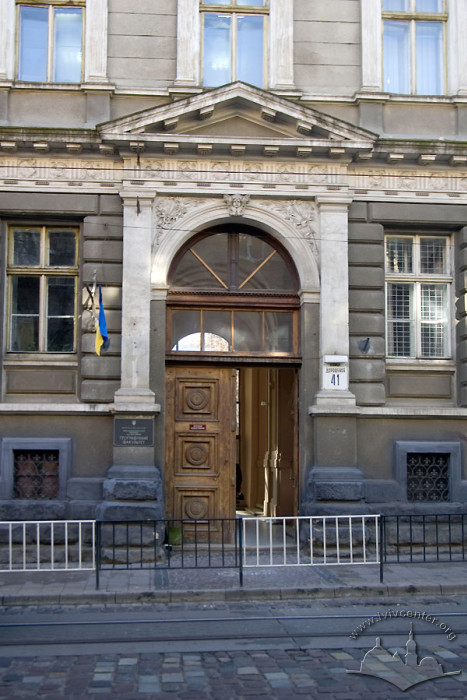
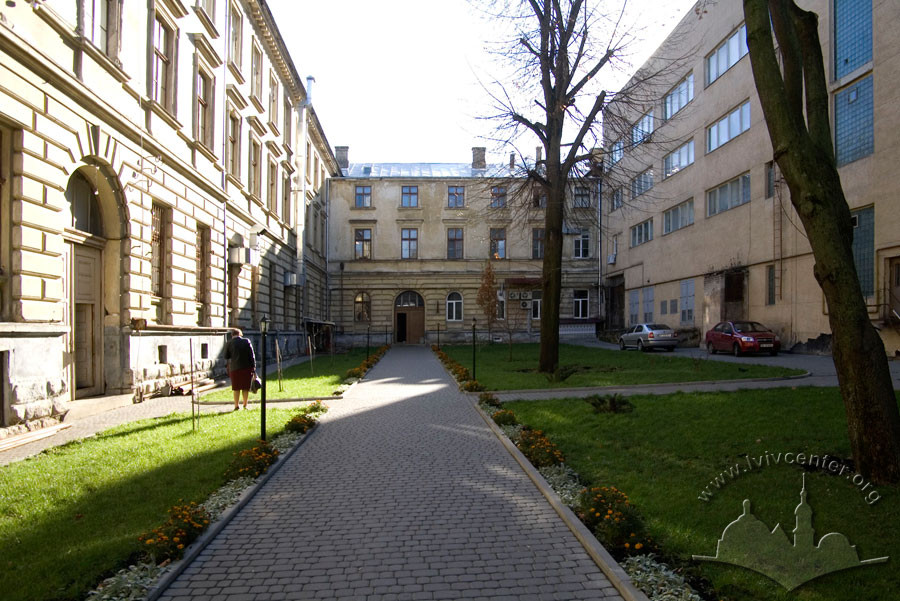
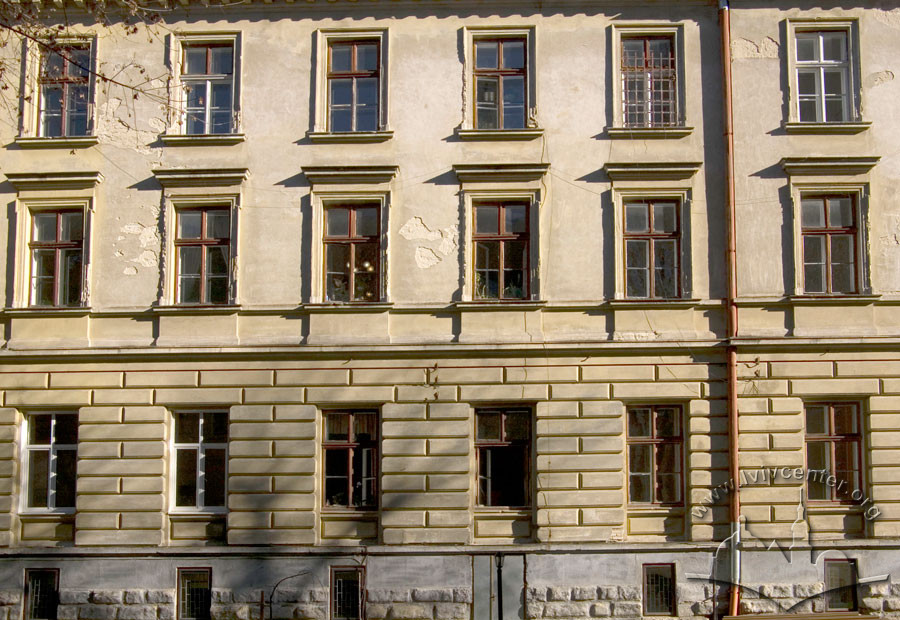
The three-story brick building is plastered and features a high semi-basement floor. Its layout is rectangular, centered around an internal courtyard. The composition of the principal elevation is symmetrical, featuring three protruded wall sections — one central and two lateral — and is anchored by a centrally located Neorenaissance entrance portal. The walls of the principal elevation are decorated with banded rustication across the first, second, and third floors. A profiled cornice runs between the first and second floors; in the protruded sections, this cornice is decorated with metopes and triglyphs. A profiled stringcourse is positioned between the semi-basement and the first floor, as well as above the third-floor windows. The entrance portal, complete with a gate and a transom light, is adorned with an archivolt and two pilasters of the Tuscan order, and is topped by a decorative triangular pediment. The first-floor windows are without trimming, whereas those on the second and third floors feature profiled trimming. On the second floor, windows in the main section are topped by triangular pediments, while those in the protruded sections feature segment pediments. The semi-basement windows are fitted with grilles. The building is terminated with a profiled classical cornice decorated with dentils, egg-and-dart molding, and brackets ornamented with acanthus leaves.Related buildings and spaces
-
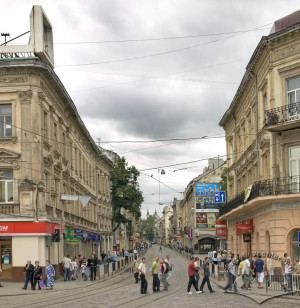
Vul. Petra Doroshenka
People
Petro Kholodnyi — a painter, muralist, graphic artist, applied arts designer, and educator. He created the murals and icons for the Holy Spirit Chapel's iconostasis at what was then the Greek Catholic Theological Seminary.Organizations
-
Supreme Ruthenian Council
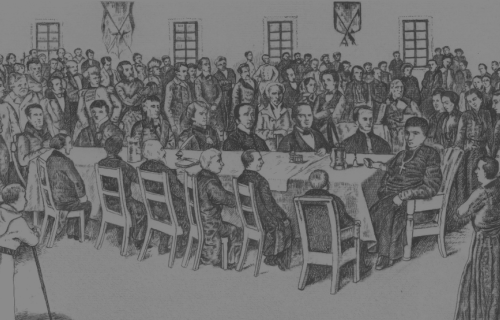
The Council was the first political representative body of Galicia's Ruthenians. It functioned in Lviv in 1848-1851. The Council proclaimed unity of the Galician Ruthenians with the Ukrainians of the Russian Empire and their disctinction from the Polish and Russian peoples. It demanded that Galicia be divided into Ruthenian and Polish provinces and aimed to secure equal rights for the Ruthenian language in education and public sphere. It launched the a political national movement of the Ruthenians in Galicia. This publication is a part of the Spring of Nations in Lviv project.
Read more
Sources
- Державний архів Львівської області (ДАЛО) 2/1/3760
- ДАЛО 2/1/3763.
- Львів. Туристичний путівник (Львів: Центр Європи, 1999), 183.
- Lwów. Ilustrowany przewodnik (Lwów: Centrum Europy – Wrocław: Via Nova, 2001), 107.